"0148f1904a9b0d16"{"id":"1002607","slug":"stylized-harvest-farm-environment","title":"Stylized Harvest Farm Environment","category":"Environments","engine":"5.0+","assetVersion":"","engineVersion":"Engine Version: 5.0+","tag":"Environments","accent":"blue","visual":"city","summary":"Build cozy rural scenes with the Stylized Harvest Farm Environment, featuring lowpoly barns, windmills, wheat, tools, and lightweight real-time assets.","platform":"Unreal Engine","indexPolicy":"index","publishedAt":"2026-11-14T06:04:21.056Z","updatedAt":"2026-11-14T06:04:21.056Z","sourceNotes":[],"fileContents":[],"compatibility":["Unreal Engine","Engine Version: 5.0+"],"featuredImage":{"alt":"Stylized Harvest Farm Environment","src":"/wp-content/uploads/published/2026/11/550161beeb30-8b05be31-1911-45ea-9edf-7ae007584f40-984dcfefbe.webp"},"hasDownloadLink":true,"downloads":0,"terms":[{"taxonomy":"category","slug":"environments","name":"Environments"}],"galleryImages":[{"src":"/wp-content/uploads/published/2026/11/925ee28c1eb7-46687936-2c6c-416b-8ab0-0d7e23f1e594-ee54a0e6c1.webp","alt":"Stylized Harvest Farm Environment"},{"src":"/wp-content/uploads/published/2026/11/dca03572681f-f69dad63-920b-42ea-9661-94720e9286f3-f65a707dfd.webp","alt":"Stylized Harvest Farm Environment"},{"src":"/wp-content/uploads/published/2026/11/1c4ab7051159-8ce30b1a-4ecc-4a60-b6f1-d889bf28d670-33127474b3.webp","alt":"Stylized Harvest Farm Environment"},{"src":"/wp-content/uploads/published/2026/11/4f4a80ec313e-184eb1f2-b516-4308-9e82-2fb4ffb1a0ee-c7756ad884.webp","alt":"Stylized Harvest Farm Environment"},{"src":"/wp-content/uploads/published/2026/11/4973db226dfa-95bca0ad-4146-49e2-b273-809e576f99a2-db4a2962f3.webp","alt":"Stylized Harvest Farm Environment"},{"src":"/wp-content/uploads/published/2026/11/c1a82412616c-71188f53-1683-4fc4-b2e7-4a5a7893a76d-3662d8ae9e.webp","alt":"Stylized Harvest Farm Environment"},{"src":"/wp-content/uploads/published/2026/11/4e52bfff2478-953c5404-403c-47cc-a270-8b9c616f2d5e-d3e9e6408e.webp","alt":"Stylized Harvest Farm Environment"},{"src":"/wp-content/uploads/published/2026/11/471fa1ee5658-3cdcc7c1-29b6-4d44-b90f-30e2423e3f5c-42801f581d.webp","alt":"Stylized Harvest Farm Environment"},{"src":"/wp-content/uploads/published/2026/11/602833b7f2ea-bce9f8e0-780c-49dc-ab31-341b5c5cb0f3-aba78cda7b.webp","alt":"Stylized Harvest Farm Environment"},{"src":"/wp-content/uploads/published/2026/11/54fbd298ef18-5906e2b6-0bab-473d-bb7c-4266868d97e4-09791838b2.webp","alt":"Stylized Harvest Farm Environment"}],"accessPanel":{"kind":"resource","title":"Get this resource","eyebrow":"Free resource","message":"Download this resource in your browser.","fileName":"Content.7z","safetyNote":"Resources are manually reviewed before listing to improve quality and reduce obvious risks.","actionLabel":"Get this resource","resourceType":"Resource archive","versions":[]},"contentHtml":"\u003ch2\u003eAssembling the Stylized Farm Layout in Real Time\u003c/h2\u003e\u003cp\u003eIntegrating assets into an interactive viewport begins with establishing primary spatial anchors across the terrain. Building a rural agricultural settlement requires structuring clear vantage points, where lowpoly architectural landmarks define the functional centers of the scene. Working with these game-ready meshes allows creators to populate ground surfaces rapidly without triggering geometry bottlenecks, making it straightforward to block out paths, boundaries, and central gathering areas in a stylized landscape.\u003c/p\u003e\u003cp\u003eBecause the collection targets a cozy atmosphere with warm colors, the initial placement of foundational pieces immediately sets an inviting tone. The visual identity leans into cartoon charm and countryside tranquility, suited for peaceful settings where visual readability takes precedence. When arranging the initial terrain, placing primary ground fields alongside pathways provides an immediate visual hierarchy that guides player movement and camera angles.\u003c/p\u003e\u003ch2\u003eStructures Across the Harvest Environment\u003c/h2\u003e\u003cp\u003eFocal architecture within the rural layout relies heavily on classic agricultural buildings. Central among these structures are the barn and the windmill, which act as dominant silhouette pieces across the countryside horizon. Their wooden construction reflects traditional village craftsmanship while maintaining clean, lowpoly surfaces that integrate smoothly into stylized visual targets.\u003c/p\u003e\u003cp\u003eThe windmill serves naturally as a high-altitude beacon for navigation, while the barn anchors the working core of the homestead. Positioned together or separated across rolling fields, these wooden structures establish the scale of the village. Their shapes are exaggerated just enough to convey stylized charm without compromising their clear architectural identity. Surrounding these primary structures with smaller wooden outbuildings, fences, and working stations creates the impression of an active, lived-in agrarian space capable of serving both backdrop roles and direct gameplay locations.\u003c/p\u003e\u003ch2\u003eRural Dressing with Crops, Wooden Tools, and Props\u003c/h2\u003e\u003cp\u003eA farming space becomes recognizable through its working details. Agricultural zones within the layout depend on dedicated plant life and harvesting equipment to feel operational. Central to this vegetation is wheat, which can be laid out in dense rows or scattered across perimeter plots to signal active cultivation. The golden tones associated with harvestable wheat reinforce the warm color palette that defines the entire scene.\u003c/p\u003e\u003cp\u003eDressing the perimeter of these fields involves placing a scarecrow among the stalks, establishing both thematic authenticity and a distinct visual marker within the crops. Around the plots and outbuildings, work spaces take form by grouping wooden tools and miscellaneous farm props. These hand tools and utility objects convey the daily labor of rural life, filling dead space around barn walls, work tables, and storage lean-tos. Because each prop shares the same stylized art direction, creators can cluster items tightly without creating visual dissonance or cluttering the silhouette of the environment.\u003c/p\u003e\u003ch2\u003eMaterial Workflows and Lightweight Texture Architecture\u003c/h2\u003e\u003cp\u003ePerformance optimization in real-time engines depends heavily on how materials and textures are structured across mesh surfaces. Most of the props in this package streamline resource usage by relying strictly on diffuse textures. This approach minimizes memory consumption and reduces runtime draw call overhead, making the entire kit exceptionally lightweight.\u003c/p\u003e\u003cp\u003eWhere additional surface definition is necessary to catch environmental lighting, assets incorporate dedicated normal and roughness maps alongside the base diffuse color. This selective approach preserves subtle details on wooden planks, cloth, and structural surfaces without requiring complex, performance-draining shader graphs across every small element. The balance between simple diffuse-only props and selectively mapped surface meshes ensures clean rendering across low-power hardware while still reacting believably to directional sun lamps, ambient skylights, and cozy interior illumination.\u003c/p\u003e\u003ch2\u003eTargeting Platforms from Mobile to PC Simulation Projects\u003c/h2\u003e\u003cp\u003eThe optimized polycounts and disciplined texture memory footprints make these assets well suited for multiplatform deployment. The package accommodates the strict rendering budgets of mobile hardware while scaling cleanly to desktop environments. On mobile platforms, the lightweight geometry and restrained texture dependencies prevent thermal throttling and maintain steady framerates, even when dense fields of wheat and multiple buildings populate the screen.\u003c/p\u003e\u003cp\u003eThe stylistic balance lends itself directly to several core game genres:\u003c/p\u003e\u003cul\u003e\u003cli\u003eFarming games driven by crop cultivation, homestead expansion, and land management.\u003c/li\u003e\u003cli\u003eSimulation projects that require clear, uncluttered visual feedback across large management zones.\u003c/li\u003e\u003cli\u003eStylized RPGs looking for welcoming rural hubs, quiet village settlements, or peaceful countryside quest locations.\u003c/li\u003e\u003cli\u003eStrategy games that utilize top-down or isometric perspectives, where readable silhouettes and distinct wooden shapes allow players to distinguish functional zones at a glance.\u003c/li\u003e\u003c/ul\u003e\u003cp\u003eFor projects requiring extended visual variety in resource-gathering loops or landscape design, the assets also pair smoothly alongside the Emberores - 36 Stylized Ore Pack. Combining agricultural farm props with stylized mining nodes expands the environmental storytelling, allowing developers to craft comprehensive crafting loops and exploration mechanics within a unified art direction.\u003c/p\u003e\u003ch2\u003eProduction Readiness and Scene Assembly\u003c/h2\u003e\u003cp\u003eDeploying the assets into an active production pipeline involves minimal friction thanks to the game-ready preparation of each component. Because meshes are built with real-time requirements in mind, artists and level designers can transition directly from conceptual greyboxing to final environment dressing. The consistent art style eliminates the need for extensive asset repainting or custom retopology before placement.\u003c/p\u003e\u003cp\u003eMaintaining visual consistency throughout expansion is straightforward. As new levels, farm plots, or village extensions are mapped out, the combination of modular wooden elements, natural foliage like wheat, and versatile props allows for varied layouts from a unified set of parts. By relying on lightweight assets, selective texture mapping, and cozy stylized aesthetics, production teams can build out expansive rural environments that run smoothly across target platforms.\u003c/p\u003e\n\n\u003ch2\u003eContinue Browsing Similar Packs\u003c/h2\u003e\n\u003cul\u003e\n\u003cli\u003e\u003ca href=\"https://3dcghub.com/farm-crops/\" rel=\"noopener noreferrer\"\u003eFarm Crops\u003c/a\u003e\u003c/li\u003e\n\u003cli\u003e\u003ca href=\"https://3dcghub.com/jobsite-vol-13-farm-hay-nanite-and-low-poly/\" rel=\"noopener noreferrer\"\u003eJobsite VOL.13 - Farm Hay (Nanite \u0026amp; Low Poly)\u003c/a\u003e\u003c/li\u003e\n\u003cli\u003e\u003ca href=\"https://3dcghub.com/animated-farm-animals-and-farmer-3d-box/\" rel=\"noopener noreferrer\"\u003eAnimated Farm Animals \u0026amp; Farmer- 3D BOX\u003c/a\u003e\u003c/li\u003e\n\u003cli\u003e\u003ca href=\"https://3dcghub.com/modular-town-modular-town-modular-village-rural-town-rural-village-farm/\" rel=\"noopener noreferrer\"\u003eModular Town (Modular Town, Modular Village, Rural Town, Rural Village, Farm)\u003c/a\u003e\u003c/li\u003e\n\u003cli\u003e\u003ca href=\"https://3dcghub.com/horror-farm/\" rel=\"noopener noreferrer\"\u003eHorror Farm\u003c/a\u003e\u003c/li\u003e\n\u003c/ul\u003e","contentTextLength":6816,"navigation":{"current":42,"total":4543,"previous":{"id":"1002608","slug":"train-pack","title":"Train pack","category":"Trains","platform":"Unreal Engine","updatedAt":"2026-11-14T06:07:12.844Z"},"next":{"id":"1002606","slug":"stylized-fantasy-pottery-and-vessels-22-low-poly-game-ready-assets","title":"Stylized Fantasy Pottery \u0026 Vessels: 22 Low-Poly Game-Ready Assets","category":"Tools, Objects \u0026 Decor","platform":"Unreal Engine","updatedAt":"2026-11-14T06:02:50.961Z"}},"relatedResources":[{"id":"4157","slug":"farm-crops","title":"Farm Crops","category":"Crop","engine":"4.26+,5.0+","assetVersion":"Engine version: 4.26+,5.0+","engineVersion":"4.20","tag":"Crop","accent":"blue","visual":"animation","summary":"Enhance your farming game with these stylized farm crops. Featuring PBR materials and low-poly designs, these assets are perfect for any 3D project.","platform":"Unreal Engine","indexPolicy":"noindex","publishedAt":"2026-02-10T11:17:49.000Z","updatedAt":"2026-04-19T15:57:29.000Z","sourceNotes":[],"fileContents":[],"compatibility":["Unreal Engine","Engine version: 4.26+,5.0+"],"featuredImage":{"alt":"Farm Crops","src":"https://3dcghub.com/wp-content/uploads/2026/02/c33a26dc-e3b2-4565-9522-570a23b9f068.webp"},"hasDownloadLink":true,"downloads":1},{"id":"1001688","slug":"jobsite-vol-13-farm-hay-nanite-and-low-poly","title":"Jobsite VOL.13 - Farm Hay (Nanite \u0026 Low Poly)","category":"Debris","engine":"5.1+","assetVersion":"","engineVersion":"Engine Version: 5.1+","tag":"Debris","accent":"blue","visual":"mech","summary":"Jobsite VOL.13 - Farm Hay brings 17 Nanite and low-poly meshes with 4K textures, master material controls, and Lumen support to Unreal Engine 5.","platform":"Unreal Engine","indexPolicy":"index","publishedAt":"2026-10-14T09:06:27.057Z","updatedAt":"2026-10-14T09:06:27.057Z","sourceNotes":[],"fileContents":[],"compatibility":["Unreal Engine","Engine Version: 5.1+"],"featuredImage":{"alt":"Jobsite VOL.13 - Farm Hay (Nanite \u0026 Low Poly)","src":"/wp-content/uploads/published/2026/10/40a48798facd-6c3cd985-e85a-4046-bcb2-9b986ee882d1-7db55c317c.webp"},"hasDownloadLink":true,"downloads":0},{"id":"1000792","slug":"animated-farm-animals-and-farmer-3d-box","title":"Animated Farm Animals \u0026 Farmer- 3D BOX","category":"Characters \u0026 Creatures","engine":"5.3+","assetVersion":"","engineVersion":"Engine Version: 5.3+","tag":"Characters","accent":"blue","visual":"character","summary":"Rigged and animated farm animals and farmer with shared skeletons, 24-28 animations per animal, 32 farmer animations, and one texture across the full set.","platform":"Unreal Engine","indexPolicy":"index","publishedAt":"2026-07-30T14:05:03.752Z","updatedAt":"2026-07-30T14:05:03.752Z","sourceNotes":[],"fileContents":[],"compatibility":["Unreal Engine","Engine Version: 5.3+"],"featuredImage":{"alt":"Animated Farm Animals \u0026 Farmer- 3D BOX","src":"/wp-content/uploads/published/2026/07/53ae199d9dd0-fa80dbe3-aa44-4c2f-baf4-7ca81d8e6d7e-ca77859e91.webp"},"hasDownloadLink":true,"downloads":1}]}
Environments
Stylized Harvest Farm Environment
Build cozy rural scenes with the Stylized Harvest Farm Environment, featuring lowpoly barns, windmills, wheat, tools, and lightweight real-time assets.
Category:Unreal Engine,EnvironmentsPlatform: Unreal EngineEngine Version: 5.0+Published: Nov 14, 2026
Environments
Resource overview
Assembling the Stylized Farm Layout in Real Time
Integrating assets into an interactive viewport begins with establishing primary spatial anchors across the terrain. Building a rural agricultural settlement requires structuring clear vantage points, where lowpoly architectural landmarks define the functional centers of the scene. Working with these game-ready meshes allows creators to populate ground surfaces rapidly without triggering geometry bottlenecks, making it straightforward to block out paths, boundaries, and central gathering areas in a stylized landscape.
Because the collection targets a cozy atmosphere with warm colors, the initial placement of foundational pieces immediately sets an inviting tone. The visual identity leans into cartoon charm and countryside tranquility, suited for peaceful settings where visual readability takes precedence. When arranging the initial terrain, placing primary ground fields alongside pathways provides an immediate visual hierarchy that guides player movement and camera angles.
Structures Across the Harvest Environment
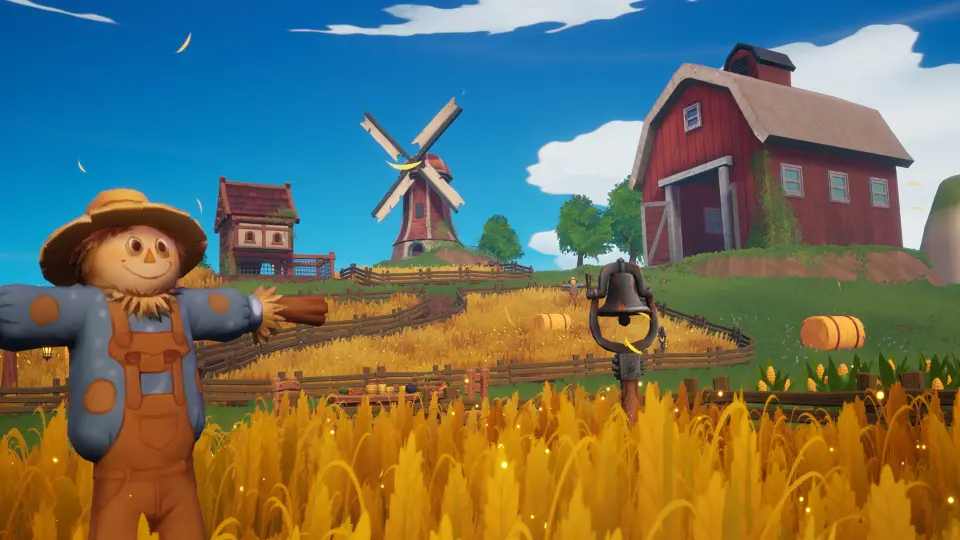
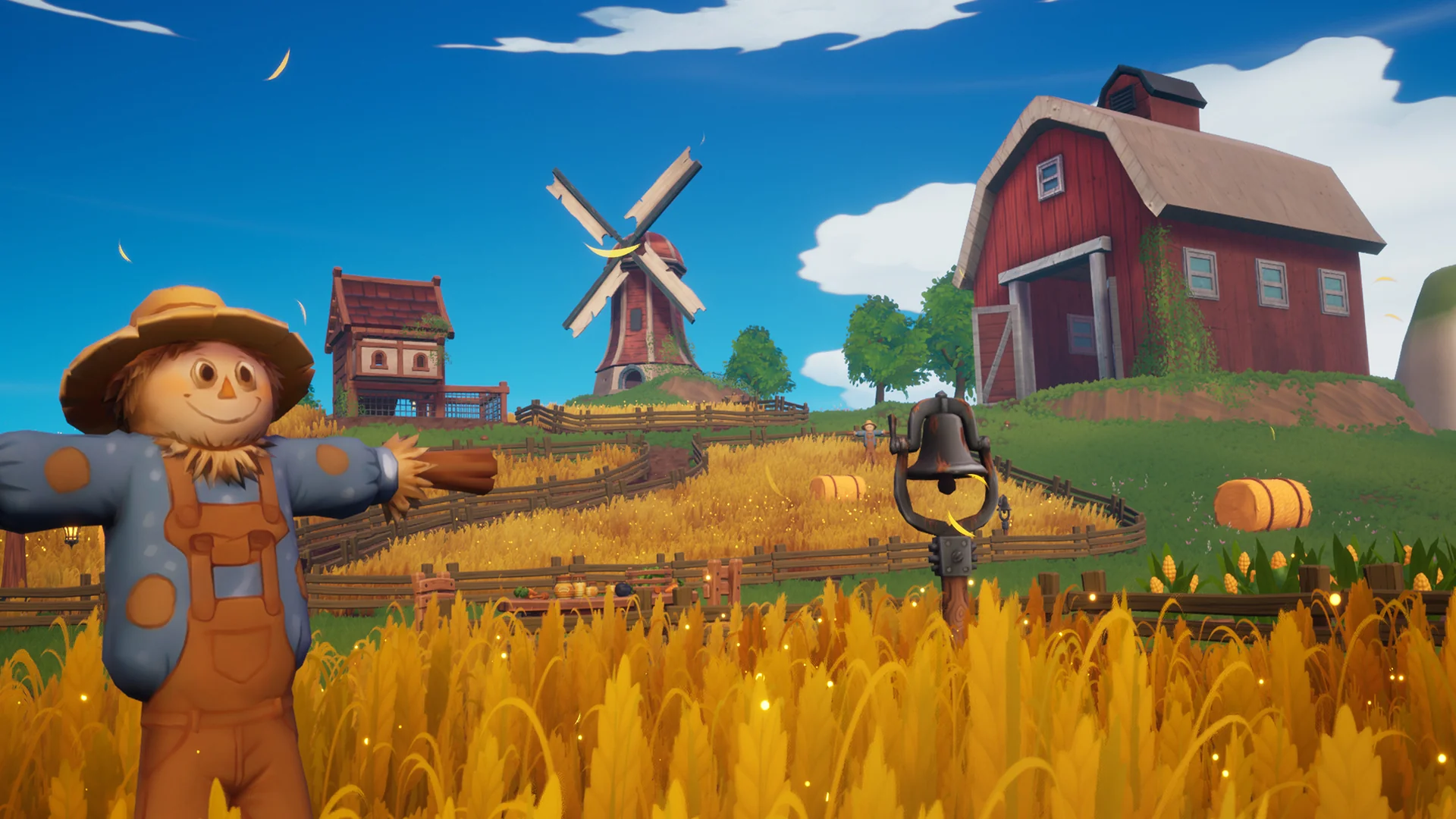
Focal architecture within the rural layout relies heavily on classic agricultural buildings. Central among these structures are the barn and the windmill, which act as dominant silhouette pieces across the countryside horizon. Their wooden construction reflects traditional village craftsmanship while maintaining clean, lowpoly surfaces that integrate smoothly into stylized visual targets.
The windmill serves naturally as a high-altitude beacon for navigation, while the barn anchors the working core of the homestead. Positioned together or separated across rolling fields, these wooden structures establish the scale of the village. Their shapes are exaggerated just enough to convey stylized charm without compromising their clear architectural identity. Surrounding these primary structures with smaller wooden outbuildings, fences, and working stations creates the impression of an active, lived-in agrarian space capable of serving both backdrop roles and direct gameplay locations.
Rural Dressing with Crops, Wooden Tools, and Props
A farming space becomes recognizable through its working details. Agricultural zones within the layout depend on dedicated plant life and harvesting equipment to feel operational. Central to this vegetation is wheat, which can be laid out in dense rows or scattered across perimeter plots to signal active cultivation. The golden tones associated with harvestable wheat reinforce the warm color palette that defines the entire scene.
Dressing the perimeter of these fields involves placing a scarecrow among the stalks, establishing both thematic authenticity and a distinct visual marker within the crops. Around the plots and outbuildings, work spaces take form by grouping wooden tools and miscellaneous farm props. These hand tools and utility objects convey the daily labor of rural life, filling dead space around barn walls, work tables, and storage lean-tos. Because each prop shares the same stylized art direction, creators can cluster items tightly without creating visual dissonance or cluttering the silhouette of the environment.
Material Workflows and Lightweight Texture Architecture
Performance optimization in real-time engines depends heavily on how materials and textures are structured across mesh surfaces. Most of the props in this package streamline resource usage by relying strictly on diffuse textures. This approach minimizes memory consumption and reduces runtime draw call overhead, making the entire kit exceptionally lightweight.
Where additional surface definition is necessary to catch environmental lighting, assets incorporate dedicated normal and roughness maps alongside the base diffuse color. This selective approach preserves subtle details on wooden planks, cloth, and structural surfaces without requiring complex, performance-draining shader graphs across every small element. The balance between simple diffuse-only props and selectively mapped surface meshes ensures clean rendering across low-power hardware while still reacting believably to directional sun lamps, ambient skylights, and cozy interior illumination.
Targeting Platforms from Mobile to PC Simulation Projects
The optimized polycounts and disciplined texture memory footprints make these assets well suited for multiplatform deployment. The package accommodates the strict rendering budgets of mobile hardware while scaling cleanly to desktop environments. On mobile platforms, the lightweight geometry and restrained texture dependencies prevent thermal throttling and maintain steady framerates, even when dense fields of wheat and multiple buildings populate the screen.
The stylistic balance lends itself directly to several core game genres:
Farming games driven by crop cultivation, homestead expansion, and land management.
Simulation projects that require clear, uncluttered visual feedback across large management zones.
Stylized RPGs looking for welcoming rural hubs, quiet village settlements, or peaceful countryside quest locations.
Strategy games that utilize top-down or isometric perspectives, where readable silhouettes and distinct wooden shapes allow players to distinguish functional zones at a glance.
For projects requiring extended visual variety in resource-gathering loops or landscape design, the assets also pair smoothly alongside the Emberores - 36 Stylized Ore Pack. Combining agricultural farm props with stylized mining nodes expands the environmental storytelling, allowing developers to craft comprehensive crafting loops and exploration mechanics within a unified art direction.
Production Readiness and Scene Assembly
Deploying the assets into an active production pipeline involves minimal friction thanks to the game-ready preparation of each component. Because meshes are built with real-time requirements in mind, artists and level designers can transition directly from conceptual greyboxing to final environment dressing. The consistent art style eliminates the need for extensive asset repainting or custom retopology before placement.
Maintaining visual consistency throughout expansion is straightforward. As new levels, farm plots, or village extensions are mapped out, the combination of modular wooden elements, natural foliage like wheat, and versatile props allows for varied layouts from a unified set of parts. By relying on lightweight assets, selective texture mapping, and cozy stylized aesthetics, production teams can build out expansive rural environments that run smoothly across target platforms.
 Environments
 Crop
 Debris
 Characters