"f813c18d2170b1f6"{"id":"1000065","slug":"horror-farm","title":"Horror Farm","category":"Interior","engine":"5.0+","assetVersion":"","engineVersion":"5.0+","tag":"Interior","accent":"blue","visual":"mech","summary":"Horror Farm is a farm environment pack with 127 static meshes, house modules, corn, props, textures, and decals for scary interior and exterior scenes.","platform":"Unreal Engine","publishedAt":"2026-05-29T13:38:07.885Z","updatedAt":"2026-05-29T13:38:07.885Z","sourceNotes":[],"fileContents":[],"compatibility":["Unreal Engine","Engine version: 5.0+"],"featuredImage":{"alt":"Horror Farm","src":"/wp-content/uploads/published/2026/05/873a0794819a-477096ce-1932-4c51-8fb7-e7b165bb7003-702c2b105a.webp"},"hasDownloadLink":true,"downloads":1,"terms":[{"taxonomy":"category","slug":"interior","name":"Interior"}],"galleryImages":[{"src":"/wp-content/uploads/published/2026/05/f806feb27b45-b1256eff-413e-4ddb-8b8c-4be63f7ff860-f2c782de06.webp","alt":"Horror Farm"},{"src":"/wp-content/uploads/published/2026/05/06cd7adf2a5b-a5f6de36-6d26-4f87-a96f-06e22cc7581d-7fb15175e9.webp","alt":"Horror Farm"},{"src":"/wp-content/uploads/published/2026/05/c2cf58123f4d-40a7e5ae-b05f-4c9c-a608-4df650670a0d-135bed41ae.webp","alt":"Horror Farm"},{"src":"/wp-content/uploads/published/2026/05/5ec6efe8f9fd-fd060bcb-abff-4b3a-94b0-feac59e0d078-a1a5c1ebf6.webp","alt":"Horror Farm"},{"src":"/wp-content/uploads/published/2026/05/a83d7623e23f-03f2ec09-fa45-44a7-b074-518910a48f78-b4714e96db.webp","alt":"Horror Farm"},{"src":"/wp-content/uploads/published/2026/05/ecee38de3b90-4ad754e6-130f-4980-92c5-f4948442167c-38fb38eb45.webp","alt":"Horror Farm"},{"src":"/wp-content/uploads/published/2026/05/5c3267750d88-635cf2e3-121f-4ecf-a8a3-5b36f6692a29-9227d6ff1b.webp","alt":"Horror Farm"},{"src":"/wp-content/uploads/published/2026/05/f5ab23c5e083-2b570bc9-bb07-4b96-8f66-2f41be24d781-b4232b7a8d.webp","alt":"Horror Farm"},{"src":"/wp-content/uploads/published/2026/05/aeecadf23eb1-86c08ad4-5aa9-49ad-a98e-68586c736b7a-2096be5aa6.webp","alt":"Horror Farm"},{"src":"/wp-content/uploads/published/2026/05/25f9906c5d1e-b4f62748-6308-492f-bbcb-b559f93e2244-fd03b02d3f.webp","alt":"Horror Farm"}],"accessPanel":{"kind":"resource","title":"Access this resource","eyebrow":"Free Download","message":"Log in or create a free account to start your download.","fileName":"Content.7z","safetyNote":"Resources are manually reviewed before listing to improve quality and reduce obvious risks.","actionLabel":"Download Free","resourceType":"Resource archive"},"contentHtml":"\u003cp\u003eFor projects that need a scary house, a tractor in the yard, dense corn, and a mix of interior and exterior spaces, Horror Farm aims straight at that kind of scene. It is a horror farm environment package shaped by the pieces needed to create a farm setting not just one hero location, with house modules, architecture modules, props, textures, decals, and corn all included as part of the same environment set.\u003c/p\u003e\n\u003cp\u003eThe package contains 127 static meshes. Those meshes come with LODs, lightmaps, and collisions, which places the focus on a usable level-building set rather than loose decorative objects. The visual direction leans toward realistic horror, reinforced by tags such as blood, scary, Halloween, mansion, chamber, house, room, exterior, and interior. That combination makes the pack most relevant for developers assembling tense farm properties, haunted rural houses, or connected indoor and outdoor horror spaces.\u003c/p\u003e \u003ch2\u003eWhere Horror Farm fits best\u003c/h2\u003e\n\u003cp\u003eHorror Farm is easiest to understand through the scenes it supports. A farm-themed horror level often needs more than one type of space: an outside approach, architectural structure, rooms inside the building, and environmental dressing that pushes the mood. This set covers those areas with a practical mix of modular building parts and supporting detail pieces.\u003c/p\u003e\n\u003cp\u003eThe house modules and architecture modules point toward level construction. They give the pack a structural side, allowing the environment to center on a farm house or mansion-like building instead of relying only on scattered props. The inclusion of room and chamber tags also suggests enclosed spaces that matter to the overall tone, while exterior and interior tags make it clear that the environment is not limited to one side of the property.\u003c/p\u003e\n\u003cp\u003eThat makes the resource useful for horror projects where a player moves between open land and tighter indoor areas. A dark exterior path through corn, a yard with machinery, a blood-stained room, or a house that shifts from realistic farm architecture into a more Halloween-like atmosphere all fit the material and themes represented here.\u003c/p\u003e \u003ch2\u003e127 static meshes with the practical groundwork already in place\u003c/h2\u003e\n\u003cp\u003eThe most concrete production detail is the mesh count: 127 static meshes. That number matters because the pack is framed as a complete environment set, not just a small prop collection. The supporting technical features attached to those meshes are equally important. Each one includes LODs, lightmaps, and collisions.\u003c/p\u003e\n\u003cp\u003eLODs help a large environment set stay manageable across a scene with multiple visible objects. In a farm layout, that can mean architectural pieces, props, and corn all existing across broader exterior views and tighter interior shots. Lightmaps matter because the pack is intended for environment work where surfaces, rooms, and structures need stable lighting behavior. Collisions make the meshes ready for level use, which is especially relevant in a horror setting where the physical layout of rooms, hallways, yards, and object placement affects movement and tension.\u003c/p\u003e\n\u003cp\u003eNothing here points to a narrowly decorative showcase pack. The inclusion of those three elements across the static meshes signals a set prepared for actual scene assembly. Whether the scene is a single house, a larger farm perimeter, or a level that moves room by room, the technical setup supports direct placement and environmental composition.\u003c/p\u003e \u003ch2\u003eHouse modules, corn, and props shape the farm setting\u003c/h2\u003e\n\u003cp\u003eThe pack’s contents are described in concrete terms: house modules, props, corn, architecture modules, textures, and decals. That mix defines the package more clearly than any broad label could. It is not only about buildings, and it is not only about surface detail. It brings together structural parts, environmental vegetation, and scene dressing.\u003c/p\u003e\n\u003cp\u003eHouse modules are the backbone for creating the main structure of the farm location. Architecture modules expand that further, giving the environment a modular construction approach rather than locking everything into one fixed arrangement. This is useful for projects that need the feel of a rural property with strong horror identity, whether the building reads more like a farmhouse, a larger residence, or a mansion-like location hinted at by the tags.\u003c/p\u003e\n\u003cp\u003eCorn is one of the defining details because it shifts the environment from a generic haunted building into a recognizable farm scene. Corn changes sightlines, shapes approaches to buildings, and supports that classic horror contrast between open ground and visual obstruction. Even without adding extra assumptions, its presence is one of the clearest signals of the pack’s intended setting.\u003c/p\u003e\n\u003cp\u003eThe props help complete the location. One of the tags specifically mentions a tractor, which fits naturally into the farm theme and suggests the environment includes the kinds of objects that sell the setting beyond walls and terrain dressing. Textures and decals push the atmosphere further. In a horror environment, decals are especially useful for localized surface detail, and the blood tag shows how that darker tone is part of the pack’s identity.\u003c/p\u003e \u003ch2\u003eInterior rooms and exterior approaches in one horror level\u003c/h2\u003e\n\u003cp\u003eHorror Farm stands out most in projects that need both indoor and outdoor storytelling. The tags point to rooms, chambers, house, exterior, and interior all at once, which paints a picture of a level that moves through different spaces rather than staying in a single visual mode.\u003c/p\u003e\n\u003cp\u003eOutside, the farm setting can carry realistic horror through architecture, props, and corn. The tractor tag adds another rural landmark, while Halloween and scary push the mood away from a neutral countryside environment. Inside, the room and chamber tags suggest a more enclosed experience, where decals, house structure, and horror dressing can create pressure in tighter spaces.\u003c/p\u003e\n\u003cp\u003eThis dual focus matters for likely use cases. A developer making a horror game level can use the pack for a full property that starts at the edge of the farm and continues into the house. A creator staging cinematic horror scenes can work with both the surrounding land and the interior rooms without changing visual direction. The realistic and PBR tags also place the environment closer to grounded horror than to stylized fantasy.\u003c/p\u003e \u003ch2\u003eScale and lighting choices in Unreal Engine 5\u003c/h2\u003e\n\u003cp\u003eAll assets are scaled according to the epic skeleton. That is a practical detail with direct implications for scene layout and character interaction. In environment work, consistent scale affects the feel of doorways, rooms, exterior pathways, architecture, and object placement. For a farm horror setting that includes both interiors and exteriors, keeping that scale aligned helps the whole space read correctly around a character.\u003c/p\u003e\n\u003cp\u003eThere is also a clear rendering note attached to the environment: distance fields and global illumination should be enabled. This is not a vague recommendation. It points to how the environment is meant to be viewed and lit. Since the screenshots were taken in Unreal Engine 5 with Lumen, the visual presentation is tied to that lighting context.\u003c/p\u003e\n\u003cp\u003eThat matters especially in horror. Global illumination has a strong effect on dark rooms, transitional spaces, and the way exterior light spills into architecture. Distance fields support the broader scene setup expected from an environment pack not just one isolated object. Together, those notes indicate that the atmosphere shown for Horror Farm depends in part on the lighting features being active.\u003c/p\u003e \u003ch2\u003eWho gets the most from Horror Farm\u003c/h2\u003e\n\u003cp\u003eHorror Farm makes the most sense for developers and artists who need a realistic horror farm location with enough range to cover exterior grounds and indoor rooms in the same project. Its 127 static meshes, modular house and architectural elements, corn, props, textures, and decals give it a practical level-building identity. The pack is especially suited to creators working on scary farm houses, Halloween-themed rural scenes, blood-stained interiors, or connected manor-like and agricultural spaces where atmosphere depends on both structure and environmental detail.\u003c/p\u003e\n\n\u003ch2\u003eContinue Browsing Similar Packs\u003c/h2\u003e\n\u003cul\u003e\n\u003cli\u003e\u003ca href=\"https://3dcghub.com/clean-horror-school-environment/\" title=\"Clean/Horror School Environment\"\u003eClean/Horror School Environment\u003c/a\u003e\u003c/li\u003e\n\u003cli\u003e\u003ca href=\"https://3dcghub.com/post-soviet-hostel/\" title=\"Post Soviet Hostel\"\u003ePost Soviet Hostel\u003c/a\u003e\u003c/li\u003e\n\u003cli\u003e\u003ca href=\"https://3dcghub.com/farm-crops/\" title=\"Farm Crops\"\u003eFarm Crops\u003c/a\u003e\u003c/li\u003e\n\u003cli\u003e\u003ca href=\"https://3dcghub.com/barnyard-megapack-barn-barn-props-farm-environment/\" title=\"Barnyard Megapack (Barn, Barn Props, Farm Environment)\"\u003eBarnyard Megapack (Barn, Barn Props, Farm Environment)\u003c/a\u003e\u003c/li\u003e\n\u003cli\u003e\u003ca href=\"https://3dcghub.com/artists-attic-studio-environment/\" title=\"Artist’s Attic Studio Environment\"\u003eArtist’s Attic Studio Environment\u003c/a\u003e\u003c/li\u003e\n\u003c/ul\u003e","contentTextLength":8294,"navigation":{"current":1730,"total":3651,"previous":{"id":"1000066","slug":"host-migration-system-v2","title":"Host Migration System V2","category":"Network \u0026 Multiplayer","platform":"Unreal Engine","updatedAt":"2026-05-29T13:41:52.845Z"},"next":{"id":"1000064","slug":"haunted-village-environment-horror-abandoned-postapo-medieval-russian-house","title":"Haunted Village Environment ( Horror Abandoned Postapo Medieval Russian House )","category":"Towns \u0026 Villages","platform":"Unreal Engine","updatedAt":"2026-05-28T14:15:28.820Z"}},"relatedResources":[{"id":"1000044","slug":"clean-horror-school-environment","title":"Clean/Horror School Environment","category":"Interior","engine":"4.26+,5.0+","assetVersion":"","engineVersion":"4.26+,5.0+","tag":"Interior","accent":"blue","visual":"city","summary":"A large modular school environment pack with 126 assets, 164 material instances, decals, demo scenes, and a shader for horror conversion.","platform":"Unreal Engine","publishedAt":"2026-05-22T09:27:13.248Z","updatedAt":"2026-05-22T09:27:13.248Z","sourceNotes":[],"fileContents":[],"compatibility":["Unreal Engine","Engine version: 4.26+,5.0+"],"featuredImage":{"alt":"Clean/Horror School Environment","src":"/wp-content/uploads/published/2026/05/4310d4089adb-73453a0e-4fce-44b8-b801-17b736a01616-106a84bf88.webp"},"hasDownloadLink":true,"downloads":1},{"id":"8974","slug":"post-soviet-hostel","title":"Post Soviet Hostel","category":"Interior","engine":"4.26+,5.0+","assetVersion":"Engine version: 4.26+,5.0+","engineVersion":"4.24","tag":"Interior","accent":"blue","visual":"city","summary":"Create an immersive atmosphere with the Post Soviet Hostel asset pack. This collection features realistic props and interactive blueprints designed for high-end game development.","platform":"Unreal Engine","publishedAt":"2026-02-25T17:45:49.000Z","updatedAt":"2026-08-23T13:06:38.716Z","sourceNotes":[],"fileContents":[],"compatibility":["Unreal Engine","Engine version: 4.26+,5.0+"],"featuredImage":{"alt":"Post Soviet Hostel","src":"https://3dcghub.com/wp-content/uploads/2026/02/5a41db30-c23e-4751-85d8-67a0c9865ca7.webp"},"hasDownloadLink":true,"downloads":7},{"id":"1001688","slug":"jobsite-vol-13-farm-hay-nanite-and-low-poly","title":"Jobsite VOL.13 - Farm Hay (Nanite \u0026 Low Poly)","category":"Debris","engine":"5.1+","assetVersion":"","engineVersion":"Engine Version: 5.1+","tag":"Debris","accent":"blue","visual":"mech","summary":"Jobsite VOL.13 - Farm Hay brings 17 Nanite and low-poly meshes with 4K textures, master material controls, and Lumen support to Unreal Engine 5.","platform":"Unreal Engine","publishedAt":"2026-10-14T09:06:27.057Z","updatedAt":"2026-10-14T09:06:27.057Z","sourceNotes":[],"fileContents":[],"compatibility":["Unreal Engine","Engine Version: 5.1+"],"featuredImage":{"alt":"Jobsite VOL.13 - Farm Hay (Nanite \u0026 Low Poly)","src":"/wp-content/uploads/published/2026/10/40a48798facd-6c3cd985-e85a-4046-bcb2-9b986ee882d1-7db55c317c.webp"},"hasDownloadLink":true,"downloads":0}]}
Interior
Horror Farm
Horror Farm is a farm environment pack with 127 static meshes, house modules, corn, props, textures, and decals for scary interior and exterior scenes.
Category:Unreal Engine,InteriorPlatform: Unreal EngineEngine version: 5.0+Published: May 29, 2026
Interior
Resource overview
For projects that need a scary house, a tractor in the yard, dense corn, and a mix of interior and exterior spaces, Horror Farm aims straight at that kind of scene. It is a horror farm environment package shaped by the pieces needed to create a farm setting not just one hero location, with house modules, architecture modules, props, textures, decals, and corn all included as part of the same environment set.
The package contains 127 static meshes. Those meshes come with LODs, lightmaps, and collisions, which places the focus on a usable level-building set rather than loose decorative objects. The visual direction leans toward realistic horror, reinforced by tags such as blood, scary, Halloween, mansion, chamber, house, room, exterior, and interior. That combination makes the pack most relevant for developers assembling tense farm properties, haunted rural houses, or connected indoor and outdoor horror spaces.
Where Horror Farm fits best
Horror Farm is easiest to understand through the scenes it supports. A farm-themed horror level often needs more than one type of space: an outside approach, architectural structure, rooms inside the building, and environmental dressing that pushes the mood. This set covers those areas with a practical mix of modular building parts and supporting detail pieces.
The house modules and architecture modules point toward level construction. They give the pack a structural side, allowing the environment to center on a farm house or mansion-like building instead of relying only on scattered props. The inclusion of room and chamber tags also suggests enclosed spaces that matter to the overall tone, while exterior and interior tags make it clear that the environment is not limited to one side of the property.
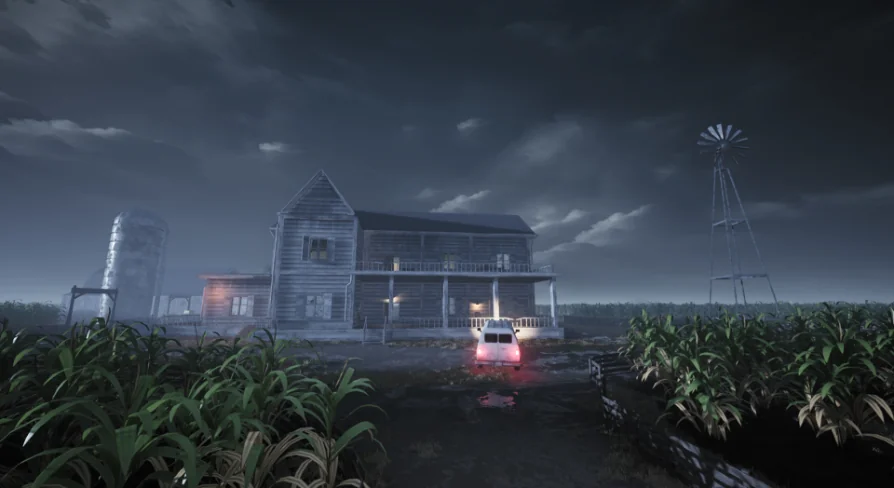
That makes the resource useful for horror projects where a player moves between open land and tighter indoor areas. A dark exterior path through corn, a yard with machinery, a blood-stained room, or a house that shifts from realistic farm architecture into a more Halloween-like atmosphere all fit the material and themes represented here.
127 static meshes with the practical groundwork already in place
The most concrete production detail is the mesh count: 127 static meshes. That number matters because the pack is framed as a complete environment set, not just a small prop collection. The supporting technical features attached to those meshes are equally important. Each one includes LODs, lightmaps, and collisions.
LODs help a large environment set stay manageable across a scene with multiple visible objects. In a farm layout, that can mean architectural pieces, props, and corn all existing across broader exterior views and tighter interior shots. Lightmaps matter because the pack is intended for environment work where surfaces, rooms, and structures need stable lighting behavior. Collisions make the meshes ready for level use, which is especially relevant in a horror setting where the physical layout of rooms, hallways, yards, and object placement affects movement and tension.
Nothing here points to a narrowly decorative showcase pack. The inclusion of those three elements across the static meshes signals a set prepared for actual scene assembly. Whether the scene is a single house, a larger farm perimeter, or a level that moves room by room, the technical setup supports direct placement and environmental composition.
House modules, corn, and props shape the farm setting
The pack’s contents are described in concrete terms: house modules, props, corn, architecture modules, textures, and decals. That mix defines the package more clearly than any broad label could. It is not only about buildings, and it is not only about surface detail. It brings together structural parts, environmental vegetation, and scene dressing.
House modules are the backbone for creating the main structure of the farm location. Architecture modules expand that further, giving the environment a modular construction approach rather than locking everything into one fixed arrangement. This is useful for projects that need the feel of a rural property with strong horror identity, whether the building reads more like a farmhouse, a larger residence, or a mansion-like location hinted at by the tags.
Corn is one of the defining details because it shifts the environment from a generic haunted building into a recognizable farm scene. Corn changes sightlines, shapes approaches to buildings, and supports that classic horror contrast between open ground and visual obstruction. Even without adding extra assumptions, its presence is one of the clearest signals of the pack’s intended setting.
The props help complete the location. One of the tags specifically mentions a tractor, which fits naturally into the farm theme and suggests the environment includes the kinds of objects that sell the setting beyond walls and terrain dressing. Textures and decals push the atmosphere further. In a horror environment, decals are especially useful for localized surface detail, and the blood tag shows how that darker tone is part of the pack’s identity.
Interior rooms and exterior approaches in one horror level
Horror Farm stands out most in projects that need both indoor and outdoor storytelling. The tags point to rooms, chambers, house, exterior, and interior all at once, which paints a picture of a level that moves through different spaces rather than staying in a single visual mode.
Outside, the farm setting can carry realistic horror through architecture, props, and corn. The tractor tag adds another rural landmark, while Halloween and scary push the mood away from a neutral countryside environment. Inside, the room and chamber tags suggest a more enclosed experience, where decals, house structure, and horror dressing can create pressure in tighter spaces.
This dual focus matters for likely use cases. A developer making a horror game level can use the pack for a full property that starts at the edge of the farm and continues into the house. A creator staging cinematic horror scenes can work with both the surrounding land and the interior rooms without changing visual direction. The realistic and PBR tags also place the environment closer to grounded horror than to stylized fantasy.
Scale and lighting choices in Unreal Engine 5
All assets are scaled according to the epic skeleton. That is a practical detail with direct implications for scene layout and character interaction. In environment work, consistent scale affects the feel of doorways, rooms, exterior pathways, architecture, and object placement. For a farm horror setting that includes both interiors and exteriors, keeping that scale aligned helps the whole space read correctly around a character.
There is also a clear rendering note attached to the environment: distance fields and global illumination should be enabled. This is not a vague recommendation. It points to how the environment is meant to be viewed and lit. Since the screenshots were taken in Unreal Engine 5 with Lumen, the visual presentation is tied to that lighting context.
That matters especially in horror. Global illumination has a strong effect on dark rooms, transitional spaces, and the way exterior light spills into architecture. Distance fields support the broader scene setup expected from an environment pack not just one isolated object. Together, those notes indicate that the atmosphere shown for Horror Farm depends in part on the lighting features being active.
Who gets the most from Horror Farm
Horror Farm makes the most sense for developers and artists who need a realistic horror farm location with enough range to cover exterior grounds and indoor rooms in the same project. Its 127 static meshes, modular house and architectural elements, corn, props, textures, and decals give it a practical level-building identity. The pack is especially suited to creators working on scary farm houses, Halloween-themed rural scenes, blood-stained interiors, or connected manor-like and agricultural spaces where atmosphere depends on both structure and environmental detail.
 Interior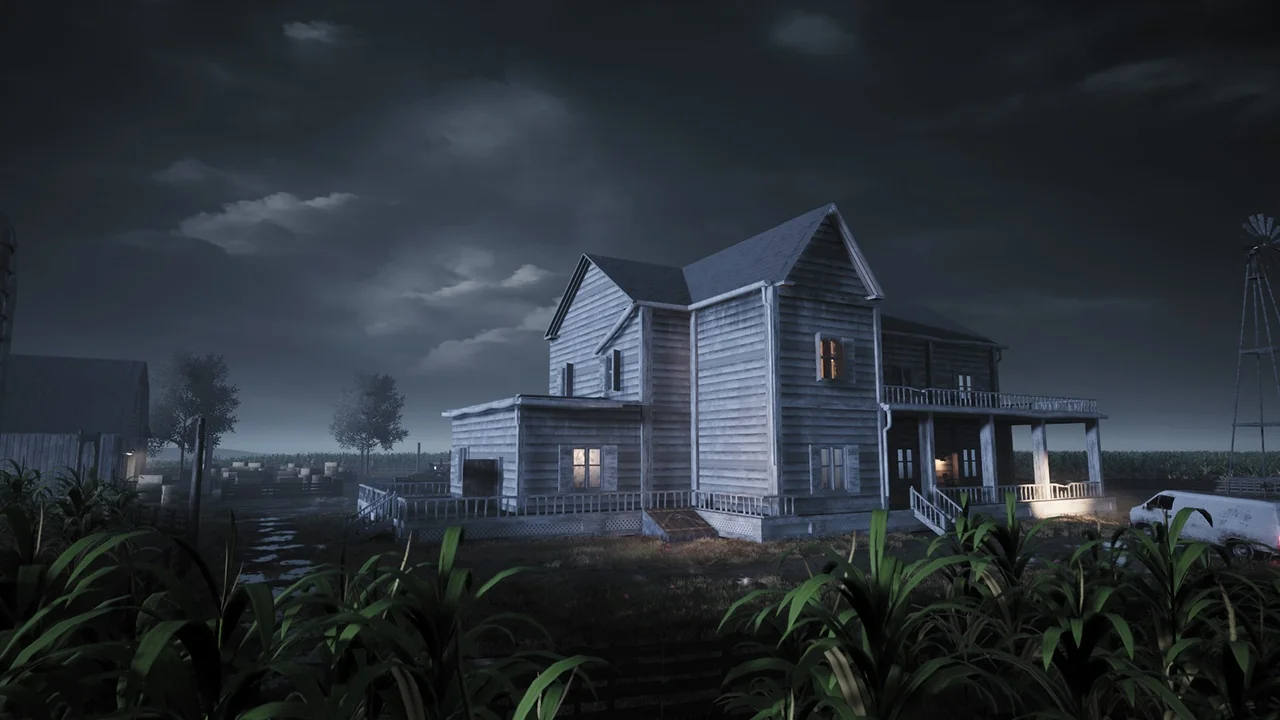
 Interior
 Interior
 Debris