"0341a2901a4ae9aa"{"id":"27418","slug":"artists-attic-studio-environment","title":"Artist’s Attic Studio Environment","category":"Interior","engine":"5.5+","assetVersion":"Engine version: 5.5+","engineVersion":"","tag":"Interior","accent":"blue","visual":"city","summary":"Artist’s Attic Studio Environment is a fully dressed attic interior with a warm, lived-in feel, modular structural pieces, and studio props. It fits scenes that need a cozy, story-rich space for cinematic framing or gameplay.","platform":"Unreal Engine","publishedAt":"2026-04-25T08:27:44.000Z","updatedAt":"2026-04-25T08:27:47.000Z","sourceNotes":[],"fileContents":[],"compatibility":["Unreal Engine","Engine version: 5.5+"],"featuredImage":{"alt":"Artist’s Attic Studio Environment","src":"https://3dcghub.com/wp-content/uploads/2026/04/1fce6996a87b_29a2b5f1-a05c-4f5a-bfc8-78a1ef2046a2.webp"},"hasDownloadLink":true,"downloads":0,"terms":[{"taxonomy":"category","slug":"interior","name":"Interior"},{"taxonomy":"post_tag","slug":"environment","name":"Environment"},{"taxonomy":"post_tag","slug":"textures","name":"Textures"},{"taxonomy":"post_tag","slug":"unreal-engine-5","name":"Unreal Engine 5"}],"galleryImages":[{"src":"https://3dcghub.com/wp-content/uploads/2026/04/b65170604b40_17f04c0d-fb99-4ab5-b0f8-0550a9250a79.webp","alt":"Artist’s Attic Studio Environment"},{"src":"https://3dcghub.com/wp-content/uploads/2026/04/69359157cb77_29a52bbd-ef9c-45ee-a2e4-5580a08232c5.webp","alt":"Artist’s Attic Studio Environment"},{"src":"https://3dcghub.com/wp-content/uploads/2026/04/ad7bcaf5348b_412a273b-0ef2-4976-9e2c-331fc9c37847.webp","alt":"Artist’s Attic Studio Environment"},{"src":"https://3dcghub.com/wp-content/uploads/2026/04/d53892a365fb_fc01447d-1569-4457-859c-8eddb0d7c909.webp","alt":"Artist’s Attic Studio Environment"},{"src":"https://3dcghub.com/wp-content/uploads/2026/04/7eb06db5370e_dffc5317-f3cf-4228-847e-7e872737253f.webp","alt":"Artist’s Attic Studio Environment"},{"src":"https://3dcghub.com/wp-content/uploads/2026/04/203f422d17e4_30c89699-a9fc-4f49-b1d9-2d3f80773ee8.webp","alt":"Artist’s Attic Studio Environment"},{"src":"https://3dcghub.com/wp-content/uploads/2026/04/46e11bfc42fa_86af49bb-2e25-4ee7-89df-c603a631e269.webp","alt":"Artist’s Attic Studio Environment"},{"src":"https://3dcghub.com/wp-content/uploads/2026/04/3e24bb86ea19_651306cd-db5a-4bcc-bd6b-f7223194dcf0.webp","alt":"Artist’s Attic Studio Environment"},{"src":"https://3dcghub.com/wp-content/uploads/2026/04/e3fbb9a82242_b4ac589a-cc89-4cfd-b7fd-ca604e1b9c23.webp","alt":"Artist’s Attic Studio Environment"},{"src":"https://3dcghub.com/wp-content/uploads/2026/04/fe41d58bbcc5_c5fcfb4d-a944-4d45-aad0-f88b29ee325b.webp","alt":"Artist’s Attic Studio Environment"}],"accessPanel":{"kind":"resource","title":"Access this resource","eyebrow":"Free Download","message":"Log in or create a free account to start your download.","fileName":"AtticEnvironment.7z","safetyNote":"All resources are 100% manually reviewed to eliminate all risks.","actionLabel":"Download Free","resourceType":"Resource archive"},"contentHtml":"\u003ch2\u003eA good fit when a scene needs warmth and history\u003c/h2\u003e\u003cp\u003eArtist’s Attic Studio Environment is a fully dressed attic interior that already carries a sense of personality, history, and lived-in charm. It works well when a project needs more than an empty room shell. The space is warm, detailed, and shaped to support a story-rich scene rather than a generic backdrop.\u003c/p\u003e\u003cp\u003eThat makes it useful for attic-based interiors where the camera is expected to linger on surfaces, objects, and the overall mood of the room. The setup leans into a cozy daytime feel, so it can support scenes that need to feel calm, personal, and carefully arranged instead of stark or unfinished.\u003c/p\u003e\u003ch2\u003eHow the room is built\u003c/h2\u003e\u003cp\u003eThe environment includes modular wooden beams, walls, floor, and roof elements. Those parts give the attic structure a clear modular foundation, which is practical when the space needs to be assembled as a complete interior and handled as part of a larger scene build. The room does not depend on a single fixed backdrop; its structural pieces are presented as separate elements that support a more flexible workflow.\u003c/p\u003e\u003cp\u003eThat modular approach is useful in production because it keeps the attic readable as a real interior while still leaving room for scene assembly. The wooden structure helps define the shape of the space, while the roof, wall, and floor pieces create the enclosed attic feel that makes the environment distinct. In practice, that kind of setup helps when the room needs to sit inside an Unreal Engine project and be used as part of a working scene rather than just a static showcase.\u003c/p\u003e\u003ch2\u003eProps that make the studio feel occupied\u003c/h2\u003e\u003cp\u003eThe attic is not left bare. It includes artist props such as desks, chairs, shelves, books, boxes, paintings, and clutter. Those items do most of the storytelling work. They turn the space into a studio with signs of use, where the environment feels active and personal instead of empty.\u003c/p\u003e\u003cp\u003eThat dressing is especially helpful for close-up shots and cinematic framing. A desk can anchor the foreground, shelves can help break up the composition, and the books, boxes, paintings, and clutter add details that reward a closer camera. Small objects matter in a room like this because they keep the scene from reading as a simple architectural space. They give the attic the kind of lived-in character that makes a shot feel grounded.\u003c/p\u003e\u003cp\u003eBecause the props are already part of the environment, the space can serve several kinds of framing without needing a separate round of heavy dressing. Wide shots can show the full attic studio, while tighter camera angles can focus on the accumulated objects and the feeling that someone actually uses the room.\u003c/p\u003e\u003ch2\u003eLighting and materials that support a clear daytime mood\u003c/h2\u003e\u003cp\u003eA carefully composed lighting setup gives the attic a natural daylight mood. That matters here because the room is meant to feel warm and readable at the same time. The lighting supports the atmosphere without overwhelming the set dressing, letting the wooden structure and studio props stand out clearly.\u003c/p\u003e\u003cp\u003eThe material side is built around high-quality PBR textures, clean material instances, and optimized meshes for real-time projects. Those elements make the scene easier to work with when the goal is to keep the attic visually coherent while still allowing tweaks and customization. Clean material instances help with adjustments, while the optimized meshes support real-time use without turning the environment into a purely static display.\u003c/p\u003e\u003cp\u003eIn a practical workflow, that combination is important. A studio interior needs to hold up under different camera angles, and the materials need to stay readable when the lighting changes. The PBR textures and daylight setup work together to keep the room grounded, while the clean material structure makes the environment easier to adapt inside production.\u003c/p\u003e\u003ch2\u003eWhere it fits in a real production workflow\u003c/h2\u003e\u003cp\u003eThis is a game-ready environment that fits both cinematics and gameplay. It is also described as Unreal Engine friendly, with a setup that is ready to drop into a project. That makes it a strong choice for teams that need an interior to move from scene layout into a working build without turning the attic into a separate reconstruction task.\u003c/p\u003e\u003cp\u003eBecause the room already combines structure, dressing, lighting, and material handling, it supports more than one stage of production. It can be used while blocking out a shot, refining a cinematic camera, or placing a playable interior into a real-time project. The attic studio does not rely on a single use case; it is shaped to support the kind of scene where environment art, prop detail, and lighting all need to work together.\u003c/p\u003e\u003cp\u003eFor projects that want a cozy interior with a clear story and a practical setup, this environment offers a direct starting point. The modular architecture handles the attic itself, the props add the lived-in studio feel, and the daylight lighting keeps the space readable. Developers and environment artists who need a warm attic studio for close-up shots, cinematic framing, or gameplay scenes will find it especially useful.\u003c/p\u003e\n\n\u003ch2\u003eRelated Resources Worth Checking\u003c/h2\u003e\n\u003cul\u003e\n\u003cli\u003e\u003ca href=\"https://3dcghub.com/shootlikeme-unreal-engine-third-person-shooter-template/\" title=\"ShootLikeMe – Unreal Engine Third Person Shooter Template\"\u003eShootLikeMe – Unreal Engine Third Person Shooter Template\u003c/a\u003e\u003c/li\u003e\n\u003cli\u003e\u003ca href=\"https://3dcghub.com/advanced-unreal-engine-5-multiplayer-gameplay-programming/\" title=\"Advanced Unreal Engine 5 Multiplayer Gameplay Programming\"\u003eAdvanced Unreal Engine 5 Multiplayer Gameplay Programming\u003c/a\u003e\u003c/li\u003e\n\u003cli\u003e\u003ca href=\"https://3dcghub.com/niagara-beginners-to-advanced-in-unreal-engine-5/\" title=\"Niagara Beginners to advanced in Unreal Engine 5\"\u003eNiagara Beginners to advanced in Unreal Engine 5\u003c/a\u003e\u003c/li\u003e\n\u003cli\u003e\u003ca href=\"https://3dcghub.com/create-zelda-like-skills-with-c-in-unreal-engine-5-2/\" title=\"Create Zelda-like skills with C++ in unreal engine 5\"\u003eCreate Zelda-like skills with C++ in unreal engine 5\u003c/a\u003e\u003c/li\u003e\n\u003cli\u003e\u003ca href=\"https://3dcghub.com/main-menus-beginner-class-unreal-engine-5/\" title=\"Main Menus Beginner Class – Unreal Engine 5\"\u003eMain Menus Beginner Class – Unreal Engine 5\u003c/a\u003e\u003c/li\u003e\n\u003c/ul\u003e\n\n\u003ch2\u003eAsset Gallery\u003c/h2\u003e","contentTextLength":5400,"navigation":{"current":2262,"total":4017,"previous":{"id":"27431","slug":"battle-of-drones-multiplayer","title":"Battle of Drones Multiplayer","category":"Shooter","platform":"Unreal Engine","updatedAt":"2026-04-25T10:58:13.000Z"},"next":{"id":"27405","slug":"arghanions-cosmic-forge-space-nebula-skyboxes-volume-11","title":"Arghanion's Cosmic Forge - Space Nebula Skyboxes - Volume 11","category":"Sky","platform":"Unreal Engine","updatedAt":"2026-04-25T06:33:01.000Z"}},"relatedResources":[{"id":"1001769","slug":"tv-studio-environment-set","title":"TV Studio Environment Set","category":"Interior","engine":"5.1+","assetVersion":"","engineVersion":"Engine Version: 5.1+","tag":"Interior","accent":"blue","visual":"city","summary":"Build broadcast stages with the TV Studio Environment Set, featuring modular meshes, custom PBR materials, and four dedicated television studio setups.","platform":"Unreal Engine","publishedAt":"2026-10-20T03:16:58.432Z","updatedAt":"2026-10-20T03:16:58.432Z","sourceNotes":[],"fileContents":[],"compatibility":["Unreal Engine","Engine Version: 5.1+"],"featuredImage":{"alt":"TV Studio Environment Set","src":"/wp-content/uploads/published/2026/10/d66f4588f14a-be856751-e5cd-4ae4-98f8-4ef47cc30a6e-90e1a6e75e.webp"},"hasDownloadLink":true,"downloads":0},{"id":"1001019","slug":"studio-7","title":"Studio 7","category":"Interior","engine":"5.0+","assetVersion":"","engineVersion":"Engine Version: 5.0+","tag":"Interior","accent":"blue","visual":"mech","summary":"Modular TV studio pack with 52 props, constructive blocks, and an example level. Customizable logo and poster materials for building news sets.","platform":"Unreal Engine","publishedAt":"2026-08-23T04:38:07.320Z","updatedAt":"2026-08-23T04:38:07.320Z","sourceNotes":[],"fileContents":[],"compatibility":["Unreal Engine","Engine Version: 5.0+"],"featuredImage":{"alt":"Studio 7","src":"/wp-content/uploads/published/2026/08/c7fc6bc1a957-462ca492-71e9-4997-ae47-0e721fa33173-76cc2aaf1e.webp"},"hasDownloadLink":true,"downloads":2},{"id":"1000714","slug":"vintage-attic-environment-kit","title":"Vintage Attic Environment Kit","category":"Interior","engine":"5.1+","assetVersion":"","engineVersion":"Engine Version: 5.1+","tag":"Interior","accent":"blue","visual":"city","summary":"208 modular meshes, 156 materials, and day/night demo levels for building realistic or retro attic scenes across films, games, and presentations.","platform":"Unreal Engine","publishedAt":"2026-07-24T08:55:12.301Z","updatedAt":"2026-07-24T08:55:12.301Z","sourceNotes":[],"fileContents":[],"compatibility":["Unreal Engine","Engine Version: 5.1+"],"featuredImage":{"alt":"Vintage Attic Environment Kit","src":"/wp-content/uploads/published/2026/07/179c47e283e5-5ae6c363-88dc-49cc-a191-85397eae84bc-2dc0365baf.webp"},"hasDownloadLink":true,"downloads":2}]}
Interior
Artist’s Attic Studio Environment
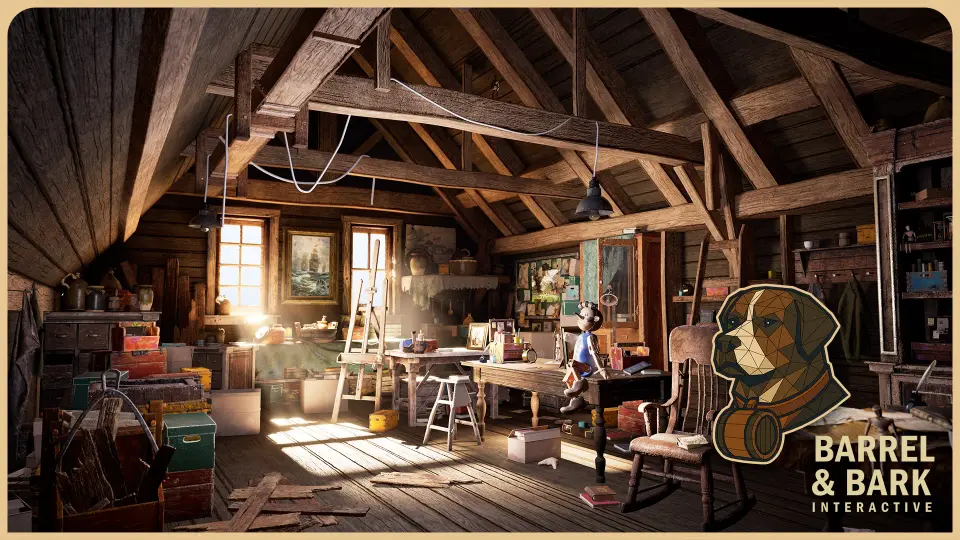
Artist’s Attic Studio Environment is a fully dressed attic interior with a warm, lived-in feel, modular structural pieces, and studio props. It fits scenes that need a cozy, story-rich space for cinematic framing or gameplay.
Artist’s Attic Studio Environment is a fully dressed attic interior that already carries a sense of personality, history, and lived-in charm. It works well when a project needs more than an empty room shell. The space is warm, detailed, and shaped to support a story-rich scene rather than a generic backdrop.
That makes it useful for attic-based interiors where the camera is expected to linger on surfaces, objects, and the overall mood of the room. The setup leans into a cozy daytime feel, so it can support scenes that need to feel calm, personal, and carefully arranged instead of stark or unfinished.
How the room is built
The environment includes modular wooden beams, walls, floor, and roof elements. Those parts give the attic structure a clear modular foundation, which is practical when the space needs to be assembled as a complete interior and handled as part of a larger scene build. The room does not depend on a single fixed backdrop; its structural pieces are presented as separate elements that support a more flexible workflow.
That modular approach is useful in production because it keeps the attic readable as a real interior while still leaving room for scene assembly. The wooden structure helps define the shape of the space, while the roof, wall, and floor pieces create the enclosed attic feel that makes the environment distinct. In practice, that kind of setup helps when the room needs to sit inside an Unreal Engine project and be used as part of a working scene rather than just a static showcase.
Props that make the studio feel occupied
The attic is not left bare. It includes artist props such as desks, chairs, shelves, books, boxes, paintings, and clutter. Those items do most of the storytelling work. They turn the space into a studio with signs of use, where the environment feels active and personal instead of empty.
That dressing is especially helpful for close-up shots and cinematic framing. A desk can anchor the foreground, shelves can help break up the composition, and the books, boxes, paintings, and clutter add details that reward a closer camera. Small objects matter in a room like this because they keep the scene from reading as a simple architectural space. They give the attic the kind of lived-in character that makes a shot feel grounded.
Because the props are already part of the environment, the space can serve several kinds of framing without needing a separate round of heavy dressing. Wide shots can show the full attic studio, while tighter camera angles can focus on the accumulated objects and the feeling that someone actually uses the room.
Lighting and materials that support a clear daytime mood
A carefully composed lighting setup gives the attic a natural daylight mood. That matters here because the room is meant to feel warm and readable at the same time. The lighting supports the atmosphere without overwhelming the set dressing, letting the wooden structure and studio props stand out clearly.
The material side is built around high-quality PBR textures, clean material instances, and optimized meshes for real-time projects. Those elements make the scene easier to work with when the goal is to keep the attic visually coherent while still allowing tweaks and customization. Clean material instances help with adjustments, while the optimized meshes support real-time use without turning the environment into a purely static display.
In a practical workflow, that combination is important. A studio interior needs to hold up under different camera angles, and the materials need to stay readable when the lighting changes. The PBR textures and daylight setup work together to keep the room grounded, while the clean material structure makes the environment easier to adapt inside production.
Where it fits in a real production workflow
This is a game-ready environment that fits both cinematics and gameplay. It is also described as Unreal Engine friendly, with a setup that is ready to drop into a project. That makes it a strong choice for teams that need an interior to move from scene layout into a working build without turning the attic into a separate reconstruction task.
Because the room already combines structure, dressing, lighting, and material handling, it supports more than one stage of production. It can be used while blocking out a shot, refining a cinematic camera, or placing a playable interior into a real-time project. The attic studio does not rely on a single use case; it is shaped to support the kind of scene where environment art, prop detail, and lighting all need to work together.
For projects that want a cozy interior with a clear story and a practical setup, this environment offers a direct starting point. The modular architecture handles the attic itself, the props add the lived-in studio feel, and the daylight lighting keeps the space readable. Developers and environment artists who need a warm attic studio for close-up shots, cinematic framing, or gameplay scenes will find it especially useful.
 Interior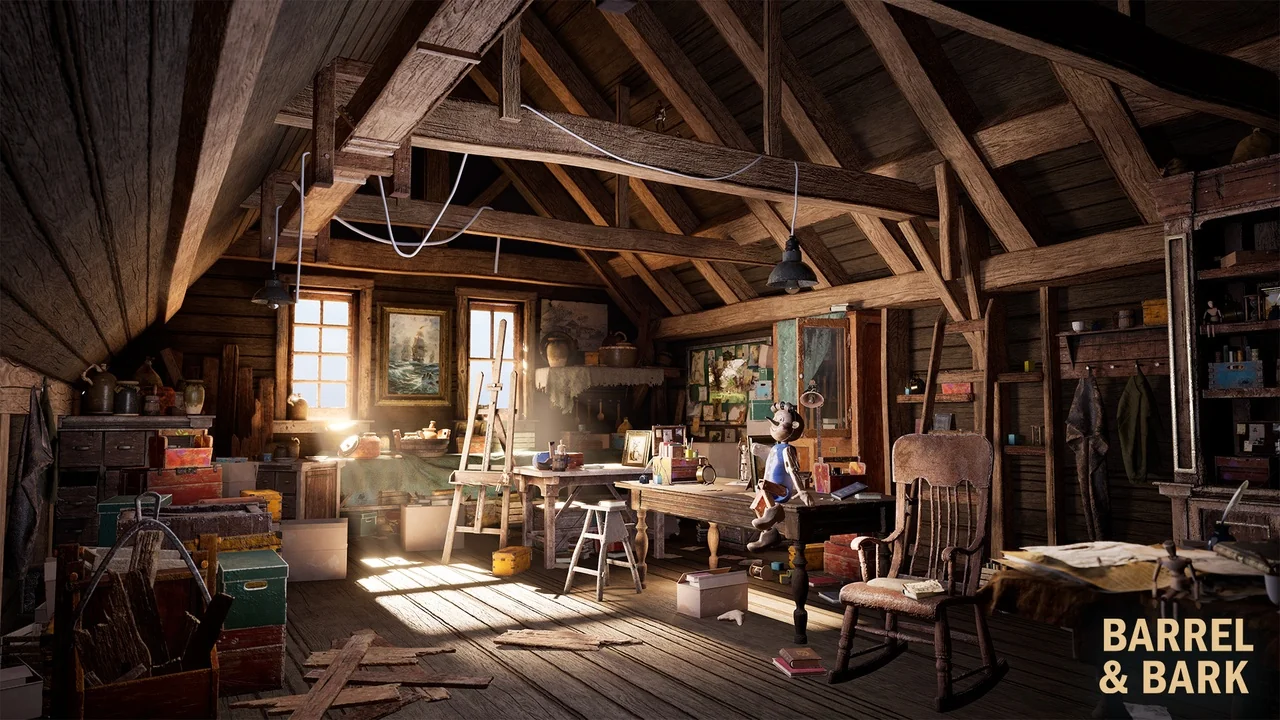
 Interior
 Interior
 Interior