"b00678cacce53329"{"id":"1002837","slug":"smokefirevfx","title":"SmokeFireVFX","category":"Fire \u0026 Explosions","engine":"4.20+,5.0+","assetVersion":"","engineVersion":"Engine Version: 4.20+,5.0+","tag":"Fire \u0026 Explosions","accent":"blue","visual":"mech","summary":"A technical breakdown of SmokeFireVFX, featuring 25 realistic smoke and fire particle effects for games, buildings, and battlefield explosion scenes.","platform":"Unreal Engine","indexPolicy":"index","publishedAt":"2026-11-20T12:19:17.679Z","updatedAt":"2026-11-20T12:19:17.679Z","sourceNotes":[],"fileContents":[],"compatibility":["Unreal Engine","Engine Version: 4.20+,5.0+"],"featuredImage":{"alt":"SmokeFireVFX","src":"/wp-content/uploads/published/2026/11/bea5f319dedf-b2ea46e5-bcca-4bf6-a84a-3c85021e5917-c279b23e4f.webp"},"fileSizeBytes":70631422,"hasDownloadLink":true,"downloads":0,"terms":[{"taxonomy":"category","slug":"fire-and-explosions","name":"Fire \u0026 Explosions"}],"galleryImages":[{"src":"/wp-content/uploads/published/2026/11/111a3b779937-fb8869aa-9e14-4180-be71-e788a67f854a-c625a9eafe.webp","alt":"SmokeFireVFX"},{"src":"/wp-content/uploads/published/2026/11/86f13323aff3-b4f42bf3-d4be-4439-9364-d9422800d9dd-7f0636c1fb.webp","alt":"SmokeFireVFX"},{"src":"/wp-content/uploads/published/2026/11/4cf10b7c13a8-02d129b5-7db3-47bb-9daa-0cf575915dc8-9dddeedd74.webp","alt":"SmokeFireVFX"},{"src":"/wp-content/uploads/published/2026/11/17098ca44665-27fa3b30-8f8f-4002-bfd2-3eab4c71b435-d2ff7e431d.webp","alt":"SmokeFireVFX"},{"src":"/wp-content/uploads/published/2026/11/93383f0e8547-7864d65e-d4fa-4b72-b01a-c4fde7c71865-e576a91601.webp","alt":"SmokeFireVFX"},{"src":"/wp-content/uploads/published/2026/11/806f21d1118c-ddb1e82e-88ff-46d9-9e59-77d6fcca6d21-03b6a8f699.webp","alt":"SmokeFireVFX"},{"src":"/wp-content/uploads/published/2026/11/dded855d8e3d-919ab1aa-c995-4515-9ba9-2f684a3ddf5d-d1fa163a10.webp","alt":"SmokeFireVFX"},{"src":"/wp-content/uploads/published/2026/11/828ca4f7be7e-7af25fd4-7fdf-4001-9636-3dd312892b56-52059cab1d.webp","alt":"SmokeFireVFX"},{"src":"/wp-content/uploads/published/2026/11/87a3251ba117-02099893-cf51-4f48-969a-a3c0a133e44a-908c8cc696.webp","alt":"SmokeFireVFX"},{"src":"/wp-content/uploads/published/2026/11/64be8464622a-e55b4a79-4fe0-4bf7-87f0-e26810938e62-1d70927b93.webp","alt":"SmokeFireVFX"}],"accessPanel":{"kind":"resource","title":"Get this resource","safetyNote":"Resources are manually reviewed before listing to improve quality and reduce obvious risks.","fileName":"Content.7z","resourceType":"Resource archive","versions":[]},"contentHtml":"\u003cp\u003ePlumes of dense particulate rise against burning embers, obscuring lines of sight while sudden bursts of flame punctuate the environment. Real-time explosion sequences hinge on the visual contrast between immediate incendiary ignition and lingering particulate silhouettes. When realistic combustion erupts inside an interactive scene, the illusion of physical force relies on how convincingly particle elements communicate heat, momentum, and dispersion. SmokeFireVFX concentrates entirely on these dynamics, presenting realistic smoke and fire systems intended for combat zones, structural destruction, and large-scale detonations.\u003c/p\u003e \u003ch2\u003eVisual Dynamics of Realistic Smoke and Fire Particle Systems\u003c/h2\u003e\n\u003cp\u003eRealistic particle simulation requires a careful balance between rapid flame expansion and gradual smoke dissipation. Fire moves with sharp velocity, flashing brightly at the point of ignition before burning through its volatile fuel. Smoke behaves differently, outlasting the initial flash, cooling as it ascends, and billowing outwards into turbulent shapes that obscure the surroundings. Within SmokeFireVFX, the visual priority rests on capturing this realistic interplay rather than stylizing or exaggerating the silhouettes.\u003c/p\u003e\n\u003cp\u003eParticle systems operating under realistic constraints must simulate convincing buoyancy and expansion. Fast-moving flames push outward from the epicenter, followed by heavy, tumbling smoke plumes that slowly lose momentum as they blend into ambient atmospheric conditions. This behavior proves essential when rendering hazardous combat conditions. If the smoke appears too thin, the explosion lacks weight; if the fire dissipates too slowly, the effect loses its sudden violent impact. By emphasizing natural dissipation and dense particulate movement, these particle elements establish authentic physical consequences for explosive events in games.\u003c/p\u003e \u003ch2\u003eTwenty-Five Variations for Staging Explosion Scenes\u003c/h2\u003e\n\u003cp\u003eRepeated visual effects can quickly diminish immersion in interactive environments. When players encounter identical smoke plumes or cloned fire blasts across successive encounters, the world begins to feel mechanical and predictable. SmokeFireVFX mitigates this visual fatigue by supplying 25 distinct kinds of special effects. This quantity gives developers the flexibility to distribute unique particle events across a single encounter or throughout an entire campaign.\u003c/p\u003e\n\u003cp\u003eHaving 25 variations allows for distinct staging choices depending on what triggers the explosion:\u003c/p\u003e\n\u003cul\u003e \u003cli\u003eDifferentiating primary blast points from secondary environmental combustion.\u003c/li\u003e \u003cli\u003eAssigning varied plume shapes to different blast sizes, from concentrated ruptures to sprawling infernos.\u003c/li\u003e \u003cli\u003eAlternating explosion profiles across continuous bombardment sequences to prevent visual repetition.\u003c/li\u003e \u003cli\u003eDeploying distinct lingering smoke trails that indicate past skirmishes or localized fire hazards.\u003c/li\u003e\n\u003c/ul\u003e\n\u003cp\u003eIn high-intensity gaming scenarios, twenty-five separate options enable level designers to choreograph chained events. A frontline artillery strike can trigger an initial sharp burst, immediately followed by secondary structural ignitions that display completely distinct smoke columns and fire spreads.\u003c/p\u003e \u003ch2\u003eSmokeFireVFX in Battlefield and Combat Scenarios\u003c/h2\u003e\n\u003cp\u003eBattlefield environments present unique visual and functional hurdles. They require large-scale atmospheric presence while preserving clarity for gameplay. SmokeFireVFX fits directly into battlefield scenes by delivering the harsh, gritty atmosphere expected in contested war zones. The combination of realistic smoke and fire establishes clear visual landmarks across vast terrain, signaling active conflict zones, fallen fortifications, or impassable boundaries.\u003c/p\u003e\n\u003cp\u003eBeyond simple visual decoration, battlefield smoke serves a practical gameplay function. Lingering particulate clouds break sightlines, shield retreating players, and signal ongoing destruction across the horizon. Because battlefield scenes often feature multiple skirmishes unfolding at once, having diverse visual effects ensures that detonations scattered across hillsides, trenches, or open plains each project an individual footprint. Fire elements pinpoint dynamic danger areas, warning players away from hazardous ground while marking freshly detonated targets.\u003c/p\u003e \u003ch2\u003eImplementing SmokeFireVFX Across Structures and Game Environments\u003c/h2\u003e\n\u003cp\u003eUrban warfare and architectural breaches demand effects that visually interact with rigid surfaces. SmokeFireVFX is suited for deployment around buildings and structural explosion scenes, where combustible forces collide with walls, roofs, and interior corridors. When an explosion impacts a building, the resulting smoke must appear trapped, forced through apertures, or pouring outward from collapsed masonry.\u003c/p\u003e\n\u003cp\u003eIntegrating these particle effects into architectural scenes helps convey structural damage. Placing heavy smoke plumes inside blown-out window frames communicates lingering internal damage. Positioning intense fire emitters at the base of compromised pillars or damaged exterior walls reinforces the physical collapse of the space. Because the collection includes realistic particle types, the fire and smoke integrate naturally alongside stone, concrete, metal, and rubble, supporting the narrative of an active, deteriorating environment under heavy assault.\u003c/p\u003e \u003ch2\u003eExecution Considerations for Real-Time Production\u003c/h2\u003e\n\u003cp\u003eSpecial effects in games must balance high visual density against strict runtime performance budgets. Particles with dense overlapping volumes, such as expansive smoke and fire plumes, can rapidly consume rendering resources if deployed without clear environmental guidelines. In production scenarios featuring extensive explosion scenes, technical artists must manage spawn rates, sorting, and lifetime parameters across all 25 variations to maintain target frame rates.\u003c/p\u003e\n\u003cp\u003eDeploying SmokeFireVFX effectively requires aligning each of the 25 variants with specific technical priorities. Faster-dissipating fire blasts are ideal for instantaneous feedback during high-action moments, minimizing the duration of overlapping visual elements on screen. Slower-drifting smoke elements can be reserved for perimeter staging or structural markers where their extended presence provides maximum scene value without overwhelming real-time performance. This methodical application ensures that realistic smoke and fire enhance the spectacle of destruction while keeping gameplay responsiveness intact.\u003c/p\u003e\n\n\u003ch2\u003eExplore Similar Assets\u003c/h2\u003e\n\u003cul\u003e\n\u003cli\u003e\u003ca href=\"https://3dcghub.com/stylized-vfx-fire/\" rel=\"noopener noreferrer\"\u003eStylized VFX - Fire\u003c/a\u003e\u003c/li\u003e\n\u003cli\u003e\u003ca href=\"https://3dcghub.com/power-explosions-vfx-pack-color-explosions-dust-and-sand-explosions/\" rel=\"noopener noreferrer\"\u003ePower Explosions VFX Pack // Color Explosions // Dust and Sand explosions\u003c/a\u003e\u003c/li\u003e\n\u003cli\u003e\u003ca href=\"https://3dcghub.com/m5-vfx-vol1-smoke-and-big-explosion-niagara/\" rel=\"noopener noreferrer\"\u003eM5 VFX Vol1. Smoke and Big Explosion(Niagara)\u003c/a\u003e\u003c/li\u003e\n\u003cli\u003e\u003ca href=\"https://3dcghub.com/looping-fire-fx/\" rel=\"noopener noreferrer\"\u003eLooping Fire FX\u003c/a\u003e\u003c/li\u003e\n\u003cli\u003e\u003ca href=\"https://3dcghub.com/dynamic-scifi-trail-pack/\" rel=\"noopener noreferrer\"\u003eDynamic SciFi Trail Pack\u003c/a\u003e\u003c/li\u003e\n\u003c/ul\u003e","contentTextLength":6655,"navigation":{"current":43,"total":4797,"previous":{"id":"1002838","slug":"splash-damage-blood","title":"Splash Damage Blood","category":"Variety","platform":"Unreal Engine","updatedAt":"2026-11-20T12:20:17.242Z"},"next":{"id":"1002836","slug":"simple-cartoon-fx-2","title":"Simple Cartoon FX 2","category":"Variety","platform":"Unreal Engine","updatedAt":"2026-11-20T12:16:05.757Z"}},"relatedResources":[{"id":"1002281","slug":"stylized-vfx-fire","title":"Stylized VFX - Fire","category":"Fire \u0026 Explosions","engine":"4.26+,5.0+","assetVersion":"","engineVersion":"Engine Version: 4.26+,5.0+","tag":"Fire \u0026 Explosions","accent":"blue","visual":"mech","summary":"Explore Stylized VFX - Fire, featuring 70 unique fire element effects built with optimized Sub UV materials for instant drag-and-drop game integration.","platform":"Unreal Engine","indexPolicy":"noindex","publishedAt":"2026-10-29T16:40:51.715Z","updatedAt":"2026-10-29T16:40:51.715Z","sourceNotes":[],"fileContents":[],"compatibility":["Unreal Engine","Engine Version: 4.26+,5.0+"],"featuredImage":{"alt":"Stylized VFX - Fire","src":"/wp-content/uploads/published/2026/10/057bd2631882-ab64453d-fecf-4944-9fc0-3b59cd7b749c-66a5cc8e61.webp"},"fileSizeBytes":21207103,"hasDownloadLink":true,"downloads":3},{"id":"1002854","slug":"vfx-grenade-pack","title":"VFX Grenade Pack","category":"Fire \u0026 Explosions","engine":"4.26+,5.0+","assetVersion":"","engineVersion":"Engine Version: 4.26+,5.0+","tag":"Fire \u0026 Explosions","accent":"blue","visual":"mech","summary":"VFX Grenade Pack delivers material-specific explosions for Niagara and Cascade in Unreal Engine, featuring Blueprints, decals, and camera shakes.","platform":"Unreal Engine","indexPolicy":"index","publishedAt":"2026-11-20T12:35:58.420Z","updatedAt":"2026-11-20T12:35:58.420Z","sourceNotes":[],"fileContents":[],"compatibility":["Unreal Engine","Engine Version: 4.26+,5.0+"],"featuredImage":{"alt":"VFX Grenade Pack","src":"/wp-content/uploads/published/2026/11/6558a19cbb7f-b11a8f0d-0f45-43c4-9e0e-9dd9232faa13-41a5e4c368.webp"},"fileSizeBytes":18032032,"hasDownloadLink":true,"downloads":0},{"id":"1002853","slug":"vfx-fire-pack","title":"VFX Fire Pack","category":"Fire \u0026 Explosions","engine":"4.26+,5.0+","assetVersion":"","engineVersion":"Engine Version: 4.26+,5.0+","tag":"Fire \u0026 Explosions","accent":"blue","visual":"mech","summary":"VFX Fire Pack delivers complete fire effects updated for Unreal Engine 5 with Niagara emitters, embedded lights, lit smoke, and environmental blueprints.","platform":"Unreal Engine","indexPolicy":"index","publishedAt":"2026-11-20T12:34:58.772Z","updatedAt":"2026-11-20T12:34:58.772Z","sourceNotes":[],"fileContents":[],"compatibility":["Unreal Engine","Engine Version: 4.26+,5.0+"],"featuredImage":{"alt":"VFX Fire Pack","src":"/wp-content/uploads/published/2026/11/9bb5dd81c644-56f491fb-6a1e-4ff8-a8ff-7823b382ff71-72b196ffb0.webp"},"fileSizeBytes":162136848,"hasDownloadLink":true,"downloads":0}]}
Resource screenshots
1 / 10
Join our channel
Follow 3DCGHUB on Telegram for new resource drops, migration updates, and community notices.
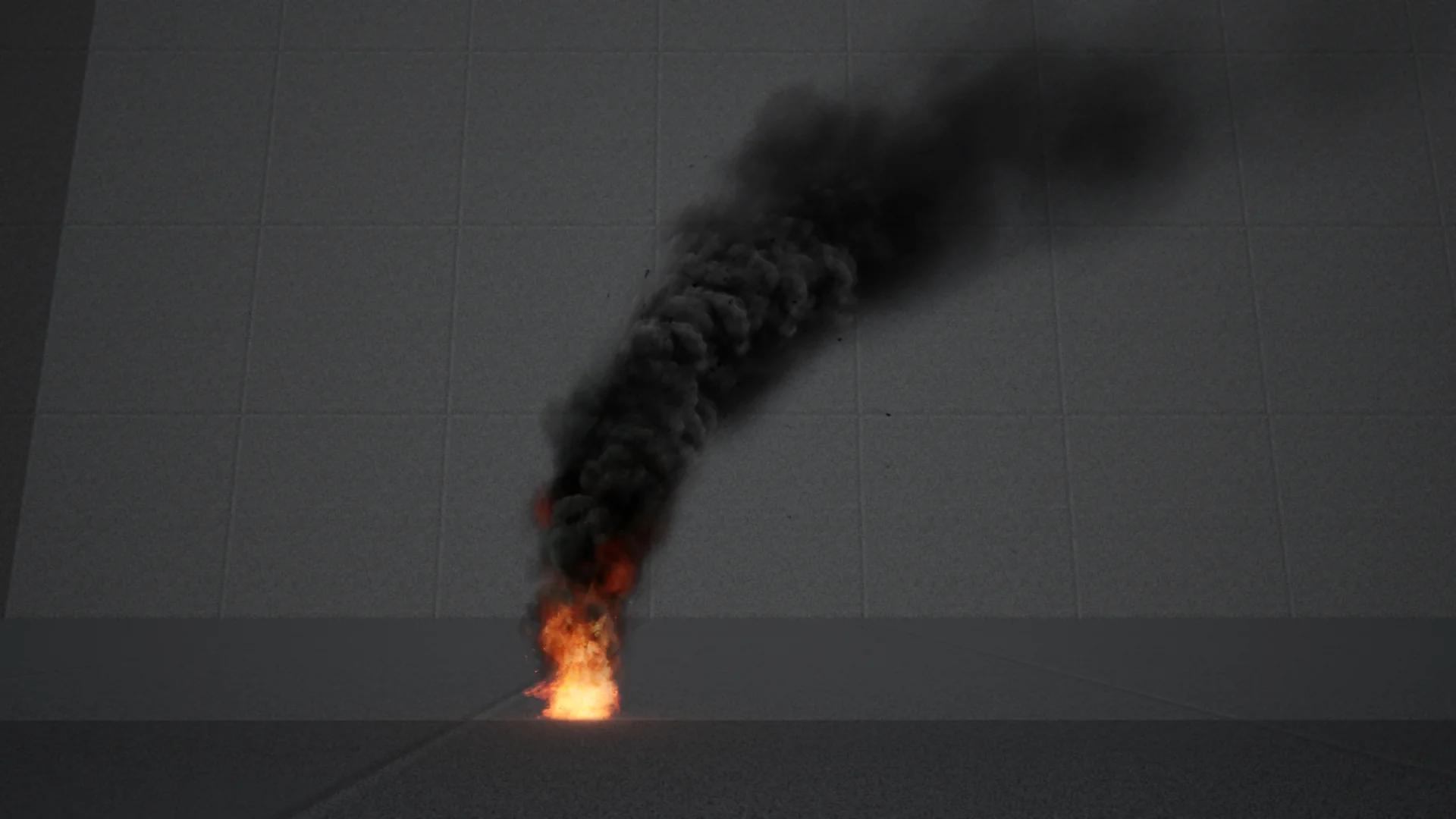
Plumes of dense particulate rise against burning embers, obscuring lines of sight while sudden bursts of flame punctuate the environment. Real-time explosion sequences hinge on the visual contrast between immediate incendiary ignition and lingering particulate silhouettes. When realistic combustion erupts inside an interactive scene, the illusion of physical force relies on how convincingly particle elements communicate heat, momentum, and dispersion. SmokeFireVFX concentrates entirely on these dynamics, presenting realistic smoke and fire systems intended for combat zones, structural destruction, and large-scale detonations.
Visual Dynamics of Realistic Smoke and Fire Particle Systems
Realistic particle simulation requires a careful balance between rapid flame expansion and gradual smoke dissipation. Fire moves with sharp velocity, flashing brightly at the point of ignition before burning through its volatile fuel. Smoke behaves differently, outlasting the initial flash, cooling as it ascends, and billowing outwards into turbulent shapes that obscure the surroundings. Within SmokeFireVFX, the visual priority rests on capturing this realistic interplay rather than stylizing or exaggerating the silhouettes.
Particle systems operating under realistic constraints must simulate convincing buoyancy and expansion. Fast-moving flames push outward from the epicenter, followed by heavy, tumbling smoke plumes that slowly lose momentum as they blend into ambient atmospheric conditions. This behavior proves essential when rendering hazardous combat conditions. If the smoke appears too thin, the explosion lacks weight; if the fire dissipates too slowly, the effect loses its sudden violent impact. By emphasizing natural dissipation and dense particulate movement, these particle elements establish authentic physical consequences for explosive events in games.
Twenty-Five Variations for Staging Explosion Scenes
Repeated visual effects can quickly diminish immersion in interactive environments. When players encounter identical smoke plumes or cloned fire blasts across successive encounters, the world begins to feel mechanical and predictable. SmokeFireVFX mitigates this visual fatigue by supplying 25 distinct kinds of special effects. This quantity gives developers the flexibility to distribute unique particle events across a single encounter or throughout an entire campaign.
Having 25 variations allows for distinct staging choices depending on what triggers the explosion:
Differentiating primary blast points from secondary environmental combustion.
Assigning varied plume shapes to different blast sizes, from concentrated ruptures to sprawling infernos.
Alternating explosion profiles across continuous bombardment sequences to prevent visual repetition.
Deploying distinct lingering smoke trails that indicate past skirmishes or localized fire hazards.
In high-intensity gaming scenarios, twenty-five separate options enable level designers to choreograph chained events. A frontline artillery strike can trigger an initial sharp burst, immediately followed by secondary structural ignitions that display completely distinct smoke columns and fire spreads.
SmokeFireVFX in Battlefield and Combat Scenarios
Battlefield environments present unique visual and functional hurdles. They require large-scale atmospheric presence while preserving clarity for gameplay. SmokeFireVFX fits directly into battlefield scenes by delivering the harsh, gritty atmosphere expected in contested war zones. The combination of realistic smoke and fire establishes clear visual landmarks across vast terrain, signaling active conflict zones, fallen fortifications, or impassable boundaries.
Beyond simple visual decoration, battlefield smoke serves a practical gameplay function. Lingering particulate clouds break sightlines, shield retreating players, and signal ongoing destruction across the horizon. Because battlefield scenes often feature multiple skirmishes unfolding at once, having diverse visual effects ensures that detonations scattered across hillsides, trenches, or open plains each project an individual footprint. Fire elements pinpoint dynamic danger areas, warning players away from hazardous ground while marking freshly detonated targets.
Implementing SmokeFireVFX Across Structures and Game Environments
Urban warfare and architectural breaches demand effects that visually interact with rigid surfaces. SmokeFireVFX is suited for deployment around buildings and structural explosion scenes, where combustible forces collide with walls, roofs, and interior corridors. When an explosion impacts a building, the resulting smoke must appear trapped, forced through apertures, or pouring outward from collapsed masonry.
Integrating these particle effects into architectural scenes helps convey structural damage. Placing heavy smoke plumes inside blown-out window frames communicates lingering internal damage. Positioning intense fire emitters at the base of compromised pillars or damaged exterior walls reinforces the physical collapse of the space. Because the collection includes realistic particle types, the fire and smoke integrate naturally alongside stone, concrete, metal, and rubble, supporting the narrative of an active, deteriorating environment under heavy assault.
Execution Considerations for Real-Time Production
Special effects in games must balance high visual density against strict runtime performance budgets. Particles with dense overlapping volumes, such as expansive smoke and fire plumes, can rapidly consume rendering resources if deployed without clear environmental guidelines. In production scenarios featuring extensive explosion scenes, technical artists must manage spawn rates, sorting, and lifetime parameters across all 25 variations to maintain target frame rates.
Deploying SmokeFireVFX effectively requires aligning each of the 25 variants with specific technical priorities. Faster-dissipating fire blasts are ideal for instantaneous feedback during high-action moments, minimizing the duration of overlapping visual elements on screen. Slower-drifting smoke elements can be reserved for perimeter staging or structural markers where their extended presence provides maximum scene value without overwhelming real-time performance. This methodical application ensures that realistic smoke and fire enhance the spectacle of destruction while keeping gameplay responsiveness intact.
 Fire & Explosions
 Fire & Explosions
 Fire & Explosions