"a7cfa646d0d8ae55"{"id":"1000882","slug":"skateboarding-system","title":"Skateboarding System","category":"Vehicles \u0026 Transportation","engine":"4.26+,5.0+","assetVersion":"","engineVersion":"Engine Version: 4.26+,5.0+","tag":"Vehicles","accent":"blue","visual":"mech","summary":"A Blueprint-based skateboarding system for Unreal Engine that fits any game genre. Includes a demo level, tutorial, and preview. Simulation-driven and ready to","platform":"Unreal Engine","publishedAt":"2026-08-05T16:13:49.545Z","updatedAt":"2026-08-05T16:13:49.545Z","sourceNotes":[],"fileContents":[],"compatibility":["Unreal Engine","Engine Version: 4.26+,5.0+"],"featuredImage":{"alt":"Skateboarding System","src":"/wp-content/uploads/published/2026/08/88c0c83b8da3-9c703979-68b5-4da2-a565-403276e2acd5-02cd3aedbf.webp"},"hasDownloadLink":true,"downloads":0,"terms":[{"taxonomy":"category","slug":"vehicles-and-transportation","name":"Vehicles \u0026 Transportation"}],"galleryImages":[{"src":"/wp-content/uploads/published/2026/08/55c9c2989f9b-39283c66-91b2-4d73-b328-9deb4dbf7d2d-151227a92a.webp","alt":"Skateboarding System"},{"src":"/wp-content/uploads/published/2026/08/f1de078ef745-143c2ec5-4f26-4da7-85ff-c4fbb512d54b-5ab04915e1.webp","alt":"Skateboarding System"},{"src":"/wp-content/uploads/published/2026/08/d3b1ba91d22f-3bb36f52-2425-4248-99e5-d3ec58bcf9eb-99e81559bf.webp","alt":"Skateboarding System"},{"src":"/wp-content/uploads/published/2026/08/1858e22ec618-81e8cbe9-01fc-496c-81ba-69fa00940b95-b6ac2113b6.webp","alt":"Skateboarding System"},{"src":"/wp-content/uploads/published/2026/08/2bcc697497b2-77e2576c-264e-4f1e-afd8-95acfc7270df-e456cf8ab2.webp","alt":"Skateboarding System"}],"accessPanel":{"kind":"resource","title":"Download this resource","eyebrow":"Free Download","message":"Log in or create a free account to start your download.","fileName":"Content.7z","safetyNote":"Resources are manually reviewed before listing to improve quality and reduce obvious risks.","actionLabel":"Download Free","resourceType":"Resource archive"},"contentHtml":"\u003cp\u003eSkateboarding in a game is 1 of those mechanics that either feels natural or falls apart. The \u003cem\u003eSkateboarding System\u003c/em\u003e for Unreal Engine aims for the 1st category. Created by the developer, it is a complete Blueprint-based setup with 1 example Demo Level, a tutorial, and a preview. The system is positioned for universal game use, meaning any genre can adopt it without heavy reprogramming.\u003c/p\u003e\n\n\u003ch2\u003eWhat the Single Demo Level Brings\u003c/h2\u003e\n\n\u003cp\u003eThe included Demo Level is the fastest way to experience the system. It's a contained environment that already has a skateboard and the associated logic working. You can immediately test how the board accelerates, how it turns, and how it interacts with the ground. That's a significant advantage when you're evaluating a system like this because you get direct feedback before wiring it into your own project.\u003c/p\u003e\n\n\u003cp\u003eThe tutorial moves past the raw experience, explaining the underlying setup in a structured way. The preview is likely a quick look at the results, useful for someone who wants to see the system in motion without loading the project. Together, these 3 elements make the asset approachable for both beginners and veterans. Even if you're already comfortable with Unreal Engine, the Demo Level gives you a ready-made sandbox for testing tweaks and modifications without building a new stage from scratch.\u003c/p\u003e\n\n\u003ch2\u003eBlueprint, Script, and Simulation Under the Hood\u003c/h2\u003e\n\n\u003cp\u003eThe asset's tags are small but telling. \u003cem\u003eBlueprint\u003c/em\u003e points to Unreal Engine's visual scripting system. This means the logic is stored as graphs made of nodes. For a developer, this is a big deal. You can see exactly how the skateboard works and modify it without writing a 1 single line of C++ code. \u003cem\u003eScript\u003c/em\u003e reinforces that the movement is driven by written logic, not just Animation Blueprint states. \u003cem\u003eSimulation\u003c/em\u003e suggests the skateboard obeys physics rules, which is essential for a vehicle-like prop. \u003cem\u003eIndustrial\u003c/em\u003e might describe the intended aesthetic or the systemic, machine-like structure of the Blueprint graphs. These tags collectively describe a system that is open, adjustable, and physics-aware.\u003c/p\u003e\n\n\u003cp\u003eBecause everything is Blueprint-driven, you have the flexibility to alter the flow without rebuilding entire modules. Open the graphs, trace the nodes, and identify which values control acceleration, rotation, or surface feedback. That kind of transparency is invaluable when you're integrating an asset into a project that already has its own custom movement logic. It also makes the system a useful learning resource for developers who want to understand how skateboarding mechanics are typically scripted in Unreal Engine.\u003c/p\u003e\n\n\u003ch2\u003eGenre Freedom and Creative Placement\u003c/h2\u003e\n\n\u003cp\u003eThe developer's claim that the system works for any game type is not just a selling phrase. In practice, a skateboard can fit into many game worlds. An open-world crime game could use it as a fast travel method through city streets. A fantasy Role-Playing Game (RPG) could include a skateboard as a rare vehicle on magical stone pathways. Even a horror game might use it for a chase sequence, where the player's only escape is a skateboard. The Demo Level serves as a neutral ground to test these ideas before you replace the demo assets with your own production art.\u003c/p\u003e\n\n\u003cp\u003eSince the system is not pinned to a specific genre, you can treat it as a core mechanic or a supplementary part of a larger gameplay suite. The skateboard could be a transportation option, a timed challenge, or a way to reach areas that are otherwise inaccessible. The same Blueprint structure that makes it easy to integrate also makes it easy to extend, so you can attach custom events or triggers to the skateboard.\u003c/p\u003e\n\n\u003ch2\u003eCompatibility Beyond the Basic Gameplay\u003c/h2\u003e\n\n\u003cp\u003eIn addition to the skateboarding logic, the system is compatible with the \u003cem\u003eAnimal VFX\u003c/em\u003e pack. That compatibility detail expands the creative options. Imagine a fantasy scene where an enraged animal leaps at a skateboarder, with Particle Effects and visual flair. Or a wildlife documentary style game where the skateboard is used among animal-shaped vehicles or characters. The fact that these 2 assets can coexist means you don't have to worry about major conflicts when placing them in the same Level. It's a subtle but useful piece of information when planning a project's asset list.\u003c/p\u003e\n\n\u003cp\u003eFor developers who like to mix and match marketplace assets, this compatibility note reduces uncertainty. You can bring in the \u003cem\u003eSkateboarding System\u003c/em\u003e for its movement logic and drop in the \u003cem\u003eAnimal VFX\u003c/em\u003e pack for environmental or character-based effects, trusting that they won't fight with each other. That kind of plug-and-play behavior is often what separates a smooth pipeline from a debugging marathon.\u003c/p\u003e\n\n\u003ch2\u003eA Starting Point That Keeps the Door Open\u003c/h2\u003e\n\n\u003cp\u003eThe \u003cem\u003eSkateboarding System\u003c/em\u003e is not a finished game, but that's not its purpose. It's a functional starting block. The example Demo Level lets you learn the mechanics, the tutorial explains the workflow, and the Blueprint structure lets you iterate. For a developer who wants skateboarding gameplay without dedicating weeks to custom physics and controls, this is a reason to take a look. For a studio that needs a temporary placeholder for a skateboard mechanic while developing other systems, it can also serve that role.\u003c/p\u003e\n\n\u003cp\u003eThe system's compatibility with other assets and its genre-agnostic design make it a flexible addition to an Unreal Engine project. Whether you're aiming for a polished skateboard title, a side activity in a larger game, or a prototype for an experimental concept, the \u003cem\u003eSkateboarding System\u003c/em\u003e gives you a working foundation to build on.\u003c/p\u003e\n\n\u003ch2\u003eMore From The Same Workflow\u003c/h2\u003e\n\u003cul\u003e\n\u003cli\u003e\u003ca href=\"https://3dcghub.com/crashed-airliner/\" title=\"Crashed Airliner\"\u003eCrashed Airliner\u003c/a\u003e\u003c/li\u003e\n\u003cli\u003e\u003ca href=\"https://3dcghub.com/airliner/\" title=\"Airliner\"\u003eAirliner\u003c/a\u003e\u003c/li\u003e\n\u003cli\u003e\u003ca href=\"https://3dcghub.com/dystopia-airship/\" title=\"Dystopia Airship\"\u003eDystopia Airship\u003c/a\u003e\u003c/li\u003e\n\u003cli\u003e\u003ca href=\"https://3dcghub.com/sci-fi-gunship/\" title=\"Sci-fi Gunship\"\u003eSci-fi Gunship\u003c/a\u003e\u003c/li\u003e\n\u003cli\u003e\u003ca href=\"https://3dcghub.com/zbl-excavator-v1/\" title=\"ZBL Excavator v1\"\u003eZBL Excavator v1\u003c/a\u003e\u003c/li\u003e\n\u003c/ul\u003e","contentTextLength":5659,"navigation":{"current":367,"total":3167,"previous":{"id":"1000883","slug":"skmodular-plugin-blueprint","title":"SKModular Plugin [Blueprint]","category":"Engine Tools","platform":"Unreal Engine","updatedAt":"2026-08-05T16:17:14.210Z"},"next":{"id":"1000881","slug":"simple-to-do-list","title":"Simple To Do List","category":"Gameplay Features","platform":"Unreal Engine","updatedAt":"2026-08-05T15:28:38.744Z"}},"relatedResources":[{"id":"1000879","slug":"sci-fi-gunship","title":"Sci-fi Gunship","category":"Vehicles \u0026 Transportation","engine":"4.26+,5.0+","assetVersion":"","engineVersion":"Engine Version: 4.26+,5.0+","tag":"Vehicles","accent":"blue","visual":"mech","summary":"High-detail sci-fi gunship with LODs, physics-based pawn movement, animated wing and minigun meshes, configurable camo materials, and impact hit effects for Unr","platform":"Unreal Engine","publishedAt":"2026-08-05T15:20:27.102Z","updatedAt":"2026-08-05T15:20:27.102Z","sourceNotes":[],"fileContents":[],"compatibility":["Unreal Engine","Engine Version: 4.26+,5.0+"],"featuredImage":{"alt":"Sci-fi Gunship","src":"/wp-content/uploads/published/2026/08/938bcc8e05ed-0adad982-6469-4b03-8e13-13dc6cb9648c-837211f26c.webp"},"hasDownloadLink":true,"downloads":1},{"id":"1000558","slug":"airliner","title":"Airliner","category":"Vehicles \u0026 Transportation","engine":"4.26+,5.0+","assetVersion":"","engineVersion":"Engine Version: 4.26+,5.0+","tag":"Vehicles","accent":"blue","visual":"mech","summary":"Airliner 3D model with interior, cockpit, landing gears, and separated flaps. Includes functional blueprints and customizable materials for Unreal Engine game d","platform":"Unreal Engine","publishedAt":"2026-07-15T17:16:13.337Z","updatedAt":"2026-07-15T17:16:13.337Z","sourceNotes":[],"fileContents":[],"compatibility":["Unreal Engine","Engine Version: 4.26+,5.0+"],"featuredImage":{"alt":"Airliner","src":"/wp-content/uploads/published/2026/07/5de0e7ce974d-2f68b6f5-c017-4084-86d7-be2a1633c8d7-07814cc908.webp"},"hasDownloadLink":true,"downloads":3},{"id":"1001021","slug":"traffic-lights-animated-14-pack-usa-stop-light-city","title":"Traffic Lights Animated 14 Pack USA Stop light City","category":"Vehicles \u0026 Transportation","engine":"4.26+,5.0+","assetVersion":"","engineVersion":"Engine Version: 4.26+,5.0+","tag":"Vehicles","accent":"blue","visual":"city","summary":"Animated USA traffic signals with working crosswalk countdown, realistic weathering textures, and adjustable green/amber/red timing via master material for game","platform":"Unreal Engine","publishedAt":"2026-08-23T05:16:10.308Z","updatedAt":"2026-08-23T05:16:10.308Z","sourceNotes":[],"fileContents":[],"compatibility":["Unreal Engine","Engine Version: 4.26+,5.0+"],"featuredImage":{"alt":"Traffic Lights Animated 14 Pack USA Stop light City","src":"/wp-content/uploads/published/2026/08/bfbbc7304f07-590eece3-e0e8-4fcf-ab09-5c081b40e123-713e7e1a0b.webp"},"hasDownloadLink":true,"downloads":0}]}
Vehicles
Skateboarding System
A Blueprint-based skateboarding system for Unreal Engine that fits any game genre. Includes a demo level, tutorial, and preview. Simulation-driven and ready to
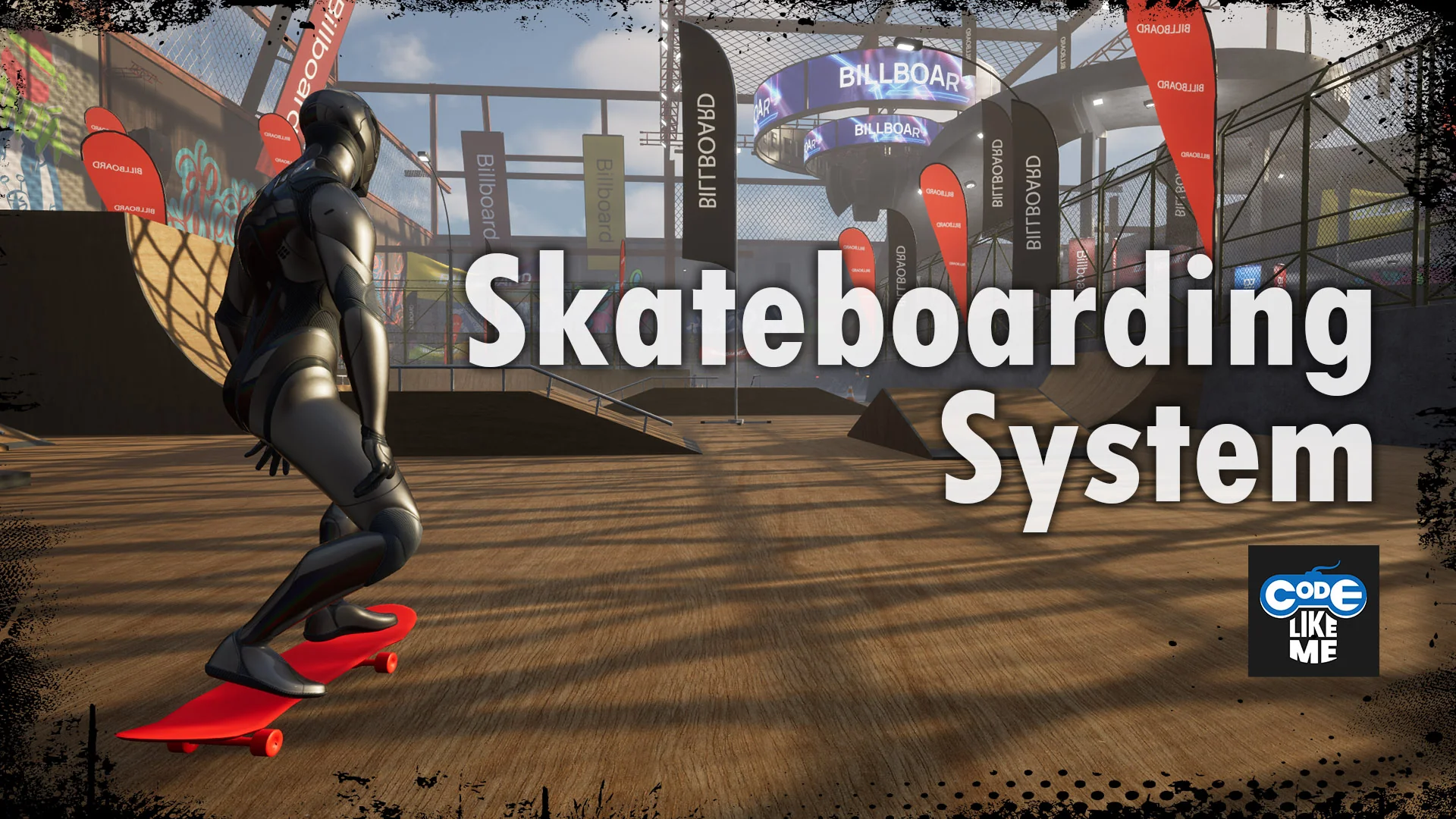
Skateboarding in a game is 1 of those mechanics that either feels natural or falls apart. The Skateboarding System for Unreal Engine aims for the 1st category. Created by the developer, it is a complete Blueprint-based setup with 1 example Demo Level, a tutorial, and a preview. The system is positioned for universal game use, meaning any genre can adopt it without heavy reprogramming.
What the Single Demo Level Brings
The included Demo Level is the fastest way to experience the system. It's a contained environment that already has a skateboard and the associated logic working. You can immediately test how the board accelerates, how it turns, and how it interacts with the ground. That's a significant advantage when you're evaluating a system like this because you get direct feedback before wiring it into your own project.
The tutorial moves past the raw experience, explaining the underlying setup in a structured way. The preview is likely a quick look at the results, useful for someone who wants to see the system in motion without loading the project. Together, these 3 elements make the asset approachable for both beginners and veterans. Even if you're already comfortable with Unreal Engine, the Demo Level gives you a ready-made sandbox for testing tweaks and modifications without building a new stage from scratch.
Blueprint, Script, and Simulation Under the Hood
The asset's tags are small but telling. Blueprint points to Unreal Engine's visual scripting system. This means the logic is stored as graphs made of nodes. For a developer, this is a big deal. You can see exactly how the skateboard works and modify it without writing a 1 single line of C++ code. Script reinforces that the movement is driven by written logic, not just Animation Blueprint states. Simulation suggests the skateboard obeys physics rules, which is essential for a vehicle-like prop. Industrial might describe the intended aesthetic or the systemic, machine-like structure of the Blueprint graphs. These tags collectively describe a system that is open, adjustable, and physics-aware.
Because everything is Blueprint-driven, you have the flexibility to alter the flow without rebuilding entire modules. Open the graphs, trace the nodes, and identify which values control acceleration, rotation, or surface feedback. That kind of transparency is invaluable when you're integrating an asset into a project that already has its own custom movement logic. It also makes the system a useful learning resource for developers who want to understand how skateboarding mechanics are typically scripted in Unreal Engine.
Genre Freedom and Creative Placement
The developer's claim that the system works for any game type is not just a selling phrase. In practice, a skateboard can fit into many game worlds. An open-world crime game could use it as a fast travel method through city streets. A fantasy Role-Playing Game (RPG) could include a skateboard as a rare vehicle on magical stone pathways. Even a horror game might use it for a chase sequence, where the player's only escape is a skateboard. The Demo Level serves as a neutral ground to test these ideas before you replace the demo assets with your own production art.
Since the system is not pinned to a specific genre, you can treat it as a core mechanic or a supplementary part of a larger gameplay suite. The skateboard could be a transportation option, a timed challenge, or a way to reach areas that are otherwise inaccessible. The same Blueprint structure that makes it easy to integrate also makes it easy to extend, so you can attach custom events or triggers to the skateboard.
Compatibility Beyond the Basic Gameplay
In addition to the skateboarding logic, the system is compatible with the Animal VFX pack. That compatibility detail expands the creative options. Imagine a fantasy scene where an enraged animal leaps at a skateboarder, with Particle Effects and visual flair. Or a wildlife documentary style game where the skateboard is used among animal-shaped vehicles or characters. The fact that these 2 assets can coexist means you don't have to worry about major conflicts when placing them in the same Level. It's a subtle but useful piece of information when planning a project's asset list.
For developers who like to mix and match marketplace assets, this compatibility note reduces uncertainty. You can bring in the Skateboarding System for its movement logic and drop in the Animal VFX pack for environmental or character-based effects, trusting that they won't fight with each other. That kind of plug-and-play behavior is often what separates a smooth pipeline from a debugging marathon.
A Starting Point That Keeps the Door Open
The Skateboarding System is not a finished game, but that's not its purpose. It's a functional starting block. The example Demo Level lets you learn the mechanics, the tutorial explains the workflow, and the Blueprint structure lets you iterate. For a developer who wants skateboarding gameplay without dedicating weeks to custom physics and controls, this is a reason to take a look. For a studio that needs a temporary placeholder for a skateboard mechanic while developing other systems, it can also serve that role.
The system's compatibility with other assets and its genre-agnostic design make it a flexible addition to an Unreal Engine project. Whether you're aiming for a polished skateboard title, a side activity in a larger game, or a prototype for an experimental concept, the Skateboarding System gives you a working foundation to build on.
 Vehicles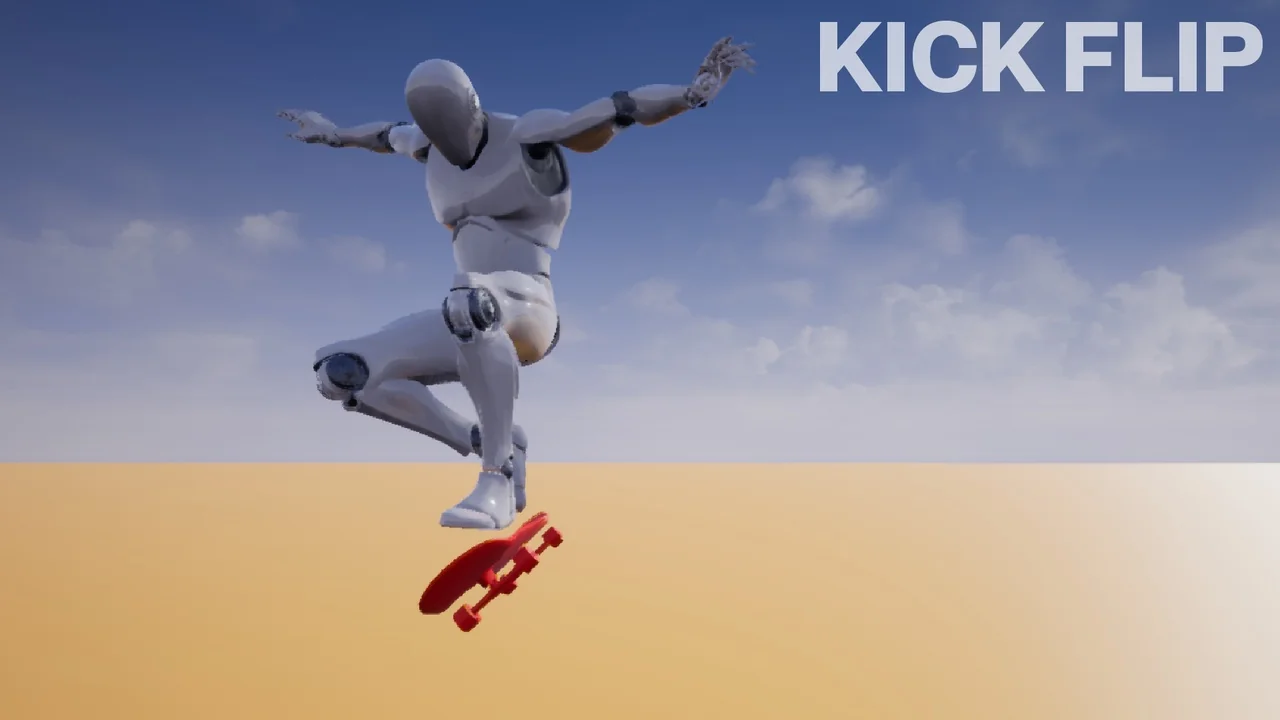
 Vehicles
 Vehicles
 Vehicles