"b00678cacce53329"{"id":"1002833","slug":"sci-fi-ui-fx","title":"Sci Fi UI FX","category":"Variety","engine":"4.22+,5.0+","assetVersion":"","engineVersion":"Engine Version: 4.22+,5.0+","tag":"Variety","accent":"blue","visual":"mech","summary":"Sci Fi UI FX provides 46 packed RGB textures, 38 particle systems, 90 customizable materials, and 5 blueprints for building realistic in-game screens.","platform":"Unreal Engine","indexPolicy":"index","publishedAt":"2026-11-20T12:12:24.063Z","updatedAt":"2026-11-20T12:12:24.063Z","sourceNotes":[],"fileContents":[],"compatibility":["Unreal Engine","Engine Version: 4.22+,5.0+"],"featuredImage":{"alt":"Sci Fi UI FX","src":"/wp-content/uploads/published/2026/11/d6c40f68d948-f5cc04f2-a025-4492-ab61-370d92718d4d-d94e5952bc.webp"},"fileSizeBytes":49048779,"hasDownloadLink":true,"downloads":0,"terms":[{"taxonomy":"category","slug":"variety-vfx","name":"Variety"}],"galleryImages":[{"src":"/wp-content/uploads/published/2026/11/145448da50cb-1db00e43-ac75-481d-a73b-d1eeb414c277-bb5fe1f08f.webp","alt":"Sci Fi UI FX"},{"src":"/wp-content/uploads/published/2026/11/afc08976c421-49198cc0-9434-4326-a77d-5f39dcc5a753-7971785490.webp","alt":"Sci Fi UI FX"},{"src":"/wp-content/uploads/published/2026/11/c526e84ff314-daf8615b-f823-4b50-a0c1-983bcc705549-f00914ed6b.webp","alt":"Sci Fi UI FX"},{"src":"/wp-content/uploads/published/2026/11/b8a3d4efa2bf-669cfc40-8003-4173-9cec-b2d9e71282bb-14b3b57187.webp","alt":"Sci Fi UI FX"},{"src":"/wp-content/uploads/published/2026/11/9dee672e26e8-398a5da7-3a5e-404c-a1c5-bde9f9892afa-3f32f6c038.webp","alt":"Sci Fi UI FX"},{"src":"/wp-content/uploads/published/2026/11/af7a2ff1b834-ae26cbc9-21db-4f4f-bd54-6b8bcb0c2436-71147a12bc.webp","alt":"Sci Fi UI FX"},{"src":"/wp-content/uploads/published/2026/11/324a1e396a9f-29c7be7a-e621-47b0-916d-7b7506e57b85-99607b5de0.webp","alt":"Sci Fi UI FX"},{"src":"/wp-content/uploads/published/2026/11/e3e990986851-30820986-4a99-4161-ac00-965f24997331-f422485c2b.webp","alt":"Sci Fi UI FX"},{"src":"/wp-content/uploads/published/2026/11/20099e3e5964-9379a751-938a-42b9-a10d-b53a81406c4c-9b68a8f0ac.webp","alt":"Sci Fi UI FX"},{"src":"/wp-content/uploads/published/2026/11/5388da6e7dd5-940df0e5-8e1a-4eec-b008-ff4d961de1b1-38f19e677b.webp","alt":"Sci Fi UI FX"}],"accessPanel":{"kind":"resource","title":"Get this resource","safetyNote":"Resources are manually reviewed before listing to improve quality and reduce obvious risks.","fileName":"Content.7z","resourceType":"Resource archive","versions":[]},"contentHtml":"\u003ch2\u003eConstructing Realistic Sci Fi Terminal Monitors\u003c/h2\u003e\u003cp\u003ePopulating environmental set pieces with believable diagnostic readouts, console interfaces, and holographic terminals is a fundamental requirement in futuristic level design. When filling extensive research facilities, industrial installations, or starship bridges, set dressers frequently face the issue of repetitive visuals if terminal displays rely on static, unvarying screen planes. Sci Fi UI FX directly addresses this production requirement by supplying a modular library of interface elements configured specifically for the creation of sci-fi screens and monitors.\u003c/p\u003e\u003cp\u003eRather than presenting locked, non-adjustable graphics, the assets within this package are explicitly set up to be customizable and combined to create unique screens for your project. This design philosophy allows individual visual components to be mixed, matched, and rearranged across multiple monitor frames, avoiding the look of cloned terminal stations. By dividing screen graphics into distinct structural pieces, artists can establish visual cohesion across an entire environment while ensuring that individual consoles display distinct operational data, radar screens, status trackers, and system diagnostics.\u003c/p\u003e\u003cp\u003eCarrying a realistic visual aesthetic, the collection is tailored to match realistic art directions where computer displays must feel practical and functional within their designated game worlds. The balance between technical screen layouts, emissive surface materials, and subtle animated FX elements produces displays that integrate seamlessly into complex mechanical set pieces and physical console housings.\u003c/p\u003e\u003ch2\u003eChannel-Packed RGB Textures for UI Display Shaders\u003c/h2\u003e\u003cp\u003eInterface displays in real-time engines demand efficient texture management to maintain high fidelity without unnecessarily consuming texture memory pools. Sci Fi UI FX utilizes a channel-packed texture workflow, supplying 46 grey packed RGB textures engineered to drive multi-layered shader networks.\u003c/p\u003e\u003cp\u003eIn a grey packed RGB texture configuration, distinct grayscale masks and graphical interface components are isolated into the individual red, green, and blue color channels of a single texture file. Instead of loading separate grayscale maps for border frames, grid lines, digital text blocks, and technical symbols, three separate interface elements are stored within one shared RGB image. Shader networks sample these channels independently, isolating the red, green, or blue channel data through component masks.\u003c/p\u003e\u003cp\u003eThis channel-packing method unlocks significant artistic control directly inside screen materials. Technical artists can isolate a grid element from the green channel, apply specific tiling coordinates and tint it with a subtle accent hue, while concurrently sampling a prominent diagnostic bracket from the red channel with distinct emissive scaling. The 46 grey packed textures provide a substantial vocabulary of geometric lines, circular reticles, numeric readouts, waveform charts, and data panels, enabling countless visual combinations across display surfaces without requiring custom texture exports for every unique monitor in a scene.\u003c/p\u003e\u003ch2\u003eDynamic FX Integration Using Particle Systems\u003c/h2\u003e\u003cp\u003eSurface shaders provide foundational interface graphics, but active computer displays and volumetric diagnostic devices rely on motion to convey active computational processing. To bridge the gap between static monitor planes and reactive digital hardware, the package includes 38 particle systems configured to augment screen surfaces with dynamic motion.\u003c/p\u003e\u003cp\u003eThese 38 particle systems introduce layered movement directly over and around the monitor screens. Rather than depending exclusively on looping video playback or flat texture pans, real-time particle emitters allow digital artifacts, scanning lines, pulsing indicator points, and holographic elements to respond dynamically within the 3D scene. The particle effects complement underlying screen materials, establishing physical depth between the display glass, the illuminated UI data, and ambient optical feedback.\u003c/p\u003e\u003cp\u003eBecause the particle systems operate in real time, they retain clean visual fidelity at diverse camera angles and close-up player inspection. Combining the 38 particle systems with customizable screen materials allows level designers to indicate terminal operational states—such as idle system standby, active network scans, alert conditions, or hardware malfunctions—by layering specific particle FX directly over existing console setups.\u003c/p\u003e\u003ch2\u003eConfiguring Materials and Instances for Custom UI Setups\u003c/h2\u003e\u003cp\u003eThe visual versatility of Sci Fi UI FX relies heavily on its shader architecture. The package includes 90 combined materials and material instances ready to be customized to your liking, establishing an accessible pipeline for tailoring screen aesthetics across diverse game environments.\u003c/p\u003e\u003cp\u003eThe material architecture is structured around core master materials that govern mathematical operations, texture blending rules, and emissive properties. Beneath these parent shaders, pre-configured material instances expose focused parameters that let artists alter screen properties without modifying underlying shader graphs. By adjusting exposed instance values, developers can fine-tune color schemes, adjust glow strength, control texture tiling rates, and change channel mask assignments to transform a standard display material into a tactical radar, medical monitor, system telemetry log, or warning screen.\u003c/p\u003e\u003cp\u003eHaving 90 combined materials and instances immediately available significantly accelerates set dressing. Production teams can rapidly assign these instances across terminal meshes, applying unique color palettes to distinguish departments within a facility—such as clinical blues for science labs, amber indicators for heavy industrial consoles, and vivid alerts for tactical command stations—while maintaining consistent shader performance and technical behavior throughout the project.\u003c/p\u003e\u003ch2\u003eBlueprint Architecture for Preconfigured Sci Fi Displays\u003c/h2\u003e\u003cp\u003eManually assembling monitor meshes, configuring multi-layered material instances, aligning texture channels, and placing particle emitters can be time-consuming when staging vast interactive areas. To provide functional reference points and rapid deployment options, the package contains 5 blueprints with assets already set up.\u003c/p\u003e\u003cp\u003eThese 5 blueprints demonstrate how the 46 grey packed RGB textures, 90 material assets, and 38 particle systems fit together into complete, functioning display assemblies. Level designers can drag these pre-assembled blueprints directly into environments to populate command centers, research stations, and cockpit layouts with fully realized screens out of the box. The blueprint actors bundle the necessary display components together, ensuring that surface materials and particle effects are correctly aligned and scaled relative to monitor geometry.\u003c/p\u003e\u003cp\u003eBeyond serving as ready-to-use props, the blueprints provide an educational framework for understanding how to combine the package components into custom setups. By inspecting how materials and particle emitters are organized within the blueprint hierarchy, technical artists can construct their own bespoke screen blueprints tailored to proprietary hardware meshes, unique console form factors, and game-specific terminal interactions.\u003c/p\u003e\u003ch2\u003ePractical Terminal Assembly and Screen Customization\u003c/h2\u003e\u003cp\u003eThe primary advantage of Sci Fi UI FX lies in its modular approach to screen construction. Because the assets are explicitly built to be customizable and combined, creators are not restricted to rigid, pre-baked monitor displays. Instead, the pack acts as a comprehensive kit for engineering tailored technological interfaces.\u003c/p\u003e\u003cp\u003eIn practice, assembling a unique monitor configuration involves pairing selected grey packed RGB textures with configured material instances to establish the primary screen layout. Artists can define base panel colors, layer secondary informational text, and introduce high-contrast emissive highlights using the independent texture channels. Once the baseline material instance is applied to the monitor mesh, matching particle systems from the library of 38 effects can be positioned to supply active scanning sweeps, floating holographic readouts, or atmospheric digital noise. The finished setup can then be stored within a custom blueprint or integrated directly into larger architectural console actors, providing high visual variation across extensive sci-fi environments while relying on a unified, optimized asset foundation.\u003c/p\u003e\n\n\u003ch2\u003eMore From The Same Workflow\u003c/h2\u003e\n\u003cul\u003e\n\u003cli\u003e\u003ca href=\"https://3dcghub.com/sci-fi-hud-effects/\" rel=\"noopener noreferrer\"\u003eSci-fi HUD Effects\u003c/a\u003e\u003c/li\u003e\n\u003cli\u003e\u003ca href=\"https://3dcghub.com/abstract-fx-meshes/\" rel=\"noopener noreferrer\"\u003eAbstract FX: Meshes\u003c/a\u003e\u003c/li\u003e\n\u003cli\u003e\u003ca href=\"https://3dcghub.com/sci-fi-fx/\" rel=\"noopener noreferrer\"\u003eSci Fi FX\u003c/a\u003e\u003c/li\u003e\n\u003cli\u003e\u003ca href=\"https://3dcghub.com/niagara-sci-fi-starter-vfx-pack/\" rel=\"noopener noreferrer\"\u003eNiagara Sci-Fi Starter VFX Pack\u003c/a\u003e\u003c/li\u003e\n\u003cli\u003e\u003ca href=\"https://3dcghub.com/mega-sci-fi-particle-fx-bundle-3in1/\" rel=\"noopener noreferrer\"\u003eMega Sci-Fi Particle FX Bundle 3in1\u003c/a\u003e\u003c/li\u003e\n\u003c/ul\u003e","contentTextLength":8715,"navigation":{"current":47,"total":4797,"previous":{"id":"1002834","slug":"shapes-fx-pack","title":"Shapes FX Pack","category":"Shaders","platform":"Unreal Engine","updatedAt":"2026-11-20T12:13:18.651Z"},"next":{"id":"1002832","slug":"sci-fi-fx","title":"Sci Fi FX","category":"Variety","platform":"Unreal Engine","updatedAt":"2026-11-20T12:02:17.924Z"}},"relatedResources":[{"id":"1000480","slug":"sci-fi-hud-effects","title":"Sci-fi HUD Effects","category":"Variety","engine":"4.26+,5.0+","assetVersion":"","engineVersion":"Engine Version: 4.26+,5.0+","tag":"Variety","accent":"blue","visual":"mech","summary":"Unreal Engine package of animated HUD effects built from blueprints, skeletal meshes, 2K sprite textures, and Niagara systems for device screens and holograms.","platform":"Unreal Engine","indexPolicy":"index","publishedAt":"2026-07-12T06:01:25.891Z","updatedAt":"2026-07-12T06:01:25.891Z","sourceNotes":[],"fileContents":[],"compatibility":["Unreal Engine","Engine Version: 4.26+,5.0+"],"featuredImage":{"alt":"Sci-fi HUD Effects","src":"/wp-content/uploads/published/2026/07/b83b3e2c775d-4026d93b-0655-4e84-91a7-0c636ea5f2d2-5621ce40c7.webp"},"fileSizeBytes":134276365,"hasDownloadLink":true,"downloads":1},{"id":"16992","slug":"abstract-fx-meshes","title":"Abstract FX: Meshes","category":"Variety","engine":"5.0+","assetVersion":"Engine version: 5.0+","engineVersion":"4.26","tag":"Variety","accent":"blue","visual":"character","summary":"Enhance your projects with Abstract FX: Meshes, a collection of 15 unique visual effects. Designed for Niagara, these optimized loops are perfect for cinematic backgrounds and menu visuals.","platform":"Unreal Engine","indexPolicy":"noindex","publishedAt":"2026-03-13T13:21:08.000Z","updatedAt":"2026-04-19T15:43:39.000Z","sourceNotes":[],"fileContents":[],"compatibility":["Unreal Engine","Engine version: 5.0+"],"featuredImage":{"alt":"Abstract FX: Meshes","src":"https://3dcghub.com/wp-content/uploads/2026/03/ce24b8e0-b450-4e99-9b44-d2c03972bd4d.webp"},"fileSizeBytes":35464252,"hasDownloadLink":true,"downloads":0},{"id":"1002832","slug":"sci-fi-fx","title":"Sci Fi FX","category":"Variety","engine":"4.17+,5.0+","assetVersion":"","engineVersion":"Engine Version: 4.17+,5.0+","tag":"Variety","accent":"blue","visual":"mech","summary":"Explore the Sci Fi FX collection featuring holograms, monitor materials, energy orbs, 3 teleport FX, 2048x2048 RGB textures, and 11 custom meshes.","platform":"Unreal Engine","indexPolicy":"index","publishedAt":"2026-11-20T12:02:17.924Z","updatedAt":"2026-11-20T12:02:17.924Z","sourceNotes":[],"fileContents":[],"compatibility":["Unreal Engine","Engine Version: 4.17+,5.0+"],"featuredImage":{"alt":"Sci Fi FX","src":"/wp-content/uploads/published/2026/11/4580dcb4c070-65db2c85-c556-4598-a219-576d5a449a08-01c01af619.webp"},"fileSizeBytes":41935741,"hasDownloadLink":true,"downloads":0}]}
Resource screenshots
1 / 10
Join our channel
Follow 3DCGHUB on Telegram for new resource drops, migration updates, and community notices.
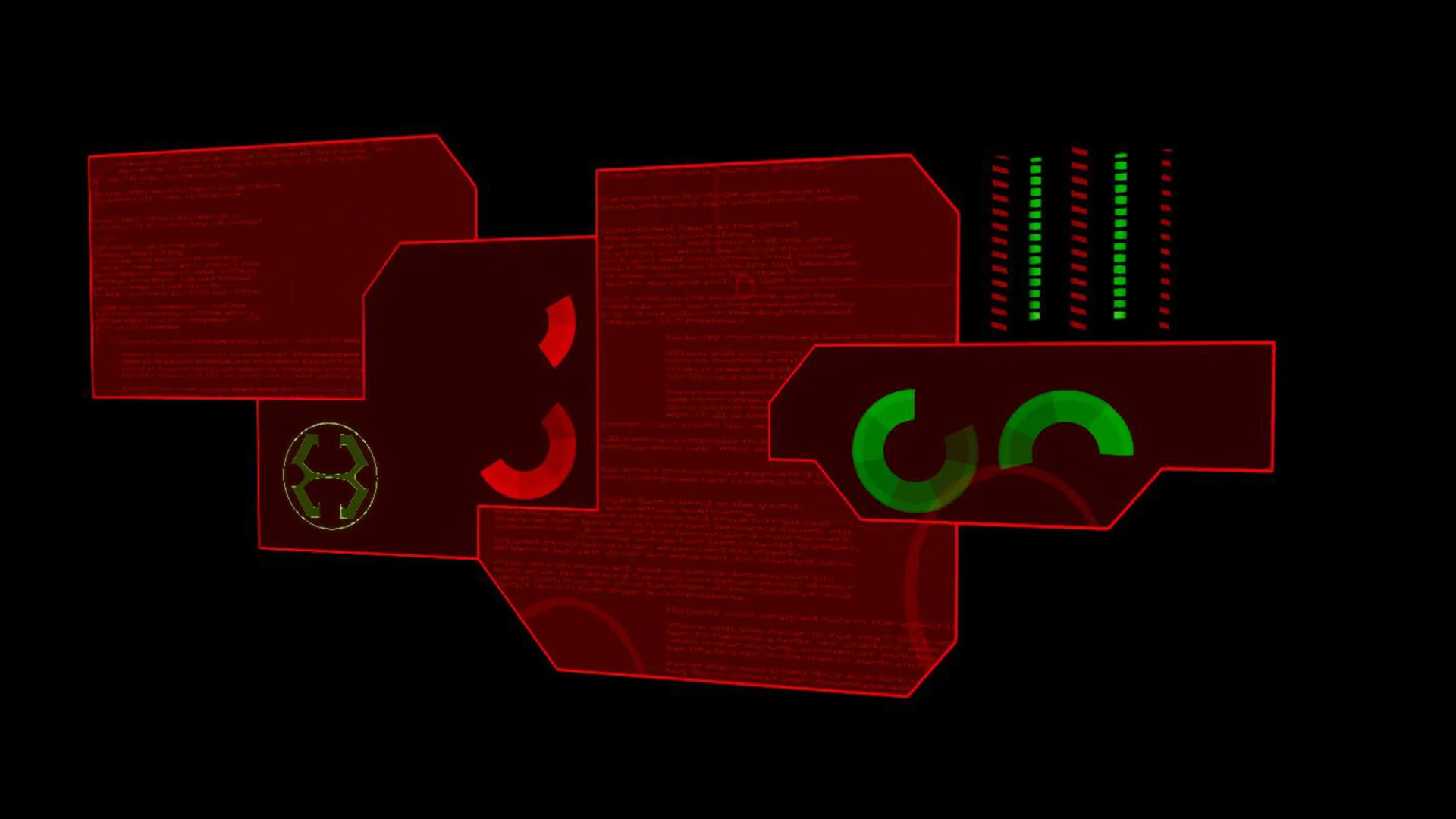
Populating environmental set pieces with believable diagnostic readouts, console interfaces, and holographic terminals is a fundamental requirement in futuristic level design. When filling extensive research facilities, industrial installations, or starship bridges, set dressers frequently face the issue of repetitive visuals if terminal displays rely on static, unvarying screen planes. Sci Fi UI FX directly addresses this production requirement by supplying a modular library of interface elements configured specifically for the creation of sci-fi screens and monitors.
Rather than presenting locked, non-adjustable graphics, the assets within this package are explicitly set up to be customizable and combined to create unique screens for your project. This design philosophy allows individual visual components to be mixed, matched, and rearranged across multiple monitor frames, avoiding the look of cloned terminal stations. By dividing screen graphics into distinct structural pieces, artists can establish visual cohesion across an entire environment while ensuring that individual consoles display distinct operational data, radar screens, status trackers, and system diagnostics.
Carrying a realistic visual aesthetic, the collection is tailored to match realistic art directions where computer displays must feel practical and functional within their designated game worlds. The balance between technical screen layouts, emissive surface materials, and subtle animated FX elements produces displays that integrate seamlessly into complex mechanical set pieces and physical console housings.
Channel-Packed RGB Textures for UI Display Shaders
Interface displays in real-time engines demand efficient texture management to maintain high fidelity without unnecessarily consuming texture memory pools. Sci Fi UI FX utilizes a channel-packed texture workflow, supplying 46 grey packed RGB textures engineered to drive multi-layered shader networks.
In a grey packed RGB texture configuration, distinct grayscale masks and graphical interface components are isolated into the individual red, green, and blue color channels of a single texture file. Instead of loading separate grayscale maps for border frames, grid lines, digital text blocks, and technical symbols, three separate interface elements are stored within one shared RGB image. Shader networks sample these channels independently, isolating the red, green, or blue channel data through component masks.
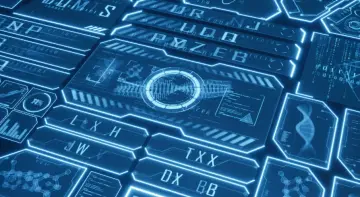
This channel-packing method unlocks significant artistic control directly inside screen materials. Technical artists can isolate a grid element from the green channel, apply specific tiling coordinates and tint it with a subtle accent hue, while concurrently sampling a prominent diagnostic bracket from the red channel with distinct emissive scaling. The 46 grey packed textures provide a substantial vocabulary of geometric lines, circular reticles, numeric readouts, waveform charts, and data panels, enabling countless visual combinations across display surfaces without requiring custom texture exports for every unique monitor in a scene.
Dynamic FX Integration Using Particle Systems
Surface shaders provide foundational interface graphics, but active computer displays and volumetric diagnostic devices rely on motion to convey active computational processing. To bridge the gap between static monitor planes and reactive digital hardware, the package includes 38 particle systems configured to augment screen surfaces with dynamic motion.
These 38 particle systems introduce layered movement directly over and around the monitor screens. Rather than depending exclusively on looping video playback or flat texture pans, real-time particle emitters allow digital artifacts, scanning lines, pulsing indicator points, and holographic elements to respond dynamically within the 3D scene. The particle effects complement underlying screen materials, establishing physical depth between the display glass, the illuminated UI data, and ambient optical feedback.
Because the particle systems operate in real time, they retain clean visual fidelity at diverse camera angles and close-up player inspection. Combining the 38 particle systems with customizable screen materials allows level designers to indicate terminal operational states—such as idle system standby, active network scans, alert conditions, or hardware malfunctions—by layering specific particle FX directly over existing console setups.
Configuring Materials and Instances for Custom UI Setups
The visual versatility of Sci Fi UI FX relies heavily on its shader architecture. The package includes 90 combined materials and material instances ready to be customized to your liking, establishing an accessible pipeline for tailoring screen aesthetics across diverse game environments.
The material architecture is structured around core master materials that govern mathematical operations, texture blending rules, and emissive properties. Beneath these parent shaders, pre-configured material instances expose focused parameters that let artists alter screen properties without modifying underlying shader graphs. By adjusting exposed instance values, developers can fine-tune color schemes, adjust glow strength, control texture tiling rates, and change channel mask assignments to transform a standard display material into a tactical radar, medical monitor, system telemetry log, or warning screen.
Having 90 combined materials and instances immediately available significantly accelerates set dressing. Production teams can rapidly assign these instances across terminal meshes, applying unique color palettes to distinguish departments within a facility—such as clinical blues for science labs, amber indicators for heavy industrial consoles, and vivid alerts for tactical command stations—while maintaining consistent shader performance and technical behavior throughout the project.
Blueprint Architecture for Preconfigured Sci Fi Displays
Manually assembling monitor meshes, configuring multi-layered material instances, aligning texture channels, and placing particle emitters can be time-consuming when staging vast interactive areas. To provide functional reference points and rapid deployment options, the package contains 5 blueprints with assets already set up.
These 5 blueprints demonstrate how the 46 grey packed RGB textures, 90 material assets, and 38 particle systems fit together into complete, functioning display assemblies. Level designers can drag these pre-assembled blueprints directly into environments to populate command centers, research stations, and cockpit layouts with fully realized screens out of the box. The blueprint actors bundle the necessary display components together, ensuring that surface materials and particle effects are correctly aligned and scaled relative to monitor geometry.
Beyond serving as ready-to-use props, the blueprints provide an educational framework for understanding how to combine the package components into custom setups. By inspecting how materials and particle emitters are organized within the blueprint hierarchy, technical artists can construct their own bespoke screen blueprints tailored to proprietary hardware meshes, unique console form factors, and game-specific terminal interactions.
Practical Terminal Assembly and Screen Customization
The primary advantage of Sci Fi UI FX lies in its modular approach to screen construction. Because the assets are explicitly built to be customizable and combined, creators are not restricted to rigid, pre-baked monitor displays. Instead, the pack acts as a comprehensive kit for engineering tailored technological interfaces.
In practice, assembling a unique monitor configuration involves pairing selected grey packed RGB textures with configured material instances to establish the primary screen layout. Artists can define base panel colors, layer secondary informational text, and introduce high-contrast emissive highlights using the independent texture channels. Once the baseline material instance is applied to the monitor mesh, matching particle systems from the library of 38 effects can be positioned to supply active scanning sweeps, floating holographic readouts, or atmospheric digital noise. The finished setup can then be stored within a custom blueprint or integrated directly into larger architectural console actors, providing high visual variation across extensive sci-fi environments while relying on a unified, optimized asset foundation.
 Variety
 Variety
 Variety