"b00678cacce53329"{"id":"1002832","slug":"sci-fi-fx","title":"Sci Fi FX","category":"Variety","engine":"4.17+,5.0+","assetVersion":"","engineVersion":"Engine Version: 4.17+,5.0+","tag":"Variety","accent":"blue","visual":"mech","summary":"Explore the Sci Fi FX collection featuring holograms, monitor materials, energy orbs, 3 teleport FX, 2048x2048 RGB textures, and 11 custom meshes.","platform":"Unreal Engine","indexPolicy":"index","publishedAt":"2026-11-20T12:02:17.924Z","updatedAt":"2026-11-20T12:02:17.924Z","sourceNotes":[],"fileContents":[],"compatibility":["Unreal Engine","Engine Version: 4.17+,5.0+"],"featuredImage":{"alt":"Sci Fi FX","src":"/wp-content/uploads/published/2026/11/4580dcb4c070-65db2c85-c556-4598-a219-576d5a449a08-01c01af619.webp"},"fileSizeBytes":41935741,"hasDownloadLink":true,"downloads":0,"terms":[{"taxonomy":"category","slug":"variety-vfx","name":"Variety"}],"galleryImages":[{"src":"/wp-content/uploads/published/2026/11/cf01b038fc36-c36a4de0-2b52-4b20-94e2-953cf0821a72-a5dd178744.webp","alt":"Sci Fi FX"},{"src":"/wp-content/uploads/published/2026/11/eab06e8090bb-2d72b0f9-3a08-49b6-9185-902286e8c006-5904359fe8.webp","alt":"Sci Fi FX"},{"src":"/wp-content/uploads/published/2026/11/2e6d58b894a1-5d7c5039-64b7-4565-a088-1fd0d1116331-893e1b1ac7.webp","alt":"Sci Fi FX"},{"src":"/wp-content/uploads/published/2026/11/201eab2231d0-e9cbc5c2-fa63-4f60-9363-221bfa5ae48e-5010eca80d.webp","alt":"Sci Fi FX"},{"src":"/wp-content/uploads/published/2026/11/b0ddb9699db6-6f8cad82-32f7-450f-a913-fbc5844efa84-ec66cb3ff9.webp","alt":"Sci Fi FX"}],"accessPanel":{"kind":"resource","title":"Get this resource","safetyNote":"Resources are manually reviewed before listing to improve quality and reduce obvious risks.","fileName":"Content.7z","resourceType":"Resource archive","versions":[]},"contentHtml":"\u003ch2\u003eCore Visual Elements of Sci Fi FX\u003c/h2\u003e\n\u003cp\u003eFuturistic environments depend heavily on emissive visual cues to communicate technology, status, and spatial mechanics. Sci Fi FX gathers a targeted collection of visual assets tailored for high-tech settings, focusing on realistic visual execution. The package includes holograms, dedicated hologram bases, monitor screen FX with corresponding materials, free-floating energy orbs, and three teleport FX. Rather than offering abstract or disconnected elements, these visual assets address specific operational fixtures common to science fiction interiors, command centers, research labs, and transit hubs.\u003c/p\u003e\n\u003cp\u003eEach included category serves a distinct functional role within a scene. Holograms generate translucent, layered projections suspended in space, while the hologram bases provide the grounded mechanical hardware required to emit those projections believably. Monitor screen FX simulate active terminals, computer readouts, and digital displays. Energy orbs offer concentrated, spherical manifestations of raw power suitable for reactors or scientific apparatus, and the three teleport effects handle spatial transit visual sequences across different staging scenarios.\u003c/p\u003e \u003ch2\u003eHolographic Systems and Monitor Displays in Sci Fi FX\u003c/h2\u003e\n\u003cp\u003eHolographic projections in futuristic environments often look disconnected if they float without dedicated hardware. Sci Fi FX pairs hologram projections directly with physical hologram bases selected from the package's 11 custom meshes. By seating projection visuals directly over physical emitters, scenes maintain a realistic balance between tangible machinery and luminous visual effects. The volumetric appearance of the holograms complements the structured geometric look of the bases, letting environment designers place functional data kiosks, tactical planning tables, or ambient communication points across a level.\u003c/p\u003e\n\u003cp\u003eAlongside free-standing holographic projections, monitor screen FX and materials provide surface-level digital details for consoles, wall panels, and terminal stations. These monitor materials simulate illuminated interfaces and dynamic readout effects directly on geometry. Because science fiction sets often feature extensive control rooms or cockpit stations, having dedicated monitor screen FX allows artists to turn simple display geometry into convincing interactive or passive workstation terminals without creating separate interface frameworks from scratch.\u003c/p\u003e \u003ch2\u003eTeleport FX Variations and Radiant Energy Orbs\u003c/h2\u003e\n\u003cp\u003eDynamic movement and power generation are addressed through the inclusion of three separate teleport FX and spherical energy effects. Teleportation in science fiction ranges from instantaneous visual shifts to staged matter dispersal, and the inclusion of three distinct teleport variants provides alternative visual styles for character entrances, transit portals, or automated cargo relay stations. Each variation presents a different visual signature, giving developers options to differentiate between various factions, technology tiers, or functional zones within the same world.\u003c/p\u003e\n\u003cp\u003eComplementing the directional motion of the teleport systems, the energy orbs provide contained, omnidirectional visual anomalies. These orbs function as self-contained power nodes, core containment units, or floating anomalous items that demand focal attention. The materials controlling the energy orbs preserve a realistic emissive intensity, ensuring they illuminate nearby environment geometry and read as intense concentrations of controlled or volatile energy. Positioned inside engine bays, propulsion systems, or laboratory containment chambers, the orbs establish immediate visual stakes within industrial or scientific sectors.\u003c/p\u003e \u003ch2\u003eMaterial Functions and Texture Architecture\u003c/h2\u003e\n\u003cp\u003eThe visual variety across Sci Fi FX is driven by a structured shading framework consisting of 39 materials and material instances, supported by 4 reusable material functions. Material functions act as centralized logic blocks, allowing core visual behaviors—such as scanlines, flickering, holographic interference, or energy pulsing—to be shared and maintained across multiple parent materials and instances. This modular shading setup lets artists adjust visual parameters across the 39 materials and material instances without breaking the underlying visual consistency.\u003c/p\u003e\n\u003cp\u003eUnderpinning the materials are 22 original RGB textures authored at 2048x2048 resolution. These high-resolution texture maps preserve crisp edge clarity, detailed pattern generation, and subtle surface variations even when inspected at close camera distances. The 2048x2048 resolution prevents screen elements, projection lines, and base surface structures from softening or blurring when players approach terminals or hologram stations directly. Combined with the 11 custom meshes, the texture and material pipeline provides the necessary density to uphold the package's realistic tag across both large-scale structures and fine surface details.\u003c/p\u003e \u003ch2\u003eInspecting Effects within the Display Room Environment\u003c/h2\u003e\n\u003cp\u003eEvaluating visual effects in an empty scene often leads to inaccurate calibration of emissive brightness, transparency, and mesh proportions. Sci Fi FX resolves this workflow challenge by including a dedicated display room where every included effect is arranged in its own isolated presentation setup. This showcase space allows artists and developers to immediately see how the holograms align with the hologram bases, how the monitor screen materials catch ambient lighting, and how the energy orbs and teleport FX read against architectural surfaces.\u003c/p\u003e\n\u003cp\u003eHaving each effect isolated in its own display within the provided room streamlines the asset review process. Technical artists can inspect individual material instance settings, examine the behavior of the 4 material functions in real time, and verify how the 22 original 2048x2048 RGB textures perform under consistent interior lighting. This organized layout simplifies the process of testing parameter changes across the 39 materials and material instances before migrating specific meshes, screen FX, or teleport sequences directly into production levels.\u003c/p\u003e\n\n\u003ch2\u003eExplore Similar Assets\u003c/h2\u003e\n\u003cul\u003e\n\u003cli\u003e\u003ca href=\"https://3dcghub.com/niagara-sci-fi-starter-vfx-pack/\" rel=\"noopener noreferrer\"\u003eNiagara Sci-Fi Starter VFX Pack\u003c/a\u003e\u003c/li\u003e\n\u003cli\u003e\u003ca href=\"https://3dcghub.com/mega-sci-fi-particle-fx-bundle-3in1/\" rel=\"noopener noreferrer\"\u003eMega Sci-Fi Particle FX Bundle 3in1\u003c/a\u003e\u003c/li\u003e\n\u003cli\u003e\u003ca href=\"https://3dcghub.com/sci-fi-hud-effects/\" rel=\"noopener noreferrer\"\u003eSci-fi HUD Effects\u003c/a\u003e\u003c/li\u003e\n\u003cli\u003e\u003ca href=\"https://3dcghub.com/catalyst-sci-fi-vfx-pack/\" rel=\"noopener noreferrer\"\u003eCatalyst Sci Fi VFX Pack\u003c/a\u003e\u003c/li\u003e\n\u003cli\u003e\u003ca href=\"https://3dcghub.com/machinery-particle-fx/\" rel=\"noopener noreferrer\"\u003eMachinery Particle FX\u003c/a\u003e\u003c/li\u003e\n\u003c/ul\u003e","contentTextLength":6319,"navigation":{"current":48,"total":4797,"previous":{"id":"1002833","slug":"sci-fi-ui-fx","title":"Sci Fi UI FX","category":"Variety","platform":"Unreal Engine","updatedAt":"2026-11-20T12:12:24.063Z"},"next":{"id":"1002831","slug":"scan-fx","title":"Scan FX","category":"Variety","platform":"Unreal Engine","updatedAt":"2026-11-20T12:01:23.630Z"}},"relatedResources":[{"id":"1002833","slug":"sci-fi-ui-fx","title":"Sci Fi UI FX","category":"Variety","engine":"4.22+,5.0+","assetVersion":"","engineVersion":"Engine Version: 4.22+,5.0+","tag":"Variety","accent":"blue","visual":"mech","summary":"Sci Fi UI FX provides 46 packed RGB textures, 38 particle systems, 90 customizable materials, and 5 blueprints for building realistic in-game screens.","platform":"Unreal Engine","indexPolicy":"index","publishedAt":"2026-11-20T12:12:24.063Z","updatedAt":"2026-11-20T12:12:24.063Z","sourceNotes":[],"fileContents":[],"compatibility":["Unreal Engine","Engine Version: 4.22+,5.0+"],"featuredImage":{"alt":"Sci Fi UI FX","src":"/wp-content/uploads/published/2026/11/d6c40f68d948-f5cc04f2-a025-4492-ab61-370d92718d4d-d94e5952bc.webp"},"fileSizeBytes":49048779,"hasDownloadLink":true,"downloads":0},{"id":"1002824","slug":"niagara-sci-fi-starter-vfx-pack","title":"Niagara Sci-Fi Starter VFX Pack","category":"Variety","engine":"4.25+,5.0+","assetVersion":"","engineVersion":"Engine Version: 4.25+,5.0+","tag":"Variety","accent":"blue","visual":"mech","summary":"A technical breakdown of the Niagara Sci-Fi Starter VFX Pack, covering 80 particle systems, scale handling, materials, meshes, and prototyping workflows.","platform":"Unreal Engine","indexPolicy":"index","publishedAt":"2026-11-20T08:01:46.751Z","updatedAt":"2026-11-20T08:01:46.751Z","sourceNotes":[],"fileContents":[],"compatibility":["Unreal Engine","Engine Version: 4.25+,5.0+"],"featuredImage":{"alt":"Niagara Sci-Fi Starter VFX Pack","src":"/wp-content/uploads/published/2026/11/04195f3fcc68-a0d8c532-4fe0-4b42-bc6c-9ce9f9c7cc25-68e9114bd6.webp"},"fileSizeBytes":230322289,"hasDownloadLink":true,"downloads":0},{"id":"1002811","slug":"mega-sci-fi-particle-fx-bundle-3in1","title":"Mega Sci-Fi Particle FX Bundle 3in1","category":"Variety","engine":"4.15+,5.0+","assetVersion":"","engineVersion":"Engine Version: 4.15+,5.0+","tag":"Variety","accent":"blue","visual":"mech","summary":"Examine the technical layout, realistic visual effects, and scene staging options inside the 34-system Mega Sci-Fi Particle FX Bundle 3in1.","platform":"Unreal Engine","indexPolicy":"index","publishedAt":"2026-11-20T07:41:29.840Z","updatedAt":"2026-11-20T07:41:29.840Z","sourceNotes":[],"fileContents":[],"compatibility":["Unreal Engine","Engine Version: 4.15+,5.0+"],"featuredImage":{"alt":"Mega Sci-Fi Particle FX Bundle 3in1","src":"/wp-content/uploads/published/2026/11/59f5c8a20250-86697ede-966e-446b-a607-1082e95befc9-0498b26cb7.webp"},"fileSizeBytes":78539712,"hasDownloadLink":true,"downloads":0}]}
Resource screenshots
1 / 5
Join our channel
Follow 3DCGHUB on Telegram for new resource drops, migration updates, and community notices.
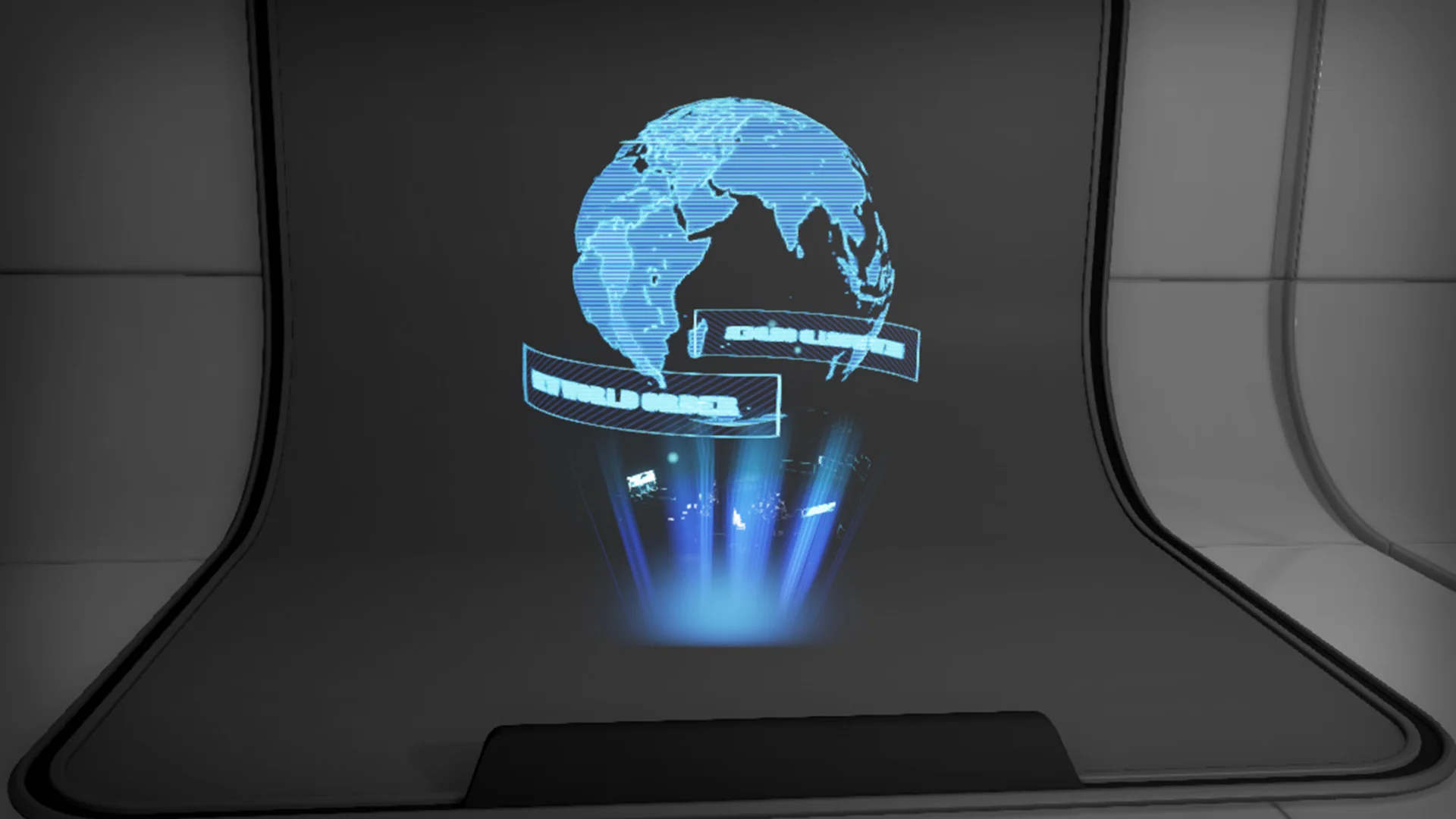
Futuristic environments depend heavily on emissive visual cues to communicate technology, status, and spatial mechanics. Sci Fi FX gathers a targeted collection of visual assets tailored for high-tech settings, focusing on realistic visual execution. The package includes holograms, dedicated hologram bases, monitor screen FX with corresponding materials, free-floating energy orbs, and three teleport FX. Rather than offering abstract or disconnected elements, these visual assets address specific operational fixtures common to science fiction interiors, command centers, research labs, and transit hubs.
Each included category serves a distinct functional role within a scene. Holograms generate translucent, layered projections suspended in space, while the hologram bases provide the grounded mechanical hardware required to emit those projections believably. Monitor screen FX simulate active terminals, computer readouts, and digital displays. Energy orbs offer concentrated, spherical manifestations of raw power suitable for reactors or scientific apparatus, and the three teleport effects handle spatial transit visual sequences across different staging scenarios.
Holographic Systems and Monitor Displays in Sci Fi FX
Holographic projections in futuristic environments often look disconnected if they float without dedicated hardware. Sci Fi FX pairs hologram projections directly with physical hologram bases selected from the package's 11 custom meshes. By seating projection visuals directly over physical emitters, scenes maintain a realistic balance between tangible machinery and luminous visual effects. The volumetric appearance of the holograms complements the structured geometric look of the bases, letting environment designers place functional data kiosks, tactical planning tables, or ambient communication points across a level.
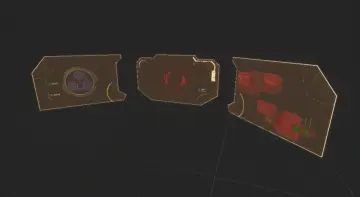
Alongside free-standing holographic projections, monitor screen FX and materials provide surface-level digital details for consoles, wall panels, and terminal stations. These monitor materials simulate illuminated interfaces and dynamic readout effects directly on geometry. Because science fiction sets often feature extensive control rooms or cockpit stations, having dedicated monitor screen FX allows artists to turn simple display geometry into convincing interactive or passive workstation terminals without creating separate interface frameworks from scratch.
Teleport FX Variations and Radiant Energy Orbs
Dynamic movement and power generation are addressed through the inclusion of three separate teleport FX and spherical energy effects. Teleportation in science fiction ranges from instantaneous visual shifts to staged matter dispersal, and the inclusion of three distinct teleport variants provides alternative visual styles for character entrances, transit portals, or automated cargo relay stations. Each variation presents a different visual signature, giving developers options to differentiate between various factions, technology tiers, or functional zones within the same world.
Complementing the directional motion of the teleport systems, the energy orbs provide contained, omnidirectional visual anomalies. These orbs function as self-contained power nodes, core containment units, or floating anomalous items that demand focal attention. The materials controlling the energy orbs preserve a realistic emissive intensity, ensuring they illuminate nearby environment geometry and read as intense concentrations of controlled or volatile energy. Positioned inside engine bays, propulsion systems, or laboratory containment chambers, the orbs establish immediate visual stakes within industrial or scientific sectors.
Material Functions and Texture Architecture
The visual variety across Sci Fi FX is driven by a structured shading framework consisting of 39 materials and material instances, supported by 4 reusable material functions. Material functions act as centralized logic blocks, allowing core visual behaviors—such as scanlines, flickering, holographic interference, or energy pulsing—to be shared and maintained across multiple parent materials and instances. This modular shading setup lets artists adjust visual parameters across the 39 materials and material instances without breaking the underlying visual consistency.
Underpinning the materials are 22 original RGB textures authored at 2048x2048 resolution. These high-resolution texture maps preserve crisp edge clarity, detailed pattern generation, and subtle surface variations even when inspected at close camera distances. The 2048x2048 resolution prevents screen elements, projection lines, and base surface structures from softening or blurring when players approach terminals or hologram stations directly. Combined with the 11 custom meshes, the texture and material pipeline provides the necessary density to uphold the package's realistic tag across both large-scale structures and fine surface details.
Inspecting Effects within the Display Room Environment
Evaluating visual effects in an empty scene often leads to inaccurate calibration of emissive brightness, transparency, and mesh proportions. Sci Fi FX resolves this workflow challenge by including a dedicated display room where every included effect is arranged in its own isolated presentation setup. This showcase space allows artists and developers to immediately see how the holograms align with the hologram bases, how the monitor screen materials catch ambient lighting, and how the energy orbs and teleport FX read against architectural surfaces.
Having each effect isolated in its own display within the provided room streamlines the asset review process. Technical artists can inspect individual material instance settings, examine the behavior of the 4 material functions in real time, and verify how the 22 original 2048x2048 RGB textures perform under consistent interior lighting. This organized layout simplifies the process of testing parameter changes across the 39 materials and material instances before migrating specific meshes, screen FX, or teleport sequences directly into production levels.
 Variety
 Variety
 Variety