"82ee98b2ee2793f1"{"id":"1002446","slug":"scary-shark-assets","title":"Scary Shark Assets","category":"Characters \u0026 Creatures","engine":"4.26+,5.0+","assetVersion":"","engineVersion":"Engine Version: 4.26+,5.0+","tag":"Characters","accent":"blue","visual":"character","summary":"Scary Shark Assets delivers a rigged underwater predator, ragdoll physics, dive cage mesh, water shader, swim and bite animations, and FPS Kit support.","platform":"Unreal Engine","indexPolicy":"index","publishedAt":"2026-11-10T18:47:32.151Z","updatedAt":"2026-11-10T18:47:32.151Z","sourceNotes":[],"fileContents":[],"compatibility":["Unreal Engine","Engine Version: 4.26+,5.0+"],"featuredImage":{"alt":"Scary Shark Assets","src":"/wp-content/uploads/published/2026/11/331728ef42b8-1b149ce2-c57d-455d-b585-8867d15ef94b-ac45f39a43.webp"},"hasDownloadLink":true,"downloads":0,"terms":[{"taxonomy":"category","slug":"characters-and-creatures","name":"Characters \u0026 Creatures"}],"galleryImages":[{"src":"/wp-content/uploads/published/2026/11/5f57fca5752b-d5626ab2-078d-4836-8e06-a2c3a40c8154-4ba9fd2c50.webp","alt":"Scary Shark Assets"},{"src":"/wp-content/uploads/published/2026/11/b52d0ef77686-ed378e40-eab1-43b4-bd7b-a7540790022c-20ec0d4f08.webp","alt":"Scary Shark Assets"},{"src":"/wp-content/uploads/published/2026/11/6288fb5fed5b-2efe9201-6f63-4ce6-ab4c-256055ebf50d-4d2a4e55d6.webp","alt":"Scary Shark Assets"},{"src":"/wp-content/uploads/published/2026/11/a1e0afbd2106-13f9bcf0-3702-44b9-9277-108b8e46a66d-ca07104c80.webp","alt":"Scary Shark Assets"},{"src":"/wp-content/uploads/published/2026/11/a5a97c0f4eaa-c35ff60c-6a58-4141-8b72-dbfb8d4d2d62-92b49b34c1.webp","alt":"Scary Shark Assets"},{"src":"/wp-content/uploads/published/2026/11/d8526c182fc1-c06f1f47-f01d-4d4a-9838-32fdacc4e70e-6bbf2e1c11.webp","alt":"Scary Shark Assets"},{"src":"/wp-content/uploads/published/2026/11/a9929f8c65ba-d9bc36ac-0bd5-40bf-850d-7883e4d793e3-0b76fe5671.webp","alt":"Scary Shark Assets"},{"src":"/wp-content/uploads/published/2026/11/9f7cfee5fc30-1fa54de1-b980-4034-bcf8-0b66136efd2d-0bbe634162.webp","alt":"Scary Shark Assets"}],"accessPanel":{"kind":"resource","title":"Get this resource","eyebrow":"Free resource","message":"Download this resource in your browser.","fileName":"Content.7z","safetyNote":"Resources are manually reviewed before listing to improve quality and reduce obvious risks.","actionLabel":"Get this resource","resourceType":"Resource archive","versions":[]},"contentHtml":"\u003cp\u003eDeep-water sequences rely heavily on tension, scale, and immediate environmental danger. Constructing an oceanic thriller, a deep-sea exploration sequence, or an underwater survival trial requires predator mechanics that behave convincingly both in open water and near confined structures. Scary Shark Assets gathers the visual elements, skeletal controls, dynamic physical properties, and staging environments required to build hostile aquatic encounters.\u003c/p\u003e \u003ch2\u003eAnatomy and Mechanics of the Scary Shark Character\u003c/h2\u003e\n\u003cp\u003eCentral to the package is the predatory shark mesh, prepared specifically with a skeletal rig to permit lifelike deformation across its body, dorsal fins, tail, and jaw. Rather than serving purely as a static prop, the model is configured as a fully articulated entity ready for active gameplay pipelines. The mesh structure accommodates realistic undulation, allowing the tail to swing in natural arcs while the head maintains direction toward a target.\u003c/p\u003e\n\u003cp\u003ePaired directly with the skeletal structure is a ragdoll-ready physics asset. Aquatic encounters often fall flat if a defeated or impacted creature simply plays a rigid death sequence. By incorporating dedicated physics bodies and joint constraints, the character can seamlessly shift from keyed locomotion into physics-driven reactions. A heavy blow, explosive impact, or lethal shot can immediately trigger physical ragdoll simulation, causing the shark to drift, sink, or tumble against underwater currents and obstacles with authentic weight.\u003c/p\u003e\n\u003cp\u003eDevelopers have the option to implement the asset across two distinct technical configurations. It can be dropped directly into levels as decorative oceanic scenery to populate background waters, coral reefs, or open sea expanses without complex scripting overhead. Alternatively, it can be deployed via character blueprints, activating interactive logic, scripted chase routines, and reactive player-engagement mechanics.\u003c/p\u003e \u003ch2\u003eLocomotion and Attacks in the Shark Animation Blueprint\u003c/h2\u003e\n\u003cp\u003eBelievable underwater predators require focused motion cycles that convey fluid speed and aggressive intent. Included with the predator are swim and bite animations calibrated specifically for marine pursuit. The swim cycles generate the continuous, rhythmic lateral motion necessary for cruising open depths or circling around submerged structures, while the bite animations deliver fast, snapping jaw movements built for attack runs.\u003c/p\u003e\n\u003cp\u003eManaging these visual states is handled through an animation blueprint and associated scripts. The animation blueprint drives state transitions, interpolating smoothly between resting or cruising swim states and aggressive striking phases. Because the animation graph is tied to character blueprint logic, developers can wire variable movement speeds, sudden bursts of velocity, and attack triggers directly into the predator's behavioral loops.\u003c/p\u003e\n\u003cp\u003eThrough script logic, the predator's movement parameters can be modified to suit specific narrative moments or AI routines. A character blueprint can dictate whether the creature patrols a set route, pursues an intruder, or circles menacingly just beyond visual range, switching into full bite mode once proximity conditions are met.\u003c/p\u003e \u003ch2\u003eEnvironmental Staging with the Cage Mesh and Water Shader\u003c/h2\u003e\n\u003cp\u003ePredatory encounters become significantly more tense when physical barriers separate the player from the danger. The asset pack includes a dedicated shark cage mesh, providing the exact structural centerpiece needed for classic diving scenarios. The cage mesh features rigid framing and protective bars, allowing level designers to position players inside a confined, vulnerable vantage point while the predator circles outside.\u003c/p\u003e\n\u003cp\u003eTo establish the visual medium of the open ocean, the package includes a water shader. The shader provides the essential surface and subsurface optical properties required to make underwater levels feel dense, deep, and atmospherically rich. Proper light play and water surface behavior ground the cage mesh and the predator within a unified, believable aquatic volume, enhancing the terror of an approaching silhouette.\u003c/p\u003e\n\u003cp\u003eCombining the shark cage, the water shader, and the swimming predator allows developers to produce classic tourist dive scenarios gone wrong, scientific expedition failures, or intense underwater salvage missions where the cage serves as the player's solitary safe zone.\u003c/p\u003e \u003ch2\u003eTesting and Staging in Dedicated Map Environments\u003c/h2\u003e\n\u003cp\u003eTo eliminate guesswork during implementation, two pre-built maps are provided: the Shark Character Map and the Shark Dive Map. Each map serves a distinct practical role in development and testing.\u003c/p\u003e\n\u003cp\u003eThe Shark Character Map functions as a focused technical workspace. In this environment, developers can inspect the rigged mesh, verify material and shader response under clean lighting, examine skeletal hierarchies, and test the ragdoll-ready physics asset without environmental distractions. It is the ideal space for fine-tuning the physics constraints, adjusting hit reactions, or auditioning custom scripts against the character blueprint.\u003c/p\u003e\n\u003cp\u003eThe Shark Dive Map demonstrates the assets working together in a complete scenario. This map assembles the water shader, the dive cage mesh, and the active predator blueprint into a coherent underwater scene. Designers can load this level to examine how the swim animations read through the water shader, test how the predator interacts with the geometry of the cage, and use the scene as a ready-to-play template for their own aquatic campaigns.\u003c/p\u003e \u003ch2\u003eIntegrating Marine Threats into First Person Shooter Kit Projects\u003c/h2\u003e\n\u003cp\u003eBeyond standalone character setup, the asset pack features verified compatibility with First Person Shooter Kit architectures. This connection streamlines the process of introducing underwater combat and hostile marine wildlife into FPS projects.\u003c/p\u003e\n\u003cp\u003eFPS systems rely on precise hit registration, projectile tracking, and player-aimed combat. Because the shark includes both an active character blueprint and a physics asset, shooting mechanics integrate cleanly. Underwater weapons—such as spearguns, firearms, or specialized defense gear—can register hits against the shark's collision hulls. Triggering the ragdoll state upon reaching zero health provides immediate, satisfying feedback from the first-person perspective, as the defeated beast reacts to the impact velocity rather than freezing in place.\u003c/p\u003e\n\u003cp\u003eWhether used to construct a claustrophobic cage-defense level within an action-oriented first-person framework or simply added as passive scenery to enhance background ocean vistas, Scary Shark Assets delivers the core rigging, animation, scripting, and environmental tools required to realize marine horror.\u003c/p\u003e\n\n\u003ch2\u003eRelated Resources Worth Checking\u003c/h2\u003e\n\u003cul\u003e\n\u003cli\u003e\u003ca href=\"https://3dcghub.com/animalia-wild-boar-young/\" rel=\"noopener noreferrer\"\u003eAnimalia - Wild Boar (young)\u003c/a\u003e\u003c/li\u003e\n\u003cli\u003e\u003ca href=\"https://3dcghub.com/dinosaur-megalodon-sea-monster-series-5/\" rel=\"noopener noreferrer\"\u003eDinosaur MEGALODON - Sea Monster Series 5\u003c/a\u003e\u003c/li\u003e\n\u003cli\u003e\u003ca href=\"https://3dcghub.com/crash-test-robot-dummy/\" rel=\"noopener noreferrer\"\u003eCrash Test Robot Dummy\u003c/a\u003e\u003c/li\u003e\n\u003cli\u003e\u003ca href=\"https://3dcghub.com/animalia-rat/\" rel=\"noopener noreferrer\"\u003eAnimalia - Rat\u003c/a\u003e\u003c/li\u003e\n\u003cli\u003e\u003ca href=\"https://3dcghub.com/animalia-brown-bear-male/\" rel=\"noopener noreferrer\"\u003eAnimalia - Brown Bear (male)\u003c/a\u003e\u003c/li\u003e\n\u003c/ul\u003e","contentTextLength":6872,"navigation":{"current":4,"total":4372,"previous":{"id":"1002447","slug":"tropical-fish","title":"Tropical Fish","category":"Towns \u0026 Villages","platform":"Unreal Engine","updatedAt":"2026-11-10T18:48:29.929Z"},"next":{"id":"1002445","slug":"rats-complete-pack","title":"Rats Complete Pack","category":"Characters \u0026 Creatures","platform":"Unreal Engine","updatedAt":"2026-11-10T18:46:12.021Z"}},"relatedResources":[{"id":"1002420","slug":"animalia-wild-boar-young","title":"Animalia - Wild Boar (young)","category":"Characters \u0026 Creatures","engine":"4.20+,5.0+","assetVersion":"","engineVersion":"Engine Version: 4.20+,5.0+","tag":"Characters","accent":"blue","visual":"character","summary":"Realistic young wild boar asset featuring 60 fps animations, root motion options, Maya and 3ds Max CAT rigs, 4K textures, LODs, and ragdoll setups.","platform":"Unreal Engine","indexPolicy":"index","publishedAt":"2026-11-10T18:10:25.416Z","updatedAt":"2026-11-10T18:10:25.416Z","sourceNotes":[],"fileContents":[],"compatibility":["Unreal Engine","Engine Version: 4.20+,5.0+"],"featuredImage":{"alt":"Animalia - Wild Boar (young)","src":"/wp-content/uploads/published/2026/11/b285935029f6-6d4de84c-4135-462d-a680-40ea204955aa-72b2c6b0a5.webp"},"hasDownloadLink":true,"downloads":0},{"id":"1001596","slug":"dinosaur-megalodon-sea-monster-series-5","title":"Dinosaur MEGALODON - Sea Monster Series 5","category":"Characters \u0026 Creatures","engine":"4.26+,5.0+","assetVersion":"","engineVersion":"Engine Version: 4.26+,5.0+","tag":"Characters","accent":"blue","visual":"character","summary":"Detailed look at the 20-meter Dinosaur MEGALODON model, featuring 18 Maya swim animations, 39k polygon mesh, 8K PBR textures, and Unreal Engine setup.","platform":"Unreal Engine","indexPolicy":"index","publishedAt":"2026-10-10T16:18:43.454Z","updatedAt":"2026-10-10T16:18:43.454Z","sourceNotes":[],"fileContents":[],"compatibility":["Unreal Engine","Engine Version: 4.26+,5.0+"],"featuredImage":{"alt":"Dinosaur MEGALODON - Sea Monster Series 5","src":"/wp-content/uploads/published/2026/10/3ead9ead6d83-75fe9bfc-3625-463d-b709-410aaa403dfb-12800b49cd.webp"},"hasDownloadLink":true,"downloads":0},{"id":"1002312","slug":"crash-test-robot-dummy","title":"Crash Test Robot Dummy","category":"Characters \u0026 Creatures","engine":"4.12+,5.0+","assetVersion":"","engineVersion":"Engine Version: 4.12+,5.0+","tag":"Characters","accent":"blue","visual":"character","summary":"A rigged Unreal robot character with LODs, a physics asset, retargetable mannequin animations, customizable materials, and commented example blueprints.","platform":"Unreal Engine","indexPolicy":"index","publishedAt":"2026-11-06T06:15:02.722Z","updatedAt":"2026-11-06T06:15:02.722Z","sourceNotes":[],"fileContents":[],"compatibility":["Unreal Engine","Engine Version: 4.12+,5.0+"],"featuredImage":{"alt":"Crash Test Robot Dummy","src":"/wp-content/uploads/published/2026/11/3290a1b6fe56-217be32f-70ba-4a20-9099-909aaa640be1-3f80cc9255.webp"},"hasDownloadLink":true,"downloads":0}]}
Characters
Scary Shark Assets
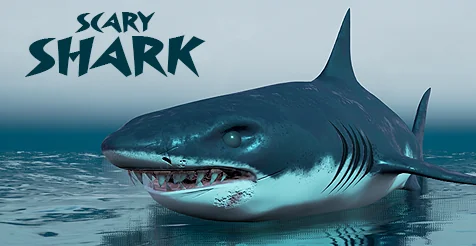
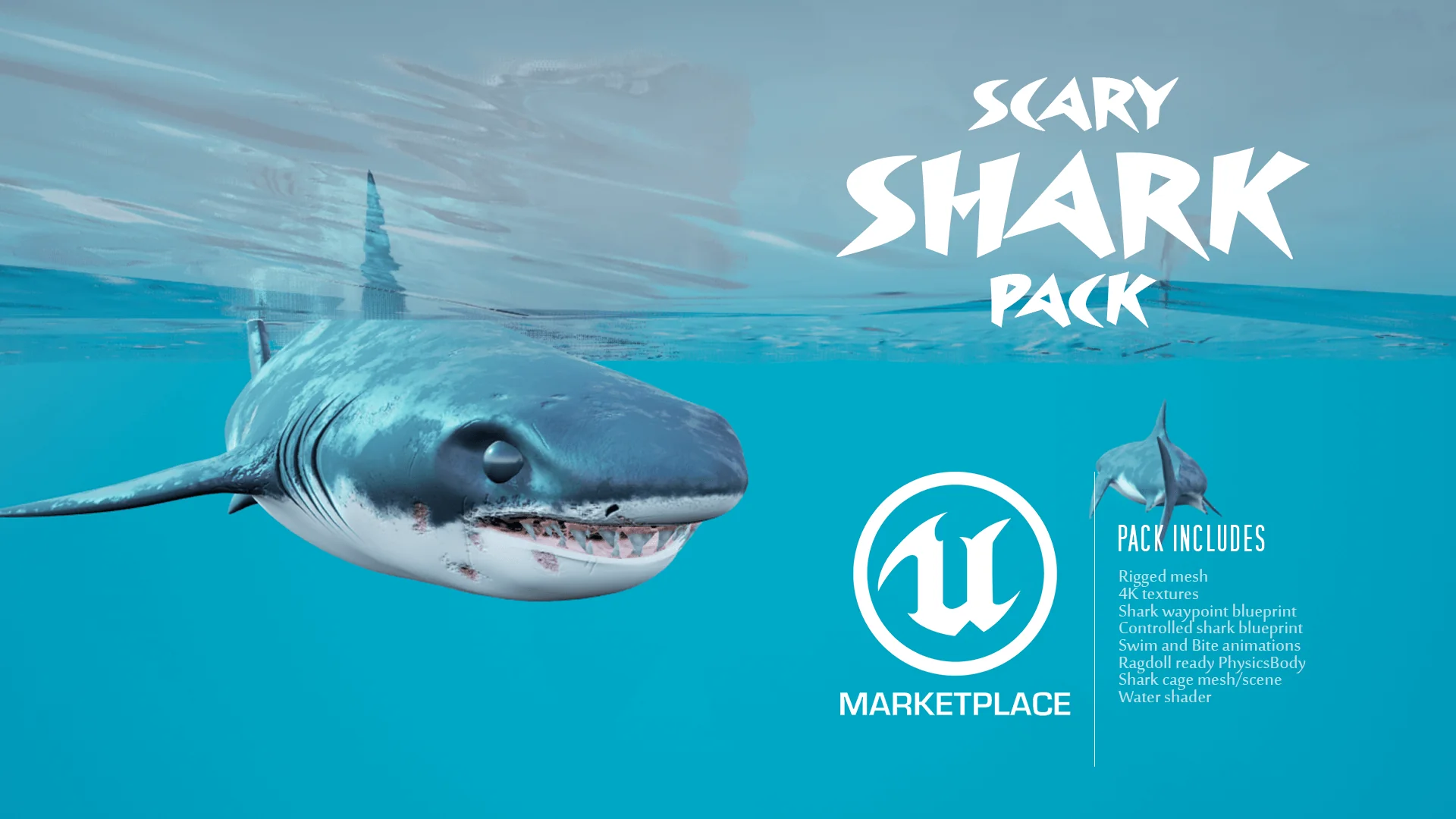
Scary Shark Assets delivers a rigged underwater predator, ragdoll physics, dive cage mesh, water shader, swim and bite animations, and FPS Kit support.
Deep-water sequences rely heavily on tension, scale, and immediate environmental danger. Constructing an oceanic thriller, a deep-sea exploration sequence, or an underwater survival trial requires predator mechanics that behave convincingly both in open water and near confined structures. Scary Shark Assets gathers the visual elements, skeletal controls, dynamic physical properties, and staging environments required to build hostile aquatic encounters.
Anatomy and Mechanics of the Scary Shark Character
Central to the package is the predatory shark mesh, prepared specifically with a skeletal rig to permit lifelike deformation across its body, dorsal fins, tail, and jaw. Rather than serving purely as a static prop, the model is configured as a fully articulated entity ready for active gameplay pipelines. The mesh structure accommodates realistic undulation, allowing the tail to swing in natural arcs while the head maintains direction toward a target.
Paired directly with the skeletal structure is a ragdoll-ready physics asset. Aquatic encounters often fall flat if a defeated or impacted creature simply plays a rigid death sequence. By incorporating dedicated physics bodies and joint constraints, the character can seamlessly shift from keyed locomotion into physics-driven reactions. A heavy blow, explosive impact, or lethal shot can immediately trigger physical ragdoll simulation, causing the shark to drift, sink, or tumble against underwater currents and obstacles with authentic weight.
Developers have the option to implement the asset across two distinct technical configurations. It can be dropped directly into levels as decorative oceanic scenery to populate background waters, coral reefs, or open sea expanses without complex scripting overhead. Alternatively, it can be deployed via character blueprints, activating interactive logic, scripted chase routines, and reactive player-engagement mechanics.
Locomotion and Attacks in the Shark Animation Blueprint
Believable underwater predators require focused motion cycles that convey fluid speed and aggressive intent. Included with the predator are swim and bite animations calibrated specifically for marine pursuit. The swim cycles generate the continuous, rhythmic lateral motion necessary for cruising open depths or circling around submerged structures, while the bite animations deliver fast, snapping jaw movements built for attack runs.
Managing these visual states is handled through an animation blueprint and associated scripts. The animation blueprint drives state transitions, interpolating smoothly between resting or cruising swim states and aggressive striking phases. Because the animation graph is tied to character blueprint logic, developers can wire variable movement speeds, sudden bursts of velocity, and attack triggers directly into the predator's behavioral loops.
Through script logic, the predator's movement parameters can be modified to suit specific narrative moments or AI routines. A character blueprint can dictate whether the creature patrols a set route, pursues an intruder, or circles menacingly just beyond visual range, switching into full bite mode once proximity conditions are met.
Environmental Staging with the Cage Mesh and Water Shader
Predatory encounters become significantly more tense when physical barriers separate the player from the danger. The asset pack includes a dedicated shark cage mesh, providing the exact structural centerpiece needed for classic diving scenarios. The cage mesh features rigid framing and protective bars, allowing level designers to position players inside a confined, vulnerable vantage point while the predator circles outside.
To establish the visual medium of the open ocean, the package includes a water shader. The shader provides the essential surface and subsurface optical properties required to make underwater levels feel dense, deep, and atmospherically rich. Proper light play and water surface behavior ground the cage mesh and the predator within a unified, believable aquatic volume, enhancing the terror of an approaching silhouette.
Combining the shark cage, the water shader, and the swimming predator allows developers to produce classic tourist dive scenarios gone wrong, scientific expedition failures, or intense underwater salvage missions where the cage serves as the player's solitary safe zone.
Testing and Staging in Dedicated Map Environments
To eliminate guesswork during implementation, two pre-built maps are provided: the Shark Character Map and the Shark Dive Map. Each map serves a distinct practical role in development and testing.
The Shark Character Map functions as a focused technical workspace. In this environment, developers can inspect the rigged mesh, verify material and shader response under clean lighting, examine skeletal hierarchies, and test the ragdoll-ready physics asset without environmental distractions. It is the ideal space for fine-tuning the physics constraints, adjusting hit reactions, or auditioning custom scripts against the character blueprint.
The Shark Dive Map demonstrates the assets working together in a complete scenario. This map assembles the water shader, the dive cage mesh, and the active predator blueprint into a coherent underwater scene. Designers can load this level to examine how the swim animations read through the water shader, test how the predator interacts with the geometry of the cage, and use the scene as a ready-to-play template for their own aquatic campaigns.
Integrating Marine Threats into First Person Shooter Kit Projects
Beyond standalone character setup, the asset pack features verified compatibility with First Person Shooter Kit architectures. This connection streamlines the process of introducing underwater combat and hostile marine wildlife into FPS projects.
FPS systems rely on precise hit registration, projectile tracking, and player-aimed combat. Because the shark includes both an active character blueprint and a physics asset, shooting mechanics integrate cleanly. Underwater weapons—such as spearguns, firearms, or specialized defense gear—can register hits against the shark's collision hulls. Triggering the ragdoll state upon reaching zero health provides immediate, satisfying feedback from the first-person perspective, as the defeated beast reacts to the impact velocity rather than freezing in place.
Whether used to construct a claustrophobic cage-defense level within an action-oriented first-person framework or simply added as passive scenery to enhance background ocean vistas, Scary Shark Assets delivers the core rigging, animation, scripting, and environmental tools required to realize marine horror.
 Characters
 Characters
 Characters
 Characters