"82ee98b2ee2793f1"{"id":"1002420","slug":"animalia-wild-boar-young","title":"Animalia - Wild Boar (young)","category":"Characters \u0026 Creatures","engine":"4.20+,5.0+","assetVersion":"","engineVersion":"Engine Version: 4.20+,5.0+","tag":"Characters","accent":"blue","visual":"character","summary":"Realistic young wild boar asset featuring 60 fps animations, root motion options, Maya and 3ds Max CAT rigs, 4K textures, LODs, and ragdoll setups.","platform":"Unreal Engine","indexPolicy":"index","publishedAt":"2026-11-10T18:10:25.416Z","updatedAt":"2026-11-10T18:10:25.416Z","sourceNotes":[],"fileContents":[],"compatibility":["Unreal Engine","Engine Version: 4.20+,5.0+"],"featuredImage":{"alt":"Animalia - Wild Boar (young)","src":"/wp-content/uploads/published/2026/11/b285935029f6-6d4de84c-4135-462d-a680-40ea204955aa-72b2c6b0a5.webp"},"hasDownloadLink":true,"downloads":0,"terms":[{"taxonomy":"category","slug":"characters-and-creatures","name":"Characters \u0026 Creatures"}],"galleryImages":[{"src":"/wp-content/uploads/published/2026/11/d458fe08b336-b482ddda-5e9e-4a11-836e-7bafa0c0fe03-e37778fed1.webp","alt":"Animalia - Wild Boar (young)"},{"src":"/wp-content/uploads/published/2026/11/f012b8826454-ea240841-7573-4110-a846-6492756a0a4e-4b4ca8b6f9.webp","alt":"Animalia - Wild Boar (young)"},{"src":"/wp-content/uploads/published/2026/11/60626177fa01-b0d79531-0c43-40d7-9b60-37615421f92a-cf6873a53c.webp","alt":"Animalia - Wild Boar (young)"},{"src":"/wp-content/uploads/published/2026/11/f94f9decc9a2-36effe9b-7aad-47c0-8548-93d42ea89c9b-ab3b31b11e.webp","alt":"Animalia - Wild Boar (young)"},{"src":"/wp-content/uploads/published/2026/11/8d7f18682c21-67d1fb68-9199-42a0-8b07-31ae68895e5f-1bed7fbec9.webp","alt":"Animalia - Wild Boar (young)"}],"accessPanel":{"kind":"resource","title":"Get this resource","eyebrow":"Free resource","message":"Download this resource in your browser.","fileName":"Content.7z","safetyNote":"Resources are manually reviewed before listing to improve quality and reduce obvious risks.","actionLabel":"Get this resource","resourceType":"Resource archive","versions":[]},"contentHtml":"\u003ch2\u003eForest Ecosystems and Wildlife Staging\u003c/h2\u003e\n\u003cp\u003eTemperate woodlands, dense river valleys, and untamed brush borders often demand dynamic wildlife to feel alive. Populating natural biomes with believable fauna involves balancing anatomical authenticity with runtime efficiency. A juvenile creature introduces distinct behavioral and visual variety compared to standard mature beasts. Representing a realistic young wild boar allows developers to populate dens, create maternal tracking encounters, or design non-predatory environmental hazards that react instinctively to player presence.\u003c/p\u003e\n\u003cp\u003eBecause the creature is based on realistic quadruped anatomy, it fits cleanly into environmental simulators, survival games, historical recreations, and hunting titles. The presence of smaller, younger fauna alters how players perceive an ecosystem, turning a generic forest corridor into an active feeding ground or nesting territory. Pairing this animal with other wilderness assets, such as the Animalia series Bald and Golden Eagle, establishes a cohesive ecological balance where distinct species share a unified visual fidelity across the landscape.\u003c/p\u003e \u003ch2\u003eWild Boar Locomotion and Root Motion Flexibility\u003c/h2\u003e\n\u003cp\u003eQuadruped movement presents specific animation challenges, particularly regarding the coordination of four legs across changing movement speeds. The young wild boar comes equipped with an extensive library of animations authored directly at 60 frames per second. High framerate authoring preserves the subtle weight shifts, rapid foot strikes, and muscle tremors characteristic of swine movement. When playing back at standard runtime rates, or when slowed down for cinematic sequences, the 60 fps capture prevents stepping artifacts and keeps the motion curve smooth.\u003c/p\u003e\n\u003cp\u003eLocomotion handling varies widely between projects, which is why every animation is supplied in two distinct forms: with root motion and without root motion. In-place animations allow standard capsule-driven character controllers to dictate directional velocity, translation speed, and physical collisions through code or visual scripting. Conversely, root motion variants extract displacement vectors directly from the skeleton's root bone, preserving natural pacing, deceleration, and ground friction without manual slide compensation.\u003c/p\u003e\n\u003cp\u003eExpansion to the motion set through version updates has broadened its behavioral range. The introduction of 46 animations in version 2.1.0, followed by the addition of dedicated Start/Stop Walk and WalkSlow clips alongside targeted tweaks in version 2.2.0, provides granular control over locomotion states. Having explicit starting and stopping transitions prevents the abrupt sliding that often occurs when an animal snaps between idle and moving states, ensuring natural momentum shifts as the animal navigates obstacles.\u003c/p\u003e \u003ch2\u003eRigging the Young Boar in Maya and 3ds Max\u003c/h2\u003e\n\u003cp\u003eCustom pipeline requirements often demand adjustments outside the game engine, whether to produce bespoke cinematic cutscenes or author specialized gameplay interactions. The asset package includes native animation rigs for both Autodesk Maya and 3ds Max. Animators can pull the character into their DCC application of choice without needing to reverse-engineer bone hierarchies or construct custom control shapes from scratch.\u003c/p\u003e\n\u003cp\u003eFor artists working in 3ds Max, the package incorporates a dedicated CAT (Character Animation Toolkit) rig equipped with basic poses. The CAT system offers procedural locomotion tools, non-destructive animation layers, and streamlined clip management, allowing animators to sketch out new movement profiles or posture adjustments rapidly. Studios targeting keyframe animation or custom behavioral sequences can use the base rigs to craft unique grooming, foraging, or death sequences that match their project's exact narrative beats.\u003c/p\u003e \u003ch2\u003eFur Rendering, 4K Texturing, and LOD Scaling\u003c/h2\u003e\n\u003cp\u003eSurface detail on a young animal demands a careful balance of skin texture, bristle density, and material definition. This model utilizes 4K textures to resolve fine dermal creases, mud-stained hide, cloven hooves, and facial features up close. High-resolution map sets ensure the creature holds up during tight third-person tracking shots or cinematic close-ups without blurring.\u003c/p\u003e\n\u003cp\u003eFur adds another layer of realism to the wild boar's silhouette. The asset supports fur workflows through gFur for Unreal Engine 5, which can be acquired freely for hair generation. While this integration exists for artists wanting volumetric strand depth, the asset does not require the gFur plugin to function within a project. Teams looking to conserve rendering overhead or bypass external plugins can deploy the base model directly, relying on the underlying geometry and high-fidelity texturing to carry the visual load.\u003c/p\u003e\n\u003cp\u003eScene performance is maintained through integrated Level of Detail (LOD) meshes. As the young boar moves farther from the active camera, the mesh steps down through its geometric levels, reducing vertex counts and draw-call strain across dense herds or wide vista shots. This automated distance scaling makes the asset viable for open-world titles where multiple animals must roam concurrently without penalizing frame budgets.\u003c/p\u003e \u003ch2\u003eEnvironmental Physics and Ragdoll Transitions\u003c/h2\u003e\n\u003cp\u003eGameplay encounters frequently require dynamic physical responses when an animal interacts with terrain hazards, traps, or projectile forces. A pre-configured ragdoll setup is included with the skeletal structure, defining accurate mass limits, joint constraints, and collision hulls across the torso, neck, and limbs.\u003c/p\u003e\n\u003cp\u003eThe ragdoll system enables seamless blending from authored 60 fps death or impact animations straight into physical simulation. When struck by physics-driven objects or falling down uneven hillsides, the boar collapses in accordance with environmental collision data rather than clipping through sloped geometry. This physics integration removes the need to manually build physics assets or tune rotation limits in engine editors, accelerating gameplay prototyping.\u003c/p\u003e \u003ch2\u003eProduction Fit and Creature Implementation\u003c/h2\u003e\n\u003cp\u003eTeams building natural wilderness spaces benefit significantly from assets that provide full technical coverage out of the box. With its dual root motion options, external DCC support spanning Maya and 3ds Max CAT setups, 4K texture definition, LOD levels, and turnkey ragdoll parameters, the young wild boar integrates smoothly into existing character and AI pipelines. It serves technical animators looking for ready-to-use locomotion trees, environment artists constructing lived-in fauna biomes, and gameplay programmers who need physics-ready quadruped actors that perform reliably under varied runtime conditions.\u003c/p\u003e\n\n\u003ch2\u003eMore From The Same Workflow\u003c/h2\u003e\n\u003cul\u003e\n\u003cli\u003e\u003ca href=\"https://3dcghub.com/animalia-gray-wolf-young/\" rel=\"noopener noreferrer\"\u003eAnimalia - Gray Wolf (young)\u003c/a\u003e\u003c/li\u003e\n\u003cli\u003e\u003ca href=\"https://3dcghub.com/animalia-leopard-young/\" rel=\"noopener noreferrer\"\u003eAnimalia - Leopard (young)\u003c/a\u003e\u003c/li\u003e\n\u003cli\u003e\u003ca href=\"https://3dcghub.com/animalia-rat/\" rel=\"noopener noreferrer\"\u003eAnimalia - Rat\u003c/a\u003e\u003c/li\u003e\n\u003cli\u003e\u003ca href=\"https://3dcghub.com/animalia-brown-bear-male/\" rel=\"noopener noreferrer\"\u003eAnimalia - Brown Bear (male)\u003c/a\u003e\u003c/li\u003e\n\u003cli\u003e\u003ca href=\"https://3dcghub.com/animalia-ladybug/\" rel=\"noopener noreferrer\"\u003eAnimalia - Ladybug\u003c/a\u003e\u003c/li\u003e\n\u003c/ul\u003e","contentTextLength":6841,"navigation":{"current":30,"total":4372,"previous":{"id":"1002421","slug":"ants","title":"Ants","category":"Procedural Systems","platform":"Unreal Engine","updatedAt":"2026-11-10T18:11:14.164Z"},"next":{"id":"1002419","slug":"animalia-rat","title":"Animalia - Rat","category":"Characters \u0026 Creatures","platform":"Unreal Engine","updatedAt":"2026-11-10T18:09:48.713Z"}},"relatedResources":[{"id":"1000973","slug":"animalia-gray-wolf-young","title":"Animalia - Gray Wolf (young)","category":"Characters \u0026 Creatures","engine":"4.26+,5.0+","assetVersion":"","engineVersion":"Engine Version: 4.26+,5.0+","tag":"Characters","accent":"blue","visual":"character","summary":"A realistic young Gray Wolf with 60fps animations, 4K textures, gFur support, Maya/3ds Max rigs, LODs, and ragdoll setup for Unreal Engine 5 projects.","platform":"Unreal Engine","indexPolicy":"index","publishedAt":"2026-08-17T16:04:58.364Z","updatedAt":"2026-08-17T16:04:58.364Z","sourceNotes":[],"fileContents":[],"compatibility":["Unreal Engine","Engine Version: 4.26+,5.0+"],"featuredImage":{"alt":"Animalia - Gray Wolf (young)","src":"/wp-content/uploads/published/2026/08/9fcd1d0b632e-f6aeddf4-1dc7-45c0-91e5-98a501f9cf7e-0eaf67a9d1.webp"},"hasDownloadLink":true,"downloads":0},{"id":"1000147","slug":"animalia-leopard-young","title":"Animalia - Leopard (young)","category":"Characters \u0026 Creatures","engine":"4.26+,5.0+","assetVersion":"","engineVersion":"Engine Version: 4.26+,5.0+","tag":"Characters","accent":"blue","visual":"character","summary":"A realistic young leopard with 60 fps animations, 4K textures, root motion options, gFur support, LODs, and ragdoll setup.","platform":"Unreal Engine","indexPolicy":"index","publishedAt":"2026-06-18T06:44:20.152Z","updatedAt":"2026-06-18T06:44:20.152Z","sourceNotes":[],"fileContents":[],"compatibility":["Unreal Engine","Engine Version: 4.26+,5.0+"],"featuredImage":{"alt":"Animalia - Leopard (young)","src":"/wp-content/uploads/published/2026/06/840511946ba8-2afc0d62-9b01-4293-b83c-f9b2d7d0101f-81df9aea17.webp"},"hasDownloadLink":true,"downloads":0},{"id":"1002438","slug":"poly-art-boar","title":"Poly Art Boar","category":"Characters \u0026 Creatures","engine":"4.26+,5.0+","assetVersion":"","engineVersion":"Engine Version: 4.26+,5.0+","tag":"Characters","accent":"blue","visual":"character","summary":"The Poly Art Boar supplies low poly boar models, textures, and in-motion animations for forest scenes, without an environment or character controller.","platform":"Unreal Engine","indexPolicy":"index","publishedAt":"2026-11-10T18:34:27.984Z","updatedAt":"2026-11-10T18:34:27.984Z","sourceNotes":[],"fileContents":[],"compatibility":["Unreal Engine","Engine Version: 4.26+,5.0+"],"featuredImage":{"alt":"Poly Art Boar","src":"/wp-content/uploads/published/2026/11/86edbb72e455-423fed1c-70eb-4e0c-b525-c55cdb49c579-6a5e3f2cc8.webp"},"hasDownloadLink":true,"downloads":0}]}
Characters
Animalia - Wild Boar (young)
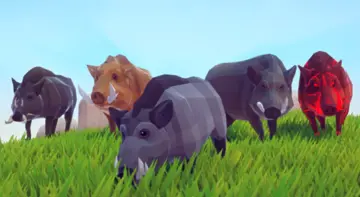
Realistic young wild boar asset featuring 60 fps animations, root motion options, Maya and 3ds Max CAT rigs, 4K textures, LODs, and ragdoll setups.
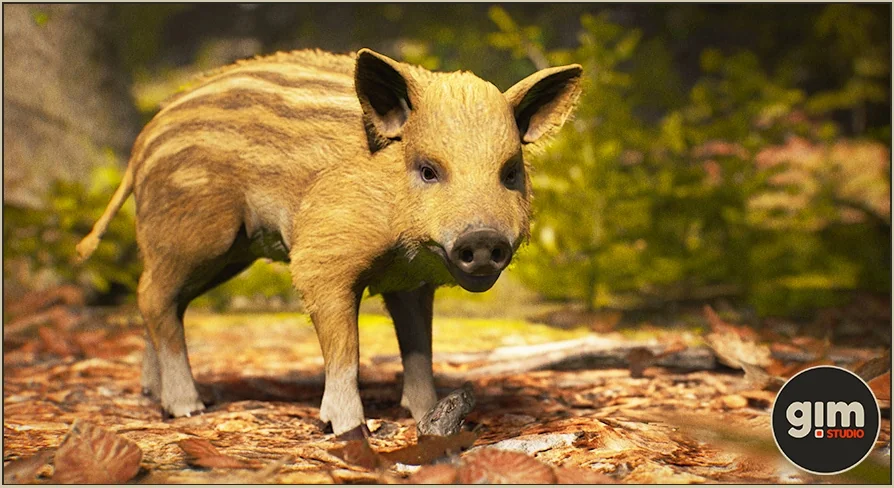
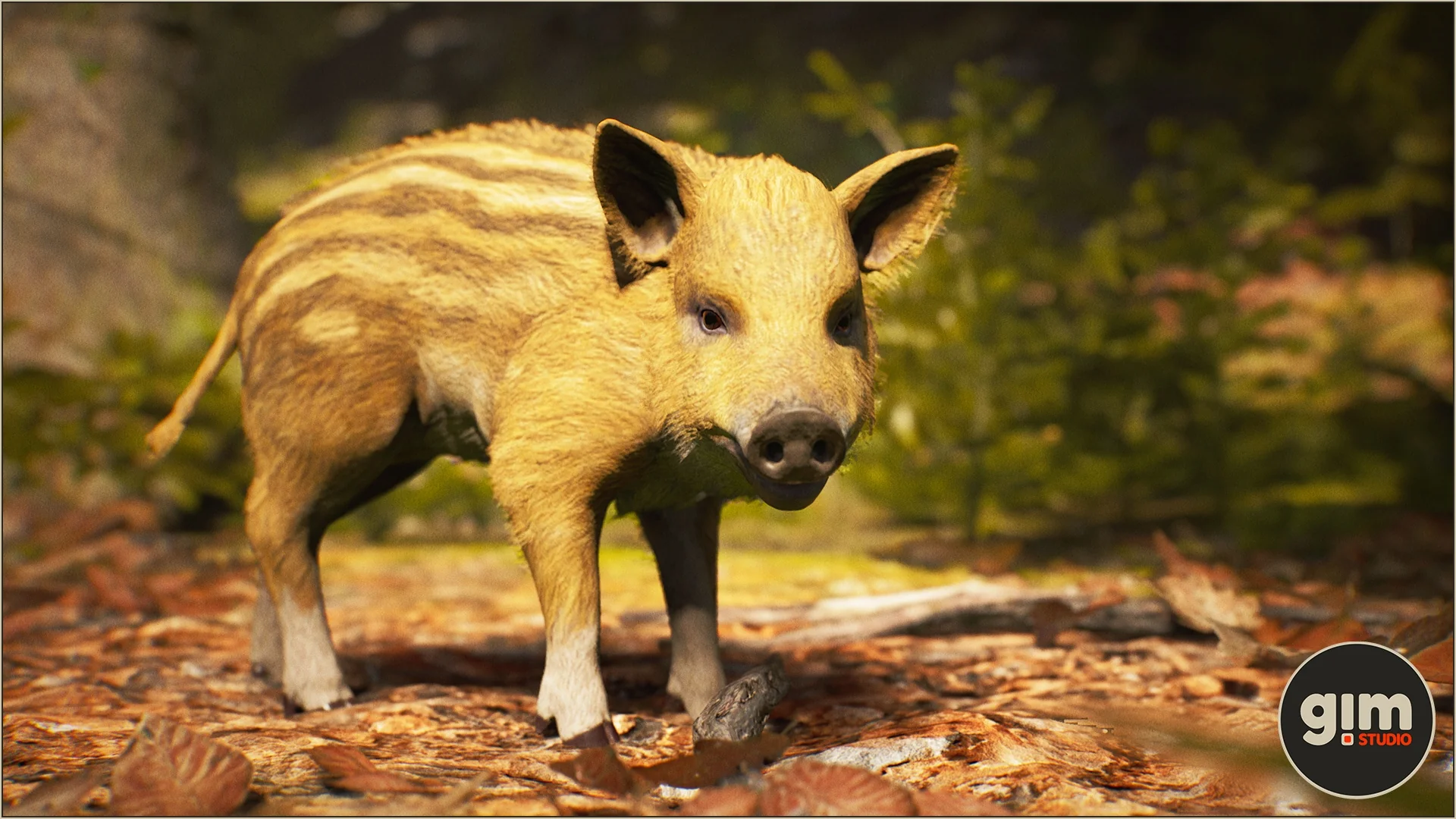
Temperate woodlands, dense river valleys, and untamed brush borders often demand dynamic wildlife to feel alive. Populating natural biomes with believable fauna involves balancing anatomical authenticity with runtime efficiency. A juvenile creature introduces distinct behavioral and visual variety compared to standard mature beasts. Representing a realistic young wild boar allows developers to populate dens, create maternal tracking encounters, or design non-predatory environmental hazards that react instinctively to player presence.
Because the creature is based on realistic quadruped anatomy, it fits cleanly into environmental simulators, survival games, historical recreations, and hunting titles. The presence of smaller, younger fauna alters how players perceive an ecosystem, turning a generic forest corridor into an active feeding ground or nesting territory. Pairing this animal with other wilderness assets, such as the Animalia series Bald and Golden Eagle, establishes a cohesive ecological balance where distinct species share a unified visual fidelity across the landscape.
Wild Boar Locomotion and Root Motion Flexibility
Quadruped movement presents specific animation challenges, particularly regarding the coordination of four legs across changing movement speeds. The young wild boar comes equipped with an extensive library of animations authored directly at 60 frames per second. High framerate authoring preserves the subtle weight shifts, rapid foot strikes, and muscle tremors characteristic of swine movement. When playing back at standard runtime rates, or when slowed down for cinematic sequences, the 60 fps capture prevents stepping artifacts and keeps the motion curve smooth.
Locomotion handling varies widely between projects, which is why every animation is supplied in two distinct forms: with root motion and without root motion. In-place animations allow standard capsule-driven character controllers to dictate directional velocity, translation speed, and physical collisions through code or visual scripting. Conversely, root motion variants extract displacement vectors directly from the skeleton's root bone, preserving natural pacing, deceleration, and ground friction without manual slide compensation.
Expansion to the motion set through version updates has broadened its behavioral range. The introduction of 46 animations in version 2.1.0, followed by the addition of dedicated Start/Stop Walk and WalkSlow clips alongside targeted tweaks in version 2.2.0, provides granular control over locomotion states. Having explicit starting and stopping transitions prevents the abrupt sliding that often occurs when an animal snaps between idle and moving states, ensuring natural momentum shifts as the animal navigates obstacles.
Rigging the Young Boar in Maya and 3ds Max
Custom pipeline requirements often demand adjustments outside the game engine, whether to produce bespoke cinematic cutscenes or author specialized gameplay interactions. The asset package includes native animation rigs for both Autodesk Maya and 3ds Max. Animators can pull the character into their DCC application of choice without needing to reverse-engineer bone hierarchies or construct custom control shapes from scratch.
For artists working in 3ds Max, the package incorporates a dedicated CAT (Character Animation Toolkit) rig equipped with basic poses. The CAT system offers procedural locomotion tools, non-destructive animation layers, and streamlined clip management, allowing animators to sketch out new movement profiles or posture adjustments rapidly. Studios targeting keyframe animation or custom behavioral sequences can use the base rigs to craft unique grooming, foraging, or death sequences that match their project's exact narrative beats.
Fur Rendering, 4K Texturing, and LOD Scaling
Surface detail on a young animal demands a careful balance of skin texture, bristle density, and material definition. This model utilizes 4K textures to resolve fine dermal creases, mud-stained hide, cloven hooves, and facial features up close. High-resolution map sets ensure the creature holds up during tight third-person tracking shots or cinematic close-ups without blurring.
Fur adds another layer of realism to the wild boar's silhouette. The asset supports fur workflows through gFur for Unreal Engine 5, which can be acquired freely for hair generation. While this integration exists for artists wanting volumetric strand depth, the asset does not require the gFur plugin to function within a project. Teams looking to conserve rendering overhead or bypass external plugins can deploy the base model directly, relying on the underlying geometry and high-fidelity texturing to carry the visual load.
Scene performance is maintained through integrated Level of Detail (LOD) meshes. As the young boar moves farther from the active camera, the mesh steps down through its geometric levels, reducing vertex counts and draw-call strain across dense herds or wide vista shots. This automated distance scaling makes the asset viable for open-world titles where multiple animals must roam concurrently without penalizing frame budgets.
Environmental Physics and Ragdoll Transitions
Gameplay encounters frequently require dynamic physical responses when an animal interacts with terrain hazards, traps, or projectile forces. A pre-configured ragdoll setup is included with the skeletal structure, defining accurate mass limits, joint constraints, and collision hulls across the torso, neck, and limbs.
The ragdoll system enables seamless blending from authored 60 fps death or impact animations straight into physical simulation. When struck by physics-driven objects or falling down uneven hillsides, the boar collapses in accordance with environmental collision data rather than clipping through sloped geometry. This physics integration removes the need to manually build physics assets or tune rotation limits in engine editors, accelerating gameplay prototyping.
Production Fit and Creature Implementation
Teams building natural wilderness spaces benefit significantly from assets that provide full technical coverage out of the box. With its dual root motion options, external DCC support spanning Maya and 3ds Max CAT setups, 4K texture definition, LOD levels, and turnkey ragdoll parameters, the young wild boar integrates smoothly into existing character and AI pipelines. It serves technical animators looking for ready-to-use locomotion trees, environment artists constructing lived-in fauna biomes, and gameplay programmers who need physics-ready quadruped actors that perform reliably under varied runtime conditions.
 Characters
 Characters
 Characters
 Characters