"82ee98b2ee2793f1"{"id":"1002421","slug":"ants","title":"Ants","category":"Procedural Systems","engine":"5.4+","assetVersion":"","engineVersion":"Engine Version: 5.4+","tag":"Procedural Systems","accent":"blue","visual":"mech","summary":"A deep dive into the Ants Blueprint system, featuring custom and automatic pathing, worker cargo routines, and ecological simulation controls.","platform":"Unreal Engine","indexPolicy":"index","publishedAt":"2026-11-10T18:11:14.164Z","updatedAt":"2026-11-10T18:11:14.164Z","sourceNotes":[],"fileContents":[],"compatibility":["Unreal Engine","Engine Version: 5.4+"],"featuredImage":{"alt":"Ants","src":"/wp-content/uploads/published/2026/11/9ed85f0763f4-401ee2a0-1251-48bf-b503-198efe749ae8-9ab2a00de7.webp"},"hasDownloadLink":true,"downloads":0,"terms":[{"taxonomy":"category","slug":"procedural-systems","name":"Procedural Systems"}],"galleryImages":[{"src":"/wp-content/uploads/published/2026/11/cb0584a98d7e-8f0c1b47-86df-48e7-bdbe-5f4baa73cf45-53ecff29ca.webp","alt":"Ants"},{"src":"/wp-content/uploads/published/2026/11/e5724d6d2e09-ed8dccf0-2c0c-4c4b-8ea7-4c7da62f8cc7-1cb8bea4dc.webp","alt":"Ants"},{"src":"/wp-content/uploads/published/2026/11/0ee25b7f1e41-3179d684-c929-4def-be9a-ed8ecae8e1ef-df212ab160.webp","alt":"Ants"},{"src":"/wp-content/uploads/published/2026/11/a31c2669b8ef-56460d94-42bf-4f4d-88db-3cb8abd34cfe-8f40872f8b.webp","alt":"Ants"},{"src":"/wp-content/uploads/published/2026/11/1b7e5d2dc12e-65fe356d-21f9-47d0-aa5b-2a9a3bda5e52-12446fc7ac.webp","alt":"Ants"},{"src":"/wp-content/uploads/published/2026/11/86560b79e520-5ed2d23c-5e1f-41a5-bcc2-a3c989057c99-e857922aca.webp","alt":"Ants"},{"src":"/wp-content/uploads/published/2026/11/3f5c13d71a5b-afcde62a-e604-481e-b763-cddecae45449-6504e9a594.webp","alt":"Ants"},{"src":"/wp-content/uploads/published/2026/11/bd1ee980e186-333b159f-2435-43d8-acfb-955d9c6761b5-adc8a7be58.webp","alt":"Ants"},{"src":"/wp-content/uploads/published/2026/11/c8fdac52e0c7-339e0fc2-5129-4025-a4b8-0b25e55c27d4-a6e6233f04.webp","alt":"Ants"}],"accessPanel":{"kind":"resource","title":"Get this resource","eyebrow":"Free resource","message":"Download this resource in your browser.","fileName":"Content.7z","safetyNote":"Resources are manually reviewed before listing to improve quality and reduce obvious risks.","actionLabel":"Get this resource","resourceType":"Resource archive","versions":[]},"contentHtml":"\u003cp\u003ePopulating 3D scenes with micro-scale life requires specialized logic that can handle dense, repetitive motion without overwhelming project architecture. Ants operates as a dedicated Blueprint system crafted to generate active insect trails across digital terrains. At its foundation, the system governs worker ants as they navigate complex surfaces, continuously executing logistics tasks that mirror real-world colony behavior. Rather than relying on static, pre-rendered foliage-style animations, the framework treats each path as a dynamic route where workers actively carry, collect, and drop off physical cargo such as sticks and stones.\u003c/p\u003e\u003ch2\u003ePath Generation and Worker Routines in Ants\u003c/h2\u003e\u003cp\u003eMovement logic within the system bifurcates into custom and automatic pathing, providing flexibility depending on terrain topology and artistic intent. Automatic paths allow level designers to populate sprawling scenes rapidly, letting procedural calculations determine route progression across meshes. This mode functions smoothly when establishing broad background life, filling ground planes, tree trunks, or rocky outcrops with organic trails of crawling workers without requiring manual node placement for every branch of the trail.\u003c/p\u003e\u003cp\u003eCustom paths provide direct authorial control over every curve and junction of the ant trail. When a scene demands that an insect line interact with specific gameplay triggers, avoid dynamic hazards, or follow exact architectural seams, custom pathing gives developers direct placement authority. Designers can guide worker lines precisely around environmental obstacles, ensuring that tiny crawlers traverse stones, navigate through cracks, or march purposefully across defined points of interest. This dual-path methodology ensures that whether a scene requires wide-area ecological background dressing or a tightly directed cinematic focal point, the navigation layer adapts directly to the layout.\u003c/p\u003e\u003ch2\u003eCargo Handling: Sticks, Stones, and Resource Transfers\u003c/h2\u003e\u003cp\u003eVisual authenticity in an insect colony depends heavily on purpose-driven movement. Ants incorporates dedicated item handling routines, deploying workers that transport discrete pieces of the environment. The system models the collection and delivery cycle directly, showing workers picking up cargo at designated sources, securing the objects, marching along the established pathing network, and completing their circuit by dropping the haul off at target destinations.\u003c/p\u003e\u003cp\u003eSticks and stones serve as the core cargo items, giving the worker trail an industrious, functional quality. The physical presence of carried cargo fundamentally changes how trails read on camera. Bare lines of identical insects can quickly look uniform or synthetic; introducing carried stones and timber fragments breaks up visual repetition. The physical exchange—lowering down to retrieve an item, altering worker posture to accommodate the weight, and releasing the material at a terminal point—anchors the crawling routine into a tangible loop of environmental interaction.\u003c/p\u003e\u003ch2\u003eConfigurable Variables Across Ants Blueprint Systems\u003c/h2\u003e\u003cp\u003eFlexibility across distinct scene scales relies on accessible parameter editing, and the Ants Blueprint exposes the essential variables required to modify trail behavior. Level designers can access and tweak core operational parameters directly inside the editor, calibrating the density, movement tempo, and distribution of the colony without altering underlying code structures. Fine-tuning these variables enables quick shifts between sparse, exploratory scouting lines and dense, high-traffic harvesting arteries.\u003c/p\u003e\u003cp\u003eAdjustable settings govern both the frequency of cargo carriers and the spatial cadence between individual workers. Designers can adjust the likelihood of an ant carrying sticks versus stones, control the pacing of the pick-up and drop-off sequences, and regulate the responsiveness of workers along both custom and automatic lines. This level of variable control ensures the Blueprint integrates smoothly across varied project requirements, allowing rapid experimentation directly within the viewport to achieve the desired balance of movement density and visual flow.\u003c/p\u003e\u003ch2\u003eEcosystem Dressing from Tiny Crawlers to Survival Simulations\u003c/h2\u003e\u003cp\u003eWhile insect systems are often relegated to minor visual effects, dynamic colony mechanics offer practical value across diverse game styles. In survival and simulation titles, an interactive ant colony can serve as an informative environmental marker or an active systemic ingredient. Visible trails hauling materials through undergrowth provide organic clues about nearby resources, terrain stability, or regional ecosystem health. The structured pickup and drop-off cycle mirrors the core loops found in survival gathering mechanics, offering potential integration into systemic ecology loops where resource nodes dynamically diminish or accumulate.\u003c/p\u003e\u003cp\u003eStrategy games and macro-management prototypes can similarly leverage the underlying logic. The principles governing how workers divide labor along automatic networks closely reflect broader economic transport models. Whether representing tiny wilderness crawlers or serving as a visual baseline for modular supply lines, the Blueprint establishes clear, readable motion that players instinctively interpret as an organized logistical effort. Its intricate, nature-grounded presentation lends itself to close-up inspections where player cameras drop to ground level, maintaining fidelity even at tiny scales.\u003c/p\u003e\u003ch2\u003eCinematic Framing and Scene Assembly\u003c/h2\u003e\u003cp\u003eCinematic sequences frequently require environmental details that ground the world during low-angle shots or slow macro pans. Natural settings gain immediate realism when microscopic elements actively inhabit the frame. A fallen log, a gravel path, or the stone foundation of an ancient structure feels substantially more embedded in the world when a line of workers cuts across the composition, transporting fragments from one side of the frame to the other.\u003c/p\u003e\u003cp\u003eThe system adapts beyond purely wilderness-based scenes, extending seamlessly into historical or interior spaces such as a Palace Hall environment. In large architectural settings, the presence of tiny insect trails operating along ornate stone floors, broken pavers, or grand pillared corridors injects atmospheric storytelling. It visually underscores age, neglect, or the persistence of nature within human-built spaces. Because the Blueprint incorporates all required editable variables, tailoring worker density, cargo type, and path trajectories to match specific architectural lines or dramatic cinematic pacing remains straightforward and efficient.\u003c/p\u003e\n\n\u003ch2\u003eExplore Similar Assets\u003c/h2\u003e\n\u003cul\u003e\n\u003cli\u003e\u003ca href=\"https://3dcghub.com/cloud-forge-complete-vdb-clouds-1-4-3/\" rel=\"noopener noreferrer\"\u003eCloud Forge Complete - VDB Clouds 1.4.3\u003c/a\u003e\u003c/li\u003e\n\u003cli\u003e\u003ca href=\"https://3dcghub.com/biome-generator-pcg/\" rel=\"noopener noreferrer\"\u003eBiome Generator PCG\u003c/a\u003e\u003c/li\u003e\n\u003cli\u003e\u003ca href=\"https://3dcghub.com/shadersource-waterfall-tool/\" rel=\"noopener noreferrer\"\u003eSHADERSOURCE - Waterfall Tool\u003c/a\u003e\u003c/li\u003e\n\u003cli\u003e\u003ca href=\"https://3dcghub.com/crane-balk-sci-fi-robotic-crane-system/\" rel=\"noopener noreferrer\"\u003eCrane Balk – Sci-Fi robotic crane system\u003c/a\u003e\u003c/li\u003e\n\u003cli\u003e\u003ca href=\"https://3dcghub.com/easy-decal-roads-rvt/\" rel=\"noopener noreferrer\"\u003eEasy Decal Roads RVT\u003c/a\u003e\u003c/li\u003e\n\u003c/ul\u003e","contentTextLength":6827,"navigation":{"current":29,"total":4372,"previous":{"id":"1002422","slug":"barn-swallow","title":"Barn Swallow","category":"Birds","platform":"Unreal Engine","updatedAt":"2026-11-10T18:15:16.962Z"},"next":{"id":"1002420","slug":"animalia-wild-boar-young","title":"Animalia - Wild Boar (young)","category":"Characters \u0026 Creatures","platform":"Unreal Engine","updatedAt":"2026-11-10T18:10:25.416Z"}},"relatedResources":[{"id":"11343","slug":"cloud-forge-complete-vdb-clouds-1-4-3","title":"Cloud Forge Complete - VDB Clouds 1.4.3","category":"Procedural Systems","engine":"5.4+","assetVersion":"","engineVersion":"Engine Version: 5.4+","tag":"Procedural Systems","accent":"blue","visual":"character","summary":"Cloud Forge Complete - VDB Clouds 1.4.3 is a comprehensive pack of 109 optimized VDB clouds designed for high-end cinematic scenes and real-time performance.","platform":"Unreal Engine","indexPolicy":"index","publishedAt":"2026-03-04T17:42:46.000Z","updatedAt":"2026-10-06T05:48:30.682Z","sourceNotes":[],"fileContents":[],"compatibility":["Unreal Engine","Engine Version: 5.4+"],"featuredImage":{"alt":"Cloud Forge Complete - VDB Clouds 1.4.3","src":"https://3dcghub.com/wp-content/uploads/2026/03/8f6d9faf-a3a0-4618-81d7-1bde65dc665b.webp"},"hasDownloadLink":true,"downloads":1},{"id":"1001793","slug":"biome-generator-pcg","title":"Biome Generator PCG","category":"Procedural Systems","engine":"5.4+","assetVersion":"","engineVersion":"Engine Version: 5.4+","tag":"Procedural Systems","accent":"blue","visual":"mech","summary":"Create procedurally populated landscapes with Biome Generator PCG. Includes Ver1.0, Ver2.0, HillGeneratorPCG, and template meshes.","platform":"Unreal Engine","indexPolicy":"index","publishedAt":"2026-10-21T07:45:47.706Z","updatedAt":"2026-10-21T07:45:47.706Z","sourceNotes":[],"fileContents":[],"compatibility":["Unreal Engine","Engine Version: 5.4+"],"featuredImage":{"alt":"Biome Generator PCG","src":"/wp-content/uploads/published/2026/10/6bba3e3f6d25-b9821c06-8ca1-437a-bfb4-4a77772dd22b-2e0fa07ab5.webp"},"hasDownloadLink":true,"downloads":0},{"id":"1002280","slug":"shadersource-waterfall-tool","title":"SHADERSOURCE - Waterfall Tool","category":"Procedural Systems","engine":"5.0+","assetVersion":"","engineVersion":"Engine Version: 5.0+","tag":"Procedural Systems","accent":"blue","visual":"mech","summary":"Build realistic falling water using the spline-based SHADERSOURCE Waterfall Tool, featuring automatic ground detection, dynamic materials, and particle LODs.","platform":"Unreal Engine","indexPolicy":"index","publishedAt":"2026-10-29T16:37:55.038Z","updatedAt":"2026-10-29T16:37:55.038Z","sourceNotes":[],"fileContents":[],"compatibility":["Unreal Engine","Engine Version: 5.0+"],"featuredImage":{"alt":"SHADERSOURCE - Waterfall Tool","src":"/wp-content/uploads/published/2026/10/273bb32eccb1-78ab8345-caa7-4b04-a0e9-523f0eb69651-cdad2f3789.webp"},"hasDownloadLink":true,"downloads":3}]}
Procedural Systems
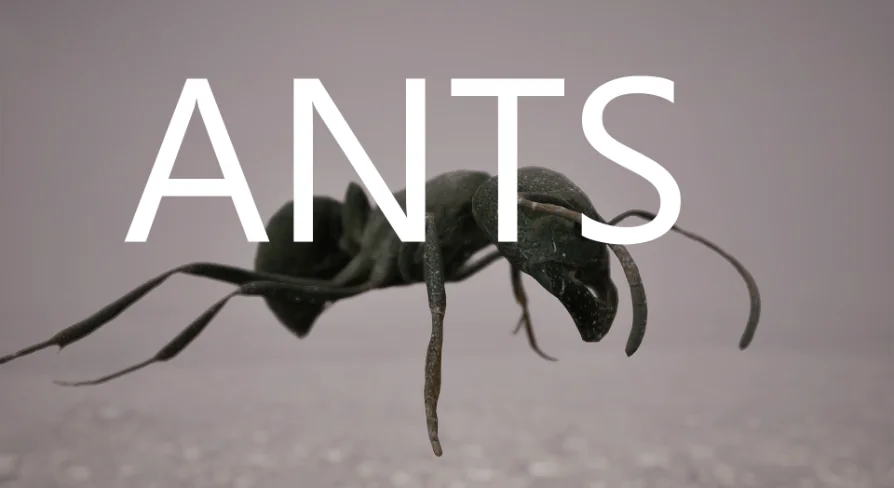
Ants
A deep dive into the Ants Blueprint system, featuring custom and automatic pathing, worker cargo routines, and ecological simulation controls.
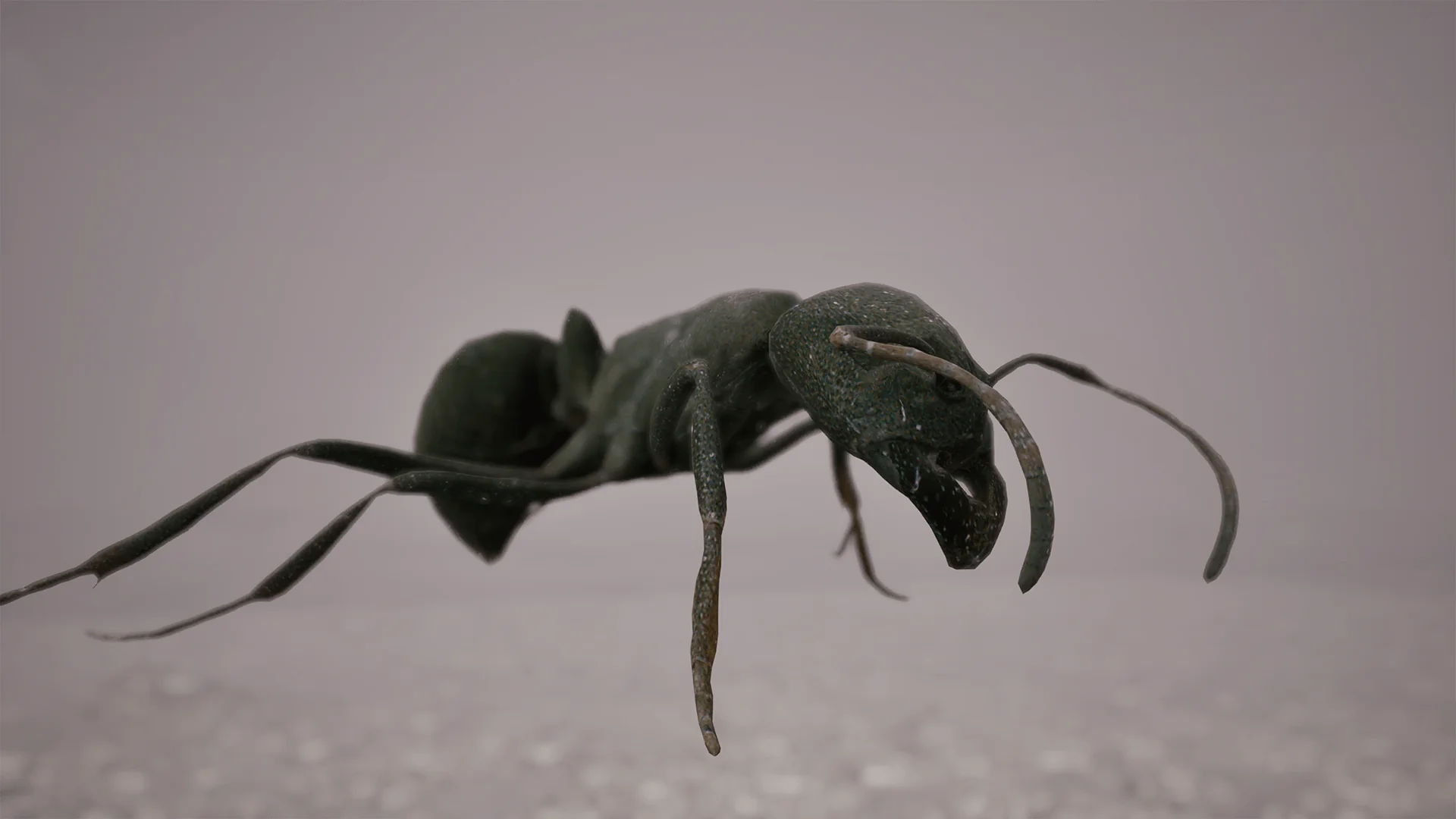
Populating 3D scenes with micro-scale life requires specialized logic that can handle dense, repetitive motion without overwhelming project architecture. Ants operates as a dedicated Blueprint system crafted to generate active insect trails across digital terrains. At its foundation, the system governs worker ants as they navigate complex surfaces, continuously executing logistics tasks that mirror real-world colony behavior. Rather than relying on static, pre-rendered foliage-style animations, the framework treats each path as a dynamic route where workers actively carry, collect, and drop off physical cargo such as sticks and stones.
Path Generation and Worker Routines in Ants
Movement logic within the system bifurcates into custom and automatic pathing, providing flexibility depending on terrain topology and artistic intent. Automatic paths allow level designers to populate sprawling scenes rapidly, letting procedural calculations determine route progression across meshes. This mode functions smoothly when establishing broad background life, filling ground planes, tree trunks, or rocky outcrops with organic trails of crawling workers without requiring manual node placement for every branch of the trail.
Custom paths provide direct authorial control over every curve and junction of the ant trail. When a scene demands that an insect line interact with specific gameplay triggers, avoid dynamic hazards, or follow exact architectural seams, custom pathing gives developers direct placement authority. Designers can guide worker lines precisely around environmental obstacles, ensuring that tiny crawlers traverse stones, navigate through cracks, or march purposefully across defined points of interest. This dual-path methodology ensures that whether a scene requires wide-area ecological background dressing or a tightly directed cinematic focal point, the navigation layer adapts directly to the layout.
Cargo Handling: Sticks, Stones, and Resource Transfers
Visual authenticity in an insect colony depends heavily on purpose-driven movement. Ants incorporates dedicated item handling routines, deploying workers that transport discrete pieces of the environment. The system models the collection and delivery cycle directly, showing workers picking up cargo at designated sources, securing the objects, marching along the established pathing network, and completing their circuit by dropping the haul off at target destinations.
Sticks and stones serve as the core cargo items, giving the worker trail an industrious, functional quality. The physical presence of carried cargo fundamentally changes how trails read on camera. Bare lines of identical insects can quickly look uniform or synthetic; introducing carried stones and timber fragments breaks up visual repetition. The physical exchange—lowering down to retrieve an item, altering worker posture to accommodate the weight, and releasing the material at a terminal point—anchors the crawling routine into a tangible loop of environmental interaction.
Configurable Variables Across Ants Blueprint Systems
Flexibility across distinct scene scales relies on accessible parameter editing, and the Ants Blueprint exposes the essential variables required to modify trail behavior. Level designers can access and tweak core operational parameters directly inside the editor, calibrating the density, movement tempo, and distribution of the colony without altering underlying code structures. Fine-tuning these variables enables quick shifts between sparse, exploratory scouting lines and dense, high-traffic harvesting arteries.
Adjustable settings govern both the frequency of cargo carriers and the spatial cadence between individual workers. Designers can adjust the likelihood of an ant carrying sticks versus stones, control the pacing of the pick-up and drop-off sequences, and regulate the responsiveness of workers along both custom and automatic lines. This level of variable control ensures the Blueprint integrates smoothly across varied project requirements, allowing rapid experimentation directly within the viewport to achieve the desired balance of movement density and visual flow.
Ecosystem Dressing from Tiny Crawlers to Survival Simulations
While insect systems are often relegated to minor visual effects, dynamic colony mechanics offer practical value across diverse game styles. In survival and simulation titles, an interactive ant colony can serve as an informative environmental marker or an active systemic ingredient. Visible trails hauling materials through undergrowth provide organic clues about nearby resources, terrain stability, or regional ecosystem health. The structured pickup and drop-off cycle mirrors the core loops found in survival gathering mechanics, offering potential integration into systemic ecology loops where resource nodes dynamically diminish or accumulate.
Strategy games and macro-management prototypes can similarly leverage the underlying logic. The principles governing how workers divide labor along automatic networks closely reflect broader economic transport models. Whether representing tiny wilderness crawlers or serving as a visual baseline for modular supply lines, the Blueprint establishes clear, readable motion that players instinctively interpret as an organized logistical effort. Its intricate, nature-grounded presentation lends itself to close-up inspections where player cameras drop to ground level, maintaining fidelity even at tiny scales.
Cinematic Framing and Scene Assembly
Cinematic sequences frequently require environmental details that ground the world during low-angle shots or slow macro pans. Natural settings gain immediate realism when microscopic elements actively inhabit the frame. A fallen log, a gravel path, or the stone foundation of an ancient structure feels substantially more embedded in the world when a line of workers cuts across the composition, transporting fragments from one side of the frame to the other.
The system adapts beyond purely wilderness-based scenes, extending seamlessly into historical or interior spaces such as a Palace Hall environment. In large architectural settings, the presence of tiny insect trails operating along ornate stone floors, broken pavers, or grand pillared corridors injects atmospheric storytelling. It visually underscores age, neglect, or the persistence of nature within human-built spaces. Because the Blueprint incorporates all required editable variables, tailoring worker density, cargo type, and path trajectories to match specific architectural lines or dramatic cinematic pacing remains straightforward and efficient.
 Procedural Systems
 Procedural Systems
 Procedural Systems
 Procedural Systems