"7e6fc58c410f2894"{"id":"1001655","slug":"root-cellar","title":"Root Cellar","category":"Abandoned","engine":"4.15+,5.0+","assetVersion":"","engineVersion":"Engine Version: 4.15+,5.0+","tag":"Abandoned","accent":"blue","visual":"mech","summary":"Explore the Root Cellar modular environment, featuring baked lighting setups, Epic player scale doors and stairs, and damp underground level design.","platform":"Unreal Engine","publishedAt":"2026-10-13T08:30:37.312Z","updatedAt":"2026-10-13T08:30:37.312Z","sourceNotes":[],"fileContents":[],"compatibility":["Unreal Engine","Engine Version: 4.15+,5.0+"],"featuredImage":{"alt":"Root Cellar","src":"/wp-content/uploads/published/2026/10/76e357fcc542-2a46e10b-ae42-4ffd-858c-a28ad160d2b5-5338175153.webp"},"hasDownloadLink":true,"downloads":0,"terms":[{"taxonomy":"category","slug":"abandoned","name":"Abandoned"}],"galleryImages":[{"src":"/wp-content/uploads/published/2026/10/c12cce51a3f7-870c9d31-a769-4459-99f9-847654428f33-5170e89d0e.webp","alt":"Root Cellar"},{"src":"/wp-content/uploads/published/2026/10/c078283c0f38-f93c4a8f-fcc7-410d-a6c5-d48690212a70-3c8be9898f.webp","alt":"Root Cellar"},{"src":"/wp-content/uploads/published/2026/10/e7a73c514862-b4059b63-d044-491b-ad51-4660a7655203-7a45d7cf8c.webp","alt":"Root Cellar"},{"src":"/wp-content/uploads/published/2026/10/35c9c503b49b-3645334b-cb42-4439-9edd-eed9996b7da6-a7966dd4cc.webp","alt":"Root Cellar"},{"src":"/wp-content/uploads/published/2026/10/1c42c83755a1-e7bddc24-294e-48f9-b85d-dca945721bd9-21aeaa7f61.webp","alt":"Root Cellar"},{"src":"/wp-content/uploads/published/2026/10/f08ed6d799bf-2b6443cc-f4d7-413e-b196-36863677e689-326c074369.webp","alt":"Root Cellar"},{"src":"/wp-content/uploads/published/2026/10/27c09e16f8b7-5dac4b2d-876d-4239-9a3e-32e41815d42a-06bd1ff7fa.webp","alt":"Root Cellar"},{"src":"/wp-content/uploads/published/2026/10/5f1c25eff741-bf9ebe2f-8955-4fc6-a630-0f7859496165-1233e5a9ab.webp","alt":"Root Cellar"}],"accessPanel":{"kind":"resource","title":"Download this resource","eyebrow":"Free Download","message":"Log in or create a free account to start your download.","fileName":"Content.7z","safetyNote":"Resources are manually reviewed before listing to improve quality and reduce obvious risks.","actionLabel":"Download Free","resourceType":"Resource archive"},"contentHtml":"\u003ch2\u003eSubterranean Environments for Historical and Horror Level Design\u003c/h2\u003e\n\u003cp\u003eBefore the arrival of modern electrical refrigeration, preserving food supplies required digging deep beneath the surface to maintain low temperatures. A subterranean root cellar served as a vital survival structure, offering a cold, dark, and damp atmosphere where harvested goods could remain edible through long winters. In digital worldbuilding, that same physical environment translates directly into spaces heavy with isolation, antiquity, and unease.\u003c/p\u003e\n\u003cp\u003eLevel designers working on horror projects frequently turn to underground environments because sub-surface architecture removes daylight and naturally limits visibility. The damp masonry, earthen boundaries, and confined air of a root cellar establish an instant sense of cold dread. Projects focused on realistic historical fiction, survival horror, or spooky supernatural encounters find an immediate narrative anchor in spaces made for raw utility rather than comfort. The heavy underground framing naturally controls player sightlines, isolating the player from outside light and building continuous tension through dim shadows and enclosed corridors.\u003c/p\u003e\n\u003cp\u003eBecause the environment is explicitly grounded in an era before mechanical cold storage existed, it fits neatly into vintage, rural, frontier, or period-accurate settings. The atmosphere leans heavily on dampness and dark corners, making it just as effective for an abandoned farmhouse basement as it is for an ominous shelter hidden beneath an isolated wilderness outpost.\u003c/p\u003e \u003ch2\u003eModular Layouts Across Underground Tunnel and Root Cellar Spaces\u003c/h2\u003e\n\u003cp\u003eThe layout of a subterranean environment must balance believable architectural weight with practical gameplay navigation. Root Cellar delivers a modular level construction capable of forming complete underground chambers as well as extended underground tunnel networks. Instead of locking level builders into a single immutable room geometry, the modular pieces allow the subterranean space to expand according to level requirements.\u003c/p\u003e\n\u003cp\u003eModular construction is especially critical in scary and realistic environments where pacing dictates geometry. A designer can assemble a brief descent into a modest household storage room, or extend the assets outward into an intricate series of underground tunnel passageways. Because the structural modules share the same cold, damp, underground aesthetic, transitioning from an open storage room into narrow subterranean hallways maintains consistent visual cohesion throughout the entire level.\u003c/p\u003e\n\u003cp\u003eBuilding subterranean levels with modular components also simplifies pathing for patrol routes, puzzle sequences, and environmental barricades. Rooms can feature multiple entry points, dead ends, or branching pathways that disorient the player, which reinforces the psychological vulnerability central to horror level construction.\u003c/p\u003e \u003ch2\u003eProper Epic Player Scale Across Doorways, Stairs, and Doors\u003c/h2\u003e\n\u003cp\u003eEnvironmental believability collapses quickly if player characters cannot transition naturally through structural openings. In game engines, standard collision capsules require precise clearance to avoid visual hitching, camera clipping, or awkward movement resistance. The doorways, stairs, and doors in Root Cellar are proportioned to match the default Epic player scale.\u003c/p\u003e\n\u003cp\u003eStandardized scaling ensures that characters built using default Epic skeletons and collision profiles clear every threshold cleanly. Stairs match the default stepping height and angle expected by standard movement components, preventing the character controller from stuttering or getting caught during descent. Similarly, doorways and doors provide the correct vertical and horizontal clearance so that first-person cameras do not collide with lintels and third-person over-the-shoulder cameras maintain stable framing when passing through thresholds.\u003c/p\u003e\n\u003cp\u003eThis attention to scale consistency simplifies level greyboxing and final assembly. Designers do not need to apply arbitrary transformation offsets or reshape collision hulls to allow default player pawns to walk down into the cellar or open doors between modular tunnel segments. The architectural proportions function out of the box with default movement settings.\u003c/p\u003e \u003ch2\u003eManaging Baked Lighting and Disabling Lumen in Unreal Engine 5\u003c/h2\u003e\n\u003cp\u003eLighting defines the damp, cold, and scary atmosphere of an underground scene. Root Cellar was originally developed for Unreal Engine 4 using baked lighting, and the artistic intent of the scene remains rooted in that static lighting pipeline. When light is precomputed into lightmaps, soft ambient occlusion, subtle bounce light, and deep subterranean shadow gradients settle permanently into the surfaces, capturing the heavy, stagnant air of an underground vault.\u003c/p\u003e\n\u003cp\u003eFor developers intending to utilize the environment inside Unreal Engine 5, maintaining this specific visual presentation requires a deliberate technical choice: Lumen must be disabled. Unreal Engine 5 introduces real-time global illumination through Lumen by default, which overrides traditional baked static lightmaps. In a scene developed around baked lighting, active Lumen lighting can wash out carefully tuned contrast, alter ambient shadow depths, and introduce unexpected real-time calculations where precomputed accuracy was originally intended.\u003c/p\u003e\n\u003cp\u003eDisabling Lumen ensures that the engine falls back to evaluating the baked lightmaps exactly as designed. The precomputed bounce light remains stable, dark crevices stay consistently pitch-black without real-time noise or temporal caching artifacts, and the performance overhead associated with real-time global illumination is eliminated. For horror scenes where precise shadow placement is essential to sustain fear, relying on baked lighting ensures that every shadow boundary remains fixed and predictable.\u003c/p\u003e \u003ch2\u003eProjects and Teams That Benefit Most from the Root Cellar Setup\u003c/h2\u003e\n\u003cp\u003eProduction teams developing horror games, vintage survival scenarios, and atmospheric level segments gain the most value from this environment. The asset pack addresses several practical level-design challenges simultaneously by offering realistic underground tunnel and cellar modularity that fits default character dimensions without requiring scale rework.\u003c/p\u003e\n\u003cp\u003eTeams committed to static lighting workflows or optimizing performance on hardware where real-time global illumination is impractical will appreciate the scene's baked lighting foundation. By preserving precomputed lighting and disabling Lumen in newer engine versions, developers achieve an immediate, high-contrast subterranean look that stays true to its original UE4 craftsmanship while functioning smoothly inside modern project environments.\u003c/p\u003e\n\n\u003ch2\u003eMore From The Same Workflow\u003c/h2\u003e\n\u003cul\u003e\n\u003cli\u003e\u003ca href=\"https://3dcghub.com/horror-military-bunker/\" title=\"Horror Military Bunker\"\u003eHorror Military Bunker\u003c/a\u003e\u003c/li\u003e\n\u003cli\u003e\u003ca href=\"https://3dcghub.com/abandoned-russian-building/\" title=\"Abandoned Russian Building\"\u003eAbandoned Russian Building\u003c/a\u003e\u003c/li\u003e\n\u003cli\u003e\u003ca href=\"https://3dcghub.com/abandoned-place/\" title=\"Abandoned Place\"\u003eAbandoned Place\u003c/a\u003e\u003c/li\u003e\n\u003cli\u003e\u003ca href=\"https://3dcghub.com/abandoned-post-apocalyptic-hospital-environment-abandoned-hospital-old/\" title=\"Abandoned / Post - Apocalyptic Hospital Environment ( Abandoned Hospital Old )\"\u003eAbandoned / Post - Apocalyptic Hospital Environment ( Abandoned Hospital Old )\u003c/a\u003e\u003c/li\u003e\n\u003cli\u003e\u003ca href=\"https://3dcghub.com/abandoned-factory-industrial-railway-zone-update-v-2/\" title=\"ABANDONED FACTORY / Industrial railway zone (Update V.2)\"\u003eABANDONED FACTORY / Industrial railway zone (Update V.2)\u003c/a\u003e\u003c/li\u003e\n\u003c/ul\u003e","contentTextLength":6936,"navigation":{"current":27,"total":3618,"previous":{"id":"1001656","slug":"ruins-treasure-prop-pack","title":"Ruins Treasure Prop Pack","category":"Tools, Objects \u0026 Decor","platform":"Unreal Engine","updatedAt":"2026-10-13T08:31:22.466Z"},"next":{"id":"1001654","slug":"roof-tiles-material-pack-vol-1","title":"Roof Tiles Material Pack Vol.1","category":"Building \u0026 Human-made","platform":"Unreal Engine","updatedAt":"2026-10-13T08:29:48.500Z"}},"relatedResources":[{"id":"1001636","slug":"horror-military-bunker","title":"Horror Military Bunker","category":"Abandoned","engine":"4.26+,5.0+","assetVersion":"","engineVersion":"Engine Version: 4.26+,5.0+","tag":"Abandoned","accent":"blue","visual":"mech","summary":"Examine the Horror Military Bunker modular environment, featuring baked lighting setups for UE4 and UE5, underground tunnel compatibility, and eerie layouts.","platform":"Unreal Engine","publishedAt":"2026-10-13T02:14:19.354Z","updatedAt":"2026-10-13T02:14:19.354Z","sourceNotes":[],"fileContents":[],"compatibility":["Unreal Engine","Engine Version: 4.26+,5.0+"],"featuredImage":{"alt":"Horror Military Bunker","src":"/wp-content/uploads/published/2026/10/39c2ac8b8ac1-d373823e-a6a9-460f-a77b-8a563e960069-0ca66d4ff6.webp"},"hasDownloadLink":true,"downloads":0},{"id":"27242","slug":"abandoned-russian-building","title":"Abandoned Russian Building","category":"Abandoned","engine":"4.26+,5.0+","assetVersion":"Engine version: 4.26+,5.0+","engineVersion":" ","tag":"Abandoned","accent":"blue","visual":"city","summary":"A decaying Soviet-era building gives horror scenes a bleak, enclosed place to unfold. The interior takes priority, while exterior pieces stay in the background, and the lighting setup is meant to stay baked if the scene is used in UE5.","platform":"Unreal Engine","publishedAt":"2026-04-23T04:12:10.000Z","updatedAt":"2026-04-23T04:12:13.000Z","sourceNotes":[],"fileContents":[],"compatibility":["Unreal Engine","Engine version: 4.26+,5.0+"],"featuredImage":{"alt":"Abandoned Russian Building","src":"https://3dcghub.com/wp-content/uploads/2026/04/134773e64463_c0be0b90-da6c-4324-9f0a-924af8ec2bc4.webp"},"hasDownloadLink":true,"downloads":7},{"id":"1001618","slug":"abandoned-place","title":"Abandoned Place","category":"Abandoned","engine":"4.26+,5.0+","assetVersion":"","engineVersion":"Engine Version: 4.26+,5.0+","tag":"Abandoned","accent":"blue","visual":"mech","summary":"Examine Abandoned Place, focusing on modular level construction, spline tools, grass dressing, and realistic abandoned environment workflows.","platform":"Unreal Engine","publishedAt":"2026-10-13T01:48:05.949Z","updatedAt":"2026-10-13T01:48:05.949Z","sourceNotes":[],"fileContents":[],"compatibility":["Unreal Engine","Engine Version: 4.26+,5.0+"],"featuredImage":{"alt":"Abandoned Place","src":"https://media.fab.com/image_previews/gallery_images/ac8a5c1f-0a03-49ff-b0f1-2924c0a4a796/3a224317-4f79-4a05-bd8d-2a4836d25f51.png"},"hasDownloadLink":true,"downloads":0}]}
Abandoned
Root Cellar
Explore the Root Cellar modular environment, featuring baked lighting setups, Epic player scale doors and stairs, and damp underground level design.
Category:Unreal Engine,AbandonedPlatform: Unreal EngineEngine Version: 4.15+,5.0+Published: Oct 13, 2026
Abandoned
Resource overview
Subterranean Environments for Historical and Horror Level Design
Before the arrival of modern electrical refrigeration, preserving food supplies required digging deep beneath the surface to maintain low temperatures. A subterranean root cellar served as a vital survival structure, offering a cold, dark, and damp atmosphere where harvested goods could remain edible through long winters. In digital worldbuilding, that same physical environment translates directly into spaces heavy with isolation, antiquity, and unease.
Level designers working on horror projects frequently turn to underground environments because sub-surface architecture removes daylight and naturally limits visibility. The damp masonry, earthen boundaries, and confined air of a root cellar establish an instant sense of cold dread. Projects focused on realistic historical fiction, survival horror, or spooky supernatural encounters find an immediate narrative anchor in spaces made for raw utility rather than comfort. The heavy underground framing naturally controls player sightlines, isolating the player from outside light and building continuous tension through dim shadows and enclosed corridors.
Because the environment is explicitly grounded in an era before mechanical cold storage existed, it fits neatly into vintage, rural, frontier, or period-accurate settings. The atmosphere leans heavily on dampness and dark corners, making it just as effective for an abandoned farmhouse basement as it is for an ominous shelter hidden beneath an isolated wilderness outpost.
Modular Layouts Across Underground Tunnel and Root Cellar Spaces
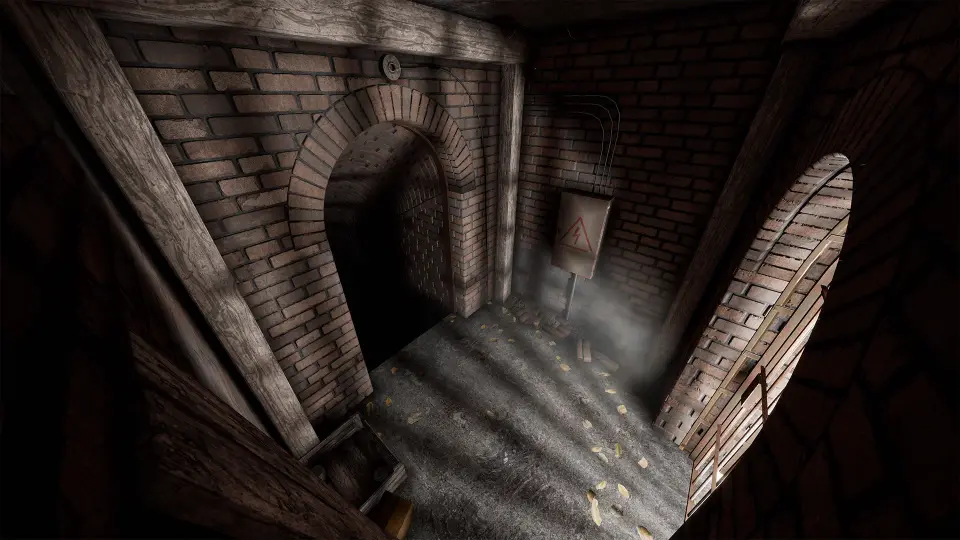
The layout of a subterranean environment must balance believable architectural weight with practical gameplay navigation. Root Cellar delivers a modular level construction capable of forming complete underground chambers as well as extended underground tunnel networks. Instead of locking level builders into a single immutable room geometry, the modular pieces allow the subterranean space to expand according to level requirements.
Modular construction is especially critical in scary and realistic environments where pacing dictates geometry. A designer can assemble a brief descent into a modest household storage room, or extend the assets outward into an intricate series of underground tunnel passageways. Because the structural modules share the same cold, damp, underground aesthetic, transitioning from an open storage room into narrow subterranean hallways maintains consistent visual cohesion throughout the entire level.
Building subterranean levels with modular components also simplifies pathing for patrol routes, puzzle sequences, and environmental barricades. Rooms can feature multiple entry points, dead ends, or branching pathways that disorient the player, which reinforces the psychological vulnerability central to horror level construction.
Proper Epic Player Scale Across Doorways, Stairs, and Doors
Environmental believability collapses quickly if player characters cannot transition naturally through structural openings. In game engines, standard collision capsules require precise clearance to avoid visual hitching, camera clipping, or awkward movement resistance. The doorways, stairs, and doors in Root Cellar are proportioned to match the default Epic player scale.
Standardized scaling ensures that characters built using default Epic skeletons and collision profiles clear every threshold cleanly. Stairs match the default stepping height and angle expected by standard movement components, preventing the character controller from stuttering or getting caught during descent. Similarly, doorways and doors provide the correct vertical and horizontal clearance so that first-person cameras do not collide with lintels and third-person over-the-shoulder cameras maintain stable framing when passing through thresholds.
This attention to scale consistency simplifies level greyboxing and final assembly. Designers do not need to apply arbitrary transformation offsets or reshape collision hulls to allow default player pawns to walk down into the cellar or open doors between modular tunnel segments. The architectural proportions function out of the box with default movement settings.
Managing Baked Lighting and Disabling Lumen in Unreal Engine 5
Lighting defines the damp, cold, and scary atmosphere of an underground scene. Root Cellar was originally developed for Unreal Engine 4 using baked lighting, and the artistic intent of the scene remains rooted in that static lighting pipeline. When light is precomputed into lightmaps, soft ambient occlusion, subtle bounce light, and deep subterranean shadow gradients settle permanently into the surfaces, capturing the heavy, stagnant air of an underground vault.
For developers intending to utilize the environment inside Unreal Engine 5, maintaining this specific visual presentation requires a deliberate technical choice: Lumen must be disabled. Unreal Engine 5 introduces real-time global illumination through Lumen by default, which overrides traditional baked static lightmaps. In a scene developed around baked lighting, active Lumen lighting can wash out carefully tuned contrast, alter ambient shadow depths, and introduce unexpected real-time calculations where precomputed accuracy was originally intended.
Disabling Lumen ensures that the engine falls back to evaluating the baked lightmaps exactly as designed. The precomputed bounce light remains stable, dark crevices stay consistently pitch-black without real-time noise or temporal caching artifacts, and the performance overhead associated with real-time global illumination is eliminated. For horror scenes where precise shadow placement is essential to sustain fear, relying on baked lighting ensures that every shadow boundary remains fixed and predictable.
Projects and Teams That Benefit Most from the Root Cellar Setup
Production teams developing horror games, vintage survival scenarios, and atmospheric level segments gain the most value from this environment. The asset pack addresses several practical level-design challenges simultaneously by offering realistic underground tunnel and cellar modularity that fits default character dimensions without requiring scale rework.
Teams committed to static lighting workflows or optimizing performance on hardware where real-time global illumination is impractical will appreciate the scene's baked lighting foundation. By preserving precomputed lighting and disabling Lumen in newer engine versions, developers achieve an immediate, high-contrast subterranean look that stays true to its original UE4 craftsmanship while functioning smoothly inside modern project environments.
 Abandoned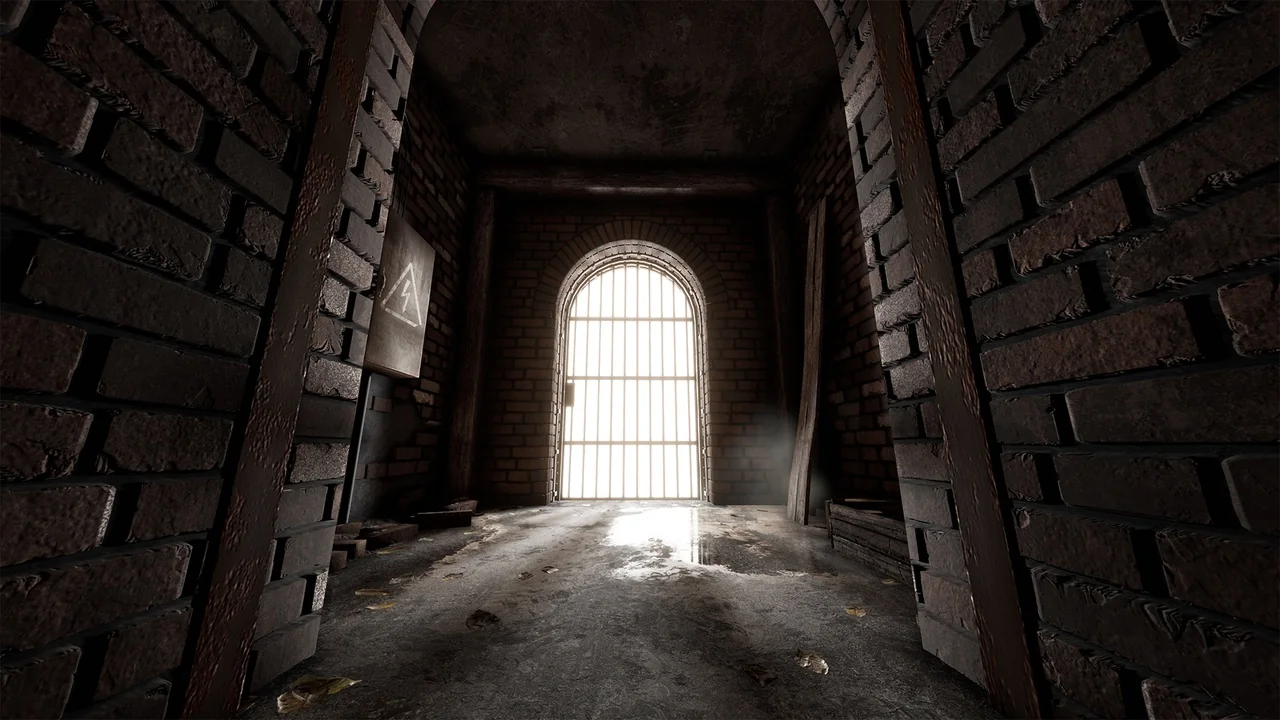
 Abandoned
 Abandoned
 Abandoned