"a338a1d501976271"{"id":"1001332","slug":"abandoned-post-apocalyptic-hospital-environment-abandoned-hospital-old","title":"Abandoned / Post - Apocalyptic Hospital Environment ( Abandoned Hospital Old )","category":"Abandoned","engine":"4.22+,5.0+","assetVersion":"","engineVersion":"Engine Version: 4.22+,5.0+","tag":"Abandoned","accent":"blue","visual":"city","summary":"Technical overview of the Abandoned / Post - Apocalyptic Hospital Environment, covering 105 unique motifs, ULAT modular assembly, and game-ready setups.","platform":"Unreal Engine","publishedAt":"2026-10-04T09:58:05.310Z","updatedAt":"2026-10-04T09:58:05.310Z","sourceNotes":[],"fileContents":[],"compatibility":["Unreal Engine","Engine Version: 4.22+,5.0+"],"featuredImage":{"alt":"Abandoned / Post - Apocalyptic Hospital Environment ( Abandoned Hospital Old )","src":"/wp-content/uploads/published/2026/10/9628a5e0a675-999f5b7f-18a3-4a50-877f-6c0fd8456656-6c3642100f.webp"},"hasDownloadLink":true,"downloads":0,"terms":[{"taxonomy":"category","slug":"abandoned","name":"Abandoned"}],"galleryImages":[{"src":"/wp-content/uploads/published/2026/10/3e4b21bb3b9f-4d764adf-9fee-4c89-a26e-4a777e43ad92-66b07960e7.webp","alt":"Abandoned / Post - Apocalyptic Hospital Environment ( Abandoned Hospital Old )"},{"src":"/wp-content/uploads/published/2026/10/3b827fdccc05-18ba281f-30dc-4073-90d5-28d5453d2b7f-0b417f370a.webp","alt":"Abandoned / Post - Apocalyptic Hospital Environment ( Abandoned Hospital Old )"},{"src":"/wp-content/uploads/published/2026/10/76e817379075-e2ad89f0-249a-42a9-81cb-a4fb97e60070-18c91ee5e9.webp","alt":"Abandoned / Post - Apocalyptic Hospital Environment ( Abandoned Hospital Old )"},{"src":"/wp-content/uploads/published/2026/10/3dfa3f2738c6-efec8a8e-40db-4948-9645-92b4df1700a8-d6a0269a36.webp","alt":"Abandoned / Post - Apocalyptic Hospital Environment ( Abandoned Hospital Old )"},{"src":"/wp-content/uploads/published/2026/10/eb250e61366e-93a82831-c856-42a4-946e-70bee719c7ea-db17c48c5a.webp","alt":"Abandoned / Post - Apocalyptic Hospital Environment ( Abandoned Hospital Old )"},{"src":"/wp-content/uploads/published/2026/10/cdeb865067fd-700b7e3f-5b16-46d4-b514-d0e613644d39-2267f7c185.webp","alt":"Abandoned / Post - Apocalyptic Hospital Environment ( Abandoned Hospital Old )"},{"src":"/wp-content/uploads/published/2026/10/89b57eba9eec-b7da1700-77b3-4c3c-89b1-d071fb7e0880-49afe13657.webp","alt":"Abandoned / Post - Apocalyptic Hospital Environment ( Abandoned Hospital Old )"}],"accessPanel":{"kind":"resource","title":"Download this resource","eyebrow":"Free Download","message":"Log in or create a free account to start your download.","fileName":"Content.7z","safetyNote":"Resources are manually reviewed before listing to improve quality and reduce obvious risks.","actionLabel":"Download Free","resourceType":"Resource archive"},"contentHtml":"\u003ch2\u003eIntegrating the Abandoned Hospital Environment into Real-Time Pipelines\u003c/h2\u003e\u003cp\u003eDeploying the Abandoned / Post - Apocalyptic Hospital Environment ( Abandoned Hospital Old ) into an active production pipeline starts with the layout of its spatial architecture. Designed specifically for real-time virtual production levels and game-ready environments, the asset collection centers around an extensive institutional structure showing severe physical neglect, disaster aftermath, and biological containment failure. Setting up the environment requires organizing the foundation geometry to match the spatial logic of an authentic medical facility before layering the specific wear, structural damage, and debris patterns.\u003c/p\u003e\u003cp\u003eBecause the pack is configured for real-time rendering, individual assets feature calibrated levels of detail to maintain rendering performance across complex indoor vistas. The environment moves smoothly between tight, claustrophobic examination rooms and deep, dusty corridors lined with empty hallways, broken windows, and cracked walls. Production teams can establish immediate scene blockage using primary walls and doorways, then branch out into specialized medical wings such as emergency rooms, psychiatric asylum wards, clinics, and subterranean bunker sections.\u003c/p\u003e\u003ch2\u003eModular Layout Construction via the Ultimate Level Art Tool (ULAT)\u003c/h2\u003e\u003cp\u003eAssembly efficiency in this environment pack relies on the inclusion of the Ultimate Level Art Tool, known as ULAT. Originally titled as a modular design development tool for mobile and web-based systems, ULAT serves as a dedicated layout and placement engine within the editor. The environment pack is natively compatible with the tool, allowing environment artists and level designers to bypass repetitive manual placement when assembling large-scale institutional interiors.\u003c/p\u003e\u003cp\u003eULAT streamlines two primary workflow tasks: the generation of custom modular architectural shells and the natural population of dressing props. When assembling large hospital wings, level designers can configure modular building blocks rapidly, ensuring wall joints, ceiling tiles, and cracked floor slabs align without seams. Beyond basic structural placement, the tool facilitates natural prop dispersion throughout the scene. Rather than hand-placing every clinical accessory, artists can leverage the tool's population algorithms to drop surgical tools, scattered medical files, and discarded furniture into believable, physics-informed arrangements. Access to the standalone tooling package and accompanying setup resources is handled through a project ticket system.\u003c/p\u003e\u003ch2\u003eStaging 105 Unique Motifs Across Clinical and Quarantine Zones\u003c/h2\u003e\u003cp\u003eVisual diversity across the facility is anchored by 105 unique motifs. These motifs supply the specialized narrative set dressing needed to distinguish ordinary architectural decay from an active biological or radiological crisis. Instead of relying on generic derelict props, the asset library delivers detailed props dedicated to high-consequence medical incidents, contagion outbreaks, and abrupt structural abandonment.\u003c/p\u003e\u003cp\u003eThe collection breaks down into several distinct functional areas:\u003c/p\u003e\u003cul\u003e\u003cli\u003e\u003cstrong\u003eEmergency and Primary Care:\u003c/strong\u003e Rusted beds, empty examination beds, ransacked cabinets, faded posters, and scattered medicine supplies suitable for sorting areas and triage wings.\u003c/li\u003e\u003cli\u003e\u003cstrong\u003eSurgical Suites:\u003c/strong\u003e Abandoned surgery fixtures, overhead surgical lamps, specialized surgical tools, and cracked clinical flooring marked with blood stains.\u003c/li\u003e\u003cli\u003e\u003cstrong\u003ePathology and Containment:\u003c/strong\u003e Morgue refrigeration units, biohazard markers, radioactive caution tape, and toxic waste staging elements indicative of contaminated zones.\u003c/li\u003e\u003cli\u003e\u003cstrong\u003eInfection Control Infrastructure:\u003c/strong\u003e Quarantine barriers, makeshift emergency exit blockades, and cordoned-off checkpoints characteristic of a pandemic containment collapse.\u003c/li\u003e\u003c/ul\u003e\u003cp\u003eThese motifs make it possible to build layered environmental storytelling. One wing can reflect an initial medical response with organized emergency supplies and advisory posters, while adjacent wards depict total panic, complete with overturned equipment, flickering lights, broken windows, overgrown vegetation breaching structural boundaries, and ransacked medicine storage.\u003c/p\u003e\u003ch2\u003eTechnical Configuration for Virtual Production and Game Projects\u003c/h2\u003e\u003cp\u003eThe pack is tuned to meet the dual requirements of real-time gameplay interaction and high-fidelity virtual production backdrops. In virtual production scenarios, background assets must hold high visual fidelity under intense camera scrutiny and direct cinematic lighting without introducing geometry faceting or low-resolution surface artifacts. The assets in this collection maintain clean silhouette definition and detailed surface wear, allowing virtual cameras to frame close-up character interactions against medical machinery or derelict walls without visual breakdown.\u003c/p\u003e\u003cp\u003eFor game development, optimization is maintained through structured geometry budgets and consistent level of detail transitions. Indoor medical environments often present difficult occlusion conditions due to interconnected rooms and sightlines stretching through broken doors and cracked walls. The asset collection balances geometry density against engine draw call overhead, making it practical to populate dense horror-themed scenarios, zombie apocalypse survival settings, or dark underground bunkers without causing performance drops during intense gameplay events.\u003c/p\u003e\u003ch2\u003eAI Integration Kit Support and Production Maintenance\u003c/h2\u003e\u003cp\u003eBeyond traditional level art workflows, this hospital environment provides structural compatibility with the NWIRO AI Integration Kit. This technical bridge connects the environment assets with Unreal Copilot, Model Context Protocol (MCP) integrations, inverse kinematics (IK) systems, and the Ultimate AI Bridge MCP framework. Integrating these toolsets enables automated scene processing, programmatic asset queries, and AI-assisted layout adjustments inside the engine, connecting classic modular design with modern procedural and intelligent editor workflows.\u003c/p\u003e\u003cp\u003eLong-term maintenance and technical implementation are managed directly through structured support pipelines. Inquiries regarding technical troubleshooting, asset integration guidance, and promotional requests are handled via support tickets, ensuring that production teams utilizing the environment for active commercial games or virtual broadcasts maintain consistent operational reliability throughout their production cycle.\u003c/p\u003e\n\n\u003ch2\u003eRelated Resources Worth Checking\u003c/h2\u003e\n\u003cul\u003e\n\u003cli\u003e\u003ca href=\"https://3dcghub.com/the-carnival-environment-post-apocalyptic-circus-amusement-parks-carnival/\" title=\"The Carnival Environment ( Post Apocalyptic Circus Amusement Parks Carnival )\"\u003eThe Carnival Environment ( Post Apocalyptic Circus Amusement Parks Carnival )\u003c/a\u003e\u003c/li\u003e\n\u003cli\u003e\u003ca href=\"https://3dcghub.com/old-minimarket-complete-environment/\" title=\"Old minimarket complete environment\"\u003eOld minimarket complete environment\u003c/a\u003e\u003c/li\u003e\n\u003cli\u003e\u003ca href=\"https://3dcghub.com/abandoned-factory-industrial-railway-zone-update-v-2/\" title=\"ABANDONED FACTORY / Industrial railway zone (Update V.2)\"\u003eABANDONED FACTORY / Industrial railway zone (Update V.2)\u003c/a\u003e\u003c/li\u003e\n\u003cli\u003e\u003ca href=\"https://3dcghub.com/abandoned-industrial-stairwell/\" title=\"Abandoned Industrial Stairwell\"\u003eAbandoned Industrial Stairwell\u003c/a\u003e\u003c/li\u003e\n\u003cli\u003e\u003ca href=\"https://3dcghub.com/abandoned-chapel/\" title=\"Abandoned Chapel\"\u003eAbandoned Chapel\u003c/a\u003e\u003c/li\u003e\n\u003c/ul\u003e","contentTextLength":6715,"navigation":{"current":70,"total":3338,"previous":{"id":"1001333","slug":"action-music-vol-ii","title":"Action Music Vol. II","category":"Music","platform":"Unreal Engine","updatedAt":"2026-10-04T10:00:04.234Z"},"next":{"id":"1000964","slug":"rome-fantasy-pack-i","title":"Rome Fantasy Pack I","category":"Fantasy","platform":"Unreal Engine","updatedAt":"2026-10-04T08:42:17.590Z"}},"relatedResources":[{"id":"6776","slug":"the-carnival-environment-post-apocalyptic-circus-amusement-parks-carnival","title":"The Carnival Environment ( Post Apocalyptic Circus Amusement Parks Carnival )","category":"Abandoned","engine":"5.2+","assetVersion":"Engine version: 5.2+","engineVersion":"5.2","tag":"Abandoned","accent":"blue","visual":"city","summary":"Transform your project with a hauntingly detailed post-apocalyptic carnival. This pack includes 67 unique meshes, Lumen support, and advanced level design tools for professional results.","platform":"Unreal Engine","publishedAt":"2026-02-20T15:23:14.000Z","updatedAt":"2026-04-19T15:56:07.000Z","sourceNotes":[],"fileContents":[],"compatibility":["Unreal Engine","Engine version: 5.2+"],"featuredImage":{"alt":"The Carnival Environment ( Post Apocalyptic Circus Amusement Parks Carnival )","src":"https://3dcghub.com/wp-content/uploads/2026/02/62335bbe-c6fd-4b9a-bc8e-55587f0a8dde.webp"},"hasDownloadLink":true,"downloads":1},{"id":"6759","slug":"old-minimarket-complete-environment","title":"Old minimarket complete environment","category":"Abandoned","engine":"5.0+","assetVersion":"Engine version: 5.0+","engineVersion":"5.0","tag":"Abandoned","accent":"blue","visual":"city","summary":"Build a gritty and realistic retail scene with this fully optimized asset pack. It includes a detailed market area, storage room, and bathroom with baked lighting for maximum performance.","platform":"Unreal Engine","publishedAt":"2026-02-20T15:19:38.000Z","updatedAt":"2026-04-19T15:56:07.000Z","sourceNotes":[],"fileContents":[],"compatibility":["Unreal Engine","Engine version: 5.0+"],"featuredImage":{"alt":"Old minimarket complete environment","src":"https://3dcghub.com/wp-content/uploads/2026/02/0480fc26-7f8b-4079-89c6-e8407765a5e0.webp"},"hasDownloadLink":true,"downloads":0},{"id":"1001038","slug":"abandoned-factory-industrial-railway-zone-update-v-2","title":"ABANDONED FACTORY / Industrial railway zone (Update V.2)","category":"Abandoned","engine":"4.27,5.0+","assetVersion":"","engineVersion":"Engine Version: 4.27,5.0+","tag":"Abandoned","accent":"blue","visual":"mech","summary":"The V.2 update brings two pre-assembled levels, modular enterable factory buildings, vertex-painted ground materials, and a LOD-to-Nanite workflow.","platform":"Unreal Engine","publishedAt":"2026-08-27T10:13:05.620Z","updatedAt":"2026-08-27T10:13:05.620Z","sourceNotes":[],"fileContents":[],"compatibility":["Unreal Engine","Engine Version: 4.27,5.0+"],"featuredImage":{"alt":"ABANDONED FACTORY / Industrial railway zone (Update V.2)","src":"/wp-content/uploads/published/2026/08/4a5ab4769ce7-cb2ebff5-ca80-4b1b-bd0b-146d6ce653c8-80d800d987.webp"},"hasDownloadLink":true,"downloads":3}]}
Abandoned
Abandoned / Post - Apocalyptic Hospital Environment ( Abandoned Hospital Old )
Technical overview of the Abandoned / Post - Apocalyptic Hospital Environment, covering 105 unique motifs, ULAT modular assembly, and game-ready setups.
Category:Unreal Engine,AbandonedPlatform: Unreal EngineEngine Version: 4.22+,5.0+Published: Oct 4, 2026
Abandoned
Resource overview
Integrating the Abandoned Hospital Environment into Real-Time Pipelines
Deploying the Abandoned / Post - Apocalyptic Hospital Environment ( Abandoned Hospital Old ) into an active production pipeline starts with the layout of its spatial architecture. Designed specifically for real-time virtual production levels and game-ready environments, the asset collection centers around an extensive institutional structure showing severe physical neglect, disaster aftermath, and biological containment failure. Setting up the environment requires organizing the foundation geometry to match the spatial logic of an authentic medical facility before layering the specific wear, structural damage, and debris patterns.
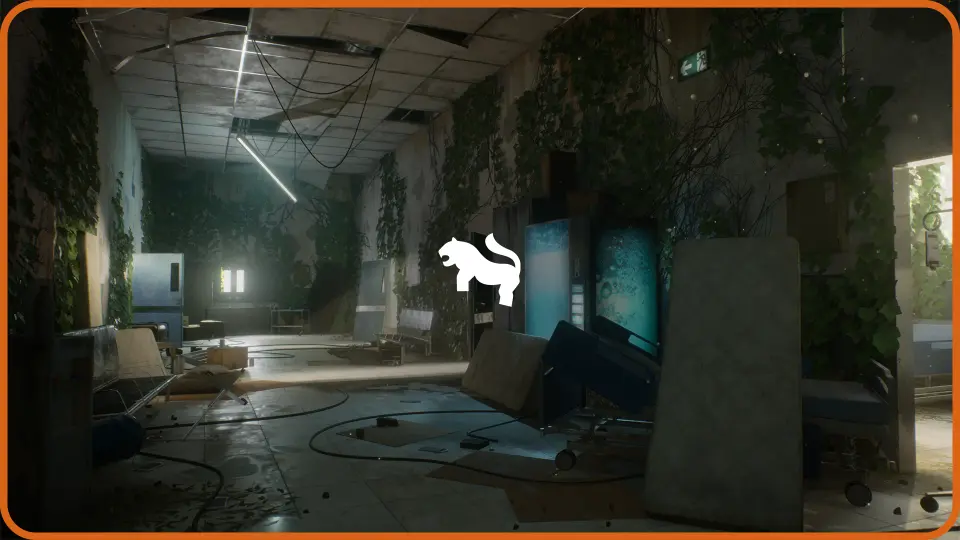
Because the pack is configured for real-time rendering, individual assets feature calibrated levels of detail to maintain rendering performance across complex indoor vistas. The environment moves smoothly between tight, claustrophobic examination rooms and deep, dusty corridors lined with empty hallways, broken windows, and cracked walls. Production teams can establish immediate scene blockage using primary walls and doorways, then branch out into specialized medical wings such as emergency rooms, psychiatric asylum wards, clinics, and subterranean bunker sections.
Modular Layout Construction via the Ultimate Level Art Tool (ULAT)
Assembly efficiency in this environment pack relies on the inclusion of the Ultimate Level Art Tool, known as ULAT. Originally titled as a modular design development tool for mobile and web-based systems, ULAT serves as a dedicated layout and placement engine within the editor. The environment pack is natively compatible with the tool, allowing environment artists and level designers to bypass repetitive manual placement when assembling large-scale institutional interiors.
ULAT streamlines two primary workflow tasks: the generation of custom modular architectural shells and the natural population of dressing props. When assembling large hospital wings, level designers can configure modular building blocks rapidly, ensuring wall joints, ceiling tiles, and cracked floor slabs align without seams. Beyond basic structural placement, the tool facilitates natural prop dispersion throughout the scene. Rather than hand-placing every clinical accessory, artists can leverage the tool's population algorithms to drop surgical tools, scattered medical files, and discarded furniture into believable, physics-informed arrangements. Access to the standalone tooling package and accompanying setup resources is handled through a project ticket system.
Staging 105 Unique Motifs Across Clinical and Quarantine Zones
Visual diversity across the facility is anchored by 105 unique motifs. These motifs supply the specialized narrative set dressing needed to distinguish ordinary architectural decay from an active biological or radiological crisis. Instead of relying on generic derelict props, the asset library delivers detailed props dedicated to high-consequence medical incidents, contagion outbreaks, and abrupt structural abandonment.
The collection breaks down into several distinct functional areas:
Emergency and Primary Care: Rusted beds, empty examination beds, ransacked cabinets, faded posters, and scattered medicine supplies suitable for sorting areas and triage wings.
Surgical Suites: Abandoned surgery fixtures, overhead surgical lamps, specialized surgical tools, and cracked clinical flooring marked with blood stains.
Pathology and Containment: Morgue refrigeration units, biohazard markers, radioactive caution tape, and toxic waste staging elements indicative of contaminated zones.
Infection Control Infrastructure: Quarantine barriers, makeshift emergency exit blockades, and cordoned-off checkpoints characteristic of a pandemic containment collapse.
These motifs make it possible to build layered environmental storytelling. One wing can reflect an initial medical response with organized emergency supplies and advisory posters, while adjacent wards depict total panic, complete with overturned equipment, flickering lights, broken windows, overgrown vegetation breaching structural boundaries, and ransacked medicine storage.
Technical Configuration for Virtual Production and Game Projects
The pack is tuned to meet the dual requirements of real-time gameplay interaction and high-fidelity virtual production backdrops. In virtual production scenarios, background assets must hold high visual fidelity under intense camera scrutiny and direct cinematic lighting without introducing geometry faceting or low-resolution surface artifacts. The assets in this collection maintain clean silhouette definition and detailed surface wear, allowing virtual cameras to frame close-up character interactions against medical machinery or derelict walls without visual breakdown.
For game development, optimization is maintained through structured geometry budgets and consistent level of detail transitions. Indoor medical environments often present difficult occlusion conditions due to interconnected rooms and sightlines stretching through broken doors and cracked walls. The asset collection balances geometry density against engine draw call overhead, making it practical to populate dense horror-themed scenarios, zombie apocalypse survival settings, or dark underground bunkers without causing performance drops during intense gameplay events.
AI Integration Kit Support and Production Maintenance
Beyond traditional level art workflows, this hospital environment provides structural compatibility with the NWIRO AI Integration Kit. This technical bridge connects the environment assets with Unreal Copilot, Model Context Protocol (MCP) integrations, inverse kinematics (IK) systems, and the Ultimate AI Bridge MCP framework. Integrating these toolsets enables automated scene processing, programmatic asset queries, and AI-assisted layout adjustments inside the engine, connecting classic modular design with modern procedural and intelligent editor workflows.
Long-term maintenance and technical implementation are managed directly through structured support pipelines. Inquiries regarding technical troubleshooting, asset integration guidance, and promotional requests are handled via support tickets, ensuring that production teams utilizing the environment for active commercial games or virtual broadcasts maintain consistent operational reliability throughout their production cycle.
 Abandoned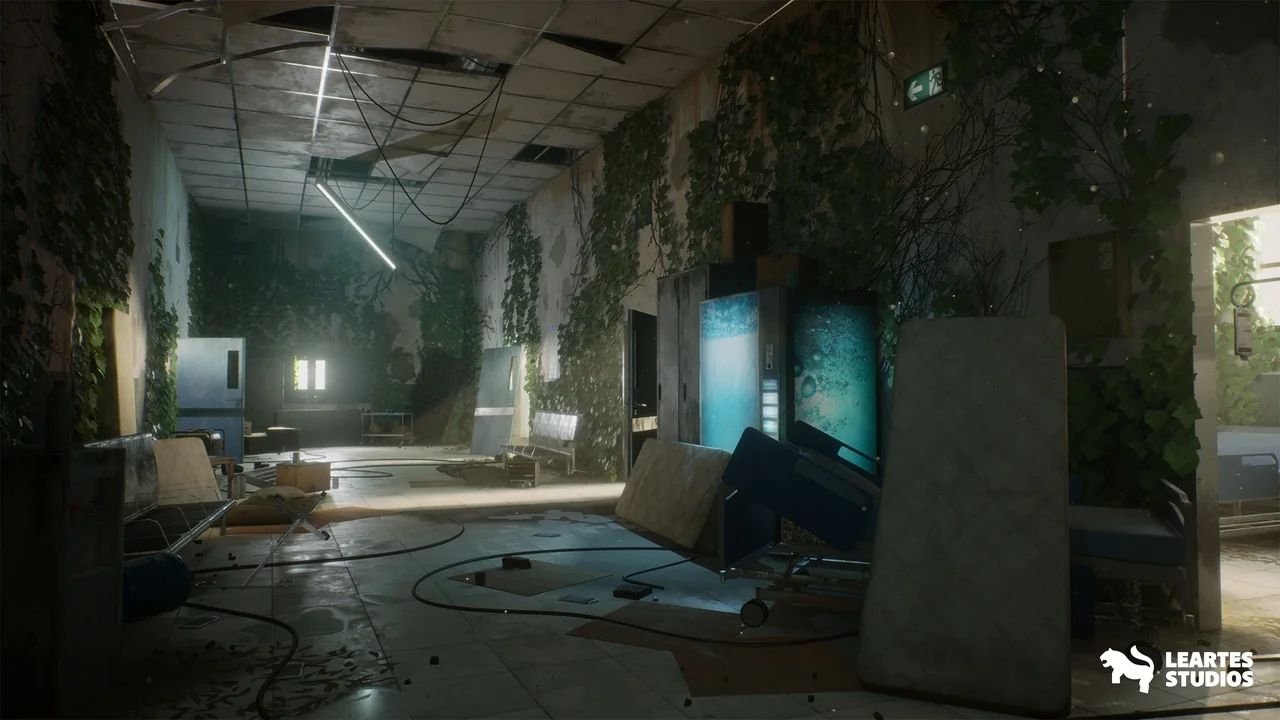
 Abandoned
 Abandoned
 Abandoned