"c68a05d5e51405b3"{"id":"27242","slug":"abandoned-russian-building","title":"Abandoned Russian Building","category":"Abandoned","engine":"4.26+,5.0+","assetVersion":"Engine version: 4.26+,5.0+","engineVersion":" ","tag":"Abandoned","accent":"blue","visual":"city","summary":"A decaying Soviet-era building gives horror scenes a bleak, enclosed place to unfold. The interior takes priority, while exterior pieces stay in the background, and the lighting setup is meant to stay baked if the scene is used in UE5.","platform":"Unreal Engine","publishedAt":"2026-04-23T04:12:10.000Z","updatedAt":"2026-04-23T04:12:13.000Z","sourceNotes":[],"fileContents":[],"compatibility":["Unreal Engine","Engine version: 4.26+,5.0+"],"featuredImage":{"alt":"Abandoned Russian Building","src":"https://3dcghub.com/wp-content/uploads/2026/04/134773e64463_c0be0b90-da6c-4324-9f0a-924af8ec2bc4.webp"},"hasDownloadLink":true,"downloads":8,"terms":[{"taxonomy":"category","slug":"abandoned","name":"Abandoned"},{"taxonomy":"post_tag","slug":"characters","name":"Characters"},{"taxonomy":"post_tag","slug":"environment","name":"Environment"},{"taxonomy":"post_tag","slug":"unreal-engine-5","name":"Unreal Engine 5"}],"galleryImages":[{"src":"https://3dcghub.com/wp-content/uploads/2026/04/6b7c1a526ff2_caec0f4f-63a3-4165-bd3a-a46745b0d9fb.webp","alt":"Abandoned Russian Building"},{"src":"https://3dcghub.com/wp-content/uploads/2026/04/420a71552f6f_c833b87c-9f7e-4ad4-96e3-c74cc3a6180a.webp","alt":"Abandoned Russian Building"},{"src":"https://3dcghub.com/wp-content/uploads/2026/04/e54d767fe357_ac38547f-fd03-4a2b-84a8-13ab3acdaf56.webp","alt":"Abandoned Russian Building"},{"src":"https://3dcghub.com/wp-content/uploads/2026/04/5dff62c0bb91_ebce021b-9ac5-4e21-ada9-5ca3b09e4c98.webp","alt":"Abandoned Russian Building"},{"src":"https://3dcghub.com/wp-content/uploads/2026/04/043bd6e7d0cd_a0d6636f-1e8c-4622-afc1-3efc39259993.webp","alt":"Abandoned Russian Building"},{"src":"https://3dcghub.com/wp-content/uploads/2026/04/6b4bc30c325f_2e171d8d-49fc-4cb6-9a40-baef90e0b0bb.webp","alt":"Abandoned Russian Building"},{"src":"https://3dcghub.com/wp-content/uploads/2026/04/6507fedcbad5_2a0397c9-760b-486a-87c6-3f5a95307398.webp","alt":"Abandoned Russian Building"},{"src":"https://3dcghub.com/wp-content/uploads/2026/04/d1176685d71b_543c72ef-cf40-4c99-926a-9407ca2f5c78.webp","alt":"Abandoned Russian Building"},{"src":"https://3dcghub.com/wp-content/uploads/2026/04/d5b9e57d8b69_9ff71b92-5ab1-4262-bdb5-5cdcd014c06d.webp","alt":"Abandoned Russian Building"},{"src":"https://3dcghub.com/wp-content/uploads/2026/04/1505c0f3fa46_7fcf95da-8686-4d5d-8c1d-47c94f669cb4.webp","alt":"Abandoned Russian Building"}],"accessPanel":{"kind":"resource","title":"Access this resource","eyebrow":"Free Download","message":"Log in or create a free account to start your download.","fileName":"Content.7z","safetyNote":"All resources are 100% manually reviewed to eliminate all risks.","actionLabel":"Download Free","resourceType":"Resource archive"},"contentHtml":"\u003ch2\u003eA bleak interior for tense scenes\u003c/h2\u003e\u003cp\u003eAbandoned Russian Building immediately points to a specific kind of environment: a decaying Soviet-era interior that feels worn down, enclosed, and ready for horror. The strongest use for it is in scenes that need a heavy sense of neglect without drifting into something generic. Its identity comes from the architecture itself, which makes it useful when the building has to do a lot of the storytelling on its own.\u003c/p\u003e\u003cp\u003eThat kind of space can support careful exploration, tight movement, and tense pacing. The atmosphere is not clean or neutral. It leans into abandonment, industrial roughness, and the visual weight of older Soviet construction. For artists and developers, that gives the scene a clear purpose from the start: it is meant to place players inside a location that already feels like trouble before anything happens.\u003c/p\u003e\u003cp\u003eThe visual keywords tied to it point in the same direction. Stalker, Metro, industrial, realism, photorealism, and horror all sit comfortably around the same mood. The building does not need a lot of explanation once it is placed in a level; the setting carries its own tension.\u003c/p\u003e\u003ch2\u003eInterior-first, with the exterior held back\u003c/h2\u003e\u003cp\u003eThe scene is focused on the interior, even though exterior assets are included. Those exterior pieces are meant for background detail rather than as the main draw. That keeps the structure grounded in enclosed space, which is useful when the goal is to build a location that feels confined and lived-in only by time, damage, and neglect.\u003c/p\u003e\u003cp\u003eFor scene-building, that balance matters. The interior can take center stage while the outside supports the building’s presence from within the level. It is a practical arrangement for projects that want the feeling of a complete place without shifting the focus away from rooms, corridors, and interior movement. The architecture stays readable from the inside, and the exterior serves the composition instead of competing with it.\u003c/p\u003e\u003cp\u003eThe corridor tag fits that use especially well. Corridors naturally narrow the player’s view, strengthen suspense, and make abandoned spaces feel more claustrophobic. In a horror environment, that kind of layout can make the building feel like a sequence of pressure points rather than a broad open shell. The result is a location that can guide attention through its own structure.\u003c/p\u003e\u003ch2\u003eIndustrial weight and brutalist shape\u003c/h2\u003e\u003cp\u003eThe tagging also points toward brutalism, modular, realistic, school, and industrial ideas. Taken together, those labels suggest a place with hard geometry, repeated forms, and a grounded look rather than a decorative one. The Soviet-era identity sharpens that further, giving the building a specific cultural and visual character instead of a vague ruined interior.\u003c/p\u003e\u003cp\u003eThat makes the scene useful for developers who want a building that reads quickly at a glance. The mood is carried by mass, repetition, and age. Brutalist and industrial cues help the interior feel heavy and severe, while the modular label suggests a structure that can be worked with in sections. Even without stepping outside the facts of the scene, it is easy to see why it suits environments where geometry and atmosphere matter more than ornament.\u003c/p\u003e\u003cp\u003eThe school tag expands the possible tone a little, but the core identity stays the same: abandoned, Soviet-era, and unnerving. That is a strong combination for settings that need an institutional feel, a forgotten public building, or a place that has been left to decay long enough to become hostile.\u003c/p\u003e\u003ch2\u003eBaked lighting is part of how it should be used\u003c/h2\u003e\u003cp\u003eThis scene was originally developed for UE4 with baked lighting, and that is not a small detail. If it is used in UE5, the lighting approach is meant to stay baked as well, which means Lumen needs to be disabled for the scene to work correctly. The lighting method is part of the intended presentation, not just a technical footnote.\u003c/p\u003e\u003cp\u003eFor artists, that makes the lighting workflow straightforward: keep the prepared look and do not push it into a different rendering path that changes how the scene behaves. For developers, it sets the expectation that shadows, brightness, and atmosphere are tied to a prelit setup. In a horror environment, that can be an advantage, because the mood depends on controlled light and dark rather than constantly shifting illumination.\u003c/p\u003e\u003cp\u003eThe technical note also helps define how the building should be approached in a project. It is a fit for teams that want a stable interior mood and are comfortable working with baked lighting. The scene’s abandoned, photorealistic feel is likely to read best when that lighting approach is preserved.\u003c/p\u003e\u003ch2\u003eWhere it fits most naturally\u003c/h2\u003e\u003cp\u003eAbandoned Russian Building works best in projects that need a decayed, Soviet-era location with an interior-first layout and a clear horror identity. It matches stalker-inspired scenes, metro-like spaces, industrial settings, and other bleak environments that depend on age and confinement. The combination of realistic presentation, brutalist character, and corridor-driven layout makes it easy to place in a tense level without forcing the style.\u003c/p\u003e\u003cp\u003eFor a project that needs a worn Russian building with baked lighting and a strong sense of abandonment, this scene is a direct fit. It is at its best when the interior is allowed to carry the mood and the background exterior detail stays secondary, exactly where it belongs.\u003c/p\u003e\n\n\u003ch2\u003eMore From The Same Workflow\u003c/h2\u003e\n\u003cul\u003e\n\u003cli\u003e\u003ca href=\"https://3dcghub.com/shootlikeme-unreal-engine-third-person-shooter-template/\" title=\"ShootLikeMe – Unreal Engine Third Person Shooter Template\"\u003eShootLikeMe – Unreal Engine Third Person Shooter Template\u003c/a\u003e\u003c/li\u003e\n\u003cli\u003e\u003ca href=\"https://3dcghub.com/advanced-unreal-engine-5-multiplayer-gameplay-programming/\" title=\"Advanced Unreal Engine 5 Multiplayer Gameplay Programming\"\u003eAdvanced Unreal Engine 5 Multiplayer Gameplay Programming\u003c/a\u003e\u003c/li\u003e\n\u003cli\u003e\u003ca href=\"https://3dcghub.com/niagara-beginners-to-advanced-in-unreal-engine-5/\" title=\"Niagara Beginners to advanced in Unreal Engine 5\"\u003eNiagara Beginners to advanced in Unreal Engine 5\u003c/a\u003e\u003c/li\u003e\n\u003cli\u003e\u003ca href=\"https://3dcghub.com/create-zelda-like-skills-with-c-in-unreal-engine-5-2/\" title=\"Create Zelda-like skills with C++ in unreal engine 5\"\u003eCreate Zelda-like skills with C++ in unreal engine 5\u003c/a\u003e\u003c/li\u003e\n\u003cli\u003e\u003ca href=\"https://3dcghub.com/main-menus-beginner-class-unreal-engine-5/\" title=\"Main Menus Beginner Class – Unreal Engine 5\"\u003eMain Menus Beginner Class – Unreal Engine 5\u003c/a\u003e\u003c/li\u003e\n\u003c/ul\u003e","contentTextLength":5696,"navigation":{"current":2114,"total":3860,"previous":{"id":"27270","slug":"advanced-road-materials","title":"Advanced road materials","category":"Asphalt","platform":"Unreal Engine","updatedAt":"2026-04-23T16:08:13.000Z"},"next":{"id":"27226","slug":"2handed-hammer-animset","title":"2Handed Hammer AnimSet","category":"Combat","platform":"Unreal Engine","updatedAt":"2026-04-22T14:10:35.000Z"}},"relatedResources":[{"id":"1001038","slug":"abandoned-factory-industrial-railway-zone-update-v-2","title":"ABANDONED FACTORY / Industrial railway zone (Update V.2)","category":"Abandoned","engine":"4.27,5.0+","assetVersion":"","engineVersion":"Engine Version: 4.27,5.0+","tag":"Abandoned","accent":"blue","visual":"mech","summary":"The V.2 update brings two pre-assembled levels, modular enterable factory buildings, vertex-painted ground materials, and a LOD-to-Nanite workflow.","platform":"Unreal Engine","publishedAt":"2026-08-27T10:13:05.620Z","updatedAt":"2026-08-27T10:13:05.620Z","sourceNotes":[],"fileContents":[],"compatibility":["Unreal Engine","Engine Version: 4.27,5.0+"],"featuredImage":{"alt":"ABANDONED FACTORY / Industrial railway zone (Update V.2)","src":"/wp-content/uploads/published/2026/08/4a5ab4769ce7-cb2ebff5-ca80-4b1b-bd0b-146d6ce653c8-80d800d987.webp"},"hasDownloadLink":true,"downloads":4},{"id":"1000243","slug":"abandoned-chapel","title":"Abandoned Chapel","category":"Abandoned","engine":"4.26+,5.0+","assetVersion":"","engineVersion":"Engine Version: 4.26+,5.0+","tag":"Abandoned","accent":"blue","visual":"mech","summary":"A collection of 164 static meshes for building an abandoned chapel and surrounding cemetery, featuring separated architecture and detailed interior props.","platform":"Unreal Engine","publishedAt":"2026-06-30T19:50:40.071Z","updatedAt":"2026-06-30T19:50:40.071Z","sourceNotes":[],"fileContents":[],"compatibility":["Unreal Engine","Engine Version: 4.26+,5.0+"],"featuredImage":{"alt":"Abandoned Chapel","src":"/wp-content/uploads/published/2026/06/c9ae0ab84df5-bbef4edb-ea24-45e6-ba34-59dd0c795c45-10bd2cfbb9.webp"},"hasDownloadLink":true,"downloads":1},{"id":"1000217","slug":"abandoned-building","title":"Abandoned Building","category":"Abandoned","engine":"4.26+,5.0+","assetVersion":"","engineVersion":"Engine Version: 4.26+,5.0+","tag":"Abandoned","accent":"blue","visual":"mech","summary":"A detailed look at the customizable environment materials and structural elements designed for constructing visually distinct abandoned levels.","platform":"Unreal Engine","publishedAt":"2026-06-26T09:59:54.284Z","updatedAt":"2026-06-26T11:58:33.227Z","sourceNotes":[],"fileContents":[],"compatibility":["Unreal Engine","Engine Version: 4.26+,5.0+"],"featuredImage":{"alt":"Abandoned Building","src":"/wp-content/uploads/published/2026/06/9fa72c80892b-e4c2255c-8407-48e1-9e6e-181b4e8a265f-68d77d2b51.webp"},"hasDownloadLink":true,"downloads":0}]}
Abandoned
Abandoned Russian Building
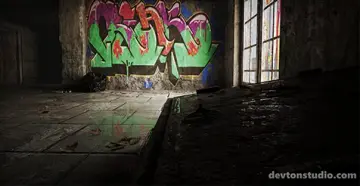
A decaying Soviet-era building gives horror scenes a bleak, enclosed place to unfold. The interior takes priority, while exterior pieces stay in the background, and the lighting setup is meant to stay baked if the scene is used in UE5.
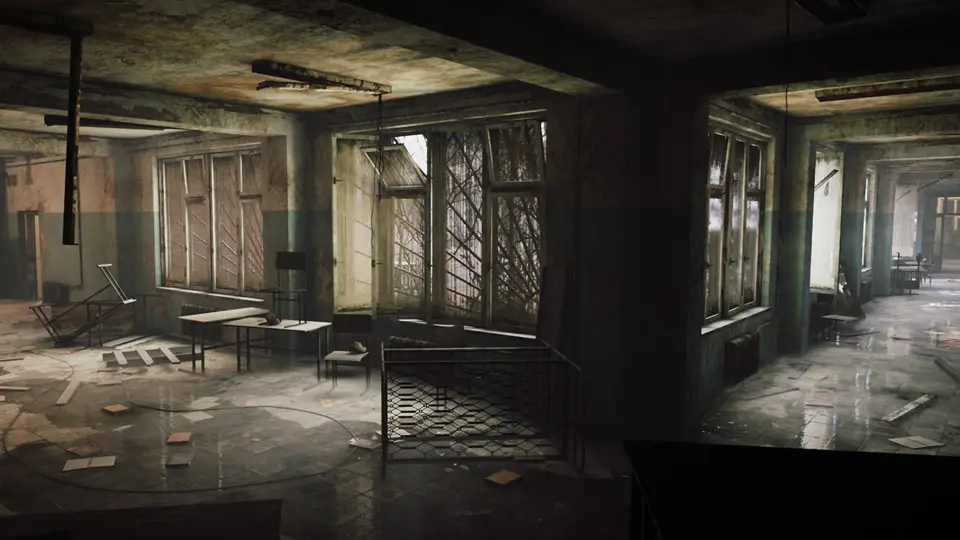
Abandoned Russian Building immediately points to a specific kind of environment: a decaying Soviet-era interior that feels worn down, enclosed, and ready for horror. The strongest use for it is in scenes that need a heavy sense of neglect without drifting into something generic. Its identity comes from the architecture itself, which makes it useful when the building has to do a lot of the storytelling on its own.
That kind of space can support careful exploration, tight movement, and tense pacing. The atmosphere is not clean or neutral. It leans into abandonment, industrial roughness, and the visual weight of older Soviet construction. For artists and developers, that gives the scene a clear purpose from the start: it is meant to place players inside a location that already feels like trouble before anything happens.
The visual keywords tied to it point in the same direction. Stalker, Metro, industrial, realism, photorealism, and horror all sit comfortably around the same mood. The building does not need a lot of explanation once it is placed in a level; the setting carries its own tension.
Interior-first, with the exterior held back
The scene is focused on the interior, even though exterior assets are included. Those exterior pieces are meant for background detail rather than as the main draw. That keeps the structure grounded in enclosed space, which is useful when the goal is to build a location that feels confined and lived-in only by time, damage, and neglect.
For scene-building, that balance matters. The interior can take center stage while the outside supports the building’s presence from within the level. It is a practical arrangement for projects that want the feeling of a complete place without shifting the focus away from rooms, corridors, and interior movement. The architecture stays readable from the inside, and the exterior serves the composition instead of competing with it.
The corridor tag fits that use especially well. Corridors naturally narrow the player’s view, strengthen suspense, and make abandoned spaces feel more claustrophobic. In a horror environment, that kind of layout can make the building feel like a sequence of pressure points rather than a broad open shell. The result is a location that can guide attention through its own structure.
Industrial weight and brutalist shape
The tagging also points toward brutalism, modular, realistic, school, and industrial ideas. Taken together, those labels suggest a place with hard geometry, repeated forms, and a grounded look rather than a decorative one. The Soviet-era identity sharpens that further, giving the building a specific cultural and visual character instead of a vague ruined interior.
That makes the scene useful for developers who want a building that reads quickly at a glance. The mood is carried by mass, repetition, and age. Brutalist and industrial cues help the interior feel heavy and severe, while the modular label suggests a structure that can be worked with in sections. Even without stepping outside the facts of the scene, it is easy to see why it suits environments where geometry and atmosphere matter more than ornament.
The school tag expands the possible tone a little, but the core identity stays the same: abandoned, Soviet-era, and unnerving. That is a strong combination for settings that need an institutional feel, a forgotten public building, or a place that has been left to decay long enough to become hostile.
Baked lighting is part of how it should be used
This scene was originally developed for UE4 with baked lighting, and that is not a small detail. If it is used in UE5, the lighting approach is meant to stay baked as well, which means Lumen needs to be disabled for the scene to work correctly. The lighting method is part of the intended presentation, not just a technical footnote.
For artists, that makes the lighting workflow straightforward: keep the prepared look and do not push it into a different rendering path that changes how the scene behaves. For developers, it sets the expectation that shadows, brightness, and atmosphere are tied to a prelit setup. In a horror environment, that can be an advantage, because the mood depends on controlled light and dark rather than constantly shifting illumination.
The technical note also helps define how the building should be approached in a project. It is a fit for teams that want a stable interior mood and are comfortable working with baked lighting. The scene’s abandoned, photorealistic feel is likely to read best when that lighting approach is preserved.
Where it fits most naturally
Abandoned Russian Building works best in projects that need a decayed, Soviet-era location with an interior-first layout and a clear horror identity. It matches stalker-inspired scenes, metro-like spaces, industrial settings, and other bleak environments that depend on age and confinement. The combination of realistic presentation, brutalist character, and corridor-driven layout makes it easy to place in a tense level without forcing the style.
For a project that needs a worn Russian building with baked lighting and a strong sense of abandonment, this scene is a direct fit. It is at its best when the interior is allowed to carry the mood and the background exterior detail stays secondary, exactly where it belongs.
 Abandoned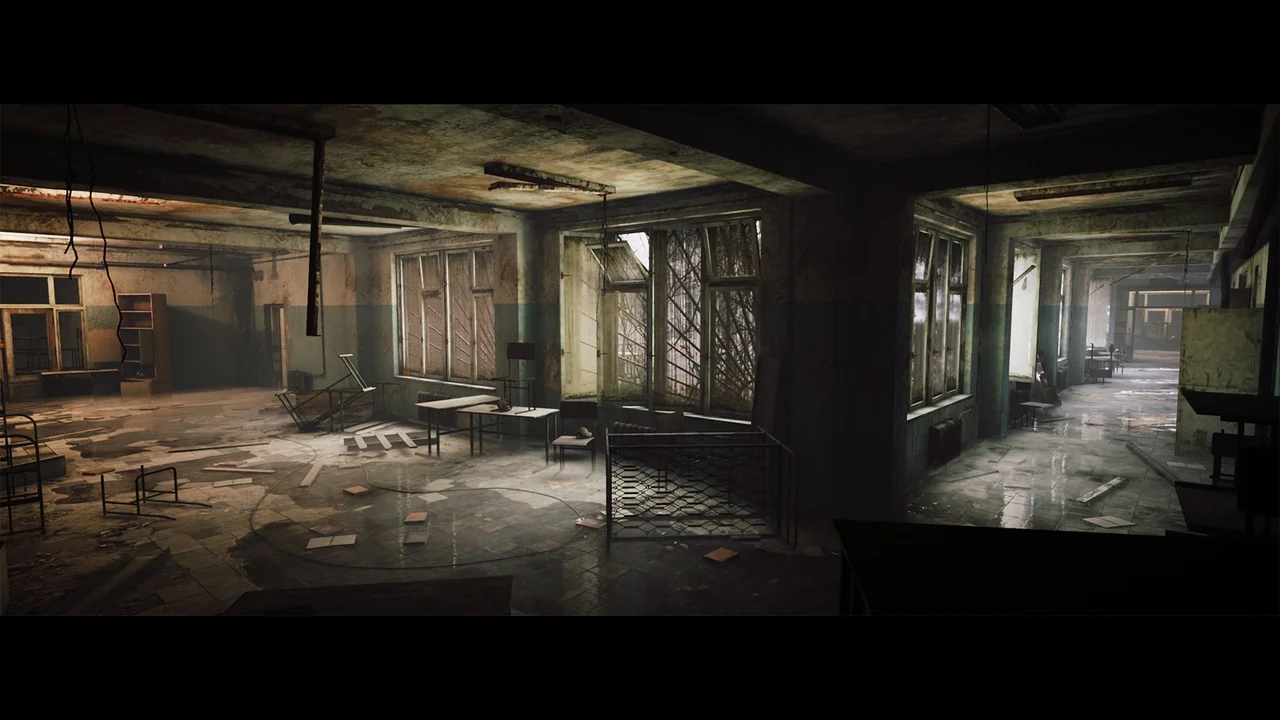
 Abandoned
 Abandoned
 Abandoned