"7e6fc58c410f2894"{"id":"1001618","slug":"abandoned-place","title":"Abandoned Place","category":"Abandoned","engine":"4.26+,5.0+","assetVersion":"","engineVersion":"Engine Version: 4.26+,5.0+","tag":"Abandoned","accent":"blue","visual":"mech","summary":"Examine Abandoned Place, focusing on modular level construction, spline tools, grass dressing, and realistic abandoned environment workflows.","platform":"Unreal Engine","publishedAt":"2026-10-13T01:48:05.949Z","updatedAt":"2026-10-13T01:48:05.949Z","sourceNotes":[],"fileContents":[],"compatibility":["Unreal Engine","Engine Version: 4.26+,5.0+"],"featuredImage":{"alt":"Abandoned Place","src":"https://media.fab.com/image_previews/gallery_images/ac8a5c1f-0a03-49ff-b0f1-2924c0a4a796/3a224317-4f79-4a05-bd8d-2a4836d25f51.png"},"hasDownloadLink":true,"downloads":0,"terms":[{"taxonomy":"category","slug":"abandoned","name":"Abandoned"}],"galleryImages":[{"src":"/wp-content/uploads/published/2026/10/14a51aff712f-627330a1-8d17-435d-aff7-3cfc127f9380-9b8f298c1f.webp","alt":"Abandoned Place"},{"src":"/wp-content/uploads/published/2026/10/c23b1a017e82-251bec7a-e211-43c8-985b-fee920c2bf3f-7cb7e99379.webp","alt":"Abandoned Place"},{"src":"/wp-content/uploads/published/2026/10/640451bb77dc-c6f74cdc-31e4-42d6-9740-06339397b502-209075922e.webp","alt":"Abandoned Place"},{"src":"/wp-content/uploads/published/2026/10/7cf7bb82645f-3f8c7e2c-c7bf-45ef-bce8-58d54d60cbe9-28b481cdac.webp","alt":"Abandoned Place"},{"src":"/wp-content/uploads/published/2026/10/21cec4c4120e-f5abe38f-7246-4b50-8035-b0846c19cf7d-38bc14a118.webp","alt":"Abandoned Place"},{"src":"/wp-content/uploads/published/2026/10/da100572c3cf-ed680a14-e588-4cc2-9fef-d7c8b4af01f3-785f6c9240.webp","alt":"Abandoned Place"},{"src":"/wp-content/uploads/published/2026/10/6c83a23d6c3f-639fce58-10e9-4e4f-b13f-125acf3c0df7-b94a0b233e.webp","alt":"Abandoned Place"},{"src":"/wp-content/uploads/published/2026/10/df86182e3b6f-2cb86537-7b7e-4b95-a6f5-dbf69ace8799-1cd05b23fc.webp","alt":"Abandoned Place"},{"src":"/wp-content/uploads/published/2026/10/2edfa64e2b20-a8d4a934-f3c3-45f9-9c8e-77c01570a36e-e760578c9f.webp","alt":"Abandoned Place"},{"src":"/wp-content/uploads/published/2026/10/4b38da552215-d40b689d-1463-4a7c-b26c-bfcca2e09125-768f89751e.webp","alt":"Abandoned Place"},{"src":"/wp-content/uploads/published/2026/10/ab2f628369d9-20ba8714-4d47-45e3-859d-a6832a93b7e1-3e730f88f8.webp","alt":"Abandoned Place"}],"accessPanel":{"kind":"resource","title":"Download this resource","eyebrow":"Free Download","message":"Log in or create a free account to start your download.","fileName":"Content.7z","safetyNote":"Resources are manually reviewed before listing to improve quality and reduce obvious risks.","actionLabel":"Download Free","resourceType":"Resource archive"},"contentHtml":"\u003ch2\u003eConstructing Environments with Abandoned Place\u003c/h2\u003e\n\u003cp\u003eScene building in games and real-time simulations demands assets that bridge broad structural forms with fine contextual decay. Abandoned Place establishes its visual foundation through weathered decay, offering an environment setup tailored for level construction. Grounded in both realistic surfacing and adaptable fantasy sensibilities, the kit delivers the components required to realize degraded, uninhabited spaces where nature has begun to reclaim man-made architecture.\u003c/p\u003e\n\u003cp\u003eRather than presenting a static, unchangeable backdrop, the environment is framed around modular geometry and interactive layout tools. This approach allows developers to break down large scenes into manageable spatial blocks. By balancing structural elements against organic overgrowth such as grass, the kit establishes a contrast between aged, fabricated surfaces and natural degradation. The resulting aesthetic supports settings ranging from grounded modern ruin studies to stylized, fantasy-infused world exploration.\u003c/p\u003e \u003ch2\u003eSplines for Organic Layouts and Pathing\u003c/h2\u003e\n\u003cp\u003ePlacing structural assets and continuous environmental elements by hand can rapidly become tedious across a sprawling map. Splines play a dedicated operational role within Abandoned Place, giving technical artists and level designers a controlled framework for drawing paths, arranging repetitive structures, and establishing clean visual flow throughout an exterior or interior expanse.\u003c/p\u003e\n\u003cp\u003eWorking with spline systems provides direct control over curvature, elevation changes, and density distribution. When laying out an abandoned exterior or routing pathways through rubble and overgrowth, splines prevent the repetitive, rigid grid alignment that often breaks realism. Curves follow the contour of the terrain naturally, guiding movement across an expansive level layout while keeping geometry aligned along custom paths. This functionality reduces the iteration time necessary to drape assets across uneven ground or wrap architectural dressing around complex perimeter zones.\u003c/p\u003e \u003ch2\u003eModular Building Blocks and Level Design Flow\u003c/h2\u003e\n\u003cp\u003eModularity stands as the architectural core of the package. Creating realistic abandoned spaces requires broken patterns, uneven transitions, and varied room shapes rather than repetitive, identical corridors. The modular foundation inside Abandoned Place permits continuous reconfiguration, letting teams block out unique building footprints, vary structural collapse, and iterate rapidly during graybox and set-dressing stages.\u003c/p\u003e\n\u003cp\u003eModular pieces can be snapped, arranged, and layered to form both expansive open zones and confined choke points. In gameplay spaces, this flexibility allows level designers to adjust sightlines, construct navigation cover, and adjust player pacing without departing from the cohesive aesthetic of the scene. Because individual pieces share stylistic coherence, assembling varying combinations does not introduce visual clashes or break continuity across a larger level.\u003c/p\u003e \u003ch2\u003eFoliage Dressing with Realistic Grass\u003c/h2\u003e\n\u003cp\u003eAn abandoned setting loses its sense of elapsed time without convincing botanical reclamation. Grass serves as a core environmental tag within Abandoned Place, functioning as a primary bridge between cold architectural materials and living terrain. The inclusion of realistic grass provides the surface dressing necessary to break up harsh ground edges, conceal structural seams, and visually date the location.\u003c/p\u003e\n\u003cp\u003eGrass assets within the pack supply visual softness across hard, weathered surfaces. Dispersing realistic grass along cracked masonry, foundational edges, and open clearings reinforces the narrative of prolonged neglect. The contrast between realistic vegetation and degraded structural geometry reinforces immersion, whether the project leans toward a strictly authentic representation of historical decay or steps into atmospheric fantasy world-building.\u003c/p\u003e \u003ch2\u003eContextualizing Hotel Room and Interior Structures\u003c/h2\u003e\n\u003cp\u003eThe collection integrates thematic utility for hotel room spaces, enabling the creation of degraded interior hospitality environments alongside broader outdoor layouts. Hotel room structures present distinct challenges in environmental storytelling: tight quarters, standardized layouts, and personal spaces that emphasize human absence once abandoned.\u003c/p\u003e\n\u003cp\u003eBuilding out a dilapidated hotel room setup involves balancing modular wall alignments with specific architectural decay. Doors, partitions, and floor surfaces need to reflect neglect while preserving recognizable room proportions. When integrated alongside the broader modular exterior assets, the hotel room context provides a logical interior destination or starting point within a wider exploratory level. Designers can transition a player seamlessly from dense outdoor foliage and grass straight into ruined interior suites, maintaining environmental coherence across both domains.\u003c/p\u003e \u003ch2\u003ePractical Implementation and Production Value\u003c/h2\u003e\n\u003cp\u003eWhen selecting environment kits for active production pipelines, adaptability determines long-term utility. Abandoned Place accommodates distinct thematic targets through its dual alignment with realistic rendering and fantasy world design. The combination of modular structural components, spline-driven continuous geometry, dedicated grass foliage, and indoor-ready spaces ensures teams can tackle diverse layout requirements without stitching together conflicting visual kits.\u003c/p\u003e\n\u003cp\u003eTeams building level scenes benefit from using modular elements that scale from single-room vignettes up to complete interactive levels. By leaning on splines to map out organic transitions and leveraging grass assets to age the scene, the pack provides the concrete building blocks necessary to ground abandoned environmental spaces effectively.\u003c/p\u003e\n\n\u003ch2\u003eContinue Browsing Similar Packs\u003c/h2\u003e\n\u003cul\u003e\n\u003cli\u003e\u003ca href=\"https://3dcghub.com/abandoned-russian-building/\" title=\"Abandoned Russian Building\"\u003eAbandoned Russian Building\u003c/a\u003e\u003c/li\u003e\n\u003cli\u003e\u003ca href=\"https://3dcghub.com/abandoned-factory-industrial-railway-zone-update-v-2/\" title=\"ABANDONED FACTORY / Industrial railway zone (Update V.2)\"\u003eABANDONED FACTORY / Industrial railway zone (Update V.2)\u003c/a\u003e\u003c/li\u003e\n\u003cli\u003e\u003ca href=\"https://3dcghub.com/1940s-abandoned-office-modular/\" title=\"1940\u0026#039;s Abandoned Office (Modular)\"\u003e1940\u0026#039;s Abandoned Office (Modular)\u003c/a\u003e\u003c/li\u003e\n\u003cli\u003e\u003ca href=\"https://3dcghub.com/abandoned-post-apocalyptic-hospital-environment-abandoned-hospital-old/\" title=\"Abandoned / Post - Apocalyptic Hospital Environment ( Abandoned Hospital Old )\"\u003eAbandoned / Post - Apocalyptic Hospital Environment ( Abandoned Hospital Old )\u003c/a\u003e\u003c/li\u003e\n\u003cli\u003e\u003ca href=\"https://3dcghub.com/abandoned-industrial-stairwell/\" title=\"Abandoned Industrial Stairwell\"\u003eAbandoned Industrial Stairwell\u003c/a\u003e\u003c/li\u003e\n\u003c/ul\u003e","contentTextLength":6050,"navigation":{"current":65,"total":3618,"previous":{"id":"1001619","slug":"anon-s-dialogue-system","title":"Anon's Dialogue System","category":"Dialog Systems","platform":"Unreal Engine","updatedAt":"2026-10-13T01:48:36.473Z"},"next":{"id":"1001617","slug":"inventory-system-pro-by-moonville","title":"Inventory System Pro by Moonville","category":"Gameplay Features","platform":"Unreal Engine","updatedAt":"2026-10-11T01:45:57.813Z"}},"relatedResources":[{"id":"27242","slug":"abandoned-russian-building","title":"Abandoned Russian Building","category":"Abandoned","engine":"4.26+,5.0+","assetVersion":"Engine version: 4.26+,5.0+","engineVersion":" ","tag":"Abandoned","accent":"blue","visual":"city","summary":"A decaying Soviet-era building gives horror scenes a bleak, enclosed place to unfold. The interior takes priority, while exterior pieces stay in the background, and the lighting setup is meant to stay baked if the scene is used in UE5.","platform":"Unreal Engine","publishedAt":"2026-04-23T04:12:10.000Z","updatedAt":"2026-04-23T04:12:13.000Z","sourceNotes":[],"fileContents":[],"compatibility":["Unreal Engine","Engine version: 4.26+,5.0+"],"featuredImage":{"alt":"Abandoned Russian Building","src":"https://3dcghub.com/wp-content/uploads/2026/04/134773e64463_c0be0b90-da6c-4324-9f0a-924af8ec2bc4.webp"},"hasDownloadLink":true,"downloads":7},{"id":"1001038","slug":"abandoned-factory-industrial-railway-zone-update-v-2","title":"ABANDONED FACTORY / Industrial railway zone (Update V.2)","category":"Abandoned","engine":"4.27,5.0+","assetVersion":"","engineVersion":"Engine Version: 4.27,5.0+","tag":"Abandoned","accent":"blue","visual":"mech","summary":"The V.2 update brings two pre-assembled levels, modular enterable factory buildings, vertex-painted ground materials, and a LOD-to-Nanite workflow.","platform":"Unreal Engine","publishedAt":"2026-08-27T10:13:05.620Z","updatedAt":"2026-08-27T10:13:05.620Z","sourceNotes":[],"fileContents":[],"compatibility":["Unreal Engine","Engine Version: 4.27,5.0+"],"featuredImage":{"alt":"ABANDONED FACTORY / Industrial railway zone (Update V.2)","src":"/wp-content/uploads/published/2026/08/4a5ab4769ce7-cb2ebff5-ca80-4b1b-bd0b-146d6ce653c8-80d800d987.webp"},"hasDownloadLink":true,"downloads":4},{"id":"6698","slug":"1940s-abandoned-office-modular","title":"1940's Abandoned Office (Modular)","category":"Abandoned","engine":"4.25+,5.0+","assetVersion":"","engineVersion":"Engine Version: 4.25+,5.0+","tag":"Abandoned","accent":"blue","visual":"city","summary":"Create a hauntingly realistic atmosphere with this modular environment kit. Perfect for war-torn or epidemic-themed settings, it offers full customization and high-quality assets for digital creators.","platform":"Unreal Engine","publishedAt":"2026-02-20T10:36:49.000Z","updatedAt":"2026-10-04T11:54:36.202Z","sourceNotes":[],"fileContents":[],"compatibility":["Unreal Engine","Engine Version: 4.25+,5.0+"],"featuredImage":{"alt":"1940's Abandoned Office (Modular)","src":"https://3dcghub.com/wp-content/uploads/2026/02/03184061-d4e7-43d8-ac62-41d89c499d19-4.webp"},"hasDownloadLink":true,"downloads":0}]}
Abandoned
Abandoned Place
Examine Abandoned Place, focusing on modular level construction, spline tools, grass dressing, and realistic abandoned environment workflows.
Category:Unreal Engine,AbandonedPlatform: Unreal EngineEngine Version: 4.26+,5.0+Published: Oct 13, 2026
Abandoned
Resource overview
Constructing Environments with Abandoned Place
Scene building in games and real-time simulations demands assets that bridge broad structural forms with fine contextual decay. Abandoned Place establishes its visual foundation through weathered decay, offering an environment setup tailored for level construction. Grounded in both realistic surfacing and adaptable fantasy sensibilities, the kit delivers the components required to realize degraded, uninhabited spaces where nature has begun to reclaim man-made architecture.
Rather than presenting a static, unchangeable backdrop, the environment is framed around modular geometry and interactive layout tools. This approach allows developers to break down large scenes into manageable spatial blocks. By balancing structural elements against organic overgrowth such as grass, the kit establishes a contrast between aged, fabricated surfaces and natural degradation. The resulting aesthetic supports settings ranging from grounded modern ruin studies to stylized, fantasy-infused world exploration.
Splines for Organic Layouts and Pathing
Placing structural assets and continuous environmental elements by hand can rapidly become tedious across a sprawling map. Splines play a dedicated operational role within Abandoned Place, giving technical artists and level designers a controlled framework for drawing paths, arranging repetitive structures, and establishing clean visual flow throughout an exterior or interior expanse.
Working with spline systems provides direct control over curvature, elevation changes, and density distribution. When laying out an abandoned exterior or routing pathways through rubble and overgrowth, splines prevent the repetitive, rigid grid alignment that often breaks realism. Curves follow the contour of the terrain naturally, guiding movement across an expansive level layout while keeping geometry aligned along custom paths. This functionality reduces the iteration time necessary to drape assets across uneven ground or wrap architectural dressing around complex perimeter zones.
Modular Building Blocks and Level Design Flow
Modularity stands as the architectural core of the package. Creating realistic abandoned spaces requires broken patterns, uneven transitions, and varied room shapes rather than repetitive, identical corridors. The modular foundation inside Abandoned Place permits continuous reconfiguration, letting teams block out unique building footprints, vary structural collapse, and iterate rapidly during graybox and set-dressing stages.
Modular pieces can be snapped, arranged, and layered to form both expansive open zones and confined choke points. In gameplay spaces, this flexibility allows level designers to adjust sightlines, construct navigation cover, and adjust player pacing without departing from the cohesive aesthetic of the scene. Because individual pieces share stylistic coherence, assembling varying combinations does not introduce visual clashes or break continuity across a larger level.
Foliage Dressing with Realistic Grass
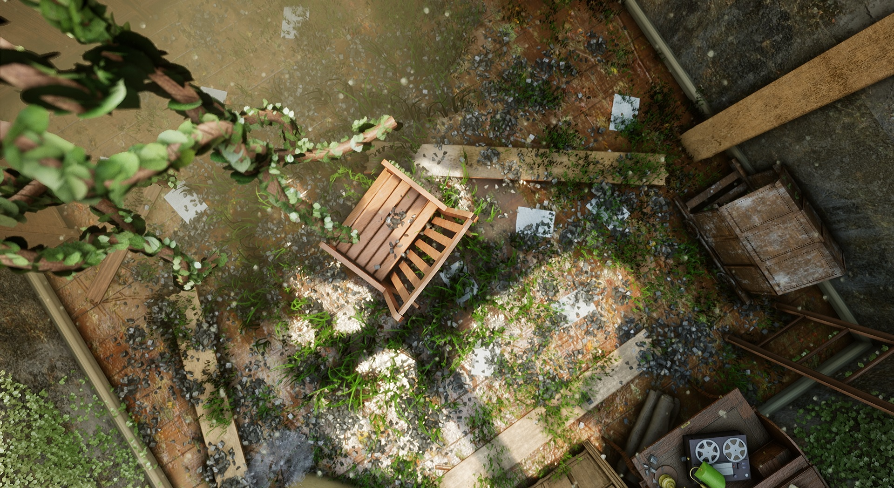
An abandoned setting loses its sense of elapsed time without convincing botanical reclamation. Grass serves as a core environmental tag within Abandoned Place, functioning as a primary bridge between cold architectural materials and living terrain. The inclusion of realistic grass provides the surface dressing necessary to break up harsh ground edges, conceal structural seams, and visually date the location.
Grass assets within the pack supply visual softness across hard, weathered surfaces. Dispersing realistic grass along cracked masonry, foundational edges, and open clearings reinforces the narrative of prolonged neglect. The contrast between realistic vegetation and degraded structural geometry reinforces immersion, whether the project leans toward a strictly authentic representation of historical decay or steps into atmospheric fantasy world-building.
Contextualizing Hotel Room and Interior Structures
The collection integrates thematic utility for hotel room spaces, enabling the creation of degraded interior hospitality environments alongside broader outdoor layouts. Hotel room structures present distinct challenges in environmental storytelling: tight quarters, standardized layouts, and personal spaces that emphasize human absence once abandoned.
Building out a dilapidated hotel room setup involves balancing modular wall alignments with specific architectural decay. Doors, partitions, and floor surfaces need to reflect neglect while preserving recognizable room proportions. When integrated alongside the broader modular exterior assets, the hotel room context provides a logical interior destination or starting point within a wider exploratory level. Designers can transition a player seamlessly from dense outdoor foliage and grass straight into ruined interior suites, maintaining environmental coherence across both domains.
Practical Implementation and Production Value
When selecting environment kits for active production pipelines, adaptability determines long-term utility. Abandoned Place accommodates distinct thematic targets through its dual alignment with realistic rendering and fantasy world design. The combination of modular structural components, spline-driven continuous geometry, dedicated grass foliage, and indoor-ready spaces ensures teams can tackle diverse layout requirements without stitching together conflicting visual kits.
Teams building level scenes benefit from using modular elements that scale from single-room vignettes up to complete interactive levels. By leaning on splines to map out organic transitions and leveraging grass assets to age the scene, the pack provides the concrete building blocks necessary to ground abandoned environmental spaces effectively.
 Abandoned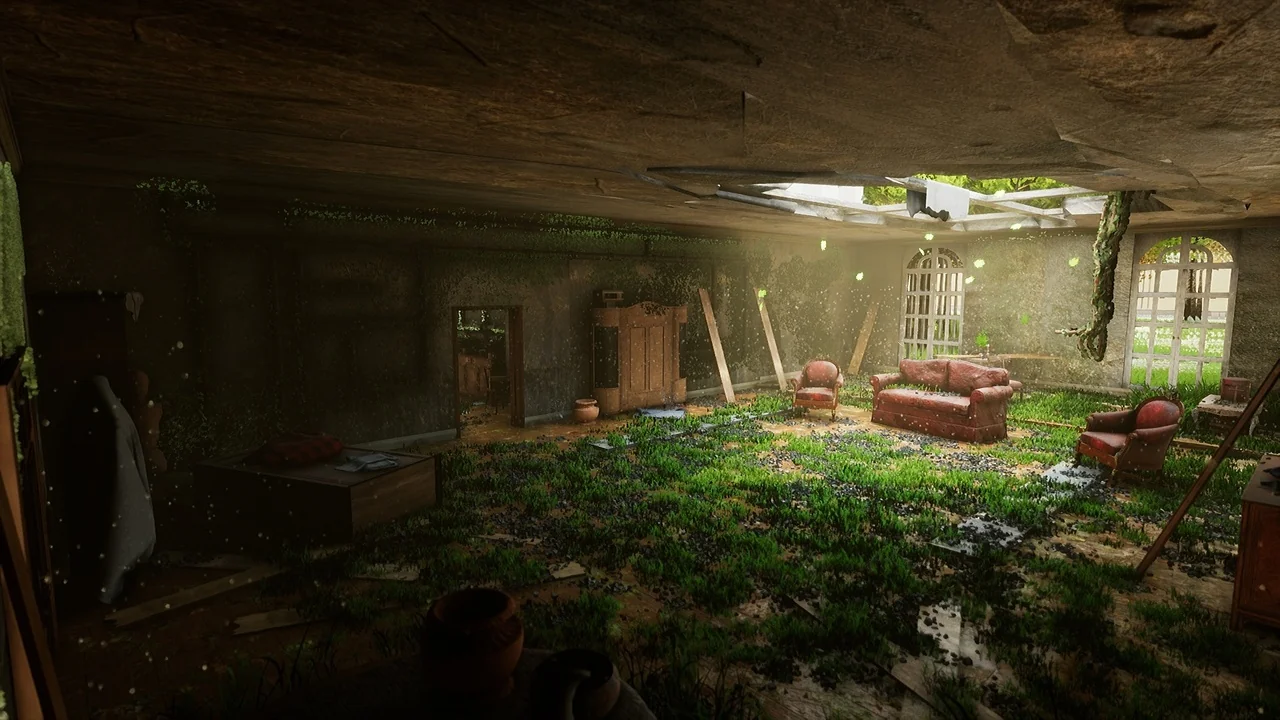
 Abandoned
 Abandoned
 Abandoned