"7e6fc58c410f2894"{"id":"1001636","slug":"horror-military-bunker","title":"Horror Military Bunker","category":"Abandoned","engine":"4.26+,5.0+","assetVersion":"","engineVersion":"Engine Version: 4.26+,5.0+","tag":"Abandoned","accent":"blue","visual":"mech","summary":"Examine the Horror Military Bunker modular environment, featuring baked lighting setups for UE4 and UE5, underground tunnel compatibility, and eerie layouts.","platform":"Unreal Engine","publishedAt":"2026-10-13T02:14:19.354Z","updatedAt":"2026-10-13T02:14:19.354Z","sourceNotes":[],"fileContents":[],"compatibility":["Unreal Engine","Engine Version: 4.26+,5.0+"],"featuredImage":{"alt":"Horror Military Bunker","src":"/wp-content/uploads/published/2026/10/39c2ac8b8ac1-d373823e-a6a9-460f-a77b-8a563e960069-0ca66d4ff6.webp"},"hasDownloadLink":true,"downloads":0,"terms":[{"taxonomy":"category","slug":"abandoned","name":"Abandoned"}],"galleryImages":[{"src":"/wp-content/uploads/published/2026/10/e0da5c2b8c01-3edfd7b8-9c99-455e-9275-c9c1907610ad-a67fa810b9.webp","alt":"Horror Military Bunker"},{"src":"/wp-content/uploads/published/2026/10/14a3ebef460f-04595c4e-e637-4bf0-b5f6-965e4d307254-55069f8382.webp","alt":"Horror Military Bunker"},{"src":"/wp-content/uploads/published/2026/10/868c83420d5c-cc0a4270-d35e-4206-a7a5-5a83aa98048f-6e99200f27.webp","alt":"Horror Military Bunker"},{"src":"/wp-content/uploads/published/2026/10/c932d06ecaef-a21b4483-1461-440f-956e-c23f32821283-ff0ed925f1.webp","alt":"Horror Military Bunker"},{"src":"/wp-content/uploads/published/2026/10/49547f36d18d-ab96722d-d471-4bb8-abd4-32516808262b-030963988e.webp","alt":"Horror Military Bunker"},{"src":"/wp-content/uploads/published/2026/10/b423b3645964-6a18a8a0-8798-47f4-802b-bd0dd2dbd96e-327175fde7.webp","alt":"Horror Military Bunker"},{"src":"/wp-content/uploads/published/2026/10/5ef1052b4976-c196b39a-5236-4c35-a387-fa552b337395-91ffbf0a3a.webp","alt":"Horror Military Bunker"},{"src":"/wp-content/uploads/published/2026/10/24cf15fff3ed-018ad7c0-99d7-4f67-8369-6121e1cdd2cf-91a62c5947.webp","alt":"Horror Military Bunker"},{"src":"/wp-content/uploads/published/2026/10/4d0fd1b63fad-a8a3893c-bc0c-4dce-aba6-2a52acdf0c17-ec9275fce4.webp","alt":"Horror Military Bunker"}],"accessPanel":{"kind":"resource","title":"Download this resource","eyebrow":"Free Download","message":"Log in or create a free account to start your download.","fileName":"Content.7z","safetyNote":"Resources are manually reviewed before listing to improve quality and reduce obvious risks.","actionLabel":"Download Free","resourceType":"Resource archive"},"contentHtml":"\u003ch2\u003eModular Constructed Missile Bunker Architecture\u003c/h2\u003e\u003cp\u003eSubterranean environments rely heavily on rigid geometry, dense structural framing, and deliberate isolation to convey tension. The modular constructed missile bunker establishes an underground defensive facility characterized by thick bulkheads, heavy accessways, and sprawling underground tunnel layouts. Because the structural segments are built modularly, the installation can be expanded from narrow maintenance passages into vast silo shafts and command chambers without breaking visual continuity.\u003c/p\u003e\u003cp\u003eThe modular framework directly shapes how players move through the scene. Tight, enclosed corridors force cautious movement, while expansive underground junctions open up space for complex tactical encounters or moments of suspense. The geometry reflects the utilitarian footprint of a fortified subterranean base, designed to withstand catastrophic pressure from above while isolating everything within its reinforced concrete perimeter. With modular alignment, the environment provides the flexibility needed to assemble custom floorplans across various types of games, adapting seamlessly whether a project requires a sprawling underground complex or a straightforward linear route.\u003c/p\u003e\u003cp\u003eRather than presenting a functional, fully maintained government outpost, the aesthetic leans into an abandoned, eerie condition. Decay, disuse, and isolation define the space. The visual character takes clear cues from realistic Russian military installations and deep metro systems, where utilitarian industrial engineering meets decades of desertion. By pairing abandoned military hardware with subterranean transit infrastructure, the level provides a naturally scary and atmospheric foundation for horror, survival, and tactical games.\u003c/p\u003e\u003ch2\u003eBaked Lighting Pipeline Between UE4 and UE5\u003c/h2\u003e\u003cp\u003eLighting in a deep underground military complex cannot rely on natural sunlight, skyboxes, or exterior bounce. Every lumen must originate from localized artificial fixtures, emergency strips, or the total absence of illumination. This environment was originally developed for Unreal Engine 4 using baked lighting, a pipeline that bakes high-density static lightmaps directly into surface textures to produce precise contact shadows and soft indirect light bounces.\u003c/p\u003e\u003cp\u003eWhen migrating or utilizing the bunker in Unreal Engine 5, maintaining the artistic intent requires adhering to that precomputed rendering model. The project is explicitly intended to use baked lighting even when deployed inside UE5. Unreal Engine 5 defaults to its dynamic global illumination framework, Lumen, which calculates bounces and indirect radiance in real time using software or hardware ray tracing. However, because this specific scene relies on handcrafted baked lightmass information, leaving Lumen active overrides the baked data and disrupts the intended contrast.\u003c/p\u003e\u003cp\u003eTo ensure the baked lighting functions correctly in Unreal Engine 5, developers must disable Lumen in the project settings or post-process volumes:\u003c/p\u003e\u003cul\u003e\u003cli\u003eOpen Project Settings and navigate to Engine \u0026gt; Rendering \u0026gt; Dynamic Global Illumination.\u003c/li\u003e\u003cli\u003eSwitch the Global Illumination method from Lumen to None or Screen Space to restore reliance on precomputed lightmaps.\u003c/li\u003e\u003cli\u003eSet the Reflection method away from Lumen to match the baked reflection probes and static specular maps.\u003c/li\u003e\u003cli\u003eVerify that static lighting remains enabled in the project configuration so Lightmass data streams into the level cleanly.\u003c/li\u003e\u003c/ul\u003e\u003cp\u003eDisabling Lumen restores the deliberate dark pockets, hard-edged shadow boundaries, and soft ambient falloff baked into the modular mesh surfaces. This ensures that the eerie atmosphere originally authored in UE4 translates into UE5 without unintended exposure compensation, dynamic light leaks, or unexpected screen-space noise.\u003c/p\u003e\u003ch2\u003eAtmosphere, Metro Elements, and Realistic Horror Styling\u003c/h2\u003e\u003cp\u003eUnderground facilities present distinct narrative cues through their visual language. The environmental identity here bridges the gap between cold military fortification and an abandoned underground metro network. The presence of Russian stylistic elements gives the machinery, structural arches, and compartmentalized rooms an austere, heavy-set personality that heightens the psychological weight of the location.\u003c/p\u003e\u003cp\u003eHorror level design depends on controlling what the player cannot see. In an abandoned underground bunker, long sightlines along damp tunnels create perpetual vulnerability, while recessed corners and security vestibules offer hiding spots or threats. The realistic wear embedded in the assets grounds the scene in historical authenticity, making the uncanny and scary qualities feel immediate. When players navigate these underground corridors, the interplay between realistic industrial props and pitch-black maintenance passages reinforces an unnerving, isolated tone.\u003c/p\u003e\u003cp\u003eBecause the environment evokes both a missile bunker and a decommissioned metro network, it easily bridges multiple narrative themes. A survival horror title can treat the site as a sealed post-apocalyptic shelter, while an underground military shooter can use it as a fortified subterranean redoubt. The architectural tags—ranging from realistic to eerie—reflect an environment capable of shifting tone based purely on encounter placement and audio staging.\u003c/p\u003e\u003ch2\u003eUnderground Tunnel Compatibility and Level Expansion\u003c/h2\u003e\u003cp\u003eLevel assembly in large projects often requires stitching distinct modular systems together. This missile bunker environment features compatibility with underground tunnel segments, allowing creators to connect subterranean military installations directly to wider underground transit networks, escape ducts, or connecting transit shafts.\u003c/p\u003e\u003cp\u003eThis compatibility solves a common production bottleneck: transitioning between distinct functional areas. An expansive missile bunker needs physical justification for how personnel, equipment, and ordnance arrived underground. Connecting the modular bunker blocks to underground tunnel systems provides a natural transitional path. Designers can build sequences that move from an abandoned rail or metro tunnel directly through blast doors into heavily fortified missile silos and tactical control rooms.\u003c/p\u003e\u003cp\u003eThe modular assembly allows teams to adjust pacing throughout a level:\u003c/p\u003e\u003cul\u003e\u003cli\u003eConstruct extended, low-profile underground tunnel corridors to build suspense and enforce restricted movement.\u003c/li\u003e\u003cli\u003eBranch into interconnected bunker storage rooms, mechanical hubs, and security checkpoints to reward exploration.\u003c/li\u003e\u003cli\u003eTransition into vertical missile silos and expansive assembly halls for major level milestones or set-piece encounters.\u003c/li\u003e\u003cli\u003eUtilize modular airlocks and blast gates as natural choke points, load zones, or containment transitions.\u003c/li\u003e\u003c/ul\u003e\u003ch2\u003eProduction Assessment for Underground Horror Levels\u003c/h2\u003e\u003cp\u003eChoosing an asset collection based on precomputed light maps requires a clear technical understanding of project scope. For productions prioritizing stable frame rates on lower-spec hardware or targeting precise, unmoving shadow volumes, baked lighting remains an effective rendering path. It eliminates the GPU overhead associated with real-time ray-traced global illumination, freeing up processing budgets for dense volumetric fog, audio processing, or artificial intelligence logic.\u003c/p\u003e\u003cp\u003eThe decisive technical factor when bringing the Horror Military Bunker into modern production pipelines is managing its lighting transition. Teams building projects in UE4 can deploy the level immediately as designed. Teams operating in UE5 must explicitly plan for a static lighting pipeline by disabling Lumen to preserve the original visual mood and precomputed contrast. When that requirement is accounted for, the asset pack provides a robust, atmospheric underground environment suited for intense horror scenarios, tactical incursions, and abandoned subterranean exploration across multiple game genres.\u003c/p\u003e\n\n\u003ch2\u003eExplore Similar Assets\u003c/h2\u003e\n\u003cul\u003e\n\u003cli\u003e\u003ca href=\"https://3dcghub.com/abandoned-industrial-stairwell/\" title=\"Abandoned Industrial Stairwell\"\u003eAbandoned Industrial Stairwell\u003c/a\u003e\u003c/li\u003e\n\u003cli\u003e\u003ca href=\"https://3dcghub.com/abandoned-russian-building/\" title=\"Abandoned Russian Building\"\u003eAbandoned Russian Building\u003c/a\u003e\u003c/li\u003e\n\u003cli\u003e\u003ca href=\"https://3dcghub.com/the-bunker-package/\" title=\"The Bunker Package\"\u003eThe Bunker Package\u003c/a\u003e\u003c/li\u003e\n\u003cli\u003e\u003ca href=\"https://3dcghub.com/grunge-military-horror-dark-gui-ui-kit-commonui-psd-ai-source-files/\" title=\"Grunge / Military / Horror Dark GUI / UI KIT (CommonUI) + psd/ai source files\"\u003eGrunge / Military / Horror Dark GUI / UI KIT (CommonUI) + psd/ai source files\u003c/a\u003e\u003c/li\u003e\n\u003cli\u003e\u003ca href=\"https://3dcghub.com/the-carnival-environment-post-apocalyptic-circus-amusement-parks-carnival/\" title=\"The Carnival Environment ( Post Apocalyptic Circus Amusement Parks Carnival )\"\u003eThe Carnival Environment ( Post Apocalyptic Circus Amusement Parks Carnival )\u003c/a\u003e\u003c/li\u003e\n\u003c/ul\u003e","contentTextLength":8120,"navigation":{"current":47,"total":3618,"previous":{"id":"1001637","slug":"horror-villains-pack","title":"Horror Villains Pack","category":"Characters \u0026 Creatures","platform":"Unreal Engine","updatedAt":"2026-10-13T02:15:47.532Z"},"next":{"id":"1001635","slug":"horror-corridor","title":"Horror Corridor","category":"Horror","platform":"Unreal Engine","updatedAt":"2026-10-13T02:12:52.752Z"}},"relatedResources":[{"id":"1000718","slug":"abandoned-industrial-stairwell","title":"Abandoned Industrial Stairwell","category":"Abandoned","engine":"4.26+,5.0+","assetVersion":"","engineVersion":"Engine Version: 4.26+,5.0+","tag":"Abandoned","accent":"blue","visual":"mech","summary":"A modular 3D environment of a rustic, abandoned industrial stairwell descending into darkness. Modular construction suited for underground tunnel and horror sce","platform":"Unreal Engine","publishedAt":"2026-07-25T19:16:38.332Z","updatedAt":"2026-07-25T19:16:38.332Z","sourceNotes":[],"fileContents":[],"compatibility":["Unreal Engine","Engine Version: 4.26+,5.0+"],"featuredImage":{"alt":"Abandoned Industrial Stairwell","src":"/wp-content/uploads/published/2026/07/d92c3cca4cca-3e3d30b4-9875-4cb5-b02d-9e4a0cd39283-da36c51503.webp"},"hasDownloadLink":true,"downloads":1},{"id":"27242","slug":"abandoned-russian-building","title":"Abandoned Russian Building","category":"Abandoned","engine":"4.26+,5.0+","assetVersion":"Engine version: 4.26+,5.0+","engineVersion":" ","tag":"Abandoned","accent":"blue","visual":"city","summary":"A decaying Soviet-era building gives horror scenes a bleak, enclosed place to unfold. The interior takes priority, while exterior pieces stay in the background, and the lighting setup is meant to stay baked if the scene is used in UE5.","platform":"Unreal Engine","publishedAt":"2026-04-23T04:12:10.000Z","updatedAt":"2026-04-23T04:12:13.000Z","sourceNotes":[],"fileContents":[],"compatibility":["Unreal Engine","Engine version: 4.26+,5.0+"],"featuredImage":{"alt":"Abandoned Russian Building","src":"https://3dcghub.com/wp-content/uploads/2026/04/134773e64463_c0be0b90-da6c-4324-9f0a-924af8ec2bc4.webp"},"hasDownloadLink":true,"downloads":7},{"id":"9323","slug":"the-bunker-package","title":"The Bunker Package","category":"Military / Warzone","engine":"4.26+,5.0+","assetVersion":"Engine version: 4.26+,5.0+","engineVersion":"4.10","tag":"Military / Warzone","accent":"blue","visual":"city","summary":"Create immersive and realistic underground environments with The Bunker Package. This collection of modular brushes and props is perfect for military-themed levels and FPS games.","platform":"Unreal Engine","publishedAt":"2026-03-01T16:27:55.000Z","updatedAt":"2026-04-19T15:51:15.000Z","sourceNotes":[],"fileContents":[],"compatibility":["Unreal Engine","Engine version: 4.26+,5.0+"],"featuredImage":{"alt":"The Bunker Package","src":"https://3dcghub.com/wp-content/uploads/2026/03/1d79e6d4-4bbd-489a-ae60-293b909dd6d4.webp"},"hasDownloadLink":true,"downloads":0}]}
Abandoned
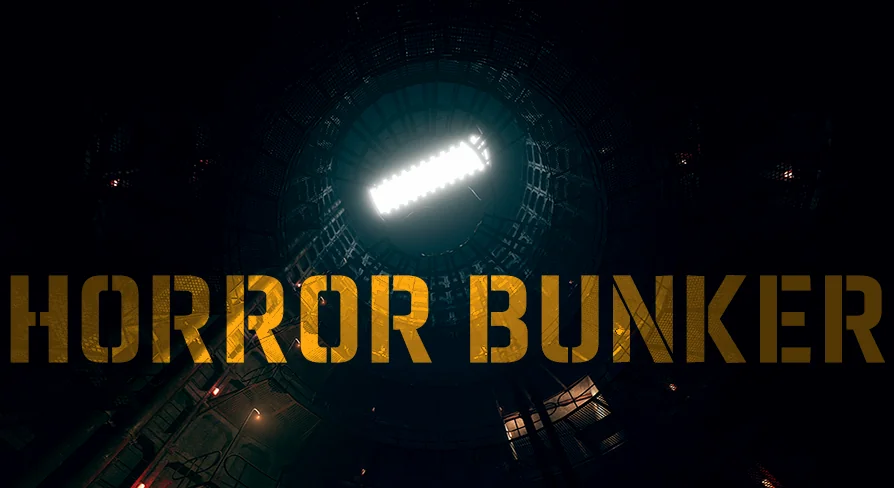
Horror Military Bunker
Examine the Horror Military Bunker modular environment, featuring baked lighting setups for UE4 and UE5, underground tunnel compatibility, and eerie layouts.
Category:Unreal Engine,AbandonedPlatform: Unreal EngineEngine Version: 4.26+,5.0+Published: Oct 13, 2026
Abandoned
Resource overview
Modular Constructed Missile Bunker Architecture
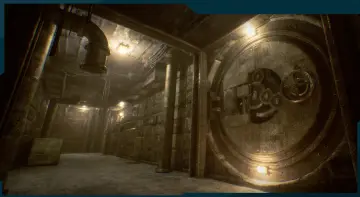
Subterranean environments rely heavily on rigid geometry, dense structural framing, and deliberate isolation to convey tension. The modular constructed missile bunker establishes an underground defensive facility characterized by thick bulkheads, heavy accessways, and sprawling underground tunnel layouts. Because the structural segments are built modularly, the installation can be expanded from narrow maintenance passages into vast silo shafts and command chambers without breaking visual continuity.
The modular framework directly shapes how players move through the scene. Tight, enclosed corridors force cautious movement, while expansive underground junctions open up space for complex tactical encounters or moments of suspense. The geometry reflects the utilitarian footprint of a fortified subterranean base, designed to withstand catastrophic pressure from above while isolating everything within its reinforced concrete perimeter. With modular alignment, the environment provides the flexibility needed to assemble custom floorplans across various types of games, adapting seamlessly whether a project requires a sprawling underground complex or a straightforward linear route.
Rather than presenting a functional, fully maintained government outpost, the aesthetic leans into an abandoned, eerie condition. Decay, disuse, and isolation define the space. The visual character takes clear cues from realistic Russian military installations and deep metro systems, where utilitarian industrial engineering meets decades of desertion. By pairing abandoned military hardware with subterranean transit infrastructure, the level provides a naturally scary and atmospheric foundation for horror, survival, and tactical games.
Baked Lighting Pipeline Between UE4 and UE5
Lighting in a deep underground military complex cannot rely on natural sunlight, skyboxes, or exterior bounce. Every lumen must originate from localized artificial fixtures, emergency strips, or the total absence of illumination. This environment was originally developed for Unreal Engine 4 using baked lighting, a pipeline that bakes high-density static lightmaps directly into surface textures to produce precise contact shadows and soft indirect light bounces.
When migrating or utilizing the bunker in Unreal Engine 5, maintaining the artistic intent requires adhering to that precomputed rendering model. The project is explicitly intended to use baked lighting even when deployed inside UE5. Unreal Engine 5 defaults to its dynamic global illumination framework, Lumen, which calculates bounces and indirect radiance in real time using software or hardware ray tracing. However, because this specific scene relies on handcrafted baked lightmass information, leaving Lumen active overrides the baked data and disrupts the intended contrast.
To ensure the baked lighting functions correctly in Unreal Engine 5, developers must disable Lumen in the project settings or post-process volumes:
Open Project Settings and navigate to Engine > Rendering > Dynamic Global Illumination.
Switch the Global Illumination method from Lumen to None or Screen Space to restore reliance on precomputed lightmaps.
Set the Reflection method away from Lumen to match the baked reflection probes and static specular maps.
Verify that static lighting remains enabled in the project configuration so Lightmass data streams into the level cleanly.
Disabling Lumen restores the deliberate dark pockets, hard-edged shadow boundaries, and soft ambient falloff baked into the modular mesh surfaces. This ensures that the eerie atmosphere originally authored in UE4 translates into UE5 without unintended exposure compensation, dynamic light leaks, or unexpected screen-space noise.
Atmosphere, Metro Elements, and Realistic Horror Styling
Underground facilities present distinct narrative cues through their visual language. The environmental identity here bridges the gap between cold military fortification and an abandoned underground metro network. The presence of Russian stylistic elements gives the machinery, structural arches, and compartmentalized rooms an austere, heavy-set personality that heightens the psychological weight of the location.
Horror level design depends on controlling what the player cannot see. In an abandoned underground bunker, long sightlines along damp tunnels create perpetual vulnerability, while recessed corners and security vestibules offer hiding spots or threats. The realistic wear embedded in the assets grounds the scene in historical authenticity, making the uncanny and scary qualities feel immediate. When players navigate these underground corridors, the interplay between realistic industrial props and pitch-black maintenance passages reinforces an unnerving, isolated tone.
Because the environment evokes both a missile bunker and a decommissioned metro network, it easily bridges multiple narrative themes. A survival horror title can treat the site as a sealed post-apocalyptic shelter, while an underground military shooter can use it as a fortified subterranean redoubt. The architectural tags—ranging from realistic to eerie—reflect an environment capable of shifting tone based purely on encounter placement and audio staging.
Underground Tunnel Compatibility and Level Expansion
Level assembly in large projects often requires stitching distinct modular systems together. This missile bunker environment features compatibility with underground tunnel segments, allowing creators to connect subterranean military installations directly to wider underground transit networks, escape ducts, or connecting transit shafts.
This compatibility solves a common production bottleneck: transitioning between distinct functional areas. An expansive missile bunker needs physical justification for how personnel, equipment, and ordnance arrived underground. Connecting the modular bunker blocks to underground tunnel systems provides a natural transitional path. Designers can build sequences that move from an abandoned rail or metro tunnel directly through blast doors into heavily fortified missile silos and tactical control rooms.
The modular assembly allows teams to adjust pacing throughout a level:
Construct extended, low-profile underground tunnel corridors to build suspense and enforce restricted movement.
Branch into interconnected bunker storage rooms, mechanical hubs, and security checkpoints to reward exploration.
Transition into vertical missile silos and expansive assembly halls for major level milestones or set-piece encounters.
Utilize modular airlocks and blast gates as natural choke points, load zones, or containment transitions.
Production Assessment for Underground Horror Levels
Choosing an asset collection based on precomputed light maps requires a clear technical understanding of project scope. For productions prioritizing stable frame rates on lower-spec hardware or targeting precise, unmoving shadow volumes, baked lighting remains an effective rendering path. It eliminates the GPU overhead associated with real-time ray-traced global illumination, freeing up processing budgets for dense volumetric fog, audio processing, or artificial intelligence logic.
The decisive technical factor when bringing the Horror Military Bunker into modern production pipelines is managing its lighting transition. Teams building projects in UE4 can deploy the level immediately as designed. Teams operating in UE5 must explicitly plan for a static lighting pipeline by disabling Lumen to preserve the original visual mood and precomputed contrast. When that requirement is accounted for, the asset pack provides a robust, atmospheric underground environment suited for intense horror scenarios, tactical incursions, and abandoned subterranean exploration across multiple game genres.
 Abandoned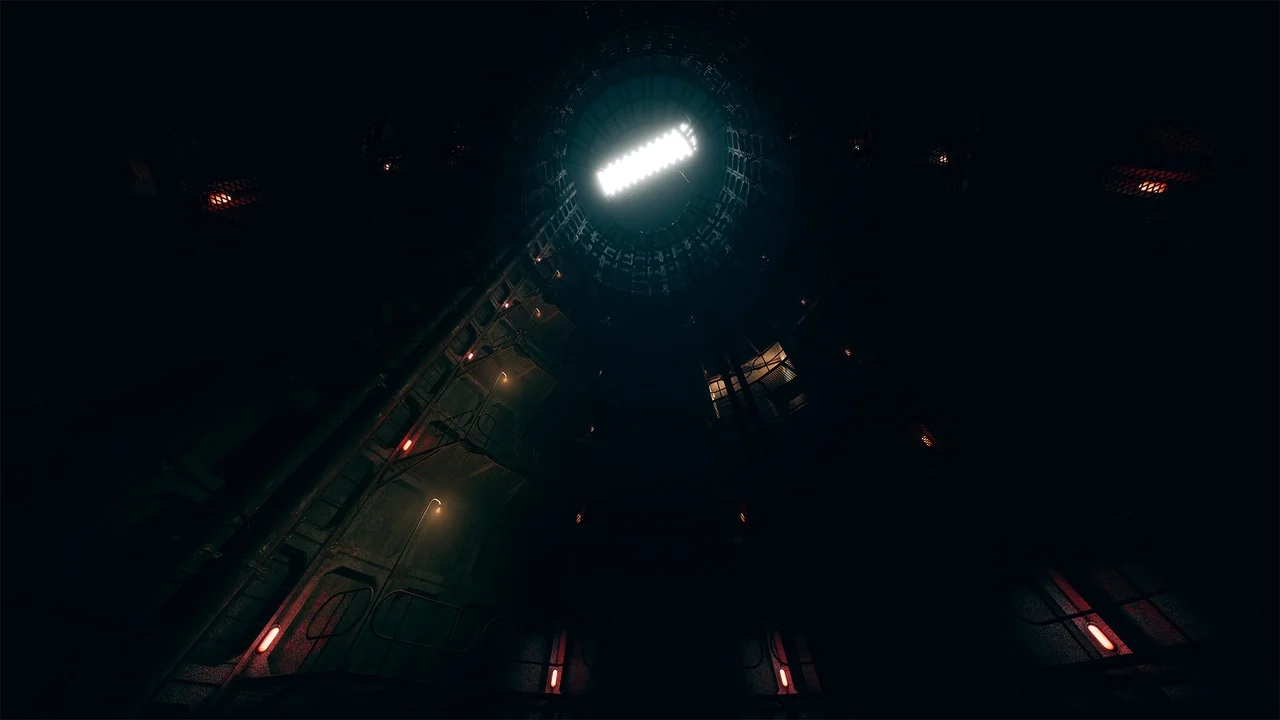
 Abandoned
 Abandoned
 Military / Warzone