"7e6fc58c410f2894"{"id":"1001637","slug":"horror-villains-pack","title":"Horror Villains Pack","category":"Characters \u0026 Creatures","engine":"4.25+,5.0+","assetVersion":"","engineVersion":"Engine Version: 4.25+,5.0+","tag":"Characters","accent":"blue","visual":"character","summary":"Detailed breakdown of the Horror Villains Pack characters, animation setups, Epic Skeleton compatibility, and revision 3.0 migration requirements.","platform":"Unreal Engine","publishedAt":"2026-10-13T02:15:47.532Z","updatedAt":"2026-10-13T02:15:47.532Z","sourceNotes":[],"fileContents":[],"compatibility":["Unreal Engine","Engine Version: 4.25+,5.0+"],"featuredImage":{"alt":"Horror Villains Pack","src":"/wp-content/uploads/published/2026/10/79707c106635-865a0ec2-24c7-44af-9a1a-53741edc2e46-b90b0fb2aa.webp"},"hasDownloadLink":true,"downloads":0,"terms":[{"taxonomy":"category","slug":"characters-and-creatures","name":"Characters \u0026 Creatures"}],"galleryImages":[{"src":"/wp-content/uploads/published/2026/10/773fe966f595-15317163-a9be-42d6-a4cf-4358f6eeaefb-184246419c.webp","alt":"Horror Villains Pack"},{"src":"/wp-content/uploads/published/2026/10/6d78e35c2132-3c4e64e9-953d-4380-ac99-acb42d4c47f5-d999c405fc.webp","alt":"Horror Villains Pack"},{"src":"/wp-content/uploads/published/2026/10/b04eeffba5b7-13b99aad-530b-4478-a7c5-09577d7eef67-81866c6cfe.webp","alt":"Horror Villains Pack"},{"src":"/wp-content/uploads/published/2026/10/48d9bf7623d1-40f90b6d-41b1-48ca-81d3-6352a0860ea1-8be5b4bceb.webp","alt":"Horror Villains Pack"},{"src":"/wp-content/uploads/published/2026/10/e80d6e232795-e6fe5cef-fcc2-4934-b01d-18e9fd766566-ae43f1b362.webp","alt":"Horror Villains Pack"},{"src":"/wp-content/uploads/published/2026/10/24817ecfae59-8cdfabf3-b01a-46fa-898c-04366a3d99ab-59b7fa14c8.webp","alt":"Horror Villains Pack"},{"src":"/wp-content/uploads/published/2026/10/53d8fa705c35-c4f1bec1-f803-430f-9014-4546554456f4-fd5d73b1d1.webp","alt":"Horror Villains Pack"},{"src":"/wp-content/uploads/published/2026/10/a9c9135a631b-01b8868d-d192-4348-8cfd-b9e85a1fceeb-a7f38cb406.webp","alt":"Horror Villains Pack"},{"src":"/wp-content/uploads/published/2026/10/c1097a9a0e15-195b8f32-5ae5-490b-85b4-566619aca62d-566349fac8.webp","alt":"Horror Villains Pack"}],"accessPanel":{"kind":"resource","title":"Download this resource","eyebrow":"Free Download","message":"Log in or create a free account to start your download.","fileName":"Content.7z","safetyNote":"Resources are manually reviewed before listing to improve quality and reduce obvious risks.","actionLabel":"Download Free","resourceType":"Resource archive"},"contentHtml":"\u003ch2\u003eDeploying Antagonists Across Dark Environments\u003c/h2\u003e\u003cp\u003eIn atmospheric horror environments, character presentation dictates whether an encounter feels genuinely terrifying or visually flat. The Horror Villains Pack supplies six distinct character figures designed to inhabit different subgenres of fear, spanning medical macabre, classic creature horror, circus dementia, and supernatural threats. Rather than presenting static geometry, each antagonist comes configured with dedicated motion sets, parametric material structures, and procedural textures intended to maintain visual fidelity under close-up inspection and harsh environmental lighting.\u003c/p\u003e\u003cp\u003eThe roster divides into archetypes that serve varied pacing needs within level design. The Crazy Doctor and Freaky Lady bring tall, unsettling humanoid presences suited for dilapidated corridors and asylum wards, while the Brutal Butcher provides a dense, threatening silhouette for industrial and slaughterhouse layouts. For close-quarters creepiness, the Evil Doll offers a drastically smaller profile, shifting player focus toward floor-level threats. The Killer Clown introduces bright, unsettling performance cues, while the Savage Werewolf brings wild beast locomotion that breaks entirely away from standard human movement patterns.\u003c/p\u003e\u003ch2\u003eEpic Skeleton Retargeting and the Savage Werewolf Rig\u003c/h2\u003e\u003cp\u003eFive of the six characters in the collection share direct compatibility with the humanoid Epic Skeleton. The Killer Clown, Brutal Butcher, Evil Doll, Freaky Lady, and Crazy Doctor are all rigged directly to the Epic standard, allowing technical designers to retarget standard humanoid animation libraries across the roster. For modern production pipelines operating in Unreal Engine 5, these five models interface directly with the IK Retarget workflow, preserving joint orientations, foot placement, and existing gameplay state machines without requiring manual bone remapping from scratch.\u003c/p\u003e\u003cp\u003eThe Savage Werewolf deliberately deviates from this humanoid baseline. Because of its non-standard anatomy, the creature does not use the Epic Skeleton and does not support humanoid retargeting. Instead, it relies strictly on an extensive internal animation set comprising 29 bespoke clips tailored to its posture and predatory attack motions. The Werewolf also omits a default physics asset, requiring technical artists to establish ragdoll bodies manually if physical simulated reactions are necessary for combat ragdolls. In contrast, the five humanoid models arrive with collision natively enabled and physics assets ready for active interaction.\u003c/p\u003e\u003ch2\u003eMesh Complexity, Level of Detail, and Collision Boundaries\u003c/h2\u003e\u003cp\u003ePolygon budgets across the characters accommodate a range of roles, from background apparitions to foreground cinematic stalkers. Mesh complexity peaks with the medical and apparitional characters, while utility slashers and the compact doll optimize heavily for performance.\u003c/p\u003e\u003ch3\u003eCrazy Doctor and Freaky Lady Specifications\u003c/h3\u003e\u003cp\u003eThe Crazy Doctor features the highest geometric density in the pack, carrying 91,483 triangles and 67,143 vertices distributed over 2 skeletal meshes. To prevent rendering bottlenecks during active gameplay, the doctor incorporates 3 distinct Level of Detail (LOD) steps alongside active collision volumes, operating alongside 14 dedicated animations. The Freaky Lady follows closely in mesh fidelity, comprising 78,590 triangles and 55,524 vertices split across 2 meshes. Like the doctor, she incorporates 3 LOD states, built-in collision volumes, and 14 native animation clips designed around erratic, haunting body mechanics.\u003c/p\u003e\u003ch3\u003eMid-Tier Humanoids: Killer Clown, Brutal Butcher, and Evil Doll\u003c/h3\u003e\u003cp\u003eThe Killer Clown uses 2 skeletal meshes containing 54,522 triangles and 31,344 vertices, backed by collision setups, integrated LODs, and 9 core animations. The Brutal Butcher steps down slightly in raw vertex load while increasing mesh modularity, delivering 3 meshes that combine for 45,205 triangles and 28,104 vertices. The Butcher features 25 animations tailored to heavy swings and deliberate pacing, full collision support, and multiple LOD transitions.\u003c/p\u003e\u003cp\u003eThe Evil Doll minimizes geometry without sacrificing surface detail. Built across 2 meshes, the doll measures 18,001 triangles and 10,048 vertices, making it lightweight for scenes where small scale allows tighter resource footprints. The doll includes 21 native animations, integrated collision, and an original base model accompanied by 2 LOD states.\u003c/p\u003e\u003ch3\u003eSavage Werewolf Multi-Mesh Construction\u003c/h3\u003e\u003cp\u003eThe Savage Werewolf utilizes an 8-mesh modular configuration combining base anatomy and dedicated fur geometry. Across both body and fur elements, the beast measures 50,335 triangles and 31,804 vertices. While it relies on 4K procedural surface treatment and multiple LOD layers to balance out the rendering overhead of dense layered meshes, it functions independently of the humanoid physics and retarget frameworks that guide the rest of the collection.\u003c/p\u003e\u003ch2\u003eParametric Shading and Procedural Texture Pipelines\u003c/h2\u003e\u003cp\u003eSurfacing across all six entities relies on a combination of parametric master materials, material instances, and high-resolution textures designed to facilitate scene customization. Through parametric material inputs, artists can adjust surface characteristics, wear, and tone directly inside the material instance editor without baking new static texture sheets.\u003c/p\u003e\u003cp\u003eMaterial instance counts vary considerably by character complexity:\u003c/p\u003e\u003cul\u003e\u003cli\u003e\u003cstrong\u003eCrazy Doctor:\u003c/strong\u003e 4 master materials feeding 13 material instances, supported by 4K textures.\u003c/li\u003e\u003cli\u003e\u003cstrong\u003eFreaky Lady:\u003c/strong\u003e 3 master materials linked to 13 material instances, utilizing full 4K resolutions.\u003c/li\u003e\u003cli\u003e\u003cstrong\u003eSavage Werewolf:\u003c/strong\u003e 4 master materials directing 11 material instances, using 35 individual textures mapped at 4K resolution across body and fur meshes.\u003c/li\u003e\u003cli\u003e\u003cstrong\u003eBrutal Butcher:\u003c/strong\u003e 3 master materials controlling 7 material instances, with textures supplied at both 2K and 4K resolutions.\u003c/li\u003e\u003cli\u003e\u003cstrong\u003eKiller Clown:\u003c/strong\u003e 4 master materials driving 6 material instances, offering dual-resolution 2K and 4K assets.\u003c/li\u003e\u003cli\u003e\u003cstrong\u003eEvil Doll:\u003c/strong\u003e 2 master materials driving 4 material instances, utilizing crisp 4K textures to hold fine surface detail on miniature geometry.\u003c/li\u003e\u003c/ul\u003e\u003ch2\u003eRevision 3.0 Upgrades and Clean Project Migration\u003c/h2\u003e\u003cp\u003eProduction environments adopting the revision 3.0 iteration of the collection must account for substantial architectural changes across the asset hierarchy. Revision 3.0 restructured folder layouts, renamed legacy assets, and refreshed core components. The update established dedicated Blueprints, revised physics assets, adjusted weapon sockets for prop attachment, updated retargeting skeletons, and refined core animation performance.\u003c/p\u003e\u003cp\u003eBecause revision 3.0 completely restructures the underlying naming conventions and folder hierarchies, updating within an existing live project risks overwriting critical references and corrupting active dependencies. Development teams evaluating or integrating the package should import the contents into a clean, empty project first. Once the files and Blueprints are validated in isolation, migrating the assets into the production directory ensures that folder paths, socket attachments, and IK Retarget setups transition smoothly without breaking active gameplay code.\u003c/p\u003e\n\n\u003ch2\u003eExplore Similar Assets\u003c/h2\u003e\n\u003cul\u003e\n\u003cli\u003e\u003ca href=\"https://3dcghub.com/heroic-fantasy-villains-vol-1/\" title=\"Heroic Fantasy Villains Vol 1\"\u003eHeroic Fantasy Villains Vol 1\u003c/a\u003e\u003c/li\u003e\n\u003cli\u003e\u003ca href=\"https://3dcghub.com/big-zombie/\" title=\"Big Zombie\"\u003eBig Zombie\u003c/a\u003e\u003c/li\u003e\n\u003cli\u003e\u003ca href=\"https://3dcghub.com/mutant-3/\" title=\"Mutant 3\"\u003eMutant 3\u003c/a\u003e\u003c/li\u003e\n\u003cli\u003e\u003ca href=\"https://3dcghub.com/bloodthirsty-beetle/\" title=\"Bloodthirsty Beetle\"\u003eBloodthirsty Beetle\u003c/a\u003e\u003c/li\u003e\n\u003cli\u003e\u003ca href=\"https://3dcghub.com/chinese-vampire/\" title=\"Chinese Vampire\"\u003eChinese Vampire\u003c/a\u003e\u003c/li\u003e\n\u003c/ul\u003e","contentTextLength":7321,"navigation":{"current":46,"total":3618,"previous":{"id":"1001638","slug":"houseplant-pack-interior-and-exterior-plants","title":"Houseplant Pack - Interior and Exterior Plants","category":"Buildings \u0026 Architecture","platform":"Unreal Engine","updatedAt":"2026-10-13T02:19:57.667Z"},"next":{"id":"1001636","slug":"horror-military-bunker","title":"Horror Military Bunker","category":"Abandoned","platform":"Unreal Engine","updatedAt":"2026-10-13T02:14:19.354Z"}},"relatedResources":[{"id":"1000621","slug":"heroic-fantasy-villains-vol-1","title":"Heroic Fantasy Villains Vol 1","category":"Characters \u0026 Creatures","engine":"4.26+,5.0+","assetVersion":"","engineVersion":"Engine Version: 4.26+,5.0+","tag":"Characters","accent":"blue","visual":"character","summary":"Heroic Fantasy Villains Vol 1 provides rigged, lowpoly 3D characters including a Darkness Warlord, Dark Elf, and Cyclops, with animation blueprints for PC and c","platform":"Unreal Engine","publishedAt":"2026-07-21T08:21:40.237Z","updatedAt":"2026-07-21T08:21:40.237Z","sourceNotes":[],"fileContents":[],"compatibility":["Unreal Engine","Engine Version: 4.26+,5.0+"],"featuredImage":{"alt":"Heroic Fantasy Villains Vol 1","src":"/wp-content/uploads/published/2026/07/5615f21dbe99-8ef8be67-b751-4c3e-8034-cf0651eaab64-6d4d89e5cb.webp"},"hasDownloadLink":true,"downloads":1},{"id":"1774","slug":"big-zombie","title":"Big Zombie","category":"Characters \u0026 Creatures","engine":"4.26+,5.0+","assetVersion":"Engine version: 4.26+,5.0+","engineVersion":"4.19","tag":"Characters","accent":"blue","visual":"character","summary":"Enhance your horror game with this modular Big Zombie boss model. Featuring 4K textures, dismemberment support, and Epic Skeleton compatibility for UE4 and UE5.","platform":"Unreal Engine","publishedAt":"2026-02-06T21:50:27.000Z","updatedAt":"2026-04-19T15:58:29.000Z","sourceNotes":[],"fileContents":[],"compatibility":["Unreal Engine","Engine version: 4.26+,5.0+"],"featuredImage":{"alt":"Big Zombie","src":"https://3dcghub.com/wp-content/uploads/2026/02/008aa7bf-894c-45d8-947a-4f0e7817b9ee.webp"},"hasDownloadLink":true,"downloads":4},{"id":"3122","slug":"mutant-3","title":"Mutant 3","category":"Characters \u0026 Creatures","engine":"4.26+,5.0+","assetVersion":"Engine version: 4.26+,5.0+","engineVersion":"4.18","tag":"Characters","accent":"blue","visual":"character","summary":"Discover the Mutant 3 character model, a game-ready creature rigged with the Epic Skeleton. Perfect for horror, RPG, and FPS games with optimized low-poly mesh.","platform":"Unreal Engine","publishedAt":"2026-02-08T15:32:14.000Z","updatedAt":"2026-04-19T15:57:42.000Z","sourceNotes":[],"fileContents":[],"compatibility":["Unreal Engine","Engine version: 4.26+,5.0+"],"featuredImage":{"alt":"Mutant 3","src":"https://3dcghub.com/wp-content/uploads/2026/02/dfbdb10d-ef9e-4109-ada5-d7cf3d53b8c4.webp"},"hasDownloadLink":true,"downloads":2}]}
Characters
Horror Villains Pack
Detailed breakdown of the Horror Villains Pack characters, animation setups, Epic Skeleton compatibility, and revision 3.0 migration requirements.
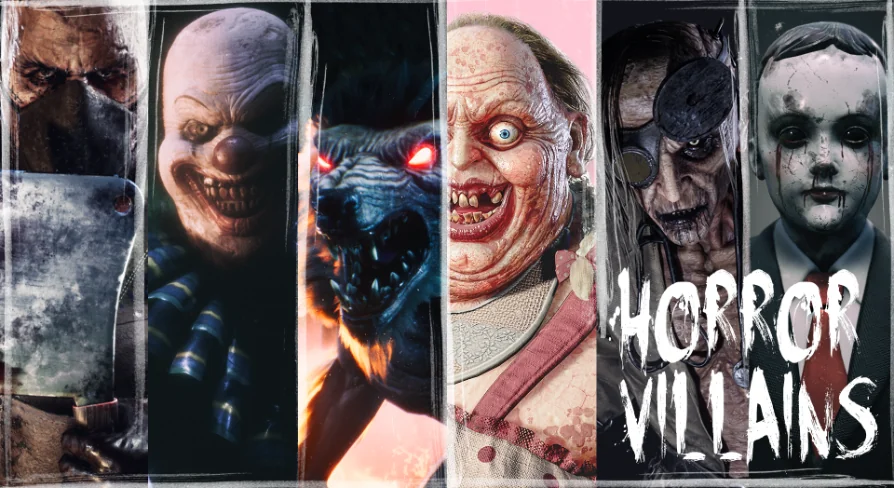
In atmospheric horror environments, character presentation dictates whether an encounter feels genuinely terrifying or visually flat. The Horror Villains Pack supplies six distinct character figures designed to inhabit different subgenres of fear, spanning medical macabre, classic creature horror, circus dementia, and supernatural threats. Rather than presenting static geometry, each antagonist comes configured with dedicated motion sets, parametric material structures, and procedural textures intended to maintain visual fidelity under close-up inspection and harsh environmental lighting.
The roster divides into archetypes that serve varied pacing needs within level design. The Crazy Doctor and Freaky Lady bring tall, unsettling humanoid presences suited for dilapidated corridors and asylum wards, while the Brutal Butcher provides a dense, threatening silhouette for industrial and slaughterhouse layouts. For close-quarters creepiness, the Evil Doll offers a drastically smaller profile, shifting player focus toward floor-level threats. The Killer Clown introduces bright, unsettling performance cues, while the Savage Werewolf brings wild beast locomotion that breaks entirely away from standard human movement patterns.
Epic Skeleton Retargeting and the Savage Werewolf Rig
Five of the six characters in the collection share direct compatibility with the humanoid Epic Skeleton. The Killer Clown, Brutal Butcher, Evil Doll, Freaky Lady, and Crazy Doctor are all rigged directly to the Epic standard, allowing technical designers to retarget standard humanoid animation libraries across the roster. For modern production pipelines operating in Unreal Engine 5, these five models interface directly with the IK Retarget workflow, preserving joint orientations, foot placement, and existing gameplay state machines without requiring manual bone remapping from scratch.
The Savage Werewolf deliberately deviates from this humanoid baseline. Because of its non-standard anatomy, the creature does not use the Epic Skeleton and does not support humanoid retargeting. Instead, it relies strictly on an extensive internal animation set comprising 29 bespoke clips tailored to its posture and predatory attack motions. The Werewolf also omits a default physics asset, requiring technical artists to establish ragdoll bodies manually if physical simulated reactions are necessary for combat ragdolls. In contrast, the five humanoid models arrive with collision natively enabled and physics assets ready for active interaction.
Mesh Complexity, Level of Detail, and Collision Boundaries
Polygon budgets across the characters accommodate a range of roles, from background apparitions to foreground cinematic stalkers. Mesh complexity peaks with the medical and apparitional characters, while utility slashers and the compact doll optimize heavily for performance.
Crazy Doctor and Freaky Lady Specifications
The Crazy Doctor features the highest geometric density in the pack, carrying 91,483 triangles and 67,143 vertices distributed over 2 skeletal meshes. To prevent rendering bottlenecks during active gameplay, the doctor incorporates 3 distinct Level of Detail (LOD) steps alongside active collision volumes, operating alongside 14 dedicated animations. The Freaky Lady follows closely in mesh fidelity, comprising 78,590 triangles and 55,524 vertices split across 2 meshes. Like the doctor, she incorporates 3 LOD states, built-in collision volumes, and 14 native animation clips designed around erratic, haunting body mechanics.
Mid-Tier Humanoids: Killer Clown, Brutal Butcher, and Evil Doll
The Killer Clown uses 2 skeletal meshes containing 54,522 triangles and 31,344 vertices, backed by collision setups, integrated LODs, and 9 core animations. The Brutal Butcher steps down slightly in raw vertex load while increasing mesh modularity, delivering 3 meshes that combine for 45,205 triangles and 28,104 vertices. The Butcher features 25 animations tailored to heavy swings and deliberate pacing, full collision support, and multiple LOD transitions.
The Evil Doll minimizes geometry without sacrificing surface detail. Built across 2 meshes, the doll measures 18,001 triangles and 10,048 vertices, making it lightweight for scenes where small scale allows tighter resource footprints. The doll includes 21 native animations, integrated collision, and an original base model accompanied by 2 LOD states.
Savage Werewolf Multi-Mesh Construction
The Savage Werewolf utilizes an 8-mesh modular configuration combining base anatomy and dedicated fur geometry. Across both body and fur elements, the beast measures 50,335 triangles and 31,804 vertices. While it relies on 4K procedural surface treatment and multiple LOD layers to balance out the rendering overhead of dense layered meshes, it functions independently of the humanoid physics and retarget frameworks that guide the rest of the collection.
Parametric Shading and Procedural Texture Pipelines
Surfacing across all six entities relies on a combination of parametric master materials, material instances, and high-resolution textures designed to facilitate scene customization. Through parametric material inputs, artists can adjust surface characteristics, wear, and tone directly inside the material instance editor without baking new static texture sheets.
Material instance counts vary considerably by character complexity:
Crazy Doctor: 4 master materials feeding 13 material instances, supported by 4K textures.
Freaky Lady: 3 master materials linked to 13 material instances, utilizing full 4K resolutions.
Savage Werewolf: 4 master materials directing 11 material instances, using 35 individual textures mapped at 4K resolution across body and fur meshes.
Brutal Butcher: 3 master materials controlling 7 material instances, with textures supplied at both 2K and 4K resolutions.
Killer Clown: 4 master materials driving 6 material instances, offering dual-resolution 2K and 4K assets.
Evil Doll: 2 master materials driving 4 material instances, utilizing crisp 4K textures to hold fine surface detail on miniature geometry.
Revision 3.0 Upgrades and Clean Project Migration
Production environments adopting the revision 3.0 iteration of the collection must account for substantial architectural changes across the asset hierarchy. Revision 3.0 restructured folder layouts, renamed legacy assets, and refreshed core components. The update established dedicated Blueprints, revised physics assets, adjusted weapon sockets for prop attachment, updated retargeting skeletons, and refined core animation performance.
Because revision 3.0 completely restructures the underlying naming conventions and folder hierarchies, updating within an existing live project risks overwriting critical references and corrupting active dependencies. Development teams evaluating or integrating the package should import the contents into a clean, empty project first. Once the files and Blueprints are validated in isolation, migrating the assets into the production directory ensures that folder paths, socket attachments, and IK Retarget setups transition smoothly without breaking active gameplay code.
 Characters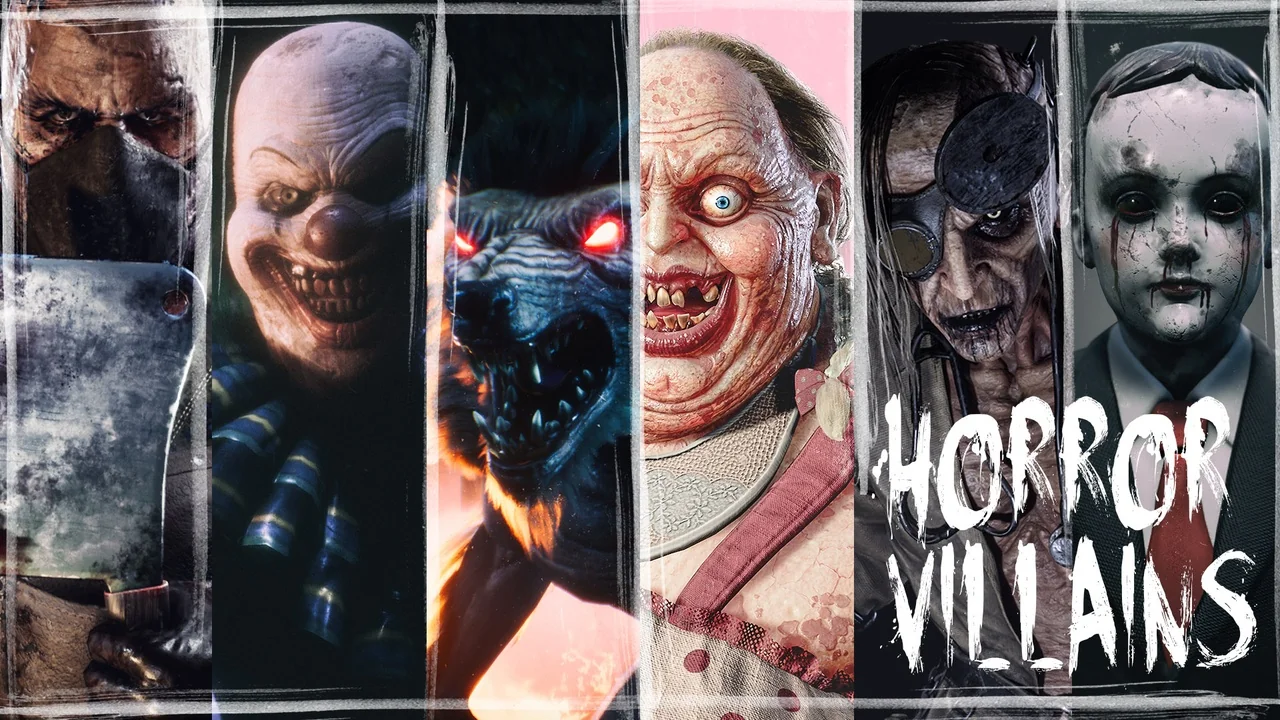
 Characters
 Characters
 Characters