"7e6fc58c410f2894"{"id":"1001635","slug":"horror-corridor","title":"Horror Corridor","category":"Horror","engine":"4.26+,5.0+","assetVersion":"","engineVersion":"Engine Version: 4.26+,5.0+","tag":"Horror","accent":"blue","visual":"mech","summary":"Build tense indoor environments with Horror Corridor, featuring modular walls, 4K textures, realistic props, and an interactive door drag Blueprint.","platform":"Unreal Engine","publishedAt":"2026-10-13T02:12:52.752Z","updatedAt":"2026-10-13T02:12:52.752Z","sourceNotes":[],"fileContents":[],"compatibility":["Unreal Engine","Engine Version: 4.26+,5.0+"],"featuredImage":{"alt":"Horror Corridor","src":"/wp-content/uploads/published/2026/10/4e28963c38c8-1f7af0bd-9cde-4323-93ca-f2831a4faf71-75644b0f6a.webp"},"hasDownloadLink":true,"downloads":0,"terms":[{"taxonomy":"category","slug":"horror","name":"Horror"}],"galleryImages":[{"src":"/wp-content/uploads/published/2026/10/e0db2f7c1479-46388418-a42b-4f8f-a69b-a1e0c4df6dcf-b5edc3d802.webp","alt":"Horror Corridor"},{"src":"/wp-content/uploads/published/2026/10/add9706dc780-cd1818a3-615a-42e9-a132-115e28eb7c77-48706ee08d.webp","alt":"Horror Corridor"},{"src":"/wp-content/uploads/published/2026/10/69b34cc4945c-0e0c53b0-153a-4021-8183-82cd9017c261-d4bca73983.webp","alt":"Horror Corridor"},{"src":"/wp-content/uploads/published/2026/10/daa3903cfaa0-cb0e9c39-ee24-466d-bcfa-fccb11420532-04fb2a1184.webp","alt":"Horror Corridor"},{"src":"/wp-content/uploads/published/2026/10/7b1517a43057-dab0ae72-8f2e-4cb7-8b98-531b65a2167e-c28324cd94.webp","alt":"Horror Corridor"},{"src":"/wp-content/uploads/published/2026/10/dc771871e122-6a5daf1c-f114-431e-b131-30a6496c6f18-7d2768de71.webp","alt":"Horror Corridor"},{"src":"/wp-content/uploads/published/2026/10/deb7767f1a8b-3a39fe07-5a99-47a6-b7ae-5181b1a12e0d-7b597c7ced.webp","alt":"Horror Corridor"},{"src":"/wp-content/uploads/published/2026/10/2b21cff34402-339d9969-2a4a-4d67-bfc3-acc3023f4cec-8e7a59dca1.webp","alt":"Horror Corridor"},{"src":"/wp-content/uploads/published/2026/10/5a1456be97c3-f481a210-82e8-4edc-aa1c-8bdfc12a8398-4b18a641ff.webp","alt":"Horror Corridor"}],"accessPanel":{"kind":"resource","title":"Download this resource","eyebrow":"Free Download","message":"Log in or create a free account to start your download.","fileName":"Content.7z","safetyNote":"Resources are manually reviewed before listing to improve quality and reduce obvious risks.","actionLabel":"Download Free","resourceType":"Resource archive"},"contentHtml":"\u003ch2\u003eConstructing Atmospheric Interior Scenarios with Horror Corridor\u003c/h2\u003e\u003cp\u003eCorridors in suspense and horror level design serve as high-tension connective spaces. They funnel navigation, restrict peripheral sightlines, and establish pacing between major narrative beats. Horror Corridor supplies the foundational pieces required to construct these transitional spaces, centering on realistic indoor architecture marked by abandonment and disrepair.\u003c/p\u003e\u003cp\u003eRather than presenting a static, pre-merged hallway, the package centers on flexible indoor scenario generation. The environmental language leans into abandoned houses, basements, and neglected residential structures. Discarded trash, cardboard, and storage boxes litter the perimeter, transforming plain passages into lived-in, decaying pathways. By isolating architectural components into discrete assets, developers can determine the exact length, turns, dead ends, and choke points of an interior level.\u003c/p\u003e\u003cp\u003eBecause indoor horror relies heavily on claustrophobia, corridor geometry must feel grounded and authentic. The scale and arrangement of interior doorways, vertical clearance, and surface weathering dictate whether a setting feels like an everyday domestic home or a foreboding subterranean basement. Horror Corridor establishes this atmosphere through modular architectural components, allowing creators to assemble everything from short apartment entryways to sprawling, labyrinthine underground corridors.\u003c/p\u003e\u003ch2\u003eModular Walls and Architectural Assembly\u003c/h2\u003e\u003cp\u003eAt the center of the package is a set of modular walls intended for varied layout planning. Hallway construction demands architectural flexibility; repetitive shapes break visual immersion quickly if corners and seams cannot be broken up. The modular wall elements allow level designers to map out varied corridor dimensions without being locked into a single fixed blueprint or hall width.\u003c/p\u003e\u003cp\u003eThe structural units snap together to form continuous passages, junction points, or alcoves. When planning an abandoned residential or basement environment, these modular boundaries interact directly with the package's assortment of clutter props. Placed alongside structural boundaries, items like trash, cardboard boxes, and neglected household debris obscure sharp floor-wall intersections and communicate sudden abandonment. The modular system supports varied arrangements, including:\u003c/p\u003e\u003cul\u003e\u003cli\u003eStraight passageways that build anticipation over long sightlines.\u003c/li\u003e\u003cli\u003eChoked hallway turns filled with cardboard and debris to slow player navigation.\u003c/li\u003e\u003cli\u003eThresholds connecting interior living areas to basements or auxiliary rooms.\u003c/li\u003e\u003cli\u003eEnclosed transitional spaces where wall alignment guides dynamic shadow casting.\u003c/li\u003e\u003c/ul\u003e\u003cp\u003eBy keeping the walls modular, the layout can adapt to dynamic encounter design. Designers can create narrow, suffocating escape routes or wider, multi-door hubs where navigation choices must be made under pressure.\u003c/p\u003e\u003ch2\u003eBlueprints and the Ingame Door Drag Effect\u003c/h2\u003e\u003cp\u003eEnvironmental design in modern interactive titles extends beyond static mesh placement. Horror Corridor incorporates gameplay-ready Blueprints to accelerate development, reducing the setup time required to make architectural assets functional in-engine. Rather than requiring technical designers to construct basic door logic and interaction systems from scratch, the package packages interactive functionality directly into its workflow.\u003c/p\u003e\u003cp\u003eA standout technical feature included in the package is the ingame door drag effect Blueprint. Standard trigger-based doors that swing open automatically upon pressing an interaction key often drain tension from horror encounters. A drag-based mechanic shifts control directly to the player, allowing doors to be cracked open slowly for peeking into pitch-black rooms or thrown open rapidly in panic situations. This physical control over threshold movement adds tactical weight to interior navigation.\u003c/p\u003e\u003cp\u003eIntegrating Blueprint logic directly alongside the physical door meshes ensures pivot points, interaction thresholds, and movement constraints are configured correctly out of the box. Level creators can drop doors directly into modular wall frames, connect the interaction framework, and focus on tuning encounter timing and lighting rather than troubleshooting basic asset scripting.\u003c/p\u003e\u003ch2\u003e4K Resolution Textures Across Environmental Props\u003c/h2\u003e\u003cp\u003eHallway encounters force the camera into extreme proximity with walls, doorways, and nearby props. Low-resolution surfaces degrade quickly when a player is pressed against a plaster wall hiding from an enemy or inspecting a door latch in first-person perspective. To prevent loss of surface detail, all textures across Horror Corridor are authored in 4K resolution.\u003c/p\u003e\u003cp\u003eThis 4K texturing covers both structural elements and detailing props. Fine surface wear, peeling materials, paper grain on cardboard boxes, and grit across abandoned trash props retain clarity under close-up light sources such as flashlights or flickering ceiling lamps. The high visual fidelity ensures that prop surfaces sustain realism across wide application areas, ranging from desktop titles to high-fidelity cinematic interior walkthroughs.\u003c/p\u003e\u003cp\u003eThe prop collection supplies the micro-detail needed to complete each corridor. Scattering realistic boxes and trash across a newly snapped set of walls breaks geometric sterility. Surface roughness, grime distribution, and edge wear on these props mirror the dilapidated state of the modular walls, producing a cohesive aesthetic throughout the entire indoor scene.\u003c/p\u003e\u003ch2\u003eWorkflow Integration Across Interior Horror Environments\u003c/h2\u003e\u003cp\u003eReleased as Version 1.0, Horror Corridor operates as a standalone interior building kit while maintaining architectural consistency with a broader line of interior environments. The pack shares thematic alignment and direct compatibility with complementary interior modules like Horror Living Room and Horror Bedroom. It also integrates into larger collections, including Horror Rooms Bundle - Vol. 1, Horror Rooms Combo 1, Horror Rooms Combo 2, and the comprehensive Horror Rooms Collection - Bundle.\u003c/p\u003e\u003cp\u003eIn a multi-room production pipeline, corridors serve as the connective tissue joining distinct chambers. Using Horror Corridor alongside matching living rooms and bedrooms ensures visual continuity as players move through an abandoned home or institution. Wall heights, doorway dimensions, and distressing effects match across settings, preventing jarring transitions when shifting from a wide living room space into a suffocating subterranean hallway.\u003c/p\u003e\u003cp\u003eFor productions requiring rapid level assembly, the balance of 4K texturing, modular structural components, and pre-configured door interaction Blueprints provides an immediate foundation for atmospheric, realistic indoor level design.\u003c/p\u003e\n\n\u003ch2\u003eContinue Browsing Similar Packs\u003c/h2\u003e\n\u003cul\u003e\n\u003cli\u003e\u003ca href=\"https://3dcghub.com/asylum/\" title=\"Asylum\"\u003eAsylum\u003c/a\u003e\u003c/li\u003e\n\u003cli\u003e\u003ca href=\"https://3dcghub.com/forgotten-hotel/\" title=\"Forgotten Hotel\"\u003eForgotten Hotel\u003c/a\u003e\u003c/li\u003e\n\u003cli\u003e\u003ca href=\"https://3dcghub.com/king-wash-laundromat-legacy-version/\" title=\"King Wash Laundromat (LEGACY VERSION)\"\u003eKing Wash Laundromat (LEGACY VERSION)\u003c/a\u003e\u003c/li\u003e\n\u003cli\u003e\u003ca href=\"https://3dcghub.com/deadly-caverns-modular-asset-pack/\" title=\"Deadly Caverns - Modular Asset Pack\"\u003eDeadly Caverns - Modular Asset Pack\u003c/a\u003e\u003c/li\u003e\n\u003cli\u003e\u003ca href=\"https://3dcghub.com/atmospheric-modular-underground-car-park-hallways/\" title=\"Atmospheric Modular Underground Car Park \u0026amp; Hallways\"\u003eAtmospheric Modular Underground Car Park \u0026amp; Hallways\u003c/a\u003e\u003c/li\u003e\n\u003c/ul\u003e","contentTextLength":6931,"navigation":{"current":48,"total":3618,"previous":{"id":"1001636","slug":"horror-military-bunker","title":"Horror Military Bunker","category":"Abandoned","platform":"Unreal Engine","updatedAt":"2026-10-13T02:14:19.354Z"},"next":{"id":"1001634","slug":"holidays-vol-2-halloween-decor-nanite-and-low-poly","title":"Holidays VOL.2 - Halloween Decor (Nanite and Low Poly)","category":"Tools, Objects \u0026 Decor","platform":"Unreal Engine","updatedAt":"2026-10-13T02:12:12.386Z"}},"relatedResources":[{"id":"1000452","slug":"asylum","title":"Asylum","category":"Horror","engine":"4.26+,5.0+","assetVersion":"","engineVersion":"Engine Version: 4.26+,5.0+","tag":"Horror","accent":"blue","visual":"mech","summary":"Modular horror asylum environment with a four-storey building, basement, 300+ props, procedural dirt shader, and mesh/light unloading for high FPS.","platform":"Unreal Engine","publishedAt":"2026-07-11T01:31:27.483Z","updatedAt":"2026-07-11T01:31:27.483Z","sourceNotes":[],"fileContents":[],"compatibility":["Unreal Engine","Engine Version: 4.26+,5.0+"],"featuredImage":{"alt":"Asylum","src":"/wp-content/uploads/published/2026/07/77966c77c091-0c1de550-e564-4810-9352-1415132c9995-723888fd7b.webp"},"hasDownloadLink":true,"downloads":3},{"id":"1001631","slug":"forgotten-hotel","title":"Forgotten Hotel","category":"Horror","engine":"4.26+,5.0+","assetVersion":"","engineVersion":"Engine Version: 4.26+,5.0+","tag":"Horror","accent":"blue","visual":"mech","summary":"Construct weathered, neglected environments with Forgotten Hotel, featuring modular interiors, grid-snap alignment, world tiling materials, and PBR textures.","platform":"Unreal Engine","publishedAt":"2026-10-13T02:08:49.944Z","updatedAt":"2026-10-13T02:08:49.944Z","sourceNotes":[],"fileContents":[],"compatibility":["Unreal Engine","Engine Version: 4.26+,5.0+"],"featuredImage":{"alt":"Forgotten Hotel","src":"/wp-content/uploads/published/2026/10/b2278c60dfde-4bca7791-57b2-49df-bdf3-2140a21ded37-eb8dba2032.webp"},"hasDownloadLink":true,"downloads":0},{"id":"1000229","slug":"king-wash-laundromat-legacy-version","title":"King Wash Laundromat (LEGACY VERSION)","category":"Horror","engine":"4.26+,5.0+","assetVersion":"","engineVersion":"Engine Version: 4.26+,5.0+","tag":"Horror","accent":"blue","visual":"mech","summary":"A comprehensive Unreal Engine environment package featuring a lonely city laundromat at night, equipped with over 100 props, master materials, and blueprint aut","platform":"Unreal Engine","publishedAt":"2026-06-27T19:49:53.349Z","updatedAt":"2026-06-27T19:49:53.349Z","sourceNotes":[],"fileContents":[],"compatibility":["Unreal Engine","Engine Version: 4.26+,5.0+"],"featuredImage":{"alt":"King Wash Laundromat (LEGACY VERSION)","src":"/wp-content/uploads/published/2026/06/a4ad9deb145a-48c13bb3-7f9d-4369-a3af-a79d3d595510-a20ff71ea2.webp"},"hasDownloadLink":true,"downloads":0}]}
Horror
Horror Corridor
Build tense indoor environments with Horror Corridor, featuring modular walls, 4K textures, realistic props, and an interactive door drag Blueprint.
Category:Unreal Engine,HorrorPlatform: Unreal EngineEngine Version: 4.26+,5.0+Published: Oct 13, 2026
Horror
Resource overview
Constructing Atmospheric Interior Scenarios with Horror Corridor
Corridors in suspense and horror level design serve as high-tension connective spaces. They funnel navigation, restrict peripheral sightlines, and establish pacing between major narrative beats. Horror Corridor supplies the foundational pieces required to construct these transitional spaces, centering on realistic indoor architecture marked by abandonment and disrepair.
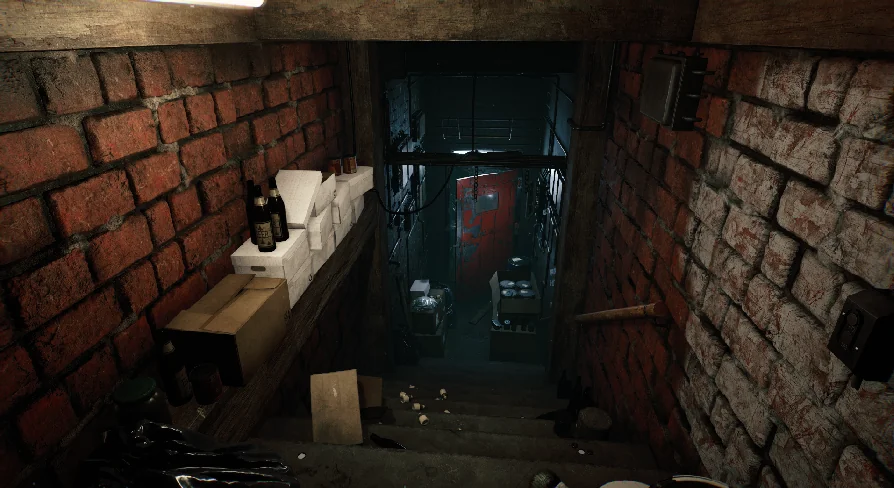
Rather than presenting a static, pre-merged hallway, the package centers on flexible indoor scenario generation. The environmental language leans into abandoned houses, basements, and neglected residential structures. Discarded trash, cardboard, and storage boxes litter the perimeter, transforming plain passages into lived-in, decaying pathways. By isolating architectural components into discrete assets, developers can determine the exact length, turns, dead ends, and choke points of an interior level.
Because indoor horror relies heavily on claustrophobia, corridor geometry must feel grounded and authentic. The scale and arrangement of interior doorways, vertical clearance, and surface weathering dictate whether a setting feels like an everyday domestic home or a foreboding subterranean basement. Horror Corridor establishes this atmosphere through modular architectural components, allowing creators to assemble everything from short apartment entryways to sprawling, labyrinthine underground corridors.
Modular Walls and Architectural Assembly
At the center of the package is a set of modular walls intended for varied layout planning. Hallway construction demands architectural flexibility; repetitive shapes break visual immersion quickly if corners and seams cannot be broken up. The modular wall elements allow level designers to map out varied corridor dimensions without being locked into a single fixed blueprint or hall width.
The structural units snap together to form continuous passages, junction points, or alcoves. When planning an abandoned residential or basement environment, these modular boundaries interact directly with the package's assortment of clutter props. Placed alongside structural boundaries, items like trash, cardboard boxes, and neglected household debris obscure sharp floor-wall intersections and communicate sudden abandonment. The modular system supports varied arrangements, including:
Straight passageways that build anticipation over long sightlines.
Choked hallway turns filled with cardboard and debris to slow player navigation.
Thresholds connecting interior living areas to basements or auxiliary rooms.
Enclosed transitional spaces where wall alignment guides dynamic shadow casting.
By keeping the walls modular, the layout can adapt to dynamic encounter design. Designers can create narrow, suffocating escape routes or wider, multi-door hubs where navigation choices must be made under pressure.
Blueprints and the Ingame Door Drag Effect
Environmental design in modern interactive titles extends beyond static mesh placement. Horror Corridor incorporates gameplay-ready Blueprints to accelerate development, reducing the setup time required to make architectural assets functional in-engine. Rather than requiring technical designers to construct basic door logic and interaction systems from scratch, the package packages interactive functionality directly into its workflow.
A standout technical feature included in the package is the ingame door drag effect Blueprint. Standard trigger-based doors that swing open automatically upon pressing an interaction key often drain tension from horror encounters. A drag-based mechanic shifts control directly to the player, allowing doors to be cracked open slowly for peeking into pitch-black rooms or thrown open rapidly in panic situations. This physical control over threshold movement adds tactical weight to interior navigation.
Integrating Blueprint logic directly alongside the physical door meshes ensures pivot points, interaction thresholds, and movement constraints are configured correctly out of the box. Level creators can drop doors directly into modular wall frames, connect the interaction framework, and focus on tuning encounter timing and lighting rather than troubleshooting basic asset scripting.
4K Resolution Textures Across Environmental Props
Hallway encounters force the camera into extreme proximity with walls, doorways, and nearby props. Low-resolution surfaces degrade quickly when a player is pressed against a plaster wall hiding from an enemy or inspecting a door latch in first-person perspective. To prevent loss of surface detail, all textures across Horror Corridor are authored in 4K resolution.
This 4K texturing covers both structural elements and detailing props. Fine surface wear, peeling materials, paper grain on cardboard boxes, and grit across abandoned trash props retain clarity under close-up light sources such as flashlights or flickering ceiling lamps. The high visual fidelity ensures that prop surfaces sustain realism across wide application areas, ranging from desktop titles to high-fidelity cinematic interior walkthroughs.
The prop collection supplies the micro-detail needed to complete each corridor. Scattering realistic boxes and trash across a newly snapped set of walls breaks geometric sterility. Surface roughness, grime distribution, and edge wear on these props mirror the dilapidated state of the modular walls, producing a cohesive aesthetic throughout the entire indoor scene.
Workflow Integration Across Interior Horror Environments
Released as Version 1.0, Horror Corridor operates as a standalone interior building kit while maintaining architectural consistency with a broader line of interior environments. The pack shares thematic alignment and direct compatibility with complementary interior modules like Horror Living Room and Horror Bedroom. It also integrates into larger collections, including Horror Rooms Bundle - Vol. 1, Horror Rooms Combo 1, Horror Rooms Combo 2, and the comprehensive Horror Rooms Collection - Bundle.
In a multi-room production pipeline, corridors serve as the connective tissue joining distinct chambers. Using Horror Corridor alongside matching living rooms and bedrooms ensures visual continuity as players move through an abandoned home or institution. Wall heights, doorway dimensions, and distressing effects match across settings, preventing jarring transitions when shifting from a wide living room space into a suffocating subterranean hallway.
For productions requiring rapid level assembly, the balance of 4K texturing, modular structural components, and pre-configured door interaction Blueprints provides an immediate foundation for atmospheric, realistic indoor level design.
 Horror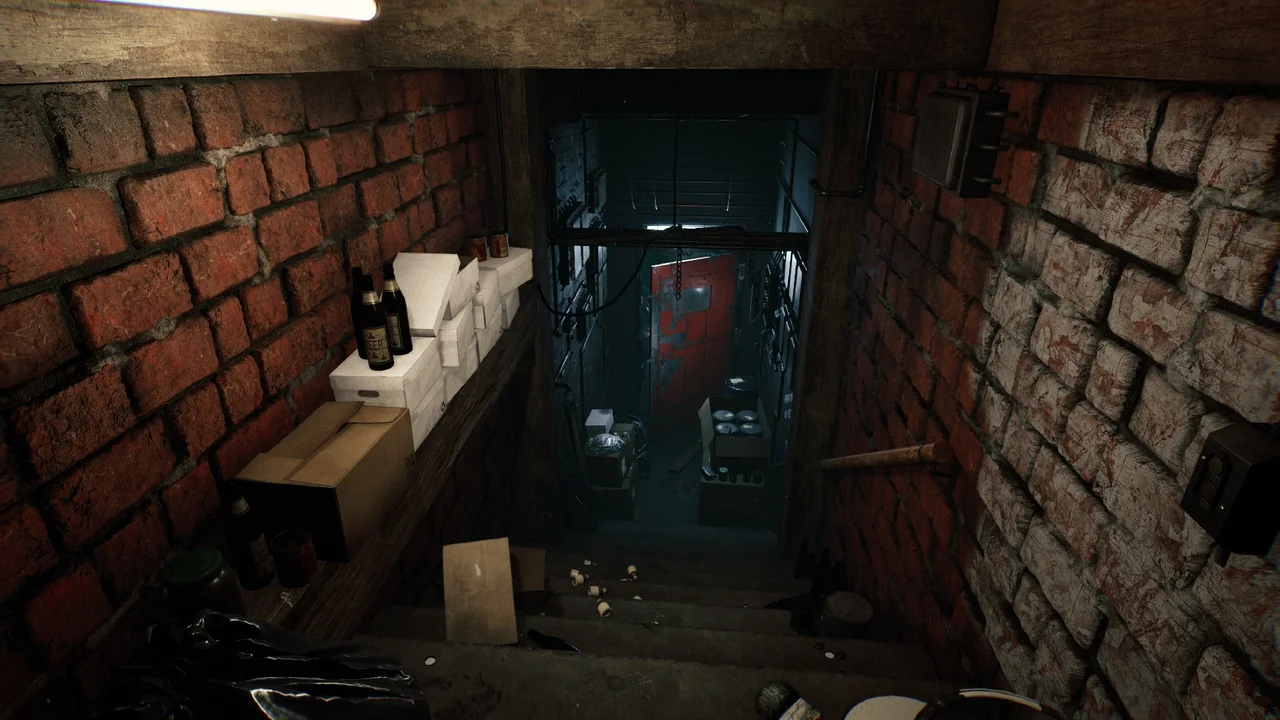
 Horror
 Horror
 Horror