"7e6fc58c410f2894"{"id":"1000452","slug":"asylum","title":"Asylum","category":"Horror","engine":"4.26+,5.0+","assetVersion":"","engineVersion":"Engine Version: 4.26+,5.0+","tag":"Horror","accent":"blue","visual":"mech","summary":"Modular horror asylum environment with a four-storey building, basement, 300+ props, procedural dirt shader, and mesh/light unloading for high FPS.","platform":"Unreal Engine","publishedAt":"2026-07-11T01:31:27.483Z","updatedAt":"2026-07-11T01:31:27.483Z","sourceNotes":[],"fileContents":[],"compatibility":["Unreal Engine","Engine Version: 4.26+,5.0+"],"featuredImage":{"alt":"Asylum","src":"/wp-content/uploads/published/2026/07/77966c77c091-0c1de550-e564-4810-9352-1415132c9995-723888fd7b.webp"},"hasDownloadLink":true,"downloads":3,"terms":[{"taxonomy":"category","slug":"horror","name":"Horror"}],"galleryImages":[{"src":"/wp-content/uploads/published/2026/07/8d301f8ac5d8-f4c94e21-8611-41a5-91c6-66be3eb1c2f4-774786f602.webp","alt":"Asylum"},{"src":"/wp-content/uploads/published/2026/07/2dae58d635ae-abe9d553-9893-460b-bb47-32d053288ea7-67519e4c1c.webp","alt":"Asylum"},{"src":"/wp-content/uploads/published/2026/07/4caa29adbfbd-a8e7c22c-d45a-49f8-a961-2e7dba5453c7-2ba61d1794.webp","alt":"Asylum"},{"src":"/wp-content/uploads/published/2026/07/e6e821359696-eb150540-9966-4594-8adc-6101a2281682-e18e3bc2d6.webp","alt":"Asylum"},{"src":"/wp-content/uploads/published/2026/07/8a3c713ad878-e5507389-1cc2-417c-9b78-44c5f517caa2-6c31cf4bd2.webp","alt":"Asylum"},{"src":"/wp-content/uploads/published/2026/07/35b71f3b05f0-f508d411-234c-4b4c-b013-f324aaf5f64a-86dab4ed5f.webp","alt":"Asylum"},{"src":"/wp-content/uploads/published/2026/07/94c8aee0ffb9-1e91f88d-0957-4fc5-8543-de3af87d341e-0b9f4b0cdb.webp","alt":"Asylum"},{"src":"/wp-content/uploads/published/2026/07/bf96a83f01d6-1208d633-f0f5-4b1e-a8bf-6b7e32190156-f5b15b3031.webp","alt":"Asylum"},{"src":"/wp-content/uploads/published/2026/07/4c87312537f1-492ad90b-7c08-489e-8fc7-c9361b571d73-f558af8639.webp","alt":"Asylum"},{"src":"/wp-content/uploads/published/2026/07/9c13848f9e16-a2623f9d-56c9-44f5-924c-808c22038206-13b0fef60a.webp","alt":"Asylum"}],"accessPanel":{"kind":"resource","title":"Download this resource","eyebrow":"Free Download","message":"Log in or create a free account to start your download.","fileName":"Content.7z","safetyNote":"Resources are manually reviewed before listing to improve quality and reduce obvious risks.","actionLabel":"Download Free","resourceType":"Resource archive"},"contentHtml":"\u003cp\u003eProjects that call for a sprawling horror setting usually run into the same wall: a large building with multiple floors, hundreds of dressed props, and numerous shadow-casting lights competing for frame time. Asylum is built for exactly that situation. The package delivers a complete four-storey hospital building with a basement, supplies more than three hundred props tailored to the hospital theme, and pairs them with technical systems that keep frame rates stable even when the level is huge and shadows are active across many light sources.\u003c/p\u003e\u003ch2\u003eWhat the Asylum package ships with\u003c/h2\u003e\u003cp\u003eAt its core the package is a self-contained environment kit. The centrepiece is a fully finished four-storey building that includes a basement level. Rather than leaving the user to block out rooms from scratch, the package includes a demo scene that shows how the building and its props come together inside a playable context. A separate playable demo is also provided, with textures halved in that version to keep the download lighter and the run accessible, helping users tour the space before committing to full-resolution assets.\u003c/p\u003e\u003cp\u003eAlongside the building shell, the set brings more than three hundred props designed specifically for a hospital environment. The props are intended to populate the corridors, rooms, and basement spaces so that the layout does not feel sparse. The tagging on the package places it firmly in the modular, level, horror category, making clear that the pieces are meant to be assembled and recombined rather than treated as a locked diorama.\u003c/p\u003e\u003ch2\u003eProcedural dirt through mesh distance fields\u003c/h2\u003e\u003cp\u003eOne of the more notable components is a procedural dirt shader applied to walls. Instead of relying on pre-baked grime textures alone, the shader uses mesh distance fields to generate dirt in a way that can respond to the geometry around it. For a horror asylum setting, where walls need to look neglected, stained, and aged without repetitive tiling artefacts, this approach gives the environment a grounded layer of surface variation. It also means the visual wear is tied to the scene's actual mesh layout rather than painted on as a static afterthought.\u003c/p\u003e\u003ch2\u003eKeeping FPS high in large, shadow-heavy levels\u003c/h2\u003e\u003cp\u003eBig horror levels often suffer when multiple light sources are allowed to cast shadows at once. The package handles this through a mesh and light unloading system. By shedding meshes and lights that are not currently relevant, the system keeps the frame rate high even when the overall level is huge and shadows are turned on across many light sources. The practical result is that users working on large asylum layouts do not have to choose between atmosphere and performance at the same scale: the unloading logic is already part of the package.\u003c/p\u003e\u003ch3\u003eBuilding as modules: walls, floors, roofs, and back polygons\u003c/h2\u003e\u003cp\u003eThe package is modular by design, and that modularity comes with specific construction rules. Walls, floors, roofs, and certain props do not carry polygons on their back sides. They are built to be used as modules rather than standalone closed meshes. The intended workflow is to assemble surfaces from these pieces so that the unseen back geometry is never exposed, keeping poly count efficient for a large four-storey plus basement build.\u003c/p\u003e\u003cp\u003eSome pivot points are intentionally not centred, set that way to make placement easier when snapping pieces together for modular construction. Users who expect every pivot to sit at mesh centre may find this unusual at first, but the misalignment is a deliberate choice for faster modular assembly rather than an oversight.\u003c/p\u003e\u003ch2\u003ePhotographs, AI, and authenticity notes\u003c/h2\u003e\u003cp\u003eThe package contains photographs used in the set dressing. These photos are generated with the help of AI and are not images of real people. This detail matters for teams concerned about likeness rights or the use of real-world faces in a commercial project. Because the photographs are AI-produced and explicitly not of real individuals, they can be used with less worry about portraying actual persons within the asylum's interior decoration, framed wall art, or scattered documents.\u003c/p\u003e\u003ch2\u003eWhere the package fits best\u003c/h2\u003e\u003cp\u003eThe clearest fit is for teams building a horror asylum or hospital experience in Unreal Engine. With the building already finished across four storeys and a basement, the bulk of structural layout work is handled. The over three hundred hospital-themed props provide the dressing needed to sell a neglected medical facility, while the procedural dirt shader tied to mesh distance fields adds surface degradation without manual texturing overhead. The demo scene gives a direct reference for how the modular pieces, props, and shader combine in a real playable space.\u003c/p\u003e\u003cp\u003ePerformance-minded developers working on large levels benefit most here. The mesh and light unloading system is the part that makes a sprawling, shadow-heavy asylum practical inside a real game rather than only as a cinematic flythrough. Teams that understand modular construction, accept back-less geometry, and want to keep many shadow-casting lights alive across a big level will find the package aligned with their needs.\u003c/p\u003e\u003cp\u003eCompatibility spans Unreal Engine 4.26 through 4.27 and continues across 5.0 to 5.7, so the package can move between late Unreal 4 projects and current Unreal 5 builds without being fixed to a single engine generation.\u003c/p\u003e\u003ch2\u003eWho benefits most\u003c/h2\u003e\u003cp\u003eLevel designers and environment artists working on horror projects are the primary audience. The combination of a complete four-storey building, hundreds of hospital props, a procedural wall dirt shader, and a built-in mesh/light unloading system means that much of the heavy lifting for both atmosphere and performance is already handled. Smaller teams or solo developers who cannot afford to build, optimise, and dress an entire asylum from scratch get a functional, playable foundation the moment the package is in their project.\u003c/p\u003e\n\n\u003ch2\u003eExplore Similar Assets\u003c/h2\u003e\n\u003cul\u003e\n\u003cli\u003e\u003ca href=\"https://3dcghub.com/asylum-modular-pack/\" title=\"Asylum Modular Pack\"\u003eAsylum Modular Pack\u003c/a\u003e\u003c/li\u003e\n\u003cli\u003e\u003ca href=\"https://3dcghub.com/brushify-underworld-pack/\" title=\"Brushify - Underworld Pack\"\u003eBrushify - Underworld Pack\u003c/a\u003e\u003c/li\u003e\n\u003cli\u003e\u003ca href=\"https://3dcghub.com/atmospheric-modular-underground-car-park-hallways/\" title=\"Atmospheric Modular Underground Car Park \u0026amp; Hallways\"\u003eAtmospheric Modular Underground Car Park \u0026amp; Hallways\u003c/a\u003e\u003c/li\u003e\n\u003cli\u003e\u003ca href=\"https://3dcghub.com/modular-hospital-abandoned-hospital-horror-hospital-modular-hospital-asylum/\" title=\"Modular Hospital (Abandoned Hospital, Horror Hospital, Modular Hospital, Asylum)\"\u003eModular Hospital (Abandoned Hospital, Horror Hospital, Modular Hospital, Asylum)\u003c/a\u003e\u003c/li\u003e\n\u003cli\u003e\u003ca href=\"https://3dcghub.com/king-wash-laundromat-legacy-version/\" title=\"King Wash Laundromat (LEGACY VERSION)\"\u003eKing Wash Laundromat (LEGACY VERSION)\u003c/a\u003e\u003c/li\u003e\n\u003c/ul\u003e","contentTextLength":6142,"navigation":{"current":1306,"total":3618,"previous":{"id":"1000453","slug":"buildings-vol-9-modular-pipes-and-gutters-nanite-and-low-poly","title":"Buildings VOL.9 - Modular Pipes \u0026 Gutters (Nanite \u0026 Low Poly)","category":"Residential Buildings","platform":"Unreal Engine","updatedAt":"2026-07-11T01:39:01.440Z"},"next":{"id":"1000451","slug":"astronauts-pack","title":"Astronauts (Pack)","category":"Characters \u0026 Creatures","platform":"Unreal Engine","updatedAt":"2026-07-11T01:19:38.245Z"}},"relatedResources":[{"id":"8461","slug":"asylum-modular-pack","title":"Asylum Modular Pack","category":"Horror","engine":"4.26+,5.0+","assetVersion":"Engine version: 4.26+,5.0+","engineVersion":"4.26","tag":"Horror","accent":"blue","visual":"city","summary":"Build immersive and terrifying environments with the Asylum Modular Pack. This comprehensive collection features 100 modular meshes and cinematic sequences designed for high-performance horror games and films.","platform":"Unreal Engine","publishedAt":"2026-02-23T17:23:25.000Z","updatedAt":"2026-04-19T15:55:27.000Z","sourceNotes":[],"fileContents":[],"compatibility":["Unreal Engine","Engine version: 4.26+,5.0+"],"featuredImage":{"alt":"Asylum Modular Pack","src":"https://3dcghub.com/wp-content/uploads/2026/02/7c09c4a0-8c43-414f-850a-c348c66e51c4.webp"},"hasDownloadLink":true,"downloads":3},{"id":"1001635","slug":"horror-corridor","title":"Horror Corridor","category":"Horror","engine":"4.26+,5.0+","assetVersion":"","engineVersion":"Engine Version: 4.26+,5.0+","tag":"Horror","accent":"blue","visual":"mech","summary":"Build tense indoor environments with Horror Corridor, featuring modular walls, 4K textures, realistic props, and an interactive door drag Blueprint.","platform":"Unreal Engine","publishedAt":"2026-10-13T02:12:52.752Z","updatedAt":"2026-10-13T02:12:52.752Z","sourceNotes":[],"fileContents":[],"compatibility":["Unreal Engine","Engine Version: 4.26+,5.0+"],"featuredImage":{"alt":"Horror Corridor","src":"/wp-content/uploads/published/2026/10/4e28963c38c8-1f7af0bd-9cde-4323-93ca-f2831a4faf71-75644b0f6a.webp"},"hasDownloadLink":true,"downloads":0},{"id":"1001631","slug":"forgotten-hotel","title":"Forgotten Hotel","category":"Horror","engine":"4.26+,5.0+","assetVersion":"","engineVersion":"Engine Version: 4.26+,5.0+","tag":"Horror","accent":"blue","visual":"mech","summary":"Construct weathered, neglected environments with Forgotten Hotel, featuring modular interiors, grid-snap alignment, world tiling materials, and PBR textures.","platform":"Unreal Engine","publishedAt":"2026-10-13T02:08:49.944Z","updatedAt":"2026-10-13T02:08:49.944Z","sourceNotes":[],"fileContents":[],"compatibility":["Unreal Engine","Engine Version: 4.26+,5.0+"],"featuredImage":{"alt":"Forgotten Hotel","src":"/wp-content/uploads/published/2026/10/b2278c60dfde-4bca7791-57b2-49df-bdf3-2140a21ded37-eb8dba2032.webp"},"hasDownloadLink":true,"downloads":0}]}
Horror
Asylum
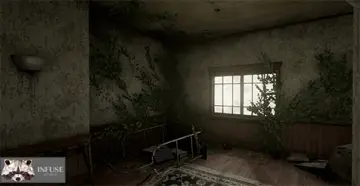
Modular horror asylum environment with a four-storey building, basement, 300+ props, procedural dirt shader, and mesh/light unloading for high FPS.
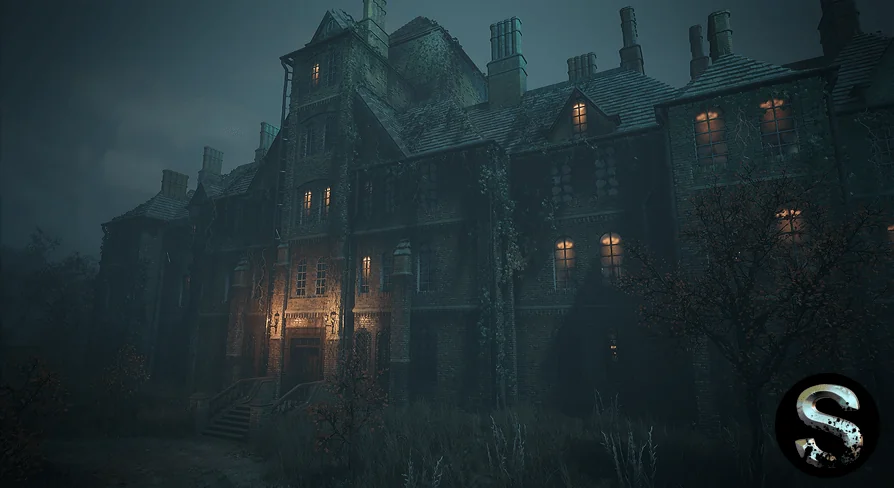
Projects that call for a sprawling horror setting usually run into the same wall: a large building with multiple floors, hundreds of dressed props, and numerous shadow-casting lights competing for frame time. Asylum is built for exactly that situation. The package delivers a complete four-storey hospital building with a basement, supplies more than three hundred props tailored to the hospital theme, and pairs them with technical systems that keep frame rates stable even when the level is huge and shadows are active across many light sources.
What the Asylum package ships with
At its core the package is a self-contained environment kit. The centrepiece is a fully finished four-storey building that includes a basement level. Rather than leaving the user to block out rooms from scratch, the package includes a demo scene that shows how the building and its props come together inside a playable context. A separate playable demo is also provided, with textures halved in that version to keep the download lighter and the run accessible, helping users tour the space before committing to full-resolution assets.
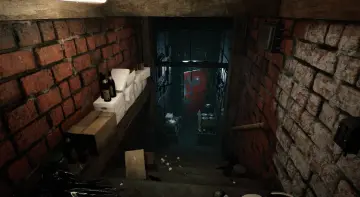
Alongside the building shell, the set brings more than three hundred props designed specifically for a hospital environment. The props are intended to populate the corridors, rooms, and basement spaces so that the layout does not feel sparse. The tagging on the package places it firmly in the modular, level, horror category, making clear that the pieces are meant to be assembled and recombined rather than treated as a locked diorama.
Procedural dirt through mesh distance fields
One of the more notable components is a procedural dirt shader applied to walls. Instead of relying on pre-baked grime textures alone, the shader uses mesh distance fields to generate dirt in a way that can respond to the geometry around it. For a horror asylum setting, where walls need to look neglected, stained, and aged without repetitive tiling artefacts, this approach gives the environment a grounded layer of surface variation. It also means the visual wear is tied to the scene's actual mesh layout rather than painted on as a static afterthought.
Keeping FPS high in large, shadow-heavy levels
Big horror levels often suffer when multiple light sources are allowed to cast shadows at once. The package handles this through a mesh and light unloading system. By shedding meshes and lights that are not currently relevant, the system keeps the frame rate high even when the overall level is huge and shadows are turned on across many light sources. The practical result is that users working on large asylum layouts do not have to choose between atmosphere and performance at the same scale: the unloading logic is already part of the package.
Building as modules: walls, floors, roofs, and back polygons
The package is modular by design, and that modularity comes with specific construction rules. Walls, floors, roofs, and certain props do not carry polygons on their back sides. They are built to be used as modules rather than standalone closed meshes. The intended workflow is to assemble surfaces from these pieces so that the unseen back geometry is never exposed, keeping poly count efficient for a large four-storey plus basement build.
Some pivot points are intentionally not centred, set that way to make placement easier when snapping pieces together for modular construction. Users who expect every pivot to sit at mesh centre may find this unusual at first, but the misalignment is a deliberate choice for faster modular assembly rather than an oversight.
Photographs, AI, and authenticity notes
The package contains photographs used in the set dressing. These photos are generated with the help of AI and are not images of real people. This detail matters for teams concerned about likeness rights or the use of real-world faces in a commercial project. Because the photographs are AI-produced and explicitly not of real individuals, they can be used with less worry about portraying actual persons within the asylum's interior decoration, framed wall art, or scattered documents.
Where the package fits best
The clearest fit is for teams building a horror asylum or hospital experience in Unreal Engine. With the building already finished across four storeys and a basement, the bulk of structural layout work is handled. The over three hundred hospital-themed props provide the dressing needed to sell a neglected medical facility, while the procedural dirt shader tied to mesh distance fields adds surface degradation without manual texturing overhead. The demo scene gives a direct reference for how the modular pieces, props, and shader combine in a real playable space.
Performance-minded developers working on large levels benefit most here. The mesh and light unloading system is the part that makes a sprawling, shadow-heavy asylum practical inside a real game rather than only as a cinematic flythrough. Teams that understand modular construction, accept back-less geometry, and want to keep many shadow-casting lights alive across a big level will find the package aligned with their needs.
Compatibility spans Unreal Engine 4.26 through 4.27 and continues across 5.0 to 5.7, so the package can move between late Unreal 4 projects and current Unreal 5 builds without being fixed to a single engine generation.
Who benefits most
Level designers and environment artists working on horror projects are the primary audience. The combination of a complete four-storey building, hundreds of hospital props, a procedural wall dirt shader, and a built-in mesh/light unloading system means that much of the heavy lifting for both atmosphere and performance is already handled. Smaller teams or solo developers who cannot afford to build, optimise, and dress an entire asylum from scratch get a functional, playable foundation the moment the package is in their project.
 Horror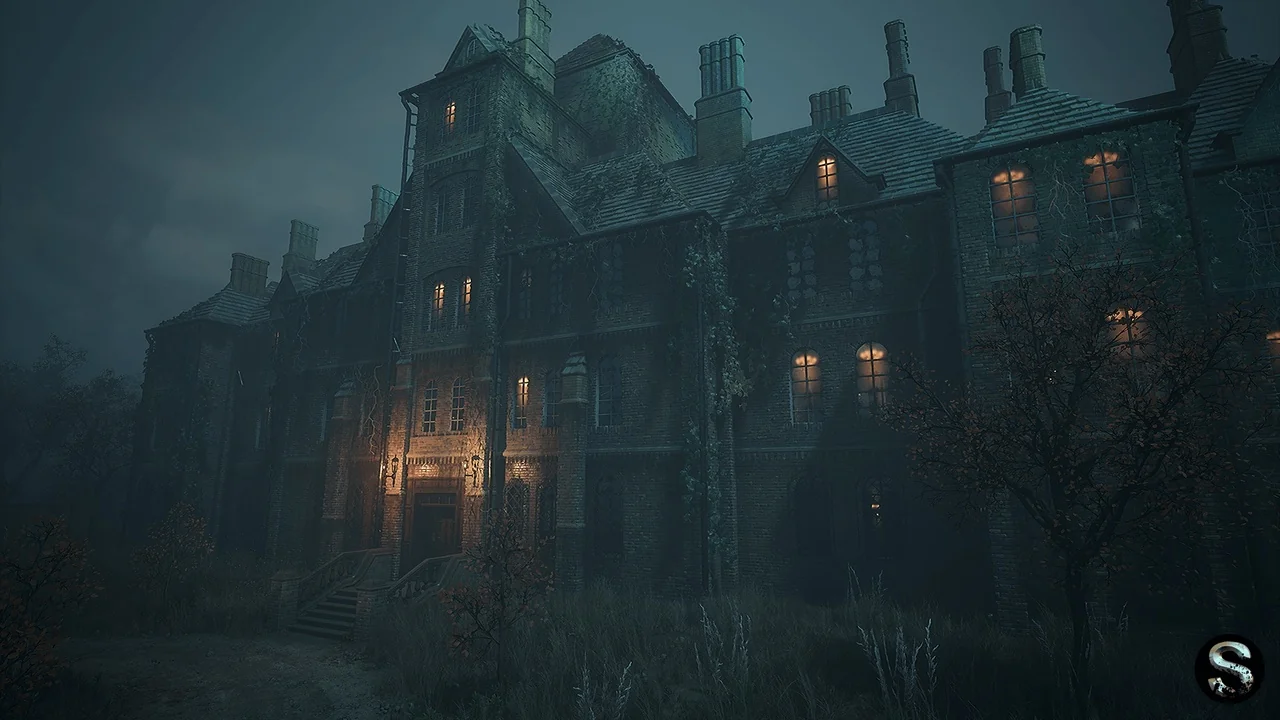
 Horror
 Horror
 Horror