"7e6fc58c410f2894"{"id":"1001631","slug":"forgotten-hotel","title":"Forgotten Hotel","category":"Horror","engine":"4.26+,5.0+","assetVersion":"","engineVersion":"Engine Version: 4.26+,5.0+","tag":"Horror","accent":"blue","visual":"mech","summary":"Construct weathered, neglected environments with Forgotten Hotel, featuring modular interiors, grid-snap alignment, world tiling materials, and PBR textures.","platform":"Unreal Engine","publishedAt":"2026-10-13T02:08:49.944Z","updatedAt":"2026-10-13T02:08:49.944Z","sourceNotes":[],"fileContents":[],"compatibility":["Unreal Engine","Engine Version: 4.26+,5.0+"],"featuredImage":{"alt":"Forgotten Hotel","src":"/wp-content/uploads/published/2026/10/b2278c60dfde-4bca7791-57b2-49df-bdf3-2140a21ded37-eb8dba2032.webp"},"hasDownloadLink":true,"downloads":0,"terms":[{"taxonomy":"category","slug":"horror","name":"Horror"}],"galleryImages":[{"src":"/wp-content/uploads/published/2026/10/e7958c087423-043e436a-793a-422b-b871-474e0fd8e1b0-387b65d615.webp","alt":"Forgotten Hotel"},{"src":"/wp-content/uploads/published/2026/10/de0daed390d9-51f0acac-c3ca-4524-91c3-e458ed363028-5d8cae7e1c.webp","alt":"Forgotten Hotel"},{"src":"/wp-content/uploads/published/2026/10/0b9bfa87a74a-123b3e97-c8c2-454b-bd75-7bc198d2caf5-f3637f3fd9.webp","alt":"Forgotten Hotel"},{"src":"/wp-content/uploads/published/2026/10/6f089394d439-dda6289b-f626-4399-bfb3-9730cb3b1b8a-14ff075ad8.webp","alt":"Forgotten Hotel"},{"src":"/wp-content/uploads/published/2026/10/5e941e1375a3-5ccd4ebf-8e48-400d-8d94-fff03278b76c-fbc9c93d81.webp","alt":"Forgotten Hotel"},{"src":"/wp-content/uploads/published/2026/10/76e41acdedd8-10256c8f-6586-4540-9657-8568318c934f-f59b250d85.webp","alt":"Forgotten Hotel"}],"accessPanel":{"kind":"resource","title":"Download this resource","eyebrow":"Free Download","message":"Log in or create a free account to start your download.","fileName":"Content.7z","safetyNote":"Resources are manually reviewed before listing to improve quality and reduce obvious risks.","actionLabel":"Download Free","resourceType":"Resource archive"},"contentHtml":"\u003ch2\u003eBuilding Weathered Hotel Settings for Mystery, Horror, and Post-Apocalyptic Scenes\u003c/h2\u003e\n\u003cp\u003eDerelict architecture provides an immediate narrative foundation for environmental storytelling. Forgotten Hotel establishes an environment defined by neglect, age, and exposure to the elements, making it adaptable to multiple game genres. When designing spaces for survival horror, a decaying hospitality structure yields claustrophobic hallways, abandoned reception counters, and guest rooms that communicate sudden evacuation or slow decay. For mystery and slow-paced exploration titles, the same structural elements allow level designers to guide players through quiet, haunting spaces where dust, silence, and deteriorating building materials build psychological tension.\u003c/p\u003e\n\u003cp\u003ePost-apocalyptic settings also benefit directly from structural deterioration. In scenarios where human habitation ended years prior, a hotel interior serves as a transitional space between civilized shelter and encroaching nature. Forgotten Hotel integrates foliage assets into the architectural decay, allowing interior corridors and suites to show physical signs of long-term exposure. Because the kit avoids locking designers into a single aesthetic idiom, spaces can range from mildly neglected venues to thoroughly derelict ruins ruined by time and lack of maintenance.\u003c/p\u003e \u003ch2\u003eModular Interiors Engineered for Fast Grid Snapping\u003c/h2\u003e\n\u003cp\u003eLevel layout requires rapid iteration, and the interior construction kit in Forgotten Hotel is structured around practical modularity. Instead of forcing level designers to assemble irregular, non-standard geometry by hand, the modules align reliably to standard grid snapping. Floor plates, structural wall segments, ceiling panels, and partition elements snap cleanly along predefined increments, preventing the micro-gaps and light-leak artifacts that often disrupt interior modular construction.\u003c/p\u003e\n\u003cp\u003eThis strict adherence to grid snapping ensures that building out complex architectural floor plans remains time-efficient. A designer can establish a ground-floor lobby, branch out into administrative offices, branch upward via vertical pathways, and populate repeated guest floor layouts without fighting mesh alignment. The asset assortment serves as a functional library covering structural essentials alongside transitional elements, giving developers the building blocks needed to draft large, cohesive facilities without relying on repetitive, identical floor sections.\u003c/p\u003e \u003ch2\u003eSurface Material Control with PBR Maps and World Tiling\u003c/h2\u003e\n\u003cp\u003eSurface treatment across Forgotten Hotel follows physically based rendering standards, ensuring consistent behavior across different lighting setups. Each asset includes the required texture passes, incorporating dedicated maps for:\u003c/p\u003e\n\u003cul\u003e\n\u003cli\u003eAlbedo for diffuse color representation free of pre-baked directional light.\u003c/li\u003e\n\u003cli\u003eRoughness to define surface variation between dry plaster, aged wood, and reflective polished finishes.\u003c/li\u003e\n\u003cli\u003eMetallic maps to distinguish raw, painted, or exposed metals from surrounding architectural substrates.\u003c/li\u003e\n\u003cli\u003eNormal maps for rendering minute surface cracks, peeling layers, and architectural reliefs.\u003c/li\u003e\n\u003cli\u003eOpacity maps where partial transparency or cutout edges are required across specialized meshes.\u003c/li\u003e\n\u003c/ul\u003e\n\u003cp\u003eTo support high visual fidelity during close-up inspection, the assets are built to AAA quality standards. Fine surface deterioration remains crisp when a player presses against a corridor wall, inspects an entrance threshold, or searches near surfaces. Furthermore, the modular segments take advantage of world tiling materials. This approach eliminates visible seam boundaries across contiguous modular wall and floor runs. It also unlocks fast artistic iteration: developers can swap the primary surface textures with alternate material passes across entire rooms or wings without re-authoring the underlying mesh UV coordinates manually.\u003c/p\u003e \u003ch2\u003eInteractive Door Meshes and Prop Dressing for Neglected Corridors\u003c/h2\u003e\n\u003cp\u003eEnvironmental believability relies heavily on secondary detail and interactive structural parts. Forgotten Hotel accounts for gameplay mechanics by delivering doors and their handles as independent meshes. Rather than merging the handle directly into the door slab, the two elements are separated out of the box. This modular mechanical setup is vital for production teams implementing physical locking mechanics, pickable door latches, or scripted opening animations. Animators and gameplay programmers can manipulate or rotate the handle independently before swinging the door open, avoiding the need to cut and re-rig consolidated geometry in external digital content creation software.\u003c/p\u003e\n\u003cp\u003eTo turn bare architectural modules into lived-in, abandoned locations, the pack incorporates a selection of props alongside its foliage assets. Props provide the contextual debris required to establish narrative history within guest suites, service access points, and common lounges. When paired with the provided foliage elements, scenes can exhibit the early or late stages of environmental reclamation, portraying broken ceilings that invite weather intrusion, creeping ground cover, or indoor planters overgrown through decades of neglect.\u003c/p\u003e \u003ch2\u003eProduction Workflow and Practical Takeaway\u003c/h2\u003e\n\u003cp\u003eForgotten Hotel acts as a streamlined environment toolkit suited for projects built with Blacksmith Forge compatibility. By pairing modular snap-ready interior pieces with separate interactive parts and world-tiling materials, it reduces the initial friction of grayboxing and dressing abandoned levels. Teams constructing horror corridors, mystery walkthroughs, or post-apocalyptic ruins gain an immediate, structurally cohesive asset base that maintains surface fidelity even under close-up scrutiny.\u003c/p\u003e\n\n\u003ch2\u003eMore From The Same Workflow\u003c/h2\u003e\n\u003cul\u003e\n\u003cli\u003e\u003ca href=\"https://3dcghub.com/cemetery-forgotten-churchyard/\" title=\"Cemetery - Forgotten Churchyard\"\u003eCemetery - Forgotten Churchyard\u003c/a\u003e\u003c/li\u003e\n\u003cli\u003e\u003ca href=\"https://3dcghub.com/deadly-caverns-modular-asset-pack/\" title=\"Deadly Caverns - Modular Asset Pack\"\u003eDeadly Caverns - Modular Asset Pack\u003c/a\u003e\u003c/li\u003e\n\u003cli\u003e\u003ca href=\"https://3dcghub.com/asylum/\" title=\"Asylum\"\u003eAsylum\u003c/a\u003e\u003c/li\u003e\n\u003cli\u003e\u003ca href=\"https://3dcghub.com/atmospheric-modular-underground-car-park-hallways/\" title=\"Atmospheric Modular Underground Car Park \u0026amp; Hallways\"\u003eAtmospheric Modular Underground Car Park \u0026amp; Hallways\u003c/a\u003e\u003c/li\u003e\n\u003cli\u003e\u003ca href=\"https://3dcghub.com/king-wash-laundromat-legacy-version/\" title=\"King Wash Laundromat (LEGACY VERSION)\"\u003eKing Wash Laundromat (LEGACY VERSION)\u003c/a\u003e\u003c/li\u003e\n\u003c/ul\u003e","contentTextLength":5910,"navigation":{"current":52,"total":3618,"previous":{"id":"1001632","slug":"fuel-bar","title":"Fuel Bar","category":"Interior","platform":"Unreal Engine","updatedAt":"2026-10-13T02:09:40.460Z"},"next":{"id":"1001630","slug":"dissolve-teleport-effect","title":"Dissolve Teleport Effect","category":"Transition","platform":"Unreal Engine","updatedAt":"2026-10-13T02:07:01.646Z"}},"relatedResources":[{"id":"1001523","slug":"cemetery-forgotten-churchyard","title":"Cemetery - Forgotten Churchyard","category":"Horror","engine":"5.1+","assetVersion":"","engineVersion":"Engine Version: 5.1+","tag":"Horror","accent":"blue","visual":"mech","summary":"Cemetery - Forgotten Churchyard delivers 725+ photogrammetry assets, PCG generation tools, dynamic lighting, and real-time performance for dark environments.","platform":"Unreal Engine","publishedAt":"2026-10-09T13:35:28.174Z","updatedAt":"2026-10-09T13:35:28.174Z","sourceNotes":[],"fileContents":[],"compatibility":["Unreal Engine","Engine Version: 5.1+"],"featuredImage":{"alt":"Cemetery - Forgotten Churchyard","src":"/wp-content/uploads/published/2026/10/a0e0af6d8136-9b91811e-5e36-4d27-a610-a38b08c00c52-a0c6f35b50.webp"},"hasDownloadLink":true,"downloads":1},{"id":"1001635","slug":"horror-corridor","title":"Horror Corridor","category":"Horror","engine":"4.26+,5.0+","assetVersion":"","engineVersion":"Engine Version: 4.26+,5.0+","tag":"Horror","accent":"blue","visual":"mech","summary":"Build tense indoor environments with Horror Corridor, featuring modular walls, 4K textures, realistic props, and an interactive door drag Blueprint.","platform":"Unreal Engine","publishedAt":"2026-10-13T02:12:52.752Z","updatedAt":"2026-10-13T02:12:52.752Z","sourceNotes":[],"fileContents":[],"compatibility":["Unreal Engine","Engine Version: 4.26+,5.0+"],"featuredImage":{"alt":"Horror Corridor","src":"/wp-content/uploads/published/2026/10/4e28963c38c8-1f7af0bd-9cde-4323-93ca-f2831a4faf71-75644b0f6a.webp"},"hasDownloadLink":true,"downloads":0},{"id":"1000586","slug":"deadly-caverns-modular-asset-pack","title":"Deadly Caverns - Modular Asset Pack","category":"Horror","engine":"4.26+,5.0+","assetVersion":"","engineVersion":"Engine Version: 4.26+,5.0+","tag":"Horror","accent":"blue","visual":"mech","summary":"Modular cave system for Unreal with bone piles, mangled corpses, blood decals, and master materials featuring vertex-weighted wetness, rain, and SSS blending.","platform":"Unreal Engine","publishedAt":"2026-07-17T00:09:01.380Z","updatedAt":"2026-07-17T00:09:01.380Z","sourceNotes":[],"fileContents":[],"compatibility":["Unreal Engine","Engine Version: 4.26+,5.0+"],"featuredImage":{"alt":"Deadly Caverns - Modular Asset Pack","src":"/wp-content/uploads/published/2026/07/c42bcf8944e8-b62acf45-b13d-4f29-bb8d-6341b26fd587-b0c30ffc5a.webp"},"hasDownloadLink":true,"downloads":2}]}
Horror
Forgotten Hotel
Construct weathered, neglected environments with Forgotten Hotel, featuring modular interiors, grid-snap alignment, world tiling materials, and PBR textures.
Category:Unreal Engine,HorrorPlatform: Unreal EngineEngine Version: 4.26+,5.0+Published: Oct 13, 2026
Horror
Resource overview
Building Weathered Hotel Settings for Mystery, Horror, and Post-Apocalyptic Scenes
Derelict architecture provides an immediate narrative foundation for environmental storytelling. Forgotten Hotel establishes an environment defined by neglect, age, and exposure to the elements, making it adaptable to multiple game genres. When designing spaces for survival horror, a decaying hospitality structure yields claustrophobic hallways, abandoned reception counters, and guest rooms that communicate sudden evacuation or slow decay. For mystery and slow-paced exploration titles, the same structural elements allow level designers to guide players through quiet, haunting spaces where dust, silence, and deteriorating building materials build psychological tension.
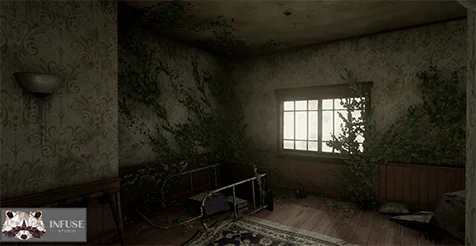
Post-apocalyptic settings also benefit directly from structural deterioration. In scenarios where human habitation ended years prior, a hotel interior serves as a transitional space between civilized shelter and encroaching nature. Forgotten Hotel integrates foliage assets into the architectural decay, allowing interior corridors and suites to show physical signs of long-term exposure. Because the kit avoids locking designers into a single aesthetic idiom, spaces can range from mildly neglected venues to thoroughly derelict ruins ruined by time and lack of maintenance.
Modular Interiors Engineered for Fast Grid Snapping
Level layout requires rapid iteration, and the interior construction kit in Forgotten Hotel is structured around practical modularity. Instead of forcing level designers to assemble irregular, non-standard geometry by hand, the modules align reliably to standard grid snapping. Floor plates, structural wall segments, ceiling panels, and partition elements snap cleanly along predefined increments, preventing the micro-gaps and light-leak artifacts that often disrupt interior modular construction.
This strict adherence to grid snapping ensures that building out complex architectural floor plans remains time-efficient. A designer can establish a ground-floor lobby, branch out into administrative offices, branch upward via vertical pathways, and populate repeated guest floor layouts without fighting mesh alignment. The asset assortment serves as a functional library covering structural essentials alongside transitional elements, giving developers the building blocks needed to draft large, cohesive facilities without relying on repetitive, identical floor sections.
Surface Material Control with PBR Maps and World Tiling
Surface treatment across Forgotten Hotel follows physically based rendering standards, ensuring consistent behavior across different lighting setups. Each asset includes the required texture passes, incorporating dedicated maps for:
Albedo for diffuse color representation free of pre-baked directional light.
Roughness to define surface variation between dry plaster, aged wood, and reflective polished finishes.
Metallic maps to distinguish raw, painted, or exposed metals from surrounding architectural substrates.
Normal maps for rendering minute surface cracks, peeling layers, and architectural reliefs.
Opacity maps where partial transparency or cutout edges are required across specialized meshes.
To support high visual fidelity during close-up inspection, the assets are built to AAA quality standards. Fine surface deterioration remains crisp when a player presses against a corridor wall, inspects an entrance threshold, or searches near surfaces. Furthermore, the modular segments take advantage of world tiling materials. This approach eliminates visible seam boundaries across contiguous modular wall and floor runs. It also unlocks fast artistic iteration: developers can swap the primary surface textures with alternate material passes across entire rooms or wings without re-authoring the underlying mesh UV coordinates manually.
Interactive Door Meshes and Prop Dressing for Neglected Corridors
Environmental believability relies heavily on secondary detail and interactive structural parts. Forgotten Hotel accounts for gameplay mechanics by delivering doors and their handles as independent meshes. Rather than merging the handle directly into the door slab, the two elements are separated out of the box. This modular mechanical setup is vital for production teams implementing physical locking mechanics, pickable door latches, or scripted opening animations. Animators and gameplay programmers can manipulate or rotate the handle independently before swinging the door open, avoiding the need to cut and re-rig consolidated geometry in external digital content creation software.
To turn bare architectural modules into lived-in, abandoned locations, the pack incorporates a selection of props alongside its foliage assets. Props provide the contextual debris required to establish narrative history within guest suites, service access points, and common lounges. When paired with the provided foliage elements, scenes can exhibit the early or late stages of environmental reclamation, portraying broken ceilings that invite weather intrusion, creeping ground cover, or indoor planters overgrown through decades of neglect.
Production Workflow and Practical Takeaway
Forgotten Hotel acts as a streamlined environment toolkit suited for projects built with Blacksmith Forge compatibility. By pairing modular snap-ready interior pieces with separate interactive parts and world-tiling materials, it reduces the initial friction of grayboxing and dressing abandoned levels. Teams constructing horror corridors, mystery walkthroughs, or post-apocalyptic ruins gain an immediate, structurally cohesive asset base that maintains surface fidelity even under close-up scrutiny.
 Horror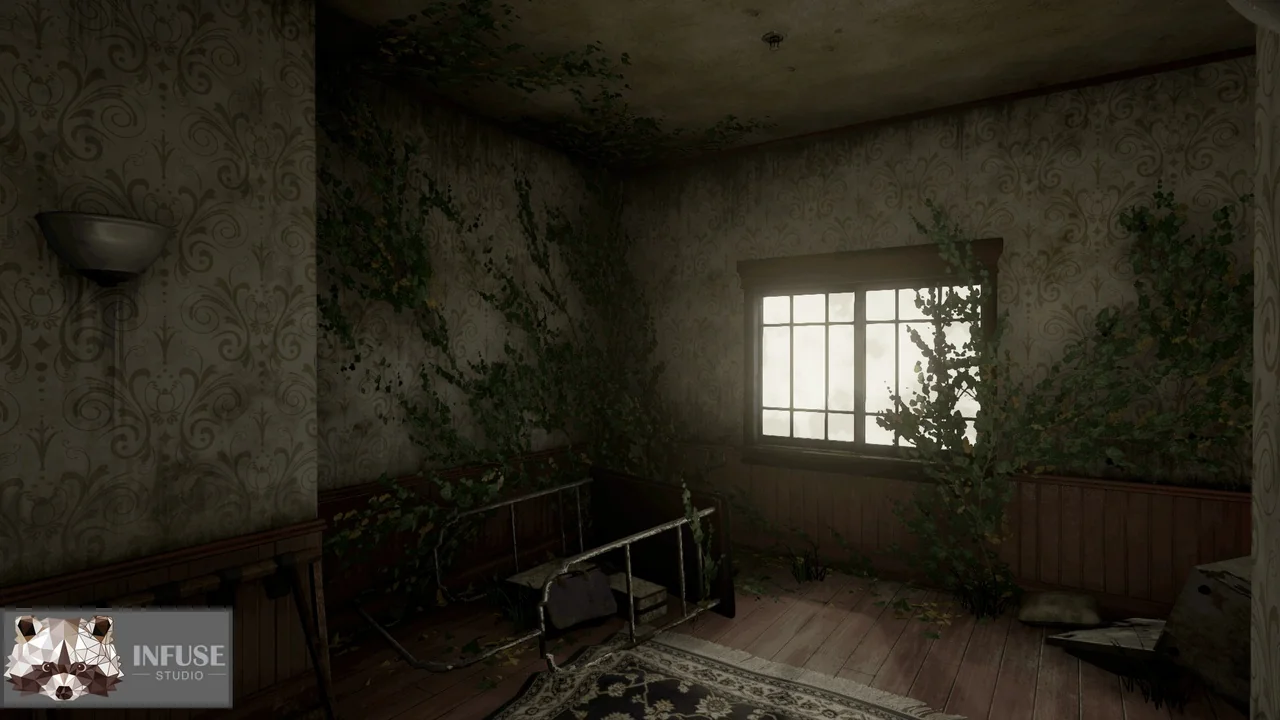
 Horror
 Horror
 Horror