"059e11fbf316ed56"{"id":"1001288","slug":"replicated-grab-system","title":"Replicated Grab System","category":"Game Systems","engine":"5.0+","assetVersion":"","engineVersion":"Engine Version: 5.0+","tag":"Game Systems","accent":"blue","visual":"mech","summary":"Network-replicated physics grab mechanics for Unreal Engine projects, featuring runtime throw controls, actor snapping, and cross-platform support.","platform":"Unreal Engine","publishedAt":"2026-10-01T12:56:15.348Z","updatedAt":"2026-10-01T12:56:15.348Z","sourceNotes":[],"fileContents":[],"compatibility":["Unreal Engine","Engine Version: 5.0+"],"featuredImage":{"alt":"Replicated Grab System","src":"/wp-content/uploads/published/2026/10/9f8885402dcc-8c8826ed-08ff-4e01-9e96-57557d15ba78-213e07ffd2.webp"},"hasDownloadLink":true,"downloads":0,"terms":[{"taxonomy":"category","slug":"game-systems","name":"Game Systems"}],"galleryImages":[{"src":"/wp-content/uploads/published/2026/10/7040c5d1c388-ac2d16d9-4309-4e24-bf0e-0bd55e1bf6fe-5fbbe810ee.webp","alt":"Replicated Grab System"},{"src":"/wp-content/uploads/published/2026/10/08fe6a14c33c-c3d55bd0-2995-4666-8f29-950f61602805-a2b3c09437.webp","alt":"Replicated Grab System"},{"src":"/wp-content/uploads/published/2026/10/4a03a249dbf4-e5a5bb61-f9dd-49e1-b0a4-d3f82b8f636a-8cc4ec29ec.webp","alt":"Replicated Grab System"},{"src":"/wp-content/uploads/published/2026/10/d0ff2506d905-451eca19-264f-41ad-a84c-66cda9cfa4e4-5360d23fa0.webp","alt":"Replicated Grab System"}],"accessPanel":{"kind":"resource","title":"Download this resource","eyebrow":"Free Download","message":"Log in or create a free account to start your download.","fileName":"Content.7z","safetyNote":"Resources are manually reviewed before listing to improve quality and reduce obvious risks.","actionLabel":"Download Free","resourceType":"Resource archive"},"contentHtml":"\u003cp\u003eSynchronizing physical object manipulation across client-server architectures routinely introduces network desynchronization, unstable collisions, and rigid actor handling. Replicated Grab System resolves these hurdles by packaging a dedicated physics handling framework that operates consistently in both singleplayer setups and networked multiplayer sessions.\u003c/p\u003e\u003cp\u003eInstead of leaving players to wrestle with jittery network physics, the system regulates how items are lifted, carried, and released without desyncing between participants. The framework explicitly separates player-driven transformations from unmanaged collision chaos, ensuring carried actors behave predictably relative to the instigating player camera while broadcasting accurate transformation and interaction data to every remote client connected to the session.\u003c/p\u003e\u003ch2\u003eHandling Physics Objects Across Networked Sessions\u003c/h2\u003e\u003cp\u003eMultiplayer physics interaction requires strict authority management so items do not drift into conflicting transforms between the server and connecting clients.\u003c/p\u003e\u003cp\u003eThe system is built entirely on native network replication logic, providing reliable synchronization whether an item is carried by a single participant or observed by multiple peers. Developers can inspect interaction behavior directly via debug functionality tailored for the snap system, ensuring placement triggers and positional references register cleanly. By maintaining consistent state checks over the network, interactions avoid the desynchronization errors that typically occur when standard physics handles interact with replicated characters.\u003c/p\u003e\u003ch2\u003eItem Manipulation Through Rotation, Zooming, and Auto-Alignment\u003c/h2\u003e\u003cp\u003eCarrying an item is rarely limited to simple translation, as gameplay tasks frequently demand inspecting, reorienting, or repositioning an object in local space.\u003c/p\u003e\u003cp\u003eA dedicated rotation mode allows players to spin the active actor along designated axes to inspect details or align it with scene geometry. When orientation needs to return to its default orientation, the system includes a dedicated rotation reset function alongside an auto rotation system that squares items up automatically. For tighter environmental navigation, developers can engage a rotation limiting mode to prevent items from turning awkwardly into walls or character geometry. Users can also zoom the carried actor back and forth along the view axis, relying on built-in distance clamps to prevent the object from clipping behind the camera view or extending unnaturally far from the character.\u003c/p\u003e\u003ch2\u003eReplicated Throw System and Physical Release Controls\u003c/h2\u003e\u003cp\u003eLetting go of a physical object demands distinct handling depending on whether the player drops an item gently or launches it forward as a projectile.\u003c/p\u003e\u003cp\u003eThe package separates drop and launch behaviors into distinct physical operations through an adjustable release speed and a dedicated customizable throw system. Throw power and release impulse can both be altered at runtime in a fully replicated manner, enabling dynamic strength modifiers, variable item mass responses, or situational gameplay buffs. The inclusion of an updated throw mod and refined replication routines guarantees that applied impulses remain uniform across client simulations, preventing discrepancies where a server calculates an object landing in one location while the throwing client renders it elsewhere.\u003c/p\u003e\u003ch2\u003eObject Snapping, Overlap Materials, and Collision Safeguards\u003c/h2\u003e\u003cp\u003eUncontrolled physics props often create severe game-breaking glitches when pushed into static architecture or forced against secondary physical objects.\u003c/p\u003e\u003cp\u003eTo counter physics instability, the system incorporates a specific option to prevent grabbed items from pushing other physical items across the scene. When precision placement is required, players can snap the grabbed actor directly into target positions, with built-in logic preventing grabbable actors from mistakenly snapping into one another. Dynamic usage states and an upgraded overlap system make it straightforward to swap out the overlap material on the fly, supplying clear visual feedback whenever an object approaches a valid socket or valid interaction surface.\u003c/p\u003e\u003ch2\u003eBlueprint Architecture Across Desktop and Mobile Platforms\u003c/h2\u003e\u003cp\u003eMaintaining clean project hierarchies requires modular mechanics that stay contained rather than scattering logic across dozens of interdependent files.\u003c/p\u003e\u003cp\u003eThe entire feature set is consolidated into 8 core Blueprints, keeping integration straightforward without cluttering existing gameplay frameworks. The system is compatible with the Advanced Door Interaction Kit (Replicated), enabling cohesive physics and environmental interaction pipelines within the same project. Development is supported on Windows and Mac workstations, while the generated code packages cleanly to Windows, Mac, Linux, Android, and iOS target builds. Note that 3D prop models shown in product showcase imagery are not included in the package, leaving teams to apply the interaction logic directly to their own custom game assets.\u003c/p\u003e\n\n\u003ch2\u003eExplore Similar Assets\u003c/h2\u003e\n\u003cul\u003e\n\u003cli\u003e\u003ca href=\"https://3dcghub.com/basic-locomotion-system-replicated/\" title=\"Basic Locomotion System (REPLICATED)\"\u003eBasic Locomotion System (REPLICATED)\u003c/a\u003e\u003c/li\u003e\n\u003cli\u003e\u003ca href=\"https://3dcghub.com/replicated-interaction-kit-vol-1-switch-valve-chain-etc/\" title=\"Replicated Interaction Kit Vol 1 (Switch, Valve, Chain etc.)\"\u003eReplicated Interaction Kit Vol 1 (Switch, Valve, Chain etc.)\u003c/a\u003e\u003c/li\u003e\n\u003cli\u003e\u003ca href=\"https://3dcghub.com/replicated-modular-vehicle-v2/\" title=\"Replicated Modular Vehicle V2\"\u003eReplicated Modular Vehicle V2\u003c/a\u003e\u003c/li\u003e\n\u003cli\u003e\u003ca href=\"https://3dcghub.com/replicated-building-system/\" title=\"Replicated Building System\"\u003eReplicated Building System\u003c/a\u003e\u003c/li\u003e\n\u003cli\u003e\u003ca href=\"https://3dcghub.com/multiplayer-dynamic-weather-system-v4/\" title=\"Multiplayer Dynamic Weather System V4\"\u003eMultiplayer Dynamic Weather System V4\u003c/a\u003e\u003c/li\u003e\n\u003c/ul\u003e","contentTextLength":5233,"navigation":{"current":9,"total":3238,"previous":{"id":"1001289","slug":"stylized-truck-pack-drivable-truck","title":"Stylized Truck Pack (Drivable Truck)","category":"Game Systems","platform":"Unreal Engine","updatedAt":"2026-10-01T12:57:24.100Z"},"next":{"id":"1001287","slug":"easy-vehicle-suspension-v2","title":"Easy Vehicle Suspension [v2]","category":"Game Systems","platform":"Unreal Engine","updatedAt":"2026-10-01T12:55:43.227Z"}},"relatedResources":[{"id":"1000980","slug":"basic-locomotion-system-replicated","title":"Basic Locomotion System (REPLICATED)","category":"Gameplay Features","engine":"5.0+","assetVersion":"","engineVersion":"Engine Version: 5.0+","tag":"Gameplay Features","accent":"blue","visual":"animation","summary":"A ground-up locomotion system for the UE5 Skeleton using Lyra animations, built as a simple third-person template with MetaHuman integration and multiplayer inv","platform":"Unreal Engine","publishedAt":"2026-08-18T05:57:51.717Z","updatedAt":"2026-08-18T05:57:51.717Z","sourceNotes":[],"fileContents":[],"compatibility":["Unreal Engine","Engine Version: 5.0+"],"featuredImage":{"alt":"Basic Locomotion System (REPLICATED)","src":"/wp-content/uploads/published/2026/08/497370037da8-24315aeb-c8a9-4077-aa37-d1119fdcf17d-0970e54182.webp"},"hasDownloadLink":true,"downloads":2},{"id":"1000664","slug":"replicated-interaction-kit-vol-1-switch-valve-chain-etc","title":"Replicated Interaction Kit Vol 1 (Switch, Valve, Chain etc.)","category":"Gameplay Features","engine":"5.1+","assetVersion":"","engineVersion":"Engine Version: 5.1+","tag":"Gameplay Features","accent":"blue","visual":"mech","summary":"A network-replicated interaction blueprint kit for Unreal Engine featuring switches, valves, and chains with multiplayer support, TPP/FPP integration, and custo","platform":"Unreal Engine","publishedAt":"2026-07-22T06:49:04.419Z","updatedAt":"2026-07-22T06:49:04.419Z","sourceNotes":[],"fileContents":[],"compatibility":["Unreal Engine","Engine Version: 5.1+"],"featuredImage":{"alt":"Replicated Interaction Kit Vol 1 (Switch, Valve, Chain etc.)","src":"/wp-content/uploads/published/2026/07/4a0398ea3371-dad15c4a-ea6d-4b44-9559-c441b78887dd-085fe54a93.webp"},"hasDownloadLink":true,"downloads":1},{"id":"25115","slug":"replicated-modular-vehicle-v2","title":"Replicated Modular Vehicle V2","category":"Game Mechanics","engine":"5.0+","assetVersion":"Engine version: 5.0+","engineVersion":"","tag":"Game Mechanics","accent":"blue","visual":"luts","summary":"Replicated Modular Vehicle V2 brings a Blueprint-only vehicle system to multiplayer Unreal Engine projects. It includes five game-ready vehicle models, modular placement options, and example blueprints for both 2-seater and 4-seater setups.","platform":"Unreal Engine","publishedAt":"2026-04-19T06:08:54.000Z","updatedAt":"2026-04-20T06:12:32.000Z","sourceNotes":[],"fileContents":[],"compatibility":["Unreal Engine","Engine version: 5.0+"],"featuredImage":{"alt":"Replicated Modular Vehicle V2","src":"https://3dcghub.com/wp-content/uploads/2026/04/be84efcf1880_96c4bb56-ed09-4e2c-8675-750650ec87e5.webp"},"hasDownloadLink":true,"downloads":1}]}
Game Systems
Replicated Grab System
Network-replicated physics grab mechanics for Unreal Engine projects, featuring runtime throw controls, actor snapping, and cross-platform support.
Category:Unreal Engine,Game SystemsPlatform: Unreal EngineEngine Version: 5.0+Published: Oct 1, 2026
Game Systems
Resource overview
Synchronizing physical object manipulation across client-server architectures routinely introduces network desynchronization, unstable collisions, and rigid actor handling. Replicated Grab System resolves these hurdles by packaging a dedicated physics handling framework that operates consistently in both singleplayer setups and networked multiplayer sessions.
Instead of leaving players to wrestle with jittery network physics, the system regulates how items are lifted, carried, and released without desyncing between participants. The framework explicitly separates player-driven transformations from unmanaged collision chaos, ensuring carried actors behave predictably relative to the instigating player camera while broadcasting accurate transformation and interaction data to every remote client connected to the session.
Handling Physics Objects Across Networked Sessions
Multiplayer physics interaction requires strict authority management so items do not drift into conflicting transforms between the server and connecting clients.
The system is built entirely on native network replication logic, providing reliable synchronization whether an item is carried by a single participant or observed by multiple peers. Developers can inspect interaction behavior directly via debug functionality tailored for the snap system, ensuring placement triggers and positional references register cleanly. By maintaining consistent state checks over the network, interactions avoid the desynchronization errors that typically occur when standard physics handles interact with replicated characters.
Item Manipulation Through Rotation, Zooming, and Auto-Alignment
Carrying an item is rarely limited to simple translation, as gameplay tasks frequently demand inspecting, reorienting, or repositioning an object in local space.
A dedicated rotation mode allows players to spin the active actor along designated axes to inspect details or align it with scene geometry. When orientation needs to return to its default orientation, the system includes a dedicated rotation reset function alongside an auto rotation system that squares items up automatically. For tighter environmental navigation, developers can engage a rotation limiting mode to prevent items from turning awkwardly into walls or character geometry. Users can also zoom the carried actor back and forth along the view axis, relying on built-in distance clamps to prevent the object from clipping behind the camera view or extending unnaturally far from the character.
Replicated Throw System and Physical Release Controls
Letting go of a physical object demands distinct handling depending on whether the player drops an item gently or launches it forward as a projectile.
The package separates drop and launch behaviors into distinct physical operations through an adjustable release speed and a dedicated customizable throw system. Throw power and release impulse can both be altered at runtime in a fully replicated manner, enabling dynamic strength modifiers, variable item mass responses, or situational gameplay buffs. The inclusion of an updated throw mod and refined replication routines guarantees that applied impulses remain uniform across client simulations, preventing discrepancies where a server calculates an object landing in one location while the throwing client renders it elsewhere.
Object Snapping, Overlap Materials, and Collision Safeguards
Uncontrolled physics props often create severe game-breaking glitches when pushed into static architecture or forced against secondary physical objects.
To counter physics instability, the system incorporates a specific option to prevent grabbed items from pushing other physical items across the scene. When precision placement is required, players can snap the grabbed actor directly into target positions, with built-in logic preventing grabbable actors from mistakenly snapping into one another. Dynamic usage states and an upgraded overlap system make it straightforward to swap out the overlap material on the fly, supplying clear visual feedback whenever an object approaches a valid socket or valid interaction surface.
Blueprint Architecture Across Desktop and Mobile Platforms
Maintaining clean project hierarchies requires modular mechanics that stay contained rather than scattering logic across dozens of interdependent files.
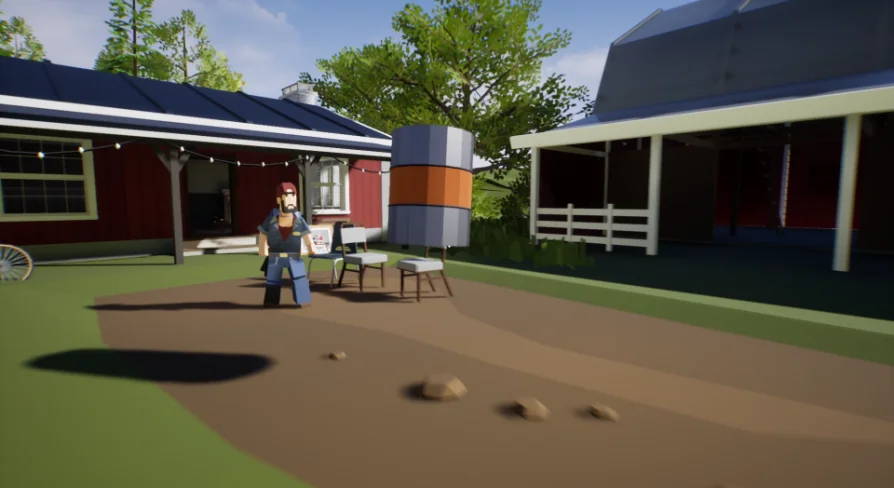
The entire feature set is consolidated into 8 core Blueprints, keeping integration straightforward without cluttering existing gameplay frameworks. The system is compatible with the Advanced Door Interaction Kit (Replicated), enabling cohesive physics and environmental interaction pipelines within the same project. Development is supported on Windows and Mac workstations, while the generated code packages cleanly to Windows, Mac, Linux, Android, and iOS target builds. Note that 3D prop models shown in product showcase imagery are not included in the package, leaving teams to apply the interaction logic directly to their own custom game assets.
 Game Systems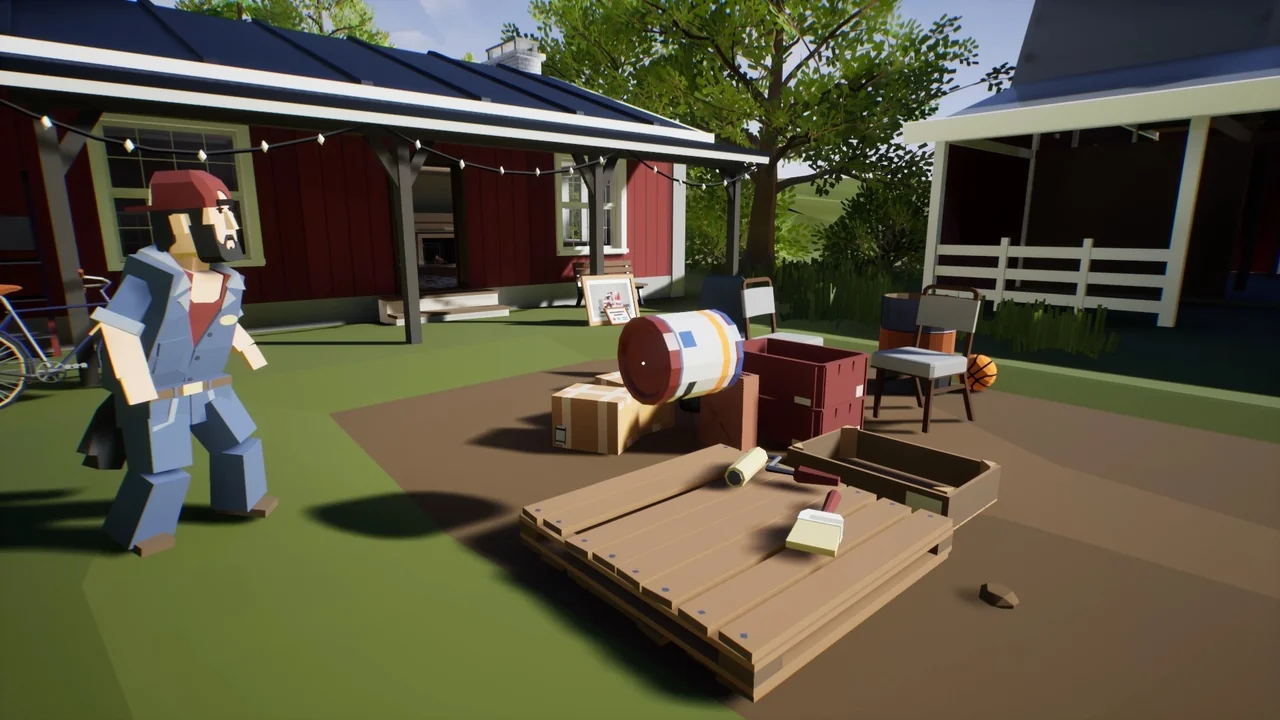
 Gameplay Features
 Gameplay Features
 Game Mechanics