"82ee98b2ee2793f1"{"id":"1002441","slug":"poly-art-rabbits","title":"Poly Art Rabbits","category":"Characters \u0026 Creatures","engine":"4.26+,5.0+","assetVersion":"","engineVersion":"Engine Version: 4.26+,5.0+","tag":"Characters","accent":"blue","visual":"character","summary":"A technical breakdown of Poly Art Rabbits, covering integration, animation pipeline handling, custom blueprint setup, and stylized wildlife staging.","platform":"Unreal Engine","indexPolicy":"index","publishedAt":"2026-11-10T18:38:18.662Z","updatedAt":"2026-11-10T18:38:18.662Z","sourceNotes":[],"fileContents":[],"compatibility":["Unreal Engine","Engine Version: 4.26+,5.0+"],"featuredImage":{"alt":"Poly Art Rabbits","src":"/wp-content/uploads/published/2026/11/c9395ea58539-bbd6bb17-3d03-4b0f-9852-4c80a295bed7-172a43a78f.webp"},"hasDownloadLink":true,"downloads":0,"terms":[{"taxonomy":"category","slug":"characters-and-creatures","name":"Characters \u0026 Creatures"}],"galleryImages":[{"src":"/wp-content/uploads/published/2026/11/09ce190e3bf5-dda7ee7b-cfb3-465a-a878-09587240a002-3689ea115d.webp","alt":"Poly Art Rabbits"},{"src":"/wp-content/uploads/published/2026/11/dd638456e1a9-2e860e0f-9cab-49dc-b94b-a282a27133ff-bfff16cc92.webp","alt":"Poly Art Rabbits"},{"src":"/wp-content/uploads/published/2026/11/7efc4f3d5548-88b0d2d6-bcff-42d2-b253-f83d5ce7f441-e40f353983.webp","alt":"Poly Art Rabbits"},{"src":"/wp-content/uploads/published/2026/11/6beccf63c3dc-0380b4b0-5459-4d83-babd-ca9a74ce9ae8-32e77ed079.webp","alt":"Poly Art Rabbits"},{"src":"/wp-content/uploads/published/2026/11/091191ed860b-67f3b431-e3d7-4b88-8ccd-6a60b160630d-e9cf54ce4f.webp","alt":"Poly Art Rabbits"},{"src":"/wp-content/uploads/published/2026/11/91ad716eb691-1435e0f7-86db-4540-9abd-39c5a23771db-dccd8cda62.webp","alt":"Poly Art Rabbits"},{"src":"/wp-content/uploads/published/2026/11/bb853e56f2b2-e95b6e5a-8d9d-4892-9aef-8caaf6c0543d-907eaaced1.webp","alt":"Poly Art Rabbits"},{"src":"/wp-content/uploads/published/2026/11/73fc7e50330b-20d09b48-b07d-40ae-8ce4-fb3247855558-6e18e5cb1b.webp","alt":"Poly Art Rabbits"},{"src":"/wp-content/uploads/published/2026/11/a05cab4f791e-ec903735-95c1-48ba-b6c8-f54acc50217b-0edbb6cde4.webp","alt":"Poly Art Rabbits"},{"src":"/wp-content/uploads/published/2026/11/8d5b294bc3f1-0b9fef25-cca0-4fc5-893d-49b9e64cf708-464f539b5b.webp","alt":"Poly Art Rabbits"}],"accessPanel":{"kind":"resource","title":"Get this resource","eyebrow":"Free resource","message":"Download this resource in your browser.","fileName":"Content.7z","safetyNote":"Resources are manually reviewed before listing to improve quality and reduce obvious risks.","actionLabel":"Get this resource","resourceType":"Resource archive","versions":[]},"contentHtml":"\u003ch2\u003eSetting Up Poly Art Rabbits in Custom Pawn Blueprints\u003c/h2\u003e\u003cp\u003eIntegrating Poly Art Rabbits into a technical production pipeline starts directly with asset ingestion and actor definition. Because the package arrives cleanly stripped of pre-built character controllers and actor blueprints, engineers are not forced to untangle pre-existing character logic or overwrite conflicting movement components. Instead, the package provides the base models, textures, and animation sequences as standalone building blocks ready to be mapped into engine-native frameworks.\u003c/p\u003e\u003cp\u003eThe setup begins by establishing a base creature class, typically inheriting from a character or pawn actor. The low-poly skeletal mesh forms the physical centerpiece of the actor, bound to its custom material instances. From there, technical artists link the motion data into an Animation Blueprint or controller script. Managing the logic through dedicated state machines allows the rabbit mesh to transition smoothly between locomotion states, idle fidgets, and reactive movement cycles. Because no game-specific controller scripts are bundled, developers retain total authority over movement values such as acceleration curves, ground friction, turning radii, and pathfinding costs within their own navigation systems.\u003c/p\u003e\u003cp\u003eThis architectural split keeps the project footprint lightweight. Developers wiring up behavior trees or state-driven utility AI can assign basic sensory perception components directly to the rabbit pawn. The creature can check for player proximity, evaluate navmesh boundaries, and trigger evasion sequences without carrying the baggage of hardcoded gameplay frameworks.\u003c/p\u003e\u003ch2\u003eAnimation Logic and Locomotion in Poly Art Rabbits\u003c/h2\u003e\u003cp\u003eMotion fidelity is critical for making small stylized creatures feel biologically convincing. Rabbits, hares, and bunnies exhibit very particular movement patterns that diverge sharply from standard quadruped locomotion. Their natural motion relies on asymmetric leaping, sudden changes in velocity, moments of complete stillness, and rapid darting runs. The animations included in Poly Art Rabbits supply the raw skeletal transformations required to replicate these behaviors in engine.\u003c/p\u003e\u003cp\u003eIn practical implementation, these motion clips can be previewed across engines—having been verified in action within multi-engine testbeds to validate how skeletal transforms and blend spaces behave during live playback. Building a responsive locomotion system requires assembling the included movement loops into layered blend spaces or blend trees. At low speed inputs, the rabbit can execute subtle investigative movements, twitching its ears or adjusting its stance. As velocity increases, the state machine shifts through directional hops into full-speed bounding runs.\u003c/p\u003e\u003cp\u003eFor developers working with broader animal locomotion frameworks, the motion data accommodates structural pairings such as Horse Animset compatibility workflows. By standardizing skeletal sockets, bone naming conventions, or retargeting profiles across quadruped hierarchies, technical animators can align the rabbit’s movement logic with wider multi-animal locomotion systems. This makes it straightforward to synchronize ground detection raycasts, root motion calculations, or procedural foot placement without rewriting bone hierarchies.\u003c/p\u003e\u003ch2\u003eStylistic Staging and Ecosystem Cohesion\u003c/h2\u003e\u003cp\u003eA persistent challenge in low-poly game production is the visual void left by empty terrain. While stylized environments, modular pine forests, rock formations, and stylized flora are widely available, wilderness scenes frequently lack ambient fauna. Poly Art Rabbits directly targets this production gap by introducing stylized wildlife scaled to populate open terrain, agricultural plots, meadow biomes, and deep woodland environments.\u003c/p\u003e\u003cp\u003eThe visual language is defined by faceted, faceted-surface low-poly geometry that matches low-fidelity aesthetic benchmarks. The geometry uses clear polygonal cuts, crisp silhouette definition, and flat or soft-gradient texturing that reads clearly at varied camera distances. Since the asset does not include environment meshes, it operates as a modular drop-in element intended to inhabit existing natural terrain packs without introducing conflicting landscape geometry or mismatched foliage styles.\u003c/p\u003e\u003cp\u003eThe creature models also occupy a defined niche within a broader wildlife hierarchy. As part of the wider Poly Art Forest Set, these rabbits align aesthetically with other forest inhabitants, including wolves, bears, foxes, deer, moose, boars, raccoons, tigers, and cats. In an active scene, rabbits serve as ground-level environmental props or fundamental prey units. Staging them in clusters creates natural narrative beats throughout an environment, giving predatory AI agents clear targets to track while presenting human players with a living, responsive ecosystem.\u003c/p\u003e\u003ch2\u003ePipeline Efficiency and Maintenance in Production\u003c/h2\u003e\u003cp\u003eFrom an optimization standpoint, lightweight low-poly animal meshes provide substantial rendering and computational advantages. Because the polygon counts and texture demands are kept tight and focused, developers can spawn multiple instances across open-world environments with negligible strain on the rendering budget. Ambient wildlife can be batched efficiently, making the meshes suitable for background crowd systems, ambient particle-style wildlife spawner volumes, or dense AI zones.\u003c/p\u003e\u003cp\u003eLong-term maintenance is similarly streamlined by the exclusion of proprietary blueprints. In production environments where game engine updates frequently deprecate legacy character controller functions or break custom script nodes, having an asset composed purely of core art assets—models, textures, and animation data—eliminates code obsolescence. Updating the project to newer engine revisions simply requires recompiling materials and letting the engine re-cache animation sequences.\u003c/p\u003e\u003cp\u003eThe resulting package serves technical artists, gameplay programmers, and environment designers who require production-ready wildlife art assets without being constrained by predetermined controller code. By supplying focused models and essential movement clips, Poly Art Rabbits functions as a clean, versatile foundation for populating stylized wilderness scenes.\u003c/p\u003e\n\n\u003ch2\u003eRelated Resources Worth Checking\u003c/h2\u003e\n\u003cul\u003e\n\u003cli\u003e\u003ca href=\"https://3dcghub.com/poly-art-deer/\" rel=\"noopener noreferrer\"\u003ePoly Art Deer\u003c/a\u003e\u003c/li\u003e\n\u003cli\u003e\u003ca href=\"https://3dcghub.com/poly-art-cougars-and-panthers/\" rel=\"noopener noreferrer\"\u003ePoly Art Cougars and Panthers\u003c/a\u003e\u003c/li\u003e\n\u003cli\u003e\u003ca href=\"https://3dcghub.com/poly-art-boar/\" rel=\"noopener noreferrer\"\u003ePoly Art Boar\u003c/a\u003e\u003c/li\u003e\n\u003cli\u003e\u003ca href=\"https://3dcghub.com/poly-art-bear/\" rel=\"noopener noreferrer\"\u003ePoly Art Bear\u003c/a\u003e\u003c/li\u003e\n\u003cli\u003e\u003ca href=\"https://3dcghub.com/forest-golems/\" rel=\"noopener noreferrer\"\u003eForest Golems\u003c/a\u003e\u003c/li\u003e\n\u003c/ul\u003e","contentTextLength":6373,"navigation":{"current":9,"total":4372,"previous":{"id":"1002442","slug":"poly-art-raccoons","title":"Poly Art Raccoons","category":"Characters \u0026 Creatures","platform":"Unreal Engine","updatedAt":"2026-11-10T18:39:06.961Z"},"next":{"id":"1002440","slug":"poly-art-deer","title":"Poly Art Deer","category":"Characters \u0026 Creatures","platform":"Unreal Engine","updatedAt":"2026-11-10T18:37:17.336Z"}},"relatedResources":[{"id":"1002444","slug":"poly-art-wolf","title":"Poly Art Wolf","category":"Characters \u0026 Creatures","engine":"4.26+,5.0+","assetVersion":"","engineVersion":"Engine Version: 4.26+,5.0+","tag":"Characters","accent":"blue","visual":"character","summary":"Explore the Poly Art Wolf asset package, featuring low-poly animal models, textures, animations, and compatibility with the Horse Animset pipeline.","platform":"Unreal Engine","indexPolicy":"index","publishedAt":"2026-11-10T18:41:27.353Z","updatedAt":"2026-11-10T18:41:27.353Z","sourceNotes":[],"fileContents":[],"compatibility":["Unreal Engine","Engine Version: 4.26+,5.0+"],"featuredImage":{"alt":"Poly Art Wolf","src":"/wp-content/uploads/published/2026/11/8982d6af3886-f8d2f00b-53a6-4387-97e9-d89f139adfed-49b4d1b9c5.webp"},"hasDownloadLink":true,"downloads":0},{"id":"1002443","slug":"poly-art-tiger","title":"Poly Art Tiger","category":"Characters \u0026 Creatures","engine":"4.26+,5.0+","assetVersion":"","engineVersion":"Engine Version: 4.26+,5.0+","tag":"Characters","accent":"blue","visual":"character","summary":"Explore technical setup, animation pipelines, and integration strategies for the Poly Art Tiger asset, featuring custom locomotion and forest styling.","platform":"Unreal Engine","indexPolicy":"index","publishedAt":"2026-11-10T18:40:16.839Z","updatedAt":"2026-11-10T18:40:16.839Z","sourceNotes":[],"fileContents":[],"compatibility":["Unreal Engine","Engine Version: 4.26+,5.0+"],"featuredImage":{"alt":"Poly Art Tiger","src":"/wp-content/uploads/published/2026/11/7e64ec46a324-2464de9e-6ef8-4031-acfb-3b526669425e-c00f85e812.webp"},"hasDownloadLink":true,"downloads":0},{"id":"1002442","slug":"poly-art-raccoons","title":"Poly Art Raccoons","category":"Characters \u0026 Creatures","engine":"4.26+,5.0+","assetVersion":"","engineVersion":"Engine Version: 4.26+,5.0+","tag":"Characters","accent":"blue","visual":"character","summary":"Explore the visual style, technical setup, and integration workflows for Poly Art Raccoons, featuring low-poly animal meshes and motion assets.","platform":"Unreal Engine","indexPolicy":"index","publishedAt":"2026-11-10T18:39:06.961Z","updatedAt":"2026-11-10T18:39:06.961Z","sourceNotes":[],"fileContents":[],"compatibility":["Unreal Engine","Engine Version: 4.26+,5.0+"],"featuredImage":{"alt":"Poly Art Raccoons","src":"/wp-content/uploads/published/2026/11/2a5beb3e246b-1132895b-afbb-4fc9-afa5-b62410cdf1bd-84d6b02c36.webp"},"hasDownloadLink":true,"downloads":0}]}
Characters
Poly Art Rabbits
A technical breakdown of Poly Art Rabbits, covering integration, animation pipeline handling, custom blueprint setup, and stylized wildlife staging.
Setting Up Poly Art Rabbits in Custom Pawn Blueprints
Integrating Poly Art Rabbits into a technical production pipeline starts directly with asset ingestion and actor definition. Because the package arrives cleanly stripped of pre-built character controllers and actor blueprints, engineers are not forced to untangle pre-existing character logic or overwrite conflicting movement components. Instead, the package provides the base models, textures, and animation sequences as standalone building blocks ready to be mapped into engine-native frameworks.
The setup begins by establishing a base creature class, typically inheriting from a character or pawn actor. The low-poly skeletal mesh forms the physical centerpiece of the actor, bound to its custom material instances. From there, technical artists link the motion data into an Animation Blueprint or controller script. Managing the logic through dedicated state machines allows the rabbit mesh to transition smoothly between locomotion states, idle fidgets, and reactive movement cycles. Because no game-specific controller scripts are bundled, developers retain total authority over movement values such as acceleration curves, ground friction, turning radii, and pathfinding costs within their own navigation systems.
This architectural split keeps the project footprint lightweight. Developers wiring up behavior trees or state-driven utility AI can assign basic sensory perception components directly to the rabbit pawn. The creature can check for player proximity, evaluate navmesh boundaries, and trigger evasion sequences without carrying the baggage of hardcoded gameplay frameworks.
Animation Logic and Locomotion in Poly Art Rabbits
Motion fidelity is critical for making small stylized creatures feel biologically convincing. Rabbits, hares, and bunnies exhibit very particular movement patterns that diverge sharply from standard quadruped locomotion. Their natural motion relies on asymmetric leaping, sudden changes in velocity, moments of complete stillness, and rapid darting runs. The animations included in Poly Art Rabbits supply the raw skeletal transformations required to replicate these behaviors in engine.
In practical implementation, these motion clips can be previewed across engines—having been verified in action within multi-engine testbeds to validate how skeletal transforms and blend spaces behave during live playback. Building a responsive locomotion system requires assembling the included movement loops into layered blend spaces or blend trees. At low speed inputs, the rabbit can execute subtle investigative movements, twitching its ears or adjusting its stance. As velocity increases, the state machine shifts through directional hops into full-speed bounding runs.
For developers working with broader animal locomotion frameworks, the motion data accommodates structural pairings such as Horse Animset compatibility workflows. By standardizing skeletal sockets, bone naming conventions, or retargeting profiles across quadruped hierarchies, technical animators can align the rabbit’s movement logic with wider multi-animal locomotion systems. This makes it straightforward to synchronize ground detection raycasts, root motion calculations, or procedural foot placement without rewriting bone hierarchies.
Stylistic Staging and Ecosystem Cohesion
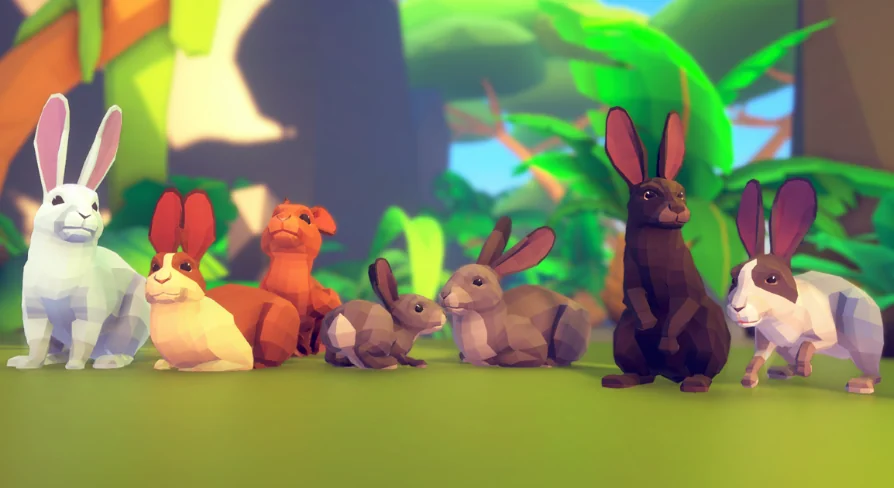
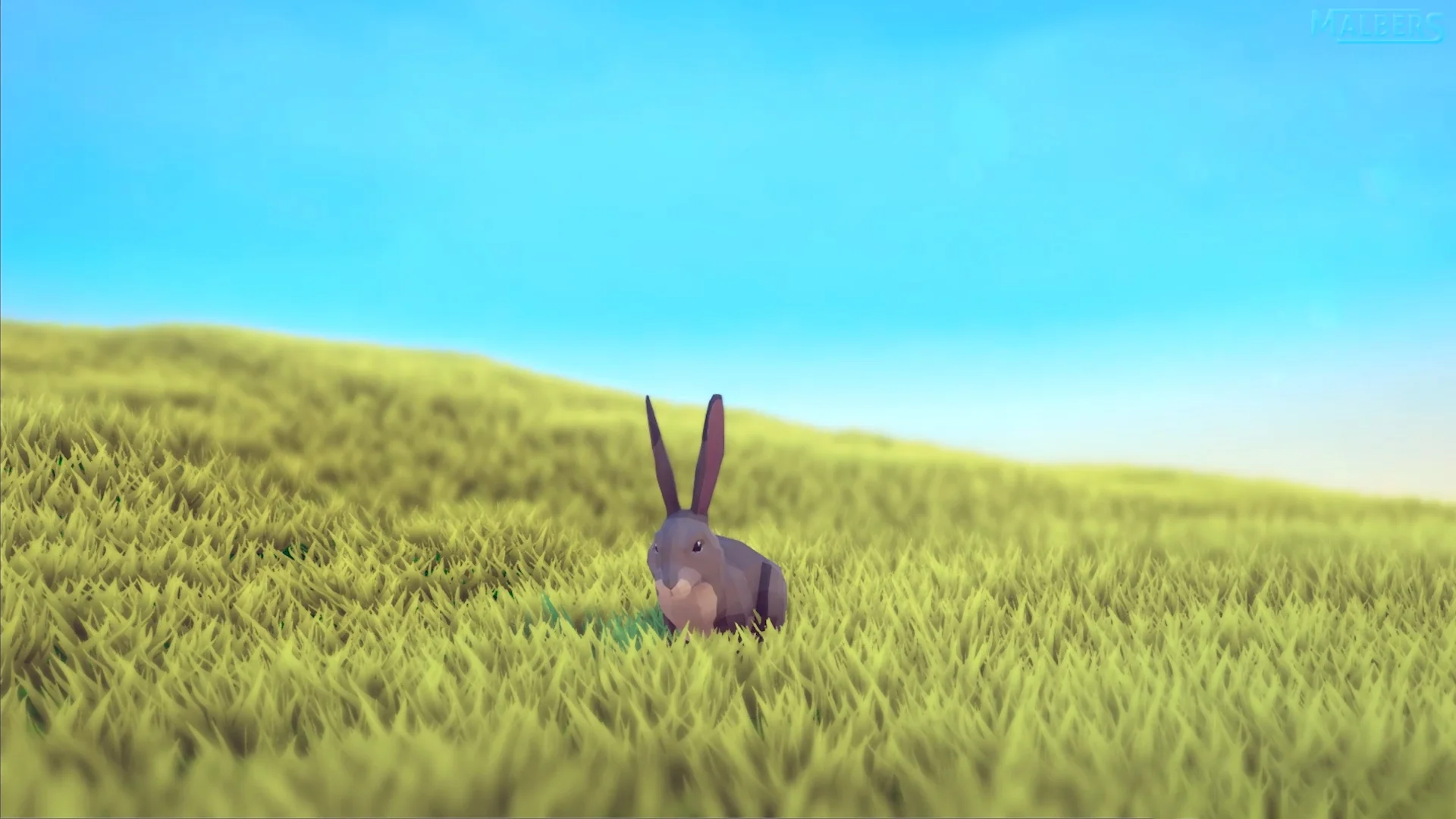
A persistent challenge in low-poly game production is the visual void left by empty terrain. While stylized environments, modular pine forests, rock formations, and stylized flora are widely available, wilderness scenes frequently lack ambient fauna. Poly Art Rabbits directly targets this production gap by introducing stylized wildlife scaled to populate open terrain, agricultural plots, meadow biomes, and deep woodland environments.
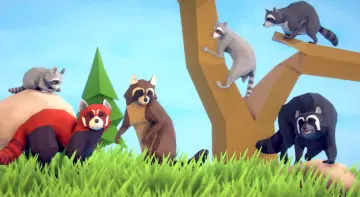
The visual language is defined by faceted, faceted-surface low-poly geometry that matches low-fidelity aesthetic benchmarks. The geometry uses clear polygonal cuts, crisp silhouette definition, and flat or soft-gradient texturing that reads clearly at varied camera distances. Since the asset does not include environment meshes, it operates as a modular drop-in element intended to inhabit existing natural terrain packs without introducing conflicting landscape geometry or mismatched foliage styles.
The creature models also occupy a defined niche within a broader wildlife hierarchy. As part of the wider Poly Art Forest Set, these rabbits align aesthetically with other forest inhabitants, including wolves, bears, foxes, deer, moose, boars, raccoons, tigers, and cats. In an active scene, rabbits serve as ground-level environmental props or fundamental prey units. Staging them in clusters creates natural narrative beats throughout an environment, giving predatory AI agents clear targets to track while presenting human players with a living, responsive ecosystem.
Pipeline Efficiency and Maintenance in Production
From an optimization standpoint, lightweight low-poly animal meshes provide substantial rendering and computational advantages. Because the polygon counts and texture demands are kept tight and focused, developers can spawn multiple instances across open-world environments with negligible strain on the rendering budget. Ambient wildlife can be batched efficiently, making the meshes suitable for background crowd systems, ambient particle-style wildlife spawner volumes, or dense AI zones.
Long-term maintenance is similarly streamlined by the exclusion of proprietary blueprints. In production environments where game engine updates frequently deprecate legacy character controller functions or break custom script nodes, having an asset composed purely of core art assets—models, textures, and animation data—eliminates code obsolescence. Updating the project to newer engine revisions simply requires recompiling materials and letting the engine re-cache animation sequences.
The resulting package serves technical artists, gameplay programmers, and environment designers who require production-ready wildlife art assets without being constrained by predetermined controller code. By supplying focused models and essential movement clips, Poly Art Rabbits functions as a clean, versatile foundation for populating stylized wilderness scenes.
 Characters
 Characters
 Characters
 Characters