"f0d304d7232d0332"{"id":"1002720","slug":"opera-house-kit","title":"Opera House Kit","category":"Interior","engine":"5.0+","assetVersion":"","engineVersion":"Engine Version: 5.0+","tag":"Interior","accent":"blue","visual":"mech","summary":"Explore the Opera House Kit, a realistic kitbash environment pack featuring modules, props, arch pieces, and PBR material instances for games and virtual produc","platform":"Unreal Engine","indexPolicy":"index","publishedAt":"2026-11-17T18:53:30.719Z","updatedAt":"2026-11-17T18:53:30.719Z","sourceNotes":[],"fileContents":[],"compatibility":["Unreal Engine","Engine Version: 5.0+"],"featuredImage":{"alt":"Opera House Kit","src":"/wp-content/uploads/published/2026/11/0411da495e45-7fd2de0a-aeed-4e69-94d2-a22b71144f5b-7b9485782e.webp"},"fileSizeBytes":2411685455,"hasDownloadLink":true,"downloads":0,"terms":[{"taxonomy":"category","slug":"interior","name":"Interior"}],"galleryImages":[{"src":"/wp-content/uploads/published/2026/11/559e4c799623-522e3bff-f81d-4b51-919a-bfba124bc1b7-e28adf7789.webp","alt":"Opera House Kit"},{"src":"/wp-content/uploads/published/2026/11/2fc83731cc1d-48c322ee-5bcf-4fa7-90dd-7b18ad5a32ae-7542c1d8b6.webp","alt":"Opera House Kit"},{"src":"/wp-content/uploads/published/2026/11/2d8c23a66761-6077fc01-bea3-4dd1-ab74-efe1717cd550-08d77e2f41.webp","alt":"Opera House Kit"},{"src":"/wp-content/uploads/published/2026/11/6a94ad0eba4d-142db730-e76c-4f49-a33a-ce8c3055a564-ec309f8c5d.webp","alt":"Opera House Kit"},{"src":"/wp-content/uploads/published/2026/11/4f12e42edddd-0401c82d-10f2-4181-b3d4-ddbe904c8218-5eef91c8f4.webp","alt":"Opera House Kit"},{"src":"/wp-content/uploads/published/2026/11/8035e23cc053-ea31a498-46bf-475b-b45c-b2bbba3ffe5a-2e970dcc0f.webp","alt":"Opera House Kit"},{"src":"/wp-content/uploads/published/2026/11/6c3929bb5c06-5fa89dec-20eb-4308-86ed-0f7e311ae1b9-5beb441dc0.webp","alt":"Opera House Kit"},{"src":"/wp-content/uploads/published/2026/11/570699103603-4acf83a8-1398-4eb2-a539-6db56164dd8a-99f575ff62.webp","alt":"Opera House Kit"},{"src":"/wp-content/uploads/published/2026/11/e075273409fe-0647e7d7-79dd-4c06-bfd9-7806581a57f7-c2905b2b64.webp","alt":"Opera House Kit"},{"src":"/wp-content/uploads/published/2026/11/d14b3f31d073-1e587682-92b9-49d6-aeb5-0c6f360daf00-4c1f727477.webp","alt":"Opera House Kit"}],"accessPanel":{"kind":"resource","title":"Get this resource","safetyNote":"Resources are manually reviewed before listing to improve quality and reduce obvious risks.","fileName":"Content.7z","resourceType":"Resource archive","versions":[]},"contentHtml":"\u003cp\u003eStaging an imposing interior venue demands architectural balance, acoustic proportions, and precise surface definition. The Opera House Kit supplies a realistic kitbash foundation intended to construct large-scale auditoriums, performance stages, concert halls, and expansive indoor arenas. Rather than offering a single unyielding background mesh, the package delivers an adaptable kitbash framework capable of sustaining close inspection in interactive game worlds, real-time presentations, and virtual film production.\u003c/p\u003e \u003ch2\u003eModular Architecture within the Opera House Kit\u003c/h2\u003e\n\u003cp\u003eAssembling convincing public architecture relies on repeating structural logic. Within the Opera House Kit, structural forms are divided into distinct modules and specialized arch pieces. These modular elements allow environment artists and level designers to delineate seating tiers, orchestra pits, proscenium openings, and soaring vaulted ceilings without modeling bespoke geometry for every corridor or gallery.\u003c/p\u003e \u003cp\u003eArch pieces serve a critical role in establishing classic institutional grandeur. By isolating curved spans, column transitions, and decorative ceiling framework into repeatable segments, the asset kit enables creators to bridge structural wall panels cleanly. Whether laying out an intimate theatrical setting or an immense multi-tiered concert arena, combining these modules creates the rhythm of columns, bays, and lintels characteristic of historic opera houses. Because the system utilizes clean modular cuts, snapping components together keeps architectural alignments straight across wide spans.\u003c/p\u003e \u003cp\u003eAlongside major structural pieces, the collection incorporates complementary props to dress the interior. Furnishing a realistic performance hall involves placing functional seating, staging barriers, ornamental partitions, and backstage elements. Scattering these secondary props across modular floors turns hollow geometry into an inhabited, believable auditorium ready for camera placement or player traversal.\u003c/p\u003e \u003ch2\u003ePBR Surface Definition and Material Instances in the Kit\u003c/h2\u003e\n\u003cp\u003eVisual authenticity in high-end renders hinges directly on surface interaction with complex lighting rigs. The Opera House Kit is textured entirely through a physically based rendering workflow, matching standard dielectric and metallic response curves across every module and prop. Polished wood stages, stone balustrades, plastered walls, and metallic decorative trims react naturally under point sources, spotlights, and ambient bounce light.\u003c/p\u003e \u003cp\u003eManaging broad surface variation without ballooning memory budgets is handled through master PBR materials and paired material instances. Instead of locking each mesh to unique, rigid texture sets, material instances allow adjustments to parameters across repeated architectural modules. This structural hierarchy gives artists fine control over tint, roughness intensity, and surface nuances directly in engine, preventing repetitive patterning across sprawling auditorium walls. When lighting shifted from a dark theatrical performance to a brightly illuminated architectural presentation, the material instances respond uniformly, retaining correct physical values under direct exposure.\u003c/p\u003e \u003ch2\u003eAssembly from Custom Levels to the Demo Level\u003c/h2\u003e\n\u003cp\u003eStarting an architectural build from scratch can present scale hurdles, especially when balancing sightlines between audience tiers and the focal performance stage. To establish an immediate benchmark, the package includes a fully constructed demo level. This pre-assembled map demonstrates the intended spatial layout, revealing how the modules, arch pieces, and interior props interlock to form a coherent venue.\u003c/p\u003e \u003cp\u003eExamining the demo level provides an immediate spatial reference for scale, camera framing, and prop density. For fast-turnaround pipelines, this ready-made stage works directly as a finished set for virtual production, pre-visualization, and cinematic cutscenes. The arrangement showcases standard proscenium depths, balcony overhangs, and seating spacing that match realistic architectural standards.\u003c/p\u003e \u003cp\u003eFor projects requiring unique geometry, the same components unpack easily for custom level creation. Designers can pull individual arch segments, wall modules, and props out of the demo context to build alternative layouts, such as modern lecture halls, underground concert stages, or fantasy royal arenas. The modular footprint ensures that whether a level designer needs a narrow backstage corridor or a grand central amphitheater, the pieces align along predictable spatial grids.\u003c/p\u003e \u003ch2\u003eStaging Applications across Games, Film, and Presentations\u003c/h2\u003e\n\u003cp\u003eDifferent production disciplines impose wildly different demands on an environment asset. In interactive game development, environments must maintain visual continuity across multiple player vantage points, offering clear navigation corridors, logical verticality, and unobstructed collision spaces. The Opera House Kit accommodates these gameplay requirements through its modular building logic, allowing level designers to tailor audience tiers and stage areas for clear player sightlines and combat lanes.\u003c/p\u003e \u003cp\u003eIn cinematic production and visual effects, the requirement shifts toward high-fidelity realism under tight focal lenses. The combination of detailed architectural silhouettes and calibrated PBR surfaces ensures that background arches and foreground props hold up when subjected to shallow depth of field, dramatic stage spotlights, or sweeping virtual camera tracks. The realistic aesthetic ensures that digital actors, musicians, or staged set pieces fit seamlessly into the surrounding hall without visual dissonance.\u003c/p\u003e \u003cp\u003eArchitectural and corporate presentations benefit equally from the pre-built architectural assets. Visualizing acoustic concepts, lighting installations, stage setups, or audience seating arrangements requires an authentic frame of reference. The realistic styling provides an immediate sense of scale and institutional dignity, allowing teams to showcase equipment, set pieces, or virtual events inside a polished auditorium space without spending weeks modeling architecture from blueprints.\u003c/p\u003e \u003ch2\u003ePractical Asset Allocation\u003c/h2\u003e\n\u003cp\u003eDeploying the Opera House Kit centers on leveraging its modular discipline. Teams can rely on the demo level for instantaneous cinematic capture or unpack the arch pieces and modular wall segments to map out bespoke concert arenas. Backed by calibrated PBR material instances and varied interior props, the set provides a complete, grounded toolkit for constructing believable performance spaces across games, films, and real-time visualization projects.\u003c/p\u003e\n\n\u003ch2\u003eExplore Similar Assets\u003c/h2\u003e\n\u003cul\u003e\n\u003cli\u003e\u003ca href=\"https://3dcghub.com/tea-house-four-seasons/\" rel=\"noopener noreferrer\"\u003eTea house - four seasons\u003c/a\u003e\u003c/li\u003e\n\u003cli\u003e\u003ca href=\"https://3dcghub.com/vintage-attic-environment-kit/\" rel=\"noopener noreferrer\"\u003eVintage Attic Environment Kit\u003c/a\u003e\u003c/li\u003e\n\u003cli\u003e\u003ca href=\"https://3dcghub.com/american-drive-modular-winter-house-with-interior/\" rel=\"noopener noreferrer\"\u003eAmerican Drive | Modular Winter House with Interior\u003c/a\u003e\u003c/li\u003e\n\u003cli\u003e\u003ca href=\"https://3dcghub.com/parkway-home-modern-family-house-with-stylish-interior-environment/\" rel=\"noopener noreferrer\"\u003eParkway Home – Modern Family House with Stylish Interior Environment\u003c/a\u003e\u003c/li\u003e\n\u003cli\u003e\u003ca href=\"https://3dcghub.com/horror-farm/\" rel=\"noopener noreferrer\"\u003eHorror Farm\u003c/a\u003e\u003c/li\u003e\n\u003c/ul\u003e","contentTextLength":6820,"navigation":{"current":20,"total":4660,"previous":{"id":"1002721","slug":"sci-fi-bio-laboratory","title":"Sci-Fi Bio Laboratory","category":"Sci-Fi","platform":"Unreal Engine","updatedAt":"2026-11-17T18:55:39.208Z"},"next":{"id":"1002719","slug":"old-office-interior-modular","title":"OLD OFFICE Interior (MODULAR)","category":"Victorian","platform":"Unreal Engine","updatedAt":"2026-11-17T18:52:31.261Z"}},"relatedResources":[{"id":"1001399","slug":"tea-house-four-seasons","title":"Tea house - four seasons","category":"Interior","engine":"5.0+","assetVersion":"","engineVersion":"Engine Version: 5.0+","tag":"Interior","accent":"blue","visual":"mech","summary":"Explore the realistic Japanese tea house environment, featuring minimalist Zen architecture, seasonal rain, winter atmospheres, and Niagara visual effects.","platform":"Unreal Engine","indexPolicy":"index","publishedAt":"2026-10-04T17:54:11.784Z","updatedAt":"2026-10-04T17:54:11.784Z","sourceNotes":[],"fileContents":[],"compatibility":["Unreal Engine","Engine Version: 5.0+"],"featuredImage":{"alt":"Tea house - four seasons","src":"/wp-content/uploads/published/2026/10/eea0ba4e6300-4b593c2c-d1e9-4aa8-9c93-db1cbe357b6e-40d14bf95c.webp"},"fileSizeBytes":2022210837,"hasDownloadLink":true,"downloads":0},{"id":"1000714","slug":"vintage-attic-environment-kit","title":"Vintage Attic Environment Kit","category":"Interior","engine":"5.1+","assetVersion":"","engineVersion":"Engine Version: 5.1+","tag":"Interior","accent":"blue","visual":"city","summary":"208 modular meshes, 156 materials, and day/night demo levels for building realistic or retro attic scenes across films, games, and presentations.","platform":"Unreal Engine","indexPolicy":"index","publishedAt":"2026-07-24T08:55:12.301Z","updatedAt":"2026-07-24T08:55:12.301Z","sourceNotes":[],"fileContents":[],"compatibility":["Unreal Engine","Engine Version: 5.1+"],"featuredImage":{"alt":"Vintage Attic Environment Kit","src":"/wp-content/uploads/published/2026/07/179c47e283e5-5ae6c363-88dc-49cc-a191-85397eae84bc-2dc0365baf.webp"},"fileSizeBytes":7644724088,"hasDownloadLink":true,"downloads":2},{"id":"1000420","slug":"american-drive-modular-winter-house-with-interior","title":"American Drive | Modular Winter House with Interior","category":"Rural","engine":"5.5+","assetVersion":"","engineVersion":"Engine Version: 5.5+","tag":"Rural","accent":"blue","visual":"mech","summary":"Discover the American Drive modular kit, featuring seamless snapping architecture, fully furnished interiors, and snowy winter PBR materials.","platform":"Unreal Engine","indexPolicy":"index","publishedAt":"2026-07-09T17:46:14.043Z","updatedAt":"2026-07-09T17:46:14.043Z","sourceNotes":[],"fileContents":[],"compatibility":["Unreal Engine","Engine Version: 5.5+"],"featuredImage":{"alt":"American Drive | Modular Winter House with Interior","src":"/wp-content/uploads/published/2026/07/e75566b06008-b2f29b5c-7eab-444a-adee-42b3355479b9-e55459e3f5.webp"},"fileSizeBytes":8814421359,"hasDownloadLink":true,"downloads":1}]}
Resource screenshots
1 / 10
Join our channel
Follow 3DCGHUB on Telegram for new resource drops, migration updates, and community notices.
Resources are manually reviewed before listing to improve quality and reduce obvious risks.
No account required
Interior
Opera House Kit
Explore the Opera House Kit, a realistic kitbash environment pack featuring modules, props, arch pieces, and PBR material instances for games and virtual produc
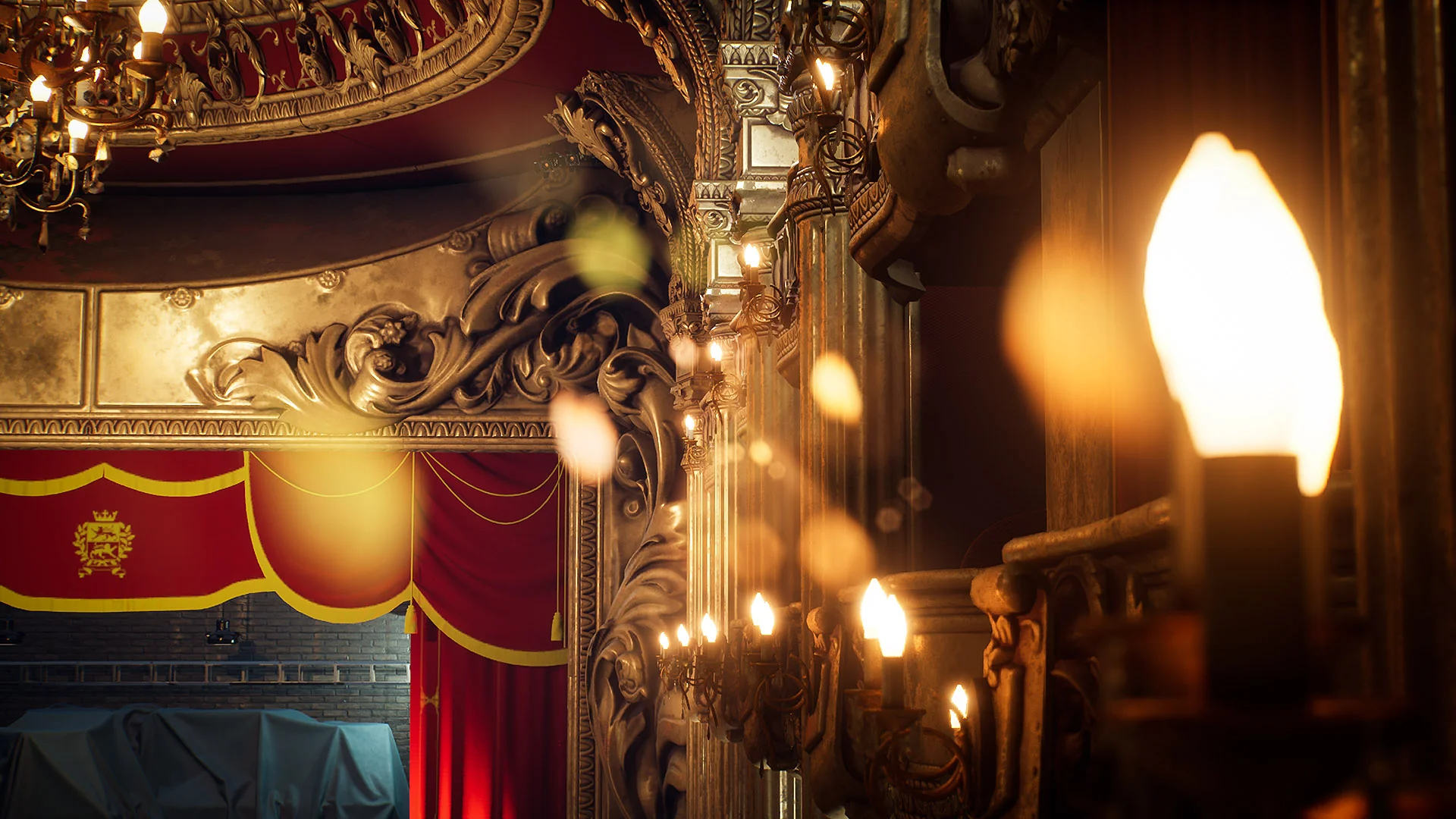
Staging an imposing interior venue demands architectural balance, acoustic proportions, and precise surface definition. The Opera House Kit supplies a realistic kitbash foundation intended to construct large-scale auditoriums, performance stages, concert halls, and expansive indoor arenas. Rather than offering a single unyielding background mesh, the package delivers an adaptable kitbash framework capable of sustaining close inspection in interactive game worlds, real-time presentations, and virtual film production.
Modular Architecture within the Opera House Kit
Assembling convincing public architecture relies on repeating structural logic. Within the Opera House Kit, structural forms are divided into distinct modules and specialized arch pieces. These modular elements allow environment artists and level designers to delineate seating tiers, orchestra pits, proscenium openings, and soaring vaulted ceilings without modeling bespoke geometry for every corridor or gallery.
Arch pieces serve a critical role in establishing classic institutional grandeur. By isolating curved spans, column transitions, and decorative ceiling framework into repeatable segments, the asset kit enables creators to bridge structural wall panels cleanly. Whether laying out an intimate theatrical setting or an immense multi-tiered concert arena, combining these modules creates the rhythm of columns, bays, and lintels characteristic of historic opera houses. Because the system utilizes clean modular cuts, snapping components together keeps architectural alignments straight across wide spans.
Alongside major structural pieces, the collection incorporates complementary props to dress the interior. Furnishing a realistic performance hall involves placing functional seating, staging barriers, ornamental partitions, and backstage elements. Scattering these secondary props across modular floors turns hollow geometry into an inhabited, believable auditorium ready for camera placement or player traversal.
PBR Surface Definition and Material Instances in the Kit
Visual authenticity in high-end renders hinges directly on surface interaction with complex lighting rigs. The Opera House Kit is textured entirely through a physically based rendering workflow, matching standard dielectric and metallic response curves across every module and prop. Polished wood stages, stone balustrades, plastered walls, and metallic decorative trims react naturally under point sources, spotlights, and ambient bounce light.
Managing broad surface variation without ballooning memory budgets is handled through master PBR materials and paired material instances. Instead of locking each mesh to unique, rigid texture sets, material instances allow adjustments to parameters across repeated architectural modules. This structural hierarchy gives artists fine control over tint, roughness intensity, and surface nuances directly in engine, preventing repetitive patterning across sprawling auditorium walls. When lighting shifted from a dark theatrical performance to a brightly illuminated architectural presentation, the material instances respond uniformly, retaining correct physical values under direct exposure.
Assembly from Custom Levels to the Demo Level
Starting an architectural build from scratch can present scale hurdles, especially when balancing sightlines between audience tiers and the focal performance stage. To establish an immediate benchmark, the package includes a fully constructed demo level. This pre-assembled map demonstrates the intended spatial layout, revealing how the modules, arch pieces, and interior props interlock to form a coherent venue.
Examining the demo level provides an immediate spatial reference for scale, camera framing, and prop density. For fast-turnaround pipelines, this ready-made stage works directly as a finished set for virtual production, pre-visualization, and cinematic cutscenes. The arrangement showcases standard proscenium depths, balcony overhangs, and seating spacing that match realistic architectural standards.
For projects requiring unique geometry, the same components unpack easily for custom level creation. Designers can pull individual arch segments, wall modules, and props out of the demo context to build alternative layouts, such as modern lecture halls, underground concert stages, or fantasy royal arenas. The modular footprint ensures that whether a level designer needs a narrow backstage corridor or a grand central amphitheater, the pieces align along predictable spatial grids.
Staging Applications across Games, Film, and Presentations
Different production disciplines impose wildly different demands on an environment asset. In interactive game development, environments must maintain visual continuity across multiple player vantage points, offering clear navigation corridors, logical verticality, and unobstructed collision spaces. The Opera House Kit accommodates these gameplay requirements through its modular building logic, allowing level designers to tailor audience tiers and stage areas for clear player sightlines and combat lanes.
In cinematic production and visual effects, the requirement shifts toward high-fidelity realism under tight focal lenses. The combination of detailed architectural silhouettes and calibrated PBR surfaces ensures that background arches and foreground props hold up when subjected to shallow depth of field, dramatic stage spotlights, or sweeping virtual camera tracks. The realistic aesthetic ensures that digital actors, musicians, or staged set pieces fit seamlessly into the surrounding hall without visual dissonance.
Architectural and corporate presentations benefit equally from the pre-built architectural assets. Visualizing acoustic concepts, lighting installations, stage setups, or audience seating arrangements requires an authentic frame of reference. The realistic styling provides an immediate sense of scale and institutional dignity, allowing teams to showcase equipment, set pieces, or virtual events inside a polished auditorium space without spending weeks modeling architecture from blueprints.
Practical Asset Allocation
Deploying the Opera House Kit centers on leveraging its modular discipline. Teams can rely on the demo level for instantaneous cinematic capture or unpack the arch pieces and modular wall segments to map out bespoke concert arenas. Backed by calibrated PBR material instances and varied interior props, the set provides a complete, grounded toolkit for constructing believable performance spaces across games, films, and real-time visualization projects.
 Interior
 Interior
 Rural