"4a94497540a6fc24"{"id":"1002719","slug":"old-office-interior-modular","title":"OLD OFFICE Interior (MODULAR)","category":"Victorian","engine":"5.2+","assetVersion":"","engineVersion":"Engine Version: 5.2+","tag":"Victorian","accent":"blue","visual":"mech","summary":"Explore the OLD OFFICE Interior (MODULAR) asset collection, featuring over 160 realistic, customizable models for weathered historical environments.","platform":"Unreal Engine","indexPolicy":"index","publishedAt":"2026-11-17T18:52:31.261Z","updatedAt":"2026-11-17T18:52:31.261Z","sourceNotes":[],"fileContents":[],"compatibility":["Unreal Engine","Engine Version: 5.2+"],"featuredImage":{"alt":"OLD OFFICE Interior (MODULAR)","src":"/wp-content/uploads/published/2026/11/309c5493cd4b-516bff11-f973-4960-8456-04b43305dc03-319a6a6d9e.webp"},"hasDownloadLink":true,"downloads":0,"terms":[{"taxonomy":"category","slug":"victorian","name":"Victorian"}],"galleryImages":[{"src":"/wp-content/uploads/published/2026/11/72dcded344a8-24317463-93b3-494e-960c-1e97c4ff056c-4e418d2186.webp","alt":"OLD OFFICE Interior (MODULAR)"},{"src":"/wp-content/uploads/published/2026/11/ca378c3aa5f7-b8f84042-5f13-4f4b-8d30-e2bf530cb3c8-0abaa8bf2e.webp","alt":"OLD OFFICE Interior (MODULAR)"},{"src":"/wp-content/uploads/published/2026/11/ac061acc8851-e119d5d6-65d8-4017-adf3-c4a21a4ff9c4-720aca77c5.webp","alt":"OLD OFFICE Interior (MODULAR)"},{"src":"/wp-content/uploads/published/2026/11/a516c6f5f992-8742f460-83b7-44e4-92da-adf42c614294-6437d3040d.webp","alt":"OLD OFFICE Interior (MODULAR)"},{"src":"/wp-content/uploads/published/2026/11/ca73bf834c61-aa042f90-92f6-496a-9273-e1b5c8b40496-157b351d78.webp","alt":"OLD OFFICE Interior (MODULAR)"},{"src":"/wp-content/uploads/published/2026/11/2f7b2c217359-231c0b79-a425-4b4e-b0c0-98dd76433d7a-6bf9c6b973.webp","alt":"OLD OFFICE Interior (MODULAR)"},{"src":"/wp-content/uploads/published/2026/11/2adfed8f93d5-56d16983-7261-4750-a6ba-4a2a03ee66da-ec6a1d8a11.webp","alt":"OLD OFFICE Interior (MODULAR)"},{"src":"/wp-content/uploads/published/2026/11/f00105290355-6d048337-6729-4a7e-ae4f-8cd22468c350-1a33a46a91.webp","alt":"OLD OFFICE Interior (MODULAR)"},{"src":"/wp-content/uploads/published/2026/11/1d31c4c09317-424325a2-8a3c-445a-97f6-7c85399fa68f-ab69fc1a62.webp","alt":"OLD OFFICE Interior (MODULAR)"},{"src":"/wp-content/uploads/published/2026/11/fd7b18bc56e4-9332c608-4941-4e6d-8fe5-268924960fd9-28307071d5.webp","alt":"OLD OFFICE Interior (MODULAR)"}],"accessPanel":{"kind":"resource","title":"Get this resource","safetyNote":"Resources are manually reviewed before listing to improve quality and reduce obvious risks.","fileName":"Content.7z","resourceType":"Resource archive","versions":[]},"contentHtml":"\u003ch2\u003eHistorical and Dilapidated Workspaces in Scene Production\u003c/h2\u003e\u003cp\u003eSetting up environments rooted in historical or mid-century municipal life requires assets that carry an authentic sense of age. Period detective offices, municipal government archives, vintage administration branches, and Victorian-rooted institutional facilities rarely feature clean, pristine geometry or factory-fresh surfaces. Environments of this nature rely on visual cues that signal decades of steady use. Subtle wear patterns, dated decorative elements, and structural fading immediately inform the player or viewer about the history of a room.\u003c/p\u003e\u003cp\u003eProjects depicting classic city spaces often need a bridge between functional workplace architecture and atmospheric aging. Achieving that balance calls for assets that display mild dilapidation rather than total destruction. When an environment exhibits fatigue—such as weathered paint, scuffed structural surfaces, and aged wooden furniture—it tells a grounded story without requiring post-apocalyptic rubble. The asset collection targets this exact mood, providing the building blocks for vintage office spaces, classic domestic studies, and municipal interiors that demand a lived-in, antique identity.\u003c/p\u003e\u003ch2\u003eAssembling an Old Office with Modular Architecture\u003c/h2\u003e\u003cp\u003eLevel construction starts with the core boundary elements: floors, walls, windows, and ceilings. By delivering these structural surfaces as modular parts, the package enables level designers to define custom room footprints rather than relying on fixed, rigid structural shells. Whether a scene requires an expansive communal clerical floor, a cramped corner office with street-facing windows, or a series of connected administrative backrooms, the structural pieces assemble to fit the specific spatial requirements of the project.\u003c/p\u003e\u003cp\u003eWall components connect alongside window frames and ceiling structures to establish the foundational envelope of the room. Because these structural elements embody a classic architectural style, they easily evoke Victorian and early-to-mid-twentieth-century designs found in historic city centers. Designers can alter floor plans quickly, switching out blank wall segments for window modules to control how natural light filters into the room. This modular flexibility allows single rooms to expand into sprawling office complexes or contract into intimate study rooms while keeping structural styling cohesive across adjacent spaces.\u003c/p\u003e\u003ch2\u003eProp Dressing with Period Furniture and Decorative Elements\u003c/h2\u003e\u003cp\u003eOnce the structural envelope is defined, dressing the space with period-appropriate set dressing gives the location its functional identity. With more than 160 realistic models included in the collection, decorators have access to a substantial pool of props to populate offices, studies, and reading rooms. Heavy furniture items, such as cabinets and bookshelves, form the secondary layer of scene layout, partitioning open areas and anchoring desk setups.\u003c/p\u003e\u003cp\u003eThe dressing extends into fine desktop and decorative details that prevent the setting from appearing sterile. Classic rotary telephones sit alongside scattered books, while framed pictures rest on walls or cabinetry to reflect the personal tastes of the fictional occupant. These smaller objects transform empty desks into active workstations. Bookshelf units can be filled with collections of books to evoke archives, private legal practices, or academic study rooms. The presence of specific antique items like classic telephone hardware immediately reinforces the historical era, grounding the setting in an analog world before the advent of modern computer terminals. The inclusion of decorative wall frames and miscellaneous period accents ensures that no two desks or office corners need to appear identical.\u003c/p\u003e\u003ch2\u003eCustomizing Interior Materials and Surface Fatigue\u003c/h2\u003e\u003cp\u003eVisual believability in period settings depends heavily on surface response. The collection relies on physically based rendering (PBR) workflows, integrating materials equipped with customizable parameters. Artists can modify color textures, roughness maps, normal maps, and detail normals to fine-tune how light interacts with every object in the scene.\u003c/p\u003e\u003cp\u003eHaving control over roughness and normal channels is particularly valuable when adjusting the visible fatigue across structural and prop elements. An artist can intensify the roughness on high-traffic areas of the floor, dial back gloss on polished wooden desks to reflect accumulated grime, or accentuate fine micro-scratches via the detail normal channel. The customizable parameters extend directly across the walls, floor, ceiling, furniture, and accessory models. This material flexibility ensures that color palettes can be unified across disparate assets. If a sequence calls for a muted, desaturated government archive, the wall and furniture color textures can be adjusted downward, while a warmer Victorian parlor or private executive suite can adopt richer tones across the same base meshes.\u003c/p\u003e\u003ch2\u003eProduction Workflows Suited for Weathered Municipal Environments\u003c/h2\u003e\u003cp\u003eEnvironment artists and level designers working on historical dramas, detective mysteries, horror titles, and narrative-driven adventure games encounter frequent needs for weathered indoor spaces. Creating bespoke vintage props and matching architecture from scratch consumes extensive production cycles. Having a unified kit of over 160 realistic models with matching fatigue and wear resolves the visual friction that often occurs when mixing assets from disparate sources.\u003c/p\u003e\u003cp\u003eThe collection serves teams that need rapid room assembly without sacrificing historical verisimilitude. Because the assets already reflect mild dilapidation and subtle aging, artists can bypass the time-consuming process of manually painting grime passes or distress decals onto brand-new furniture models. Solo developers and small technical art teams can block out convincing administrative buildings, dusty legal offices, or vintage residential libraries with minimal overhead, maintaining tight art direction from structural walls down to the individual telephone on the desk.\u003c/p\u003e\n\n\u003ch2\u003eRelated Resources Worth Checking\u003c/h2\u003e\n\u003cul\u003e\n\u003cli\u003e\u003ca href=\"https://3dcghub.com/loft-office-modular/\" rel=\"noopener noreferrer\"\u003eLoft Office (Modular)\u003c/a\u003e\u003c/li\u003e\n\u003cli\u003e\u003ca href=\"https://3dcghub.com/brutalist-architecture-office/\" rel=\"noopener noreferrer\"\u003eBrutalist Architecture Office\u003c/a\u003e\u003c/li\u003e\n\u003cli\u003e\u003ca href=\"https://3dcghub.com/office-corridor-environment-office-corridor-environment-office-corridor-3d/\" rel=\"noopener noreferrer\"\u003eOffice Corridor Environment ( Office Corridor Environment Office Corridor 3D )\u003c/a\u003e\u003c/li\u003e\n\u003cli\u003e\u003ca href=\"https://3dcghub.com/apocalyptic-office-props-vol1/\" rel=\"noopener noreferrer\"\u003eApocalyptic Office Props Vol1\u003c/a\u003e\u003c/li\u003e\n\u003cli\u003e\u003ca href=\"https://3dcghub.com/the-newsroom-environment-newsroom-newsroom-office-news-paper-interior-3d/\" rel=\"noopener noreferrer\"\u003eThe Newsroom Environment ( Newsroom Newsroom Office News Paper Interior 3D )\u003c/a\u003e\u003c/li\u003e\n\u003c/ul\u003e","contentTextLength":6375,"navigation":{"current":1,"total":4642,"next":{"id":"1002718","slug":"nordic-fishing-hut-coastal-lakeside-cabin-interior-exterior","title":"Nordic Fishing Hut - Coastal Lakeside Cabin [Interior + Exterior]","category":"Rural","platform":"Unreal Engine","updatedAt":"2026-11-17T18:51:34.222Z"}},"relatedResources":[{"id":"1002704","slug":"loft-office-modular","title":"Loft Office (Modular)","category":"Interior","engine":"5.0+","assetVersion":"","engineVersion":"Engine Version: 5.0+","tag":"Interior","accent":"blue","visual":"mech","summary":"Explore Loft Office (Modular), featuring three complete modern interior scenes tailored for ArchViz, VR projects, and AAA game production environments.","platform":"Unreal Engine","indexPolicy":"index","publishedAt":"2026-11-17T18:33:16.317Z","updatedAt":"2026-11-17T18:33:16.317Z","sourceNotes":[],"fileContents":[],"compatibility":["Unreal Engine","Engine Version: 5.0+"],"featuredImage":{"alt":"Loft Office (Modular)","src":"/wp-content/uploads/published/2026/11/79cdb87b5cfe-a6fb079f-1b77-480e-ab1b-081cca4f67ee-321ada8d8e.webp"},"hasDownloadLink":true,"downloads":0},{"id":"1002696","slug":"brutalist-architecture-office","title":"Brutalist Architecture Office","category":"Interior","engine":"5.0+","assetVersion":"","engineVersion":"Engine Version: 5.0+","tag":"Interior","accent":"blue","visual":"mech","summary":"Explore the procedural systems, 70+ blueprints, and 250+ arch viz props powering the Brutalist Architecture Office environment in Unreal Engine.","platform":"Unreal Engine","indexPolicy":"index","publishedAt":"2026-11-17T18:22:42.571Z","updatedAt":"2026-11-17T18:22:42.571Z","sourceNotes":[],"fileContents":[],"compatibility":["Unreal Engine","Engine Version: 5.0+"],"featuredImage":{"alt":"Brutalist Architecture Office","src":"/wp-content/uploads/published/2026/11/f54a66fde9fe-c7043e4b-8471-4311-b999-78cb53403409-6b0dbcd5af.webp"},"hasDownloadLink":true,"downloads":0},{"id":"1000542","slug":"office-corridor-environment-office-corridor-environment-office-corridor-3d","title":"Office Corridor Environment ( Office Corridor Environment Office Corridor 3D )","category":"Interior","engine":"5.0+","assetVersion":"","engineVersion":"Engine Version: 5.0+","tag":"Interior","accent":"blue","visual":"city","summary":"A modular office corridor environment for Unreal Engine featuring 169 unique meshes, Lumen lighting, Nanite support, and the Ultimate Level Art Tool for fast sc","platform":"Unreal Engine","indexPolicy":"index","publishedAt":"2026-07-15T03:47:27.924Z","updatedAt":"2026-07-15T03:47:27.924Z","sourceNotes":[],"fileContents":[],"compatibility":["Unreal Engine","Engine Version: 5.0+"],"featuredImage":{"alt":"Office Corridor Environment ( Office Corridor Environment Office Corridor 3D )","src":"/wp-content/uploads/published/2026/07/cac97ccdaa91-464fff5d-fc15-465e-8a98-9e6e2f4aa7c6-f331eac002.webp"},"fileSizeBytes":1761041978,"hasDownloadLink":true,"downloads":1}]}
Resource screenshots
1 / 10
Join our channel
Follow 3DCGHUB on Telegram for new resource drops, migration updates, and community notices.
Historical and Dilapidated Workspaces in Scene Production
Setting up environments rooted in historical or mid-century municipal life requires assets that carry an authentic sense of age. Period detective offices, municipal government archives, vintage administration branches, and Victorian-rooted institutional facilities rarely feature clean, pristine geometry or factory-fresh surfaces. Environments of this nature rely on visual cues that signal decades of steady use. Subtle wear patterns, dated decorative elements, and structural fading immediately inform the player or viewer about the history of a room.
Projects depicting classic city spaces often need a bridge between functional workplace architecture and atmospheric aging. Achieving that balance calls for assets that display mild dilapidation rather than total destruction. When an environment exhibits fatigue—such as weathered paint, scuffed structural surfaces, and aged wooden furniture—it tells a grounded story without requiring post-apocalyptic rubble. The asset collection targets this exact mood, providing the building blocks for vintage office spaces, classic domestic studies, and municipal interiors that demand a lived-in, antique identity.
Assembling an Old Office with Modular Architecture
Level construction starts with the core boundary elements: floors, walls, windows, and ceilings. By delivering these structural surfaces as modular parts, the package enables level designers to define custom room footprints rather than relying on fixed, rigid structural shells. Whether a scene requires an expansive communal clerical floor, a cramped corner office with street-facing windows, or a series of connected administrative backrooms, the structural pieces assemble to fit the specific spatial requirements of the project.
Wall components connect alongside window frames and ceiling structures to establish the foundational envelope of the room. Because these structural elements embody a classic architectural style, they easily evoke Victorian and early-to-mid-twentieth-century designs found in historic city centers. Designers can alter floor plans quickly, switching out blank wall segments for window modules to control how natural light filters into the room. This modular flexibility allows single rooms to expand into sprawling office complexes or contract into intimate study rooms while keeping structural styling cohesive across adjacent spaces.
Prop Dressing with Period Furniture and Decorative Elements
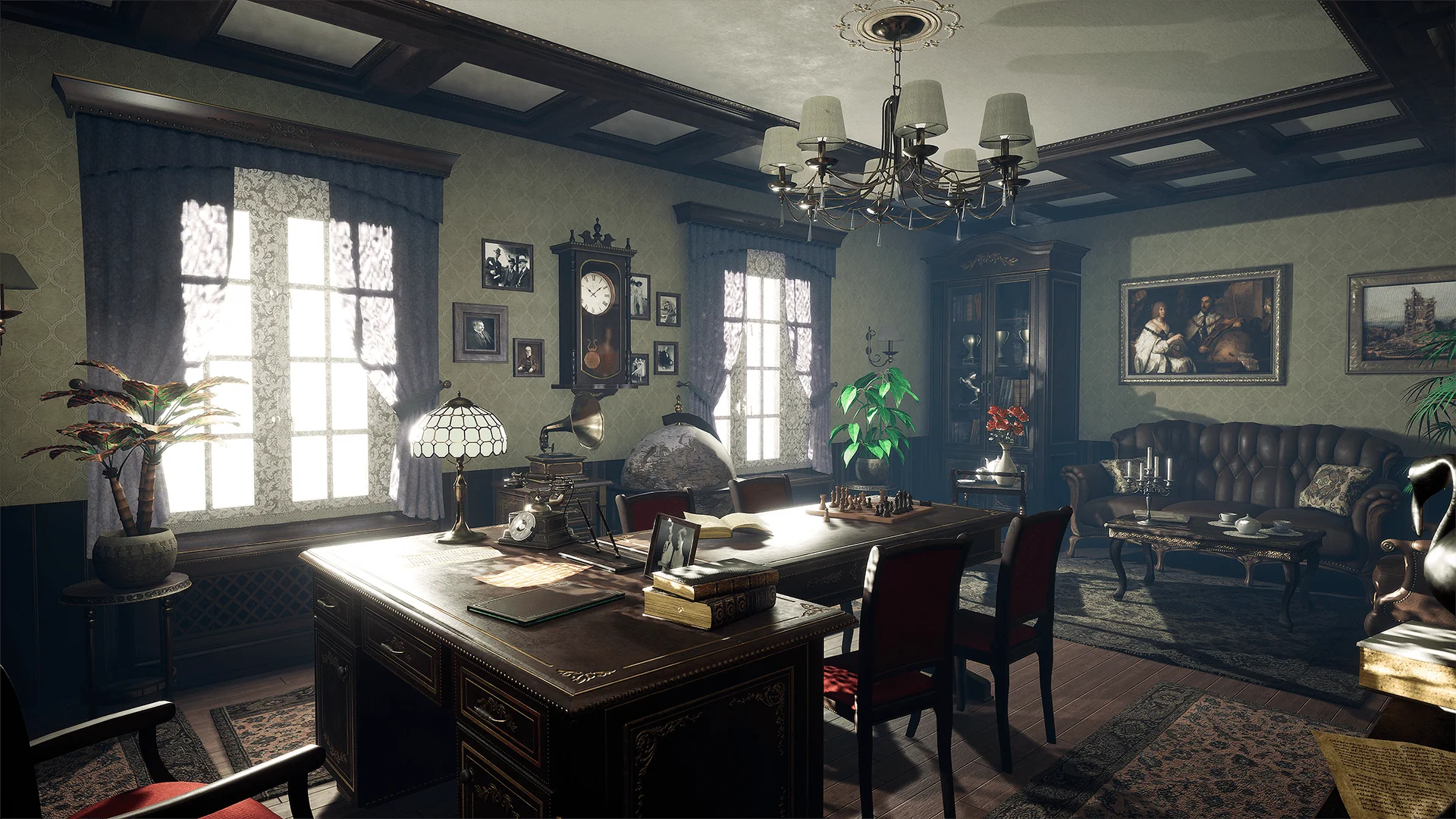
Once the structural envelope is defined, dressing the space with period-appropriate set dressing gives the location its functional identity. With more than 160 realistic models included in the collection, decorators have access to a substantial pool of props to populate offices, studies, and reading rooms. Heavy furniture items, such as cabinets and bookshelves, form the secondary layer of scene layout, partitioning open areas and anchoring desk setups.
The dressing extends into fine desktop and decorative details that prevent the setting from appearing sterile. Classic rotary telephones sit alongside scattered books, while framed pictures rest on walls or cabinetry to reflect the personal tastes of the fictional occupant. These smaller objects transform empty desks into active workstations. Bookshelf units can be filled with collections of books to evoke archives, private legal practices, or academic study rooms. The presence of specific antique items like classic telephone hardware immediately reinforces the historical era, grounding the setting in an analog world before the advent of modern computer terminals. The inclusion of decorative wall frames and miscellaneous period accents ensures that no two desks or office corners need to appear identical.
Customizing Interior Materials and Surface Fatigue
Visual believability in period settings depends heavily on surface response. The collection relies on physically based rendering (PBR) workflows, integrating materials equipped with customizable parameters. Artists can modify color textures, roughness maps, normal maps, and detail normals to fine-tune how light interacts with every object in the scene.
Having control over roughness and normal channels is particularly valuable when adjusting the visible fatigue across structural and prop elements. An artist can intensify the roughness on high-traffic areas of the floor, dial back gloss on polished wooden desks to reflect accumulated grime, or accentuate fine micro-scratches via the detail normal channel. The customizable parameters extend directly across the walls, floor, ceiling, furniture, and accessory models. This material flexibility ensures that color palettes can be unified across disparate assets. If a sequence calls for a muted, desaturated government archive, the wall and furniture color textures can be adjusted downward, while a warmer Victorian parlor or private executive suite can adopt richer tones across the same base meshes.
Production Workflows Suited for Weathered Municipal Environments
Environment artists and level designers working on historical dramas, detective mysteries, horror titles, and narrative-driven adventure games encounter frequent needs for weathered indoor spaces. Creating bespoke vintage props and matching architecture from scratch consumes extensive production cycles. Having a unified kit of over 160 realistic models with matching fatigue and wear resolves the visual friction that often occurs when mixing assets from disparate sources.
The collection serves teams that need rapid room assembly without sacrificing historical verisimilitude. Because the assets already reflect mild dilapidation and subtle aging, artists can bypass the time-consuming process of manually painting grime passes or distress decals onto brand-new furniture models. Solo developers and small technical art teams can block out convincing administrative buildings, dusty legal offices, or vintage residential libraries with minimal overhead, maintaining tight art direction from structural walls down to the individual telephone on the desk.
 Interior
 Interior
 Interior