"1c2c8b66743036b4"{"id":"1001650","slug":"modular-sci-fi-underground-environment","title":"Modular Sci-Fi Underground Environment","category":"Sci-Fi","engine":"4.23+,5.0+","assetVersion":"","engineVersion":"Engine Version: 4.23+,5.0+","tag":"Sci-Fi","accent":"blue","visual":"city","summary":"Build subterranean levels in UE4 with the Modular Sci-Fi Underground Environment, featuring custom collisions and modular facility architecture.","platform":"Unreal Engine","publishedAt":"2026-10-13T08:26:39.253Z","updatedAt":"2026-10-13T08:26:39.253Z","sourceNotes":[],"fileContents":[],"compatibility":["Unreal Engine","Engine Version: 4.23+,5.0+"],"featuredImage":{"alt":"Modular Sci-Fi Underground Environment","src":"/wp-content/uploads/published/2026/10/5c09ae13a60d-a3852ca4-852c-4b0f-8df1-2b28efab2a0b-d656f3080f.webp"},"hasDownloadLink":true,"downloads":0,"terms":[{"taxonomy":"category","slug":"sci-fi","name":"Sci-Fi"}],"galleryImages":[{"src":"/wp-content/uploads/published/2026/10/9d326c93e4fc-966695e2-d7e1-40c2-96b3-c57fbe10ddd8-34ed06b710.webp","alt":"Modular Sci-Fi Underground Environment"},{"src":"/wp-content/uploads/published/2026/10/fe1e58913341-9c648955-3920-4e3c-8be7-237065b61693-e3fa591cc9.webp","alt":"Modular Sci-Fi Underground Environment"},{"src":"/wp-content/uploads/published/2026/10/747b8786b536-dae7ac25-bfe1-4627-9fa6-0ccf29021434-f15c128286.webp","alt":"Modular Sci-Fi Underground Environment"},{"src":"/wp-content/uploads/published/2026/10/c1519757406c-90a80d55-ec2d-40dd-8f2b-e76945e16f9b-4b3a41297b.webp","alt":"Modular Sci-Fi Underground Environment"},{"src":"/wp-content/uploads/published/2026/10/c75de641ac52-f446036e-f972-49a1-a6b9-5eebedba438c-ca5454ce2d.webp","alt":"Modular Sci-Fi Underground Environment"},{"src":"/wp-content/uploads/published/2026/10/15e41240077b-e710da11-9f5c-48e0-bae5-89d049b0551e-7a74f8326f.webp","alt":"Modular Sci-Fi Underground Environment"},{"src":"/wp-content/uploads/published/2026/10/e2a172a25d37-0f16aa56-2134-4a06-b015-12cb3c06ad37-9443d09f97.webp","alt":"Modular Sci-Fi Underground Environment"},{"src":"/wp-content/uploads/published/2026/10/0e378d34e5ef-f9883e09-968e-4c60-9bc8-887fab512fe5-3112838ed6.webp","alt":"Modular Sci-Fi Underground Environment"},{"src":"/wp-content/uploads/published/2026/10/b652525a51dd-a203532e-9312-49ec-aeb6-0dc2731ffd02-08c7b84421.webp","alt":"Modular Sci-Fi Underground Environment"},{"src":"/wp-content/uploads/published/2026/10/0b11cc9bb3cf-0128c106-23d1-48c8-9105-7d858849fd30-93f88c17d7.webp","alt":"Modular Sci-Fi Underground Environment"}],"accessPanel":{"kind":"resource","title":"Download this resource","eyebrow":"Free Download","message":"Log in or create a free account to start your download.","fileName":"Content.7z","safetyNote":"Resources are manually reviewed before listing to improve quality and reduce obvious risks.","actionLabel":"Download Free","resourceType":"Resource archive"},"contentHtml":"\u003cp\u003eSubterranean science-fiction settings present unique environmental challenges, requiring a balance between raw rock formations and structured industrial engineering. Whether staging a covert subterranean laboratory, an automated mining shaft, or a digital metaverse space, level designers need structural elements that snap cleanly into place while leaving room for customized layout decisions. Modular Sci-Fi Underground Environment is configured as an entry point for establishing these environments inside Unreal Engine 4, offering a foundational architecture that can be adapted to match distinct worldbuilding needs.\u003c/p\u003e \u003ch2\u003eBuilding Sci-Fi Underground Spaces from Caves to Mines\u003c/h2\u003e \u003cp\u003eUnderground operations in speculative fiction take many forms, from raw cavern networks cut open by heavy drills to high-tech outposts hidden beneath planetary crusts. The kit directly targets underground, cave, and mine settings, establishing the visual groundwork needed to stage low-light corridors, heavy structural framing, and specialized installations. Because the models serve as an adaptable structural baseline, teams can establish distinct atmospheres simply by adjusting lighting schemes, material assignments, and prop density.\u003c/p\u003e \u003cp\u003eHologram elements and level-specific components allow developers to communicate technological function within an otherwise dark and isolated space. Digital schematics, floating readouts, and holographic markers help define functional zones within an underground outpost, indicating maintenance pathways, power relays, or hazardous excavation boundaries. In metaverse environments and interactive walkthroughs, these technological accents serve as practical visual landmarks, keeping visitors oriented as they navigate winding subterranean corridors.\u003c/p\u003e \u003cp\u003eBecause the environment is built to accommodate individual adjustments, teams are not locked into a rigid visual identity. Meshes can be modified by the user to introduce wear, reconfigure component shapes, or align the structural panels with custom art directions. This adaptability prevents different underground rooms from feeling uniform, allowing miners' quarters, security gates, and machine hubs to maintain distinct appearances while sharing the same underlying architectural language.\u003c/p\u003e \u003ch2\u003eModular Assembly and Modifying Pieces for Custom Levels\u003c/h2\u003e \u003cp\u003eFast level blocking is essential during early production phases. The structural meshes in this package are engineered to fit together smoothly, enabling level designers to quickly lay out corridors, junctions, halls, and cavern outposts without encountering awkward seam alignments or floating edges. By relying on pieces designed to snap cleanly, environmental artists can prototype cavern layouts and structural frameworks rapidly before committing to final prop dressing.\u003c/p\u003e \u003cp\u003eModularity also simplifies iteration. If an encounter area needs wider defensive chokepoints or an excavation tunnel requires a longer pathway for pacing reasons, sections can be unlinked, duplicated, or extended without rebuilding surrounding meshes. The user can easily adjust and modify the assets to meet the spatial constraints of specific gameplay mechanics, such as third-person camera clearances or vehicle movement paths.\u003c/p\u003e \u003cp\u003eBeyond spatial adjustments, the straightforward setup allows developers to integrate the kit into existing UE4 projects without complicated migration steps. Meshes are configured so that dropping them into an active level does not disrupt established project hierarchies. This ease of integration makes the assets useful not only for building entire underground complexes from the ground up, but also for expanding existing installations that need subterranean basements, utility conduits, or lower-level transit bays.\u003c/p\u003e \u003ch2\u003eCustom Collisions and Asset Integration in UE4\u003c/h2\u003e \u003cp\u003eA modular kit is only as reliable as its collision setup, particularly in confined underground spaces where players interact closely with walls, ceilings, and access hatches. Modular Sci-Fi Underground Environment incorporates custom collisions across its components, ensuring that characters, camera sweeps, and physics projectiles react predictably against structural surfaces. In dense interior layouts, accurate collision bounds prevent gameplay hitches such as characters snagging on decorative paneling or cameras clipping through low cave ceilings.\u003c/p\u003e \u003cp\u003ePipeline documentation supports this technical integration. The package includes an asset overview document detailing the individual meshes, custom collision structures, and update notes. Having organized asset references allows artists to evaluate mesh footprints and collision boundaries before placing assets into a scene, reducing guesswork during level assembly. Furthermore, access to product update notes and live documentation ensures that teams remain informed about adjustments or maintenance applied to the assets over the course of their project lifecycle.\u003c/p\u003e \u003ch2\u003eBridging Surface Exteriors with Underground Facilities via Elevators\u003c/h2\u003e \u003cp\u003eVerticality is a defining element of underground installation design. Real-world and fictional facilities rarely exist completely severed from the surface; they rely on access shafts, heavy machinery lifts, and transit nodes to move equipment and personnel. The architecture of the package connects conceptually with expanded configurations that feature exterior structures and elevator systems linking surface buildings to subterranean levels.\u003c/p\u003e \u003cp\u003eBy planning spaces around an elevator shaft or vertical conduit, developers can craft compelling pacing transitions. A game sequence might begin within an above-ground perimeter facility, descend through sheer bedrock via a high-capacity lift, and open into the sprawling underground mine or research level built with these modular pieces. This connectivity provides narrative continuity and functional believability, turning separate map zones into a unified, believable facility complex.\u003c/p\u003e \u003ch2\u003eModular Research Facility Compatibility and Production Fit\u003c/h2\u003e \u003cp\u003eLarge-scale productions often require environmental consistency across diverse sub-levels, laboratories, and containment zones. This underground set maintains cross-compatibility with the 4 IN 1 Modular Research Facility and the Mega Bundle 2025 collection. This compatibility allows artists to construct multi-tiered facilities where clean research stations, sterile observation cleanrooms, and rugged underground excavations sit alongside one another without stylistic friction.\u003c/p\u003e \u003cp\u003eFor independent developers, technical artists, and level designers building inside Unreal Engine 4, the pack offers an accessible, structured pathway to constructing believable underground spaces. Its combination of modular snap readiness, custom collisions, straightforward user modification, and room for vertical expansion provides a reliable kit for anyone establishing sci-fi caves, hidden laboratories, or subterranean game levels.\u003c/p\u003e\n\n\u003ch2\u003eContinue Browsing Similar Packs\u003c/h2\u003e\n\u003cul\u003e\n\u003cli\u003e\u003ca href=\"https://3dcghub.com/4-in-1-modular-research-facility-mega-bundle-2025/\" title=\"4 IN 1 Modular Research Facility / Mega Bundle 2025\"\u003e4 IN 1 Modular Research Facility / Mega Bundle 2025\u003c/a\u003e\u003c/li\u003e\n\u003cli\u003e\u003ca href=\"https://3dcghub.com/modular-underground-environment/\" title=\"Modular Underground Environment\"\u003eModular Underground Environment\u003c/a\u003e\u003c/li\u003e\n\u003cli\u003e\u003ca href=\"https://3dcghub.com/modular-sci-fi-interior-ii/\" title=\"Modular Sci-Fi Interior II\"\u003eModular Sci-Fi Interior II\u003c/a\u003e\u003c/li\u003e\n\u003cli\u003e\u003ca href=\"https://3dcghub.com/modular-cyberpunk-city-asset-pack/\" title=\"Modular CyberPunk City Asset Pack\"\u003eModular CyberPunk City Asset Pack\u003c/a\u003e\u003c/li\u003e\n\u003cli\u003e\u003ca href=\"https://3dcghub.com/mega-sci-fi-city-package/\" title=\"Mega Sci-Fi City Package\"\u003eMega Sci-Fi City Package\u003c/a\u003e\u003c/li\u003e\n\u003c/ul\u003e","contentTextLength":7098,"navigation":{"current":65,"total":3651,"previous":{"id":"1001651","slug":"muddy-roads-mat-pack","title":"Muddy Roads Mat Pack","category":"Building \u0026 Human-made","platform":"Unreal Engine","updatedAt":"2026-10-13T08:27:18.508Z"},"next":{"id":"1001649","slug":"modular-sci-fi-interior-ii","title":"Modular Sci-Fi Interior II","category":"Sci-Fi","platform":"Unreal Engine","updatedAt":"2026-10-13T08:25:19.177Z"}},"relatedResources":[{"id":"1001680","slug":"modular-sci-fi-interior","title":"Modular Sci-Fi Interior","category":"Sci-Fi","engine":"4.26+,5.0+","assetVersion":"","engineVersion":"Engine Version: 4.26+,5.0+","tag":"Sci-Fi","accent":"blue","visual":"mech","summary":"Build AAA spaceship corridors, engineering bays, and laboratories with Modular Sci-Fi Interior, featuring 68 compatible parts and customizable materials.","platform":"Unreal Engine","publishedAt":"2026-10-13T15:31:32.670Z","updatedAt":"2026-10-13T15:31:32.670Z","sourceNotes":[],"fileContents":[],"compatibility":["Unreal Engine","Engine Version: 4.26+,5.0+"],"featuredImage":{"alt":"Modular Sci-Fi Interior","src":"/wp-content/uploads/published/2026/10/5f742de1385a-81f27987-eea8-4083-8247-e2f32ed77b80-110aed85b4.webp"},"hasDownloadLink":true,"downloads":1},{"id":"1001665","slug":"scifi-corridor-environment","title":"SciFi Corridor Environment","category":"Sci-Fi","engine":"4.20+,5.0+","assetVersion":"","engineVersion":"Engine Version: 4.20+,5.0+","tag":"Sci-Fi","accent":"blue","visual":"city","summary":"Explore the SciFi Corridor Environment, a modular lowpoly level scene built for current gen games with customizable PBR materials and prop compatibility.","platform":"Unreal Engine","publishedAt":"2026-10-13T15:05:15.324Z","updatedAt":"2026-10-13T15:05:15.324Z","sourceNotes":[],"fileContents":[],"compatibility":["Unreal Engine","Engine Version: 4.20+,5.0+"],"featuredImage":{"alt":"SciFi Corridor Environment","src":"/wp-content/uploads/published/2026/10/522388a562b7-365997bb-848d-475f-be61-3d69c5e3307e-42292051e6.webp"},"hasDownloadLink":true,"downloads":1},{"id":"1001660","slug":"sci-fi-interior-pack","title":"Sci-Fi Interior Pack","category":"Sci-Fi","engine":"4.16+,5.0+","assetVersion":"","engineVersion":"Engine Version: 4.16+,5.0+","tag":"Sci-Fi","accent":"blue","visual":"mech","summary":"Build AAA sci-fi corridors, rooms, and space station halls with the modular meshes, props, and realistic PBR materials in the Sci-Fi Interior Pack.","platform":"Unreal Engine","publishedAt":"2026-10-13T14:49:18.243Z","updatedAt":"2026-10-13T14:49:18.243Z","sourceNotes":[],"fileContents":[],"compatibility":["Unreal Engine","Engine Version: 4.16+,5.0+"],"featuredImage":{"alt":"Sci-Fi Interior Pack","src":"/wp-content/uploads/published/2026/10/feeee675490c-ab3f77c7-91c9-47ea-82e1-43d047947c91-e6293b0541.webp"},"hasDownloadLink":true,"downloads":1}]}
Sci-Fi
Modular Sci-Fi Underground Environment
Build subterranean levels in UE4 with the Modular Sci-Fi Underground Environment, featuring custom collisions and modular facility architecture.
Category:Unreal Engine,Sci-FiPlatform: Unreal EngineEngine Version: 4.23+,5.0+Published: Oct 13, 2026
Sci-Fi
Resource overview
Subterranean science-fiction settings present unique environmental challenges, requiring a balance between raw rock formations and structured industrial engineering. Whether staging a covert subterranean laboratory, an automated mining shaft, or a digital metaverse space, level designers need structural elements that snap cleanly into place while leaving room for customized layout decisions. Modular Sci-Fi Underground Environment is configured as an entry point for establishing these environments inside Unreal Engine 4, offering a foundational architecture that can be adapted to match distinct worldbuilding needs.
Building Sci-Fi Underground Spaces from Caves to Mines
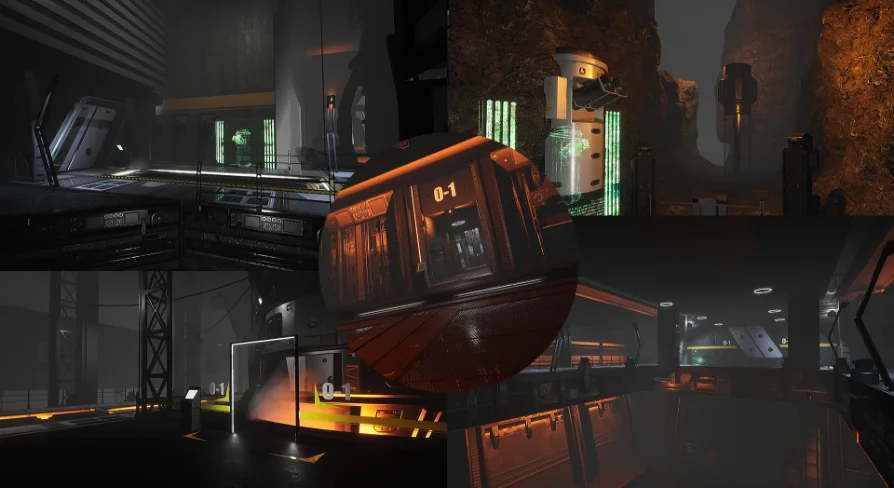
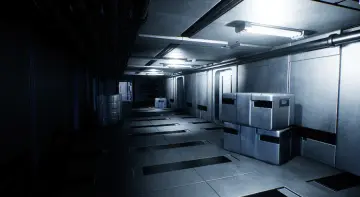
Underground operations in speculative fiction take many forms, from raw cavern networks cut open by heavy drills to high-tech outposts hidden beneath planetary crusts. The kit directly targets underground, cave, and mine settings, establishing the visual groundwork needed to stage low-light corridors, heavy structural framing, and specialized installations. Because the models serve as an adaptable structural baseline, teams can establish distinct atmospheres simply by adjusting lighting schemes, material assignments, and prop density.
Hologram elements and level-specific components allow developers to communicate technological function within an otherwise dark and isolated space. Digital schematics, floating readouts, and holographic markers help define functional zones within an underground outpost, indicating maintenance pathways, power relays, or hazardous excavation boundaries. In metaverse environments and interactive walkthroughs, these technological accents serve as practical visual landmarks, keeping visitors oriented as they navigate winding subterranean corridors.
Because the environment is built to accommodate individual adjustments, teams are not locked into a rigid visual identity. Meshes can be modified by the user to introduce wear, reconfigure component shapes, or align the structural panels with custom art directions. This adaptability prevents different underground rooms from feeling uniform, allowing miners' quarters, security gates, and machine hubs to maintain distinct appearances while sharing the same underlying architectural language.
Modular Assembly and Modifying Pieces for Custom Levels
Fast level blocking is essential during early production phases. The structural meshes in this package are engineered to fit together smoothly, enabling level designers to quickly lay out corridors, junctions, halls, and cavern outposts without encountering awkward seam alignments or floating edges. By relying on pieces designed to snap cleanly, environmental artists can prototype cavern layouts and structural frameworks rapidly before committing to final prop dressing.
Modularity also simplifies iteration. If an encounter area needs wider defensive chokepoints or an excavation tunnel requires a longer pathway for pacing reasons, sections can be unlinked, duplicated, or extended without rebuilding surrounding meshes. The user can easily adjust and modify the assets to meet the spatial constraints of specific gameplay mechanics, such as third-person camera clearances or vehicle movement paths.
Beyond spatial adjustments, the straightforward setup allows developers to integrate the kit into existing UE4 projects without complicated migration steps. Meshes are configured so that dropping them into an active level does not disrupt established project hierarchies. This ease of integration makes the assets useful not only for building entire underground complexes from the ground up, but also for expanding existing installations that need subterranean basements, utility conduits, or lower-level transit bays.
Custom Collisions and Asset Integration in UE4
A modular kit is only as reliable as its collision setup, particularly in confined underground spaces where players interact closely with walls, ceilings, and access hatches. Modular Sci-Fi Underground Environment incorporates custom collisions across its components, ensuring that characters, camera sweeps, and physics projectiles react predictably against structural surfaces. In dense interior layouts, accurate collision bounds prevent gameplay hitches such as characters snagging on decorative paneling or cameras clipping through low cave ceilings.
Pipeline documentation supports this technical integration. The package includes an asset overview document detailing the individual meshes, custom collision structures, and update notes. Having organized asset references allows artists to evaluate mesh footprints and collision boundaries before placing assets into a scene, reducing guesswork during level assembly. Furthermore, access to product update notes and live documentation ensures that teams remain informed about adjustments or maintenance applied to the assets over the course of their project lifecycle.
Bridging Surface Exteriors with Underground Facilities via Elevators
Verticality is a defining element of underground installation design. Real-world and fictional facilities rarely exist completely severed from the surface; they rely on access shafts, heavy machinery lifts, and transit nodes to move equipment and personnel. The architecture of the package connects conceptually with expanded configurations that feature exterior structures and elevator systems linking surface buildings to subterranean levels.
By planning spaces around an elevator shaft or vertical conduit, developers can craft compelling pacing transitions. A game sequence might begin within an above-ground perimeter facility, descend through sheer bedrock via a high-capacity lift, and open into the sprawling underground mine or research level built with these modular pieces. This connectivity provides narrative continuity and functional believability, turning separate map zones into a unified, believable facility complex.
Modular Research Facility Compatibility and Production Fit
Large-scale productions often require environmental consistency across diverse sub-levels, laboratories, and containment zones. This underground set maintains cross-compatibility with the 4 IN 1 Modular Research Facility and the Mega Bundle 2025 collection. This compatibility allows artists to construct multi-tiered facilities where clean research stations, sterile observation cleanrooms, and rugged underground excavations sit alongside one another without stylistic friction.
For independent developers, technical artists, and level designers building inside Unreal Engine 4, the pack offers an accessible, structured pathway to constructing believable underground spaces. Its combination of modular snap readiness, custom collisions, straightforward user modification, and room for vertical expansion provides a reliable kit for anyone establishing sci-fi caves, hidden laboratories, or subterranean game levels.
 Sci-Fi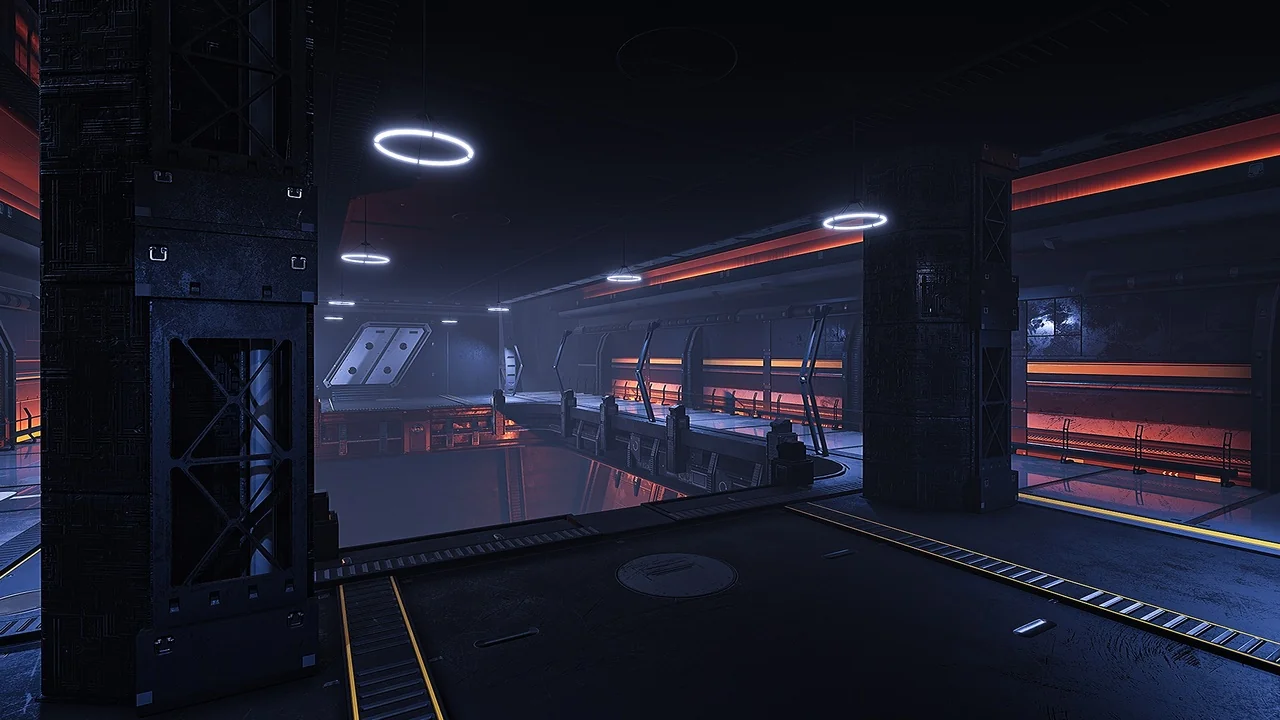
 Sci-Fi
 Sci-Fi
 Sci-Fi