"72afc5f8a809d018"{"id":"1002114","slug":"modular-russian-soldier","title":"modular russian soldier","category":"Characters \u0026 Creatures","engine":"4.27+,5.0+","assetVersion":"","engineVersion":"Engine Version: 4.27+,5.0+","tag":"Characters","accent":"blue","visual":"character","summary":"Explore the modular russian soldier asset featuring realistic tactical armor, groom hair settings, material customization, and CORPSE compatibility.","platform":"Unreal Engine","publishedAt":"2026-10-29T08:57:07.985Z","updatedAt":"2026-10-29T08:57:07.985Z","sourceNotes":[],"fileContents":[],"compatibility":["Unreal Engine","Engine Version: 4.27+,5.0+"],"featuredImage":{"alt":"modular russian soldier","src":"/wp-content/uploads/published/2026/10/e4444c1f147e-90addc23-97a4-4406-b204-db1ac87d0390-63948fc1dc.webp"},"hasDownloadLink":true,"downloads":0,"terms":[{"taxonomy":"category","slug":"characters-and-creatures","name":"Characters \u0026 Creatures"}],"galleryImages":[{"src":"/wp-content/uploads/published/2026/10/0bcc1b6befeb-12cb44a9-c911-4cb7-ad48-04d91bac209f-41614bfdb1.webp","alt":"modular russian soldier"},{"src":"/wp-content/uploads/published/2026/10/c9635621d4a4-42daef65-b747-4c3d-ae64-d081239f8d0f-13d6acea4c.webp","alt":"modular russian soldier"},{"src":"/wp-content/uploads/published/2026/10/9beddbf75639-6b8e5aea-9165-4a16-b13f-a2fb42684416-79d0c66eac.webp","alt":"modular russian soldier"},{"src":"/wp-content/uploads/published/2026/10/7c4c406c7a17-0ed684e5-062d-48ab-b81b-c1c9fac2097b-519b5e5fa5.webp","alt":"modular russian soldier"},{"src":"/wp-content/uploads/published/2026/10/05b59e03933e-e201f183-03bf-420d-a097-cb6f9ed11057-8df6023612.webp","alt":"modular russian soldier"},{"src":"/wp-content/uploads/published/2026/10/8b489eeff6bb-86734b51-b2ee-456b-930b-de8d212db027-8c29cebbdb.webp","alt":"modular russian soldier"},{"src":"/wp-content/uploads/published/2026/10/fe141ec172f7-8b5cdf6c-e6d1-4c92-aa91-beb066afbbdb-ce65d422d7.webp","alt":"modular russian soldier"},{"src":"/wp-content/uploads/published/2026/10/9f72c3cababf-17ea2c9e-e164-4180-885b-50e3777d4697-53df2306fa.webp","alt":"modular russian soldier"},{"src":"/wp-content/uploads/published/2026/10/79442b96d25f-ebccb00b-e4c8-4766-85b3-22088729a08b-7dbeccd5e2.webp","alt":"modular russian soldier"}],"accessPanel":{"kind":"resource","title":"Download this resource","eyebrow":"Free Download","message":"Log in or create a free account to start your download.","fileName":"Content.7z","safetyNote":"Resources are manually reviewed before listing to improve quality and reduce obvious risks.","actionLabel":"Download Free","resourceType":"Resource archive"},"contentHtml":"\u003cp\u003eStark concrete checkpoints, contested urban ruins, and deep woodland patrol routes require believable infantry models to sell the weight of modern military engagement. A character built specifically around authentic Russian military, police, and special force aesthetics provides game environments with an immediate sense of operational realism. Whether populating a tense SWAT clearing operation or staging broad army assault maneuvers, the visual silhouette of realistic body armor, tactical fabric, and combat-ready accessories anchors player perception in grounded modern warfare.\u003c/p\u003e \u003ch2\u003eModular Russian Soldier Structure and Tactical Silhouette\u003c/h2\u003e\n\u003cp\u003eThe core utility of this character model lies in its modular structure. Rather than locking an artist or technical designer into a single immutable uniform, the modular Russian soldier allows different pieces of kit to be assembled according to the operational profile demanded by the scene. A heavy frontline army combatant can sport full torso armor and protective gear, while a specialized operative or SWAT team member might prioritize a leaner tactical profile built for rapid interior breach and clear scenarios.\u003c/p\u003e \u003cp\u003eModularity also solves the visual repetition problem common in projects featuring military squads or defensive garrisons. When staging a fortified bunker or setting up a patrol along an international border, having interchangeable modular components makes it possible to generate recognizable team variations from the same underlying design. Different helmet setups, tactical vests, armor plates, and uniform layers can be arranged across multiple character instances, ensuring that allied or enemy fireteams maintain a cohesive faction appearance without looking like carbon-copy clones.\u003c/p\u003e \u003ch2\u003eMaterial Customization Across Uniforms and Armor\u003c/h2\u003e\n\u003cp\u003eFine visual control over the character relies heavily on the material setup. The model features accessible material parameters that allow creators to adjust the look directly inside the engine without round-tripping through external texture painting suites. This ease of material customization opens up practical workflow benefits for projects that span diverse biomes or require clear team identification mechanics.\u003c/p\u003e \u003cp\u003eBy altering material values across the uniform and protective armor, designers can adapt the soldier to arid desert environments, snow-laden mountain passes, or murky temperate woodlands. In team-based tactical shooters where visual readability is paramount, material adjustments can alter camouflage patterns or accent tones to signal friendly versus opposing factions. Weathering, surface sheen, and color saturation can be shifted within the materials to represent either freshly deployed special force operatives or battle-weary infantry who have spent weeks holding forward defensive positions in muddy trenches.\u003c/p\u003e \u003ch2\u003eGroom Hair Settings and Engine Plugin Requirements\u003c/h2\u003e\n\u003cp\u003eFacial and head detailing on realistic characters often struggles with flat polygon cards or rigid hair meshes. This model adopts groom hair, delivering a more tactile, strand-based presentation suitable for close-up narrative cinematics, dialogue sequences, or third-person viewpoints where the camera remains tight on the character's upper body. The groom hair can be adjusted independently through its dedicated settings, letting developers tune density, styling, or shape to match individual character concepts.\u003c/p\u003e \u003cp\u003eTaking advantage of these groom features requires enabling the engine's native groom plugins. Without the groom plugins activated in the project configuration, the hair elements cannot compile or render as intended. Once the required plugins are turned on, the groom system taps into realistic strand dynamics and advanced hair shading, granting technical artists complete control over how hair strands interact with lighting, character motion, and shadow passes across the soldier's face and tactical headgear.\u003c/p\u003e \u003ch2\u003eFirearm Integration Without Weapon Animations\u003c/h2\u003e\n\u003cp\u003eThe soldier model comes paired with a firearm appropriate for military assault and police tactical engagements, though the weapon asset itself does not feature moving or mechanical animations. Understanding this distinction is critical for setting up the technical combat pipeline and gameplay mechanics.\u003c/p\u003e \u003cp\u003eBecause the weapon does not have its own internal animations, interactive weapon functions must be handled through alternative techniques:\u003c/p\u003e\n\u003cul\u003e \u003cli\u003eSocket-based weapon attachment directly to the soldier's hand bones or tactical weapon slings.\u003c/li\u003e \u003cli\u003eHand and finger poses driven entirely by the character's skeletal rig rather than articulated moving parts on the rifle.\u003c/li\u003e \u003cli\u003eReload sequences constructed using camera cuts, full-body arm animations, or off-screen handling rather than animated slide cycles, rotating bolts, or moving magazine release levers.\u003c/li\u003e \u003cli\u003eVisual feedback achieved through particle muzzle flashes, shell-ejection emitters spawned via gameplay scripts, and dynamic audio cues.\u003c/li\u003e\n\u003c/ul\u003e \u003cp\u003eFor background patrol guards, stationary sentries, or ambient combatants observed from mid-range combat distances, static weapon geometry rarely detracts from gameplay clarity. Setting up simple weapon sockets on the soldier's skeleton allows the rifle to track naturally with character aim offsets, walk cycles, and weapon-raise stances.\u003c/p\u003e \u003ch2\u003eAnimation Blueprint Logic and CORPSE Compatibility\u003c/h2\u003e\n\u003cp\u003eBringing a modular infantry model to life requires solid framework integration. Tagged for use with animation blueprints and scripts, the soldier is set up to plug into standard humanoid locomotion pipelines. Developers can channel existing walk, sprint, crouch, weapon-aim, and tactical cover states through an animation blueprint, driving the character's skeletal deformation across all equipped modular armor segments simultaneously.\u003c/p\u003e \u003cp\u003eOn top of that, the asset features verified compatibility with CORPSE systems. In modern shooters and tactical action titles, handling death transitions, persistent battlefield casualties, and ragdoll simulations often introduces clipping or detachment bugs when modular armor layers fail to stick to the underlying physical skeleton. Compatibility with CORPSE ensures that when this soldier is eliminated during a firefight, the modular armor pieces, tactical gear, and uniform components remain synchronized with the underlying ragdoll physics, leaving realistic fallen combatants across the scene without visual artifacts.\u003c/p\u003e \u003ch2\u003eProject Deployment and Fit\u003c/h2\u003e\n\u003cp\u003eThe modular Russian soldier serves projects that prioritize grounded military realism, tactical team variety, and direct control over character surfacing. Between groom hair support for high-fidelity rendering, an open material setup for rapid environmental adaptation, and full compatibility with animation blueprints and CORPSE frameworks, the model handles both active combatant roles and persistent tactical staging across demanding combat scenarios.\u003c/p\u003e\n\n\u003ch2\u003eExplore Similar Assets\u003c/h2\u003e\n\u003cul\u003e\n\u003cli\u003e\u003ca href=\"https://3dcghub.com/liquidator-russian-soldier/\" title=\"LIQUIDATOR RUSSIAN SOLDIER\"\u003eLIQUIDATOR RUSSIAN SOLDIER\u003c/a\u003e\u003c/li\u003e\n\u003cli\u003e\u003ca href=\"https://3dcghub.com/sci-fi-space-soldier-female/\" title=\"Sci Fi Space Soldier Female\"\u003eSci Fi Space Soldier Female\u003c/a\u003e\u003c/li\u003e\n\u003cli\u003e\u003ca href=\"https://3dcghub.com/modular-soldier-opb-full/\" title=\"Modular Soldier OPB Full\"\u003eModular Soldier OPB Full\u003c/a\u003e\u003c/li\u003e\n\u003cli\u003e\u003ca href=\"https://3dcghub.com/german-soldier-wwii/\" title=\"German Soldier WWII\"\u003eGerman Soldier WWII\u003c/a\u003e\u003c/li\u003e\n\u003cli\u003e\u003ca href=\"https://3dcghub.com/special-forces-ski-fi-soldier/\" title=\"Special forces ski-fi soldier\"\u003eSpecial forces ski-fi soldier\u003c/a\u003e\u003c/li\u003e\n\u003c/ul\u003e","contentTextLength":7026,"navigation":{"current":61,"total":4100,"previous":{"id":"1002115","slug":"modular-scifi-hallways","title":"Modular SciFi Hallways","category":"Sci-Fi","platform":"Unreal Engine","updatedAt":"2026-10-29T08:57:52.632Z"},"next":{"id":"1002113","slug":"modular-longbow-pack-game-ready","title":"Modular Longbow Pack - Game-Ready","category":"Weapons \u0026 Combat","platform":"Unreal Engine","updatedAt":"2026-10-29T08:56:02.296Z"}},"relatedResources":[{"id":"1002076","slug":"liquidator-russian-soldier","title":"LIQUIDATOR RUSSIAN SOLDIER","category":"Characters \u0026 Creatures","engine":"4.26+,5.0+","assetVersion":"","engineVersion":"Engine Version: 4.26+,5.0+","tag":"Characters","accent":"blue","visual":"character","summary":"A character model of a 1986 Chernobyl Soviet liquidator equipped with modular hazmat gear, Animationblueprint logic, and CORPSE compatibility.","platform":"Unreal Engine","publishedAt":"2026-10-26T15:44:04.991Z","updatedAt":"2026-10-26T15:44:04.991Z","sourceNotes":[],"fileContents":[],"compatibility":["Unreal Engine","Engine Version: 4.26+,5.0+"],"featuredImage":{"alt":"LIQUIDATOR RUSSIAN SOLDIER","src":"/wp-content/uploads/published/2026/10/28a154b5d6a7-ab20af51-569e-43b1-92e2-a565fae52774-df6fca4ae6.webp"},"hasDownloadLink":true,"downloads":0},{"id":"1001659","slug":"sci-fi-space-soldier-female","title":"Sci Fi Space Soldier Female","category":"Characters \u0026 Creatures","engine":"4.16+,5.0+","assetVersion":"","engineVersion":"Engine Version: 4.16+,5.0+","tag":"Characters","accent":"blue","visual":"character","summary":"Sci Fi Space Soldier Female features 2 model versions, 2 LOD levels at 29K and 10K triangles, Epic skeleton rigging, and customizable multi-tone materials.","platform":"Unreal Engine","publishedAt":"2026-10-13T14:48:21.104Z","updatedAt":"2026-10-13T14:48:21.104Z","sourceNotes":[],"fileContents":[],"compatibility":["Unreal Engine","Engine Version: 4.16+,5.0+"],"featuredImage":{"alt":"Sci Fi Space Soldier Female","src":"/wp-content/uploads/published/2026/10/c9df1964c209-c1a5eaa9-4d71-4521-b647-674811bda59b-9cb1722b78.webp"},"hasDownloadLink":true,"downloads":1},{"id":"1001167","slug":"modular-soldier-opb-full","title":"Modular Soldier OPB Full","category":"Characters \u0026 Creatures","engine":"4.27,5.0+","assetVersion":"","engineVersion":"Engine Version: 4.27,5.0+","tag":"Characters","accent":"blue","visual":"character","summary":"Examine the Modular Soldier OPB Full pack, featuring UE4 and MetaHuman skeletons, 17 skeletal meshes, 4K textures, Lyra support, and mobile LOD scaling.","platform":"Unreal Engine","publishedAt":"2026-09-16T15:17:15.509Z","updatedAt":"2026-09-16T15:17:15.509Z","sourceNotes":[],"fileContents":[],"compatibility":["Unreal Engine","Engine Version: 4.27,5.0+"],"featuredImage":{"alt":"Modular Soldier OPB Full","src":"/wp-content/uploads/published/2026/09/ea2ebd97c5f3-6fd23319-3d68-435c-a7cb-60a62bd850ca-000d21f799.webp"},"hasDownloadLink":true,"downloads":4}]}
Characters
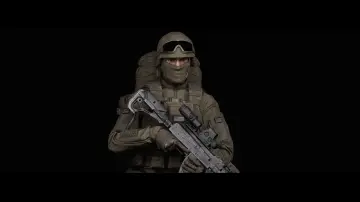
modular russian soldier
Explore the modular russian soldier asset featuring realistic tactical armor, groom hair settings, material customization, and CORPSE compatibility.
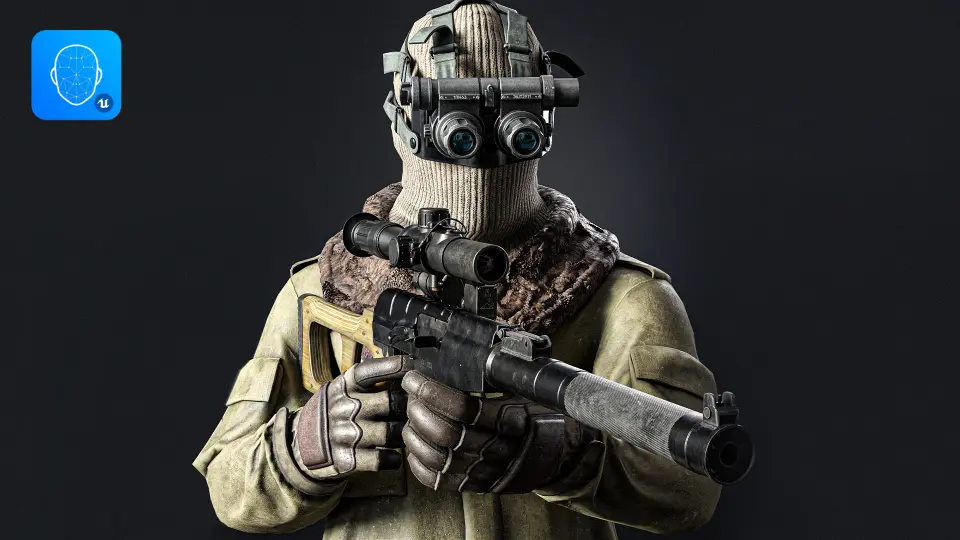
Stark concrete checkpoints, contested urban ruins, and deep woodland patrol routes require believable infantry models to sell the weight of modern military engagement. A character built specifically around authentic Russian military, police, and special force aesthetics provides game environments with an immediate sense of operational realism. Whether populating a tense SWAT clearing operation or staging broad army assault maneuvers, the visual silhouette of realistic body armor, tactical fabric, and combat-ready accessories anchors player perception in grounded modern warfare.
Modular Russian Soldier Structure and Tactical Silhouette
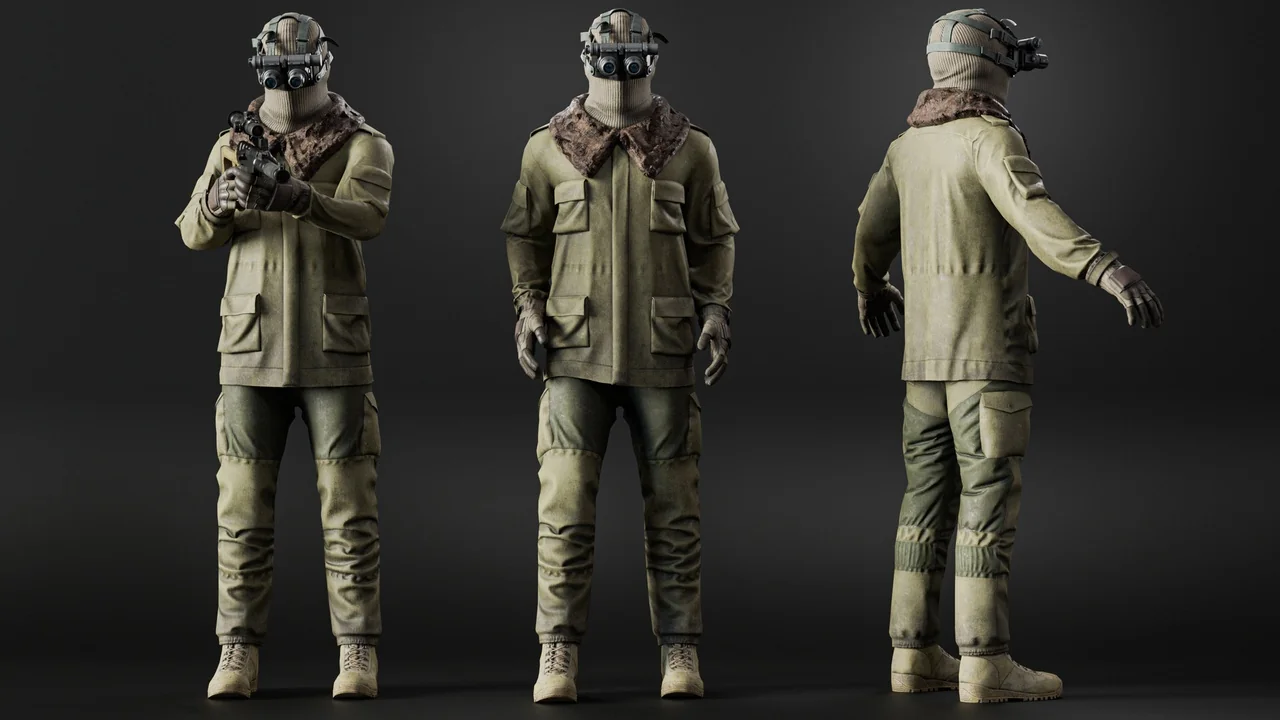
The core utility of this character model lies in its modular structure. Rather than locking an artist or technical designer into a single immutable uniform, the modular Russian soldier allows different pieces of kit to be assembled according to the operational profile demanded by the scene. A heavy frontline army combatant can sport full torso armor and protective gear, while a specialized operative or SWAT team member might prioritize a leaner tactical profile built for rapid interior breach and clear scenarios.
Modularity also solves the visual repetition problem common in projects featuring military squads or defensive garrisons. When staging a fortified bunker or setting up a patrol along an international border, having interchangeable modular components makes it possible to generate recognizable team variations from the same underlying design. Different helmet setups, tactical vests, armor plates, and uniform layers can be arranged across multiple character instances, ensuring that allied or enemy fireteams maintain a cohesive faction appearance without looking like carbon-copy clones.
Material Customization Across Uniforms and Armor
Fine visual control over the character relies heavily on the material setup. The model features accessible material parameters that allow creators to adjust the look directly inside the engine without round-tripping through external texture painting suites. This ease of material customization opens up practical workflow benefits for projects that span diverse biomes or require clear team identification mechanics.
By altering material values across the uniform and protective armor, designers can adapt the soldier to arid desert environments, snow-laden mountain passes, or murky temperate woodlands. In team-based tactical shooters where visual readability is paramount, material adjustments can alter camouflage patterns or accent tones to signal friendly versus opposing factions. Weathering, surface sheen, and color saturation can be shifted within the materials to represent either freshly deployed special force operatives or battle-weary infantry who have spent weeks holding forward defensive positions in muddy trenches.
Groom Hair Settings and Engine Plugin Requirements
Facial and head detailing on realistic characters often struggles with flat polygon cards or rigid hair meshes. This model adopts groom hair, delivering a more tactile, strand-based presentation suitable for close-up narrative cinematics, dialogue sequences, or third-person viewpoints where the camera remains tight on the character's upper body. The groom hair can be adjusted independently through its dedicated settings, letting developers tune density, styling, or shape to match individual character concepts.
Taking advantage of these groom features requires enabling the engine's native groom plugins. Without the groom plugins activated in the project configuration, the hair elements cannot compile or render as intended. Once the required plugins are turned on, the groom system taps into realistic strand dynamics and advanced hair shading, granting technical artists complete control over how hair strands interact with lighting, character motion, and shadow passes across the soldier's face and tactical headgear.
Firearm Integration Without Weapon Animations
The soldier model comes paired with a firearm appropriate for military assault and police tactical engagements, though the weapon asset itself does not feature moving or mechanical animations. Understanding this distinction is critical for setting up the technical combat pipeline and gameplay mechanics.
Because the weapon does not have its own internal animations, interactive weapon functions must be handled through alternative techniques:
Socket-based weapon attachment directly to the soldier's hand bones or tactical weapon slings.
Hand and finger poses driven entirely by the character's skeletal rig rather than articulated moving parts on the rifle.
Reload sequences constructed using camera cuts, full-body arm animations, or off-screen handling rather than animated slide cycles, rotating bolts, or moving magazine release levers.
Visual feedback achieved through particle muzzle flashes, shell-ejection emitters spawned via gameplay scripts, and dynamic audio cues.
For background patrol guards, stationary sentries, or ambient combatants observed from mid-range combat distances, static weapon geometry rarely detracts from gameplay clarity. Setting up simple weapon sockets on the soldier's skeleton allows the rifle to track naturally with character aim offsets, walk cycles, and weapon-raise stances.
Animation Blueprint Logic and CORPSE Compatibility
Bringing a modular infantry model to life requires solid framework integration. Tagged for use with animation blueprints and scripts, the soldier is set up to plug into standard humanoid locomotion pipelines. Developers can channel existing walk, sprint, crouch, weapon-aim, and tactical cover states through an animation blueprint, driving the character's skeletal deformation across all equipped modular armor segments simultaneously.
On top of that, the asset features verified compatibility with CORPSE systems. In modern shooters and tactical action titles, handling death transitions, persistent battlefield casualties, and ragdoll simulations often introduces clipping or detachment bugs when modular armor layers fail to stick to the underlying physical skeleton. Compatibility with CORPSE ensures that when this soldier is eliminated during a firefight, the modular armor pieces, tactical gear, and uniform components remain synchronized with the underlying ragdoll physics, leaving realistic fallen combatants across the scene without visual artifacts.
Project Deployment and Fit
The modular Russian soldier serves projects that prioritize grounded military realism, tactical team variety, and direct control over character surfacing. Between groom hair support for high-fidelity rendering, an open material setup for rapid environmental adaptation, and full compatibility with animation blueprints and CORPSE frameworks, the model handles both active combatant roles and persistent tactical staging across demanding combat scenarios.
 Characters
 Characters
 Characters
 Characters