"a19e0535960bd083"{"id":"1002076","slug":"liquidator-russian-soldier","title":"LIQUIDATOR RUSSIAN SOLDIER","category":"Characters \u0026 Creatures","engine":"4.26+,5.0+","assetVersion":"","engineVersion":"Engine Version: 4.26+,5.0+","tag":"Characters","accent":"blue","visual":"character","summary":"A character model of a 1986 Chernobyl Soviet liquidator equipped with modular hazmat gear, Animationblueprint logic, and CORPSE compatibility.","platform":"Unreal Engine","publishedAt":"2026-10-26T15:44:04.991Z","updatedAt":"2026-10-26T15:44:04.991Z","sourceNotes":[],"fileContents":[],"compatibility":["Unreal Engine","Engine Version: 4.26+,5.0+"],"featuredImage":{"alt":"LIQUIDATOR RUSSIAN SOLDIER","src":"/wp-content/uploads/published/2026/10/28a154b5d6a7-ab20af51-569e-43b1-92e2-a565fae52774-df6fca4ae6.webp"},"hasDownloadLink":true,"downloads":0,"terms":[{"taxonomy":"category","slug":"characters-and-creatures","name":"Characters \u0026 Creatures"}],"galleryImages":[{"src":"/wp-content/uploads/published/2026/10/68f39fcf993b-295f438f-3b15-4c00-91ef-5430f3d4b11f-279d53d756.webp","alt":"LIQUIDATOR RUSSIAN SOLDIER"},{"src":"/wp-content/uploads/published/2026/10/23d0cfc38e06-28ca0ea6-9b7f-4e04-8fd0-a25cdb725314-9bc8d8a3f1.webp","alt":"LIQUIDATOR RUSSIAN SOLDIER"},{"src":"/wp-content/uploads/published/2026/10/a33bc3bb78a9-20459524-30a7-4ef2-a7db-0f8fd1cbc75a-2f155ae302.webp","alt":"LIQUIDATOR RUSSIAN SOLDIER"},{"src":"/wp-content/uploads/published/2026/10/3763ca3327c7-d69ef9a6-2da8-45b5-b9e0-b12d58f4a6a4-8014778820.webp","alt":"LIQUIDATOR RUSSIAN SOLDIER"},{"src":"/wp-content/uploads/published/2026/10/a4e18a0d5656-6f3b974c-471e-4e0b-904b-9a62fcc95cea-8344f1a400.webp","alt":"LIQUIDATOR RUSSIAN SOLDIER"},{"src":"/wp-content/uploads/published/2026/10/292ddd49123b-8d1bcc7c-2e01-4703-9972-5f261bd61206-077d6ce1f8.webp","alt":"LIQUIDATOR RUSSIAN SOLDIER"},{"src":"/wp-content/uploads/published/2026/10/08d3fc20dae7-4e11630a-90b1-455e-9dce-5f53a52d2352-e2f8b13658.webp","alt":"LIQUIDATOR RUSSIAN SOLDIER"},{"src":"/wp-content/uploads/published/2026/10/b167ab70bfe4-34c65161-dbc5-4515-a580-514c436de741-d47eece27f.webp","alt":"LIQUIDATOR RUSSIAN SOLDIER"},{"src":"/wp-content/uploads/published/2026/10/0ab9c76293b2-e1457757-16da-4241-be3b-919be43b8606-315abb42b3.webp","alt":"LIQUIDATOR RUSSIAN SOLDIER"}],"accessPanel":{"kind":"resource","title":"Download this resource","eyebrow":"Free Download","message":"Log in or create a free account to start your download.","fileName":"Content.7z","safetyNote":"Resources are manually reviewed before listing to improve quality and reduce obvious risks.","actionLabel":"Download Free","resourceType":"Resource archive"},"contentHtml":"\u003ch2\u003eRecreating Chernobyl 1986 and Catastrophic Incident Zones\u003c/h2\u003e\n\u003cp\u003eRuinous concrete slabs, graphite debris, irradiated wreckage, and quarantine perimeters demand character assets that reflect the harsh reality of severe incident response. LIQUIDATOR RUSSIAN SOLDIER targets these contaminated landscapes, drawing directly from the historical Soviet personnel who handled the liquidation of the accident at the Chernobyl nuclear power plant in 1986. The visual weight of heavy protective gear grounds an environment immediately, whether an interactive level takes place in the historic Pripyat exclusion zone or within an entirely fictional catastrophe setting.\u003c/p\u003e\n\u003cp\u003eNuclear, biological, and chemical disasters confront emergency workers with unseen airborne particulates, intense radiation fields, and lethal biohazards. Placing a dedicated Soviet soldier into these environments gives players an unmistakable visual cue about the danger level of an area. While rooted in the 1986 disaster, the character model functions across broader disaster scenarios involving weaponized viral outbreaks, laboratory breaches, industrial chemistry plant explosions, or prolonged post-apocalyptic survival conditions.\u003c/p\u003e \u003ch2\u003eSoviet Soldier Hazmat Anatomy and Modular Contamination Gear\u003c/h2\u003e\n\u003cp\u003eThe model captures the distinct aesthetic of military-issued hazardous materials intervention. Heavyweight materials, sealed seams, gas filtration apparatus, and improvised lead shielding defined the historical liquidators who operated on the rooftops and ground sectors around Chernobyl. By adopting a realistic design approach, the suit bridges traditional military uniforms and utilitarian containment wear, making the figure appear prepared for both battlefield conflict and lethal contamination control.\u003c/p\u003e\n\u003cp\u003eModular asset construction allows developers to customize the appearance of personnel across a production. In an incident zone, individual workers rarely look completely identical; gear becomes worn, masks are adjusted, and equipment configurations shift depending on the specific task. The modular nature of this soldier model allows for subtle variations in appearance, helping populate a camp, checkpoint, or cleanup operation with multiple individuals without causing obvious visual repetition. It delivers a warrior silhouette draped in specialized biohazard protection suited for intense chemical, viral, or radiological containment duties.\u003c/p\u003e \u003ch2\u003eAnimationblueprint Mechanics, Scripts, and Setup Workflows\u003c/h2\u003e\n\u003cp\u003eIntegrating a complex character into an interactive project requires more than static geometry. This asset package includes an Animationblueprint alongside dedicated script components, ensuring the character can be wired into existing locomotion systems, behavior trees, and player or non-player character controllers without starting the technical setup from scratch. The Animationblueprint governs how movement, idling, and state transitions map to the character skeleton, establishing smooth coordination between input logic and mesh deformation.\u003c/p\u003e\n\u003cp\u003eTo assist with immediate implementation, video review and video setup materials are provided alongside the asset files. These visual walkthroughs demonstrate the structural hierarchy of the character, how the modular components attach, and the proper procedure for linking the scripts and animation logic to an active project pipeline. Having video guides removes ambiguity during setup, letting technical artists verify their node setups, skeleton mappings, and script connections before deploying the soldier into testing scenes.\u003c/p\u003e \u003ch2\u003eCORPSE Integration for Environmental Storytelling and Hazardous Casualties\u003c/h2\u003e\n\u003cp\u003eDisaster scenes rely heavily on environmental storytelling, where the presence of fallen personnel communicates the invisible lethality of an environment. With verified compatibility for the CORPSE system, the liquidator model can transition seamlessly into a deceased or incapacitated state. This capability is vital for scenarios where players must navigate fields of lethal radiation, toxic chemical clouds, or virulent pathogen hotspots.\u003c/p\u003e\n\u003cp\u003eScattering fallen liquidators across a contaminated installation instantly informs players that protective suits alone were not enough to survive the threat. Developers can populate reactor ruins, abandoned decontamination tents, and overturned transport vehicles with static or dynamically triggered casualties. Because the character model natively supports CORPSE integration, teams avoid manual skinning fixes or custom ragdoll workarounds when placing bodies that visually match the active military responders wandering the zone.\u003c/p\u003e \u003ch2\u003eImplementing the Liquidator in Stalker and Disaster Scenarios\u003c/h2\u003e\n\u003cp\u003eProjects shaped by anomalous exclusion zones, military-enforced quarantines, and post-nuclear cleanup operations gain a historically grounded presence through this soldier asset. It serves equally well as a playable protagonist navigating lethal biohazard sectors, an allied non-player operative clearing debris, or an environmental obstacle warning players away from high-dose radiation pockets. The combination of realistic suit texturing, modular elements, Animationblueprint readiness, and CORPSE workflow support creates a dependable foundation for any game focused on chemical accidents, viral outbreaks, or the grim aftermath of a nuclear meltdown.\u003c/p\u003e\n\n\u003ch2\u003eRelated Resources Worth Checking\u003c/h2\u003e\n\u003cul\u003e\n\u003cli\u003e\u003ca href=\"https://3dcghub.com/sci-fi-space-soldier-female/\" title=\"Sci Fi Space Soldier Female\"\u003eSci Fi Space Soldier Female\u003c/a\u003e\u003c/li\u003e\n\u003cli\u003e\u003ca href=\"https://3dcghub.com/modular-soldier-opb-full/\" title=\"Modular Soldier OPB Full\"\u003eModular Soldier OPB Full\u003c/a\u003e\u003c/li\u003e\n\u003cli\u003e\u003ca href=\"https://3dcghub.com/german-soldier-wwii/\" title=\"German Soldier WWII\"\u003eGerman Soldier WWII\u003c/a\u003e\u003c/li\u003e\n\u003cli\u003e\u003ca href=\"https://3dcghub.com/soldier-future-01/\" title=\"Soldier Future 01\"\u003eSoldier Future 01\u003c/a\u003e\u003c/li\u003e\n\u003cli\u003e\u003ca href=\"https://3dcghub.com/special-forces-ski-fi-soldier/\" title=\"Special forces ski-fi soldier\"\u003eSpecial forces ski-fi soldier\u003c/a\u003e\u003c/li\u003e\n\u003c/ul\u003e","contentTextLength":5470,"navigation":{"current":15,"total":4026,"previous":{"id":"1002077","slug":"livevideomatting","title":"LiveVideoMatting","category":"Engine Tools","platform":"Unreal Engine","updatedAt":"2026-10-26T15:46:38.992Z"},"next":{"id":"1002075","slug":"led-pixel-bar-and-animation-preset","title":"LED Pixel Bar and Animation Preset","category":"Gameplay Features","platform":"Unreal Engine","updatedAt":"2026-10-26T15:42:46.851Z"}},"relatedResources":[{"id":"1001659","slug":"sci-fi-space-soldier-female","title":"Sci Fi Space Soldier Female","category":"Characters \u0026 Creatures","engine":"4.16+,5.0+","assetVersion":"","engineVersion":"Engine Version: 4.16+,5.0+","tag":"Characters","accent":"blue","visual":"character","summary":"Sci Fi Space Soldier Female features 2 model versions, 2 LOD levels at 29K and 10K triangles, Epic skeleton rigging, and customizable multi-tone materials.","platform":"Unreal Engine","publishedAt":"2026-10-13T14:48:21.104Z","updatedAt":"2026-10-13T14:48:21.104Z","sourceNotes":[],"fileContents":[],"compatibility":["Unreal Engine","Engine Version: 4.16+,5.0+"],"featuredImage":{"alt":"Sci Fi Space Soldier Female","src":"/wp-content/uploads/published/2026/10/c9df1964c209-c1a5eaa9-4d71-4521-b647-674811bda59b-9cb1722b78.webp"},"hasDownloadLink":true,"downloads":1},{"id":"1001167","slug":"modular-soldier-opb-full","title":"Modular Soldier OPB Full","category":"Characters \u0026 Creatures","engine":"4.27,5.0+","assetVersion":"","engineVersion":"Engine Version: 4.27,5.0+","tag":"Characters","accent":"blue","visual":"character","summary":"Examine the Modular Soldier OPB Full pack, featuring UE4 and MetaHuman skeletons, 17 skeletal meshes, 4K textures, Lyra support, and mobile LOD scaling.","platform":"Unreal Engine","publishedAt":"2026-09-16T15:17:15.509Z","updatedAt":"2026-09-16T15:17:15.509Z","sourceNotes":[],"fileContents":[],"compatibility":["Unreal Engine","Engine Version: 4.27,5.0+"],"featuredImage":{"alt":"Modular Soldier OPB Full","src":"/wp-content/uploads/published/2026/09/ea2ebd97c5f3-6fd23319-3d68-435c-a7cb-60a62bd850ca-000d21f799.webp"},"hasDownloadLink":true,"downloads":4},{"id":"1002040","slug":"german-soldier-wwii","title":"German Soldier WWII","category":"Characters \u0026 Creatures","engine":"4.26+,5.0+","assetVersion":"","engineVersion":"Engine Version: 4.26+,5.0+","tag":"Characters","accent":"blue","visual":"character","summary":"Explore the German Soldier WWII character asset, featuring standard UE mannequin rigging, customizable camouflage materials, and full PBR texture sets.","platform":"Unreal Engine","publishedAt":"2026-10-26T14:22:08.764Z","updatedAt":"2026-10-26T14:22:08.764Z","sourceNotes":[],"fileContents":[],"compatibility":["Unreal Engine","Engine Version: 4.26+,5.0+"],"featuredImage":{"alt":"German Soldier WWII","src":"/wp-content/uploads/published/2026/10/ef549c4de90c-7506682f-e445-427d-a90f-9300d7328716-5c6da2ebf9.webp"},"hasDownloadLink":true,"downloads":0}]}
Characters
LIQUIDATOR RUSSIAN SOLDIER
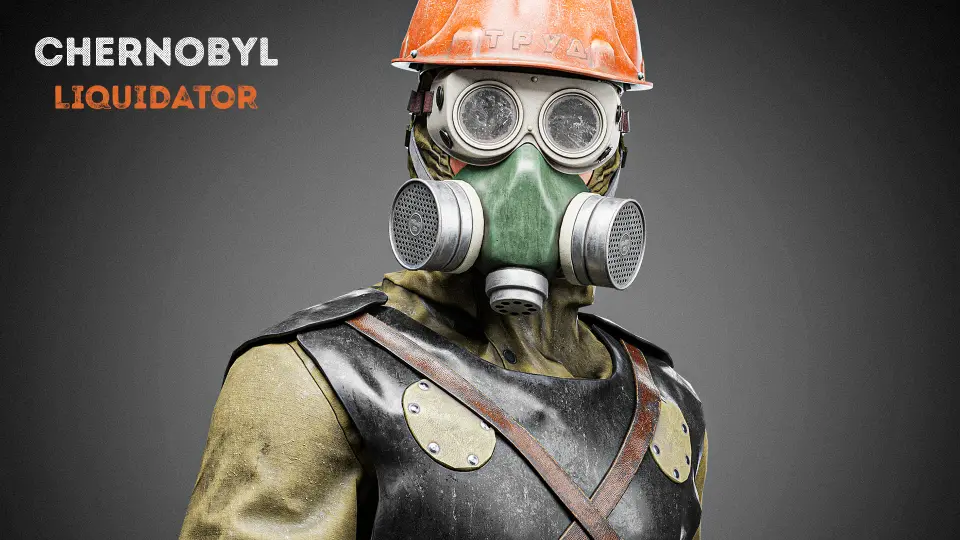
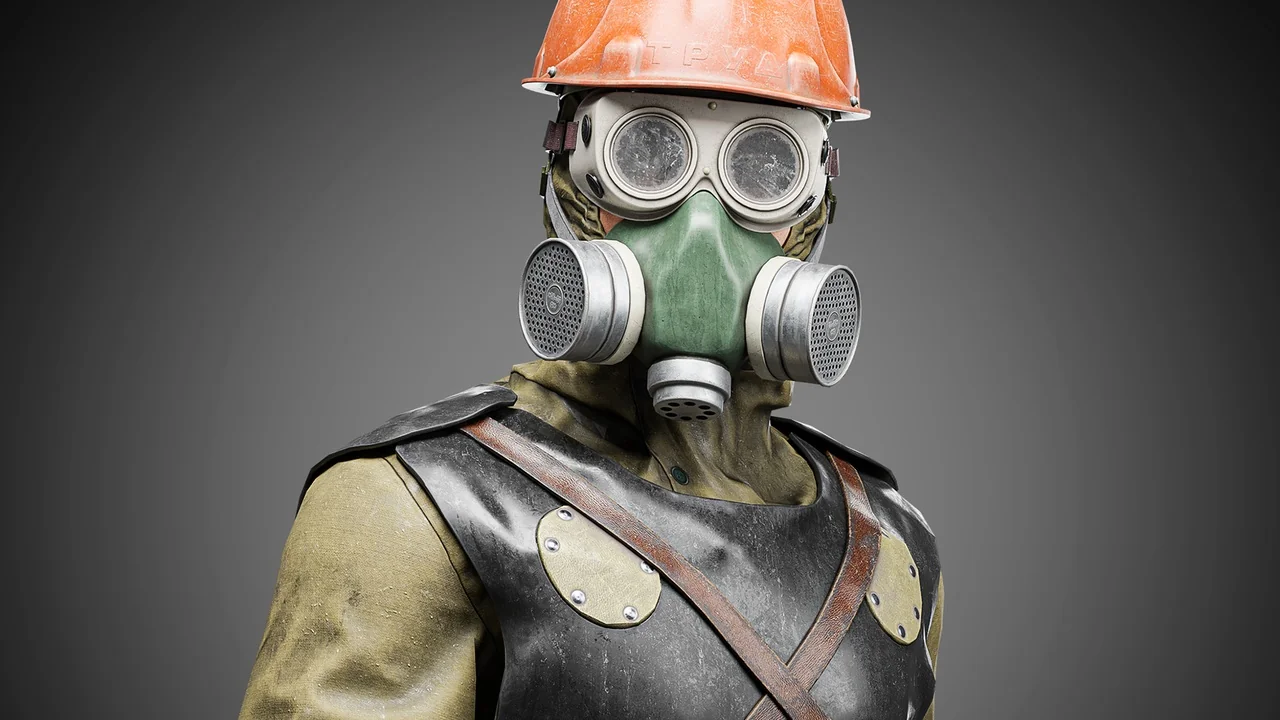
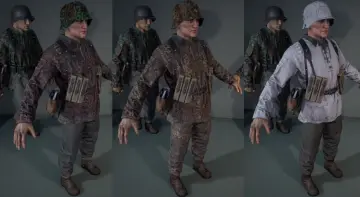
A character model of a 1986 Chernobyl Soviet liquidator equipped with modular hazmat gear, Animationblueprint logic, and CORPSE compatibility.
Recreating Chernobyl 1986 and Catastrophic Incident Zones
Ruinous concrete slabs, graphite debris, irradiated wreckage, and quarantine perimeters demand character assets that reflect the harsh reality of severe incident response. LIQUIDATOR RUSSIAN SOLDIER targets these contaminated landscapes, drawing directly from the historical Soviet personnel who handled the liquidation of the accident at the Chernobyl nuclear power plant in 1986. The visual weight of heavy protective gear grounds an environment immediately, whether an interactive level takes place in the historic Pripyat exclusion zone or within an entirely fictional catastrophe setting.
Nuclear, biological, and chemical disasters confront emergency workers with unseen airborne particulates, intense radiation fields, and lethal biohazards. Placing a dedicated Soviet soldier into these environments gives players an unmistakable visual cue about the danger level of an area. While rooted in the 1986 disaster, the character model functions across broader disaster scenarios involving weaponized viral outbreaks, laboratory breaches, industrial chemistry plant explosions, or prolonged post-apocalyptic survival conditions.
Soviet Soldier Hazmat Anatomy and Modular Contamination Gear
The model captures the distinct aesthetic of military-issued hazardous materials intervention. Heavyweight materials, sealed seams, gas filtration apparatus, and improvised lead shielding defined the historical liquidators who operated on the rooftops and ground sectors around Chernobyl. By adopting a realistic design approach, the suit bridges traditional military uniforms and utilitarian containment wear, making the figure appear prepared for both battlefield conflict and lethal contamination control.
Modular asset construction allows developers to customize the appearance of personnel across a production. In an incident zone, individual workers rarely look completely identical; gear becomes worn, masks are adjusted, and equipment configurations shift depending on the specific task. The modular nature of this soldier model allows for subtle variations in appearance, helping populate a camp, checkpoint, or cleanup operation with multiple individuals without causing obvious visual repetition. It delivers a warrior silhouette draped in specialized biohazard protection suited for intense chemical, viral, or radiological containment duties.
Animationblueprint Mechanics, Scripts, and Setup Workflows
Integrating a complex character into an interactive project requires more than static geometry. This asset package includes an Animationblueprint alongside dedicated script components, ensuring the character can be wired into existing locomotion systems, behavior trees, and player or non-player character controllers without starting the technical setup from scratch. The Animationblueprint governs how movement, idling, and state transitions map to the character skeleton, establishing smooth coordination between input logic and mesh deformation.
To assist with immediate implementation, video review and video setup materials are provided alongside the asset files. These visual walkthroughs demonstrate the structural hierarchy of the character, how the modular components attach, and the proper procedure for linking the scripts and animation logic to an active project pipeline. Having video guides removes ambiguity during setup, letting technical artists verify their node setups, skeleton mappings, and script connections before deploying the soldier into testing scenes.
CORPSE Integration for Environmental Storytelling and Hazardous Casualties
Disaster scenes rely heavily on environmental storytelling, where the presence of fallen personnel communicates the invisible lethality of an environment. With verified compatibility for the CORPSE system, the liquidator model can transition seamlessly into a deceased or incapacitated state. This capability is vital for scenarios where players must navigate fields of lethal radiation, toxic chemical clouds, or virulent pathogen hotspots.
Scattering fallen liquidators across a contaminated installation instantly informs players that protective suits alone were not enough to survive the threat. Developers can populate reactor ruins, abandoned decontamination tents, and overturned transport vehicles with static or dynamically triggered casualties. Because the character model natively supports CORPSE integration, teams avoid manual skinning fixes or custom ragdoll workarounds when placing bodies that visually match the active military responders wandering the zone.
Implementing the Liquidator in Stalker and Disaster Scenarios
Projects shaped by anomalous exclusion zones, military-enforced quarantines, and post-nuclear cleanup operations gain a historically grounded presence through this soldier asset. It serves equally well as a playable protagonist navigating lethal biohazard sectors, an allied non-player operative clearing debris, or an environmental obstacle warning players away from high-dose radiation pockets. The combination of realistic suit texturing, modular elements, Animationblueprint readiness, and CORPSE workflow support creates a dependable foundation for any game focused on chemical accidents, viral outbreaks, or the grim aftermath of a nuclear meltdown.
 Characters
 Characters
 Characters
 Characters