"b00678cacce53329"{"id":"1002799","slug":"lightning-fast","title":"Lightning Fast","category":"Procedural Systems","engine":"4.18+,5.0+","assetVersion":"","engineVersion":"Engine Version: 4.18+,5.0+","tag":"Procedural Systems","accent":"blue","visual":"mech","summary":"Lightning Fast combines procedural materials and blueprints to generate realistic and stylized electricity, bolts, beams, and replicated character skills.","platform":"Unreal Engine","indexPolicy":"index","publishedAt":"2026-11-20T07:23:46.559Z","updatedAt":"2026-11-20T07:23:46.559Z","sourceNotes":[],"fileContents":[],"compatibility":["Unreal Engine","Engine Version: 4.18+,5.0+"],"featuredImage":{"alt":"Lightning Fast","src":"/wp-content/uploads/published/2026/11/06c02825a750-edbe767e-5ee2-4dab-9bbb-e463794963fc-93027b6b2a.webp"},"fileSizeBytes":25671059,"hasDownloadLink":true,"downloads":0,"terms":[{"taxonomy":"category","slug":"procedural-systems","name":"Procedural Systems"}],"galleryImages":[{"src":"/wp-content/uploads/published/2026/11/6a3de8bcb852-4b410a90-4eb6-49aa-8eff-9737383eab06-66bcbbd7eb.webp","alt":"Lightning Fast"},{"src":"/wp-content/uploads/published/2026/11/b381816b46df-8e25f99b-ed35-41fd-8b7b-cb5c6e13d1f9-e42a5e6342.webp","alt":"Lightning Fast"},{"src":"/wp-content/uploads/published/2026/11/6906cae0bae5-60e9c905-5a03-46b0-99b9-e90c41a71b75-0b15916ed7.webp","alt":"Lightning Fast"},{"src":"/wp-content/uploads/published/2026/11/4b5df0322742-508c4a0a-1633-47bd-8551-35bdc7be823c-cf91460204.webp","alt":"Lightning Fast"},{"src":"/wp-content/uploads/published/2026/11/be54853a449f-eb752e29-d73e-427f-8298-09a3ef5f91df-20d62a92d0.webp","alt":"Lightning Fast"},{"src":"/wp-content/uploads/published/2026/11/73ffc198ea4f-845dcef8-2bfd-4edc-b36a-526364c88c49-d6fc89bf5b.webp","alt":"Lightning Fast"},{"src":"/wp-content/uploads/published/2026/11/380a241c4a15-6ed5f0e7-0b03-4916-ab13-25fe705448ee-1de80fd11e.webp","alt":"Lightning Fast"},{"src":"/wp-content/uploads/published/2026/11/ee0876864741-e67ddfe6-e401-4a15-9ee3-054d0e5e99a8-5295e83662.webp","alt":"Lightning Fast"},{"src":"/wp-content/uploads/published/2026/11/5c375138010e-68cbdef8-6d15-4359-bf69-11e4a836cad5-1f7f7ecaaf.webp","alt":"Lightning Fast"},{"src":"/wp-content/uploads/published/2026/11/72d74f2e729a-f5d49345-d017-4d45-b2dd-d321f811003d-cd3dd016a4.webp","alt":"Lightning Fast"}],"accessPanel":{"kind":"resource","title":"Get this resource","safetyNote":"Resources are manually reviewed before listing to improve quality and reduce obvious risks.","fileName":"Content.7z","resourceType":"Resource archive","versions":[]},"contentHtml":"\u003ch2\u003eImplementing Lightning Fast Across Real-Time Pipelines\u003c/h2\u003e\u003cp\u003eGenerating electric arcs, procedural discharges, and atmospheric lightning requires an architecture that balances rendering efficiency with visual fidelity. Lightning Fast addresses this balance by pairing specialized materials with Blueprint logic to produce a broad variety of realistic and stylized electricity effects. The framework is engineered specifically for real-time video games and film production pipelines, ensuring that chaotic energy arcs can be deployed across wide exterior environments or fast-paced interior action sequences without degrading frame rates. By maintaining high performance alongside AAA visual quality, the toolkit gives technical artists and gameplay designers the freedom to introduce dynamic electrical phenomena across multiple levels of scale.\u003c/p\u003e\u003cp\u003eThe system adapts cleanly across distinct creative aesthetics. In photorealistic projects, the underlying material calculations capture the jagged, rapid dissipation of natural atmospheric weather discharges. In stylized productions, the visual parameters emphasize clean energy readouts, high-contrast silhouette shapes, and exaggerated arcing paths. Because the framework integrates both the procedural shader logic and the driving Blueprint scripts, creators can establish background storm lightning flashing across the horizon, build interactive props like high-voltage electric fences, or configure devastating magical spells and high-tech weaponry from a unified set of assets.\u003c/p\u003e\u003ch2\u003eProcedural Engineering in the Lightning Fast Mesh and Materials\u003c/h2\u003e\u003cp\u003eAt the center of the package is the Lightning-Fast Mesh deployed in combination with the dedicated Lightning Fast Material. Standard ribbon geometry and traditional camera-facing billboarding cards frequently encounter rendering artifacts in visual effects production, flattening into thin planes or clipping unreliably when viewed at steep or perpendicular angles. The Lightning Fast mesh and material setup resolves this limitation by maintaining its full visual form when watched from every angle. This full-angle viewing stability allows technical artists to position energy discharges freely throughout 3D space, confident that the silhouette and volumetric depth remain intact regardless of player orientation or dynamic camera movements.\u003c/p\u003e\u003cp\u003eGeometric scalability is another critical design feature of this mesh and material pairing. When the mesh is transformed, elongated, or scaled across short or vast distances, it consistently keeps its proper shape. This prevents the uneven texture stretching, UV distortion, or noise artifacting that commonly occurs when standard modular meshes are stretched to fit dynamic target coordinates. As a result, the mesh interfaces smoothly with spline meshes, bending and conforming along complex curves, branching conduits, or irregular environmental pathways. Furthermore, the mesh and material pipeline can be used directly inside particle systems, allowing developers to generate erratic bursts, particle-driven arcs, and cascading ribbon effects that spawn dynamically from collision points or moving emitters.\u003c/p\u003e\u003ch2\u003eAtmospheric Storm Strikes, Beams, and Lightning Volumetric Discharges\u003c/h2\u003e\u003cp\u003eElectricity presents varied physical forms depending on its environmental context, and the framework supports a wide spectrum of visual manifestations. Atmospheric conditions are established through dedicated flashes, bolts, and strikes. These elements can be integrated into dynamic weather systems to simulate sudden ambient discharges during an intense storm. Following the release of Update 1.1, lightning bolts include integrated ambient light support. This feature introduces instant dynamic illumination to surroundings when a strike occurs, casting high-intensity light across surrounding geometry and terrain to realistically sell the visual weight of sudden lightning strikes.\u003c/p\u003e\u003cp\u003eFor directed or conductive energy transfer, the package provides beams, chains, and spline-driven links. These presets accommodate linear energy arcs, such as electric currents bridging adjacent metallic conduits, high-voltage substations, or chain-lightning behaviors jumping across sequential scene targets. For localized containment zones and environmental hazards, creators can deploy volume discharges, electrocute effects, and electric fences. These setups take advantage of dynamic scripts, sound integration, and X-ray visual styles to communicate immediate electrical hazard zones, perimeter barriers, and charged volumes that react visually when objects or characters intersect their boundaries.\u003c/p\u003e\u003ch2\u003eCombat Weaponry, Character Skills, and Fast Network Replication\u003c/h2\u003e\u003cp\u003eBeyond passive weather effects and environmental hazards, the system includes pre-configured character skills and offensive combat abilities. Action mechanics are supported through ready-to-use combat archetypes, including a directional lightning gun that fires sustained, high-energy beam attacks, and broad lightning area-of-effect (AoE) abilities that detonate outward to clear surrounding space. For character movement and cinematic gameplay sequences, the framework provides a specialized lightning trail configured for slow-motion runs. This ability coats moving characters in dynamic energy trails and ribbons that track velocity and emphasize movement speed across the screen.\u003c/p\u003e\u003cp\u003eTarget feedback is handled through dedicated hit and electrocute reactions, providing clear visual readouts whenever characters or props take electrical damage. To ensure that these combat mechanics function seamlessly in multiplayer environments, Update 1.1 introduced full network replication. Blueprint logic coordinates the visual discharges, weapon states, hit reactions, and lightning strikes between server and client instances. This synchronization ensures that when a player discharges a lightning gun, triggers an electric AoE blast, or suffers an electrocute reaction, the timing, illumination, and beam trajectories display identically across the network without desynchronizing.\u003c/p\u003e\u003ch2\u003eShowcase Demonstrations and Editor Workflow Operations\u003c/h2\u003e\u003cp\u003eTo assist with pipeline deployment, the package includes dedicated Showcase, Editor, and Demo resources. These setups provide practical reference points where artists can observe how the blueprints, materials, audio cues, and dynamic scripts coordinate to generate both realistic and stylized outputs. Users can inspect how the mesh adapts to spline paths in the editor, review how ambient light values affect scene exposure during storm flashes, and evaluate character combat skills within interactive demo scenes.\u003c/p\u003e\u003cp\u003eBecause the collection structures its features across modular blueprints, procedural shaders, and flexible meshes, teams can adapt the components to meet specialized project requirements. Whether establishing quiet background storm bolts over an open landscape, erecting defensive electric fences within an industrial level, or engineering high-speed multiplayer spell combat, the unified mesh and material architecture delivers an efficient, production-ready foundation for electricity VFX.\u003c/p\u003e\n\n\u003ch2\u003eMore From The Same Workflow\u003c/h2\u003e\n\u003cul\u003e\n\u003cli\u003e\u003ca href=\"https://3dcghub.com/lightning-electricity-vfx-pack/\" rel=\"noopener noreferrer\"\u003eLightning / Electricity VFX Pack\u003c/a\u003e\u003c/li\u003e\n\u003cli\u003e\u003ca href=\"https://3dcghub.com/black-hole-creator/\" rel=\"noopener noreferrer\"\u003eBlack Hole Creator\u003c/a\u003e\u003c/li\u003e\n\u003cli\u003e\u003ca href=\"https://3dcghub.com/ultimate-greyboxing-kit/\" rel=\"noopener noreferrer\"\u003eUltimate Greyboxing Kit\u003c/a\u003e\u003c/li\u003e\n\u003cli\u003e\u003ca href=\"https://3dcghub.com/dynamic-radial-menu-x/\" rel=\"noopener noreferrer\"\u003eDYNAMIC RADIAL MENU X\u003c/a\u003e\u003c/li\u003e\n\u003cli\u003e\u003ca href=\"https://3dcghub.com/b2bp-slide-show/\" rel=\"noopener noreferrer\"\u003eB2BP Slide Show\u003c/a\u003e\u003c/li\u003e\n\u003c/ul\u003e","contentTextLength":7253,"navigation":{"current":81,"total":4797,"previous":{"id":"1002800","slug":"liquid-explosionvfx","title":"Liquid_ExplosionVFX","category":"Variety","platform":"Unreal Engine","updatedAt":"2026-11-20T07:25:30.337Z"},"next":{"id":"1002798","slug":"lazy-godray","title":"Lazy Godray","category":"Weather","platform":"Unreal Engine","updatedAt":"2026-11-20T07:22:44.806Z"}},"relatedResources":[{"id":"17185","slug":"lightning-electricity-vfx-pack","title":"Lightning / Electricity VFX Pack","category":"Variety","engine":"4.26+,5.0+","assetVersion":"Engine version: 4.26+,5.0+","engineVersion":"4.24","tag":"Variety","accent":"blue","visual":"city","summary":"Enhance your project with the Lightning / Electricity VFX Pack, a versatile collection of Niagara effects ranging from electric arcs to storms. This pack includes turnkey examples and VR-optimized maps for high-performance development.","platform":"Unreal Engine","indexPolicy":"noindex","publishedAt":"2026-03-13T13:55:56.000Z","updatedAt":"2026-04-19T15:43:36.000Z","sourceNotes":[],"fileContents":[],"compatibility":["Unreal Engine","Engine version: 4.26+,5.0+"],"featuredImage":{"alt":"Lightning / Electricity VFX Pack","src":"https://3dcghub.com/wp-content/uploads/2026/03/7fdd3a51-39bb-4954-9f95-8abd86e3500c.webp"},"fileSizeBytes":106285582,"hasDownloadLink":true,"downloads":3},{"id":"1002083","slug":"black-hole-creator","title":"Black Hole Creator","category":"Procedural Systems","engine":"4.27+,5.0+","assetVersion":"","engineVersion":"Engine Version: 4.27+,5.0+","tag":"Procedural Systems","accent":"blue","visual":"mech","summary":"Implement realistic gravitational lensing in Unreal with Black Hole Creator, using quaternion texture warping on skyboxes and cube render targets.","platform":"Unreal Engine","indexPolicy":"index","publishedAt":"2026-10-26T15:53:01.518Z","updatedAt":"2026-10-26T15:53:01.518Z","sourceNotes":[],"fileContents":[],"compatibility":["Unreal Engine","Engine Version: 4.27+,5.0+"],"featuredImage":{"alt":"Black Hole Creator","src":"/wp-content/uploads/published/2026/10/717b045c8602-534a731a-67c5-432d-aff8-8ddf63960422-0b2e6be61c.webp"},"fileSizeBytes":644881556,"hasDownloadLink":true,"downloads":0},{"id":"1002247","slug":"ultimate-greyboxing-kit","title":"Ultimate Greyboxing Kit","category":"Procedural Systems","engine":"4.26+,5.0+","assetVersion":"","engineVersion":"Engine Version: 4.26+,5.0+","tag":"Procedural Systems","accent":"blue","visual":"mech","summary":"A rapid level design kit featuring 73 modular shapes, world-aligned materials, and 18 interactive blueprints to block out gameplay before creating final art.","platform":"Unreal Engine","indexPolicy":"index","publishedAt":"2026-10-29T16:05:37.804Z","updatedAt":"2026-10-29T16:05:37.804Z","sourceNotes":[],"fileContents":[],"compatibility":["Unreal Engine","Engine Version: 4.26+,5.0+"],"featuredImage":{"alt":"Ultimate Greyboxing Kit","src":"/wp-content/uploads/published/2026/10/c5f8bddc80d5-27f71971-a0bf-4fa3-80be-dfe992256b08-8b95e2cbe5.webp"},"fileSizeBytes":30510967,"hasDownloadLink":true,"downloads":0}]}
Resource screenshots
1 / 10
Join our channel
Follow 3DCGHUB on Telegram for new resource drops, migration updates, and community notices.
Resources are manually reviewed before listing to improve quality and reduce obvious risks.
No account required
Procedural Systems
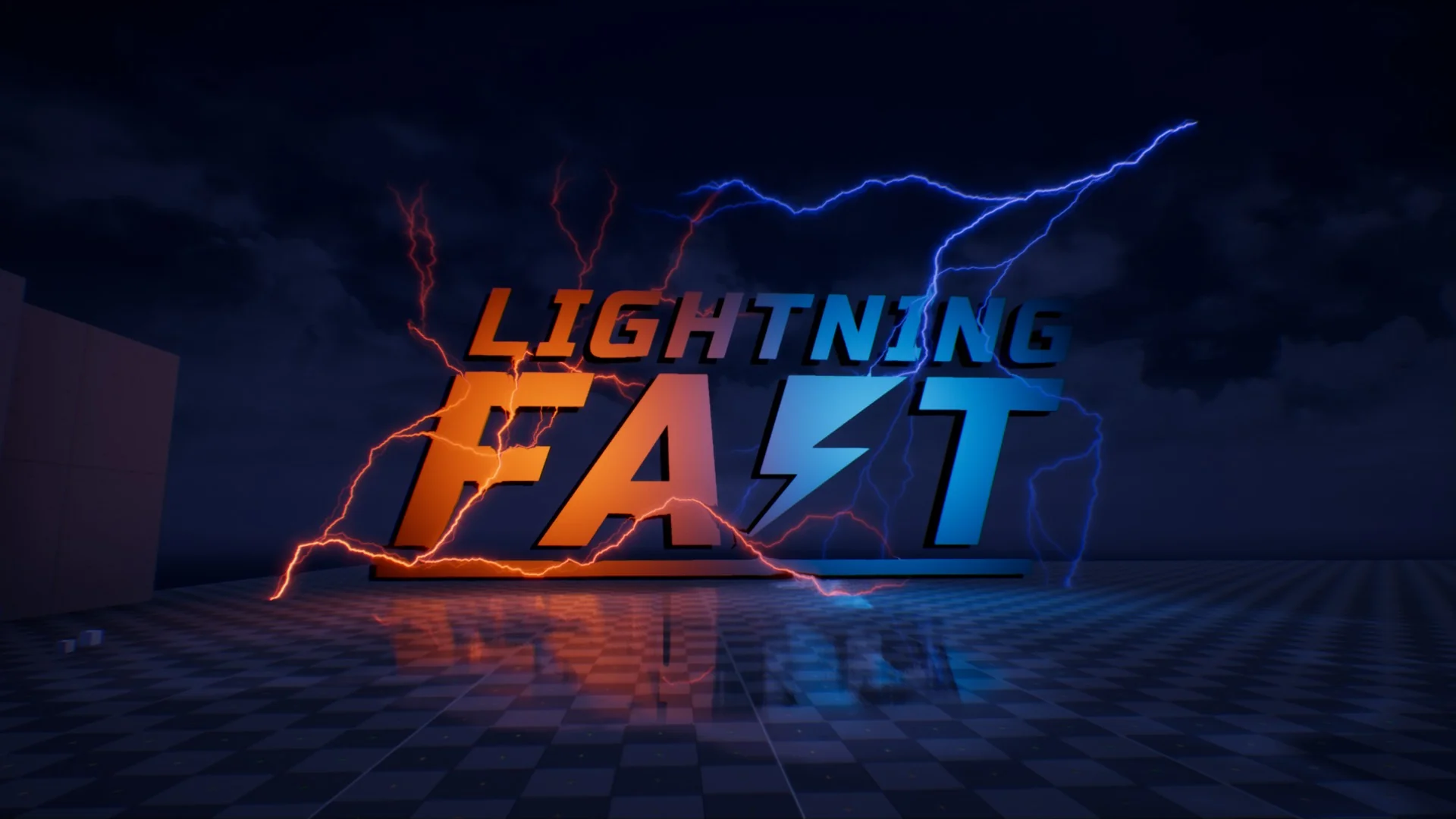
Lightning Fast
Lightning Fast combines procedural materials and blueprints to generate realistic and stylized electricity, bolts, beams, and replicated character skills.
Implementing Lightning Fast Across Real-Time Pipelines
Generating electric arcs, procedural discharges, and atmospheric lightning requires an architecture that balances rendering efficiency with visual fidelity. Lightning Fast addresses this balance by pairing specialized materials with Blueprint logic to produce a broad variety of realistic and stylized electricity effects. The framework is engineered specifically for real-time video games and film production pipelines, ensuring that chaotic energy arcs can be deployed across wide exterior environments or fast-paced interior action sequences without degrading frame rates. By maintaining high performance alongside AAA visual quality, the toolkit gives technical artists and gameplay designers the freedom to introduce dynamic electrical phenomena across multiple levels of scale.
The system adapts cleanly across distinct creative aesthetics. In photorealistic projects, the underlying material calculations capture the jagged, rapid dissipation of natural atmospheric weather discharges. In stylized productions, the visual parameters emphasize clean energy readouts, high-contrast silhouette shapes, and exaggerated arcing paths. Because the framework integrates both the procedural shader logic and the driving Blueprint scripts, creators can establish background storm lightning flashing across the horizon, build interactive props like high-voltage electric fences, or configure devastating magical spells and high-tech weaponry from a unified set of assets.
Procedural Engineering in the Lightning Fast Mesh and Materials
At the center of the package is the Lightning-Fast Mesh deployed in combination with the dedicated Lightning Fast Material. Standard ribbon geometry and traditional camera-facing billboarding cards frequently encounter rendering artifacts in visual effects production, flattening into thin planes or clipping unreliably when viewed at steep or perpendicular angles. The Lightning Fast mesh and material setup resolves this limitation by maintaining its full visual form when watched from every angle. This full-angle viewing stability allows technical artists to position energy discharges freely throughout 3D space, confident that the silhouette and volumetric depth remain intact regardless of player orientation or dynamic camera movements.
Geometric scalability is another critical design feature of this mesh and material pairing. When the mesh is transformed, elongated, or scaled across short or vast distances, it consistently keeps its proper shape. This prevents the uneven texture stretching, UV distortion, or noise artifacting that commonly occurs when standard modular meshes are stretched to fit dynamic target coordinates. As a result, the mesh interfaces smoothly with spline meshes, bending and conforming along complex curves, branching conduits, or irregular environmental pathways. Furthermore, the mesh and material pipeline can be used directly inside particle systems, allowing developers to generate erratic bursts, particle-driven arcs, and cascading ribbon effects that spawn dynamically from collision points or moving emitters.
Atmospheric Storm Strikes, Beams, and Lightning Volumetric Discharges
Electricity presents varied physical forms depending on its environmental context, and the framework supports a wide spectrum of visual manifestations. Atmospheric conditions are established through dedicated flashes, bolts, and strikes. These elements can be integrated into dynamic weather systems to simulate sudden ambient discharges during an intense storm. Following the release of Update 1.1, lightning bolts include integrated ambient light support. This feature introduces instant dynamic illumination to surroundings when a strike occurs, casting high-intensity light across surrounding geometry and terrain to realistically sell the visual weight of sudden lightning strikes.
For directed or conductive energy transfer, the package provides beams, chains, and spline-driven links. These presets accommodate linear energy arcs, such as electric currents bridging adjacent metallic conduits, high-voltage substations, or chain-lightning behaviors jumping across sequential scene targets. For localized containment zones and environmental hazards, creators can deploy volume discharges, electrocute effects, and electric fences. These setups take advantage of dynamic scripts, sound integration, and X-ray visual styles to communicate immediate electrical hazard zones, perimeter barriers, and charged volumes that react visually when objects or characters intersect their boundaries.
Combat Weaponry, Character Skills, and Fast Network Replication
Beyond passive weather effects and environmental hazards, the system includes pre-configured character skills and offensive combat abilities. Action mechanics are supported through ready-to-use combat archetypes, including a directional lightning gun that fires sustained, high-energy beam attacks, and broad lightning area-of-effect (AoE) abilities that detonate outward to clear surrounding space. For character movement and cinematic gameplay sequences, the framework provides a specialized lightning trail configured for slow-motion runs. This ability coats moving characters in dynamic energy trails and ribbons that track velocity and emphasize movement speed across the screen.
Target feedback is handled through dedicated hit and electrocute reactions, providing clear visual readouts whenever characters or props take electrical damage. To ensure that these combat mechanics function seamlessly in multiplayer environments, Update 1.1 introduced full network replication. Blueprint logic coordinates the visual discharges, weapon states, hit reactions, and lightning strikes between server and client instances. This synchronization ensures that when a player discharges a lightning gun, triggers an electric AoE blast, or suffers an electrocute reaction, the timing, illumination, and beam trajectories display identically across the network without desynchronizing.
Showcase Demonstrations and Editor Workflow Operations
To assist with pipeline deployment, the package includes dedicated Showcase, Editor, and Demo resources. These setups provide practical reference points where artists can observe how the blueprints, materials, audio cues, and dynamic scripts coordinate to generate both realistic and stylized outputs. Users can inspect how the mesh adapts to spline paths in the editor, review how ambient light values affect scene exposure during storm flashes, and evaluate character combat skills within interactive demo scenes.
Because the collection structures its features across modular blueprints, procedural shaders, and flexible meshes, teams can adapt the components to meet specialized project requirements. Whether establishing quiet background storm bolts over an open landscape, erecting defensive electric fences within an industrial level, or engineering high-speed multiplayer spell combat, the unified mesh and material architecture delivers an efficient, production-ready foundation for electricity VFX.
 Variety
 Procedural Systems
 Procedural Systems