"7ad89cffa44984cf"{"id":"1002572","slug":"lens-flare-vfx-advanced-sprite-based-lens-flares","title":"LENS FLARE VFX | ADVANCED SPRITE BASED LENS FLARES","category":"Shaders","engine":"5.0+","assetVersion":"","engineVersion":"Engine Version: 5.0+","tag":"Shaders","accent":"blue","visual":"mech","summary":"Explore the sprite-based optical flare system for Unreal Engine 4 and 5, featuring over 300 HDR textures, multi-tap depth occlusion, and modular elements.","platform":"Unreal Engine","indexPolicy":"index","publishedAt":"2026-11-13T18:09:14.803Z","updatedAt":"2026-11-13T18:09:14.803Z","sourceNotes":[],"fileContents":[],"compatibility":["Unreal Engine","Engine Version: 5.0+"],"featuredImage":{"alt":"LENS FLARE VFX | ADVANCED SPRITE BASED LENS FLARES","src":"/wp-content/uploads/published/2026/11/4918796a7b9e-2285021a-3c0c-49a7-88b2-7c1eedfcf3ff-cffb02d23c.webp"},"hasDownloadLink":true,"downloads":0,"terms":[{"taxonomy":"category","slug":"shaders","name":"Shaders"}],"galleryImages":[{"src":"/wp-content/uploads/published/2026/11/f2e331a43812-bb501959-eb76-4090-bff0-265b5e35d4b6-dc494beb35.webp","alt":"LENS FLARE VFX | ADVANCED SPRITE BASED LENS FLARES"},{"src":"/wp-content/uploads/published/2026/11/bdae787ccc7c-9133c8da-84de-4edd-a21a-3295870afbbd-9b7f1d820b.webp","alt":"LENS FLARE VFX | ADVANCED SPRITE BASED LENS FLARES"},{"src":"/wp-content/uploads/published/2026/11/1cee108d0ea7-165013a1-e37c-41ef-abd4-c76a3e296802-9d6697ba66.webp","alt":"LENS FLARE VFX | ADVANCED SPRITE BASED LENS FLARES"},{"src":"/wp-content/uploads/published/2026/11/9660d5c4a2c2-f16e820e-c88e-4bd8-829e-52b287d03f6b-971e398d58.webp","alt":"LENS FLARE VFX | ADVANCED SPRITE BASED LENS FLARES"},{"src":"/wp-content/uploads/published/2026/11/0c1f60fb294a-5f70e469-dd06-4aff-bf35-ad051ce7a1a2-90f825f034.webp","alt":"LENS FLARE VFX | ADVANCED SPRITE BASED LENS FLARES"},{"src":"/wp-content/uploads/published/2026/11/e85a0dcfa70d-60967068-2868-47e7-8f95-ebded59f46e7-308b33a5ac.webp","alt":"LENS FLARE VFX | ADVANCED SPRITE BASED LENS FLARES"},{"src":"/wp-content/uploads/published/2026/11/29efca6b0ae2-64325628-c79d-4150-916a-7790ee9c716b-2082cbee1c.webp","alt":"LENS FLARE VFX | ADVANCED SPRITE BASED LENS FLARES"},{"src":"/wp-content/uploads/published/2026/11/4339c7878889-4eb786f9-860d-4ac4-9f33-d792a5fe48ef-f58234119f.webp","alt":"LENS FLARE VFX | ADVANCED SPRITE BASED LENS FLARES"},{"src":"/wp-content/uploads/published/2026/11/8b4412709795-9b58f7ab-0f8b-45f5-b7a8-ce1e676ee262-b8312bda7f.webp","alt":"LENS FLARE VFX | ADVANCED SPRITE BASED LENS FLARES"},{"src":"/wp-content/uploads/published/2026/11/407b35e704b1-a9e596da-a10b-4eba-9241-d906b6dbde42-e122ef88f0.webp","alt":"LENS FLARE VFX | ADVANCED SPRITE BASED LENS FLARES"}],"accessPanel":{"kind":"resource","title":"Get this resource","eyebrow":"Free resource","message":"Download this resource in your browser.","fileName":"Content.7z","safetyNote":"Resources are manually reviewed before listing to improve quality and reduce obvious risks.","actionLabel":"Get this resource","resourceType":"Resource archive","versions":[]},"contentHtml":"\u003ch2\u003eSetting Up Lens Flare VFX in Engine Workflows\u003c/h2\u003e\u003cp\u003eIntegrating complex light responses into a real-time environment begins with establishing how camera optics evaluate in-frame luminaires. Setting up the system in Unreal Engine 4 or Unreal Engine 5 involves placing modular components that respond directly to the primary light sources within a level. Because the system relies on a fully modular structure, artists can start either by loading ready-made configurations directly from the included demo scene or by attaching isolated elements onto project-specific light vectors.\u003c/p\u003e\u003cp\u003eInitial customization centers on Material Instance editing. Rather than rebuilding shader logic for every distinct camera body or optical profile, parameters are surfaced directly inside material instances. Artists can assign hotspot behaviors, layer screen-space dirt, adjust individual ghost rings, and regulate how color attenuates across the frame. Testing optical responsiveness is facilitated by interactive parameter checking, allowing developers to manipulate intensity thresholds, view scene compositions, and contrast before-and-after states right in the editor viewport or across a standalone test level.\u003c/p\u003e\u003ch2\u003eAdvanced Sprite Based Lens Flares and Optical Anatomy\u003c/h2\u003e\u003cp\u003eRecreating the behavior of glass assemblies requires simulating the internal reflections, refractions, and diffraction patterns that arise when high-intensity light strikes multi-element camera lenses. The asset implements these behaviors through a sprite-based approach driven by physically-inspired rendering principles. Instead of generating a single static overlay, the system breaks light propagation down into distinct optical phenomena that can be assembled, adjusted, or stripped down based on the exact visual target.\u003c/p\u003e\u003cp\u003eCentral to this assembly is an extensive library containing more than 300 HDR textures. These assets supply the specific shapes and optical flaws generated by physical barrels and iris leaves:\u003c/p\u003e\u003cul\u003e\u003cli\u003eChromatic ghosts that separate light into constituent wavelengths along the optical axis.\u003c/li\u003e\u003cli\u003eStarburst patterns shaped by aperture blades encountering intense focal points.\u003c/li\u003e\u003cli\u003eHalo rings and edge flares that emerge as lights drift toward the borders of the sensor.\u003c/li\u003e\u003cli\u003eSpectral dispersions and anamorphic streaks that stretch horizontal flares across wide aspect ratios.\u003c/li\u003e\u003cli\u003eHexagonal bokeh artifacts reflecting physical aperture geometry during unfocused light gathering.\u003c/li\u003e\u003cli\u003eGlints, concentrated hotspots, and multi-ghost configurations that duplicate complex multi-element groupings.\u003c/li\u003e\u003c/ul\u003e\u003cp\u003eSurface contaminants are represented through dedicated lens dirt elements. When a bright source hits the lens, these dirt textures illuminate dynamically, showing realistic dust, oils, and imperfections on the front glass element. Coloration also extends into photorealistic tints designed specifically to emulate anti-reflective (AR) lens coatings, giving the scattered light the subtle magenta, green, or amber hues characteristic of coated production optics.\u003c/p\u003e\u003ch2\u003eDepth Occlusion, Screen Space Tracking, and Distance Fading\u003c/h2\u003e\u003cp\u003eConvincing lens flares must react smoothly when light sources pass behind scene geometry, terrain, or moving characters. To avoid sudden pop-in or harsh visual clipping, the system utilizes multi-tap depth occlusion. This occlusion technique evaluates depth samples across multiple points around the light's screen position, causing flares to soften and diminish naturally as an occluding object begins to intersect the light source.\u003c/p\u003e\u003cp\u003eScreen position calculations govern how flare elements scale, stretch, and travel. Ghosts and secondary reflections follow precise optical vectors that move symmetrically across the center of the frame as the camera pans. Edge flares fire specifically when bright sources graze the screen periphery, simulating the steep incidence angles that cause internal barrel reflections in cinema lenses.\u003c/p\u003e\u003cp\u003eDistance-based depth fade controls prevent optical sprites from clipping aggressively into nearby scene geometry or producing oversized visual blooms around distant lights. As lights recede from the camera, distance parameters fade flare components, keeping light scattering balanced with scene depth while simultaneously lowering rendering overhead when sources are small or distant.\u003c/p\u003e\u003ch2\u003eVersion 1.1 Enhancements and Element Control\u003c/h2\u003e\u003cp\u003eThe Version 1.1 update introduces precise adjustments to ghost counts, distortion mapping, and camera matching. A central addition is the expanded single ghost architecture, which allows users to assign unique textures across up to eight distinct elements. This enables fine-grained control over individual lens reflections, allowing technical artists to combine different chromatic rings, bokeh shapes, and iris spots without blending them into a single locked texture.\u003c/p\u003e\u003cp\u003eField of view correction ensures that flare geometry and ghost travel vectors adjust proportionally whenever camera focal lengths change. Wide-angle lenses maintain their stretched, peripheral light separation, while telephoto focal lengths keep ghosts clustered near the focal point. Streak gradients now incorporate UV distortion mapping supported by new UV distortion textures and dedicated lens flare gradients. These distortions break up the uniform linearity of anamorphic flares, introducing subtle irregularities and optical waves that simulate glass imperfections. Alongside these new visual layers, the update includes broader performance optimization passes that refine sprite evaluation during high-intensity sequences.\u003c/p\u003e\u003ch2\u003eProduction Applications Across Interactive Environments\u003c/h2\u003e\u003cp\u003eBecause the toolkit is completely modular, its visual footprint can be calibrated to fit a wide range of aesthetic targets and performance profiles. Cinematic sequences benefit heavily from the full stack of optical phenomena: combining anamorphic streaks, anti-reflective coating tints, starbursts, and hexagonal bokeh replicates high-end film glass during dramatic shifts in exposure.\u003c/p\u003e\u003cp\u003eIn racing games and vehicular simulators, the system handles dynamic headlamp flashes, sun glare through windshields, and high-contrast night driving reflections. Edge flares and multi-tap occlusion keep lighting responsive when moving rapidly past streetlights, barriers, and tunnel exits. Sci-fi environments can leverage dynamic streaks, intense chromatic ghosts, and vibrant spectral dispersions to ground artificial emitters, thrusters, and planetary lighting in physical camera optics. Architectural visualizations can rely on cleaner, subtler glints, gentle halos, and soft lens dirt to present photorealistic exterior daylight or interior spot fixtures without visual clutter.\u003c/p\u003e\u003cp\u003eWhether applied to pre-rendered sequences or real-time gameplay loops, configuration relies on material instance properties, setup documentation, and interactive demonstration spaces to ensure visual calibration remains directly aligned with scene lighting.\u003c/p\u003e\n\n\u003ch2\u003eMore From The Same Workflow\u003c/h2\u003e\n\u003cul\u003e\n\u003cli\u003e\u003ca href=\"https://3dcghub.com/liquid-materials-vfx-pack/\" rel=\"noopener noreferrer\"\u003eLIQUID MATERIALS : VFX Pack\u003c/a\u003e\u003c/li\u003e\n\u003cli\u003e\u003ca href=\"https://3dcghub.com/lens-flares/\" rel=\"noopener noreferrer\"\u003eLens Flares\u003c/a\u003e\u003c/li\u003e\n\u003cli\u003e\u003ca href=\"https://3dcghub.com/lasers-with-shadows/\" rel=\"noopener noreferrer\"\u003eLasers with shadows\u003c/a\u003e\u003c/li\u003e\n\u003cli\u003e\u003ca href=\"https://3dcghub.com/star-vfx-pack/\" rel=\"noopener noreferrer\"\u003eStar VFX Pack\u003c/a\u003e\u003c/li\u003e\n\u003cli\u003e\u003ca href=\"https://3dcghub.com/lens-and-film-post-process/\" rel=\"noopener noreferrer\"\u003eLens and Film Post Process\u003c/a\u003e\u003c/li\u003e\n\u003c/ul\u003e","contentTextLength":7031,"navigation":{"current":5,"total":4499,"previous":{"id":"1002573","slug":"led-light-generator","title":"Led Light Generator","category":"Building \u0026 Human-made","platform":"Unreal Engine","updatedAt":"2026-11-13T19:38:16.469Z"},"next":{"id":"1002571","slug":"easy-impact-frames","title":"Easy Impact Frames","category":"Shaders","platform":"Unreal Engine","updatedAt":"2026-11-13T18:07:36.408Z"}},"relatedResources":[{"id":"1000844","slug":"liquid-materials-vfx-pack","title":"LIQUID MATERIALS : VFX Pack","category":"Shaders","engine":"5.1+","assetVersion":"","engineVersion":"Engine Version: 5.1+","tag":"Shaders","accent":"blue","visual":"luts","summary":"LIQUID MATERIALS: VFX Pack provides 23 meshes, 13 glass materials, and 13 liquid materials with automatic Niagara-based real-time fluid animation for Unreal Eng","platform":"Unreal Engine","indexPolicy":"index","publishedAt":"2026-08-04T07:08:15.893Z","updatedAt":"2026-08-04T07:08:15.893Z","sourceNotes":[],"fileContents":[],"compatibility":["Unreal Engine","Engine Version: 5.1+"],"featuredImage":{"alt":"LIQUID MATERIALS : VFX Pack","src":"/wp-content/uploads/published/2026/08/031b6a53ab5b-856b12c0-66b3-4f90-9a63-103fd8b06400-4230560477.webp"},"hasDownloadLink":true,"downloads":2},{"id":"1000123","slug":"lens-flares","title":"Lens Flares","category":"Shaders","engine":"4.26+,5.0+","assetVersion":"","engineVersion":"Engine Version: 4.26+,5.0+","tag":"Shaders","accent":"blue","visual":"mech","summary":"A GPU-based lens flare effect with world space and screen space materials, material instances, texture controls, and smooth occlusion fades.","platform":"Unreal Engine","indexPolicy":"index","publishedAt":"2026-06-11T09:42:24.762Z","updatedAt":"2026-06-11T09:42:24.762Z","sourceNotes":[],"fileContents":[],"compatibility":["Unreal Engine","Engine Version: 4.26+,5.0+"],"featuredImage":{"alt":"Lens Flares","src":"/wp-content/uploads/published/2026/06/3f2a559ae89c-df446426-bc70-4f45-a786-e2d9d3b61ff6-de4e94aa79.webp"},"hasDownloadLink":true,"downloads":0},{"id":"15910","slug":"lasers-with-shadows","title":"Lasers with shadows","category":"Shaders","engine":"4.26+,5.0+","assetVersion":"Engine version: 4.26+,5.0+","engineVersion":"4.20","tag":"Shaders","accent":"blue","visual":"character","summary":"Enhance your project with advanced shader-based lasers that cast dynamic shadows from geometry and masked materials. This asset offers a high-performance solution for realistic and stylized lighting effects.","platform":"Unreal Engine","indexPolicy":"noindex","publishedAt":"2026-03-12T13:28:43.000Z","updatedAt":"2026-04-19T15:44:39.000Z","sourceNotes":[],"fileContents":[],"compatibility":["Unreal Engine","Engine version: 4.26+,5.0+"],"featuredImage":{"alt":"Lasers with shadows","src":"https://3dcghub.com/wp-content/uploads/2026/03/1097ec07-e96f-4ccf-b33e-3793c651d5aa.webp"},"hasDownloadLink":true,"downloads":0}]}
Shaders
LENS FLARE VFX | ADVANCED SPRITE BASED LENS FLARES
Explore the sprite-based optical flare system for Unreal Engine 4 and 5, featuring over 300 HDR textures, multi-tap depth occlusion, and modular elements.
Category:Unreal Engine,ShadersPlatform: Unreal EngineEngine Version: 5.0+Published: Nov 13, 2026
Shaders
Resource overview
Setting Up Lens Flare VFX in Engine Workflows
Integrating complex light responses into a real-time environment begins with establishing how camera optics evaluate in-frame luminaires. Setting up the system in Unreal Engine 4 or Unreal Engine 5 involves placing modular components that respond directly to the primary light sources within a level. Because the system relies on a fully modular structure, artists can start either by loading ready-made configurations directly from the included demo scene or by attaching isolated elements onto project-specific light vectors.
Initial customization centers on Material Instance editing. Rather than rebuilding shader logic for every distinct camera body or optical profile, parameters are surfaced directly inside material instances. Artists can assign hotspot behaviors, layer screen-space dirt, adjust individual ghost rings, and regulate how color attenuates across the frame. Testing optical responsiveness is facilitated by interactive parameter checking, allowing developers to manipulate intensity thresholds, view scene compositions, and contrast before-and-after states right in the editor viewport or across a standalone test level.
Advanced Sprite Based Lens Flares and Optical Anatomy
Recreating the behavior of glass assemblies requires simulating the internal reflections, refractions, and diffraction patterns that arise when high-intensity light strikes multi-element camera lenses. The asset implements these behaviors through a sprite-based approach driven by physically-inspired rendering principles. Instead of generating a single static overlay, the system breaks light propagation down into distinct optical phenomena that can be assembled, adjusted, or stripped down based on the exact visual target.
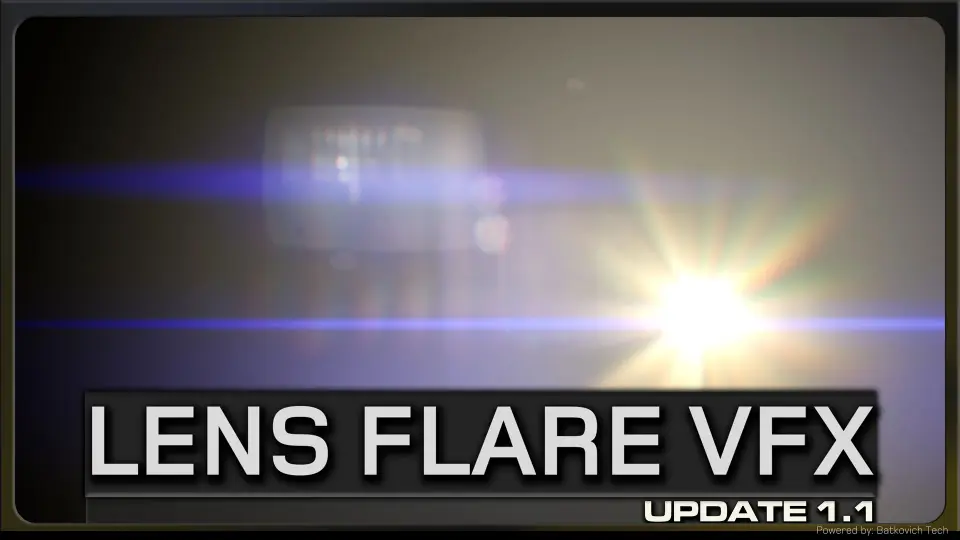
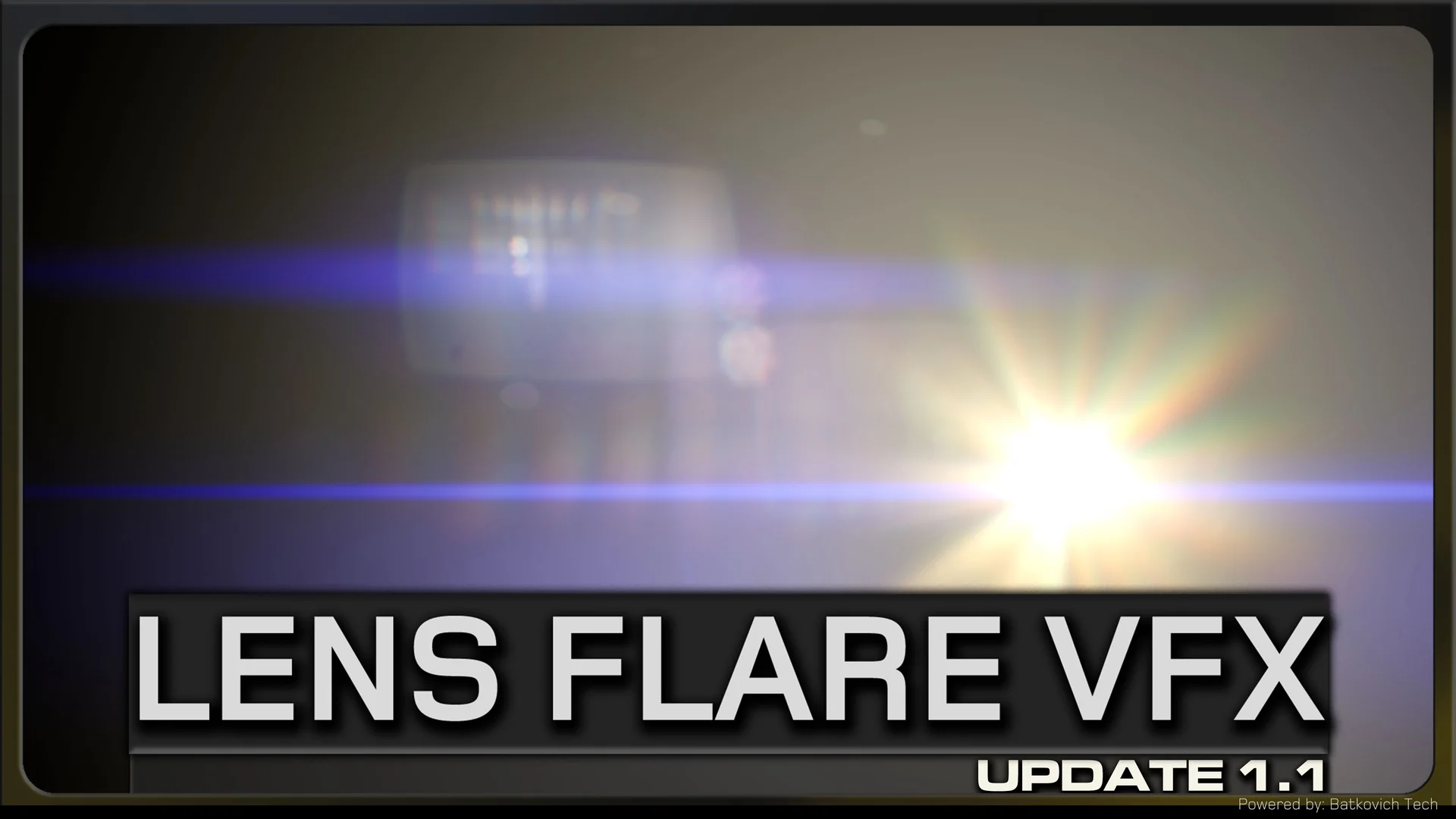
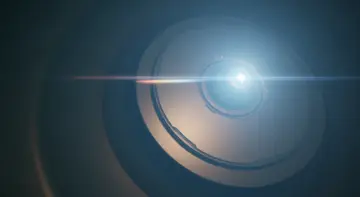
Central to this assembly is an extensive library containing more than 300 HDR textures. These assets supply the specific shapes and optical flaws generated by physical barrels and iris leaves:
Chromatic ghosts that separate light into constituent wavelengths along the optical axis.
Starburst patterns shaped by aperture blades encountering intense focal points.
Halo rings and edge flares that emerge as lights drift toward the borders of the sensor.
Spectral dispersions and anamorphic streaks that stretch horizontal flares across wide aspect ratios.
Glints, concentrated hotspots, and multi-ghost configurations that duplicate complex multi-element groupings.
Surface contaminants are represented through dedicated lens dirt elements. When a bright source hits the lens, these dirt textures illuminate dynamically, showing realistic dust, oils, and imperfections on the front glass element. Coloration also extends into photorealistic tints designed specifically to emulate anti-reflective (AR) lens coatings, giving the scattered light the subtle magenta, green, or amber hues characteristic of coated production optics.
Depth Occlusion, Screen Space Tracking, and Distance Fading
Convincing lens flares must react smoothly when light sources pass behind scene geometry, terrain, or moving characters. To avoid sudden pop-in or harsh visual clipping, the system utilizes multi-tap depth occlusion. This occlusion technique evaluates depth samples across multiple points around the light's screen position, causing flares to soften and diminish naturally as an occluding object begins to intersect the light source.
Screen position calculations govern how flare elements scale, stretch, and travel. Ghosts and secondary reflections follow precise optical vectors that move symmetrically across the center of the frame as the camera pans. Edge flares fire specifically when bright sources graze the screen periphery, simulating the steep incidence angles that cause internal barrel reflections in cinema lenses.
Distance-based depth fade controls prevent optical sprites from clipping aggressively into nearby scene geometry or producing oversized visual blooms around distant lights. As lights recede from the camera, distance parameters fade flare components, keeping light scattering balanced with scene depth while simultaneously lowering rendering overhead when sources are small or distant.
Version 1.1 Enhancements and Element Control
The Version 1.1 update introduces precise adjustments to ghost counts, distortion mapping, and camera matching. A central addition is the expanded single ghost architecture, which allows users to assign unique textures across up to eight distinct elements. This enables fine-grained control over individual lens reflections, allowing technical artists to combine different chromatic rings, bokeh shapes, and iris spots without blending them into a single locked texture.
Field of view correction ensures that flare geometry and ghost travel vectors adjust proportionally whenever camera focal lengths change. Wide-angle lenses maintain their stretched, peripheral light separation, while telephoto focal lengths keep ghosts clustered near the focal point. Streak gradients now incorporate UV distortion mapping supported by new UV distortion textures and dedicated lens flare gradients. These distortions break up the uniform linearity of anamorphic flares, introducing subtle irregularities and optical waves that simulate glass imperfections. Alongside these new visual layers, the update includes broader performance optimization passes that refine sprite evaluation during high-intensity sequences.
Production Applications Across Interactive Environments
Because the toolkit is completely modular, its visual footprint can be calibrated to fit a wide range of aesthetic targets and performance profiles. Cinematic sequences benefit heavily from the full stack of optical phenomena: combining anamorphic streaks, anti-reflective coating tints, starbursts, and hexagonal bokeh replicates high-end film glass during dramatic shifts in exposure.
In racing games and vehicular simulators, the system handles dynamic headlamp flashes, sun glare through windshields, and high-contrast night driving reflections. Edge flares and multi-tap occlusion keep lighting responsive when moving rapidly past streetlights, barriers, and tunnel exits. Sci-fi environments can leverage dynamic streaks, intense chromatic ghosts, and vibrant spectral dispersions to ground artificial emitters, thrusters, and planetary lighting in physical camera optics. Architectural visualizations can rely on cleaner, subtler glints, gentle halos, and soft lens dirt to present photorealistic exterior daylight or interior spot fixtures without visual clutter.
Whether applied to pre-rendered sequences or real-time gameplay loops, configuration relies on material instance properties, setup documentation, and interactive demonstration spaces to ensure visual calibration remains directly aligned with scene lighting.
 Shaders
 Shaders
 Shaders
 Shaders