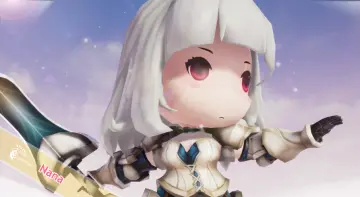
"5da73d49ff33a5b1"{"id":"1002372","slug":"kaoru","title":"Kaoru","category":"Humans","engine":"4.22+,5.0+","assetVersion":"","engineVersion":"Engine Version: 4.22+,5.0+","tag":"Humans","accent":"blue","visual":"mech","summary":"Kaoru is a lowpoly anime shinobi girl in four outfits — Pajamas, Bikini and Student included — with 33 animations and Unreal Engine 4.22 to 5.0 builds.","platform":"Unreal Engine","indexPolicy":"index","publishedAt":"2026-11-09T18:42:27.372Z","updatedAt":"2026-11-09T18:42:27.372Z","sourceNotes":[],"fileContents":[],"compatibility":["Unreal Engine","Engine Version: 4.22+,5.0+"],"featuredImage":{"alt":"Kaoru","src":"/wp-content/uploads/published/2026/11/915fb26435f5-f2db8837-c002-42d2-9a7f-d9ec6c2be20f-fda18598c1.webp"},"hasDownloadLink":true,"downloads":0,"terms":[{"taxonomy":"category","slug":"humans","name":"Humans"}],"galleryImages":[{"src":"/wp-content/uploads/published/2026/11/0d761a43498a-72e086df-966c-488a-99b3-7b4cecfd2e00-2ba146f7a5.webp","alt":"Kaoru"},{"src":"/wp-content/uploads/published/2026/11/338fecdb8738-14c56295-119d-44da-8f29-62031e9c4076-a90515703f.webp","alt":"Kaoru"},{"src":"/wp-content/uploads/published/2026/11/b323a8490551-aeeda8f8-b69e-4d01-85f7-e5f82fed18b9-218d58a546.webp","alt":"Kaoru"},{"src":"/wp-content/uploads/published/2026/11/ab35880f26ba-afc06b0b-de11-408a-8375-ea8bc25f9db5-11e2a41a67.webp","alt":"Kaoru"},{"src":"/wp-content/uploads/published/2026/11/63c40dfba5fc-628e3e21-1b22-4b87-8e59-ea767081bc77-a5e5ca8306.webp","alt":"Kaoru"},{"src":"/wp-content/uploads/published/2026/11/efcbf256363f-50d24e0e-f1ad-4d27-a7ba-0560d100ccf8-c97fe29c63.webp","alt":"Kaoru"}],"accessPanel":{"kind":"resource","title":"Get this resource","eyebrow":"Free resource","message":"Download this resource in your browser.","fileName":"Content.7z","safetyNote":"Resources are manually reviewed before listing to improve quality and reduce obvious risks.","actionLabel":"Get this resource","resourceType":"Resource archive","versions":[]},"contentHtml":"\u003cp\u003eKaoru ships as four characters — Kaoru, Kaoru Pajamas, Kaoru Bikini, and Kaoru Student — with 33 animations attached and a preview that runs the motions in Unity3D. Unreal Engine builds cover 4.22 and later through 5.0. The tag set reads like a one-line brief: Lowpoly, Anime, Shinobi, Ninja, Girl, Cat, Knife.\u003c/p\u003e \u003ch2\u003eKaoru's Four Wardrobe Variants\u003c/h2\u003e \u003cp\u003eThe base character carries the shinobi reading of the set, the ninja framing the tags advertise. Around her sit three alternate outfits that shift the same girl into different circumstances. Pajamas puts her in a domestic, off-duty register — a bedroom, a dorm, a quiet interior. Bikini moves her outdoors into water or summer staging. Student places her in a school context, distinct enough as a setting that a project can use it for an entirely separate scene type without introducing a second character.\u003c/p\u003e \u003cp\u003eWhat the four-way split buys an artist is continuity. A visual novel, a short slice-of-life piece, or a game with school-and-home or day-and-night chapters can keep one recognizable face across all of them, and the audience reads the change of clothes as a change of situation rather than a change of cast. Costume swapping also gives a dialogue scene something to cut to — an establishing beat in the student outfit, a quieter one in pajamas — with no extra modelling.\u003c/p\u003e \u003cp\u003eEach look is presented and counted as its own character rather than as one body with an alternate material slot. That is worth knowing when you plan storage, and when you decide how many of the four actually need to be loaded in a given scene at the same time.\u003c/p\u003e \u003ch2\u003eThirty-Three Animations, Shown in Unity3D\u003c/h2\u003e \u003cp\u003eThirty-three clips is the whole motion budget of the package. The preview runs those examples in Unity3D, which is a practical place to evaluate them: the motions can be watched on the character, in a real-time engine, before anything is moved into an Unreal project. Timing, spacing, and how the poses read at speed are all visible at that stage.\u003c/p\u003e \u003cp\u003eCount the clips against your scene list rather than against an abstract ideal. A character who has to idle, walk, run, turn, and react needs a different spread than one who only appears in conversation. Thirty-three is a workable vocabulary of movement for a lowpoly anime character, and the preview is where you confirm that the specific vocabulary lines up with the beats you are staging. Any gap can be filled later by keying additional motion onto the same character.\u003c/p\u003e \u003ch2\u003eKaoru in Unreal: 4.22, 5.0, and No Toon Shader\u003c/h2\u003e \u003cp\u003eUnreal Engine support runs from 4.22 upward, with 5.0 listed alongside it, so the character fits both the older 4.x pipeline and the 5.x one. The caveat is stated plainly: the UE version does not come with the script or the Toon shader. The cel-styled shading that makes an anime character look finished is not part of the Unreal delivery, and neither is the script that drives the behaviour seen in the demonstration.\u003c/p\u003e \u003cp\u003eIn practice, the Unreal build gives you the mesh, the four looks, and the animation set, and leaves the look development to you. Budget for a toon or cel pass — outline treatment, stepped lighting, flat colour response — as a separate task before the character is presentable in-engine. Against that, the version range is wide enough that the same character can go into an existing 4.22 project or a newer 5.0 one without hunting for a conversion route.\u003c/p\u003e \u003ch3\u003eYippy Kawaii Compatibility\u003c/h3\u003e \u003cp\u003eYippy Kawaii is named as a compatible product for the set, which gives a concrete starting point when choosing the stylised shading setup that Kaoru should sit inside. Anyone already working in that look has a known reference to match against rather than a blank search for a shader route.\u003c/p\u003e \u003ch2\u003eThe Tags Behind Kaoru: Lowpoly, Shinobi, Cat, Knife\u003c/h2\u003e \u003cp\u003eLowpoly and Anime are the two tags that decide how the character reads on screen. A low-poly budget keeps her cheap to place in a scene and easy to render alongside other content, which is the usual reason to pick this style for a real-time anime project — the silhouette does the work, faces and clothing stay simple, and the model does not dominate the frame's cost.\u003c/p\u003e \u003cp\u003eShinobi and Ninja together define the role. This is a ninja girl, not a civilian bystander, and that framing places her in stealth, action, or martial-arts-adjacent staging. Girl closes the description of the character herself. Cat and Knife are the two most concrete elements in the list: a blade in hand and an animal presence in her world. Neither is incidental. The knife points at combat or at a small held prop that stays legible in a low-poly silhouette; the cat introduces a second living subject to stage her around and to animate against.\u003c/p\u003e \u003cp\u003eRead together, the seven tags describe a narrow niche rather than a broad one: a stylised real-time ninja girl with a blade and an animal, aimed at projects that want anime presentation without high-poly weight. Anyone assembling a cast around that description will find the role already decided for them.\u003c/p\u003e \u003ch2\u003eWhere the Kaoru Set Sits in a Project\u003c/h2\u003e \u003cp\u003eFour outfits and 33 animations make the strongest case for scenes that need the same girl in more than one situation — episodic content, dialogue-driven games, or any project with distinct location types. The Unity3D preview answers the animation question directly, while Unreal users should plan the shading work as part of the schedule, since the toon shader and script do not travel with the UE version. Version support across 4.22 and 5.0 handles the engine side; the cel look, the outline pass, and any scripted behaviour are yours to build. Treated that way, the package supplies the character, the wardrobe, and the motion, and leaves the final rendering character to the person using it.\u003c/p\u003e\n\n\u003ch2\u003eExplore Similar Assets\u003c/h2\u003e\n\u003cul\u003e\n\u003cli\u003e\u003ca href=\"https://3dcghub.com/anime-girl-cleric/\" rel=\"noopener noreferrer\"\u003eAnime Girl Cleric\u003c/a\u003e\u003c/li\u003e\n\u003cli\u003e\u003ca href=\"https://3dcghub.com/cyberpunk-street-girl/\" rel=\"noopener noreferrer\"\u003eCyberpunk Street Girl\u003c/a\u003e\u003c/li\u003e\n\u003cli\u003e\u003ca href=\"https://3dcghub.com/valkiria/\" rel=\"noopener noreferrer\"\u003eValkiria\u003c/a\u003e\u003c/li\u003e\n\u003cli\u003e\u003ca href=\"https://3dcghub.com/k-pop-series-sun/\" rel=\"noopener noreferrer\"\u003eK-POP SERIES - Sun\u003c/a\u003e\u003c/li\u003e\n\u003cli\u003e\u003ca href=\"https://3dcghub.com/winsome-girl/\" rel=\"noopener noreferrer\"\u003eWinsome Girl\u003c/a\u003e\u003c/li\u003e\n\u003c/ul\u003e","contentTextLength":5792,"navigation":{"current":48,"total":4340,"previous":{"id":"1002373","slug":"lana","title":"Lana","category":"Humans","platform":"Unreal Engine","updatedAt":"2026-11-09T18:43:48.624Z"},"next":{"id":"1002371","slug":"feline-swordsman-character","title":"Feline Swordsman Character","category":"Characters \u0026 Creatures","platform":"Unreal Engine","updatedAt":"2026-11-09T18:40:38.381Z"}},"relatedResources":[{"id":"1002399","slug":"sword-elf","title":"Sword Elf","category":"Humans","engine":"4.22+,5.0+","assetVersion":"","engineVersion":"Engine Version: 4.22+,5.0+","tag":"Humans","accent":"blue","visual":"mech","summary":"Examine the technical integration, UE4 Epic skeleton retargeting, locomotion setup, and prototyping workflow for the stylized fantasy Sword Elf character.","platform":"Unreal Engine","indexPolicy":"index","publishedAt":"2026-11-10T04:28:30.060Z","updatedAt":"2026-11-10T04:28:30.060Z","sourceNotes":[],"fileContents":[],"compatibility":["Unreal Engine","Engine Version: 4.22+,5.0+"],"featuredImage":{"alt":"Sword Elf","src":"/wp-content/uploads/published/2026/11/b6a5d88c5d56-7011a649-dd4f-4904-8e6a-28ac32d5a955-e2a7ba0f70.webp"},"hasDownloadLink":true,"downloads":0},{"id":"1002368","slug":"anime-girl-cleric","title":"Anime Girl Cleric","category":"Humans","engine":"4.26+,5.0+","assetVersion":"","engineVersion":"Engine Version: 4.26+,5.0+","tag":"Humans","accent":"blue","visual":"mech","summary":"An anime-style cleric character for Unreal Engine 4.26+ and 5.0+, with a ready combat RPG system, three-language voice over, sound effects and VFX particles.","platform":"Unreal Engine","indexPolicy":"index","publishedAt":"2026-11-09T18:35:30.007Z","updatedAt":"2026-11-09T18:35:30.007Z","sourceNotes":[],"fileContents":[],"compatibility":["Unreal Engine","Engine Version: 4.26+,5.0+"],"featuredImage":{"alt":"Anime Girl Cleric","src":"/wp-content/uploads/published/2026/11/7d27742bc380-9cfac7ac-d447-440b-bd11-1e7ea873e6ad-c164cac138.webp"},"hasDownloadLink":true,"downloads":0},{"id":"1002375","slug":"nana","title":"Nana","category":"Humans","engine":"4.19+,5.0+","assetVersion":"","engineVersion":"Engine Version: 4.19+,5.0+","tag":"Humans","accent":"blue","visual":"mech","summary":"Nana is a low-poly anime knight with separate face, skin, hair, and armor textures, easy color changes, a Unity3D animation example, and UE 4.19+/5.0+.","platform":"Unreal Engine","indexPolicy":"index","publishedAt":"2026-11-09T18:45:08.233Z","updatedAt":"2026-11-09T18:45:08.233Z","sourceNotes":[],"fileContents":[],"compatibility":["Unreal Engine","Engine Version: 4.19+,5.0+"],"featuredImage":{"alt":"Nana","src":"/wp-content/uploads/published/2026/11/7c229244895a-589ec8fc-9b35-4c43-8c72-006e856a2a8d-e5353152c3.webp"},"hasDownloadLink":true,"downloads":0}]}
Humans
Kaoru
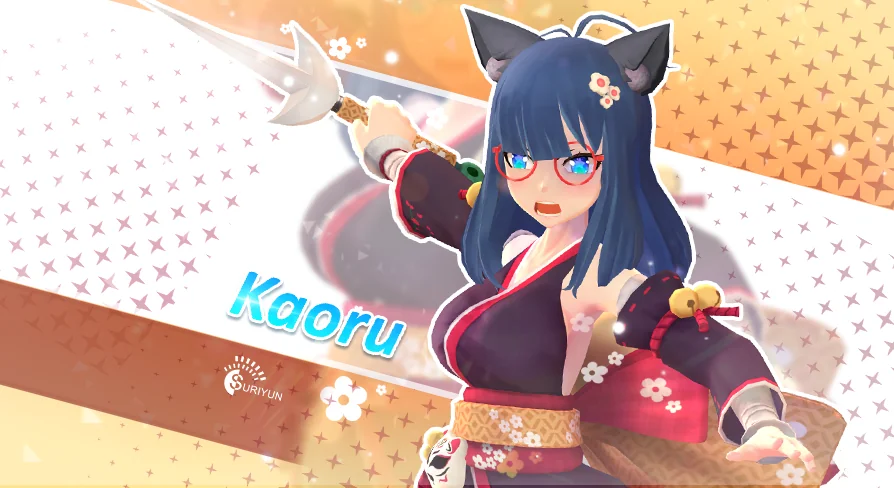
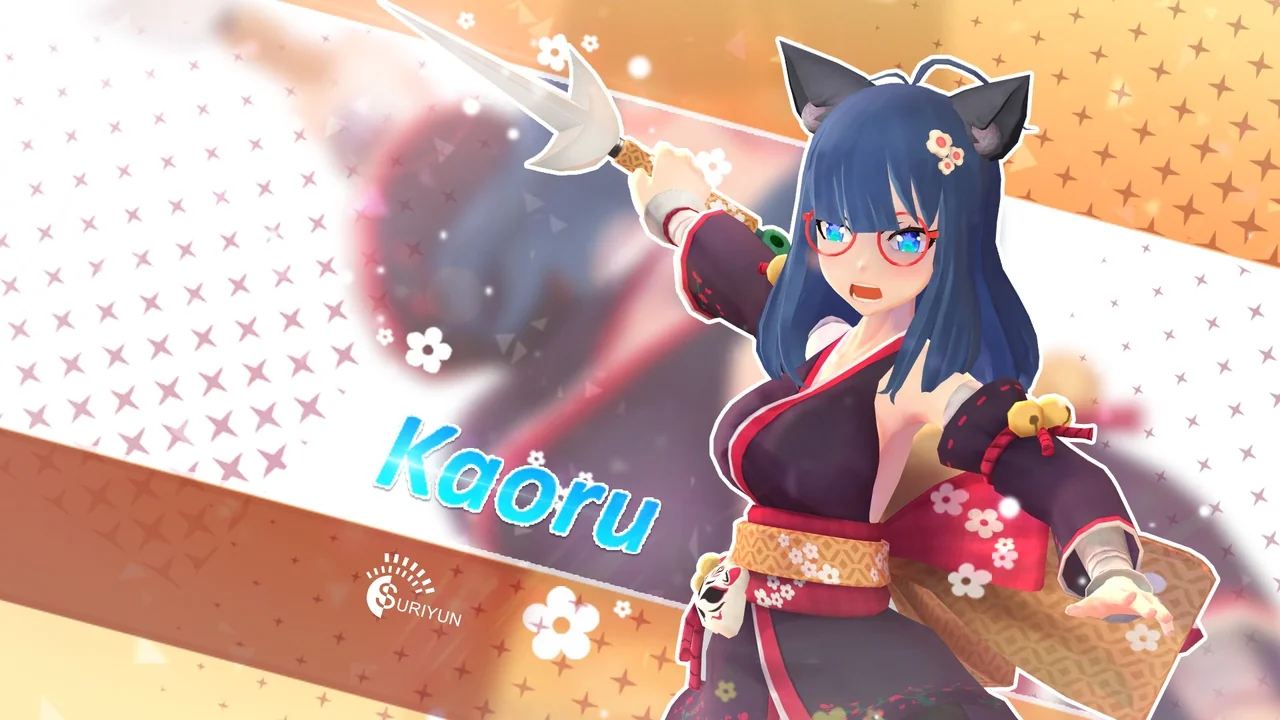
Kaoru is a lowpoly anime shinobi girl in four outfits — Pajamas, Bikini and Student included — with 33 animations and Unreal Engine 4.22 to 5.0 builds.
Category:Unreal Engine,HumansPlatform: Unreal EngineEngine Version: 4.22+,5.0+Published: Nov 9, 2026
Humans
Resource overview
Kaoru ships as four characters — Kaoru, Kaoru Pajamas, Kaoru Bikini, and Kaoru Student — with 33 animations attached and a preview that runs the motions in Unity3D. Unreal Engine builds cover 4.22 and later through 5.0. The tag set reads like a one-line brief: Lowpoly, Anime, Shinobi, Ninja, Girl, Cat, Knife.
Kaoru's Four Wardrobe Variants
The base character carries the shinobi reading of the set, the ninja framing the tags advertise. Around her sit three alternate outfits that shift the same girl into different circumstances. Pajamas puts her in a domestic, off-duty register — a bedroom, a dorm, a quiet interior. Bikini moves her outdoors into water or summer staging. Student places her in a school context, distinct enough as a setting that a project can use it for an entirely separate scene type without introducing a second character.
What the four-way split buys an artist is continuity. A visual novel, a short slice-of-life piece, or a game with school-and-home or day-and-night chapters can keep one recognizable face across all of them, and the audience reads the change of clothes as a change of situation rather than a change of cast. Costume swapping also gives a dialogue scene something to cut to — an establishing beat in the student outfit, a quieter one in pajamas — with no extra modelling.
Each look is presented and counted as its own character rather than as one body with an alternate material slot. That is worth knowing when you plan storage, and when you decide how many of the four actually need to be loaded in a given scene at the same time.
Thirty-Three Animations, Shown in Unity3D
Thirty-three clips is the whole motion budget of the package. The preview runs those examples in Unity3D, which is a practical place to evaluate them: the motions can be watched on the character, in a real-time engine, before anything is moved into an Unreal project. Timing, spacing, and how the poses read at speed are all visible at that stage.
Count the clips against your scene list rather than against an abstract ideal. A character who has to idle, walk, run, turn, and react needs a different spread than one who only appears in conversation. Thirty-three is a workable vocabulary of movement for a lowpoly anime character, and the preview is where you confirm that the specific vocabulary lines up with the beats you are staging. Any gap can be filled later by keying additional motion onto the same character.
Kaoru in Unreal: 4.22, 5.0, and No Toon Shader
Unreal Engine support runs from 4.22 upward, with 5.0 listed alongside it, so the character fits both the older 4.x pipeline and the 5.x one. The caveat is stated plainly: the UE version does not come with the script or the Toon shader. The cel-styled shading that makes an anime character look finished is not part of the Unreal delivery, and neither is the script that drives the behaviour seen in the demonstration.
In practice, the Unreal build gives you the mesh, the four looks, and the animation set, and leaves the look development to you. Budget for a toon or cel pass — outline treatment, stepped lighting, flat colour response — as a separate task before the character is presentable in-engine. Against that, the version range is wide enough that the same character can go into an existing 4.22 project or a newer 5.0 one without hunting for a conversion route.
Yippy Kawaii Compatibility
Yippy Kawaii is named as a compatible product for the set, which gives a concrete starting point when choosing the stylised shading setup that Kaoru should sit inside. Anyone already working in that look has a known reference to match against rather than a blank search for a shader route.
The Tags Behind Kaoru: Lowpoly, Shinobi, Cat, Knife
Lowpoly and Anime are the two tags that decide how the character reads on screen. A low-poly budget keeps her cheap to place in a scene and easy to render alongside other content, which is the usual reason to pick this style for a real-time anime project — the silhouette does the work, faces and clothing stay simple, and the model does not dominate the frame's cost.
Shinobi and Ninja together define the role. This is a ninja girl, not a civilian bystander, and that framing places her in stealth, action, or martial-arts-adjacent staging. Girl closes the description of the character herself. Cat and Knife are the two most concrete elements in the list: a blade in hand and an animal presence in her world. Neither is incidental. The knife points at combat or at a small held prop that stays legible in a low-poly silhouette; the cat introduces a second living subject to stage her around and to animate against.
Read together, the seven tags describe a narrow niche rather than a broad one: a stylised real-time ninja girl with a blade and an animal, aimed at projects that want anime presentation without high-poly weight. Anyone assembling a cast around that description will find the role already decided for them.
Where the Kaoru Set Sits in a Project
Four outfits and 33 animations make the strongest case for scenes that need the same girl in more than one situation — episodic content, dialogue-driven games, or any project with distinct location types. The Unity3D preview answers the animation question directly, while Unreal users should plan the shading work as part of the schedule, since the toon shader and script do not travel with the UE version. Version support across 4.22 and 5.0 handles the engine side; the cel look, the outline pass, and any scripted behaviour are yours to build. Treated that way, the package supplies the character, the wardrobe, and the motion, and leaves the final rendering character to the person using it.
 Humans
 Humans
 Humans
 Humans