"95fdaf16012263fa"{"id":"1002362","slug":"valkiria","title":"Valkiria","category":"Humans","engine":"4.20+,5.0+","assetVersion":"","engineVersion":"Engine Version: 4.20+,5.0+","tag":"Humans","accent":"blue","visual":"mech","summary":"Valkiria is a lowpoly character with 9,848 tris, diffuse/normal/specular maps, rigged and animated with an animation blueprint and script, compatible with Gobli","platform":"Unreal Engine","indexPolicy":"index","publishedAt":"2026-11-06T07:20:02.742Z","updatedAt":"2026-11-06T07:20:02.742Z","sourceNotes":[],"fileContents":[],"compatibility":["Unreal Engine","Engine Version: 4.20+,5.0+"],"featuredImage":{"alt":"Valkiria","src":"/wp-content/uploads/published/2026/11/f1680dd3d570-4f48546b-dd1a-40f1-817b-da56eac3fae1-7f678210d5.webp"},"hasDownloadLink":true,"downloads":0,"terms":[{"taxonomy":"category","slug":"humans","name":"Humans"}],"galleryImages":[{"src":"/wp-content/uploads/published/2026/11/be97cb02133c-e67914b5-9e8c-4454-942d-e696f63bcc5d-1bcb9cc999.webp","alt":"Valkiria"},{"src":"/wp-content/uploads/published/2026/11/22dfeae6016c-bf8fee4d-49cb-481c-93e5-b60d29e951bb-f777ad8c52.webp","alt":"Valkiria"},{"src":"/wp-content/uploads/published/2026/11/cd012374907d-be5972bb-9e57-4cac-abd4-bf8d9d9f6f08-d64bbbfeb1.webp","alt":"Valkiria"},{"src":"/wp-content/uploads/published/2026/11/e3ccad635bc3-677b6175-6eb6-401f-8e92-9894271ed134-4b47818a8a.webp","alt":"Valkiria"},{"src":"/wp-content/uploads/published/2026/11/ddfeb82f3ad6-37d181f6-e331-4585-9bb2-a4aa67e94ece-b7cc267f4d.webp","alt":"Valkiria"},{"src":"/wp-content/uploads/published/2026/11/dbc79011f705-a50bdb63-57e0-4ff8-89f7-01910a85ecbc-40b71a4e10.webp","alt":"Valkiria"},{"src":"/wp-content/uploads/published/2026/11/dcbd2c26a9d8-b7f06f10-76d9-4c6f-9cba-11cc08a2a072-dc5262bbce.webp","alt":"Valkiria"}],"accessPanel":{"kind":"resource","title":"Get this resource","eyebrow":"Free resource","message":"3DCGHUB is the service provider for this listing. Access is fulfilled through the official publisher channel.","fileName":"Content.7z","safetyNote":"Resources are manually reviewed before listing to improve quality and reduce obvious risks.","actionLabel":"Get this resource","resourceType":"Resource archive","versions":[]},"contentHtml":"\u003ch2\u003eValkiria’s 9,848-Triangle Budget for Real-Time Scenes\u003c/h2\u003e\n\u003cp\u003eIntegrating a character into a lowpoly scene often forces a trade-off between visual detail and polygon budget. Valkiria addresses that balance with a model of 9,848 triangles. That count sits comfortably in the lowpoly range, where real-time rendering can handle many instances without overwhelming the pipeline. The asset carries tags for “Lowpoly” and “Stylized,” which align with the geometry count and suggest a deliberate economy of form.\u003c/p\u003e\n\u003cp\u003eThe character is tagged as “Woman” and “Girl,” and also as “Player” and “Enemy.” Those role tags mean the same mesh can be cast on either side of a conflict—a player avatar or an opponent. For a project that needs a single character to fill multiple slots, that flexibility reduces the need for separate assets. The triangle budget keeps the model light enough for crowds or repeated spawns while retaining enough structure for a readable silhouette.\u003c/p\u003e \u003ch2\u003eDiffuse, Normal, and Specular Maps on Body and Weapon\u003c/h2\u003e\n\u003cp\u003eThe texture set includes diffuse, normal, and specular maps. The body textures are 2048x2048, while the weapon textures are 1024x1024. That resolution difference likely reflects the relative screen space each part occupies: the body carries more visual area and benefits from higher detail, while the weapon can stay lighter without losing definition. The specular map indicates a workflow that uses specular highlights, a common approach in many real-time pipelines for controlling shininess and material response.\u003c/p\u003e\n\u003cp\u003eMaterial tags—Metal, Leather, Cloth, Organic—hint at the range of surfaces the maps cover. The body map at 2048x2048 can support the variation needed for skin, fabric, and armor pieces, while the weapon map at 1024x1024 keeps the accessory efficient. Because the weapon has its own texture set, it can be adjusted independently of the body, whether for customization or to match a different scene palette.\u003c/p\u003e \u003ch2\u003eRigged Setup with Animation Blueprint and Script\u003c/h2\u003e\n\u003cp\u003eValkiria is tagged “Rigged” and “Animated,” so the model arrives with a skeleton and motion data. The “Animationblueprint” tag points to an included animation blueprint, which can help with setting up state machines, blending, or transitions without starting from scratch. A “Script” tag suggests that scripts are also part of the package, possibly for controlling animation logic or character behavior.\u003c/p\u003e\n\u003cp\u003eThese tags mean the asset is not just a static mesh; it has a setup for driving motion. For a developer, that can shorten the implementation phase: the rig and animation blueprint provide a foundation for integrating the character into a scene. The script may handle how animations are triggered or how the character responds, though the exact implementation would depend on the project. The presence of these elements is a practical starting point for anyone building out character controls or enemy AI.\u003c/p\u003e \u003ch2\u003eFrom Cyberpunk to Medieval: Tag-Driven Style Range\u003c/h2\u003e\n\u003cp\u003eThe tags span a wide aesthetic range: Cyberpunk, Postapocalyptic, Scifi, Steampunk, Medieval, Fantasy, Anime, Cartoon, Realistic, and Stylized. That breadth means the same character can read as a cyberpunk operative, a postapocalyptic survivor, a steampunk adventurer, or a medieval fantasy figure, depending on the surrounding scene. The weapon tag indicates a weapon is included, which can reinforce whichever setting is chosen.\u003c/p\u003e\n\u003cp\u003eBecause the weapon is textured separately at 1024x1024, it can be swapped or customized to better match a particular theme. A metal-heavy weapon might suit a steampunk or sci-fi scene, while a simpler design could fit a medieval or fantasy setting. The character’s material tags—metal, leather, cloth, organic—further support this versatility by covering surfaces that appear across genres. In a production that moves between themes, Valkiria can be adapted rather than replaced.\u003c/p\u003e \u003ch2\u003eGoblin Compatibility and Character Role Assignment\u003c/h2\u003e\n\u003cp\u003eThe compatibility field names Goblin. That detail matters for pipelines that use Goblin as part of their technical stack, as it suggests the asset is intended to work within that environment. Checking compatibility early can prevent import or setup issues later. The character’s role tags—Player and Enemy—make assignment straightforward: the same model can be used for a protagonist or an antagonist without needing a separate asset.\u003c/p\u003e\n\u003cp\u003eThe rigged and animated tags, along with the animation blueprint and script, mean the character is ready for motion-based roles. Whether the character is chasing the player or being controlled by the player, the underlying setup supports both. The lowpoly count keeps the character efficient in scenes with multiple actors, and the separate weapon texture allows the accessory to be tuned independently. For a project that needs a versatile character with a complete texture set and animation-ready rig, Valkiria covers both enemy and player roles without exceeding a modest triangle budget.\u003c/p\u003e\n\n\u003ch2\u003eExplore Similar Assets\u003c/h2\u003e\n\u003cul\u003e\n\u003cli\u003e\u003ca href=\"https://3dcghub.com/winsome-girl/\" rel=\"noopener noreferrer\"\u003eWinsome Girl\u003c/a\u003e\u003c/li\u003e\n\u003cli\u003e\u003ca href=\"https://3dcghub.com/k-pop-series-sun/\" rel=\"noopener noreferrer\"\u003eK-POP SERIES - Sun\u003c/a\u003e\u003c/li\u003e\n\u003cli\u003e\u003ca href=\"https://3dcghub.com/regular-male-civilian-character/\" rel=\"noopener noreferrer\"\u003eRegular Male Civilian Character\u003c/a\u003e\u003c/li\u003e\n\u003cli\u003e\u003ca href=\"https://3dcghub.com/gangster-3/\" rel=\"noopener noreferrer\"\u003eGangster 3\u003c/a\u003e\u003c/li\u003e\n\u003cli\u003e\u003ca href=\"https://3dcghub.com/heroes-tribal-warrior/\" rel=\"noopener noreferrer\"\u003eHeroes - Tribal Warrior\u003c/a\u003e\u003c/li\u003e\n\u003c/ul\u003e","contentTextLength":5045,"navigation":{"current":6,"total":4291,"previous":{"id":"1002363","slug":"watches","title":"Watches","category":"Electronics \u0026 Technology","platform":"Unreal Engine","updatedAt":"2026-11-06T07:22:21.351Z"},"next":{"id":"1002361","slug":"uz-x-fpsk-ready","title":"UZ-X (FPSK Ready)","category":"Guns","platform":"Unreal Engine","updatedAt":"2026-11-06T07:18:59.634Z"}},"relatedResources":[{"id":"1002270","slug":"winsome-girl","title":"Winsome Girl","category":"Humans","engine":"4.26+,5.0+","assetVersion":"","engineVersion":"Engine Version: 4.26+,5.0+","tag":"Humans","accent":"blue","visual":"mech","summary":"Explore Winsome Girl, a stylized modern female character rigged to the UE4 Epic skeleton with morph targets, demo posing, and Animation Blueprint logic.","platform":"Unreal Engine","indexPolicy":"index","publishedAt":"2026-10-29T16:29:50.361Z","updatedAt":"2026-10-29T16:29:50.361Z","sourceNotes":[],"fileContents":[],"compatibility":["Unreal Engine","Engine Version: 4.26+,5.0+"],"featuredImage":{"alt":"Winsome Girl","src":"/wp-content/uploads/published/2026/10/3a43c12e093c-23e13005-5dbc-47d8-884b-3289593e6190-03c194c8a5.webp"},"hasDownloadLink":true,"downloads":0},{"id":"1001813","slug":"k-pop-series-sun","title":"K-POP SERIES - Sun","category":"Humans","engine":"4.19+,5.0+","assetVersion":"","engineVersion":"Engine Version: 4.19+,5.0+","tag":"Humans","accent":"blue","visual":"mech","summary":"Explore the K-POP SERIES - Sun 3D character featuring 3 modular outfits, 52 Apple Blendshapes, 4K packed textures, and a UE4 Mannequin compatible rig.","platform":"Unreal Engine","indexPolicy":"index","publishedAt":"2026-10-21T08:07:28.503Z","updatedAt":"2026-10-21T08:07:28.503Z","sourceNotes":[],"fileContents":[],"compatibility":["Unreal Engine","Engine Version: 4.19+,5.0+"],"featuredImage":{"alt":"K-POP SERIES - Sun","src":"/wp-content/uploads/published/2026/10/83ca5751ce7a-5a057e83-5982-45c2-912b-4df36281063c-669168bb3d.webp"},"hasDownloadLink":true,"downloads":2},{"id":"1002342","slug":"regular-male-civilian-character","title":"Regular Male Civilian Character","category":"Humans","engine":"4.19+,5.0+","assetVersion":"","engineVersion":"Engine Version: 4.19+,5.0+","tag":"Humans","accent":"blue","visual":"character","summary":"A customizable male civilian character compatible with the Epic skeleton, with five faces, twelve clothing types, three accessories, LODs, and PBR-tagged materi","platform":"Unreal Engine","indexPolicy":"index","publishedAt":"2026-11-06T06:48:46.543Z","updatedAt":"2026-11-06T06:48:46.543Z","sourceNotes":[],"fileContents":[],"compatibility":["Unreal Engine","Engine Version: 4.19+,5.0+"],"featuredImage":{"alt":"Regular Male Civilian Character","src":"/wp-content/uploads/published/2026/11/d6e4f79a6e9c-b67956f8-4470-4c1f-80d0-9a91dd32c434-d811c78525.webp"},"hasDownloadLink":true,"downloads":0}]}
Humans
Valkiria
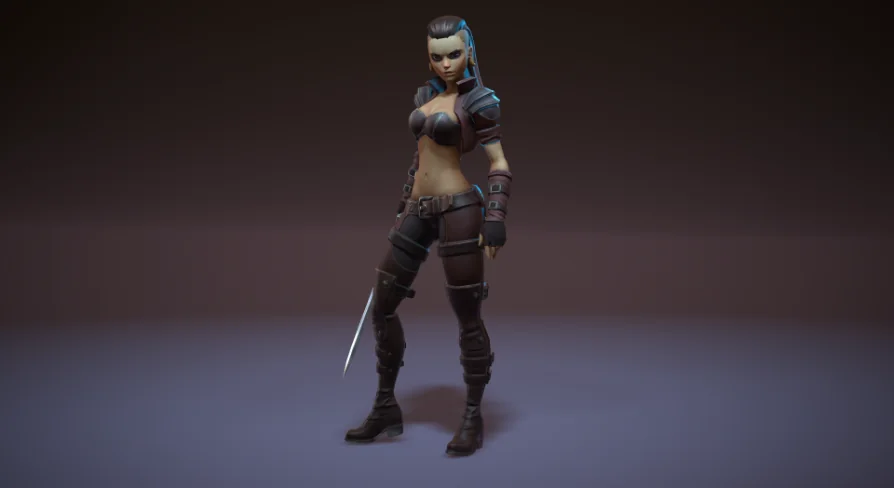
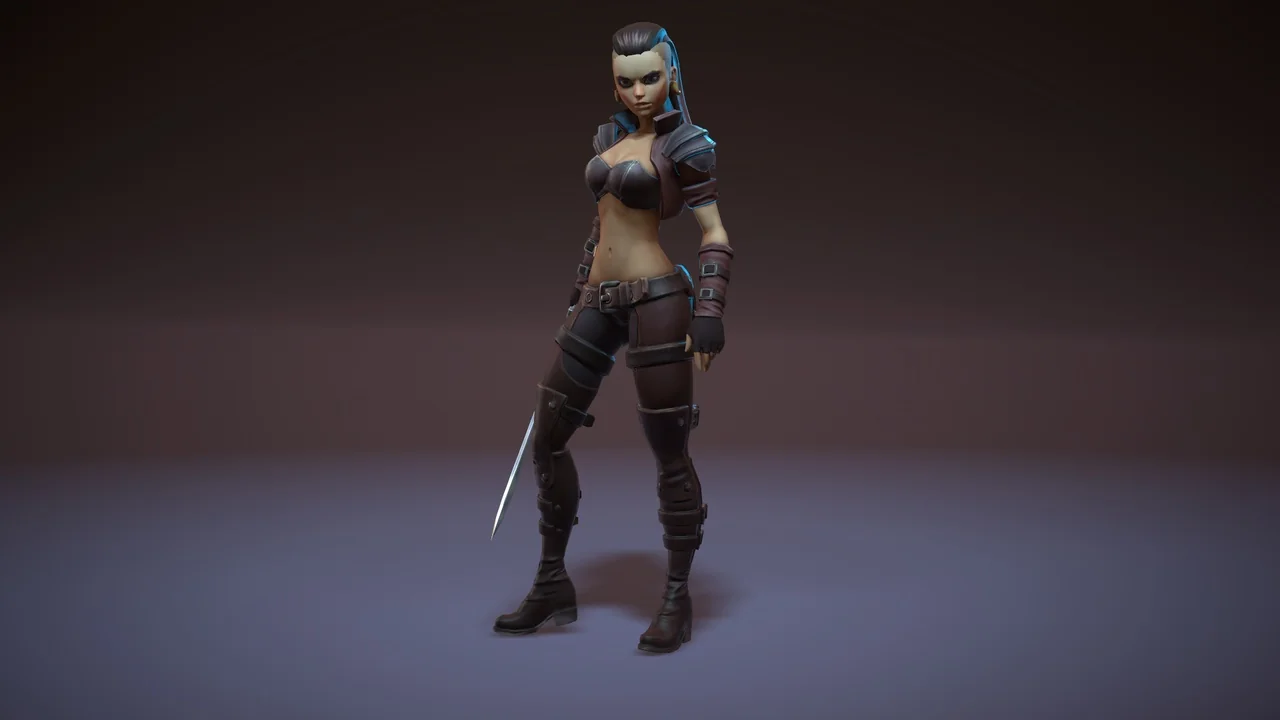
Valkiria is a lowpoly character with 9,848 tris, diffuse/normal/specular maps, rigged and animated with an animation blueprint and script, compatible with Gobli
Category:Unreal Engine,HumansPlatform: Unreal EngineEngine Version: 4.20+,5.0+Published: Nov 6, 2026
Humans
Resource overview
Valkiria’s 9,848-Triangle Budget for Real-Time Scenes
Integrating a character into a lowpoly scene often forces a trade-off between visual detail and polygon budget. Valkiria addresses that balance with a model of 9,848 triangles. That count sits comfortably in the lowpoly range, where real-time rendering can handle many instances without overwhelming the pipeline. The asset carries tags for “Lowpoly” and “Stylized,” which align with the geometry count and suggest a deliberate economy of form.
The character is tagged as “Woman” and “Girl,” and also as “Player” and “Enemy.” Those role tags mean the same mesh can be cast on either side of a conflict—a player avatar or an opponent. For a project that needs a single character to fill multiple slots, that flexibility reduces the need for separate assets. The triangle budget keeps the model light enough for crowds or repeated spawns while retaining enough structure for a readable silhouette.
Diffuse, Normal, and Specular Maps on Body and Weapon
The texture set includes diffuse, normal, and specular maps. The body textures are 2048x2048, while the weapon textures are 1024x1024. That resolution difference likely reflects the relative screen space each part occupies: the body carries more visual area and benefits from higher detail, while the weapon can stay lighter without losing definition. The specular map indicates a workflow that uses specular highlights, a common approach in many real-time pipelines for controlling shininess and material response.
Material tags—Metal, Leather, Cloth, Organic—hint at the range of surfaces the maps cover. The body map at 2048x2048 can support the variation needed for skin, fabric, and armor pieces, while the weapon map at 1024x1024 keeps the accessory efficient. Because the weapon has its own texture set, it can be adjusted independently of the body, whether for customization or to match a different scene palette.
Rigged Setup with Animation Blueprint and Script
Valkiria is tagged “Rigged” and “Animated,” so the model arrives with a skeleton and motion data. The “Animationblueprint” tag points to an included animation blueprint, which can help with setting up state machines, blending, or transitions without starting from scratch. A “Script” tag suggests that scripts are also part of the package, possibly for controlling animation logic or character behavior.
These tags mean the asset is not just a static mesh; it has a setup for driving motion. For a developer, that can shorten the implementation phase: the rig and animation blueprint provide a foundation for integrating the character into a scene. The script may handle how animations are triggered or how the character responds, though the exact implementation would depend on the project. The presence of these elements is a practical starting point for anyone building out character controls or enemy AI.
From Cyberpunk to Medieval: Tag-Driven Style Range
The tags span a wide aesthetic range: Cyberpunk, Postapocalyptic, Scifi, Steampunk, Medieval, Fantasy, Anime, Cartoon, Realistic, and Stylized. That breadth means the same character can read as a cyberpunk operative, a postapocalyptic survivor, a steampunk adventurer, or a medieval fantasy figure, depending on the surrounding scene. The weapon tag indicates a weapon is included, which can reinforce whichever setting is chosen.
Because the weapon is textured separately at 1024x1024, it can be swapped or customized to better match a particular theme. A metal-heavy weapon might suit a steampunk or sci-fi scene, while a simpler design could fit a medieval or fantasy setting. The character’s material tags—metal, leather, cloth, organic—further support this versatility by covering surfaces that appear across genres. In a production that moves between themes, Valkiria can be adapted rather than replaced.
Goblin Compatibility and Character Role Assignment
The compatibility field names Goblin. That detail matters for pipelines that use Goblin as part of their technical stack, as it suggests the asset is intended to work within that environment. Checking compatibility early can prevent import or setup issues later. The character’s role tags—Player and Enemy—make assignment straightforward: the same model can be used for a protagonist or an antagonist without needing a separate asset.
The rigged and animated tags, along with the animation blueprint and script, mean the character is ready for motion-based roles. Whether the character is chasing the player or being controlled by the player, the underlying setup supports both. The lowpoly count keeps the character efficient in scenes with multiple actors, and the separate weapon texture allows the accessory to be tuned independently. For a project that needs a versatile character with a complete texture set and animation-ready rig, Valkiria covers both enemy and player roles without exceeding a modest triangle budget.
 Humans
 Humans
 Humans
 Humans