"95fdaf16012263fa"{"id":"1002363","slug":"watches","title":"Watches","category":"Electronics \u0026 Technology","engine":"4.22+,5.0+","assetVersion":"","engineVersion":"Engine Version: 4.22+,5.0+","tag":"Electronics","accent":"blue","visual":"mech","summary":"Seven PBR watches — four classic, two smart, one futuristic — with working real-time displays, 4096px normal, roughness, metallic and AO maps, and Blueprint set","platform":"Unreal Engine","indexPolicy":"index","publishedAt":"2026-11-06T07:22:21.351Z","updatedAt":"2026-11-06T07:22:21.351Z","sourceNotes":[],"fileContents":[],"compatibility":["Unreal Engine","Engine Version: 4.22+,5.0+"],"featuredImage":{"alt":"Watches","src":"/wp-content/uploads/published/2026/11/84d378196f28-49b02384-dc7f-47fb-b427-d5e60ba1b4a4-971f5418ab.webp"},"hasDownloadLink":true,"downloads":0,"terms":[{"taxonomy":"category","slug":"electronics-and-technology","name":"Electronics \u0026 Technology"}],"galleryImages":[{"src":"/wp-content/uploads/published/2026/11/91026f14c9e0-923f8697-fb92-45eb-9d86-d1f7f3e6a631-316b7e5ace.webp","alt":"Watches"},{"src":"/wp-content/uploads/published/2026/11/f6f71a18fba8-900727a6-79be-4bb8-a703-3696f7782579-36c7c9a552.webp","alt":"Watches"},{"src":"/wp-content/uploads/published/2026/11/8841f7daf07e-d8d66525-c462-4530-b3c3-cee00d787c0e-82d5e6d214.webp","alt":"Watches"},{"src":"/wp-content/uploads/published/2026/11/a0f7323a13e2-4ab28782-bbfd-4ec5-926f-d2238b2080dc-70f3b40dff.webp","alt":"Watches"},{"src":"/wp-content/uploads/published/2026/11/67cb31bab634-b45b3b6c-8297-4380-bccd-88aeb9e1ae85-a996480967.webp","alt":"Watches"},{"src":"/wp-content/uploads/published/2026/11/0c4ff3567870-37f939aa-ee04-4c15-94a0-1450cba1ed11-ff346dc050.webp","alt":"Watches"}],"accessPanel":{"kind":"resource","title":"Get this resource","eyebrow":"Free resource","message":"3DCGHUB is the service provider for this listing. Access is fulfilled through the official publisher channel.","fileName":"Watches.7z","safetyNote":"Resources are manually reviewed before listing to improve quality and reduce obvious risks.","actionLabel":"Get this resource","resourceType":"Resource archive","versions":[]},"contentHtml":"\u003cp\u003eBringing a watch into a real-time scene usually forces a choice between a static prop and bespoke clock logic written on top of it. This pack removes that decision. The watches display the actual current time while the scene is running, and the same models are intended for VR games as well as standard rendering. Seven watches are included — four classic, two smart, and one futuristic — with the asset carrying four tags: PBR, Lowpoly, Realistic, and Blueprint.\u003c/p\u003e \u003ch2\u003eWatches That Keep Counting While the Scene Runs\u003c/h2\u003e\n\u003cp\u003eThe behaviour is the reason to reach for this set at all. A watch that shows real time means a wristwatch on a character, a clock on a desk, or a display inside a VR environment stays correct as the session continues, rather than freezing at whatever position the model was exported in. Any scene where time is visibly part of the dressing benefits from that without extra work on the model side.\u003c/p\u003e\n\u003cp\u003eThe Blueprint tag is the one that speaks to behaviour rather than surface. Working clock logic of this kind is generally handled in the engine through Blueprint graphs rather than baked into an animation clip, which means the time display is a live element during play. When integrating, that is the piece worth inspecting first: check how the clock reads the current time, confirm it continues to update in the states your project actually uses, and verify it behaves correctly after the object is spawned, pooled, or re-enabled. A clock that updates in the editor viewport but stalls after a level transition is the classic failure mode for this kind of setup, and it is far easier to catch early than after a build is packaged.\u003c/p\u003e\n\u003cp\u003eVR adds a second consideration. Head-mounted rendering puts the models close to the viewer, and a watch is a small object that people instinctively bring near their face to read. The pack is explicitly intended for VR games, which makes the closeness of inspection relevant rather than theoretical.\u003c/p\u003e \u003ch2\u003eFour Classic, Two Smart, One Futuristic\u003c/h2\u003e\n\u003cp\u003eThe seven models are not variations on one silhouette. Four are classic watches, two are smart watches, and one is futuristic. That spread covers the three contexts these objects usually appear in: period or formal settings for the classic four, contemporary scenes and modern characters for the smart pair, and science fiction or stylised near-future work for the single futuristic piece.\u003c/p\u003e\n\u003cp\u003eFor populating a scene, the classic group being the largest means the set leans toward conventional watch design and gives enough variety to avoid repeating the same model across several characters. The two smart watches make a natural pairing beyond one token modern option. The futuristic watch stands alone, which is appropriate for a design that is meant to read as distinct from everything else in the collection.\u003c/p\u003e \u003ch2\u003eThe 4096px Maps Behind the PBR Materials\u003c/h2\u003e\n\u003cp\u003eEvery watch uses PBR materials, and the texture set is built out across four map types at 4096px:\u003c/p\u003e\n\u003cul\u003e\n\u003cli\u003e\u003cstrong\u003eNormal map\u003c/strong\u003e — carries surface relief, so fine detail on the watch body reads without extra geometry.\u003c/li\u003e\n\u003cli\u003e\u003cstrong\u003eRoughness map\u003c/strong\u003e — controls how polished or matte each area appears, which is what separates a brushed surface from a glossy one.\u003c/li\u003e\n\u003cli\u003e\u003cstrong\u003eMetallic map\u003c/strong\u003e — defines which parts behave as metal.\u003c/li\u003e\n\u003cli\u003e\u003cstrong\u003eAmbient occlusion map\u003c/strong\u003e — darkens the crevices and contact areas where light would otherwise not reach.\u003c/li\u003e\n\u003c/ul\u003e\n\u003cp\u003eFour separate maps beyond one packed or simplified texture means the material responds properly to changing lighting. In VR this matters more than in a flat render, because the viewer's head movement continuously changes the angle light hits the watch, and a metal-and-roughness setup is what keeps that response convincing. The 4096px resolution is generous for objects this small, and the normal map is doing the heavy lifting on surface detail — which ties directly into the Lowpoly tag.\u003c/p\u003e \u003ch2\u003eLowpoly Geometry, Realistic Surfaces, Mobile Budgets\u003c/h2\u003e\n\u003cp\u003eThe tag set reads PBR, Lowpoly, Realistic, and Blueprint, and those describe a deliberate combination rather than a contradiction. The geometry is low-poly; the appearance is realistic, carried by the 4096px normal, roughness, metallic, and AO maps. Detail that would otherwise cost polygons is moved into the texture set, which is exactly the trade that makes a realistic-looking object affordable in a real-time scene.\u003c/p\u003e\n\u003cp\u003eMobile suitability is stated directly, and the low-poly geometry is the part of the equation that supports it. The 4096px textures are the part that needs attention on a mobile build — four maps at that resolution across seven watches is a meaningful amount of texture memory once a scene is populated, and the normal, roughness, metallic, and AO maps all count separately. Reducing resolution or sharing maps between watches is the obvious lever if a project's budget tightens, and the low-poly base means the geometry side has little left to give.\u003c/p\u003e \u003ch2\u003eAdding the Set to a Scene\u003c/h2\u003e\n\u003cp\u003eThe practical path is short. Place the watch models where the scene needs them, keep the supplied PBR material setup intact so the normal, roughness, metallic, and AO maps stay wired to the correct slots, and confirm the real-time clock behaviour is running in the states the project actually reaches. VR and mobile both use the same assets, so a single set can serve a flat-screen build and a headset build without swapping models.\u003c/p\u003e\n\u003cp\u003eWhat the set asks of you is proportionate to what it gives. The models and materials arrive complete; the part that needs verification is the live clock — how it sources time, whether it survives spawning and scene transitions, and whether it continues updating under the conditions your project imposes. Sort that once per watch type and the collection is production-ready: four classic, two smart, and one futuristic watch, all reading the correct time, all sharing the same PBR and low-poly foundation.\u003c/p\u003e\n\n\u003ch2\u003eRelated Resources Worth Checking\u003c/h2\u003e\n\u003cul\u003e\n\u003cli\u003e\u003ca href=\"https://3dcghub.com/futuristicpropsetvol-2/\" rel=\"noopener noreferrer\"\u003eFuturisticPropSetVol-2\u003c/a\u003e\u003c/li\u003e\n\u003cli\u003e\u003ca href=\"https://3dcghub.com/vintage-scifi-pack-vol-9-server-computers/\" rel=\"noopener noreferrer\"\u003eVintage SciFi Pack VOL 9 Server computers\u003c/a\u003e\u003c/li\u003e\n\u003cli\u003e\u003ca href=\"https://3dcghub.com/server-room-kit/\" rel=\"noopener noreferrer\"\u003eServer Room Kit\u003c/a\u003e\u003c/li\u003e\n\u003cli\u003e\u003ca href=\"https://3dcghub.com/sci-fi-door-set/\" rel=\"noopener noreferrer\"\u003eSci-Fi Door Set\u003c/a\u003e\u003c/li\u003e\n\u003cli\u003e\u003ca href=\"https://3dcghub.com/urban-interior-props-pack-vol-2/\" rel=\"noopener noreferrer\"\u003eUrban Interior Props Pack Vol.2\u003c/a\u003e\u003c/li\u003e\n\u003c/ul\u003e","contentTextLength":5949,"navigation":{"current":5,"total":4291,"previous":{"id":"1002364","slug":"weapon-system","title":"Weapon System","category":"Humans","platform":"Unreal Engine","updatedAt":"2026-11-06T07:23:16.717Z"},"next":{"id":"1002362","slug":"valkiria","title":"Valkiria","category":"Humans","platform":"Unreal Engine","updatedAt":"2026-11-06T07:20:02.742Z"}},"relatedResources":[{"id":"1001808","slug":"futuristicpropsetvol-2","title":"FuturisticPropSetVol-2","category":"Electronics \u0026 Technology","engine":"4.26+,5.0+","assetVersion":"","engineVersion":"Engine Version: 4.26+,5.0+","tag":"Electronics","accent":"blue","visual":"mech","summary":"Examine FuturisticPropSetVol-2, featuring modular sci-fi assets, distinct UV tiers for displays and glass, and Crafting WorkBench Set compatibility.","platform":"Unreal Engine","indexPolicy":"index","publishedAt":"2026-10-21T08:03:29.663Z","updatedAt":"2026-10-21T08:03:29.663Z","sourceNotes":[],"fileContents":[],"compatibility":["Unreal Engine","Engine Version: 4.26+,5.0+"],"featuredImage":{"alt":"FuturisticPropSetVol-2","src":"/wp-content/uploads/published/2026/10/c3e776f1b5ca-31b50f93-ea35-40c7-a810-519f85716de4-72403f5e14.webp"},"hasDownloadLink":true,"downloads":1},{"id":"1002260","slug":"vintage-scifi-pack-vol-9-server-computers","title":"Vintage SciFi Pack VOL 9 Server computers","category":"Electronics \u0026 Technology","engine":"4.26+,5.0+","assetVersion":"","engineVersion":"Engine Version: 4.26+,5.0+","tag":"Electronics","accent":"blue","visual":"mech","summary":"Explore Vintage SciFi Pack VOL 9 Server computers, featuring Substance Painter PBR textures and versatile assets built for Unreal Engine projects.","platform":"Unreal Engine","indexPolicy":"index","publishedAt":"2026-10-29T16:20:34.124Z","updatedAt":"2026-10-29T16:20:34.124Z","sourceNotes":[],"fileContents":[],"compatibility":["Unreal Engine","Engine Version: 4.26+,5.0+"],"featuredImage":{"alt":"Vintage SciFi Pack VOL 9 Server computers","src":"/wp-content/uploads/published/2026/10/7250aee024a2-8920dbfd-a740-431e-b1de-ea729b616173-7cbec4002e.webp"},"hasDownloadLink":true,"downloads":0},{"id":"1002198","slug":"server-room-kit","title":"Server Room Kit","category":"Electronics \u0026 Technology","engine":"4.26+,5.0+","assetVersion":"","engineVersion":"Engine Version: 4.26+,5.0+","tag":"Electronics","accent":"blue","visual":"mech","summary":"Explore the Server Room Kit featuring 10 modular low-poly assets, 2 LOD stages, atlas textures, and PBR channel-packed materials.","platform":"Unreal Engine","indexPolicy":"index","publishedAt":"2026-10-29T14:42:10.246Z","updatedAt":"2026-10-29T14:42:10.246Z","sourceNotes":[],"fileContents":[],"compatibility":["Unreal Engine","Engine Version: 4.26+,5.0+"],"featuredImage":{"alt":"Server Room Kit","src":"/wp-content/uploads/published/2026/10/f5d8ef0d3c6a-ae04ae2f-40cf-46f3-8f4b-b8d74e8a08ef-ed8400eaa0.webp"},"hasDownloadLink":true,"downloads":0}]}
Electronics
Watches
Seven PBR watches — four classic, two smart, one futuristic — with working real-time displays, 4096px normal, roughness, metallic and AO maps, and Blueprint set
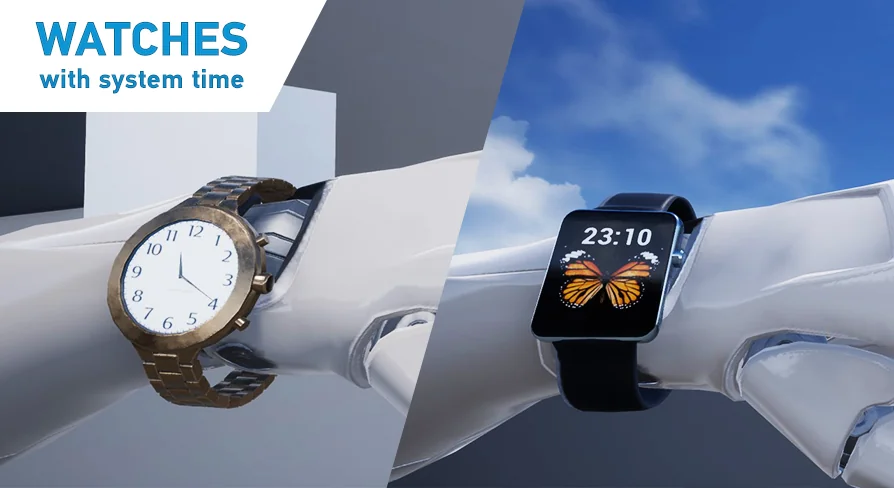
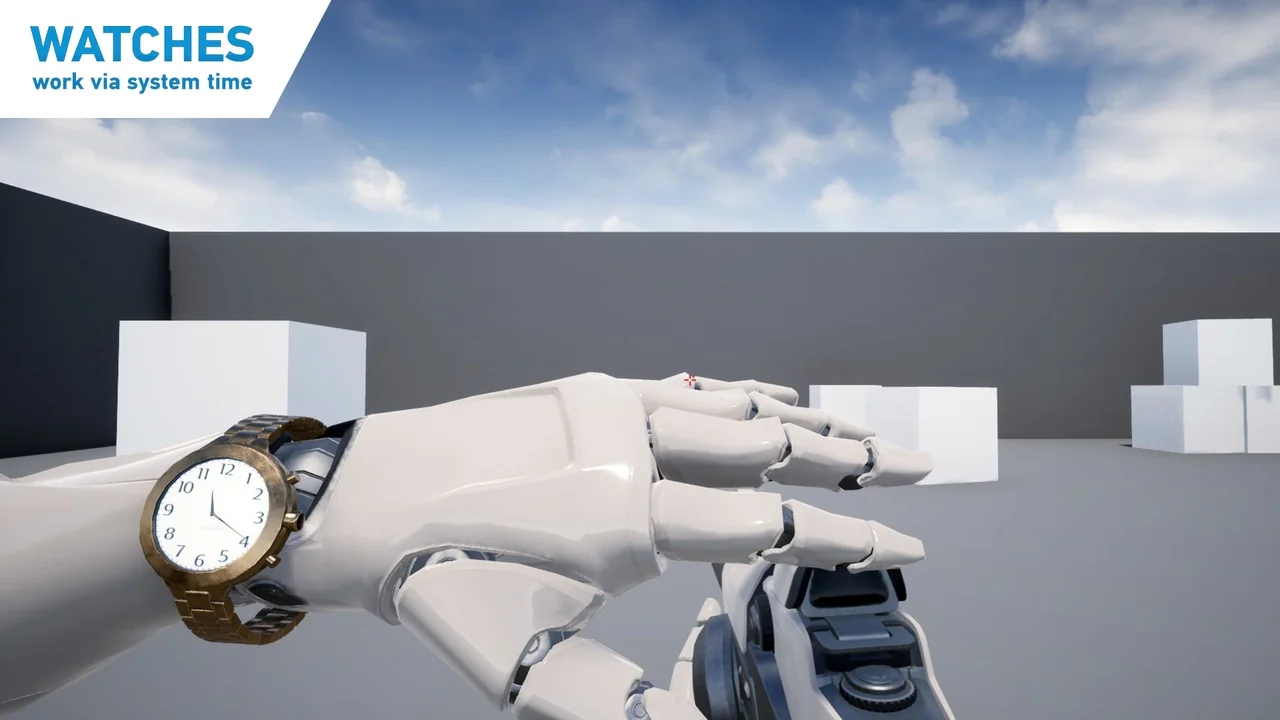
Bringing a watch into a real-time scene usually forces a choice between a static prop and bespoke clock logic written on top of it. This pack removes that decision. The watches display the actual current time while the scene is running, and the same models are intended for VR games as well as standard rendering. Seven watches are included — four classic, two smart, and one futuristic — with the asset carrying four tags: PBR, Lowpoly, Realistic, and Blueprint.
Watches That Keep Counting While the Scene Runs
The behaviour is the reason to reach for this set at all. A watch that shows real time means a wristwatch on a character, a clock on a desk, or a display inside a VR environment stays correct as the session continues, rather than freezing at whatever position the model was exported in. Any scene where time is visibly part of the dressing benefits from that without extra work on the model side.
The Blueprint tag is the one that speaks to behaviour rather than surface. Working clock logic of this kind is generally handled in the engine through Blueprint graphs rather than baked into an animation clip, which means the time display is a live element during play. When integrating, that is the piece worth inspecting first: check how the clock reads the current time, confirm it continues to update in the states your project actually uses, and verify it behaves correctly after the object is spawned, pooled, or re-enabled. A clock that updates in the editor viewport but stalls after a level transition is the classic failure mode for this kind of setup, and it is far easier to catch early than after a build is packaged.
VR adds a second consideration. Head-mounted rendering puts the models close to the viewer, and a watch is a small object that people instinctively bring near their face to read. The pack is explicitly intended for VR games, which makes the closeness of inspection relevant rather than theoretical.
Four Classic, Two Smart, One Futuristic
The seven models are not variations on one silhouette. Four are classic watches, two are smart watches, and one is futuristic. That spread covers the three contexts these objects usually appear in: period or formal settings for the classic four, contemporary scenes and modern characters for the smart pair, and science fiction or stylised near-future work for the single futuristic piece.
For populating a scene, the classic group being the largest means the set leans toward conventional watch design and gives enough variety to avoid repeating the same model across several characters. The two smart watches make a natural pairing beyond one token modern option. The futuristic watch stands alone, which is appropriate for a design that is meant to read as distinct from everything else in the collection.
The 4096px Maps Behind the PBR Materials
Every watch uses PBR materials, and the texture set is built out across four map types at 4096px:
Normal map — carries surface relief, so fine detail on the watch body reads without extra geometry.
Roughness map — controls how polished or matte each area appears, which is what separates a brushed surface from a glossy one.
Metallic map — defines which parts behave as metal.
Ambient occlusion map — darkens the crevices and contact areas where light would otherwise not reach.
Four separate maps beyond one packed or simplified texture means the material responds properly to changing lighting. In VR this matters more than in a flat render, because the viewer's head movement continuously changes the angle light hits the watch, and a metal-and-roughness setup is what keeps that response convincing. The 4096px resolution is generous for objects this small, and the normal map is doing the heavy lifting on surface detail — which ties directly into the Lowpoly tag.
Lowpoly Geometry, Realistic Surfaces, Mobile Budgets
The tag set reads PBR, Lowpoly, Realistic, and Blueprint, and those describe a deliberate combination rather than a contradiction. The geometry is low-poly; the appearance is realistic, carried by the 4096px normal, roughness, metallic, and AO maps. Detail that would otherwise cost polygons is moved into the texture set, which is exactly the trade that makes a realistic-looking object affordable in a real-time scene.
Mobile suitability is stated directly, and the low-poly geometry is the part of the equation that supports it. The 4096px textures are the part that needs attention on a mobile build — four maps at that resolution across seven watches is a meaningful amount of texture memory once a scene is populated, and the normal, roughness, metallic, and AO maps all count separately. Reducing resolution or sharing maps between watches is the obvious lever if a project's budget tightens, and the low-poly base means the geometry side has little left to give.
Adding the Set to a Scene
The practical path is short. Place the watch models where the scene needs them, keep the supplied PBR material setup intact so the normal, roughness, metallic, and AO maps stay wired to the correct slots, and confirm the real-time clock behaviour is running in the states the project actually reaches. VR and mobile both use the same assets, so a single set can serve a flat-screen build and a headset build without swapping models.
What the set asks of you is proportionate to what it gives. The models and materials arrive complete; the part that needs verification is the live clock — how it sources time, whether it survives spawning and scene transitions, and whether it continues updating under the conditions your project imposes. Sort that once per watch type and the collection is production-ready: four classic, two smart, and one futuristic watch, all reading the correct time, all sharing the same PBR and low-poly foundation.
 Electronics
 Electronics
 Electronics
 Electronics