"c14ff6bd758dadb1"{"id":"1000630","slug":"junkyard-environment-kit","title":"Junkyard Environment Kit","category":"Industrial","engine":"5.0+","assetVersion":"","engineVersion":"Engine Version: 5.0+","tag":"Industrial","accent":"blue","visual":"city","summary":"Industrial and cyberpunk-themed environment kit featuring junk piles, destroyed tanks, pillars, walls, cables, and props for building wasteland and military sce","platform":"Unreal Engine","publishedAt":"2026-07-21T14:31:59.635Z","updatedAt":"2026-07-21T14:31:59.635Z","sourceNotes":[],"fileContents":[],"compatibility":["Unreal Engine","Engine Version: 5.0+"],"featuredImage":{"alt":"Junkyard Environment Kit","src":"/wp-content/uploads/published/2026/07/3b47ad514381-16c63dcb-c863-4a0b-a146-7ba2f607c8fc-62c8d315a6.webp"},"hasDownloadLink":true,"downloads":2,"terms":[{"taxonomy":"category","slug":"industrial-environments","name":"Industrial"}],"galleryImages":[{"src":"/wp-content/uploads/published/2026/07/7e5f8dfd39d7-9438acbc-b621-4b97-ad98-cca5a55b4b93-ab8710a476.webp","alt":"Junkyard Environment Kit"},{"src":"/wp-content/uploads/published/2026/07/359186e8e76c-acf2c755-be58-45a4-a2d1-4db5c9983426-5c6ab26363.webp","alt":"Junkyard Environment Kit"},{"src":"/wp-content/uploads/published/2026/07/bac50353e8cb-d0562d27-c39a-458e-be82-84053bd5376b-128bf07524.webp","alt":"Junkyard Environment Kit"},{"src":"/wp-content/uploads/published/2026/07/139580cbaa5a-4370914a-aae3-413f-a74f-ec83df98aa48-364c14c46c.webp","alt":"Junkyard Environment Kit"},{"src":"/wp-content/uploads/published/2026/07/b6ddc74bce47-08a7fb23-3a5d-4505-a17d-5646344af56c-4d6e31b38d.webp","alt":"Junkyard Environment Kit"},{"src":"/wp-content/uploads/published/2026/07/6458b7b96f54-36374c47-1a26-44d7-8bce-8f8c6c797ceb-740e460a75.webp","alt":"Junkyard Environment Kit"},{"src":"/wp-content/uploads/published/2026/07/1b7065f4da52-c1f0bf8b-7169-4cac-8570-d05948059c02-c45891dcc8.webp","alt":"Junkyard Environment Kit"},{"src":"/wp-content/uploads/published/2026/07/7319b88e2c80-031a8610-ec75-4383-80cd-f5f702353349-02580d4dff.webp","alt":"Junkyard Environment Kit"},{"src":"/wp-content/uploads/published/2026/07/e72d690178e1-251cc8ec-6538-450f-8863-e03ce046f271-e8045b4a82.webp","alt":"Junkyard Environment Kit"},{"src":"/wp-content/uploads/published/2026/07/8bc0b423ebd9-dd563d21-99f0-4964-9769-2997eda2def4-10dcabc5d2.webp","alt":"Junkyard Environment Kit"}],"accessPanel":{"kind":"resource","title":"Download this resource","eyebrow":"Free Download","message":"Log in or create a free account to start your download.","fileName":"junkyard.7z","safetyNote":"Resources are manually reviewed before listing to improve quality and reduce obvious risks.","actionLabel":"Download Free","resourceType":"Resource archive"},"contentHtml":"\u003cp\u003eScenes shaped by decay, abandonment, and industrial collapse demand a specific kind of asset library. Wasteland outposts, cyberpunk slums, and post-conflict military zones all rely on convincing hard-surface geometry paired with organic clutter. The \u003cstrong\u003eJunkyard Environment Kit\u003c/strong\u003e Targets exactly this production territory, offering a blend of structural components and debris pieces suited to assembling environments with a worn, industrial character.\u003c/p\u003e \u003ch2\u003eBuilding Industrial Wasteland and Cyberpunk Environments\u003c/h2\u003e \u003cp\u003eThe kit is themed around two interconnected visual directions: junkyard aesthetics and cyberpunk. These themes share an affinity for industrial materials, exposed mechanics, and surfaces that have seen heavy use. Rather than providing pristine sci-fi panels or clean architectural elements, the package leans into hard-surface assets that read as worn, discarded, or repurposed.\u003c/p\u003e \u003cp\u003eThis dual theme opens up several scene-building possibilities. A Level designer constructing a cyberpunk district can use the industrial pieces to fill alleyways and peripheral zones with the kind of mechanical detritus that grounds a neon-lit setting in physical reality. A wasteland scene benefits from the same pieces arranged as barriers, makeshift shelters, or scattered wreckage across open terrain. The industrial and hard-surface focus means the assets work as structural layers rather than purely decorative scatter.\u003c/p\u003e \u003ch3\u003eAsset Composition and Modular Construction\u003c/h3\u003e \u003cp\u003eThe package is built as a mixture of industrial hard-surface assets. The inclusion of pillars, walls, and floors points toward a modular construction approach, where these elements can be combined and recombined to form larger structures. Walls and floors establish the foundational geometry of a space, while pillars provide vertical support elements that can define boundaries or segment open areas into navigable corridors.\u003c/p\u003e \u003cp\u003eModular level construction relies on pieces that fit together cleanly without obvious repetition. The tag set associated with the kit includes both \"Modular\" and \"Level,\" indicating that these assets are intended for environment assembly rather than standalone hero pieces. Designers can snap structural components together to form enclosed compounds, partially collapsed buildings, or open-air industrial sites.\u003c/p\u003e \u003ch2\u003eDestroyed Tanks and MilitaryArmor Pieces\u003c/h2\u003e \u003cp\u003eAmong the most distinctive inclusions in the kit are destroyed tanks. These serve as large-scale environmental anchors that immediately communicate a sense of past conflict or catastrophic failure. A wrecked tank placed in a scene functions as both a visual landmark and a gameplay obstacle. It draws the eye, establishes scale, and provides narrative context without requiring additional explanation.\u003c/p\u003e \u003cp\u003eThe presence of tank and armor elements is reinforced by tags including \"Army,\" \"Armor,\" \"Military,\" and \"Tank.\" These tags signal that the military aesthetic is not incidental but a core thematic thread. Destroyed military hardware pairs naturally with the junkyard concept, where decommissioned or abandoned equipment accumulates alongside other debris. For scenes depicting post-battle landscapes, fortified positions that have fallen into disrepair, or scrap yards processing military surplus, these pieces provide immediate visual context.\u003c/p\u003e \u003cp\u003eA destroyed tank hull surrounded by loose cables and junk piles can anchor an entire scene in seconds. The kit provides both the centerpiece and the surrounding clutter needed to make that centerpiece feel grounded.\u003c/p\u003e \u003ch3\u003eJunk Piles, Cables, and Organic Debris Layers\u003c/h3\u003e \u003cp\u003eStructural and military assets alone would leave an environment feeling sparse. The kit addresses this by including junk piles, cables, and a broader category of props. Junk piles introduce the organic scatter that makes a space feel lived-in or, more accurately, abandoned-in. They fill gaps between major structural pieces, break up sightlines, and create the irregular ground profiles that distinguish an actively used scrap yard from a clean digital set.\u003c/p\u003e \u003cp\u003eCables add a different function. They can drape between structures, coil on the ground, or hang from damaged fixtures, introducing visual lines that guide movement through a space. In a cyberpunk context, cables serve as evidence of improvised electrical infrastructure. In a junkyard, they read as salvaged material waiting to be processed. Either way, they add a layer of fine detail that breaks up the rigid geometry of walls and pillars.\u003c/p\u003e \u003cp\u003eThe general props category rounds out the package, providing the smaller objects that populate surfaces and fill the periphery of a scene. Combined with the junk piles and cables, these elements allow a designer to layer the environment from broad structural shapes down to ground-level detail.\u003c/p\u003e \u003ch2\u003ePBR Materials and Realistic Surface Treatment\u003c/h2\u003e \u003cp\u003eThe \"Pbr\" tag indicates that the assets use physically based rendering materials. This matters significantly for industrial and military themes, where surface wear, rust, grime, and metal oxidation carry most of the visual storytelling. PBR materials respond to lighting conditions in a physically consistent manner, meaning that corroded metal surfaces will catch and reflect light differently than painted armor plating or concrete floors.\u003c/p\u003e \u003cp\u003eFor environment artists working in engine pipelines that support PBR workflows, this ensures that the assets will integrate predictably with existing lighting setups. A junk pile rendered with proper PBR textures will interact naturally with dynamic lights, global illumination, and environmental reflections, reducing the need for custom material adjustments.\u003c/p\u003e \u003cp\u003eThe \"Realistic\" tag confirms the intended visual target. These are not stylized or hand-painted assets but pieces designed to hold up under close inspection within a realistic rendering context.\u003c/p\u003e \u003ch2\u003eWhere the Kit Fits in a Production Pipeline\u003c/h2\u003e \u003cp\u003eThe combination of industrial structure, military wreckage, and organic debris makes this kit particularly suited for several scene types. Post-apocalyptic and wasteland environments are the most direct match, as they require exactly the kind of layered decay the package provides. Cyberpunk settings that need industrial underpasses, maintenance tunnels, or slum districts can draw from the structural pieces and cable props to build out these peripheral spaces.\u003c/p\u003e \u003cp\u003eWar-themed levels benefit from the destroyed tanks and military armor elements, which can be arranged to suggest battle aftermath or abandoned defensive positions. General industrial environments, such as factories, storage yards, or processing facilities, can use the pillars, walls, and floors to establish the architectural shell before adding junk piles and cables to introduce age and disuse.\u003c/p\u003e \u003ch3\u003eWho Will Get the Most Use From This Package\u003c/h3\u003e \u003cp\u003eLevel designers and environment artists working on scenes that require industrial decay, military abandonment, or cyberpunk grime will find the most direct value in this kit. The modular structural pieces support rapid prototyping of space layouts, while the debris and prop layers allow for detailed scene polish without needing to source individual scatter assets from multiple packages.\u003c/p\u003e \u003cp\u003eTeams building wasteland or post-conflict narrative content can use the destroyed tank and armor pieces as both environmental anchors and storytelling props. Solo developers and smaller studios benefit from the variety of asset types within a single themed package, as it reduces the need to assemble a compatible asset library from unrelated sources. The PBR material workflow ensures that the pieces will integrate cleanly into modern engine rendering pipelines without additional material authoring overhead.\u003c/p\u003e\n\n\u003ch2\u003eRelated Resources Worth Checking\u003c/h2\u003e\n\u003cul\u003e\n\u003cli\u003e\u003ca href=\"https://3dcghub.com/cyber-scrapyard-environment-kit/\" title=\"Cyber Scrapyard Environment Kit\"\u003eCyber Scrapyard Environment Kit\u003c/a\u003e\u003c/li\u003e\n\u003cli\u003e\u003ca href=\"https://3dcghub.com/easy-urban-concrete-kit/\" title=\"Easy Urban Concrete Kit\"\u003eEasy Urban Concrete Kit\u003c/a\u003e\u003c/li\u003e\n\u003cli\u003e\u003ca href=\"https://3dcghub.com/cyberpunk-subway-train-kit/\" title=\"Cyberpunk Subway Train Kit\"\u003eCyberpunk Subway Train Kit\u003c/a\u003e\u003c/li\u003e\n\u003cli\u003e\u003ca href=\"https://3dcghub.com/modular-brutalist-levelscapes/\" title=\"Modular Brutalist Levelscapes\"\u003eModular Brutalist Levelscapes\u003c/a\u003e\u003c/li\u003e\n\u003cli\u003e\u003ca href=\"https://3dcghub.com/junkyard-environment-14-assets/\" title=\"Junkyard Environment / 14 Assets\"\u003eJunkyard Environment / 14 Assets\u003c/a\u003e\u003c/li\u003e\n\u003c/ul\u003e","contentTextLength":7812,"navigation":{"current":1230,"total":3719,"previous":{"id":"1000631","slug":"kick-up-fx","title":"Kick Up FX","category":"Variety","platform":"Unreal Engine","updatedAt":"2026-07-21T14:39:46.079Z"},"next":{"id":"1000629","slug":"jobsite-vol-12-office-nanite-and-low-poly","title":"Jobsite VOL.12 - Office (Nanite \u0026 Low Poly)","category":"Industrial","platform":"Unreal Engine","updatedAt":"2026-07-21T14:14:28.685Z"}},"relatedResources":[{"id":"8569","slug":"cyber-scrapyard-environment-kit","title":"Cyber Scrapyard Environment Kit","category":"Industrial","engine":"5.1+","assetVersion":"Engine version: 5.1+","engineVersion":"5.1","tag":"Industrial","accent":"blue","visual":"city","summary":"Transform your digital projects with a versatile collection of industrial and sci-fi assets. This kit provides everything needed to build realistic junkyards and cyberpunk landscapes.","platform":"Unreal Engine","publishedAt":"2026-02-23T17:53:11.000Z","updatedAt":"2026-04-19T15:55:24.000Z","sourceNotes":[],"fileContents":[],"compatibility":["Unreal Engine","Engine version: 5.1+"],"featuredImage":{"alt":"Cyber Scrapyard Environment Kit","src":"https://3dcghub.com/wp-content/uploads/2026/02/c8395b77-a014-44fc-a1ea-0c16b9c884ee.webp"},"hasDownloadLink":true,"downloads":0},{"id":"1000593","slug":"easy-urban-concrete-kit","title":"Easy Urban Concrete Kit","category":"Industrial","engine":"5.2+","assetVersion":"","engineVersion":"Engine Version: 5.2+","tag":"Industrial","accent":"blue","visual":"mech","summary":"Modular concrete asset pack with scalable meshes, vertex paintable blended materials, and pre-assembled blueprints for urban level creation and dressing.","platform":"Unreal Engine","publishedAt":"2026-07-17T00:49:42.939Z","updatedAt":"2026-07-17T00:49:42.939Z","sourceNotes":[],"fileContents":[],"compatibility":["Unreal Engine","Engine Version: 5.2+"],"featuredImage":{"alt":"Easy Urban Concrete Kit","src":"/wp-content/uploads/published/2026/07/4f977ed20102-73bb9c6e-eeed-4d07-a6ab-3e2bcd856c76-b64b387c95.webp"},"hasDownloadLink":true,"downloads":1},{"id":"1000585","slug":"cyberpunk-subway-train-kit","title":"Cyberpunk Subway Train Kit","category":"Industrial","engine":"5.0+","assetVersion":"","engineVersion":"Engine Version: 5.0+","tag":"Industrial","accent":"blue","visual":"mech","summary":"Modular cyberpunk subway train construction kit with custom materials, decals, and a demo map featuring a train interior with a moving cityscape backdrop.","platform":"Unreal Engine","publishedAt":"2026-07-17T00:03:49.854Z","updatedAt":"2026-07-17T00:03:49.854Z","sourceNotes":[],"fileContents":[],"compatibility":["Unreal Engine","Engine Version: 5.0+"],"featuredImage":{"alt":"Cyberpunk Subway Train Kit","src":"/wp-content/uploads/published/2026/07/9afb4be55c5c-0286140f-e8ac-40f9-a11b-76179a90cfba-c44c78e080.webp"},"hasDownloadLink":true,"downloads":0}]}
Industrial
Junkyard Environment Kit
Industrial and cyberpunk-themed environment kit featuring junk piles, destroyed tanks, pillars, walls, cables, and props for building wasteland and military sce
Scenes shaped by decay, abandonment, and industrial collapse demand a specific kind of asset library. Wasteland outposts, cyberpunk slums, and post-conflict military zones all rely on convincing hard-surface geometry paired with organic clutter. The Junkyard Environment Kit Targets exactly this production territory, offering a blend of structural components and debris pieces suited to assembling environments with a worn, industrial character.
Building Industrial Wasteland and Cyberpunk Environments
The kit is themed around two interconnected visual directions: junkyard aesthetics and cyberpunk. These themes share an affinity for industrial materials, exposed mechanics, and surfaces that have seen heavy use. Rather than providing pristine sci-fi panels or clean architectural elements, the package leans into hard-surface assets that read as worn, discarded, or repurposed.
This dual theme opens up several scene-building possibilities. A Level designer constructing a cyberpunk district can use the industrial pieces to fill alleyways and peripheral zones with the kind of mechanical detritus that grounds a neon-lit setting in physical reality. A wasteland scene benefits from the same pieces arranged as barriers, makeshift shelters, or scattered wreckage across open terrain. The industrial and hard-surface focus means the assets work as structural layers rather than purely decorative scatter.
Asset Composition and Modular Construction
The package is built as a mixture of industrial hard-surface assets. The inclusion of pillars, walls, and floors points toward a modular construction approach, where these elements can be combined and recombined to form larger structures. Walls and floors establish the foundational geometry of a space, while pillars provide vertical support elements that can define boundaries or segment open areas into navigable corridors.
Modular level construction relies on pieces that fit together cleanly without obvious repetition. The tag set associated with the kit includes both "Modular" and "Level," indicating that these assets are intended for environment assembly rather than standalone hero pieces. Designers can snap structural components together to form enclosed compounds, partially collapsed buildings, or open-air industrial sites.
Destroyed Tanks and MilitaryArmor Pieces
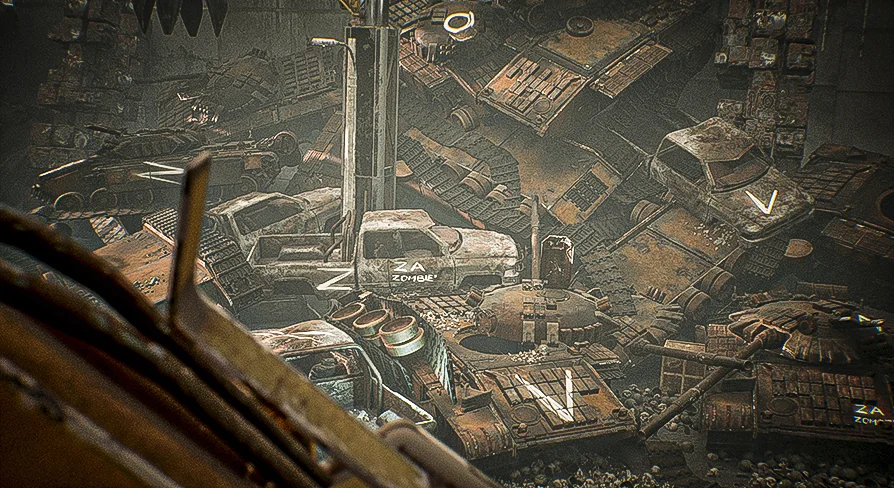
Among the most distinctive inclusions in the kit are destroyed tanks. These serve as large-scale environmental anchors that immediately communicate a sense of past conflict or catastrophic failure. A wrecked tank placed in a scene functions as both a visual landmark and a gameplay obstacle. It draws the eye, establishes scale, and provides narrative context without requiring additional explanation.
The presence of tank and armor elements is reinforced by tags including "Army," "Armor," "Military," and "Tank." These tags signal that the military aesthetic is not incidental but a core thematic thread. Destroyed military hardware pairs naturally with the junkyard concept, where decommissioned or abandoned equipment accumulates alongside other debris. For scenes depicting post-battle landscapes, fortified positions that have fallen into disrepair, or scrap yards processing military surplus, these pieces provide immediate visual context.
A destroyed tank hull surrounded by loose cables and junk piles can anchor an entire scene in seconds. The kit provides both the centerpiece and the surrounding clutter needed to make that centerpiece feel grounded.
Junk Piles, Cables, and Organic Debris Layers
Structural and military assets alone would leave an environment feeling sparse. The kit addresses this by including junk piles, cables, and a broader category of props. Junk piles introduce the organic scatter that makes a space feel lived-in or, more accurately, abandoned-in. They fill gaps between major structural pieces, break up sightlines, and create the irregular ground profiles that distinguish an actively used scrap yard from a clean digital set.
Cables add a different function. They can drape between structures, coil on the ground, or hang from damaged fixtures, introducing visual lines that guide movement through a space. In a cyberpunk context, cables serve as evidence of improvised electrical infrastructure. In a junkyard, they read as salvaged material waiting to be processed. Either way, they add a layer of fine detail that breaks up the rigid geometry of walls and pillars.
The general props category rounds out the package, providing the smaller objects that populate surfaces and fill the periphery of a scene. Combined with the junk piles and cables, these elements allow a designer to layer the environment from broad structural shapes down to ground-level detail.
PBR Materials and Realistic Surface Treatment
The "Pbr" tag indicates that the assets use physically based rendering materials. This matters significantly for industrial and military themes, where surface wear, rust, grime, and metal oxidation carry most of the visual storytelling. PBR materials respond to lighting conditions in a physically consistent manner, meaning that corroded metal surfaces will catch and reflect light differently than painted armor plating or concrete floors.
For environment artists working in engine pipelines that support PBR workflows, this ensures that the assets will integrate predictably with existing lighting setups. A junk pile rendered with proper PBR textures will interact naturally with dynamic lights, global illumination, and environmental reflections, reducing the need for custom material adjustments.
The "Realistic" tag confirms the intended visual target. These are not stylized or hand-painted assets but pieces designed to hold up under close inspection within a realistic rendering context.
Where the Kit Fits in a Production Pipeline
The combination of industrial structure, military wreckage, and organic debris makes this kit particularly suited for several scene types. Post-apocalyptic and wasteland environments are the most direct match, as they require exactly the kind of layered decay the package provides. Cyberpunk settings that need industrial underpasses, maintenance tunnels, or slum districts can draw from the structural pieces and cable props to build out these peripheral spaces.
War-themed levels benefit from the destroyed tanks and military armor elements, which can be arranged to suggest battle aftermath or abandoned defensive positions. General industrial environments, such as factories, storage yards, or processing facilities, can use the pillars, walls, and floors to establish the architectural shell before adding junk piles and cables to introduce age and disuse.
Who Will Get the Most Use From This Package
Level designers and environment artists working on scenes that require industrial decay, military abandonment, or cyberpunk grime will find the most direct value in this kit. The modular structural pieces support rapid prototyping of space layouts, while the debris and prop layers allow for detailed scene polish without needing to source individual scatter assets from multiple packages.
Teams building wasteland or post-conflict narrative content can use the destroyed tank and armor pieces as both environmental anchors and storytelling props. Solo developers and smaller studios benefit from the variety of asset types within a single themed package, as it reduces the need to assemble a compatible asset library from unrelated sources. The PBR material workflow ensures that the pieces will integrate cleanly into modern engine rendering pipelines without additional material authoring overhead.
 Industrial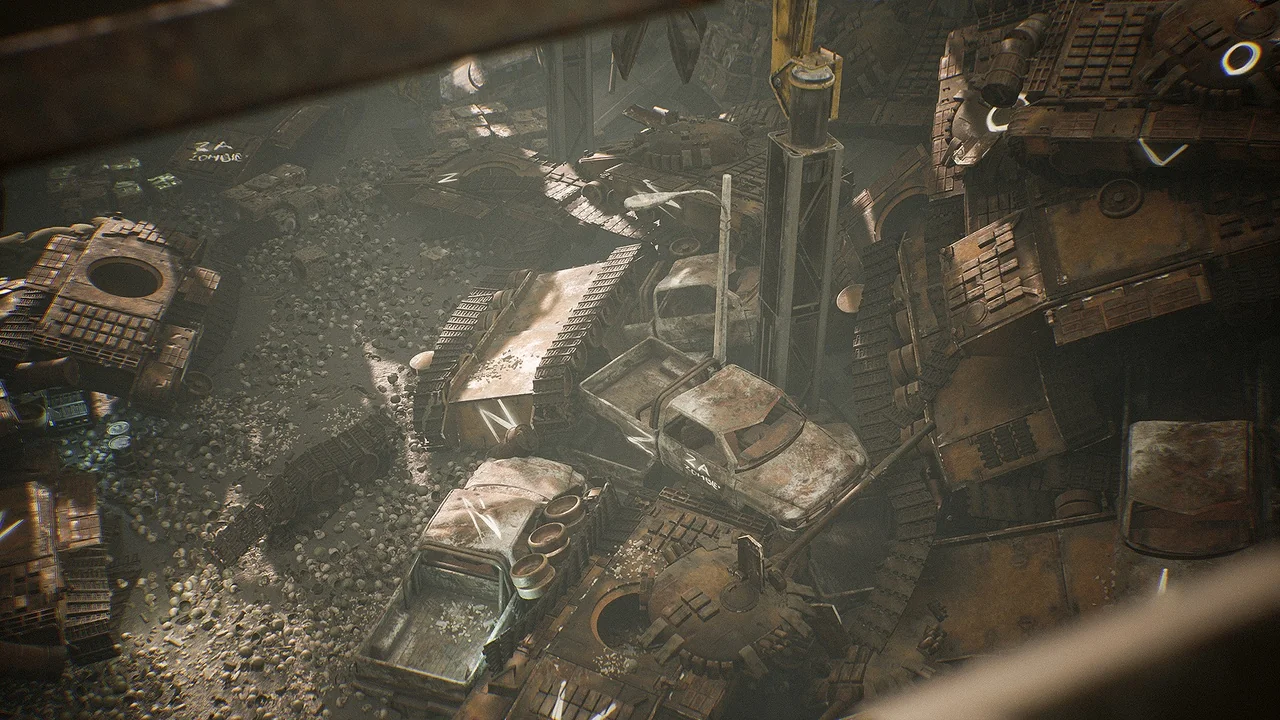
 Industrial
 Industrial
 Industrial