"c14ff6bd758dadb1"{"id":"1000593","slug":"easy-urban-concrete-kit","title":"Easy Urban Concrete Kit","category":"Industrial","engine":"5.2+","assetVersion":"","engineVersion":"Engine Version: 5.2+","tag":"Industrial","accent":"blue","visual":"mech","summary":"Modular concrete asset pack with scalable meshes, vertex paintable blended materials, and pre-assembled blueprints for urban level creation and dressing.","platform":"Unreal Engine","publishedAt":"2026-07-17T00:49:42.939Z","updatedAt":"2026-07-17T00:49:42.939Z","sourceNotes":[],"fileContents":[],"compatibility":["Unreal Engine","Engine Version: 5.2+"],"featuredImage":{"alt":"Easy Urban Concrete Kit","src":"/wp-content/uploads/published/2026/07/4f977ed20102-73bb9c6e-eeed-4d07-a6ab-3e2bcd856c76-b64b387c95.webp"},"hasDownloadLink":true,"downloads":1,"terms":[{"taxonomy":"category","slug":"industrial-environments","name":"Industrial"}],"galleryImages":[{"src":"/wp-content/uploads/published/2026/07/7178813d4f9e-a7a2bf2c-dbbd-489b-b912-ddcb26a74f2f-7357cdafa9.webp","alt":"Easy Urban Concrete Kit"},{"src":"/wp-content/uploads/published/2026/07/b20b5bcb4a83-7fd552af-f8fc-4779-bb5b-a8402fc630dd-e06c8e2b22.webp","alt":"Easy Urban Concrete Kit"},{"src":"/wp-content/uploads/published/2026/07/76238937aa35-e34a39e9-9b83-4842-a143-30d157c30684-9ab6ef468a.webp","alt":"Easy Urban Concrete Kit"},{"src":"/wp-content/uploads/published/2026/07/271db8cc6ffc-7f05ce8e-a013-4988-a0c6-305e93334375-e6a0cf5fd2.webp","alt":"Easy Urban Concrete Kit"},{"src":"/wp-content/uploads/published/2026/07/a460c8c1f1a7-673ce347-3d69-49f3-887c-af5284287e37-78b20bf07d.webp","alt":"Easy Urban Concrete Kit"},{"src":"/wp-content/uploads/published/2026/07/941bac275539-8ea44e26-d2ba-43a1-a244-f7c417163aed-cc842821b5.webp","alt":"Easy Urban Concrete Kit"},{"src":"/wp-content/uploads/published/2026/07/87b41c06f9b2-9791d36a-b4ab-4b62-873a-5116a49dcb22-a5950ed1de.webp","alt":"Easy Urban Concrete Kit"},{"src":"/wp-content/uploads/published/2026/07/9ce5f97137c7-9083c4b4-6b9f-48c7-8a25-52276653a237-90abb46c49.webp","alt":"Easy Urban Concrete Kit"},{"src":"/wp-content/uploads/published/2026/07/717b8feccfad-ef2a7134-f5d7-435e-89f1-02f7144e6049-1104406a5e.webp","alt":"Easy Urban Concrete Kit"},{"src":"/wp-content/uploads/published/2026/07/1132ac79eff9-98833933-5ddc-443e-8763-69686c6962c4-41dc75d174.webp","alt":"Easy Urban Concrete Kit"}],"accessPanel":{"kind":"resource","title":"Download this resource","eyebrow":"Free Download","message":"Log in or create a free account to start your download.","fileName":"Content.7z","safetyNote":"Resources are manually reviewed before listing to improve quality and reduce obvious risks.","actionLabel":"Download Free","resourceType":"Resource archive"},"contentHtml":"\u003cp\u003eSetting up urban environments with the Easy Urban Concrete Kit begins with its modular foundation. The collection centers on primitives — essential geometric forms that serve as the building blocks for level creation. Rather than providing highly detailed, finished architectural meshes, the approach here is deliberately flexible. Each mesh can be scaled easily without texel density loss, provided the scaling stays within normal ranges. This means a single wall segment or floor block can be stretched to fill different spatial requirements without the surface texture stretching or breaking visually.\u003c/p\u003e \u003ch2\u003eScalable Meshes and Texel Density Preservation\u003c/h2\u003e \u003cp\u003eThe technical backbone of the kit is its reliance on baked normal maps layered beneath tileable concrete textures. Instead of packing unique, high-resolution texture maps into every individual mesh, the system separates surface detail into two components. The baked normal map carries the geometric relief and form-specific detailing. On top of that sits a tileable concrete texture that repeats seamlessly across the surface as the mesh scales.\u003c/p\u003e \u003cp\u003eThis combination is what allows the scalability claim to hold. Because the top layer is tileable, enlarging a mesh simply means the concrete texture covers more repetitions of the same pattern. The texel density — the ratio of texture pixels to surface area — remains consistent because the texture tiles rather than stretches. This gives level designers the freedom to resize pieces on the fly to fit gaps, extend platforms, or adjust room proportions without worrying about the visual degradation that normally accompanies non-uniform scaling of uniquely textured assets.\u003c/p\u003e \u003cp\u003eThe restriction to normal scale is an important qualifier. Extreme scaling beyond expected ranges would eventually introduce issues, either with the baked normal map detail not matching the new proportions or with the tileable pattern becoming too obviously repetitive at very large sizes. Within typical architectural and environmental scaling, however, the system holds.\u003c/p\u003e \u003ch2\u003eVertex Painting and Concrete Material Blending\u003c/h2\u003e \u003cp\u003eBeyond static texturing, the kit supports vertex painting with a blending concrete material. This is where the visual character of each asset can be customized on a per-mesh basis. Vertex painting allows the designer to paint directly on the mesh surface in the viewport, blending between different material appearances across the same asset.\u003c/p\u003e \u003cp\u003eThe specific variation described runs from bright dried concrete to greenish stains suited for dirty corners. This means a single wall piece could appear freshly poured and clean on one section while transitioning into mossy, stained, or weathered concrete in another area. The greenish stain option implies organic growth or long-term moisture exposure, making it suitable for areas meant to look neglected, damp, or aged.\u003c/p\u003e \u003cp\u003eThis blending system gives each asset the potential to look distinct even when drawn from the same modular set. Two identical wall blocks placed in different areas of a level can read as completely different materials — one clean and well-maintained, the other grimy and forgotten — simply through vertex painting. This addresses a common problem with modular kits where repetition becomes visually obvious because every instance of a mesh looks identical.\u003c/p\u003e \u003ch2\u003ePre-Assembled Blueprints for Level Dressing\u003c/h2\u003e \u003cp\u003eFor faster assembly, the pack includes pre-assembled blueprints. These are combinations of the static meshes already arranged into configurations that demonstrate how the blending material works across multiple pieces. Rather than starting from individual primitives every time, designers can pull from these pre-built groupings to populate areas quickly.\u003c/p\u003e \u003cp\u003eThe blueprints serve a dual purpose. They function as ready-to-use structural elements for level dressing, and they also act as reference examples showing how the vertex-painted blending looks in practice. A designer unfamiliar with how to set up the material blends can examine these pre-assembled pieces to understand the workflow before applying vertex painting to their own custom arrangements.\u003c/p\u003e \u003cp\u003eThe variety of combinations included means the blueprints cover different architectural and environmental needs. These pre-assembled options reduce the time spent manually positioning individual meshes and tuning material blends from scratch, which is particularly useful during the early blocking-out phase or when large areas need to be dressed quickly with coherent-looking results.\u003c/p\u003e \u003ch2\u003eUrban Level Project Applications\u003c/h2\u003e \u003cp\u003eThe tagging attached to the kit points to specific project types where it fits naturally. The primary tags — Modular, Platformer, Level, Concrete, Urban, Runner — indicate a package oriented toward interactive environments rather than static visualization. Platformer and Runner both refer to game genres that rely heavily on traversible geometric spaces, often requiring modular building blocks that can be arranged into paths, obstacles, and architectural backdrops.\u003c/p\u003e \u003cp\u003eUrban level creation benefits from the concrete theme directly. The material workflow supports the visual range expected in city environments: clean structural concrete for maintained areas and stained, weathered concrete for neglected zones. Loosely speaking, this covers the visual spectrum from constructed infrastructure to abandoned or forgotten urban spaces — though the exact aesthetic direction depends on how the vertex painting is applied by the user.\u003c/p\u003e \u003cp\u003ePlatformer and Runner level design in particular often requires rapid iteration. Level layouts change frequently during development as jumps, timing windows, and difficulty curves are tuned. The scalability of the meshes supports this workflow because geometry can be adjusted spatially without re-texturing. If a platform needs to be longer to make a jump feasible, the mesh can be stretched rather than replaced. If a gap needs to be narrower, the mesh can be scaled down. The texture adapts through tiling rather than requiring new UV mapping or different texture assets.\u003c/p\u003e \u003ch2\u003eEngine Compatibility and Showcase References\u003c/h2\u003e \u003cp\u003eThe kit is compatible with Unreal Engine versions 4.24 through 4.27 and 5.0 through 5.6. This covers a substantial span of the engine's recent history, spanning multiple major versions. The 4.24–4.27 range covers late-generation Unreal Engine 4 releases, while the 5.0–5.6 range covers the Unreal Engine 5 cycle. Projects built on any of these versions can integrate the asset package without requiring manual upgrades or version conversions.\u003c/p\u003e \u003cp\u003eThree video showcases accompany the package, each demonstrating different aspects of the kit in use. The first, titled Deep House Walkthrough, presents an interior environment showing how the concrete assets come together in an enclosed architectural space. The second, Chill Flythrough, offers an aerial or camera-driven pass through an environment, providing a broader view of the asset groupings and textural variety. The third, Level Dressing, focuses on the practical assembly process — likely showing the placement and arrangement of meshes and blueprints to build out a playable or navigable space.\u003c/p\u003e \u003ch2\u003eWho Benefits from the Easy Urban Concrete Kit\u003c/h2\u003e \u003cp\u003eLevel designers working on urban-themed projects in Unreal Engine gain the most direct value. The vertex painting system appeals to those who want per-asset visual control without creating custom materials for every variation. Small teams and solo developers benefit from the pre-assembled blueprints because they reduce the time spent on manual mesh placement and material tuning.\u003c/p\u003e \u003cp\u003eProjects that require rapid prototyping of platformer or runner levels are a strong match. The scalability of the meshes supports iterative level design where geometry changes frequently. The concrete aesthetic, combined with the ability to blend between clean and stained surfaces, suits both maintained urban environments and derelict or abandoned settings within the same asset package. Teams already invested in the 4.24–5.6 engine range can drop the assets directly into existing workflows without compatibility friction.\u003c/p\u003e\n\n\u003ch2\u003eMore From The Same Workflow\u003c/h2\u003e\n\u003cul\u003e\n\u003cli\u003e\u003ca href=\"https://3dcghub.com/cyberpunk-subway-train-kit/\" title=\"Cyberpunk Subway Train Kit\"\u003eCyberpunk Subway Train Kit\u003c/a\u003e\u003c/li\u003e\n\u003cli\u003e\u003ca href=\"https://3dcghub.com/concrete-material-and-texture-pack/\" title=\"Concrete Material And Texture Pack\"\u003eConcrete Material And Texture Pack\u003c/a\u003e\u003c/li\u003e\n\u003cli\u003e\u003ca href=\"https://3dcghub.com/modular-sewers-tunnels-modular-sewers-modular-tunnels-modular-corridor/\" title=\"Modular Sewers \u0026amp; Tunnels (Modular Sewers, Modular Tunnels, Modular Corridor)\"\u003eModular Sewers \u0026amp; Tunnels (Modular Sewers, Modular Tunnels, Modular Corridor)\u003c/a\u003e\u003c/li\u003e\n\u003cli\u003e\u003ca href=\"https://3dcghub.com/modular-brutalist-levelscapes/\" title=\"Modular Brutalist Levelscapes\"\u003eModular Brutalist Levelscapes\u003c/a\u003e\u003c/li\u003e\n\u003cli\u003e\u003ca href=\"https://3dcghub.com/cyber-scrapyard-environment-kit/\" title=\"Cyber Scrapyard Environment Kit\"\u003eCyber Scrapyard Environment Kit\u003c/a\u003e\u003c/li\u003e\n\u003c/ul\u003e","contentTextLength":8321,"navigation":{"current":1269,"total":3719,"previous":{"id":"1000594","slug":"elemental-horses-pack","title":"Elemental Horses Pack","category":"Mammals","platform":"Unreal Engine","updatedAt":"2026-07-17T01:17:52.961Z"},"next":{"id":"1000592","slug":"easy-toolbag","title":"Easy Toolbag","category":"Widgets \u0026 Controls","platform":"Unreal Engine","updatedAt":"2026-07-17T00:43:08.420Z"}},"relatedResources":[{"id":"1000585","slug":"cyberpunk-subway-train-kit","title":"Cyberpunk Subway Train Kit","category":"Industrial","engine":"5.0+","assetVersion":"","engineVersion":"Engine Version: 5.0+","tag":"Industrial","accent":"blue","visual":"mech","summary":"Modular cyberpunk subway train construction kit with custom materials, decals, and a demo map featuring a train interior with a moving cityscape backdrop.","platform":"Unreal Engine","publishedAt":"2026-07-17T00:03:49.854Z","updatedAt":"2026-07-17T00:03:49.854Z","sourceNotes":[],"fileContents":[],"compatibility":["Unreal Engine","Engine Version: 5.0+"],"featuredImage":{"alt":"Cyberpunk Subway Train Kit","src":"/wp-content/uploads/published/2026/07/9afb4be55c5c-0286140f-e8ac-40f9-a11b-76179a90cfba-c44c78e080.webp"},"hasDownloadLink":true,"downloads":0},{"id":"12310","slug":"concrete-material-and-texture-pack","title":"Concrete Material And Texture Pack","category":"Building \u0026 Human-made","engine":"5.2+","assetVersion":"Engine version: 5.2+","engineVersion":"5.2","tag":"Building","accent":"blue","visual":"luts","summary":"Discover a comprehensive collection of 120 PBR textures across 20 distinct materials, featuring 4K resolution and seamless tiling for realistic urban environments.","platform":"Unreal Engine","publishedAt":"2026-03-07T12:14:14.000Z","updatedAt":"2026-04-19T15:47:59.000Z","sourceNotes":[],"fileContents":[],"compatibility":["Unreal Engine","Engine version: 5.2+"],"featuredImage":{"alt":"Concrete Material And Texture Pack","src":"https://3dcghub.com/wp-content/uploads/2026/03/0319bf4b-a931-4249-9365-6b5ba722265f.webp"},"hasDownloadLink":true,"downloads":0},{"id":"8659","slug":"modular-sewers-tunnels-modular-sewers-modular-tunnels-modular-corridor","title":"Modular Sewers \u0026 Tunnels (Modular Sewers, Modular Tunnels, Modular Corridor)","category":"Industrial","engine":"5.3+","assetVersion":"Engine version: 5.3+","engineVersion":"5.3","tag":"Industrial","accent":"blue","visual":"city","summary":"Build hyper-realistic underground environments with this comprehensive modular kit. Perfect for horror and survival games, it features optimized assets, smart materials, and advanced lighting support.","platform":"Unreal Engine","publishedAt":"2026-02-23T18:26:36.000Z","updatedAt":"2026-04-19T15:55:22.000Z","sourceNotes":[],"fileContents":[],"compatibility":["Unreal Engine","Engine version: 5.3+"],"featuredImage":{"alt":"Modular Sewers \u0026 Tunnels (Modular Sewers, Modular Tunnels, Modular Corridor)","src":"https://3dcghub.com/wp-content/uploads/2026/02/05e02c66-3095-4ca9-bfef-3b5e033f583b.webp"},"hasDownloadLink":true,"downloads":2}]}
Industrial
Easy Urban Concrete Kit
Modular concrete asset pack with scalable meshes, vertex paintable blended materials, and pre-assembled blueprints for urban level creation and dressing.
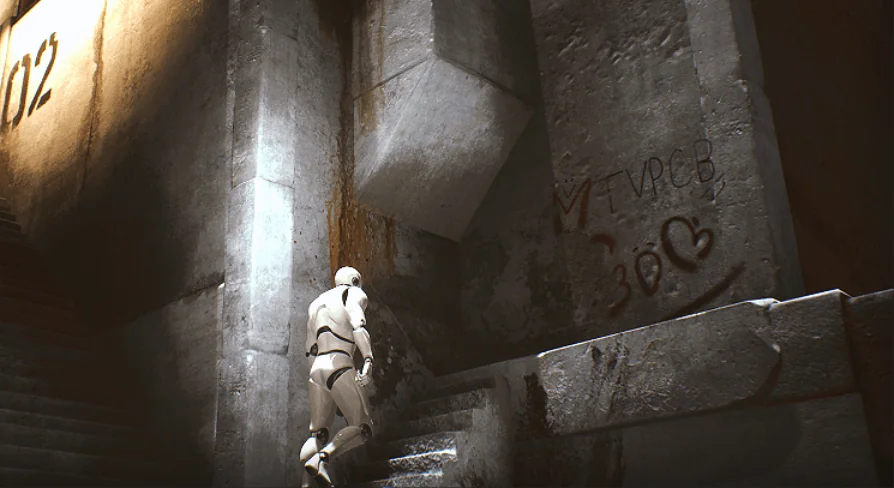
Setting up urban environments with the Easy Urban Concrete Kit begins with its modular foundation. The collection centers on primitives — essential geometric forms that serve as the building blocks for level creation. Rather than providing highly detailed, finished architectural meshes, the approach here is deliberately flexible. Each mesh can be scaled easily without texel density loss, provided the scaling stays within normal ranges. This means a single wall segment or floor block can be stretched to fill different spatial requirements without the surface texture stretching or breaking visually.
Scalable Meshes and Texel Density Preservation
The technical backbone of the kit is its reliance on baked normal maps layered beneath tileable concrete textures. Instead of packing unique, high-resolution texture maps into every individual mesh, the system separates surface detail into two components. The baked normal map carries the geometric relief and form-specific detailing. On top of that sits a tileable concrete texture that repeats seamlessly across the surface as the mesh scales.
This combination is what allows the scalability claim to hold. Because the top layer is tileable, enlarging a mesh simply means the concrete texture covers more repetitions of the same pattern. The texel density — the ratio of texture pixels to surface area — remains consistent because the texture tiles rather than stretches. This gives level designers the freedom to resize pieces on the fly to fit gaps, extend platforms, or adjust room proportions without worrying about the visual degradation that normally accompanies non-uniform scaling of uniquely textured assets.
The restriction to normal scale is an important qualifier. Extreme scaling beyond expected ranges would eventually introduce issues, either with the baked normal map detail not matching the new proportions or with the tileable pattern becoming too obviously repetitive at very large sizes. Within typical architectural and environmental scaling, however, the system holds.
Vertex Painting and Concrete Material Blending
Beyond static texturing, the kit supports vertex painting with a blending concrete material. This is where the visual character of each asset can be customized on a per-mesh basis. Vertex painting allows the designer to paint directly on the mesh surface in the viewport, blending between different material appearances across the same asset.
The specific variation described runs from bright dried concrete to greenish stains suited for dirty corners. This means a single wall piece could appear freshly poured and clean on one section while transitioning into mossy, stained, or weathered concrete in another area. The greenish stain option implies organic growth or long-term moisture exposure, making it suitable for areas meant to look neglected, damp, or aged.
This blending system gives each asset the potential to look distinct even when drawn from the same modular set. Two identical wall blocks placed in different areas of a level can read as completely different materials — one clean and well-maintained, the other grimy and forgotten — simply through vertex painting. This addresses a common problem with modular kits where repetition becomes visually obvious because every instance of a mesh looks identical.
Pre-Assembled Blueprints for Level Dressing
For faster assembly, the pack includes pre-assembled blueprints. These are combinations of the static meshes already arranged into configurations that demonstrate how the blending material works across multiple pieces. Rather than starting from individual primitives every time, designers can pull from these pre-built groupings to populate areas quickly.
The blueprints serve a dual purpose. They function as ready-to-use structural elements for level dressing, and they also act as reference examples showing how the vertex-painted blending looks in practice. A designer unfamiliar with how to set up the material blends can examine these pre-assembled pieces to understand the workflow before applying vertex painting to their own custom arrangements.
The variety of combinations included means the blueprints cover different architectural and environmental needs. These pre-assembled options reduce the time spent manually positioning individual meshes and tuning material blends from scratch, which is particularly useful during the early blocking-out phase or when large areas need to be dressed quickly with coherent-looking results.
Urban Level Project Applications
The tagging attached to the kit points to specific project types where it fits naturally. The primary tags — Modular, Platformer, Level, Concrete, Urban, Runner — indicate a package oriented toward interactive environments rather than static visualization. Platformer and Runner both refer to game genres that rely heavily on traversible geometric spaces, often requiring modular building blocks that can be arranged into paths, obstacles, and architectural backdrops.
Urban level creation benefits from the concrete theme directly. The material workflow supports the visual range expected in city environments: clean structural concrete for maintained areas and stained, weathered concrete for neglected zones. Loosely speaking, this covers the visual spectrum from constructed infrastructure to abandoned or forgotten urban spaces — though the exact aesthetic direction depends on how the vertex painting is applied by the user.
Platformer and Runner level design in particular often requires rapid iteration. Level layouts change frequently during development as jumps, timing windows, and difficulty curves are tuned. The scalability of the meshes supports this workflow because geometry can be adjusted spatially without re-texturing. If a platform needs to be longer to make a jump feasible, the mesh can be stretched rather than replaced. If a gap needs to be narrower, the mesh can be scaled down. The texture adapts through tiling rather than requiring new UV mapping or different texture assets.
Engine Compatibility and Showcase References
The kit is compatible with Unreal Engine versions 4.24 through 4.27 and 5.0 through 5.6. This covers a substantial span of the engine's recent history, spanning multiple major versions. The 4.24–4.27 range covers late-generation Unreal Engine 4 releases, while the 5.0–5.6 range covers the Unreal Engine 5 cycle. Projects built on any of these versions can integrate the asset package without requiring manual upgrades or version conversions.
Three video showcases accompany the package, each demonstrating different aspects of the kit in use. The first, titled Deep House Walkthrough, presents an interior environment showing how the concrete assets come together in an enclosed architectural space. The second, Chill Flythrough, offers an aerial or camera-driven pass through an environment, providing a broader view of the asset groupings and textural variety. The third, Level Dressing, focuses on the practical assembly process — likely showing the placement and arrangement of meshes and blueprints to build out a playable or navigable space.
Who Benefits from the Easy Urban Concrete Kit
Level designers working on urban-themed projects in Unreal Engine gain the most direct value. The vertex painting system appeals to those who want per-asset visual control without creating custom materials for every variation. Small teams and solo developers benefit from the pre-assembled blueprints because they reduce the time spent on manual mesh placement and material tuning.
Projects that require rapid prototyping of platformer or runner levels are a strong match. The scalability of the meshes supports iterative level design where geometry changes frequently. The concrete aesthetic, combined with the ability to blend between clean and stained surfaces, suits both maintained urban environments and derelict or abandoned settings within the same asset package. Teams already invested in the 4.24–5.6 engine range can drop the assets directly into existing workflows without compatibility friction.
 Industrial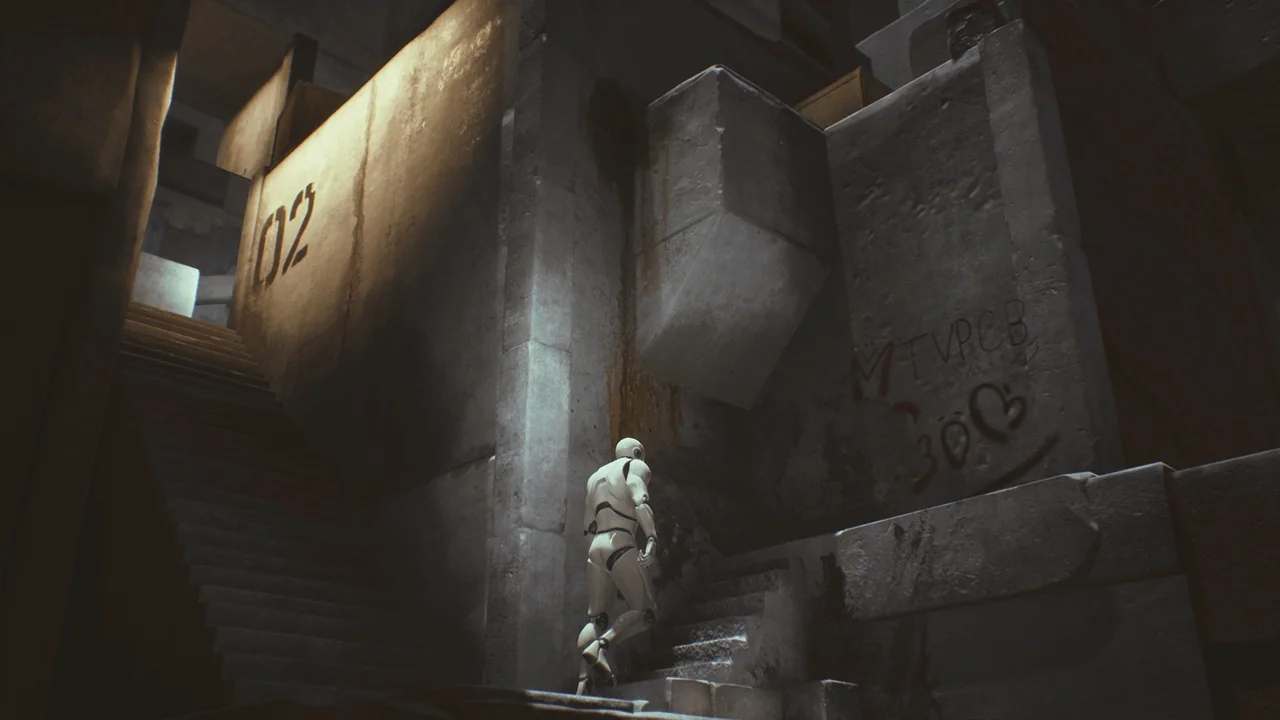
 Industrial
 Building
 Industrial