"6ac84fdb0bd06614"{"id":"28275","slug":"horror-and-decay-vol-5-urban-surfaces","title":"Horror and Decay VOL.5 - Urban Surfaces","category":"Damage \u0026 Grunge","engine":"4.26+,5.0+","assetVersion":"Engine version: 4.26+,5.0+","engineVersion":"","tag":"Damage \u0026 Grunge","accent":"blue","visual":"luts","summary":"Horror and Decay VOL.5 - Urban Surfaces focuses on the messy, broken side of city environments. Its tileable texture sets, master material setup, and vertex paint blending make it useful for building grimy roads, walls, dirt, mud, and cracked concrete with...","platform":"Unreal Engine","publishedAt":"2026-05-06T15:45:04.000Z","updatedAt":"2026-05-06T15:45:05.000Z","sourceNotes":[],"fileContents":[],"compatibility":["Unreal Engine","Engine version: 4.26+,5.0+"],"featuredImage":{"alt":"Horror and Decay VOL.5 - Urban Surfaces","src":"https://3dcghub.com/wp-content/uploads/2026/05/9037e3dd3b26_a62630b0-0965-4e52-b1eb-593d490fe082.webp"},"hasDownloadLink":true,"downloads":0,"terms":[{"taxonomy":"category","slug":"damage-and-grunge","name":"Damage \u0026 Grunge"},{"taxonomy":"post_tag","slug":"materials","name":"Materials"},{"taxonomy":"post_tag","slug":"textures","name":"Textures"},{"taxonomy":"post_tag","slug":"unreal-engine-5","name":"Unreal Engine 5"}],"galleryImages":[{"src":"https://3dcghub.com/wp-content/uploads/2026/05/824f57ec23dd_933aa4ff-c4aa-40ef-970e-ce1b1c49247b.webp","alt":"Horror and Decay VOL.5 - Urban Surfaces"},{"src":"https://3dcghub.com/wp-content/uploads/2026/05/cc17baa7777f_335dd849-ab36-4cdb-a899-c0b61b7dd2d0.webp","alt":"Horror and Decay VOL.5 - Urban Surfaces"},{"src":"https://3dcghub.com/wp-content/uploads/2026/05/b559cd22d1f5_0d6ac0a9-2891-4195-956c-61851e7dccda.webp","alt":"Horror and Decay VOL.5 - Urban Surfaces"},{"src":"https://3dcghub.com/wp-content/uploads/2026/05/6665009e22fe_d9da6163-9a91-41c1-ad0e-f6558e49ae36.webp","alt":"Horror and Decay VOL.5 - Urban Surfaces"},{"src":"https://3dcghub.com/wp-content/uploads/2026/05/ccf79f4ccc84_2f1423a7-2b21-46c6-9941-311a6ff683f9.webp","alt":"Horror and Decay VOL.5 - Urban Surfaces"},{"src":"https://3dcghub.com/wp-content/uploads/2026/05/a43a762f317a_2e10d94a-9231-4f68-895c-43a252f35233.webp","alt":"Horror and Decay VOL.5 - Urban Surfaces"},{"src":"https://3dcghub.com/wp-content/uploads/2026/05/0d2e67a2593f_dbee2ef6-7218-4849-93ee-d8e27eb005ef.webp","alt":"Horror and Decay VOL.5 - Urban Surfaces"},{"src":"https://3dcghub.com/wp-content/uploads/2026/05/81685568566f_7bf044b1-b171-4844-970c-e97f1c179d0a.webp","alt":"Horror and Decay VOL.5 - Urban Surfaces"},{"src":"https://3dcghub.com/wp-content/uploads/2026/05/a0a140714d67_f21c70c8-dc31-4ac3-9392-beaf7864b459.webp","alt":"Horror and Decay VOL.5 - Urban Surfaces"},{"src":"https://3dcghub.com/wp-content/uploads/2026/05/bd074dde344b_dac98f38-f2f4-4ca6-bd3f-80685224ac19.webp","alt":"Horror and Decay VOL.5 - Urban Surfaces"}],"accessPanel":{"kind":"resource","title":"Access this resource","eyebrow":"Free Download","message":"Log in or create a free account to start your download.","fileName":"Content.7z","safetyNote":"All resources are 100% manually reviewed to eliminate all risks.","actionLabel":"Download Free","resourceType":"Resource archive"},"contentHtml":"\u003cp\u003eUrban environment work often stalls on the same issue: surfaces need to feel worn, dirty, and layered without turning into obvious repeating patterns. \u003cstrong\u003eHorror and Decay VOL.5 - Urban Surfaces\u003c/strong\u003e Addresses that problem with a collection of assets, maps, and materials created in Unreal Engine, aimed at realistic AAA quality visuals while staying optimized for games.\u003c/p\u003e\u003cp\u003eThe pack leans into damaged and neglected city textures rather than clean architectural finishes. Mud, cracked ground, dirty materials, metal, concrete, roads, walls, broken surfaces, and dirt all shape its identity, making it a strong fit for scenes that need grime to carry the mood as much as the geometry does.\u003c/p\u003e\u003ch2\u003eUsing Horror and Decay VOL.5 for layered urban wear\u003c/h2\u003e\u003cp\u003eThe most practical detail in this set is how the tileable texture sets are meant to work together. Each one is constructed to be used in combination inside a vertex paint blend, with sets such as Dirt_01, Dirt_02, and Dirt_03 intended to blend well with each other.\u003c/p\u003e\u003cp\u003eThat changes how the pack can be approached during scene assembly. Instead of treating each surface as a single isolated material choice, artists can combine related dirt layers to break up repetition and hide visible tiling more easily. For alley floors, concrete corners, roadside edges, damaged walls, or muddy transitions between materials, that blending setup gives more control over where filth gathers and where wear spreads. In a horror-leaning environment, that matters visually because surface variation often sells age, neglect, and tension better than broad decals alone.\u003c/p\u003e\u003ch2\u003eUrban Surfaces materials inside Unreal Engine\u003c/h2\u003e\u003cp\u003eEverything included is created in Unreal Engine, and the project contains all pictured assets, maps, and materials. The material side is structured around a master material setup that controls all instances.\u003c/p\u003e\u003cp\u003eFor production, that points to a workflow where broad consistency can be maintained while still allowing scene-specific adjustments. The pack includes additional controls for roughness, albedo, normals, and more, which gives room to push a surface wetter, flatter, dustier, or more worn depending on placement. A roadside concrete slab can read differently from a stained interior wall even when both belong to the same overall visual family. Because the control happens through material instances, it supports fast iteration across multiple surfaces without rebuilding each look from scratch.\u003c/p\u003e\u003cp\u003eThe channel packing also reflects a game-focused pipeline. Roughness, Metalness, and Ambient Occlusion are packed together, which helps keep the material setup efficient while preserving the essential response needed for dirty metal, broken concrete, and worn street materials. Combined with the stated game optimization, the pack sits comfortably in scene work where atmosphere is important but materials still need to behave predictably in real-time rendering.\u003c/p\u003e\u003ch2\u003eDirty roads, cracked walls, and broken concrete\u003c/h2\u003e\u003cp\u003eThe tag set gives a clear picture of the kind of environments this collection supports. PBR surfaces with mud, cracked detail, dirty finishes, metal, concrete, road textures, wall treatments, and broken materials all point toward distressed urban spaces rather than pristine construction.\u003c/p\u003e\u003cp\u003eThat makes the pack flexible across several kinds of locations without needing to step outside its established theme. A street can pick up muddy edges and broken concrete. A wall can carry grime and cracking without losing realism. A metal element can feel weathered rather than newly placed. Since the models are fully detailed from all sides, they are not limited to one-angle presentation, which is useful when the camera moves freely through a level or circles closely around environmental dressing. The visual target is explicitly realistic AAA quality in visuals, style, and budget, so the set is tuned toward believable wear rather than exaggerated stylization.\u003c/p\u003e\u003cp\u003eAnother useful production note is that all branding and labels are custom made by the studio. That keeps the set free of legal issues and avoids the distraction of recognizable real-world markings when dressing a scene. For developers building abandoned streets, damaged facilities, or contaminated industrial corners, that can help maintain consistency without introducing unwanted real-brand references into the environment.\u003c/p\u003e\u003ch2\u003eTexture sizes and lighting checks in Horror and Decay VOL.5\u003c/h2\u003e\u003cp\u003eTexture resolution is weighted heavily toward 2048 textures, with 49 at 2048, 2 at 1024, 1 at 256, and 4 at 128. That distribution reinforces the pack’s emphasis on high quality and fidelity texture sets, while still including smaller sizes where needed.\u003c/p\u003e\u003cp\u003eIn practice, that balance suggests a resource intended to hold up across close and mid-range viewing in surface-heavy scenes. High-resolution texture coverage is especially helpful in urban decay work, where viewers tend to read subtle grime breakup, chipped material transitions, and fine cracking as part of the atmosphere. The inclusion of a test dynamic lighting scene also adds a practical staging space for checking how the materials respond under active lighting conditions. Since roughness, albedo, and normal variation carry so much of the mood in dirty environments, having that lighting scene available helps with judging whether a surface is reading as damp, chalky, oxidized, or simply overlit.\u003c/p\u003e\u003cp\u003eThe set is created by Dekogon Kollab artists, and the overall package stays focused on one clear job: supplying believable urban deterioration that can be mixed, adjusted, and repeated with less repetition showing through. For productions that need roads, walls, mud, concrete, and broken surfaces to carry horror or environmental storytelling, this is the kind of material-driven pack that fits directly into scene building rather than sitting on the sidelines as generic texture coverage.\u003c/p\u003e\n\n\u003ch2\u003eRelated Resources Worth Checking\u003c/h2\u003e\n\u003cul\u003e\n\u003cli\u003e\u003ca href=\"https://3dcghub.com/56-fabric-textile-materials-4k-pbr-collection/\" title=\"56 Fabric \u0026amp;amp; Textile Materials (4K PBR Collection)\"\u003e56 Fabric \u0026amp; Textile Materials (4K PBR Collection)\u003c/a\u003e\u003c/li\u003e\n\u003cli\u003e\u003ca href=\"https://3dcghub.com/advanced-road-materials/\" title=\"Advanced road materials\"\u003eAdvanced road materials\u003c/a\u003e\u003c/li\u003e\n\u003cli\u003e\u003ca href=\"https://3dcghub.com/ground-vol-48-hand-painted-textures/\" title=\"Ground Vol.48 – Hand Painted Textures\"\u003eGround Vol.48 – Hand Painted Textures\u003c/a\u003e\u003c/li\u003e\n\u003cli\u003e\u003ca href=\"https://3dcghub.com/master-materials-and-layer-system-for-daz3d-imports/\" title=\"Master Materials and Layer System for Daz3D Imports\"\u003eMaster Materials and Layer System for Daz3D Imports\u003c/a\u003e\u003c/li\u003e\n\u003cli\u003e\u003ca href=\"https://3dcghub.com/realistic-materials-vol-7-water-ice-25-materials/\" title=\"Realistic Materials Vol. 7 – Water \u0026amp;amp; Ice (25+ Materials)\"\u003eRealistic Materials Vol. 7 – Water \u0026amp; Ice (25+ Materials)\u003c/a\u003e\u003c/li\u003e\n\u003c/ul\u003e","contentTextLength":6138,"navigation":{"current":1317,"total":3181,"previous":{"id":"28288","slug":"huge-arpg","title":"Huge ARPG","category":"RPG","platform":"Unreal Engine","updatedAt":"2026-05-06T16:44:54.000Z"},"next":{"id":"28262","slug":"hologram-vfx-with-niagara-2","title":"HOLOGRAM VFX With Niagara 2","category":"Gameplay Features","platform":"Unreal Engine","updatedAt":"2026-05-06T15:41:42.000Z"}},"relatedResources":[{"id":"12450","slug":"battle-damaged-decals-1","title":"Battle Damaged Decals 1","category":"Damage \u0026 Grunge","engine":"4.26+,5.0+","assetVersion":"Engine version: 4.26+,5.0+","engineVersion":"4.18","tag":"Damage \u0026 Grunge","accent":"blue","visual":"luts","summary":"Enhance your digital environments with Battle Damaged Decals 1. This collection features 80 specialized decals designed to simulate realistic wear and destruction on eight different surface types.","platform":"Unreal Engine","publishedAt":"2026-03-07T12:28:34.000Z","updatedAt":"2026-04-19T15:47:57.000Z","sourceNotes":[],"fileContents":[],"compatibility":["Unreal Engine","Engine version: 4.26+,5.0+"],"featuredImage":{"alt":"Battle Damaged Decals 1","src":"https://3dcghub.com/wp-content/uploads/2026/03/60cd68e3-c46d-4895-b8c3-46718c6056dd.webp"},"hasDownloadLink":true,"downloads":0},{"id":"12331","slug":"horror-and-decay-vol-2-urban-debris","title":"Horror and Decay VOL.2 - Urban Debris","category":"Building \u0026 Human-made","engine":"4.26+,5.0+","assetVersion":"Engine version: 4.26+,5.0+","engineVersion":"4.19","tag":"Building","accent":"blue","visual":"luts","summary":"Enhance your game environments with Horror and Decay VOL.2 - Urban Debris. This collection offers high-quality, realistic assets designed for professional game development in Unreal Engine.","platform":"Unreal Engine","publishedAt":"2026-03-07T12:16:27.000Z","updatedAt":"2026-04-19T15:47:59.000Z","sourceNotes":[],"fileContents":[],"compatibility":["Unreal Engine","Engine version: 4.26+,5.0+"],"featuredImage":{"alt":"Horror and Decay VOL.2 - Urban Debris","src":"https://3dcghub.com/wp-content/uploads/2026/03/c75cf398-628d-4eee-82dc-2e4462d9c306.webp"},"hasDownloadLink":true,"downloads":0},{"id":"28510","slug":"atmospheric-modular-underground-car-park-hallways","title":"Atmospheric Modular Underground Car Park \u0026 Hallways","category":"Horror","engine":"4.26+,5.0+","assetVersion":"Engine version: 4.26+,5.0+","engineVersion":"","tag":"Horror","accent":"blue","visual":"city","summary":"Atmospheric Modular Underground Car Park \u0026 Hallways focuses on a fully modular interior parking garage space with a large prop selection and first-person-ready texture density. It suits projects that need realistic, moody underground scenes while still keep...","platform":"Unreal Engine","publishedAt":"2026-05-16T07:51:39.000Z","updatedAt":"2026-05-16T07:51:40.000Z","sourceNotes":[],"fileContents":[],"compatibility":["Unreal Engine","Engine version: 4.26+,5.0+"],"featuredImage":{"alt":"Atmospheric Modular Underground Car Park \u0026 Hallways","src":"https://3dcghub.com/wp-content/uploads/2026/05/fc554ca61735_1093ac58-3cd5-41a2-8138-2d8c18c1c48a.webp"},"hasDownloadLink":true,"downloads":0}]}
Damage & Grunge
Horror and Decay VOL.5 - Urban Surfaces
Horror and Decay VOL.5 - Urban Surfaces focuses on the messy, broken side of city environments. Its tileable texture sets, master material setup, and vertex paint blending make it useful for building grimy roads, walls, dirt, mud, and cracked concrete with...
Urban environment work often stalls on the same issue: surfaces need to feel worn, dirty, and layered without turning into obvious repeating patterns. Horror and Decay VOL.5 - Urban Surfaces Addresses that problem with a collection of assets, maps, and materials created in Unreal Engine, aimed at realistic AAA quality visuals while staying optimized for games.
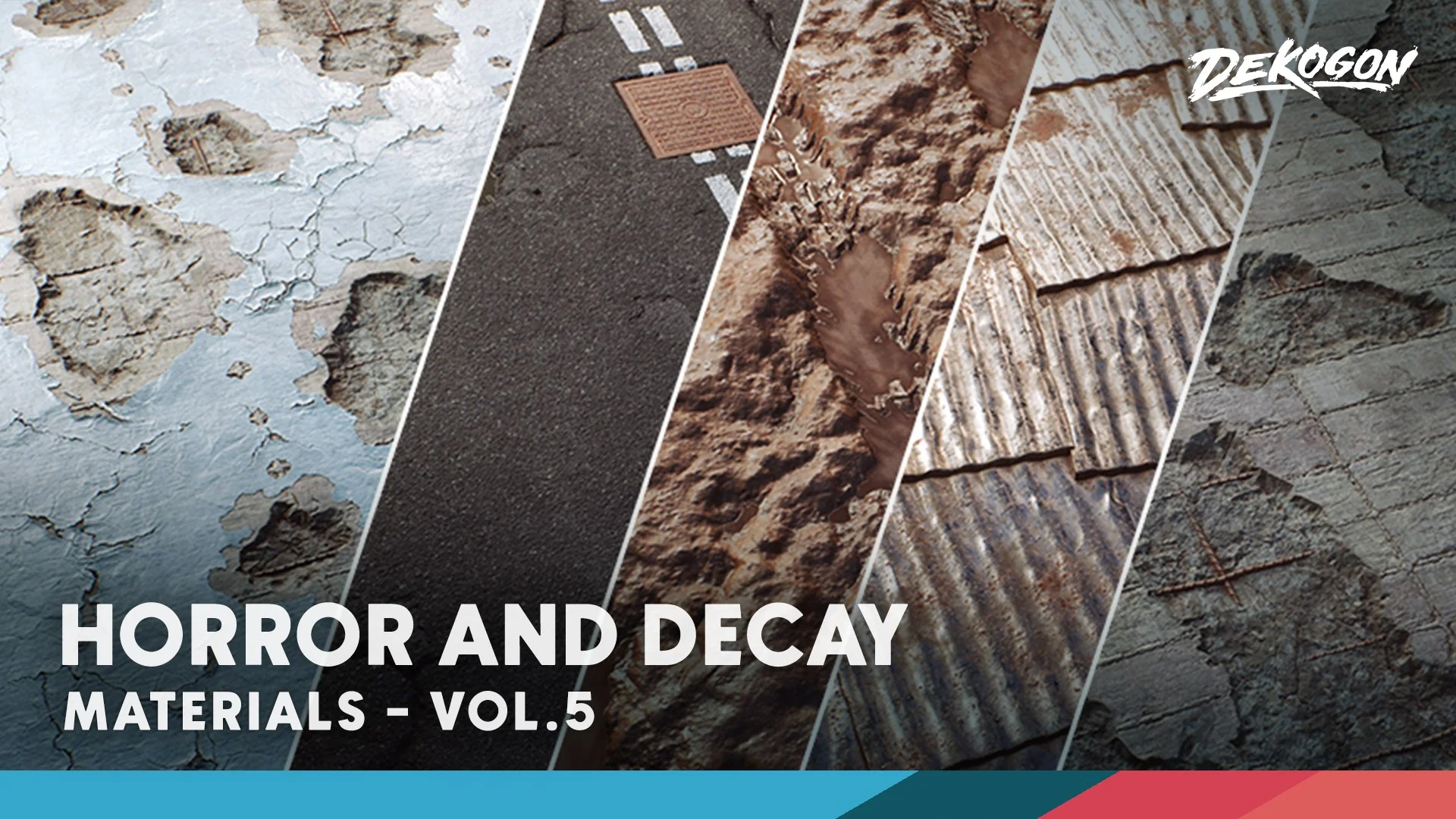
The pack leans into damaged and neglected city textures rather than clean architectural finishes. Mud, cracked ground, dirty materials, metal, concrete, roads, walls, broken surfaces, and dirt all shape its identity, making it a strong fit for scenes that need grime to carry the mood as much as the geometry does.
Using Horror and Decay VOL.5 for layered urban wear
The most practical detail in this set is how the tileable texture sets are meant to work together. Each one is constructed to be used in combination inside a vertex paint blend, with sets such as Dirt_01, Dirt_02, and Dirt_03 intended to blend well with each other.
That changes how the pack can be approached during scene assembly. Instead of treating each surface as a single isolated material choice, artists can combine related dirt layers to break up repetition and hide visible tiling more easily. For alley floors, concrete corners, roadside edges, damaged walls, or muddy transitions between materials, that blending setup gives more control over where filth gathers and where wear spreads. In a horror-leaning environment, that matters visually because surface variation often sells age, neglect, and tension better than broad decals alone.
Urban Surfaces materials inside Unreal Engine
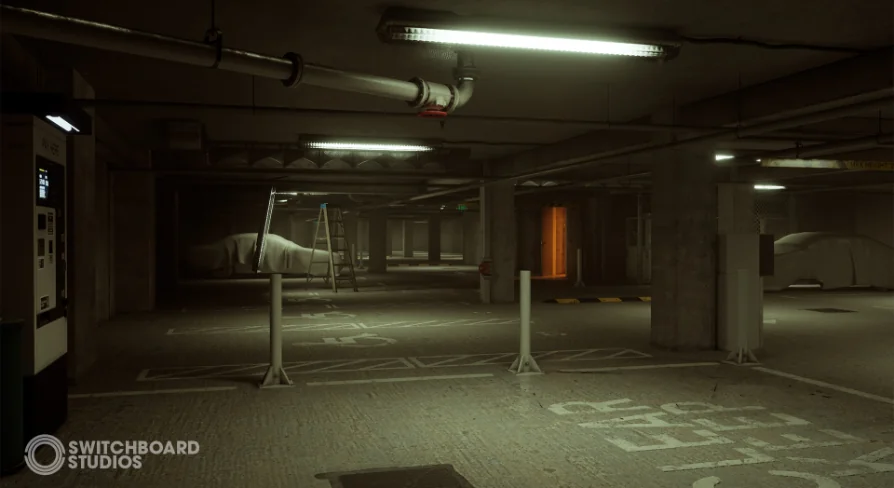
Everything included is created in Unreal Engine, and the project contains all pictured assets, maps, and materials. The material side is structured around a master material setup that controls all instances.
For production, that points to a workflow where broad consistency can be maintained while still allowing scene-specific adjustments. The pack includes additional controls for roughness, albedo, normals, and more, which gives room to push a surface wetter, flatter, dustier, or more worn depending on placement. A roadside concrete slab can read differently from a stained interior wall even when both belong to the same overall visual family. Because the control happens through material instances, it supports fast iteration across multiple surfaces without rebuilding each look from scratch.
The channel packing also reflects a game-focused pipeline. Roughness, Metalness, and Ambient Occlusion are packed together, which helps keep the material setup efficient while preserving the essential response needed for dirty metal, broken concrete, and worn street materials. Combined with the stated game optimization, the pack sits comfortably in scene work where atmosphere is important but materials still need to behave predictably in real-time rendering.
Dirty roads, cracked walls, and broken concrete
The tag set gives a clear picture of the kind of environments this collection supports. PBR surfaces with mud, cracked detail, dirty finishes, metal, concrete, road textures, wall treatments, and broken materials all point toward distressed urban spaces rather than pristine construction.
That makes the pack flexible across several kinds of locations without needing to step outside its established theme. A street can pick up muddy edges and broken concrete. A wall can carry grime and cracking without losing realism. A metal element can feel weathered rather than newly placed. Since the models are fully detailed from all sides, they are not limited to one-angle presentation, which is useful when the camera moves freely through a level or circles closely around environmental dressing. The visual target is explicitly realistic AAA quality in visuals, style, and budget, so the set is tuned toward believable wear rather than exaggerated stylization.
Another useful production note is that all branding and labels are custom made by the studio. That keeps the set free of legal issues and avoids the distraction of recognizable real-world markings when dressing a scene. For developers building abandoned streets, damaged facilities, or contaminated industrial corners, that can help maintain consistency without introducing unwanted real-brand references into the environment.
Texture sizes and lighting checks in Horror and Decay VOL.5
Texture resolution is weighted heavily toward 2048 textures, with 49 at 2048, 2 at 1024, 1 at 256, and 4 at 128. That distribution reinforces the pack’s emphasis on high quality and fidelity texture sets, while still including smaller sizes where needed.
In practice, that balance suggests a resource intended to hold up across close and mid-range viewing in surface-heavy scenes. High-resolution texture coverage is especially helpful in urban decay work, where viewers tend to read subtle grime breakup, chipped material transitions, and fine cracking as part of the atmosphere. The inclusion of a test dynamic lighting scene also adds a practical staging space for checking how the materials respond under active lighting conditions. Since roughness, albedo, and normal variation carry so much of the mood in dirty environments, having that lighting scene available helps with judging whether a surface is reading as damp, chalky, oxidized, or simply overlit.
The set is created by Dekogon Kollab artists, and the overall package stays focused on one clear job: supplying believable urban deterioration that can be mixed, adjusted, and repeated with less repetition showing through. For productions that need roads, walls, mud, concrete, and broken surfaces to carry horror or environmental storytelling, this is the kind of material-driven pack that fits directly into scene building rather than sitting on the sidelines as generic texture coverage.
 Damage & Grunge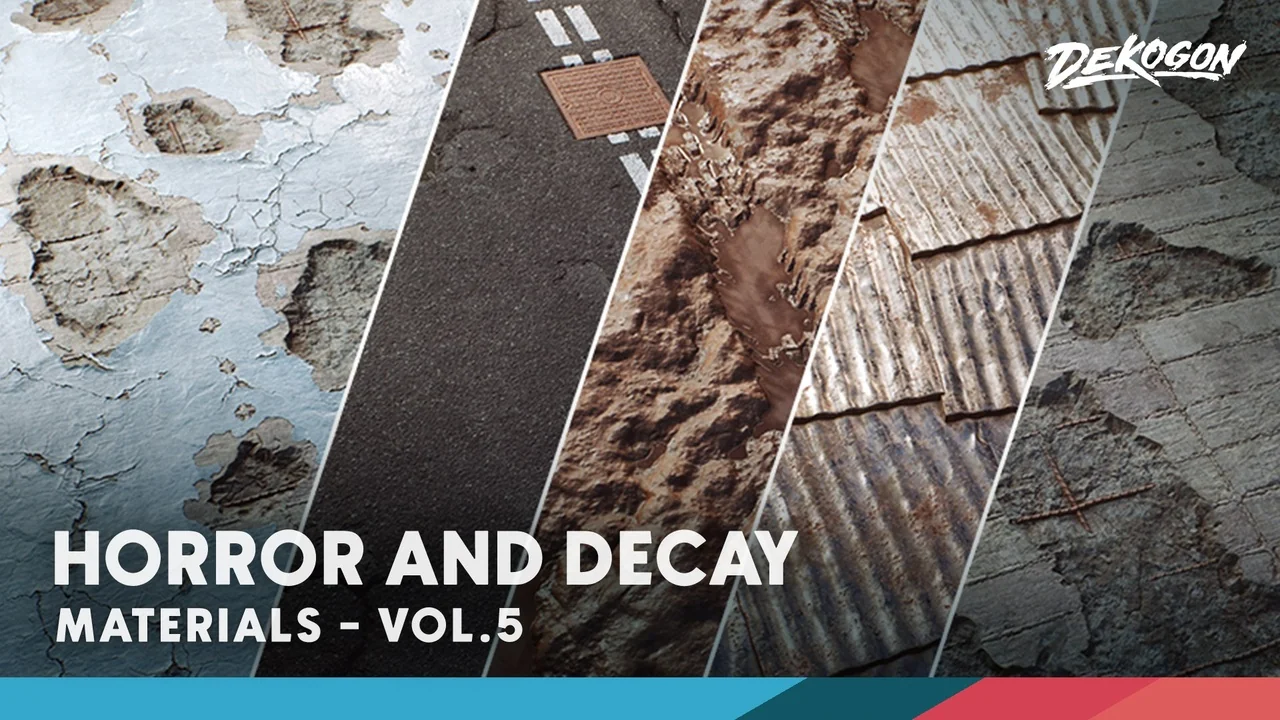
 Damage & Grunge
 Building
 Horror