"4481da9c895ef786"{"id":"1000297","slug":"hero-for-rpg-modular-pbr","title":"Hero for RPG : Modular PBR","category":"Humans","engine":"4.26+,5.0+","assetVersion":"","engineVersion":"Engine Version: 4.26+,5.0+","tag":"Humans","accent":"blue","visual":"mech","summary":"A low-poly, mobile-optimized modular character system featuring 61 customizable parts, 24 weapons, a Mask Tint Shader, and a full suite of RPG animations.","platform":"Unreal Engine","publishedAt":"2026-07-03T17:52:27.983Z","updatedAt":"2026-07-03T17:52:27.983Z","sourceNotes":[],"fileContents":[],"compatibility":["Unreal Engine","Engine Version: 4.26+,5.0+"],"featuredImage":{"alt":"Hero for RPG : Modular PBR","src":"/wp-content/uploads/published/2026/07/89b55b3ac8b4-a5bd48ca-6f86-4ebd-bd57-edb9ed13c124-a77d835b25.webp"},"hasDownloadLink":true,"downloads":0,"terms":[{"taxonomy":"category","slug":"humans","name":"Humans"}],"galleryImages":[{"src":"/wp-content/uploads/published/2026/07/b3b485263695-a12db404-4bfc-4c0b-8207-3422e5d43684-d9fa67b627.webp","alt":"Hero for RPG : Modular PBR"},{"src":"/wp-content/uploads/published/2026/07/587cf5be86ad-33a704a3-a113-426b-81f2-ec2f1df88b77-7debe5e88a.webp","alt":"Hero for RPG : Modular PBR"},{"src":"/wp-content/uploads/published/2026/07/21c35a7cdbb3-5c5f355b-3495-49b9-8a4e-0f915ea2820d-e902645d5f.webp","alt":"Hero for RPG : Modular PBR"},{"src":"/wp-content/uploads/published/2026/07/e6e36da2cf3a-4012d70d-1bca-4541-bb75-7901084f06c6-f5f5163faa.webp","alt":"Hero for RPG : Modular PBR"},{"src":"/wp-content/uploads/published/2026/07/c18768ce7485-6b627288-9d47-4d8f-b93a-649315f972f4-b4026b579b.webp","alt":"Hero for RPG : Modular PBR"},{"src":"/wp-content/uploads/published/2026/07/a21a05e9a5df-788a0e5c-e1a9-4f82-82d9-538334dce695-085fbd742c.webp","alt":"Hero for RPG : Modular PBR"},{"src":"/wp-content/uploads/published/2026/07/cd1e50695dad-98d38e47-ca03-488e-a285-1ae602d9ebe7-f705931037.webp","alt":"Hero for RPG : Modular PBR"},{"src":"/wp-content/uploads/published/2026/07/75ab2ba4495c-ab3a7d6d-bd89-47bc-b04e-b1efece9707f-eb670fd0c2.webp","alt":"Hero for RPG : Modular PBR"},{"src":"/wp-content/uploads/published/2026/07/c590f3f16344-bea5ba67-1b42-4d87-b45e-53ff60746cd4-9fd0a82c6d.webp","alt":"Hero for RPG : Modular PBR"},{"src":"/wp-content/uploads/published/2026/07/9159b0799e8f-8d756c92-40de-475d-919f-98fcd665c8fe-d67ef9d2aa.webp","alt":"Hero for RPG : Modular PBR"}],"accessPanel":{"kind":"resource","title":"Download this resource","eyebrow":"Free Download","message":"Log in or create a free account to start your download.","fileName":"Content.7z","safetyNote":"Resources are manually reviewed before listing to improve quality and reduce obvious risks.","actionLabel":"Download Free","resourceType":"Resource archive"},"contentHtml":"\u003ch2\u003eCombining the 61 Modular Parts and Weapons\u003c/h2\u003e\n\u003cp\u003eTo establish a flexible character system for a role-playing game, developers can utilize the extensive component library provided in this asset. The core structure relies on combining 61 distinct modular parts, allowing for a vast number of permutation options. This setup directly supports RPG inventory mechanics where players continuously acquire and equip different armor pieces, clothing, and accessories. By swapping these modular meshes on the underlying skeleton, the character's visual progression can be updated in real-time.\u003c/p\u003e\n\u003cp\u003eAlongside the body and armor components, the system includes 24 distinct weapon parts. These weapons can be attached to the character's hands or holstered on the body via socket attachment points, further expanding the loadout customization. Because the components are separated into individual modular pieces, a single base rig can represent numerous different character classes, enemy types, or NPC variants simply by altering which of the 61 meshes are actively rendered in the scene.\u003c/p\u003e\n\u003ch2\u003eConfiguring the RAM Textures and Mask Tint Shader\u003c/h2\u003e\n\u003cp\u003eMaintaining rendering efficiency while supporting extensive customization requires a highly optimized material pipeline. Rather than assigning unique materials to every individual armor piece and weapon, the entire collection of 85 components is governed by just four materials. This strict limitation ensures that the character generates a very low number of draw calls, which is a critical factor for mobile game development.\u003c/p\u003e\n\u003cp\u003eEach of these four materials utilizes a streamlined PBR texture setup consisting of one BaseColor map, one Normal map, and one RAM Texture. The RAM Texture serves as a packed map, consolidating multiple data channels into a single image file to reduce texture memory overhead. To facilitate visual variety without requiring additional texture maps, the setup provides a dedicated Mask Tint Shader.\u003c/p\u003e\n\u003cp\u003eThe Mask Tint Shader enables infinite color customization by utilizing a masking system to isolate specific areas of the character's gear. Developers can manipulate the shader's tint parameters via code to create visually distinct factions, apply elemental weapon colors, or allow players to manually dye their equipment through an in-game customization menu. This approach provides visual diversity while maintaining the strict four-material limit.\u003c/p\u003e\n\u003ch2\u003eImplementing the RPG Animation Set\u003c/h2\u003e\n\u003cp\u003eBringing the modular character to life requires building a custom animation state machine, as an out-of-the-box controller is not included. The provided animation suite encompasses a wide range of actions specifically tailored for action-RPG gameplay loops. For basic locomotion and evasive maneuvers, developers can wire up the four walk animations, four dash animations, run, sprint, run back, roll, and slide clips. Vertical traversal and platforming mechanics are supported by three climb animations and four distinct jump animations, allowing for varied movement profiles.\u003c/p\u003e\n\u003cp\u003eThe combat animations are categorized into offensive strikes and defensive reactions. An attack system can be built by chaining the two normal attacks and the five combo animations. A dedicated jump attack clip is also available for aerial engagements. On the defensive side, developers can implement blocking mechanics using the defend animation, which pairs directly with the defend hit clip to show the character absorbing an impact while guarding.\u003c/p\u003e\n\u003cp\u003eUnblocked damage can trigger the get hit or dizzy animations, providing clear visual feedback for stagger mechanics. If the character's health is depleted, the die animation triggers, while the die recover clip can be used for resurrection items or revive spells. To support inventory and role-playing interactions, several utility animations are included. The equipment change animation visually reinforces the modular system when swapping out any of the parts or weapons. Additional state animations like pick up, potion drink, sleep, an idle state, and a victory pose provide the necessary actions for interacting with loot, restoring health, resting at camps, and concluding successful encounters.\u003c/p\u003e\n\u003ch2\u003eManaging the 5,000 Tris Polygon Budget\u003c/h2\u003e\n\u003cp\u003eWhen targeting mobile platforms, adhering to strict geometric budgets is essential for maintaining stable frame rates. This modular character is specifically optimized for mobile games, featuring a low-poly construction across all available meshes. When a character is fully assembled, utilizing a complete set of modular armor parts alongside an equipped weapon, the total geometry sits at approximately 5,000 triangles.\u003c/p\u003e\n\u003cp\u003eThis 5,000-tris budget encompasses all included parts necessary to render a complete hero. By keeping the polygon count this low, developers can comfortably instance the character multiple times within a single scene. This allows for the creation of crowded towns filled with customized NPCs or large-scale battles against numerous enemy variants, all while remaining within the performance constraints of mobile hardware. The combination of the low-poly geometry, the consolidated material setup, and the highly reusable modular parts creates a production-ready framework for RPG development.\u003c/p\u003e\n\n\u003ch2\u003eRelated Resources Worth Checking\u003c/h2\u003e\n\u003cul\u003e\n\u003cli\u003e\u003ca href=\"https://3dcghub.com/survivor-girl-1-modular/\" title=\"Survivor Girl 1 (Modular)\"\u003eSurvivor Girl 1 (Modular)\u003c/a\u003e\u003c/li\u003e\n\u003cli\u003e\u003ca href=\"https://3dcghub.com/hero-mercenary-warrior/\" title=\"Hero Mercenary Warrior\"\u003eHero Mercenary Warrior\u003c/a\u003e\u003c/li\u003e\n\u003cli\u003e\u003ca href=\"https://3dcghub.com/kitsune/\" title=\"Kitsune\"\u003eKitsune\u003c/a\u003e\u003c/li\u003e\n\u003cli\u003e\u003ca href=\"https://3dcghub.com/modular-elf-archer-girl/\" title=\"Modular Elf Archer Girl\"\u003eModular Elf Archer Girl\u003c/a\u003e\u003c/li\u003e\n\u003cli\u003e\u003ca href=\"https://3dcghub.com/kitsune-modular/\" title=\"Kitsune (Modular)\"\u003eKitsune (Modular)\u003c/a\u003e\u003c/li\u003e\n\u003c/ul\u003e","contentTextLength":5346,"navigation":{"current":1108,"total":3269,"previous":{"id":"1000298","slug":"hex-tree-skill-perk-tech","title":"HEX TREE (Skill, Perk, Tech)","category":"Gameplay Features","platform":"Unreal Engine","updatedAt":"2026-07-03T18:01:38.886Z"},"next":{"id":"1000296","slug":"galapagos-tortoise","title":"Galapagos Tortoise","category":"Animals","platform":"Unreal Engine","updatedAt":"2026-07-03T17:49:30.825Z"}},"relatedResources":[{"id":"1000206","slug":"survivor-girl-1-modular","title":"Survivor Girl 1 (Modular)","category":"Humans","engine":"4.26+,5.0+","assetVersion":"","engineVersion":"Engine Version: 4.26+,5.0+","tag":"Humans","accent":"blue","visual":"mech","summary":"A fully rigged, modular female character model designed for apocalyptic survival games, featuring facial blendshapes, 4K PBR textures, and low-poly weapons.","platform":"Unreal Engine","publishedAt":"2026-06-23T19:35:44.835Z","updatedAt":"2026-06-23T19:35:44.835Z","sourceNotes":[],"fileContents":[],"compatibility":["Unreal Engine","Engine Version: 4.26+,5.0+"],"featuredImage":{"alt":"Survivor Girl 1 (Modular)","src":"/wp-content/uploads/published/2026/06/ea003c542fdd-d82dc264-87e2-40e6-a96c-2a4b916b4cb7-25e2910de6.webp"},"hasDownloadLink":true,"downloads":2},{"id":"1000421","slug":"assassin-girl-modular","title":"Assassin Girl Modular","category":"Humans","engine":"4.27,5.0+","assetVersion":"","engineVersion":"Engine Version: 4.27,5.0+","tag":"Humans","accent":"blue","visual":"mech","summary":"Modular rigged female assassin character with Epic Skeleton, facial blendshapes, PBR 4K textures, and Unreal Engine physics. Includes dagger and multiple body t","platform":"Unreal Engine","publishedAt":"2026-07-09T20:16:25.138Z","updatedAt":"2026-07-09T20:16:25.138Z","sourceNotes":[],"fileContents":[],"compatibility":["Unreal Engine","Engine Version: 4.27,5.0+"],"featuredImage":{"alt":"Assassin Girl Modular","src":"/wp-content/uploads/published/2026/07/571d57f12c7f-2b2ffcf1-fa74-4d6a-81c3-00378fd516a0-1a49c79810.webp"},"hasDownloadLink":true,"downloads":3},{"id":"2553","slug":"hero-mercenary-warrior","title":"Hero Mercenary Warrior","category":"Characters \u0026 Creatures","engine":"4.26+,5.0+","assetVersion":"Engine version: 4.26+,5.0+","engineVersion":"4.25","tag":"Characters","accent":"blue","visual":"character","summary":"Elevate your game with this realistic Hero Mercenary Warrior. It features modular armor, PBR textures, and facial morphs for professional fantasy projects.","platform":"Unreal Engine","publishedAt":"2026-02-07T10:20:54.000Z","updatedAt":"2026-04-19T15:58:00.000Z","sourceNotes":[],"fileContents":[],"compatibility":["Unreal Engine","Engine version: 4.26+,5.0+"],"featuredImage":{"alt":"Hero Mercenary Warrior","src":"https://3dcghub.com/wp-content/uploads/2026/02/dfd5e624-63d6-49e9-9b88-37f076de8a6b.webp"},"hasDownloadLink":true,"downloads":2}]}
Humans
Hero for RPG : Modular PBR
A low-poly, mobile-optimized modular character system featuring 61 customizable parts, 24 weapons, a Mask Tint Shader, and a full suite of RPG animations.
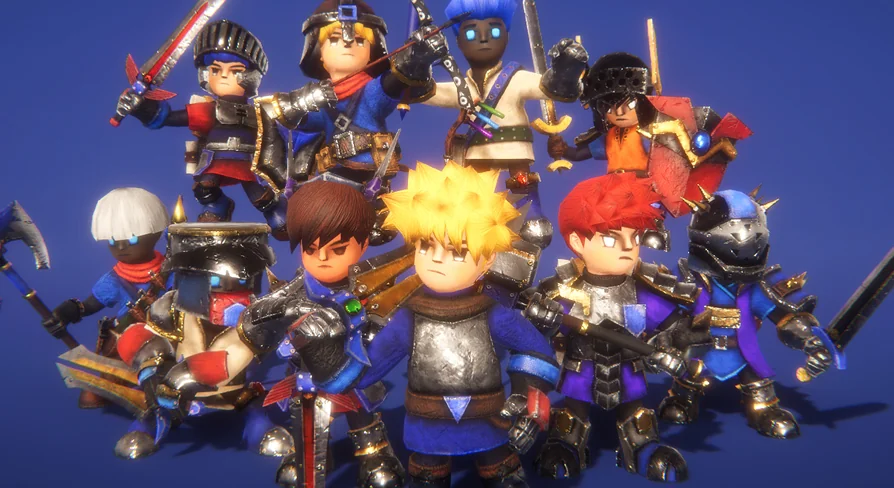
To establish a flexible character system for a role-playing game, developers can utilize the extensive component library provided in this asset. The core structure relies on combining 61 distinct modular parts, allowing for a vast number of permutation options. This setup directly supports RPG inventory mechanics where players continuously acquire and equip different armor pieces, clothing, and accessories. By swapping these modular meshes on the underlying skeleton, the character's visual progression can be updated in real-time.
Alongside the body and armor components, the system includes 24 distinct weapon parts. These weapons can be attached to the character's hands or holstered on the body via socket attachment points, further expanding the loadout customization. Because the components are separated into individual modular pieces, a single base rig can represent numerous different character classes, enemy types, or NPC variants simply by altering which of the 61 meshes are actively rendered in the scene.
Configuring the RAM Textures and Mask Tint Shader
Maintaining rendering efficiency while supporting extensive customization requires a highly optimized material pipeline. Rather than assigning unique materials to every individual armor piece and weapon, the entire collection of 85 components is governed by just four materials. This strict limitation ensures that the character generates a very low number of draw calls, which is a critical factor for mobile game development.
Each of these four materials utilizes a streamlined PBR texture setup consisting of one BaseColor map, one Normal map, and one RAM Texture. The RAM Texture serves as a packed map, consolidating multiple data channels into a single image file to reduce texture memory overhead. To facilitate visual variety without requiring additional texture maps, the setup provides a dedicated Mask Tint Shader.
The Mask Tint Shader enables infinite color customization by utilizing a masking system to isolate specific areas of the character's gear. Developers can manipulate the shader's tint parameters via code to create visually distinct factions, apply elemental weapon colors, or allow players to manually dye their equipment through an in-game customization menu. This approach provides visual diversity while maintaining the strict four-material limit.
Implementing the RPG Animation Set
Bringing the modular character to life requires building a custom animation state machine, as an out-of-the-box controller is not included. The provided animation suite encompasses a wide range of actions specifically tailored for action-RPG gameplay loops. For basic locomotion and evasive maneuvers, developers can wire up the four walk animations, four dash animations, run, sprint, run back, roll, and slide clips. Vertical traversal and platforming mechanics are supported by three climb animations and four distinct jump animations, allowing for varied movement profiles.
The combat animations are categorized into offensive strikes and defensive reactions. An attack system can be built by chaining the two normal attacks and the five combo animations. A dedicated jump attack clip is also available for aerial engagements. On the defensive side, developers can implement blocking mechanics using the defend animation, which pairs directly with the defend hit clip to show the character absorbing an impact while guarding.
Unblocked damage can trigger the get hit or dizzy animations, providing clear visual feedback for stagger mechanics. If the character's health is depleted, the die animation triggers, while the die recover clip can be used for resurrection items or revive spells. To support inventory and role-playing interactions, several utility animations are included. The equipment change animation visually reinforces the modular system when swapping out any of the parts or weapons. Additional state animations like pick up, potion drink, sleep, an idle state, and a victory pose provide the necessary actions for interacting with loot, restoring health, resting at camps, and concluding successful encounters.
Managing the 5,000 Tris Polygon Budget
When targeting mobile platforms, adhering to strict geometric budgets is essential for maintaining stable frame rates. This modular character is specifically optimized for mobile games, featuring a low-poly construction across all available meshes. When a character is fully assembled, utilizing a complete set of modular armor parts alongside an equipped weapon, the total geometry sits at approximately 5,000 triangles.
This 5,000-tris budget encompasses all included parts necessary to render a complete hero. By keeping the polygon count this low, developers can comfortably instance the character multiple times within a single scene. This allows for the creation of crowded towns filled with customized NPCs or large-scale battles against numerous enemy variants, all while remaining within the performance constraints of mobile hardware. The combination of the low-poly geometry, the consolidated material setup, and the highly reusable modular parts creates a production-ready framework for RPG development.
 Humans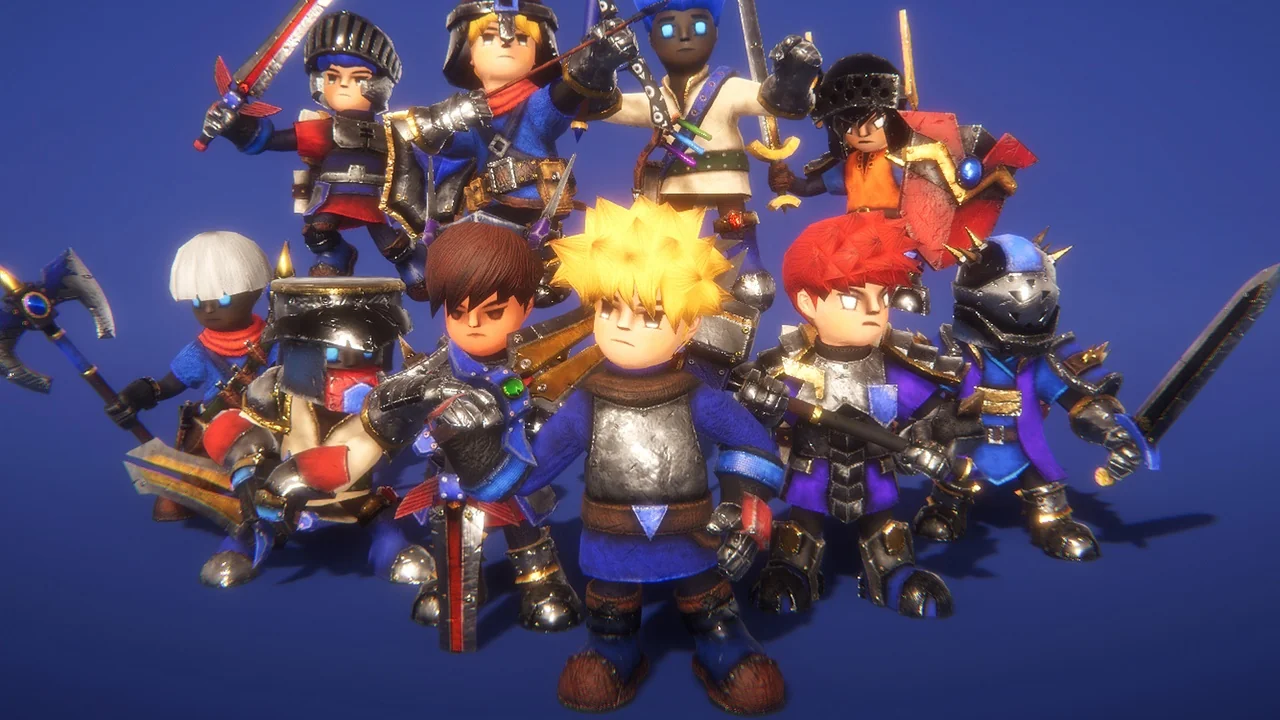
 Humans
 Humans
 Characters