"a19e0535960bd083"{"id":"1002045","slug":"hacking-security-access","title":"HACKING SECURITY ACCESS","category":"Characters \u0026 Creatures","engine":"4.26+,5.0+","assetVersion":"","engineVersion":"Engine Version: 4.26+,5.0+","tag":"Characters","accent":"blue","visual":"character","summary":"Explore the Hacking Security Access system for Unreal Engine, featuring Blueprint interactions, security door bypasses, and stealth gameplay mechanics.","platform":"Unreal Engine","publishedAt":"2026-10-26T14:42:40.685Z","updatedAt":"2026-10-26T14:42:40.685Z","sourceNotes":[],"fileContents":[],"compatibility":["Unreal Engine","Engine Version: 4.26+,5.0+"],"featuredImage":{"alt":"HACKING SECURITY ACCESS","src":"/wp-content/uploads/published/2026/10/7eb72c61571f-61bcffa1-d374-48d0-aba3-3392d08d3aaf-2f76191b66.webp"},"hasDownloadLink":true,"downloads":0,"terms":[{"taxonomy":"category","slug":"characters-and-creatures","name":"Characters \u0026 Creatures"}],"galleryImages":[{"src":"/wp-content/uploads/published/2026/10/92603bbfcc25-a89b9f24-5cc5-49c3-8ff8-bab3e1f7e069-05095d8787.webp","alt":"HACKING SECURITY ACCESS"},{"src":"/wp-content/uploads/published/2026/10/a3d1828ef39f-40bd99d0-69a4-4f22-a2c3-ac8ea7edbde3-c5689634f3.webp","alt":"HACKING SECURITY ACCESS"},{"src":"/wp-content/uploads/published/2026/10/73c3be35d4f9-ef0f77f8-986f-46b4-b9e9-74e3062632cb-755aa8a430.webp","alt":"HACKING SECURITY ACCESS"},{"src":"/wp-content/uploads/published/2026/10/24752f035d79-df5efc7c-61d6-4ad9-987c-1776c0c34f85-408a0be608.webp","alt":"HACKING SECURITY ACCESS"},{"src":"/wp-content/uploads/published/2026/10/847d44ee3f1d-a80eddb5-ad01-4491-8a61-046045cfef40-7d707df73b.webp","alt":"HACKING SECURITY ACCESS"},{"src":"/wp-content/uploads/published/2026/10/4d5323bcc487-f31c06d7-b315-4b2b-b489-a706d37eca06-4bf2a05441.webp","alt":"HACKING SECURITY ACCESS"},{"src":"/wp-content/uploads/published/2026/10/635da92bafdd-11598a78-f240-454c-9b6f-b8c7a96e850f-265f75147c.webp","alt":"HACKING SECURITY ACCESS"},{"src":"/wp-content/uploads/published/2026/10/f2d6d49e32cc-a28f0835-cbd9-4ce0-97bd-da6223beb447-8b6c350c8a.webp","alt":"HACKING SECURITY ACCESS"},{"src":"/wp-content/uploads/published/2026/10/7090bf86248d-f5411d22-ff53-4a1e-b63a-bd9d09583ecd-7c3f2c394f.webp","alt":"HACKING SECURITY ACCESS"}],"accessPanel":{"kind":"resource","title":"Download this resource","eyebrow":"Free Download","message":"Log in or create a free account to start your download.","fileName":"HACKING SECURITY ACCESS.7z","safetyNote":"Resources are manually reviewed before listing to improve quality and reduce obvious risks.","actionLabel":"Download Free","resourceType":"Resource archive"},"contentHtml":"\u003ch2\u003eConstructing Infiltration Scenarios with Hacking Security Access\u003c/h2\u003e\u003cp\u003eCovert infiltration missions rely heavily on environmental friction to build tension. When an operative navigates through restricted facilities, locked barriers and guarded checkpoints serve as natural checkpoints that dictate pacing. Hacking Security Access establishes this dynamic by simulating the physical and digital hurdles an agent encounters in the field. Rather than bypassing obstacles with an instantaneous keystroke, the system emphasizes deliberate, device-driven actions that place character positioning and timing at the center of the encounter.\u003c/p\u003e\u003cp\u003eThe thematic range spans tactical espionage operations, splinter agency missions, and covert incursions where an operative must slice through access controls without triggering active alarms. By integrating the concepts of security cards, readers, and encrypted portals, the toolkit establishes physical interaction points within a level. Level designers can establish high-security sectors where progression requires cracking electronic doors or deciphering clearance access, pulling players into close proximity with sensitive barriers while maintaining a constant sense of vulnerability.\u003c/p\u003e\u003ch2\u003eCard Reading, Door Systems, and Secret Security Clearance\u003c/h2\u003e\u003cp\u003eThe mechanics present in the toolkit focus directly on the interaction between an operative, a handheld hacking device, and environmental access points. At its foundation, the system incorporates credential validation loops, including electronic card scanning, script execution, and manual overrides. These systems turn a simple sealed doorway into an active gameplay hurdle requiring specific execution steps.\u003c/p\u003e\u003cp\u003eSecurity checkpoints within a compound can be tailored around varying layers of clearance. An operative might approach a locked door terminal, deploy a specialized interface, and read encoded data to bypass electronic locking mechanisms. Because the mechanics involve both the hacking unit and the target door, the player remains locked into the immediate environment while working through the interface. This setup naturally complements cover mechanics, encouraging level layouts where players conceal themselves behind adjacent partitions, scan card readers, and time their electronic breaches around patrolling security vectors.\u003c/p\u003e\u003ch2\u003eBlueprint and AnimationBlueprint Mechanics for Agent Stealth\u003c/h2\u003e\u003cp\u003eUnderneath the operational flow, the system relies on visual scripting logic distributed across standard Blueprints and AnimationBlueprints. This separation ensures that logic triggers synchronize cleanly with the visual performance of the character model. When an agent approaches a secure door or terminal, the interaction does not happen in an isolated UI vacuum; character gestures, device handling, and cover postures connect directly to the underlying scripts.\u003c/p\u003e\u003cp\u003eUsing AnimationBlueprints allows for coordinated physical motion, ensuring the agent aligns with terminals, manipulates the hacking unit, and responds to environmental states without jarring snaps. At the same time, the core interaction logic is routed through modular Blueprints. This visual scripting structure handles credential checks, card reading confirmations, interaction timers, and door state transitions between locked, breached, and open states. Developers can trace event flows directly through the node graphs, modifying how clearance data is parsed or adjusting the trigger volumes that initiate hacking sequences.\u003c/p\u003e\u003ch2\u003eIterative Design from Version 1.0 to the Community Remake\u003c/h2\u003e\u003cp\u003eThe architecture of Hacking Security Access reflects several development cycles aimed at refining device interaction and expanding engine support. The toolkit originally debuted as version 1.0 in February 2018, introducing an all-in-one hacking device equipped with an intuitive interface and dedicated feature set. That initial release focused on combining advanced visual design with accessible interaction schemes so players could interact with security equipment through clear, readable input steps.\u003c/p\u003e\u003cp\u003eAs developer needs shifted, the system underwent a major overhaul. Version 2.0 and 2.1 launched in April 2022 as a comprehensive remake shaped by community feedback. This revision restructured core functions to ensure smoother interaction loops and updated workflow logic. Subsequent maintenance led to version 2.2 in December 2022, which delivered general performance fixes and targeted enhancements specifically aligned with newer rendering and architecture standards.\u003c/p\u003e\u003ch2\u003eEngine Modernization from UE4 to Unreal Engine 5.1\u003c/h2\u003e\u003cp\u003eSpanning multiple generations of development, the package maintains compatibility across multiple iterations of Unreal Engine. The underlying Blueprints and assets operate within Unreal Engine 4 as well as modern Unreal Engine 5 releases, with dedicated enhancements documented through Unreal Engine 5.1. This wide coverage ensures production pipelines can maintain legacy projects while transitioning into modern engine environments without rewriting core interaction trees.\u003c/p\u003e\u003cp\u003eThe technical updates introduced in version 2.2 address the operational differences of running interactive systems inside Unreal Engine 5 and 5.1. These updates optimize script performance, ensure interaction traces register accurately within updated physics and scene handling pipelines, and maintain responsive UI performance on modern renderers. Whether deployed within an older branch or a contemporary production track, the core logic governing doors, cards, and hacking tools functions consistently.\u003c/p\u003e\u003ch2\u003eSpy Operations, Underwater Settings, and Game Integration\u003c/h2\u003e\u003cp\u003eWhile standard tactical espionage environments are a natural match for security breaches, the toolkit's design applies equally well to less conventional settings. The framework supports covert underwater missions, subterranean laboratories, and black-site operations where sealed doors and compartmentalized access control are essential for structural survival. In deep-sea stations or submerged facilities, electronic airlocks and waterproof security hatches depend on the same logic of access validation, card recognition, and terminal hacking.\u003c/p\u003e\u003cp\u003eBeyond standalone sandbox environments, the system demonstrates verified compatibility with Laser Reflection The Game, highlighting its ability to drop into broader game structures alongside complementary mechanics. Whether deployed within a puzzle-heavy infiltration framework or a straightforward stealth title requiring responsive door clearances, Hacking Security Access supplies the interactive framework necessary to transform routine navigation into a deliberate tactical challenge.\u003c/p\u003e\n\n\u003ch2\u003eRelated Resources Worth Checking\u003c/h2\u003e\n\u003cul\u003e\n\u003cli\u003e\u003ca href=\"https://3dcghub.com/combat-systems-constructor/\" title=\"Combat Systems - Constructor\"\u003eCombat Systems - Constructor\u003c/a\u003e\u003c/li\u003e\n\u003cli\u003e\u003ca href=\"https://3dcghub.com/esm-hurricaneknight-raphael/\" title=\"ESM HurricaneKnight Raphael\"\u003eESM HurricaneKnight Raphael\u003c/a\u003e\u003c/li\u003e\n\u003cli\u003e\u003ca href=\"https://3dcghub.com/sci-fi-character-06-necromancer/\" title=\"Sci-Fi Character 06 (Necromancer)\"\u003eSci-Fi Character 06 (Necromancer)\u003c/a\u003e\u003c/li\u003e\n\u003cli\u003e\u003ca href=\"https://3dcghub.com/boar-biker/\" title=\"Boar Biker\"\u003eBoar Biker\u003c/a\u003e\u003c/li\u003e\n\u003cli\u003e\u003ca href=\"https://3dcghub.com/german-soldier-wwii/\" title=\"German Soldier WWII\"\u003eGerman Soldier WWII\u003c/a\u003e\u003c/li\u003e\n\u003c/ul\u003e","contentTextLength":6792,"navigation":{"current":46,"total":4026,"previous":{"id":"1002046","slug":"hammer-animation-set","title":"Hammer Animation Set","category":"Combat","platform":"Unreal Engine","updatedAt":"2026-10-26T14:57:48.907Z"},"next":{"id":"1002044","slug":"ground-mix-vol-22-hand-painted-textures","title":"Ground Mix Vol.22 - Hand Painted Textures","category":"Variety","platform":"Unreal Engine","updatedAt":"2026-10-26T14:36:30.033Z"}},"relatedResources":[{"id":"1001871","slug":"combat-systems-constructor","title":"Combat Systems - Constructor","category":"Characters \u0026 Creatures","engine":"4.26+,5.0+","assetVersion":"","engineVersion":"Engine Version: 4.26+,5.0+","tag":"Characters","accent":"blue","visual":"character","summary":"Explore Combat Systems - Constructor, featuring modular animated chassis, varied weapon systems, and Blueprint scripts for assembling custom combat robots.","platform":"Unreal Engine","publishedAt":"2026-10-22T11:13:58.665Z","updatedAt":"2026-10-22T11:13:58.665Z","sourceNotes":[],"fileContents":[],"compatibility":["Unreal Engine","Engine Version: 4.26+,5.0+"],"featuredImage":{"alt":"Combat Systems - Constructor","src":"/wp-content/uploads/published/2026/10/fb18d32f019d-7fd1be55-7392-4109-8a09-027a83a7eca7-edfcb660c7.webp"},"hasDownloadLink":true,"downloads":1},{"id":"1002011","slug":"esm-hurricaneknight-raphael","title":"ESM HurricaneKnight Raphael","category":"Characters \u0026 Creatures","engine":"4.26+,5.0+","assetVersion":"","engineVersion":"Engine Version: 4.26+,5.0+","tag":"Characters","accent":"blue","visual":"character","summary":"Explore ESM HurricaneKnight Raphael, a realistic fantasy knight featuring an animation blueprint, scripting support, and holy warrior styling.","platform":"Unreal Engine","publishedAt":"2026-10-26T12:31:34.413Z","updatedAt":"2026-10-26T12:31:34.413Z","sourceNotes":[],"fileContents":[],"compatibility":["Unreal Engine","Engine Version: 4.26+,5.0+"],"featuredImage":{"alt":"ESM HurricaneKnight Raphael","src":"/wp-content/uploads/published/2026/10/5ba69b252509-ef9a9613-9aac-41c8-8383-3be5c295a394-5082a9673f.webp"},"hasDownloadLink":true,"downloads":0},{"id":"1001757","slug":"sci-fi-character-06-necromancer","title":"Sci-Fi Character 06 (Necromancer)","category":"Characters \u0026 Creatures","engine":"4.26+,5.0+","assetVersion":"","engineVersion":"Engine Version: 4.26+,5.0+","tag":"Characters","accent":"blue","visual":"character","summary":"Explore the mesh structure, APEX fabric simulation, Blueprint setup, and 56 creature animations included with Sci-Fi Character 06 (Necromancer).","platform":"Unreal Engine","publishedAt":"2026-10-20T03:02:03.751Z","updatedAt":"2026-10-20T03:02:03.751Z","sourceNotes":[],"fileContents":[],"compatibility":["Unreal Engine","Engine Version: 4.26+,5.0+"],"featuredImage":{"alt":"Sci-Fi Character 06 (Necromancer)","src":"/wp-content/uploads/published/2026/10/959abf120e1c-92ece96d-eb41-4d3a-9fea-c8c8f377b119-36343f6451.webp"},"hasDownloadLink":true,"downloads":0}]}
Characters
HACKING SECURITY ACCESS
Explore the Hacking Security Access system for Unreal Engine, featuring Blueprint interactions, security door bypasses, and stealth gameplay mechanics.
Constructing Infiltration Scenarios with Hacking Security Access
Covert infiltration missions rely heavily on environmental friction to build tension. When an operative navigates through restricted facilities, locked barriers and guarded checkpoints serve as natural checkpoints that dictate pacing. Hacking Security Access establishes this dynamic by simulating the physical and digital hurdles an agent encounters in the field. Rather than bypassing obstacles with an instantaneous keystroke, the system emphasizes deliberate, device-driven actions that place character positioning and timing at the center of the encounter.
The thematic range spans tactical espionage operations, splinter agency missions, and covert incursions where an operative must slice through access controls without triggering active alarms. By integrating the concepts of security cards, readers, and encrypted portals, the toolkit establishes physical interaction points within a level. Level designers can establish high-security sectors where progression requires cracking electronic doors or deciphering clearance access, pulling players into close proximity with sensitive barriers while maintaining a constant sense of vulnerability.
Card Reading, Door Systems, and Secret Security Clearance
The mechanics present in the toolkit focus directly on the interaction between an operative, a handheld hacking device, and environmental access points. At its foundation, the system incorporates credential validation loops, including electronic card scanning, script execution, and manual overrides. These systems turn a simple sealed doorway into an active gameplay hurdle requiring specific execution steps.
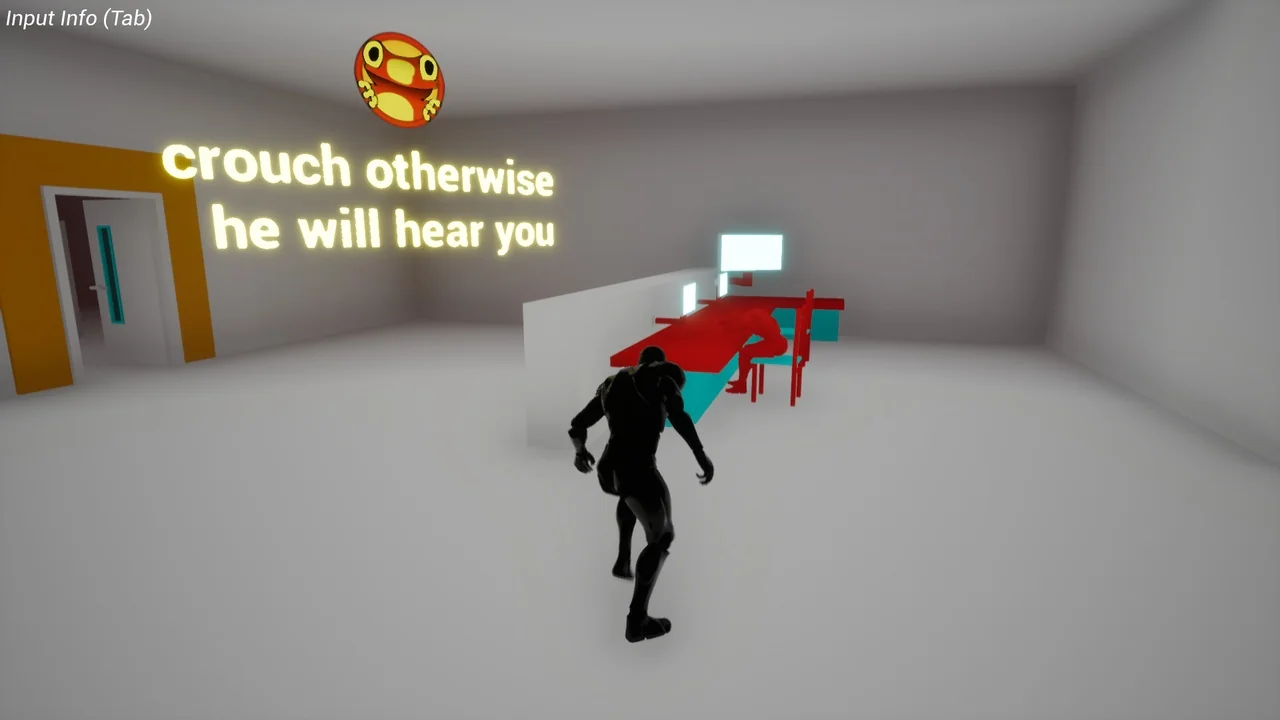
Security checkpoints within a compound can be tailored around varying layers of clearance. An operative might approach a locked door terminal, deploy a specialized interface, and read encoded data to bypass electronic locking mechanisms. Because the mechanics involve both the hacking unit and the target door, the player remains locked into the immediate environment while working through the interface. This setup naturally complements cover mechanics, encouraging level layouts where players conceal themselves behind adjacent partitions, scan card readers, and time their electronic breaches around patrolling security vectors.
Blueprint and AnimationBlueprint Mechanics for Agent Stealth
Underneath the operational flow, the system relies on visual scripting logic distributed across standard Blueprints and AnimationBlueprints. This separation ensures that logic triggers synchronize cleanly with the visual performance of the character model. When an agent approaches a secure door or terminal, the interaction does not happen in an isolated UI vacuum; character gestures, device handling, and cover postures connect directly to the underlying scripts.
Using AnimationBlueprints allows for coordinated physical motion, ensuring the agent aligns with terminals, manipulates the hacking unit, and responds to environmental states without jarring snaps. At the same time, the core interaction logic is routed through modular Blueprints. This visual scripting structure handles credential checks, card reading confirmations, interaction timers, and door state transitions between locked, breached, and open states. Developers can trace event flows directly through the node graphs, modifying how clearance data is parsed or adjusting the trigger volumes that initiate hacking sequences.
Iterative Design from Version 1.0 to the Community Remake
The architecture of Hacking Security Access reflects several development cycles aimed at refining device interaction and expanding engine support. The toolkit originally debuted as version 1.0 in February 2018, introducing an all-in-one hacking device equipped with an intuitive interface and dedicated feature set. That initial release focused on combining advanced visual design with accessible interaction schemes so players could interact with security equipment through clear, readable input steps.
As developer needs shifted, the system underwent a major overhaul. Version 2.0 and 2.1 launched in April 2022 as a comprehensive remake shaped by community feedback. This revision restructured core functions to ensure smoother interaction loops and updated workflow logic. Subsequent maintenance led to version 2.2 in December 2022, which delivered general performance fixes and targeted enhancements specifically aligned with newer rendering and architecture standards.
Engine Modernization from UE4 to Unreal Engine 5.1
Spanning multiple generations of development, the package maintains compatibility across multiple iterations of Unreal Engine. The underlying Blueprints and assets operate within Unreal Engine 4 as well as modern Unreal Engine 5 releases, with dedicated enhancements documented through Unreal Engine 5.1. This wide coverage ensures production pipelines can maintain legacy projects while transitioning into modern engine environments without rewriting core interaction trees.
The technical updates introduced in version 2.2 address the operational differences of running interactive systems inside Unreal Engine 5 and 5.1. These updates optimize script performance, ensure interaction traces register accurately within updated physics and scene handling pipelines, and maintain responsive UI performance on modern renderers. Whether deployed within an older branch or a contemporary production track, the core logic governing doors, cards, and hacking tools functions consistently.
Spy Operations, Underwater Settings, and Game Integration
While standard tactical espionage environments are a natural match for security breaches, the toolkit's design applies equally well to less conventional settings. The framework supports covert underwater missions, subterranean laboratories, and black-site operations where sealed doors and compartmentalized access control are essential for structural survival. In deep-sea stations or submerged facilities, electronic airlocks and waterproof security hatches depend on the same logic of access validation, card recognition, and terminal hacking.
Beyond standalone sandbox environments, the system demonstrates verified compatibility with Laser Reflection The Game, highlighting its ability to drop into broader game structures alongside complementary mechanics. Whether deployed within a puzzle-heavy infiltration framework or a straightforward stealth title requiring responsive door clearances, Hacking Security Access supplies the interactive framework necessary to transform routine navigation into a deliberate tactical challenge.
 Characters
 Characters
 Characters
 Characters