"a19e0535960bd083"{"id":"1002011","slug":"esm-hurricaneknight-raphael","title":"ESM HurricaneKnight Raphael","category":"Characters \u0026 Creatures","engine":"4.26+,5.0+","assetVersion":"","engineVersion":"Engine Version: 4.26+,5.0+","tag":"Characters","accent":"blue","visual":"character","summary":"Explore ESM HurricaneKnight Raphael, a realistic fantasy knight featuring an animation blueprint, scripting support, and holy warrior styling.","platform":"Unreal Engine","publishedAt":"2026-10-26T12:31:34.413Z","updatedAt":"2026-10-26T12:31:34.413Z","sourceNotes":[],"fileContents":[],"compatibility":["Unreal Engine","Engine Version: 4.26+,5.0+"],"featuredImage":{"alt":"ESM HurricaneKnight Raphael","src":"/wp-content/uploads/published/2026/10/5ba69b252509-ef9a9613-9aac-41c8-8383-3be5c295a394-5082a9673f.webp"},"hasDownloadLink":true,"downloads":0,"terms":[{"taxonomy":"category","slug":"characters-and-creatures","name":"Characters \u0026 Creatures"}],"galleryImages":[{"src":"/wp-content/uploads/published/2026/10/912754b38d15-6ca51774-a764-4487-82fe-7386f38d0c67-c10ed95e98.webp","alt":"ESM HurricaneKnight Raphael"},{"src":"/wp-content/uploads/published/2026/10/bca3a1a32fba-51b28ef0-a83c-4074-9c12-62ac79359038-2af097af95.webp","alt":"ESM HurricaneKnight Raphael"},{"src":"/wp-content/uploads/published/2026/10/cd6ea98d2981-ad26b2d5-39bc-4d3c-94a7-2411d4bae93f-874bf3a2c2.webp","alt":"ESM HurricaneKnight Raphael"},{"src":"/wp-content/uploads/published/2026/10/a6f29a9282ef-fcdfe2a9-e750-4c1f-899b-73879b479fdf-dbdc434b79.webp","alt":"ESM HurricaneKnight Raphael"},{"src":"/wp-content/uploads/published/2026/10/e27514e37ad3-7f64f01f-7e59-4d91-837e-815d3ede9890-b695885a48.webp","alt":"ESM HurricaneKnight Raphael"},{"src":"/wp-content/uploads/published/2026/10/4187822dc590-b9e78380-b5b8-4d3c-92af-0e24eb7a8a8b-9ec24ec77f.webp","alt":"ESM HurricaneKnight Raphael"},{"src":"/wp-content/uploads/published/2026/10/13c536927d33-f1987e3f-a956-4f28-84ea-04640bff1b36-5fe4d72e3c.webp","alt":"ESM HurricaneKnight Raphael"},{"src":"/wp-content/uploads/published/2026/10/a30cc12bf039-f4a02241-2989-43d5-85b7-b0c85e731d26-31666cd38b.webp","alt":"ESM HurricaneKnight Raphael"}],"accessPanel":{"kind":"resource","title":"Download this resource","eyebrow":"Free Download","message":"Log in or create a free account to start your download.","fileName":"Content.7z","safetyNote":"Resources are manually reviewed before listing to improve quality and reduce obvious risks.","actionLabel":"Download Free","resourceType":"Resource archive"},"contentHtml":"\u003ch2\u003eVisual Archetypes of the HurricaneKnight Raphael\u003c/h2\u003e\u003cp\u003eProjects rooted in grounded fantasy often require combatants whose appearance instantly projects discipline, authority, and raw force. ESM HurricaneKnight Raphael establishes this presence through a core aesthetic combining holy conviction with mighty, imposing physical power. Rather than leaning into exaggerated or whimsical proportions, the presentation emphasizes a realistic execution, anchoring the character firmly within traditional heroic fantasy environments.\u003c/p\u003e\u003cp\u003eThe visual identity revolves around the concept of a holy knight whose presentation emphasizes disciplined power. In cinematic sequences or active combat encounters, the knight's presence communicates stalwart defense and deliberate offensive weight. Environments such as fortified cathedral courtyards, war-torn mountain bastions, and consecrated strongholds provide natural settings where such a figure fits immediately into narrative worldbuilding.\u003c/p\u003e\u003cp\u003eBy treating the holy motif as an integral design trait, the character functions well when cast as a high-ranking paladin, an order champion, or an elite guardian. The imposing presence allows creators to stage encounters where Raphael acts either as the central protagonist defending a realm or as an unyielding boss guarding sanctified grounds against intruders.\u003c/p\u003e\u003ch2\u003eAnimationblueprint Setup and Mechanical Control\u003c/h2\u003e\u003cp\u003eMovement quality dictates how believable an armored character feels under direct player control. ESM HurricaneKnight Raphael incorporates an animation blueprint, establishing the foundational state logic necessary to coordinate actions, transitions, and character locomotion across varied gameplay scenarios.\u003c/p\u003e\u003cp\u003eAn animation blueprint coordinates complex motion by handling state changes between idle stances, full-speed sprints, directional turns, and combat swings. For a character defined by words like power and mighty, state transitions must convey momentum and follow-through. Having a dedicated animation blueprint structure provides the baseline logic required to bind inputs to motion states cleanly, sparing technical designers from having to map out basic character transitions from absolute scratch.\u003c/p\u003e\u003cp\u003eBecause the character includes script-level integration alongside the animation blueprint, technical animators can synchronize gameplay-driven triggers directly with animation frames. When timing weapon impacts, defensive parries, or casting gestures linked to holy abilities, having the underlying animation blueprint logic already aligned simplifies the task of achieving responsive, high-impact combat mechanics.\u003c/p\u003e\u003ch2\u003eCharacter Retargeting and Animation Flexibility\u003c/h2\u003e\u003cp\u003eReusability remains central to any real-time character pipeline, especially when integrating an armored combatant into an existing motion library. Dedicated retarget tutorial material guides users through adapting skeletal motions, enabling ESM HurricaneKnight Raphael to inherit third-party animations or internal studio motion capture takes without breaking posture or bone hierarchy alignment.\u003c/p\u003e\u003cp\u003eRetargeting armored models typically demands close attention to shoulder guards, joint deformation, and center-of-gravity shifts. Working through the retargeting workflow ensures that custom swings, running cycles, or defensive dodges adapt cleanly to Raphael's proportions. This capability prevents the character from being locked to a single rigid movement set, opening the door for developers to plug in their own attack chains, specialized martial maneuvers, or interactive dialogue gestures.\u003c/p\u003e\u003cp\u003eFor teams staging large-scale medieval or fantasy battles, retargeting flexibility allows Raphael to share motion data across multiple combatant rigs. Standardizing locomotion and strike packages across several characters speeds up testing and iteration, ensuring that Raphael can jump straight into ongoing combat prototypes without requiring bespoke motion recording for every individual action.\u003c/p\u003e\u003ch2\u003eCompatibility with ESM Novice Sorceress\u003c/h2\u003e\u003cp\u003eEncounter variety often hinges on complementary character dynamics. Within game design frameworks, pairing physical front-line combatants with support or magic-wielding counterparts produces balanced combat squads and varied tactical scenarios. ESM HurricaneKnight Raphael shares direct pipeline compatibility with ESM Novice Sorceress, making the pair natural collaborators across gameplay and narrative scenes.\u003c/p\u003e\u003cp\u003eFrom a gameplay perspective, this compatibility allows developers to prototype cooperative mechanics, companion artificial intelligence systems, or multi-class party rosters without resolving structural discrepancies between asset architectures. Raphael provides the heavy, defensive frontline presence—holding choke points and drawing enemy aggression—while the Novice Sorceress operates from the backline to provide ranged spellcasting or tactical support.\u003c/p\u003e\u003cp\u003eIn cutscenes or campaign framing, placing a mighty holy knight alongside a novice practitioner establishes immediate narrative friction or mentorship dynamics. The shared compatibility between these assets ensures that visual scale, setup conventions, and engine interactions remain harmonious throughout production.\u003c/p\u003e\u003ch2\u003eScript Support for Realistic Fantasy Systems\u003c/h2\u003e\u003cp\u003eBeyond surface visuals and skeletal setup, ESM HurricaneKnight Raphael includes script features designed to assist implementation into realistic fantasy frameworks. Integrating a character into modern game engines requires connective logic that handles status changes, hit reaction handling, equipment attachment points, and ability invocation.\u003c/p\u003e\u003cp\u003eThe inclusion of script resources allows developers to tie gameplay variables directly to character behavior. In practical design scenarios, this facilitates the setup of holy buffs, aura effects, defensive stances, or resource-draining power attacks. Instead of spending early development time building character controllers and state variables entirely by hand, creators can leverage the integrated script structure to establish baseline functionality rapidly.\u003c/p\u003e\u003cp\u003eThis functional scaffolding helps bridge the gap between creative visual design and responsive gameplay systems. Whether configuring a high-stakes duel system where precise parrying is mandatory or assembling an action-oriented boss encounter featuring phase changes, the underlying scripting and animation blueprint infrastructure support sustained iterative tuning.\u003c/p\u003e\u003ch2\u003eIdeal Production Scenarios for ESM HurricaneKnight Raphael\u003c/h2\u003e\u003cp\u003eTeams building combat-focused titles benefit most from this asset when looking for an established knight archetype that combines heavy visual weight with immediate technical readiness. Solo developers and small production units can deploy Raphael as a principal player character, taking advantage of the bundled animation blueprint, script integration, and retarget guidance to assemble a working prototype swiftly.\u003c/p\u003e\u003cp\u003eLarger teams developing expansive fantasy worlds can position Raphael as an elite order member, an uncompromising temple protector, or a pivotal faction lieutenant. The synergy with companion characters like ESM Novice Sorceress offers a ready-made foundation for multi-character encounters, providing projects with a powerful, grounded holy knight ready for deployment into demanding real-time environments.\u003c/p\u003e\n\n\u003ch2\u003eRelated Resources Worth Checking\u003c/h2\u003e\n\u003cul\u003e\n\u003cli\u003e\u003ca href=\"https://3dcghub.com/esm-ice-queen/\" title=\"ESM Ice Queen\"\u003eESM Ice Queen\u003c/a\u003e\u003c/li\u003e\n\u003cli\u003e\u003ca href=\"https://3dcghub.com/camel-fantasy/\" title=\"Camel Fantasy\"\u003eCamel Fantasy\u003c/a\u003e\u003c/li\u003e\n\u003cli\u003e\u003ca href=\"https://3dcghub.com/viking-ulf/\" title=\"Viking Ulf\"\u003eViking Ulf\u003c/a\u003e\u003c/li\u003e\n\u003cli\u003e\u003ca href=\"https://3dcghub.com/dark-knight/\" title=\"Dark Knight\"\u003eDark Knight\u003c/a\u003e\u003c/li\u003e\n\u003cli\u003e\u003ca href=\"https://3dcghub.com/cyberpunk-street-boy/\" title=\"Cyberpunk Street Boy\"\u003eCyberpunk Street Boy\u003c/a\u003e\u003c/li\u003e\n\u003c/ul\u003e","contentTextLength":7387,"navigation":{"current":80,"total":4026,"previous":{"id":"1002012","slug":"etasphera45","title":"Etasphera45","category":"Mechanical \u0026 Robots","platform":"Unreal Engine","updatedAt":"2026-10-26T12:49:30.399Z"},"next":{"id":"1002010","slug":"esm-buff-icon","title":"ESM Buff Icon","category":"Gameplay Features","platform":"Unreal Engine","updatedAt":"2026-10-26T12:30:54.765Z"}},"relatedResources":[{"id":"2284","slug":"esm-ice-queen","title":"ESM Ice Queen","category":"Characters \u0026 Creatures","engine":"4.26+,5.0+","assetVersion":"Engine version: 4.26+,5.0+","engineVersion":"4.22","tag":"Characters","accent":"blue","visual":"character","summary":"Enhance your project with the ESM Ice Queen. This realistic fantasy character features high-quality textures and professional rigging for game developers.","platform":"Unreal Engine","publishedAt":"2026-02-07T08:49:20.000Z","updatedAt":"2026-04-19T15:58:04.000Z","sourceNotes":[],"fileContents":[],"compatibility":["Unreal Engine","Engine version: 4.26+,5.0+"],"featuredImage":{"alt":"ESM Ice Queen","src":"https://3dcghub.com/wp-content/uploads/2026/02/5cc995a0-675d-40c8-87c0-2b3db3abf5f4.webp"},"hasDownloadLink":true,"downloads":0},{"id":"1001972","slug":"camel-fantasy","title":"Camel Fantasy","category":"Characters \u0026 Creatures","engine":"4.18+,5.0+","assetVersion":"","engineVersion":"Engine Version: 4.18+,5.0+","tag":"Characters","accent":"blue","visual":"character","summary":"Examine the Camel Fantasy character, featuring super boss capabilities, modular bags, Animation Blueprint integration, and desert RPG styling.","platform":"Unreal Engine","publishedAt":"2026-10-24T13:56:22.541Z","updatedAt":"2026-10-24T13:56:22.541Z","sourceNotes":[],"fileContents":[],"compatibility":["Unreal Engine","Engine Version: 4.18+,5.0+"],"featuredImage":{"alt":"Camel Fantasy","src":"/wp-content/uploads/published/2026/10/82135a2497a5-a9b1abf0-65b8-40b3-82b6-7fa209d8eb0a-86e7f30c67.webp"},"hasDownloadLink":true,"downloads":0},{"id":"1001916","slug":"viking-ulf","title":"Viking Ulf","category":"Characters \u0026 Creatures","engine":"4.26+,5.0+","assetVersion":"","engineVersion":"Engine Version: 4.26+,5.0+","tag":"Characters","accent":"blue","visual":"character","summary":"Viking Ulf delivers a low-poly fantasy protagonist equipped with an axe, animation blueprint, combat scripting, and FPS Starter Pack compatibility.","platform":"Unreal Engine","publishedAt":"2026-10-22T11:53:01.440Z","updatedAt":"2026-10-22T11:53:01.440Z","sourceNotes":[],"fileContents":[],"compatibility":["Unreal Engine","Engine Version: 4.26+,5.0+"],"featuredImage":{"alt":"Viking Ulf","src":"/wp-content/uploads/published/2026/10/a6873923df39-3ed9cd68-3ebd-4720-b687-5cc602992b18-1a91240702.webp"},"hasDownloadLink":true,"downloads":0}]}
Characters
ESM HurricaneKnight Raphael
Explore ESM HurricaneKnight Raphael, a realistic fantasy knight featuring an animation blueprint, scripting support, and holy warrior styling.
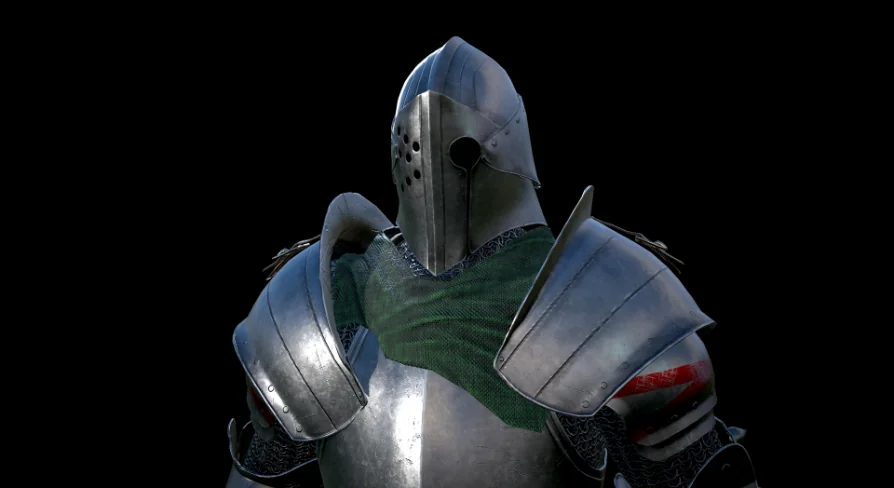
Projects rooted in grounded fantasy often require combatants whose appearance instantly projects discipline, authority, and raw force. ESM HurricaneKnight Raphael establishes this presence through a core aesthetic combining holy conviction with mighty, imposing physical power. Rather than leaning into exaggerated or whimsical proportions, the presentation emphasizes a realistic execution, anchoring the character firmly within traditional heroic fantasy environments.
The visual identity revolves around the concept of a holy knight whose presentation emphasizes disciplined power. In cinematic sequences or active combat encounters, the knight's presence communicates stalwart defense and deliberate offensive weight. Environments such as fortified cathedral courtyards, war-torn mountain bastions, and consecrated strongholds provide natural settings where such a figure fits immediately into narrative worldbuilding.
By treating the holy motif as an integral design trait, the character functions well when cast as a high-ranking paladin, an order champion, or an elite guardian. The imposing presence allows creators to stage encounters where Raphael acts either as the central protagonist defending a realm or as an unyielding boss guarding sanctified grounds against intruders.
Animationblueprint Setup and Mechanical Control
Movement quality dictates how believable an armored character feels under direct player control. ESM HurricaneKnight Raphael incorporates an animation blueprint, establishing the foundational state logic necessary to coordinate actions, transitions, and character locomotion across varied gameplay scenarios.
An animation blueprint coordinates complex motion by handling state changes between idle stances, full-speed sprints, directional turns, and combat swings. For a character defined by words like power and mighty, state transitions must convey momentum and follow-through. Having a dedicated animation blueprint structure provides the baseline logic required to bind inputs to motion states cleanly, sparing technical designers from having to map out basic character transitions from absolute scratch.
Because the character includes script-level integration alongside the animation blueprint, technical animators can synchronize gameplay-driven triggers directly with animation frames. When timing weapon impacts, defensive parries, or casting gestures linked to holy abilities, having the underlying animation blueprint logic already aligned simplifies the task of achieving responsive, high-impact combat mechanics.
Character Retargeting and Animation Flexibility
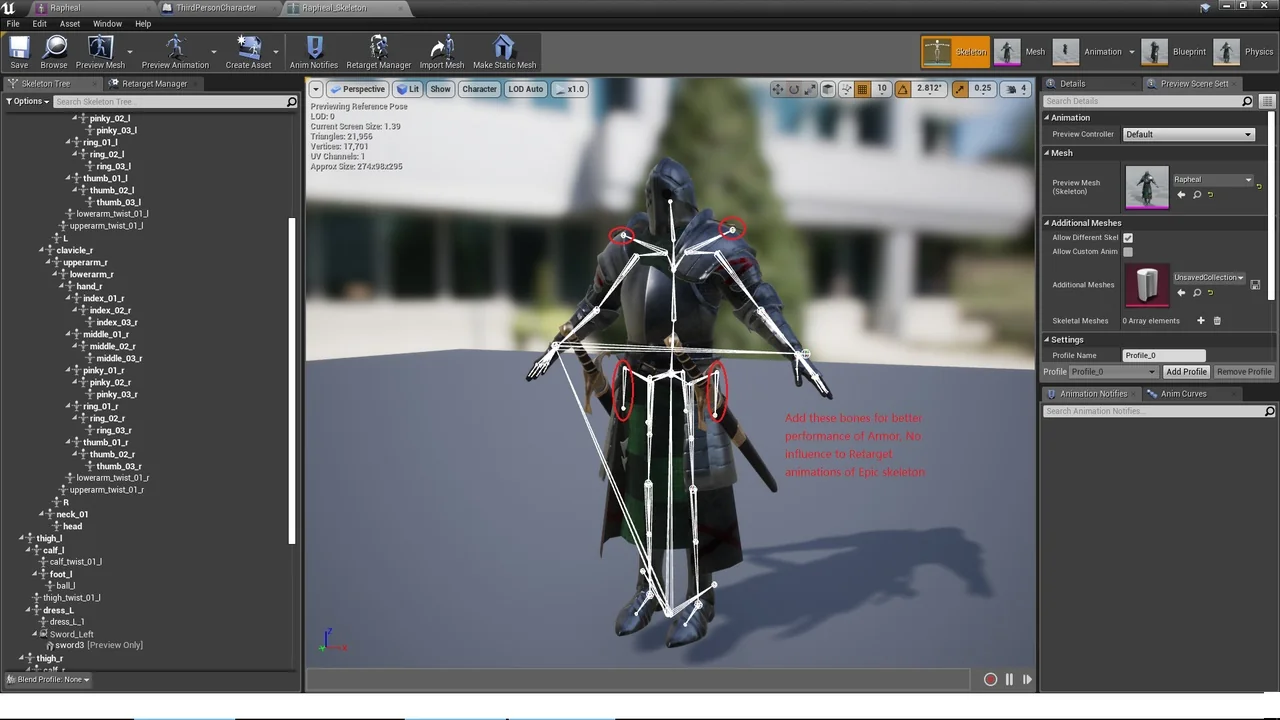
Reusability remains central to any real-time character pipeline, especially when integrating an armored combatant into an existing motion library. Dedicated retarget tutorial material guides users through adapting skeletal motions, enabling ESM HurricaneKnight Raphael to inherit third-party animations or internal studio motion capture takes without breaking posture or bone hierarchy alignment.
Retargeting armored models typically demands close attention to shoulder guards, joint deformation, and center-of-gravity shifts. Working through the retargeting workflow ensures that custom swings, running cycles, or defensive dodges adapt cleanly to Raphael's proportions. This capability prevents the character from being locked to a single rigid movement set, opening the door for developers to plug in their own attack chains, specialized martial maneuvers, or interactive dialogue gestures.
For teams staging large-scale medieval or fantasy battles, retargeting flexibility allows Raphael to share motion data across multiple combatant rigs. Standardizing locomotion and strike packages across several characters speeds up testing and iteration, ensuring that Raphael can jump straight into ongoing combat prototypes without requiring bespoke motion recording for every individual action.
Compatibility with ESM Novice Sorceress
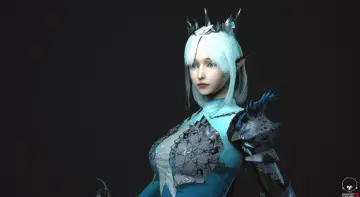
Encounter variety often hinges on complementary character dynamics. Within game design frameworks, pairing physical front-line combatants with support or magic-wielding counterparts produces balanced combat squads and varied tactical scenarios. ESM HurricaneKnight Raphael shares direct pipeline compatibility with ESM Novice Sorceress, making the pair natural collaborators across gameplay and narrative scenes.
From a gameplay perspective, this compatibility allows developers to prototype cooperative mechanics, companion artificial intelligence systems, or multi-class party rosters without resolving structural discrepancies between asset architectures. Raphael provides the heavy, defensive frontline presence—holding choke points and drawing enemy aggression—while the Novice Sorceress operates from the backline to provide ranged spellcasting or tactical support.
In cutscenes or campaign framing, placing a mighty holy knight alongside a novice practitioner establishes immediate narrative friction or mentorship dynamics. The shared compatibility between these assets ensures that visual scale, setup conventions, and engine interactions remain harmonious throughout production.
Script Support for Realistic Fantasy Systems
Beyond surface visuals and skeletal setup, ESM HurricaneKnight Raphael includes script features designed to assist implementation into realistic fantasy frameworks. Integrating a character into modern game engines requires connective logic that handles status changes, hit reaction handling, equipment attachment points, and ability invocation.
The inclusion of script resources allows developers to tie gameplay variables directly to character behavior. In practical design scenarios, this facilitates the setup of holy buffs, aura effects, defensive stances, or resource-draining power attacks. Instead of spending early development time building character controllers and state variables entirely by hand, creators can leverage the integrated script structure to establish baseline functionality rapidly.
This functional scaffolding helps bridge the gap between creative visual design and responsive gameplay systems. Whether configuring a high-stakes duel system where precise parrying is mandatory or assembling an action-oriented boss encounter featuring phase changes, the underlying scripting and animation blueprint infrastructure support sustained iterative tuning.
Ideal Production Scenarios for ESM HurricaneKnight Raphael
Teams building combat-focused titles benefit most from this asset when looking for an established knight archetype that combines heavy visual weight with immediate technical readiness. Solo developers and small production units can deploy Raphael as a principal player character, taking advantage of the bundled animation blueprint, script integration, and retarget guidance to assemble a working prototype swiftly.
Larger teams developing expansive fantasy worlds can position Raphael as an elite order member, an uncompromising temple protector, or a pivotal faction lieutenant. The synergy with companion characters like ESM Novice Sorceress offers a ready-made foundation for multi-character encounters, providing projects with a powerful, grounded holy knight ready for deployment into demanding real-time environments.
 Characters
 Characters
 Characters
 Characters