"7ad89cffa44984cf"{"id":"1002530","slug":"gastarias","title":"GASTARIAS","category":"Characters \u0026 Creatures","engine":"4.26+,5.0+","assetVersion":"","engineVersion":"Engine Version: 4.26+,5.0+","tag":"Characters","accent":"blue","visual":"character","summary":"Technical analysis of GASTARIAS, a 4.3 Ktris low-poly alien enemy featuring an 11-bone rig, 4K texturing, and eight animations with root motion.","platform":"Unreal Engine","indexPolicy":"index","publishedAt":"2026-11-13T09:24:21.655Z","updatedAt":"2026-11-13T09:24:21.655Z","sourceNotes":[],"fileContents":[],"compatibility":["Unreal Engine","Engine Version: 4.26+,5.0+"],"featuredImage":{"alt":"GASTARIAS","src":"/wp-content/uploads/published/2026/11/6d6ecd406f3b-b77dc8d3-331ef6c200.webp"},"hasDownloadLink":true,"downloads":0,"terms":[{"taxonomy":"category","slug":"characters-and-creatures","name":"Characters \u0026 Creatures"}],"galleryImages":[{"src":"/wp-content/uploads/published/2026/11/25d777ee33f8-e1fd2d58-827eaeb2cc.webp","alt":"GASTARIAS"},{"src":"/wp-content/uploads/published/2026/11/4a8f28d9f667-aa56a2ba-47998ad0ec.webp","alt":"GASTARIAS"},{"src":"/wp-content/uploads/published/2026/11/00715221e530-3c8b38dc-4004cf50e2.webp","alt":"GASTARIAS"},{"src":"/wp-content/uploads/published/2026/11/cb042e9007d0-c1e4328a-cea1d67780.webp","alt":"GASTARIAS"},{"src":"/wp-content/uploads/published/2026/11/8535bd7e5f61-583af52f-1c65c47c56.webp","alt":"GASTARIAS"}],"accessPanel":{"kind":"resource","title":"Get this resource","eyebrow":"Free resource","message":"Download this resource in your browser.","fileName":"Content.7z","safetyNote":"Resources are manually reviewed before listing to improve quality and reduce obvious risks.","actionLabel":"Get this resource","resourceType":"Resource archive","versions":[]},"contentHtml":"\u003cp\u003eGASTARIAS delivers a dedicated alien opponent built to serve sci-fi combat encounters. The asset centers on an extraterrestrial adversary intended specifically as a target for projectile and shooting mechanics, functioning as a standalone unit while also forming part of the larger Sci Fi Creatures Vol 1 collection. Structured with a compact polygonal footprint, a minimal skeletal rig, high-resolution surface mapping, and a focused animation library, the creature is configured to balance real-time runtime efficiency against visual definition across modern computing platforms and console hardware.\u003c/p\u003e \u003ch2\u003eGASTARIAS Mesh Geometry and Visual Profile\u003c/h2\u003e\n\u003cp\u003eThe core geometry of GASTARIAS is established at 4.3 Ktris, providing a lightweight surface mesh that fits cleanly into low-poly production requirements without sacrificing the distinctive physical silhouette needed for hostile enemy identification. In interactive shooting environments, enemy identification relies on readable silhouettes and defined mass. At 4,300 triangles, the model distributes its edge density to articulate the unusual forms expected of an alien entity, ensuring the anatomy holds up under direct visual scrutiny while keeping the per-instance vertex processing overhead remarkably low.\u003c/p\u003e\n\u003cp\u003eThis triangle count allows developers to deploy the creature in varying encounter densities. Because the geometric footprint is small, scenes can accommodate multiple instances simultaneously without saturating the geometry pipeline. The underlying construction aligns with both realistic and fantasy visual aesthetics, accommodating stylistically grounded science-fiction combat as well as more imaginative speculative settings. Maintaining a tight 4.3 Ktris topology also facilitates clean physics approximations and collision boundary setups, both of which are central when calculating projectile impacts, hit detection boxes, and debris interactions during active gameplay.\u003c/p\u003e \u003ch2\u003eRigging Architecture and the 11-Bone Setup of GASTARIAS\u003c/h2\u003e\n\u003cp\u003eBeneath the surface mesh, GASTARIAS operates on a specialized skeletal rig composed of 11 bones. Modern character assets often implement complex, multi-joint hierarchies that demand significant computational power during runtime skinning. In contrast, an 11-bone hierarchy represents an exceptionally streamlined deformer structure. This economical joint setup drastically simplifies matrix skinning calculations, enabling the animation engine to update bone transformations in minimal compute cycles during every frame.\u003c/p\u003e\n\u003cp\u003eAn 11-bone framework yields concrete benefits for game runtime systems:\u003c/p\u003e\n\u003cul\u003e\n\u003cli\u003eDrastically reduced CPU skinning overhead across dense enemy waves\u003c/li\u003e\n\u003cli\u003eStraightforward parameter binding within an Animation Blueprint\u003c/li\u003e\n\u003cli\u003eDirect translation of scripted behaviors without resolving extraneous bone chains\u003c/li\u003e\n\u003cli\u003eMinimal memory footprint when storing runtime pose caches and transform tracks\u003c/li\u003e\n\u003c/ul\u003e\n\u003cp\u003eBecause the skeleton restricts itself to 11 functional joints, connecting the entity to custom gameplay logic, behavioral scripts, or procedural aiming offsets avoids the complexity associated with standard high-density humanoid rigs. The rig directly accommodates the specialized motion requirements of an unusual alien entity, focusing deformation on the primary articulators needed to establish locomotion, physical reactions, and attack posturing.\u003c/p\u003e \u003ch2\u003eAnimation Set and Root Motion Handling\u003c/h2\u003e\n\u003cp\u003eGASTARIAS includes a dedicated set of eight animations designed to manage the creature's operational state machine. Within this motion library, three clips are supplied specifically as root motion variations, while the remaining five clips function as standard in-place cycles. This division equips developers with the flexibility to choose how locomotion and entity positioning are driven within the game engine.\u003c/p\u003e\n\u003cp\u003eThe presence of three root motion variations allows the creature's physical displacement to be dictated directly by the animated movement of the root joint. In combat sequences where physical grounding and precise spatial translation are necessary—such as lurching maneuvers, directional evasion, or aggressive forward charges—root motion eliminates foot sliding and preserves the organic weight of the creature's strange movement patterns. The animation data directly informs the character controller of its world-space trajectory, ensuring physics systems and collision capsules match the exact displacement depicted on screen.\u003c/p\u003e\n\u003cp\u003eFor gameplay implementations relying on custom algorithmic pathfinding or character movement components that dictate speed programmatically, the in-place variations allow movement logic to be governed externally by script or AI controllers. Blending between these eight states via an Animation Blueprint ensures smooth visual transitions between idle awareness, combat movement, attack cycles, and damage responsiveness when the alien is targeted and shot by the player. The animation set provides the necessary operational states to execute standard enemy AI behaviors from initial encounter to final neutralization.\u003c/p\u003e \u003ch2\u003eMaterial Configuration and Platform Performance\u003c/h2\u003e\n\u003cp\u003eSurface rendering for GASTARIAS is unified under a single material that utilizes 4096x4096 textures. Allocating a full 4K texture resolution to a single material pass achieves an optimal compromise between fine-grained visual fidelity and rendering efficiency. Because the asset relies on exactly one material, drawing the entity on screen requires only one draw call per mesh pass, eliminating the draw call accumulation that occurs when models are fragmented across multiple material IDs.\u003c/p\u003e\n\u003cp\u003eThe 4096x4096 texture layout ensures that even when the camera closes in during intense combat or cinematic close-ups, surface detailing remains crisp and legible. The single material accommodates realistic shader pipelines, rendering skin, carapace, or biological details with high surface fidelity that belies the low underlying triangle count. At the same time, hardware that requires memory conservation can easily scale down the 4K texture mipmaps to 2048x2048 or 1024x1024 without needing to modify the UV layouts or material assignments.\u003c/p\u003e\n\u003cp\u003eTargeted specifically for deployment on PC, Mac, and latest-generation console platforms, the combination of 4.3 Ktris geometry, an 11-bone skeletal system, and a single-draw-call material setup ensures consistent frame pacing. Modern consoles and desktop systems can leverage the high-resolution texture map while exploiting the hyper-efficient mesh and rig to populate expansive levels with multiple instances of this hostile creature.\u003c/p\u003e \u003ch2\u003eIntegration Within Sci-Fi Pipelines and Package Compatibility\u003c/h2\u003e\n\u003cp\u003eBeyond its standalone characteristics, GASTARIAS is built to function alongside broader ecological assets, being included inside the Sci Fi Creatures Vol 1 collection. This placement associates the creature with a wider menagerie of non-humanoid adversaries, allowing it to integrate into coordinated encounters where varied enemy types challenge the player using different combat dynamics. Additionally, the asset maintains compatibility with the Farm Animals Pack framework, facilitating shared technical pipelines, animation structures, or deployment patterns across related animalistic rigs.\u003c/p\u003e\n\u003cp\u003eThe technical parameters—spanning low-poly geometry, script tag support, an Animation Blueprint pipeline, and cross-platform readiness—establish GASTARIAS as a production-ready hostile asset. Whether functioning as cannon fodder in an intense sci-fi shooter, populating a distant alien biome, or serving as a strange beast within a speculative fantasy quest, the package arrives structurally complete to handle immediate AI integration, combat targeting, and real-time rendering.\u003c/p\u003e\n\n\u003ch2\u003eRelated Resources Worth Checking\u003c/h2\u003e\n\u003cul\u003e\n\u003cli\u003e\u003ca href=\"https://3dcghub.com/giant-viper/\" rel=\"noopener noreferrer\"\u003eGiant Viper\u003c/a\u003e\u003c/li\u003e\n\u003cli\u003e\u003ca href=\"https://3dcghub.com/darkness-spider/\" rel=\"noopener noreferrer\"\u003eDarkness Spider\u003c/a\u003e\u003c/li\u003e\n\u003cli\u003e\u003ca href=\"https://3dcghub.com/black-dragon/\" rel=\"noopener noreferrer\"\u003eBlack Dragon\u003c/a\u003e\u003c/li\u003e\n\u003cli\u003e\u003ca href=\"https://3dcghub.com/mr-plague-doctor/\" rel=\"noopener noreferrer\"\u003emr. Plague Doctor\u003c/a\u003e\u003c/li\u003e\n\u003cli\u003e\u003ca href=\"https://3dcghub.com/crocodile/\" rel=\"noopener noreferrer\"\u003eCROCODILE\u003c/a\u003e\u003c/li\u003e\n\u003c/ul\u003e","contentTextLength":7790,"navigation":{"current":47,"total":4499,"previous":{"id":"1002531","slug":"heavyknight","title":"HeavyKnight","category":"Characters \u0026 Creatures","platform":"Unreal Engine","updatedAt":"2026-11-13T09:29:35.306Z"},"next":{"id":"1002529","slug":"fps-arms-pack","title":"FPS Arms Pack","category":"Humans","platform":"Unreal Engine","updatedAt":"2026-11-13T09:22:55.665Z"}},"relatedResources":[{"id":"1002434","slug":"giant-viper","title":"Giant Viper","category":"Characters \u0026 Creatures","engine":"4.15+,5.0+","assetVersion":"","engineVersion":"Engine Version: 4.15+,5.0+","tag":"Characters","accent":"blue","visual":"character","summary":"Low-poly Giant Viper creature model featuring 4.52 Ktris, 31 bones, 21 animations with root motion, single-material 2048x2048 textures, and 5 color variations.","platform":"Unreal Engine","indexPolicy":"index","publishedAt":"2026-11-10T18:30:25.159Z","updatedAt":"2026-11-10T18:30:25.159Z","sourceNotes":[],"fileContents":[],"compatibility":["Unreal Engine","Engine Version: 4.15+,5.0+"],"featuredImage":{"alt":"Giant Viper","src":"/wp-content/uploads/published/2026/11/653d1d24cc6d-6894143a-3e33-401f-a8b8-281b4d825fb0-7a645d247c.webp"},"hasDownloadLink":true,"downloads":0},{"id":"1002430","slug":"darkness-spider","title":"Darkness Spider","category":"Characters \u0026 Creatures","engine":"4.26+,5.0+","assetVersion":"","engineVersion":"Engine Version: 4.26+,5.0+","tag":"Characters","accent":"blue","visual":"character","summary":"Technical review of Darkness Spider, featuring 6.2 Ktris geometry, a 61-bone rig, 4K textures, 22 animations, and AnimationBlueprint integration.","platform":"Unreal Engine","indexPolicy":"index","publishedAt":"2026-11-10T18:26:38.496Z","updatedAt":"2026-11-10T18:26:38.496Z","sourceNotes":[],"fileContents":[],"compatibility":["Unreal Engine","Engine Version: 4.26+,5.0+"],"featuredImage":{"alt":"Darkness Spider","src":"/wp-content/uploads/published/2026/11/f3b879ba1cb8-f32667a7-e261-4eb4-b45b-4e66c1f5b187-98451b7b38.webp"},"hasDownloadLink":true,"downloads":0},{"id":"1002508","slug":"black-dragon","title":"Black Dragon","category":"Characters \u0026 Creatures","engine":"4.15+,5.0+","assetVersion":"","engineVersion":"Engine Version: 4.15+,5.0+","tag":"Characters","accent":"blue","visual":"character","summary":"A technical breakdown of the Black Dragon asset, examining its 32 Ktris geometry, 105-bone rig, dual-material setup, 4K textures, and 22 animations.","platform":"Unreal Engine","indexPolicy":"index","publishedAt":"2026-11-13T08:22:50.098Z","updatedAt":"2026-11-13T08:22:50.098Z","sourceNotes":[],"fileContents":[],"compatibility":["Unreal Engine","Engine Version: 4.15+,5.0+"],"featuredImage":{"alt":"Black Dragon","src":"/wp-content/uploads/published/2026/11/57ed55afd22d-4b325e15-b03d2a6228.webp"},"hasDownloadLink":true,"downloads":0}]}
Characters
GASTARIAS
Technical analysis of GASTARIAS, a 4.3 Ktris low-poly alien enemy featuring an 11-bone rig, 4K texturing, and eight animations with root motion.
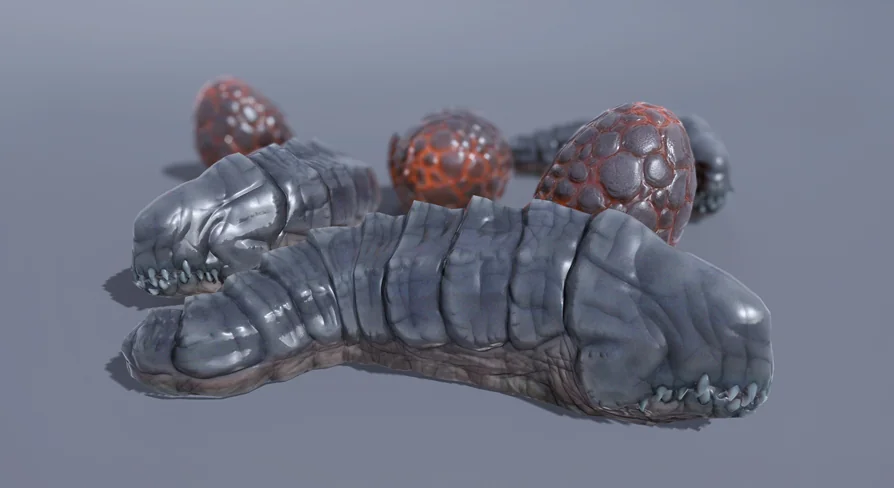
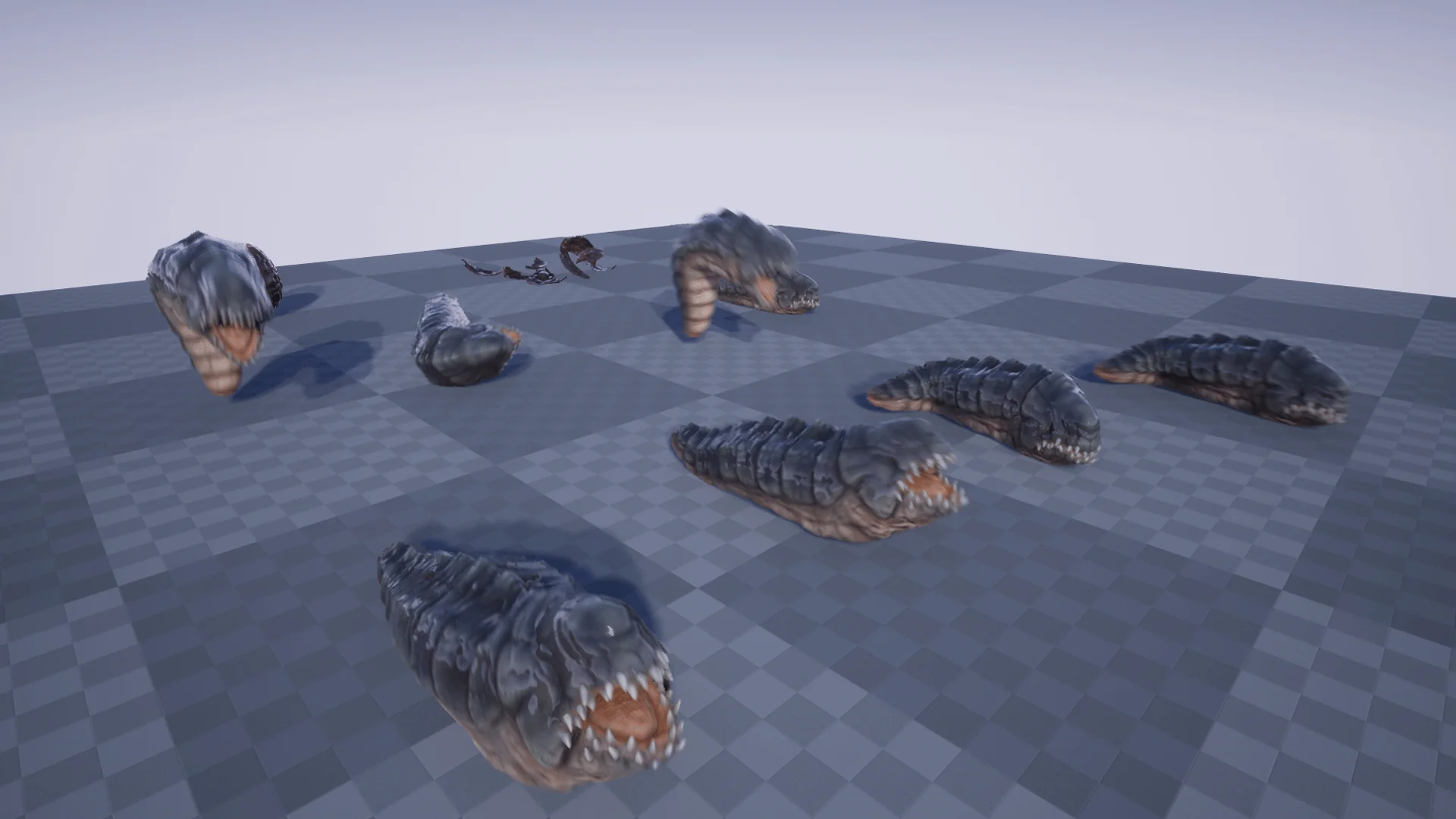
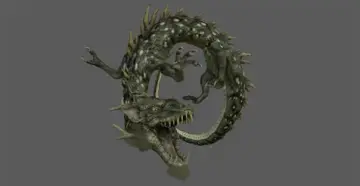
GASTARIAS delivers a dedicated alien opponent built to serve sci-fi combat encounters. The asset centers on an extraterrestrial adversary intended specifically as a target for projectile and shooting mechanics, functioning as a standalone unit while also forming part of the larger Sci Fi Creatures Vol 1 collection. Structured with a compact polygonal footprint, a minimal skeletal rig, high-resolution surface mapping, and a focused animation library, the creature is configured to balance real-time runtime efficiency against visual definition across modern computing platforms and console hardware.
GASTARIAS Mesh Geometry and Visual Profile
The core geometry of GASTARIAS is established at 4.3 Ktris, providing a lightweight surface mesh that fits cleanly into low-poly production requirements without sacrificing the distinctive physical silhouette needed for hostile enemy identification. In interactive shooting environments, enemy identification relies on readable silhouettes and defined mass. At 4,300 triangles, the model distributes its edge density to articulate the unusual forms expected of an alien entity, ensuring the anatomy holds up under direct visual scrutiny while keeping the per-instance vertex processing overhead remarkably low.
This triangle count allows developers to deploy the creature in varying encounter densities. Because the geometric footprint is small, scenes can accommodate multiple instances simultaneously without saturating the geometry pipeline. The underlying construction aligns with both realistic and fantasy visual aesthetics, accommodating stylistically grounded science-fiction combat as well as more imaginative speculative settings. Maintaining a tight 4.3 Ktris topology also facilitates clean physics approximations and collision boundary setups, both of which are central when calculating projectile impacts, hit detection boxes, and debris interactions during active gameplay.
Rigging Architecture and the 11-Bone Setup of GASTARIAS
Beneath the surface mesh, GASTARIAS operates on a specialized skeletal rig composed of 11 bones. Modern character assets often implement complex, multi-joint hierarchies that demand significant computational power during runtime skinning. In contrast, an 11-bone hierarchy represents an exceptionally streamlined deformer structure. This economical joint setup drastically simplifies matrix skinning calculations, enabling the animation engine to update bone transformations in minimal compute cycles during every frame.
An 11-bone framework yields concrete benefits for game runtime systems:
Drastically reduced CPU skinning overhead across dense enemy waves
Straightforward parameter binding within an Animation Blueprint
Direct translation of scripted behaviors without resolving extraneous bone chains
Minimal memory footprint when storing runtime pose caches and transform tracks
Because the skeleton restricts itself to 11 functional joints, connecting the entity to custom gameplay logic, behavioral scripts, or procedural aiming offsets avoids the complexity associated with standard high-density humanoid rigs. The rig directly accommodates the specialized motion requirements of an unusual alien entity, focusing deformation on the primary articulators needed to establish locomotion, physical reactions, and attack posturing.
Animation Set and Root Motion Handling
GASTARIAS includes a dedicated set of eight animations designed to manage the creature's operational state machine. Within this motion library, three clips are supplied specifically as root motion variations, while the remaining five clips function as standard in-place cycles. This division equips developers with the flexibility to choose how locomotion and entity positioning are driven within the game engine.
The presence of three root motion variations allows the creature's physical displacement to be dictated directly by the animated movement of the root joint. In combat sequences where physical grounding and precise spatial translation are necessary—such as lurching maneuvers, directional evasion, or aggressive forward charges—root motion eliminates foot sliding and preserves the organic weight of the creature's strange movement patterns. The animation data directly informs the character controller of its world-space trajectory, ensuring physics systems and collision capsules match the exact displacement depicted on screen.
For gameplay implementations relying on custom algorithmic pathfinding or character movement components that dictate speed programmatically, the in-place variations allow movement logic to be governed externally by script or AI controllers. Blending between these eight states via an Animation Blueprint ensures smooth visual transitions between idle awareness, combat movement, attack cycles, and damage responsiveness when the alien is targeted and shot by the player. The animation set provides the necessary operational states to execute standard enemy AI behaviors from initial encounter to final neutralization.
Material Configuration and Platform Performance
Surface rendering for GASTARIAS is unified under a single material that utilizes 4096x4096 textures. Allocating a full 4K texture resolution to a single material pass achieves an optimal compromise between fine-grained visual fidelity and rendering efficiency. Because the asset relies on exactly one material, drawing the entity on screen requires only one draw call per mesh pass, eliminating the draw call accumulation that occurs when models are fragmented across multiple material IDs.
The 4096x4096 texture layout ensures that even when the camera closes in during intense combat or cinematic close-ups, surface detailing remains crisp and legible. The single material accommodates realistic shader pipelines, rendering skin, carapace, or biological details with high surface fidelity that belies the low underlying triangle count. At the same time, hardware that requires memory conservation can easily scale down the 4K texture mipmaps to 2048x2048 or 1024x1024 without needing to modify the UV layouts or material assignments.
Targeted specifically for deployment on PC, Mac, and latest-generation console platforms, the combination of 4.3 Ktris geometry, an 11-bone skeletal system, and a single-draw-call material setup ensures consistent frame pacing. Modern consoles and desktop systems can leverage the high-resolution texture map while exploiting the hyper-efficient mesh and rig to populate expansive levels with multiple instances of this hostile creature.
Integration Within Sci-Fi Pipelines and Package Compatibility
Beyond its standalone characteristics, GASTARIAS is built to function alongside broader ecological assets, being included inside the Sci Fi Creatures Vol 1 collection. This placement associates the creature with a wider menagerie of non-humanoid adversaries, allowing it to integrate into coordinated encounters where varied enemy types challenge the player using different combat dynamics. Additionally, the asset maintains compatibility with the Farm Animals Pack framework, facilitating shared technical pipelines, animation structures, or deployment patterns across related animalistic rigs.
The technical parameters—spanning low-poly geometry, script tag support, an Animation Blueprint pipeline, and cross-platform readiness—establish GASTARIAS as a production-ready hostile asset. Whether functioning as cannon fodder in an intense sci-fi shooter, populating a distant alien biome, or serving as a strange beast within a speculative fantasy quest, the package arrives structurally complete to handle immediate AI integration, combat targeting, and real-time rendering.
 Characters
 Characters
 Characters
 Characters