"82ee98b2ee2793f1"{"id":"1002430","slug":"darkness-spider","title":"Darkness Spider","category":"Characters \u0026 Creatures","engine":"4.26+,5.0+","assetVersion":"","engineVersion":"Engine Version: 4.26+,5.0+","tag":"Characters","accent":"blue","visual":"character","summary":"Technical review of Darkness Spider, featuring 6.2 Ktris geometry, a 61-bone rig, 4K textures, 22 animations, and AnimationBlueprint integration.","platform":"Unreal Engine","indexPolicy":"index","publishedAt":"2026-11-10T18:26:38.496Z","updatedAt":"2026-11-10T18:26:38.496Z","sourceNotes":[],"fileContents":[],"compatibility":["Unreal Engine","Engine Version: 4.26+,5.0+"],"featuredImage":{"alt":"Darkness Spider","src":"/wp-content/uploads/published/2026/11/f3b879ba1cb8-f32667a7-e261-4eb4-b45b-4e66c1f5b187-98451b7b38.webp"},"hasDownloadLink":true,"downloads":0,"terms":[{"taxonomy":"category","slug":"characters-and-creatures","name":"Characters \u0026 Creatures"}],"galleryImages":[{"src":"/wp-content/uploads/published/2026/11/3b489ca8881d-5d99e016-40e1-4de2-9017-561f5621c387-b56e258c98.webp","alt":"Darkness Spider"},{"src":"/wp-content/uploads/published/2026/11/8b563c74d4a2-ee1aca0a-50ef-4782-8b81-6df553a73d81-892ea5dde0.webp","alt":"Darkness Spider"},{"src":"/wp-content/uploads/published/2026/11/404ae2b4ab86-05c300b1-c5a3-4001-bf25-65ab0e0b82b0-02fc6777bb.webp","alt":"Darkness Spider"},{"src":"/wp-content/uploads/published/2026/11/72869552f07c-23b74e10-ad7f-466e-8019-54bdf51f92ef-bb0d66a476.webp","alt":"Darkness Spider"},{"src":"/wp-content/uploads/published/2026/11/134b02430521-ac59f940-4e19-4ce7-901b-1eaa67204ae2-389e1f96e5.webp","alt":"Darkness Spider"}],"accessPanel":{"kind":"resource","title":"Get this resource","eyebrow":"Free resource","message":"Download this resource in your browser.","fileName":"Content.7z","safetyNote":"Resources are manually reviewed before listing to improve quality and reduce obvious risks.","actionLabel":"Get this resource","resourceType":"Resource archive","versions":[]},"contentHtml":"\u003ch2\u003eIntegrating the Darkness Spider via AnimationBlueprint and Rig Systems\u003c/h2\u003e\n\u003cp\u003eDeploying the Darkness Spider into an active development environment begins at the skeletal hierarchy. The model is structured upon a 61-bone skeleton, establishing enough rotational joints to handle multi-segmented arachnid limbs, pedipalps, chelicerae, and abdominal shifts. When importing the skeletal mesh into an engine workflow, the bone mapping corresponds directly to the provided AnimationBlueprint and scripting hooks, allowing technical artists to link standard state machines immediately to player-detection logic.\u003c/p\u003e\n\u003cp\u003eThe 61 bones distribute control points evenly across the eight walking legs and the central body core. Multi-jointed limbs require dedicated pivot structures to prevent unnatural mesh pinching during extreme flexion, such as crouching before an attack or curling inward during death sequences. Setting up the asset's AnimationBlueprint enables blending between passive locomotion profiles, idling states, and rapid combat responses without manually rebuilding bone constraints or re-weighting vertex clusters.\u003c/p\u003e\n\u003cp\u003eGameplay logic can communicate directly with the included script components to drive movement parameters, attack triggers, and tracking behaviors. Because the AnimationBlueprint handles state transitions natively, developers can wire the creature directly to behavior trees, navigation mesh paths, or custom artificial intelligence systems that govern hostile monster actions.\u003c/p\u003e \u003ch2\u003eGeometry Density and the 6.2 Ktris Darkness Spider Mesh\u003c/h2\u003e\n\u003cp\u003ePerformance optimization in real-time combat scenarios hinges on polygon economy. The Darkness Spider is modeled at 6.2 Ktris (6,200 triangles), situating the character squarely within the lowpoly asset category while maintaining crisp silhouette definition. Low polycount assets allow scenes to scale gracefully when populating dungeons, caves, or outdoor clearings with swarms or multiple elite variants without inflating vertex processing costs.\u003c/p\u003e\n\u003cp\u003eDespite the economical polygon budget, edge flow is directed toward functional deformation zones. Arachnid anatomy features rigid exoskeleton plates interconnected by flexible joints. The 6.2 Ktris allocation preserves volume around the cephalothorax and abdomen while providing enough edge loops along each leg segment to deform realistically under dynamic skeletal motion. The model avoids dense geometric bevels, relying instead on clean surface contours to portray an aggressive, realistic horror silhouette.\u003c/p\u003e\n\u003cp\u003eBy confining the entire mesh to 6.2 Ktris, the asset functions efficiently across diverse performance budgets. Whether used on hardware profiles that demand strict polygon ceilings or inside dense open-world scenes with high background geometry, the creature maintains steady rendering times during heavy on-screen skirmishes.\u003c/p\u003e \u003ch2\u003eLocomotion Sequences and Root Motion Variations\u003c/h2\u003e\n\u003cp\u003eCharacter responsiveness relies on animation flexibility, particularly for multi-legged creatures whose gait cycles differ drastically from bipedal combatants. The package includes a collection of 22 animations, giving developers a comprehensive motion library to cover standard traversal, hostile engagements, and reaction behaviors. Within this library, 6 clips are provided specifically as root motion variations.\u003c/p\u003e\n\u003cp\u003eRoot motion allows the movement of the root bone to drive the physical transformation of the character in the game world, eliminating the foot-sliding artifacts that frequently plague arachnid animations. For lunges, rapid skittering dashes, or venom-striking advances, the 6 root motion variations ensure that the physical collision capsule travels in precise synchronization with the animated limbs. This tight synchronization proves essential when the creature closes the distance to strike down hero characters in melee encounters.\u003c/p\u003e\n\u003cp\u003eThe remaining in-place animations cover classic cycles suitable for programmatic movement controllers. When navigation components or pathfinding systems calculate exact directional velocities, the in-place clips blend cleanly within blend spaces or directional locomotion networks. Having both static and root-driven motion options lets creators choose between kinematic realism and script-driven trajectory controls depending on their combat framework.\u003c/p\u003e \u003ch2\u003eTexture Footprint and Single-Material Shading\u003c/h2\u003e\n\u003cp\u003eSurface rendering is governed by a streamlined technical setup that utilizes exactly 1 material applied across the entire model. Consolidating the model into a single material slot limits draw calls to one per instance on standard passes, which prevents rendering overhead from escalating when spawning multiple instances of the creature in a single encounter area.\u003c/p\u003e\n\u003cp\u003eTo preserve high-frequency visual fidelity across a single material, the package relies on 4096*4096 (4K) textures. Mapping a complete 6.2 Ktris creature onto a 4096*4096 canvas yields generous texel density across both broad structural regions and intricate anatomical features. The large texture layout captures the realistic and horror-focused styling of the creature, from the mottled, dark chitin of the carapace to the sharp tips of the fangs and leg segments.\u003c/p\u003e\n\u003cp\u003eBecause the single material manages all surface properties across the high-resolution texture map, shader maintenance remains simple. Engine integration does not require balancing multi-material layer blends or managing disparate sub-surface sets, making the shader setup easy to adapt into custom master materials, standard deferred pipelines, or forward rendering configurations.\u003c/p\u003e \u003ch2\u003eFantasy Combat Roles and Farm Animals Pack Compatibility\u003c/h2\u003e\n\u003cp\u003eThe visual direction of the asset combines realistic arachnid articulation with fantasy horror conventions. Built as an aggressive predator, the creature is intended to wield powerful venom against hero characters exploring dangerous territories. Its sinister exterior fits naturally into underground tombs, poisoned forests, dark caverns, or cursed ruins where fantasy protagonists encounter lethal wildlife and monstrous ambushes.\u003c/p\u003e\n\u003cp\u003eBeyond isolated fantasy encounters, the asset maintains compatibility with the Farm Animals Pack. This structural alignment allows the spider to inhabit existing environments, ecosystem setups, or project templates configured around the animal suite. Developers leveraging that collection can introduce the spider as a predatory threat to surrounding fauna, expanding world interactions without encountering skeletal or architectural conflicts.\u003c/p\u003e\n\u003cp\u003eWith its balanced 6.2 Ktris frame, 61-bone control rig, 22-clip animation pool, single 4K material, and ready-to-run AnimationBlueprint support, the Darkness Spider provides a solid, technically sound base for any production requiring a venomous arachnid adversary.\u003c/p\u003e\n\n\u003ch2\u003eContinue Browsing Similar Packs\u003c/h2\u003e\n\u003cul\u003e\n\u003cli\u003e\u003ca href=\"https://3dcghub.com/robot-spider/\" rel=\"noopener noreferrer\"\u003eRobot Spider\u003c/a\u003e\u003c/li\u003e\n\u003cli\u003e\u003ca href=\"https://3dcghub.com/spideeye/\" rel=\"noopener noreferrer\"\u003eSpideEye\u003c/a\u003e\u003c/li\u003e\n\u003cli\u003e\u003ca href=\"https://3dcghub.com/spider-tank/\" rel=\"noopener noreferrer\"\u003eSpider Tank\u003c/a\u003e\u003c/li\u003e\n\u003cli\u003e\u003ca href=\"https://3dcghub.com/spiders-pack/\" rel=\"noopener noreferrer\"\u003eSpiders pack\u003c/a\u003e\u003c/li\u003e\n\u003cli\u003e\u003ca href=\"https://3dcghub.com/japanese-insect-pack/\" rel=\"noopener noreferrer\"\u003eJapanese Insect Pack\u003c/a\u003e\u003c/li\u003e\n\u003c/ul\u003e","contentTextLength":6846,"navigation":{"current":20,"total":4372,"previous":{"id":"1002431","slug":"dinosaur-stegosaurus","title":"Dinosaur Stegosaurus","category":"Characters \u0026 Creatures","platform":"Unreal Engine","updatedAt":"2026-11-10T18:27:24.656Z"},"next":{"id":"1002429","slug":"cuttlefish-camouflage","title":"Cuttlefish Camouflage","category":"Characters \u0026 Creatures","platform":"Unreal Engine","updatedAt":"2026-11-10T18:22:12.836Z"}},"relatedResources":[{"id":"1002174","slug":"robot-spider","title":"Robot Spider","category":"Characters \u0026 Creatures","engine":"4.19+,5.0+","assetVersion":"","engineVersion":"Engine Version: 4.19+,5.0+","tag":"Characters","accent":"blue","visual":"character","summary":"Examine the Robot Spider character model, featuring 4K PBR metallic-roughness textures, 13 animations, turret articulation, and an included damage variant.","platform":"Unreal Engine","indexPolicy":"index","publishedAt":"2026-10-29T10:54:47.040Z","updatedAt":"2026-10-29T10:54:47.040Z","sourceNotes":[],"fileContents":[],"compatibility":["Unreal Engine","Engine Version: 4.19+,5.0+"],"featuredImage":{"alt":"Robot Spider","src":"/wp-content/uploads/published/2026/10/c97535cddc0a-84eee4c7-f51c-4fc6-8d32-755f9175da17-3e3c630c50.webp"},"hasDownloadLink":true,"downloads":1},{"id":"3571","slug":"spideeye","title":"SpideEye","category":"Characters \u0026 Creatures","engine":"4.26+,5.0+","assetVersion":"Engine version: 4.26+,5.0+","engineVersion":"4.18","tag":"Characters","accent":"blue","visual":"character","summary":"Enhance your game with SpideEye, a low-poly arachnid featuring 3 color variations and PBR textures. Perfect for horror and fantasy projects. Learn more!","platform":"Unreal Engine","indexPolicy":"index","publishedAt":"2026-02-09T08:35:52.000Z","updatedAt":"2026-04-19T15:57:36.000Z","sourceNotes":[],"fileContents":[],"compatibility":["Unreal Engine","Engine version: 4.26+,5.0+"],"featuredImage":{"alt":"SpideEye","src":"https://3dcghub.com/wp-content/uploads/2026/02/67c5cc5d-594b-483d-b81a-14000bc9f0f7.webp"},"hasDownloadLink":true,"downloads":0},{"id":"1000549","slug":"spider-tank","title":"Spider Tank","category":"Characters \u0026 Creatures","engine":"5.1+","assetVersion":"","engineVersion":"Engine Version: 5.1+","tag":"Characters","accent":"blue","visual":"character","summary":"Spider Tank is a fully customizable Unreal Engine robot asset with 4K textures, 4 LODs, 10 animations, SFX, AnimBPs, and single-slot master material.","platform":"Unreal Engine","indexPolicy":"index","publishedAt":"2026-07-15T06:05:04.002Z","updatedAt":"2026-07-15T06:05:04.002Z","sourceNotes":[],"fileContents":[],"compatibility":["Unreal Engine","Engine Version: 5.1+"],"featuredImage":{"alt":"Spider Tank","src":"/wp-content/uploads/published/2026/07/f2fc51502ac4-bb470fe7-e03b-491e-b261-e46d7177cba3-f1b3b70f9b.webp"},"hasDownloadLink":true,"downloads":1}]}
Characters
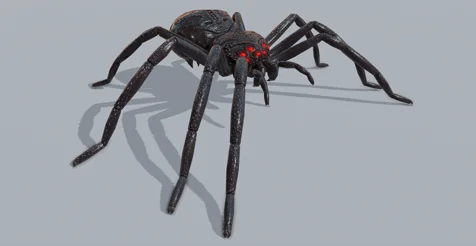
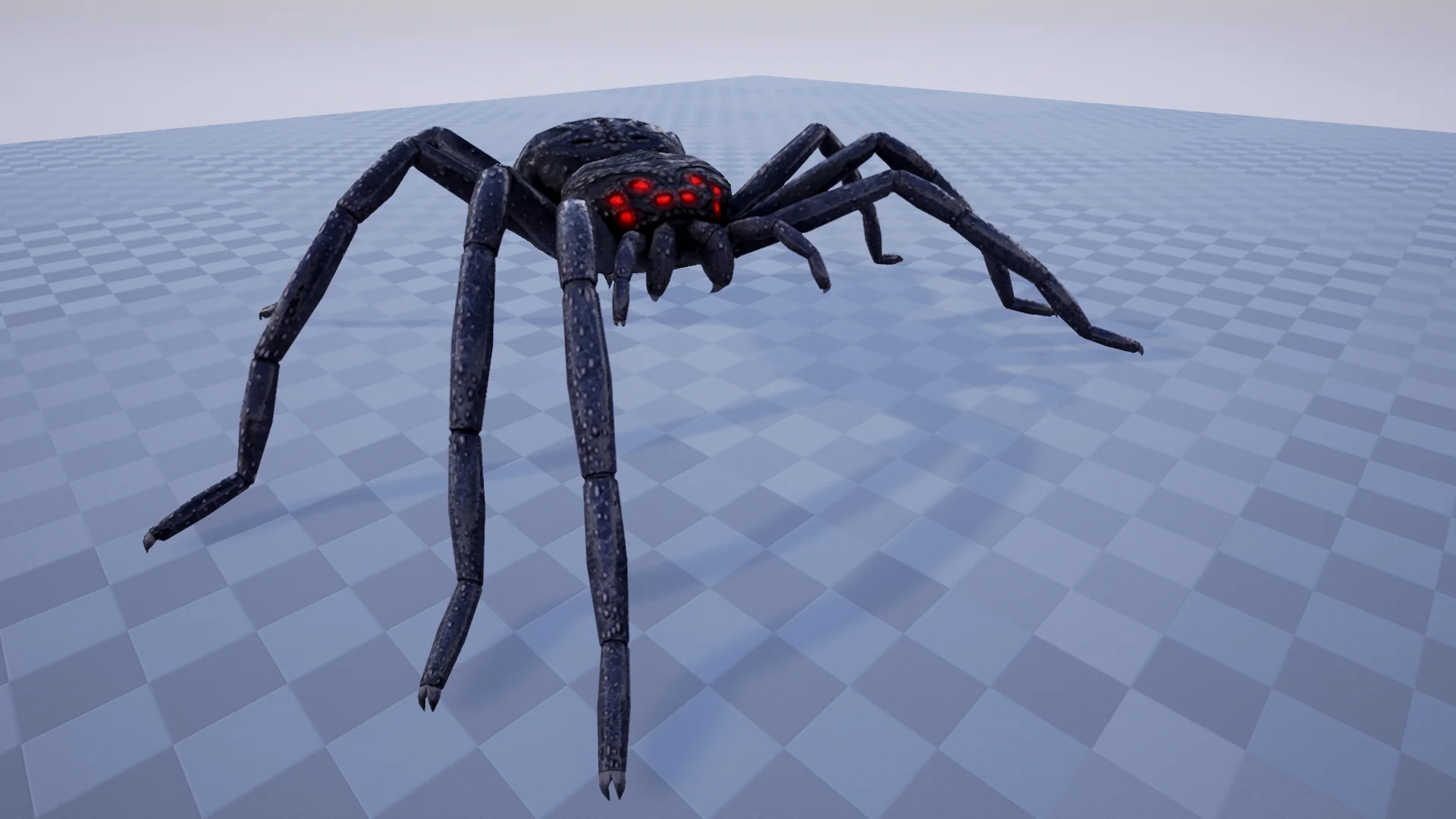
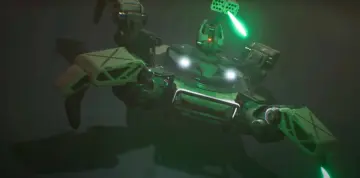
Darkness Spider
Technical review of Darkness Spider, featuring 6.2 Ktris geometry, a 61-bone rig, 4K textures, 22 animations, and AnimationBlueprint integration.
Integrating the Darkness Spider via AnimationBlueprint and Rig Systems
Deploying the Darkness Spider into an active development environment begins at the skeletal hierarchy. The model is structured upon a 61-bone skeleton, establishing enough rotational joints to handle multi-segmented arachnid limbs, pedipalps, chelicerae, and abdominal shifts. When importing the skeletal mesh into an engine workflow, the bone mapping corresponds directly to the provided AnimationBlueprint and scripting hooks, allowing technical artists to link standard state machines immediately to player-detection logic.
The 61 bones distribute control points evenly across the eight walking legs and the central body core. Multi-jointed limbs require dedicated pivot structures to prevent unnatural mesh pinching during extreme flexion, such as crouching before an attack or curling inward during death sequences. Setting up the asset's AnimationBlueprint enables blending between passive locomotion profiles, idling states, and rapid combat responses without manually rebuilding bone constraints or re-weighting vertex clusters.
Gameplay logic can communicate directly with the included script components to drive movement parameters, attack triggers, and tracking behaviors. Because the AnimationBlueprint handles state transitions natively, developers can wire the creature directly to behavior trees, navigation mesh paths, or custom artificial intelligence systems that govern hostile monster actions.
Geometry Density and the 6.2 Ktris Darkness Spider Mesh
Performance optimization in real-time combat scenarios hinges on polygon economy. The Darkness Spider is modeled at 6.2 Ktris (6,200 triangles), situating the character squarely within the lowpoly asset category while maintaining crisp silhouette definition. Low polycount assets allow scenes to scale gracefully when populating dungeons, caves, or outdoor clearings with swarms or multiple elite variants without inflating vertex processing costs.
Despite the economical polygon budget, edge flow is directed toward functional deformation zones. Arachnid anatomy features rigid exoskeleton plates interconnected by flexible joints. The 6.2 Ktris allocation preserves volume around the cephalothorax and abdomen while providing enough edge loops along each leg segment to deform realistically under dynamic skeletal motion. The model avoids dense geometric bevels, relying instead on clean surface contours to portray an aggressive, realistic horror silhouette.
By confining the entire mesh to 6.2 Ktris, the asset functions efficiently across diverse performance budgets. Whether used on hardware profiles that demand strict polygon ceilings or inside dense open-world scenes with high background geometry, the creature maintains steady rendering times during heavy on-screen skirmishes.
Locomotion Sequences and Root Motion Variations
Character responsiveness relies on animation flexibility, particularly for multi-legged creatures whose gait cycles differ drastically from bipedal combatants. The package includes a collection of 22 animations, giving developers a comprehensive motion library to cover standard traversal, hostile engagements, and reaction behaviors. Within this library, 6 clips are provided specifically as root motion variations.
Root motion allows the movement of the root bone to drive the physical transformation of the character in the game world, eliminating the foot-sliding artifacts that frequently plague arachnid animations. For lunges, rapid skittering dashes, or venom-striking advances, the 6 root motion variations ensure that the physical collision capsule travels in precise synchronization with the animated limbs. This tight synchronization proves essential when the creature closes the distance to strike down hero characters in melee encounters.
The remaining in-place animations cover classic cycles suitable for programmatic movement controllers. When navigation components or pathfinding systems calculate exact directional velocities, the in-place clips blend cleanly within blend spaces or directional locomotion networks. Having both static and root-driven motion options lets creators choose between kinematic realism and script-driven trajectory controls depending on their combat framework.
Texture Footprint and Single-Material Shading
Surface rendering is governed by a streamlined technical setup that utilizes exactly 1 material applied across the entire model. Consolidating the model into a single material slot limits draw calls to one per instance on standard passes, which prevents rendering overhead from escalating when spawning multiple instances of the creature in a single encounter area.
To preserve high-frequency visual fidelity across a single material, the package relies on 4096*4096 (4K) textures. Mapping a complete 6.2 Ktris creature onto a 4096*4096 canvas yields generous texel density across both broad structural regions and intricate anatomical features. The large texture layout captures the realistic and horror-focused styling of the creature, from the mottled, dark chitin of the carapace to the sharp tips of the fangs and leg segments.
Because the single material manages all surface properties across the high-resolution texture map, shader maintenance remains simple. Engine integration does not require balancing multi-material layer blends or managing disparate sub-surface sets, making the shader setup easy to adapt into custom master materials, standard deferred pipelines, or forward rendering configurations.
Fantasy Combat Roles and Farm Animals Pack Compatibility
The visual direction of the asset combines realistic arachnid articulation with fantasy horror conventions. Built as an aggressive predator, the creature is intended to wield powerful venom against hero characters exploring dangerous territories. Its sinister exterior fits naturally into underground tombs, poisoned forests, dark caverns, or cursed ruins where fantasy protagonists encounter lethal wildlife and monstrous ambushes.
Beyond isolated fantasy encounters, the asset maintains compatibility with the Farm Animals Pack. This structural alignment allows the spider to inhabit existing environments, ecosystem setups, or project templates configured around the animal suite. Developers leveraging that collection can introduce the spider as a predatory threat to surrounding fauna, expanding world interactions without encountering skeletal or architectural conflicts.
With its balanced 6.2 Ktris frame, 61-bone control rig, 22-clip animation pool, single 4K material, and ready-to-run AnimationBlueprint support, the Darkness Spider provides a solid, technically sound base for any production requiring a venomous arachnid adversary.
 Characters
 Characters
 Characters
 Characters