"7e6fc58c410f2894"{"id":"1000458","slug":"feudal-japan-megapack","title":"Feudal Japan Megapack","category":"Historical","engine":"5.1+","assetVersion":"","engineVersion":"Engine Version: 5.1+","tag":"Historical","accent":"blue","visual":"mech","summary":"Feudal Japan Megapack for Unreal Engine delivers 400+ modular Nanite and Lumen compatible assets including temples, merchant shops, and vegetation set in Feudal","platform":"Unreal Engine","publishedAt":"2026-07-11T04:29:03.740Z","updatedAt":"2026-07-11T04:29:03.740Z","sourceNotes":[],"fileContents":[],"compatibility":["Unreal Engine","Engine Version: 5.1+"],"featuredImage":{"alt":"Feudal Japan Megapack","src":"/wp-content/uploads/published/2026/07/f0ff28597879-1f7ff01f-9b8d-4ff3-88c9-b5ef7ed22fdb-f183c3651b.webp"},"hasDownloadLink":true,"downloads":0,"terms":[{"taxonomy":"category","slug":"historical","name":"Historical"}],"galleryImages":[{"src":"/wp-content/uploads/published/2026/07/be16fbba2521-6506e3c4-786a-403b-b38e-4481531d07e9-7f6e656c29.webp","alt":"Feudal Japan Megapack"},{"src":"/wp-content/uploads/published/2026/07/383b34dd79f6-290e69e2-adf8-487b-80f5-413adb72509d-ba905b973e.webp","alt":"Feudal Japan Megapack"},{"src":"/wp-content/uploads/published/2026/07/2b00e893e800-af0e0946-fafe-4a51-bb94-aecdd38b7888-345bc01725.webp","alt":"Feudal Japan Megapack"},{"src":"/wp-content/uploads/published/2026/07/b9c1edd71523-41653bfd-524f-46df-84cc-e589bda4b563-c780380589.webp","alt":"Feudal Japan Megapack"},{"src":"/wp-content/uploads/published/2026/07/9e6a18cd8958-fd8faa91-816f-4bb3-bbbb-fb764d9ab941-1cb7c65b9d.webp","alt":"Feudal Japan Megapack"},{"src":"/wp-content/uploads/published/2026/07/c8259b2303eb-2d248946-09f2-4115-82c7-37f0627e2fdd-9416351e90.webp","alt":"Feudal Japan Megapack"},{"src":"/wp-content/uploads/published/2026/07/881755862f42-5de400f8-6acb-441b-9a4e-05df6a7e505c-4abbf2f231.webp","alt":"Feudal Japan Megapack"},{"src":"/wp-content/uploads/published/2026/07/61356db22c4e-25408b2b-02d9-4f7f-93cf-e132cdfdc531-236e207d1f.webp","alt":"Feudal Japan Megapack"},{"src":"/wp-content/uploads/published/2026/07/28a7b6d52c11-a874911a-1369-435f-a3f6-57829b23200e-63de878d48.webp","alt":"Feudal Japan Megapack"}],"accessPanel":{"kind":"resource","title":"Download this resource","eyebrow":"Free Download","message":"Log in or create a free account to start your download.","fileName":"Content.7z","safetyNote":"Resources are manually reviewed before listing to improve quality and reduce obvious risks.","actionLabel":"Download Free","resourceType":"Resource archive"},"contentHtml":"\u003cp\u003eBuilding a historically inspired Japanese environment from scratch demands a massive range of structural pieces, props, and natural elements. Assembling a cohesive scene often means juggling assets from multiple sources, struggling to match material consistency, and spending hours tweaking individual meshes. The Feudal Japan Megapack approaches this problem by consolidating an entire architectural and cultural ecosystem into a single, unified library for Unreal Engine.\u003c/p\u003e \u003ch2\u003eModular Architecture and Merchant Culture\u003c/h2\u003e\n\u003cp\u003eCreated by Meshingun Studio, this library centers on the aesthetic and daily life of historical Japan. The collection goes beyond generic buildings to capture specific elements of the era.\u003c/p\u003e \u003cp\u003eThe visual theme draws heavily from the unique architecture of the period. Creators can expect to find a variety of structures, including temples and merchant shops, all designed with a distinct Japanese visual identity. The pack also places a strong emphasis on the everyday items used by merchants, grounding the environment in practical, lived-in detail. Vegetation pieces are included alongside the architecture, allowing for complete environmental dressing.\u003c/p\u003e \u003ch2\u003eGrid-Snapping Assembly and Prefab Workflows\u003c/h2\u003e\n\u003cp\u003eSpeed of construction is a core focus of the asset library. Every modular piece included is designed to snap directly to the grid, removing the manual alignment work that usually slows down environment blocking.\u003c/p\u003e \u003cp\u003eFor faster scene population, the pack ships with pre-arranged prefabs. These ready-made groupings allow for quick set dressing, letting creators drop entire structural configurations or environmental clusters into a level without assembling them piece by piece. With more than 400 assets and prefabs in total, the library provides substantial building blocks for large-scale scenes.\u003c/p\u003e \u003ch2\u003eMaterial Parameter Control and Optimization\u003c/h2\u003e\n\u003cp\u003eCustomization extends deep into the material workflow. The pack includes a set of master materials that the developers consider some of their most valuable offerings.\u003c/p\u003e \u003cp\u003eThese master materials give direct access to modify parameters globally. Instead of adjusting textures or colors on individual instances, creators can make sweeping changes across multiple assets through a single material interface. This system allows the aesthetic of a scene to be modified to fit specific lighting conditions or artistic directions efficiently.\u003c/p\u003e \u003cp\u003ePerformance tie directly into this material system. The meshes, tools, and shaders have all been carefully optimized to maintain smooth operation during game development, ensuring that visual complexity does not come at the cost of framerate.\u003c/p\u003e \u003ch2\u003eNanite, Lumen, and Engine Support\u003c/h2\u003e\n\u003cp\u003eThe technical foundation leans heavily into modern Unreal Engine capabilities. The assets fully support Nanite and Lumen, starting from Unreal Engine 5.0 onwards. Support has been explicitly extended to Unreal Engine 5.4.\u003c/p\u003e \u003cp\u003eLumen integration allows the temporal history and bounce lighting of the Japanese architecture to render with dynamic global illumination. Hardware raytracing is also available, and creators can toggle this feature depending on their specific system specifications. The pack includes handy blueprints and decals alongside the core meshes to further expand the functional toolset available in the engine.\u003c/p\u003e \u003cp\u003eA playable demo and showcase video are available to demonstrate the assets in motion before integration. The developer also provides documentation covering the setup process, including specific instructions on how to enable Lumen and hardware raytracing within a project.\u003c/p\u003e \u003ch2\u003eThematic Depth for Production Pipelines\u003c/h2\u003e\n\u003cp\u003eThe asset tags associated with the pack point toward the specific cultural and structural elements creators can leverage. Beyond temples and merchant shops, the library includes elements tied to broader Japanese historical motifs, including components suitable for building fortresses and castles.\u003c/p\u003e \u003cp\u003eDecorative and symbolic items like Torii gates, lanterns, and cherry foliage provide the necessary dressing to build believable Shogun-era or Ronin-focused scenes. Smaller props and thematic details like bamboo, katanas, and shuriken further populate the environment, giving creators the granular pieces needed to bring a Feudal Japan setting to life.\u003c/p\u003e \u003cp\u003eIn a production pipeline, this megapack functions as a complete environment toolkit. By combining grid-snapping modularity, universal material controls, and modern rendering support, creators can take a scene from an empty level to a fully dressed Japanese landscape without leaving the asset library.\u003c/p\u003e\n\n\u003ch2\u003eRelated Resources Worth Checking\u003c/h2\u003e\n\u003cul\u003e\n\u003cli\u003e\u003ca href=\"https://3dcghub.com/feudal-japanese-castle-environment-japan-japanese-feudal-castle-castle-japan/\" title=\"Feudal Japanese Castle Environment ( Japan Japanese Feudal Castle Castle Japan )\"\u003eFeudal Japanese Castle Environment ( Japan Japanese Feudal Castle Castle Japan )\u003c/a\u003e\u003c/li\u003e\n\u003cli\u003e\u003ca href=\"https://3dcghub.com/feudal-japan-exterior-props-vol1/\" title=\"Feudal Japan Exterior Props Vol1\"\u003eFeudal Japan Exterior Props Vol1\u003c/a\u003e\u003c/li\u003e\n\u003cli\u003e\u003ca href=\"https://3dcghub.com/feudal-japanese-village-environment-japan-medieval-japanese-japan-feudal-3d/\" title=\"Feudal Japanese Village Environment ( Japan Medieval Japanese Japan Feudal 3D )\"\u003eFeudal Japanese Village Environment ( Japan Medieval Japanese Japan Feudal 3D )\u003c/a\u003e\u003c/li\u003e\n\u003cli\u003e\u003ca href=\"https://3dcghub.com/throne-room-environment-kit/\" title=\"Throne Room Environment Kit\"\u003eThrone Room Environment Kit\u003c/a\u003e\u003c/li\u003e\n\u003cli\u003e\u003ca href=\"https://3dcghub.com/nordic-medieval-tavern/\" title=\"Nordic Medieval Tavern\"\u003eNordic Medieval Tavern\u003c/a\u003e\u003c/li\u003e\n\u003c/ul\u003e","contentTextLength":4826,"navigation":{"current":1301,"total":3618,"previous":{"id":"1000459","slug":"fighter-drone","title":"Fighter Drone","category":"Characters \u0026 Creatures","platform":"Unreal Engine","updatedAt":"2026-07-11T04:47:57.511Z"},"next":{"id":"1000457","slug":"f3-modern-girl-ashley","title":"F3 Modern Girl Ashley","category":"Characters \u0026 Creatures","platform":"Unreal Engine","updatedAt":"2026-07-11T02:20:15.381Z"}},"relatedResources":[{"id":"8398","slug":"feudal-japanese-castle-environment-japan-japanese-feudal-castle-castle-japan","title":"Feudal Japanese Castle Environment ( Japan Japanese Feudal Castle Castle Japan )","category":"Historical","engine":"5.0+","assetVersion":"Engine version: 5.0+","engineVersion":"5.0","tag":"Historical","accent":"blue","visual":"city","summary":"Build stunning historical worlds with the Feudal Japanese Castle Environment. This pack features 197 unique meshes and the Ultimate Level Art Tool for efficient modular design.","platform":"Unreal Engine","publishedAt":"2026-02-23T17:10:04.000Z","updatedAt":"2026-04-19T15:55:28.000Z","sourceNotes":[],"fileContents":[],"compatibility":["Unreal Engine","Engine version: 5.0+"],"featuredImage":{"alt":"Feudal Japanese Castle Environment ( Japan Japanese Feudal Castle Castle Japan )","src":"https://3dcghub.com/wp-content/uploads/2026/02/9cb65449-5714-43f8-8e02-f12d84442831.webp"},"hasDownloadLink":true,"downloads":1},{"id":"1000962","slug":"pharaoh-s-legacy-egyptian-temple-megapack","title":"Pharaoh's Legacy: Egyptian Temple Megapack","category":"Historical","engine":"5.1+","assetVersion":"","engineVersion":"Engine Version: 5.1+","tag":"Historical","accent":"blue","visual":"mech","summary":"Over 300 Egyptian temple assets for UE 5.4, with Nanite/Lumen support, modular prefabs, and master materials. Epic Water and Volumetric plugins required.","platform":"Unreal Engine","publishedAt":"2026-08-14T16:36:17.986Z","updatedAt":"2026-08-14T16:36:17.986Z","sourceNotes":[],"fileContents":[],"compatibility":["Unreal Engine","Engine Version: 5.1+"],"featuredImage":{"alt":"Pharaoh's Legacy: Egyptian Temple Megapack","src":"/wp-content/uploads/published/2026/08/4ce06b0e30f6-34cb77c7-10e2-4330-b954-9b021c0df487-573e8d99ad.webp"},"hasDownloadLink":true,"downloads":1},{"id":"1000652","slug":"mountain-temple-japanese-temple-ancient-temple-temple-shrine-feudal-japan","title":"Mountain Temple (Japanese Temple, Ancient Temple, Temple Shrine, Feudal Japan)","category":"Temple","engine":"5.5+","assetVersion":"","engineVersion":"Engine Version: 5.5+","tag":"Temple","accent":"blue","visual":"mech","summary":"A modular Japanese shrine temple environment for Unreal Engine with material layering, vertex painting, Nanite foliage, and prop kits for building feudal Japan","platform":"Unreal Engine","publishedAt":"2026-07-21T19:17:13.891Z","updatedAt":"2026-07-21T19:17:13.891Z","sourceNotes":[],"fileContents":[],"compatibility":["Unreal Engine","Engine Version: 5.5+"],"featuredImage":{"alt":"Mountain Temple (Japanese Temple, Ancient Temple, Temple Shrine, Feudal Japan)","src":"/wp-content/uploads/published/2026/07/c65473b30385-e14168cc-6d72-423a-a7bf-177d39c6402a-3db1da1c73.webp"},"hasDownloadLink":true,"downloads":0}]}
Historical
Feudal Japan Megapack
Feudal Japan Megapack for Unreal Engine delivers 400+ modular Nanite and Lumen compatible assets including temples, merchant shops, and vegetation set in Feudal
Building a historically inspired Japanese environment from scratch demands a massive range of structural pieces, props, and natural elements. Assembling a cohesive scene often means juggling assets from multiple sources, struggling to match material consistency, and spending hours tweaking individual meshes. The Feudal Japan Megapack approaches this problem by consolidating an entire architectural and cultural ecosystem into a single, unified library for Unreal Engine.
Modular Architecture and Merchant Culture
Created by Meshingun Studio, this library centers on the aesthetic and daily life of historical Japan. The collection goes beyond generic buildings to capture specific elements of the era.
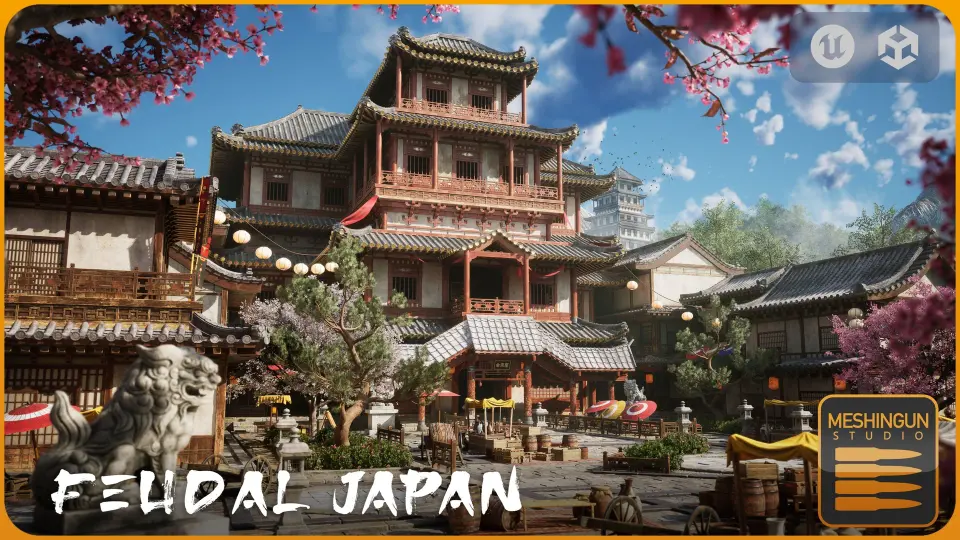
The visual theme draws heavily from the unique architecture of the period. Creators can expect to find a variety of structures, including temples and merchant shops, all designed with a distinct Japanese visual identity. The pack also places a strong emphasis on the everyday items used by merchants, grounding the environment in practical, lived-in detail. Vegetation pieces are included alongside the architecture, allowing for complete environmental dressing.
Grid-Snapping Assembly and Prefab Workflows
Speed of construction is a core focus of the asset library. Every modular piece included is designed to snap directly to the grid, removing the manual alignment work that usually slows down environment blocking.
For faster scene population, the pack ships with pre-arranged prefabs. These ready-made groupings allow for quick set dressing, letting creators drop entire structural configurations or environmental clusters into a level without assembling them piece by piece. With more than 400 assets and prefabs in total, the library provides substantial building blocks for large-scale scenes.
Material Parameter Control and Optimization
Customization extends deep into the material workflow. The pack includes a set of master materials that the developers consider some of their most valuable offerings.
These master materials give direct access to modify parameters globally. Instead of adjusting textures or colors on individual instances, creators can make sweeping changes across multiple assets through a single material interface. This system allows the aesthetic of a scene to be modified to fit specific lighting conditions or artistic directions efficiently.
Performance tie directly into this material system. The meshes, tools, and shaders have all been carefully optimized to maintain smooth operation during game development, ensuring that visual complexity does not come at the cost of framerate.
Nanite, Lumen, and Engine Support
The technical foundation leans heavily into modern Unreal Engine capabilities. The assets fully support Nanite and Lumen, starting from Unreal Engine 5.0 onwards. Support has been explicitly extended to Unreal Engine 5.4.
Lumen integration allows the temporal history and bounce lighting of the Japanese architecture to render with dynamic global illumination. Hardware raytracing is also available, and creators can toggle this feature depending on their specific system specifications. The pack includes handy blueprints and decals alongside the core meshes to further expand the functional toolset available in the engine.
A playable demo and showcase video are available to demonstrate the assets in motion before integration. The developer also provides documentation covering the setup process, including specific instructions on how to enable Lumen and hardware raytracing within a project.
Thematic Depth for Production Pipelines
The asset tags associated with the pack point toward the specific cultural and structural elements creators can leverage. Beyond temples and merchant shops, the library includes elements tied to broader Japanese historical motifs, including components suitable for building fortresses and castles.
Decorative and symbolic items like Torii gates, lanterns, and cherry foliage provide the necessary dressing to build believable Shogun-era or Ronin-focused scenes. Smaller props and thematic details like bamboo, katanas, and shuriken further populate the environment, giving creators the granular pieces needed to bring a Feudal Japan setting to life.
In a production pipeline, this megapack functions as a complete environment toolkit. By combining grid-snapping modularity, universal material controls, and modern rendering support, creators can take a scene from an empty level to a fully dressed Japanese landscape without leaving the asset library.
 Historical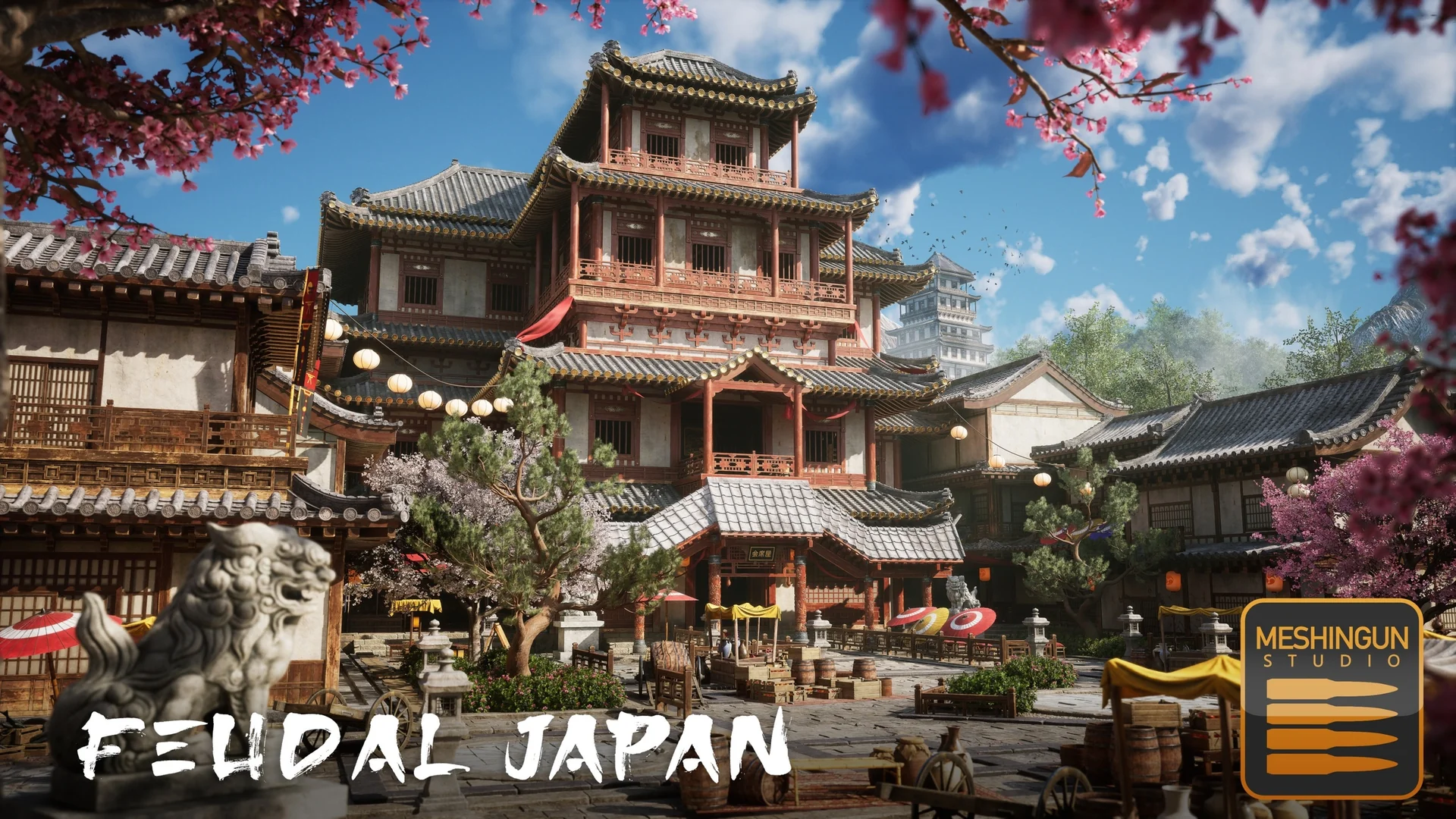
 Historical
 Historical
 Temple