"0283a5a6392d9fd6"{"id":"1001406","slug":"dark-medieval-environment-megapack-dark-medieval-village-dark-medieval-dark","title":"Dark Medieval Environment Megapack ( Dark Medieval Village Dark Medieval Dark )","category":"3D","engine":"4.22+,5.0+","assetVersion":"","engineVersion":"Engine Version: 4.22+,5.0+","tag":"3D","accent":"blue","visual":"city","summary":"Build grim, plague-stricken settlements with 341 unique meshes, fully furnished enterable interiors, characters, and the Ultimate Level Art Tool.","platform":"Unreal Engine","publishedAt":"2026-10-05T06:03:38.670Z","updatedAt":"2026-10-05T06:03:38.670Z","sourceNotes":[],"fileContents":[],"compatibility":["Unreal Engine","Engine Version: 4.22+,5.0+"],"featuredImage":{"alt":"Dark Medieval Environment Megapack ( Dark Medieval Village Dark Medieval Dark )","src":"/wp-content/uploads/published/2026/10/0bd3805fa435-6d6af2ca-5aa3-49a1-87b3-f01dbc3568d7-18bd777745.webp"},"hasDownloadLink":true,"downloads":0,"terms":[{"taxonomy":"category","slug":"3d","name":"3D"}],"galleryImages":[{"src":"/wp-content/uploads/published/2026/10/4e0a7e397871-7bf64511-506e-4ad5-99fd-5c6050146886-e6e7abf379.webp","alt":"Dark Medieval Environment Megapack ( Dark Medieval Village Dark Medieval Dark )"},{"src":"/wp-content/uploads/published/2026/10/ca74ee81c2ed-236b3000-f633-4c7d-ab05-f9e5547120b9-c77a6c93d2.webp","alt":"Dark Medieval Environment Megapack ( Dark Medieval Village Dark Medieval Dark )"},{"src":"/wp-content/uploads/published/2026/10/2e9188da80c6-c99e6be8-4ebe-4dcc-b026-c374aad6340d-caff249ff5.webp","alt":"Dark Medieval Environment Megapack ( Dark Medieval Village Dark Medieval Dark )"},{"src":"/wp-content/uploads/published/2026/10/c74c0c084530-97a3ee3e-066b-43e3-b3b9-7250bc22bd7a-632218efd9.webp","alt":"Dark Medieval Environment Megapack ( Dark Medieval Village Dark Medieval Dark )"},{"src":"/wp-content/uploads/published/2026/10/5d8e9423eeed-2c388d1f-6a2b-4345-9d24-99eefbd0ad58-ad382288d1.webp","alt":"Dark Medieval Environment Megapack ( Dark Medieval Village Dark Medieval Dark )"},{"src":"/wp-content/uploads/published/2026/10/0fd7eba838ff-341c803a-9e0d-4eb4-8e75-50a4112ac5ec-3be3f80a17.webp","alt":"Dark Medieval Environment Megapack ( Dark Medieval Village Dark Medieval Dark )"},{"src":"/wp-content/uploads/published/2026/10/75b0648a2477-ec3cceab-6291-40fe-94f2-2025f118c595-1d8defa4b4.webp","alt":"Dark Medieval Environment Megapack ( Dark Medieval Village Dark Medieval Dark )"},{"src":"/wp-content/uploads/published/2026/10/3807b60af553-cda9b1ca-b7f2-4d0f-8bb0-8cf62e9f2f29-a4cc2596c6.webp","alt":"Dark Medieval Environment Megapack ( Dark Medieval Village Dark Medieval Dark )"},{"src":"/wp-content/uploads/published/2026/10/f57d87a52210-8bf925cf-9536-46ba-aaec-8619778dac3f-7fdfe4cef9.webp","alt":"Dark Medieval Environment Megapack ( Dark Medieval Village Dark Medieval Dark )"}],"accessPanel":{"kind":"resource","title":"Download this resource","eyebrow":"Free Download","message":"Log in or create a free account to start your download.","fileName":"Content.7z","safetyNote":"Resources are manually reviewed before listing to improve quality and reduce obvious risks.","actionLabel":"Download Free","resourceType":"Resource archive"},"contentHtml":"\u003cp\u003eStreets wind between decaying timber facades, shadowed pathways, and shuttered homes marked by pestilence. The Dark Medieval Environment Megapack establishes a grim settlement caught under the weight of famine and plague, setting up a believable world space where players or cameras can transition seamlessly from exterior mud tracks straight through the doorways of ruined habitations without encountering sealed geometry or hollow shells.\u003c/p\u003e \u003ch2\u003eFurnished Interiors and Enterable Medieval Structures\u003c/h2\u003e\n\u003cp\u003eA frequent constraint in sprawling historical town scenes is the divide between exterior facades and workable rooms. This environment pack addresses that boundary directly by making all buildings enterable, backed by fully furnished interiors. The core asset collection contains 341 unique static meshes, covering structural components, set dressing, everyday props, and thematic scatter tailored to a diseased or abandoned hamlet.\u003c/p\u003e \u003cp\u003eWalls and exterior envelopes rely on tileable and trim materials, keeping architectural surfaces consistent across varied building silhouettes while controlling asset overhead. Complementing the timber, stone, and plasterwork of the buildings are dedicated landscape and foliage assets. These ground elements allow level designers to blend domestic thresholds into surrounding muddy ditches, barren dirt roads, overgrown roadside patches, and silent outlying fields. Because the structures are complete on the inside, level flow can route combat, exploration, or cinematic storytelling directly through ground-floor workshops, moonlit halls, and cramped upstairs living quarters without requiring separate interior streaming levels.\u003c/p\u003e \u003ch2\u003eRapid Scene Assembly with the Ultimate Level Art Tool\u003c/h2\u003e\n\u003cp\u003eAssembling large village clusters mesh by mesh can quickly become an unmanageable task. Included within this package is the Ultimate Level Art Tool (ULAT), a specialized modular design utility developed to streamline structural assembly and organic environmental scattering. Originally titled as a modular design development tool for mobile and web-based systems, ULAT operates directly inside the production pipeline to accelerate building composition.\u003c/p\u003e \u003cp\u003eBy pairing the 341 static meshes with ULAT, creators can piece together custom modular buildings rapidly rather than manually aligning walls, beams, and roof segments one at a time. Beyond structural layout, the tool assists in naturally populating streets, alleys, and courtyards with contextual props. This workflow bridges the gap between individual modular components and cohesive scene dressing, ensuring that gothic alleyways, forsaken town squares, and cluttered living spaces maintain varied silhouettes without demanding endless manual placement.\u003c/p\u003e \u003ch2\u003ePlague Doctors and Settlement Inhabitants\u003c/h2\u003e\n\u003cp\u003eTo ground the narrative reality of a cursed hamlet or quarantine zone, the environment package incorporates four character models into the scene. These figures provide immediate scale and narrative staging for street corners, treatment rooms, or darkened windows:\u003c/p\u003e\n\u003cul\u003e \u003cli\u003eTwo distinct versions of Doctors outfitted in historical plague protective gear.\u003c/li\u003e \u003cli\u003eOne male civilian non-player character.\u003c/li\u003e \u003cli\u003eOne female civilian non-player character.\u003c/li\u003e\n\u003c/ul\u003e\n\u003cp\u003ePlacing these character models among the decaying houses, eerie lanterns, and burning torches reinforces the sense of a doomed civilization grappling with pestilence. Whether staged as wandering souls in foggy streets or positioned inside unholy sanctuaries and clinic interiors, their presence eliminates the immediate need to source third-party character assets merely to populate a cinematic sequence or baseline gameplay prototype.\u003c/p\u003e \u003ch2\u003eThematic Breadth Across Cursed Hamlets and Burned Ruins\u003c/h2\u003e\n\u003cp\u003eThe aesthetic scope of the package encompasses survival horror, gothic fantasy, and bleak dark-ages realism. The included mesh library and trim textures lend themselves to diverse scene variations:\u003c/p\u003e\n\u003cul\u003e \u003cli\u003eHaunted settlements and forsaken outposts dominated by macabre architecture and crumbling stone.\u003c/li\u003e \u003cli\u003ePlague-stricken town centers surrounded by silent fields, hollow roads, and sinister squares.\u003c/li\u003e \u003cli\u003eMystic marketplaces and ruined settlements displaying signs of witchcraft influence, dark rituals, and sudden abandonment.\u003c/li\u003e \u003cli\u003eBurned ruins and bloodstained roads beneath blackened skies, suitable for siege aftermaths or demonic incursions.\u003c/li\u003e\n\u003c/ul\u003e\n\u003cp\u003eThe collection also includes access to a dedicated Stable Environment, providing additional rural structures and staging options to extend layouts beyond dense town centers and into outer agricultural zones.\u003c/p\u003e \u003ch2\u003eExpansion Roadmap and AI Toolchain Compatibility\u003c/h2\u003e\n\u003cp\u003eLong-term project scaling is supported through an established milestone structure driven by community reviews, which unlocks successive asset drops for the environment. The initial milestone targets an expanded lighting update at 30 reviews, followed by a dedicated Windmill Building at 50 reviews, and culminates in a major Village Expansion at 100 reviews. This roadmap expands the footprint of the pack over time without fracturing the established visual identity.\u003c/p\u003e\n\u003cp\u003eFor technical workflows leveraging automation and procedural level design, the asset pack is compatible with the NWIRO AI Integration Kit. This opens support for Unreal Copilot, Model Context Protocol (MCP), inverse kinematics (IK) setups, and the Ultimate AI Bridge MCP, allowing teams to integrate modern AI-assisted editor tools and control systems directly into their dark medieval world-building pipelines.\u003c/p\u003e \u003ch2\u003eEvaluating the Pack for Production Pipelines\u003c/h2\u003e\n\u003cp\u003eWhen scoping an environment that requires believable historical decay alongside functional interior gameplay, this collection balances modular flexibility with granular detail. The combination of 341 unique static meshes, enterable structures, integrated character assets, and ULAT procedural placement gives small teams and level artists an end-to-end framework for building grim medieval worlds that are immediately navigable from the village gates to the inner hearth.\u003c/p\u003e\n\n\u003ch2\u003eExplore Similar Assets\u003c/h2\u003e\n\u003cul\u003e\n\u003cli\u003e\u003ca href=\"https://3dcghub.com/medieval-village-megapack/\" title=\"Medieval Village Megapack\"\u003eMedieval Village Megapack\u003c/a\u003e\u003c/li\u003e\n\u003cli\u003e\u003ca href=\"https://3dcghub.com/medieval-fantasy-ruins-dark-forest-environment/\" title=\"Medieval Fantasy Ruins - Dark Forest Environment\"\u003eMedieval Fantasy Ruins - Dark Forest Environment\u003c/a\u003e\u003c/li\u003e\n\u003cli\u003e\u003ca href=\"https://3dcghub.com/medieval-village/\" title=\"Medieval Village\"\u003eMedieval Village\u003c/a\u003e\u003c/li\u003e\n\u003cli\u003e\u003ca href=\"https://3dcghub.com/medieval-castle-village-environment-medieval-castle-village-medieval-castle/\" title=\"Medieval Castle Village Environment ( Medieval Castle Village Medieval Castle )\"\u003eMedieval Castle Village Environment ( Medieval Castle Village Medieval Castle )\u003c/a\u003e\u003c/li\u003e\n\u003cli\u003e\u003ca href=\"https://3dcghub.com/medieval-props-cellar/\" title=\"Medieval Props: Cellar\"\u003eMedieval Props: Cellar\u003c/a\u003e\u003c/li\u003e\n\u003c/ul\u003e","contentTextLength":6182,"navigation":{"current":11,"total":3354,"previous":{"id":"1001407","slug":"dungeon-souls","title":"Dungeon Souls","category":"Horror","platform":"Unreal Engine","updatedAt":"2026-10-05T06:04:53.703Z"},"next":{"id":"1001405","slug":"cyberpunk-gigapack-modular-cyberpunk-environment-cyberpunk-characters","title":"Cyberpunk Gigapack ( Modular Cyberpunk Environment / Cyberpunk Characters )","category":"Cyberpunk","platform":"Unreal Engine","updatedAt":"2026-10-05T06:02:33.224Z"}},"relatedResources":[{"id":"1000523","slug":"medieval-village-megapack","title":"Medieval Village Megapack","category":"Medieval","engine":"5.0+","assetVersion":"","engineVersion":"Engine Version: 5.0+","tag":"Medieval","accent":"blue","visual":"mech","summary":"Over 550 Romanesque medieval assets with Nanite and Lumen support, weather control tools, modular grid-snapping prefabs, and a customizable NPC for Unreal Engin","platform":"Unreal Engine","publishedAt":"2026-07-14T15:32:22.101Z","updatedAt":"2026-07-14T15:32:22.101Z","sourceNotes":[],"fileContents":[],"compatibility":["Unreal Engine","Engine Version: 5.0+"],"featuredImage":{"alt":"Medieval Village Megapack","src":"/wp-content/uploads/published/2026/07/3321eb710ab4-a5853349-cb6b-4ee3-ad3d-f21d65b1c17b-6a78748e95.webp"},"hasDownloadLink":true,"downloads":2},{"id":"27172","slug":"medieval-fantasy-ruins-dark-forest-environment","title":"Medieval Fantasy Ruins - Dark Forest Environment","category":"Medieval","engine":"5.4+","assetVersion":"Engine version: 5.4+","engineVersion":"","tag":"Medieval","accent":"blue","visual":"city","summary":"This environment package gives dark fantasy projects a ready-made foundation of ruins, forest atmosphere, and dungeon spaces. Its two lighting scenarios and UE5-focused rebuilds make it useful for scenes that need a moody, believable backdrop.","platform":"Unreal Engine","publishedAt":"2026-04-21T15:06:52.000Z","updatedAt":"2026-04-21T15:06:52.000Z","sourceNotes":[],"fileContents":[],"compatibility":["Unreal Engine","Engine version: 5.4+"],"featuredImage":{"alt":"Medieval Fantasy Ruins - Dark Forest Environment","src":"https://3dcghub.com/wp-content/uploads/2026/04/7c6c817f53df_64665e7e-05cd-4ee7-9b62-b484ab0e85fb.webp"},"hasDownloadLink":true,"downloads":3},{"id":"1001409","slug":"medieval-street-pack-medieval-town-medieval-medieval-clock-tower","title":"Medieval Street Pack (Medieval Town, Medieval , Medieval Clock Tower )","category":"3D","engine":"4.22+,5.0+","assetVersion":"","engineVersion":"Engine Version: 4.22+,5.0+","tag":"3D","accent":"blue","visual":"mech","summary":"Build detailed medieval towns and explore an enterable clock tower with pulley mechanisms using the Medieval Street Pack for modular level design.","platform":"Unreal Engine","publishedAt":"2026-10-05T06:13:40.727Z","updatedAt":"2026-10-05T06:13:40.727Z","sourceNotes":[],"fileContents":[],"compatibility":["Unreal Engine","Engine Version: 4.22+,5.0+"],"featuredImage":{"alt":"Medieval Street Pack (Medieval Town, Medieval , Medieval Clock Tower )","src":"/wp-content/uploads/published/2026/10/36e37ffb6014-0efa079b-ccbf-4a85-8e18-2a62165b0172-ced6143227.webp"},"hasDownloadLink":true,"downloads":0}]}
3D
Dark Medieval Environment Megapack ( Dark Medieval Village Dark Medieval Dark )
Build grim, plague-stricken settlements with 341 unique meshes, fully furnished enterable interiors, characters, and the Ultimate Level Art Tool.
Category:Unreal Engine,3DPlatform: Unreal EngineEngine Version: 4.22+,5.0+Published: Oct 5, 2026
3D
Resource overview
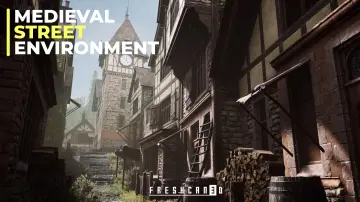
Streets wind between decaying timber facades, shadowed pathways, and shuttered homes marked by pestilence. The Dark Medieval Environment Megapack establishes a grim settlement caught under the weight of famine and plague, setting up a believable world space where players or cameras can transition seamlessly from exterior mud tracks straight through the doorways of ruined habitations without encountering sealed geometry or hollow shells.
Furnished Interiors and Enterable Medieval Structures
A frequent constraint in sprawling historical town scenes is the divide between exterior facades and workable rooms. This environment pack addresses that boundary directly by making all buildings enterable, backed by fully furnished interiors. The core asset collection contains 341 unique static meshes, covering structural components, set dressing, everyday props, and thematic scatter tailored to a diseased or abandoned hamlet.
Walls and exterior envelopes rely on tileable and trim materials, keeping architectural surfaces consistent across varied building silhouettes while controlling asset overhead. Complementing the timber, stone, and plasterwork of the buildings are dedicated landscape and foliage assets. These ground elements allow level designers to blend domestic thresholds into surrounding muddy ditches, barren dirt roads, overgrown roadside patches, and silent outlying fields. Because the structures are complete on the inside, level flow can route combat, exploration, or cinematic storytelling directly through ground-floor workshops, moonlit halls, and cramped upstairs living quarters without requiring separate interior streaming levels.
Rapid Scene Assembly with the Ultimate Level Art Tool
Assembling large village clusters mesh by mesh can quickly become an unmanageable task. Included within this package is the Ultimate Level Art Tool (ULAT), a specialized modular design utility developed to streamline structural assembly and organic environmental scattering. Originally titled as a modular design development tool for mobile and web-based systems, ULAT operates directly inside the production pipeline to accelerate building composition.
By pairing the 341 static meshes with ULAT, creators can piece together custom modular buildings rapidly rather than manually aligning walls, beams, and roof segments one at a time. Beyond structural layout, the tool assists in naturally populating streets, alleys, and courtyards with contextual props. This workflow bridges the gap between individual modular components and cohesive scene dressing, ensuring that gothic alleyways, forsaken town squares, and cluttered living spaces maintain varied silhouettes without demanding endless manual placement.
Plague Doctors and Settlement Inhabitants
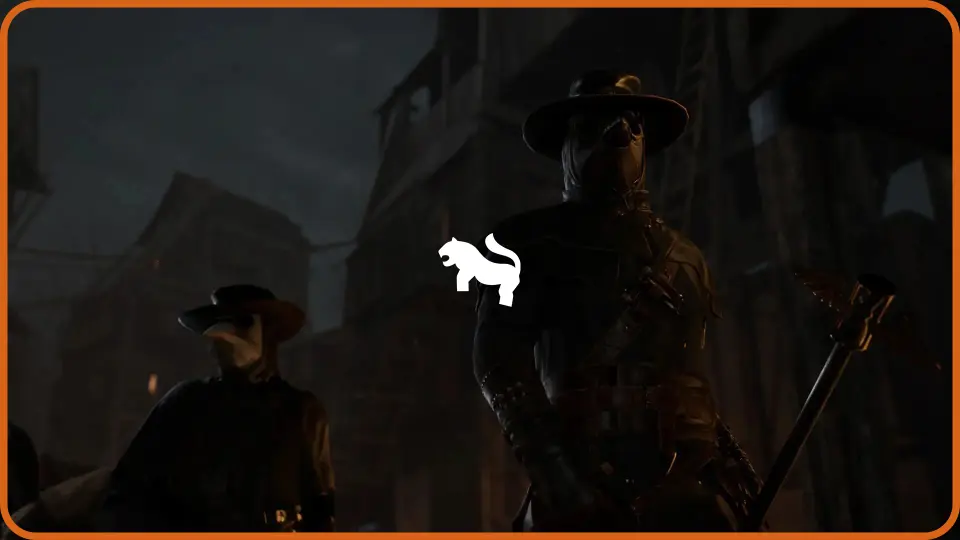
To ground the narrative reality of a cursed hamlet or quarantine zone, the environment package incorporates four character models into the scene. These figures provide immediate scale and narrative staging for street corners, treatment rooms, or darkened windows:
Two distinct versions of Doctors outfitted in historical plague protective gear.
One male civilian non-player character.
One female civilian non-player character.
Placing these character models among the decaying houses, eerie lanterns, and burning torches reinforces the sense of a doomed civilization grappling with pestilence. Whether staged as wandering souls in foggy streets or positioned inside unholy sanctuaries and clinic interiors, their presence eliminates the immediate need to source third-party character assets merely to populate a cinematic sequence or baseline gameplay prototype.
Thematic Breadth Across Cursed Hamlets and Burned Ruins
The aesthetic scope of the package encompasses survival horror, gothic fantasy, and bleak dark-ages realism. The included mesh library and trim textures lend themselves to diverse scene variations:
Haunted settlements and forsaken outposts dominated by macabre architecture and crumbling stone.
Plague-stricken town centers surrounded by silent fields, hollow roads, and sinister squares.
Mystic marketplaces and ruined settlements displaying signs of witchcraft influence, dark rituals, and sudden abandonment.
Burned ruins and bloodstained roads beneath blackened skies, suitable for siege aftermaths or demonic incursions.
The collection also includes access to a dedicated Stable Environment, providing additional rural structures and staging options to extend layouts beyond dense town centers and into outer agricultural zones.
Expansion Roadmap and AI Toolchain Compatibility
Long-term project scaling is supported through an established milestone structure driven by community reviews, which unlocks successive asset drops for the environment. The initial milestone targets an expanded lighting update at 30 reviews, followed by a dedicated Windmill Building at 50 reviews, and culminates in a major Village Expansion at 100 reviews. This roadmap expands the footprint of the pack over time without fracturing the established visual identity.
For technical workflows leveraging automation and procedural level design, the asset pack is compatible with the NWIRO AI Integration Kit. This opens support for Unreal Copilot, Model Context Protocol (MCP), inverse kinematics (IK) setups, and the Ultimate AI Bridge MCP, allowing teams to integrate modern AI-assisted editor tools and control systems directly into their dark medieval world-building pipelines.
Evaluating the Pack for Production Pipelines
When scoping an environment that requires believable historical decay alongside functional interior gameplay, this collection balances modular flexibility with granular detail. The combination of 341 unique static meshes, enterable structures, integrated character assets, and ULAT procedural placement gives small teams and level artists an end-to-end framework for building grim medieval worlds that are immediately navigable from the village gates to the inner hearth.
 3D
3D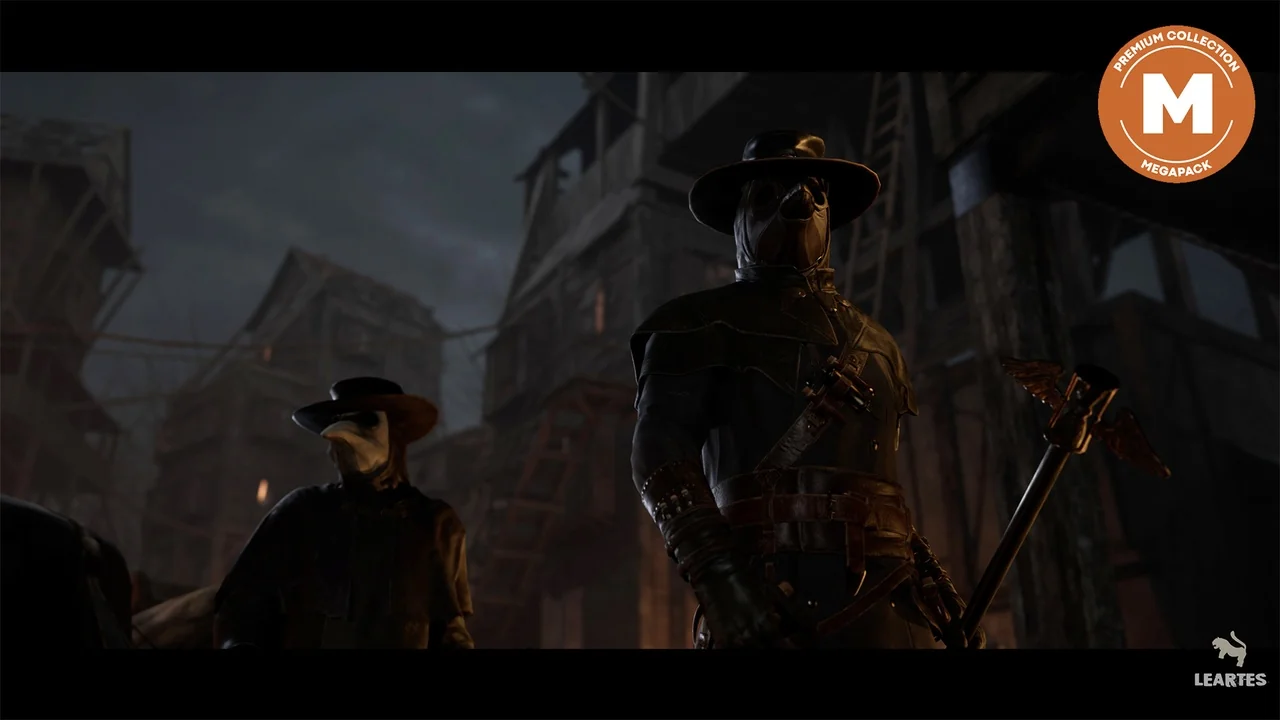
 Medieval
 Medieval
 3D
3D