"1277d48bfeb5e7b3"{"id":"27172","slug":"medieval-fantasy-ruins-dark-forest-environment","title":"Medieval Fantasy Ruins - Dark Forest Environment","category":"Medieval","engine":"5.4+","assetVersion":"Engine version: 5.4+","engineVersion":"","tag":"Medieval","accent":"blue","visual":"city","summary":"This environment package gives dark fantasy projects a ready-made foundation of ruins, forest atmosphere, and dungeon spaces. Its two lighting scenarios and UE5-focused rebuilds make it useful for scenes that need a moody, believable backdrop.","platform":"Unreal Engine","publishedAt":"2026-04-21T15:06:52.000Z","updatedAt":"2026-04-21T15:06:52.000Z","sourceNotes":[],"fileContents":[],"compatibility":["Unreal Engine","Engine version: 5.4+"],"featuredImage":{"alt":"Medieval Fantasy Ruins - Dark Forest Environment","src":"https://3dcghub.com/wp-content/uploads/2026/04/7c6c817f53df_64665e7e-05cd-4ee7-9b62-b484ab0e85fb.webp"},"hasDownloadLink":true,"downloads":3,"terms":[{"taxonomy":"category","slug":"medieval","name":"Medieval"},{"taxonomy":"post_tag","slug":"characters","name":"Characters"},{"taxonomy":"post_tag","slug":"environment","name":"Environment"},{"taxonomy":"post_tag","slug":"unreal-engine-5","name":"Unreal Engine 5"}],"galleryImages":[{"src":"https://3dcghub.com/wp-content/uploads/2026/04/77704b465a9e_dde3260c-dc10-4f4d-b55d-3fe7e2d117c5.webp","alt":"Medieval Fantasy Ruins - Dark Forest Environment"},{"src":"https://3dcghub.com/wp-content/uploads/2026/04/c65a16cba84b_dcdac5b2-fa98-4f9d-a244-3ec3bbc55cf5.webp","alt":"Medieval Fantasy Ruins - Dark Forest Environment"},{"src":"https://3dcghub.com/wp-content/uploads/2026/04/dd8be2b218d0_143e2dc2-4f92-42dc-bc2a-c0f0954b63ab.webp","alt":"Medieval Fantasy Ruins - Dark Forest Environment"},{"src":"https://3dcghub.com/wp-content/uploads/2026/04/8f291d82d6e0_9c1d85ba-8dc2-47fb-a910-e768c285a511.webp","alt":"Medieval Fantasy Ruins - Dark Forest Environment"},{"src":"https://3dcghub.com/wp-content/uploads/2026/04/0425f459d1a1_6be1d83e-c700-41e5-949a-114ff81a2ee1.webp","alt":"Medieval Fantasy Ruins - Dark Forest Environment"},{"src":"https://3dcghub.com/wp-content/uploads/2026/04/492403ec6eac_21f01152-d639-4e4e-b303-a02537ef4b35.webp","alt":"Medieval Fantasy Ruins - Dark Forest Environment"},{"src":"https://3dcghub.com/wp-content/uploads/2026/04/52ba186d6bd5_f3ceba9b-796d-49e9-98dd-53b490c2e909.webp","alt":"Medieval Fantasy Ruins - Dark Forest Environment"},{"src":"https://3dcghub.com/wp-content/uploads/2026/04/d9599bb20797_9eeea23f-f5a2-4ddc-90be-4c3c39ac7f3b.webp","alt":"Medieval Fantasy Ruins - Dark Forest Environment"},{"src":"https://3dcghub.com/wp-content/uploads/2026/04/3cc35cc0f277_e20006ad-c107-4783-bd79-3c688bb4ae0d.webp","alt":"Medieval Fantasy Ruins - Dark Forest Environment"},{"src":"https://3dcghub.com/wp-content/uploads/2026/04/09f5ecdc8e0e_84855f9d-261a-489c-8edf-e403347aa6f0.webp","alt":"Medieval Fantasy Ruins - Dark Forest Environment"}],"accessPanel":{"kind":"resource","title":"Access this resource","eyebrow":"Free Download","message":"Log in or create a free account to start your download.","fileName":"Medieval_Village.7z","safetyNote":"All resources are 100% manually reviewed to eliminate all risks.","actionLabel":"Download Free","resourceType":"Resource archive"},"contentHtml":"\u003ch2\u003eA dark fantasy backdrop with room for different scene types\u003c/h2\u003e\n\u003cp\u003e\u003cem\u003eMedieval Fantasy Ruins - Dark Forest Environment\u003c/em\u003e Is an atmospheric environment package centered on a moody medieval setting. It is framed as a space for building either a medieval fantasy world or a demonic monster slasher, which makes its tone flexible even though the visual direction stays dark and grounded. The overall emphasis is on a believable, immersive world rather than a clean, stylized one.\u003c/p\u003e\n\u003cp\u003eThe environment is presented as a level with two lighting scenarios, so the same space can read in different ways depending on the mood needed for a project. That matters when a scene has to support more than one purpose: a brooding exploration area, a horror-leaning ruin, or a fantasy location that needs a heavier, more ominous atmosphere. The filmic quality and photogrammetry assets reinforce that direction and help the setting feel physically present rather than abstract.\u003c/p\u003e \u003ch2\u003eLighting that shifts the same space into a different mood\u003c/h2\u003e\n\u003cp\u003eLighting is one of the main reasons this package stands out. Two demo scenes are included: one uses standard lighting, and the other uses Lumen and Nanite. The environment also has full support for Nanite and Lumen in Unreal Engine 5.1 and later. That gives the level a clear workflow advantage for teams working in current UE5 rendering paths, since the same environment can be examined in more than one lighting setup.\u003c/p\u003e\n\u003cp\u003eA chapel map with a neutral lighting setup expands the practical range even further. Instead of locking the whole package into one dark visual read, the additional map offers a different lighting context that can be used to study the environment under calmer conditions. One of the completed updates also added a lighting scene with an RTX/Lumen example, which reinforces the package’s focus on showing how the environment behaves under modern lighting approaches.\u003c/p\u003e\n\u003cp\u003eFor level art, this kind of setup is useful because it helps establish how a scene should feel before the final gameplay context is set. A ruin can become more threatening, more sacred, or more abandoned depending on how the light is handled, and the included lighting scenarios support that decision-making directly.\u003c/p\u003e \u003ch2\u003eRebuilt landscapes and UE5-ready systems\u003c/h2\u003e\n\u003cp\u003eThe landscapes were rebuilt using new meshes optimized for UE5 features. That signals a version of the environment that has already been adapted to current engine capabilities instead of relying on older setup habits. The package also replaces legacy Cascade effects with Niagara-based VFX, which keeps the visual effects side aligned with newer Unreal Engine workflows.\u003c/p\u003e\n\u003cp\u003ePerformance improvements are part of the package as well, along with optimizations aimed at a bug-free experience. In practice, that means the environment is not only about appearance. It also reflects the sort of cleanup and modernization that matters when a scene is expected to be used as part of a real production pipeline. A visually rich environment still needs to be manageable, and the optimizations point in that direction without changing the overall dark fantasy identity of the asset.\u003c/p\u003e\n\u003cp\u003eBecause the package supports Nanite and Lumen in Unreal Engine 5.1+, it fits naturally into projects that are already committed to UE5 rendering features. The setup is especially relevant when a team wants an environment that can be evaluated with modern geometry and lighting rather than treated as a static showcase piece.\u003c/p\u003e \u003ch2\u003eDungeon expansions and extra set dressing\u003c/h2\u003e\n\u003cp\u003eThe completed updates added more usable space to the demo map, including additional dungeons. That expands the environment beyond a single scenic ruin and makes it feel more like a level that can support movement, exploration, and layered composition. An extra map with a chapel and neutral lighting was also added, giving the package another environment variant instead of only one dominant mood.\u003c/p\u003e\n\u003cp\u003eExtra assets help fill out the scene and strengthen the forgotten, ruined tone. Human remains and old lattice structures are included, which push the environment further into the abandoned and decayed side of medieval fantasy. These details are small, but they matter because they help the main spaces feel lived-in, damaged, and far removed from anything pristine.\u003c/p\u003e\n\u003cp\u003eThe dungeon areas, chapel space, and supporting props work together as scene-building material. They provide different layers of use inside the same theme: ruins for broad atmosphere, dungeons for enclosed tension, and chapel elements for a quieter but still desolate read. That combination makes the environment easier to adapt into a larger level rather than leaving it as a single isolated showcase.\u003c/p\u003e \u003ch2\u003eWhere it fits in a real production workflow\u003c/h2\u003e\n\u003cp\u003eThis package fits best when a project needs a moody foundation for a dark fantasy or horror-adjacent level. It can serve as the starting point for a ruined forest area, a medieval tomb or catacomb space, or a broader fantasy location that needs to feel forgotten and worn down. The package tags point to that same range: church, mystic, abandoned, photogrammetry, dungeon, medieval, temple, catacomb, swamp, crypt, ruin, dark, horror, and forgotten.\u003c/p\u003e\n\u003cp\u003eFor an environment artist or level designer, the value is in having a scene that already combines atmosphere, rebuilt UE5 landscapes, modern VFX, and multiple lighting reads. The included demo scenes show how the space behaves under standard lighting and under Lumen + Nanite, while the chapel map and dungeon additions give the layout more variety. That makes it useful as a working environment rather than just a single mood image.\u003c/p\u003e\n\u003cp\u003eIf a project needs a grim medieval setting with believable materials, layered lighting, and enough dungeon and chapel variation to support scene dressing, this environment is set up for that kind of work. It is most fitting when the goal is to build a dark, immersive space in Unreal Engine rather than start from scratch.\u003c/p\u003e\n\n\u003ch2\u003eContinue Browsing Similar Packs\u003c/h2\u003e\n\u003cul\u003e\n\u003cli\u003e\u003ca href=\"https://3dcghub.com/shootlikeme-unreal-engine-third-person-shooter-template/\" title=\"ShootLikeMe – Unreal Engine Third Person Shooter Template\"\u003eShootLikeMe – Unreal Engine Third Person Shooter Template\u003c/a\u003e\u003c/li\u003e\n\u003cli\u003e\u003ca href=\"https://3dcghub.com/advanced-unreal-engine-5-multiplayer-gameplay-programming/\" title=\"Advanced Unreal Engine 5 Multiplayer Gameplay Programming\"\u003eAdvanced Unreal Engine 5 Multiplayer Gameplay Programming\u003c/a\u003e\u003c/li\u003e\n\u003cli\u003e\u003ca href=\"https://3dcghub.com/niagara-beginners-to-advanced-in-unreal-engine-5/\" title=\"Niagara Beginners to advanced in Unreal Engine 5\"\u003eNiagara Beginners to advanced in Unreal Engine 5\u003c/a\u003e\u003c/li\u003e\n\u003cli\u003e\u003ca href=\"https://3dcghub.com/create-zelda-like-skills-with-c-in-unreal-engine-5-2/\" title=\"Create Zelda-like skills with C++ in unreal engine 5\"\u003eCreate Zelda-like skills with C++ in unreal engine 5\u003c/a\u003e\u003c/li\u003e\n\u003cli\u003e\u003ca href=\"https://3dcghub.com/main-menus-beginner-class-unreal-engine-5/\" title=\"Main Menus Beginner Class – Unreal Engine 5\"\u003eMain Menus Beginner Class – Unreal Engine 5\u003c/a\u003e\u003c/li\u003e\n\u003c/ul\u003e","contentTextLength":6232,"navigation":{"current":2118,"total":3860,"previous":{"id":"27198","slug":"medieval-nordic-viking-castle-environment","title":"Medieval Nordic / Viking Castle Environment","category":"Historical","platform":"Unreal Engine","updatedAt":"2026-04-21T15:48:49.000Z"},"next":{"id":"27159","slug":"junkyard-environment-14-assets","title":"Junkyard Environment / 14 Assets","category":"Industrial","platform":"Unreal Engine","updatedAt":"2026-04-21T13:49:46.000Z"}},"relatedResources":[{"id":"27901","slug":"stylized-village-village-stylized-village-stylized-town-medieval-village","title":"Stylized Village (Village, Stylized Village, Stylized Town, Medieval Village)","category":"Medieval","engine":"5.1+","assetVersion":"Engine version: 5.1+","engineVersion":"5.0","tag":"Medieval","accent":"blue","visual":"city","summary":"Stylized Village places a complete fantasy settlement into a larger island setting rather than isolating a few buildings on a test map. It combines a main town, docks, forests, foliage, stylized VFX, and 248 meshes in a UE5-focused environment that suits re...","platform":"Unreal Engine","publishedAt":"2026-04-30T06:08:49.000Z","updatedAt":"2026-04-30T06:08:50.000Z","sourceNotes":[],"fileContents":[],"compatibility":["Unreal Engine","Engine version: 5.1+"],"featuredImage":{"alt":"Stylized Village (Village, Stylized Village, Stylized Town, Medieval Village)","src":"https://3dcghub.com/wp-content/uploads/2026/04/be4ffe5a20de_7e422236-7fcc-408e-8a70-e7fb8686fbf1.webp"},"hasDownloadLink":true,"downloads":2},{"id":"9225","slug":"medieval-village-pack-medieval-prop-medieval-market-medieval-house-medieval","title":"Medieval Village Pack (Medieval Prop, Medieval Market, Medieval House, Medieval)","category":"Medieval","engine":"4.26+,5.0+","assetVersion":"Engine version: 4.26+,5.0+","engineVersion":"","tag":"Medieval","accent":"blue","visual":"city","summary":"Medieval Village Pack brings together medieval buildings, indoor and outdoor props, foliage, tents, and market details for Unreal Engine village, fantasy, RPG, and historical environment scenes.","platform":"Unreal Engine","publishedAt":"2026-03-01T16:07:28.000Z","updatedAt":"2026-05-31T15:48:05.105Z","sourceNotes":[],"fileContents":[],"compatibility":["Unreal Engine","Engine version: 4.26+,5.0+"],"featuredImage":{"alt":"Medieval Village Pack (Medieval Prop, Medieval Market, Medieval House, Medieval)","src":"https://3dcghub.com/wp-content/uploads/2026/03/0deb269f-fd86-4df1-9d38-4fa288773733.webp"},"hasDownloadLink":true,"downloads":1},{"id":"27034","slug":"medieval-village-slavic-huts-environment","title":"Medieval Village - Slavic Huts environment","category":"Medieval","engine":"5.2+","assetVersion":"Engine version: 5.2+","engineVersion":"","tag":"Medieval","accent":"blue","visual":"city","summary":"This environment package captures a Slavic-inspired medieval village with modular thatched huts, fences, woodpiles, and natural landscapes. It also includes dynamic lighting, an interactive raven system, and a hidden ritual area for darker fantasy scenes.","platform":"Unreal Engine","publishedAt":"2026-04-21T06:37:36.000Z","updatedAt":"2026-04-21T06:37:36.000Z","sourceNotes":[],"fileContents":[],"compatibility":["Unreal Engine","Engine version: 5.2+"],"featuredImage":{"alt":"Medieval Village - Slavic Huts environment","src":"https://3dcghub.com/wp-content/uploads/2026/04/43f58efa4da0_71452cf0-6794-4c6b-93f1-1f985824c334.webp"},"hasDownloadLink":true,"downloads":0}]}
Medieval
Medieval Fantasy Ruins - Dark Forest Environment
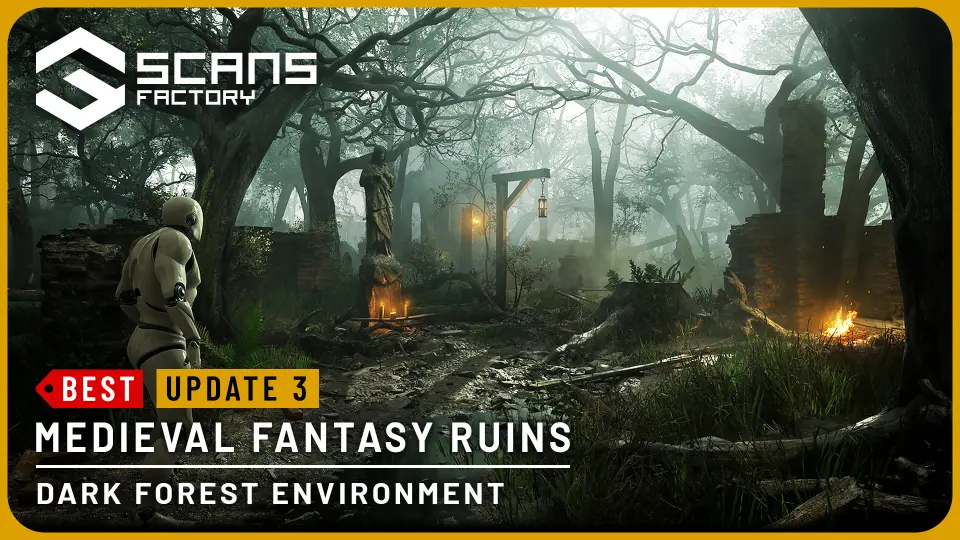
This environment package gives dark fantasy projects a ready-made foundation of ruins, forest atmosphere, and dungeon spaces. Its two lighting scenarios and UE5-focused rebuilds make it useful for scenes that need a moody, believable backdrop.
A dark fantasy backdrop with room for different scene types
Medieval Fantasy Ruins - Dark Forest Environment Is an atmospheric environment package centered on a moody medieval setting. It is framed as a space for building either a medieval fantasy world or a demonic monster slasher, which makes its tone flexible even though the visual direction stays dark and grounded. The overall emphasis is on a believable, immersive world rather than a clean, stylized one.
The environment is presented as a level with two lighting scenarios, so the same space can read in different ways depending on the mood needed for a project. That matters when a scene has to support more than one purpose: a brooding exploration area, a horror-leaning ruin, or a fantasy location that needs a heavier, more ominous atmosphere. The filmic quality and photogrammetry assets reinforce that direction and help the setting feel physically present rather than abstract.
Lighting that shifts the same space into a different mood
Lighting is one of the main reasons this package stands out. Two demo scenes are included: one uses standard lighting, and the other uses Lumen and Nanite. The environment also has full support for Nanite and Lumen in Unreal Engine 5.1 and later. That gives the level a clear workflow advantage for teams working in current UE5 rendering paths, since the same environment can be examined in more than one lighting setup.
A chapel map with a neutral lighting setup expands the practical range even further. Instead of locking the whole package into one dark visual read, the additional map offers a different lighting context that can be used to study the environment under calmer conditions. One of the completed updates also added a lighting scene with an RTX/Lumen example, which reinforces the package’s focus on showing how the environment behaves under modern lighting approaches.
For level art, this kind of setup is useful because it helps establish how a scene should feel before the final gameplay context is set. A ruin can become more threatening, more sacred, or more abandoned depending on how the light is handled, and the included lighting scenarios support that decision-making directly.
Rebuilt landscapes and UE5-ready systems
The landscapes were rebuilt using new meshes optimized for UE5 features. That signals a version of the environment that has already been adapted to current engine capabilities instead of relying on older setup habits. The package also replaces legacy Cascade effects with Niagara-based VFX, which keeps the visual effects side aligned with newer Unreal Engine workflows.
Performance improvements are part of the package as well, along with optimizations aimed at a bug-free experience. In practice, that means the environment is not only about appearance. It also reflects the sort of cleanup and modernization that matters when a scene is expected to be used as part of a real production pipeline. A visually rich environment still needs to be manageable, and the optimizations point in that direction without changing the overall dark fantasy identity of the asset.
Because the package supports Nanite and Lumen in Unreal Engine 5.1+, it fits naturally into projects that are already committed to UE5 rendering features. The setup is especially relevant when a team wants an environment that can be evaluated with modern geometry and lighting rather than treated as a static showcase piece.
Dungeon expansions and extra set dressing
The completed updates added more usable space to the demo map, including additional dungeons. That expands the environment beyond a single scenic ruin and makes it feel more like a level that can support movement, exploration, and layered composition. An extra map with a chapel and neutral lighting was also added, giving the package another environment variant instead of only one dominant mood.
Extra assets help fill out the scene and strengthen the forgotten, ruined tone. Human remains and old lattice structures are included, which push the environment further into the abandoned and decayed side of medieval fantasy. These details are small, but they matter because they help the main spaces feel lived-in, damaged, and far removed from anything pristine.
The dungeon areas, chapel space, and supporting props work together as scene-building material. They provide different layers of use inside the same theme: ruins for broad atmosphere, dungeons for enclosed tension, and chapel elements for a quieter but still desolate read. That combination makes the environment easier to adapt into a larger level rather than leaving it as a single isolated showcase.
Where it fits in a real production workflow
This package fits best when a project needs a moody foundation for a dark fantasy or horror-adjacent level. It can serve as the starting point for a ruined forest area, a medieval tomb or catacomb space, or a broader fantasy location that needs to feel forgotten and worn down. The package tags point to that same range: church, mystic, abandoned, photogrammetry, dungeon, medieval, temple, catacomb, swamp, crypt, ruin, dark, horror, and forgotten.
For an environment artist or level designer, the value is in having a scene that already combines atmosphere, rebuilt UE5 landscapes, modern VFX, and multiple lighting reads. The included demo scenes show how the space behaves under standard lighting and under Lumen + Nanite, while the chapel map and dungeon additions give the layout more variety. That makes it useful as a working environment rather than just a single mood image.
If a project needs a grim medieval setting with believable materials, layered lighting, and enough dungeon and chapel variation to support scene dressing, this environment is set up for that kind of work. It is most fitting when the goal is to build a dark, immersive space in Unreal Engine rather than start from scratch.
 Medieval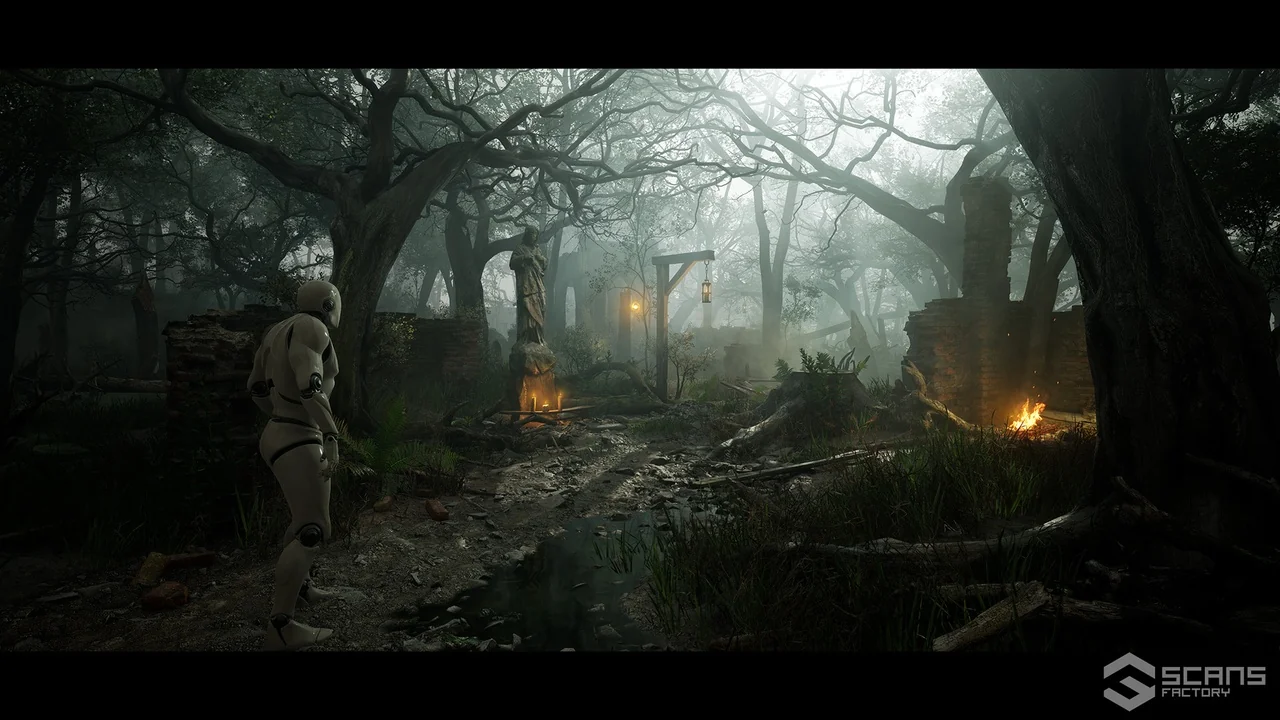
 Medieval
 Medieval
 Medieval