"fa182e0cd0a6ea73"{"id":"1001797","slug":"city-bus","title":"City bus","category":"Service \u0026 Commercial Vehicles","engine":"5.0+","assetVersion":"","engineVersion":"Engine Version: 5.0+","tag":"Service","accent":"blue","visual":"city","summary":"A vintage low-poly City bus asset featuring Nanite support for Unreal Engine 5.0, UE 4.27 compatibility, 4K textures, and dynamic lighting behavior.","platform":"Unreal Engine","publishedAt":"2026-10-21T07:49:51.255Z","updatedAt":"2026-10-21T07:49:51.255Z","sourceNotes":[],"fileContents":[],"compatibility":["Unreal Engine","Engine Version: 5.0+"],"featuredImage":{"alt":"City bus","src":"/wp-content/uploads/published/2026/10/10f3adf7987f-13748bc2-20d6-4b21-b3d2-3d471aa22608-6f3d43709e.webp"},"hasDownloadLink":true,"downloads":0,"terms":[{"taxonomy":"category","slug":"service-and-commercial-vehicles","name":"Service \u0026 Commercial Vehicles"}],"galleryImages":[{"src":"/wp-content/uploads/published/2026/10/19b623f2c6d9-5b4ee60b-7294-4fdd-a179-89eacf297729-62e12a3f93.webp","alt":"City bus"},{"src":"/wp-content/uploads/published/2026/10/673989db4237-7bb76b45-a6df-4638-98d1-cb1b4ef9430f-af838d6b64.webp","alt":"City bus"},{"src":"/wp-content/uploads/published/2026/10/4956f55df76c-e810dee4-935d-42cd-81eb-688902d90967-420d4968bc.webp","alt":"City bus"},{"src":"/wp-content/uploads/published/2026/10/ec7cc9028770-868af993-0b74-4378-b061-168c63e1132a-e12e724f97.webp","alt":"City bus"},{"src":"/wp-content/uploads/published/2026/10/eab785520b04-73113196-fc79-44ef-929d-3bb9d1154593-c7d2108149.webp","alt":"City bus"},{"src":"/wp-content/uploads/published/2026/10/708d8262f86d-83e79d1f-0749-4844-aaaf-6a1e699cbb56-16174afb0f.webp","alt":"City bus"},{"src":"/wp-content/uploads/published/2026/10/fd88daab9f8d-fac912d2-e458-456a-809d-226e27aedeeb-dfe7da525b.webp","alt":"City bus"},{"src":"/wp-content/uploads/published/2026/10/d7b7e2c45d57-c341ce5b-c0a0-4a1b-ae46-2c5b617c9f79-833d403d8c.webp","alt":"City bus"},{"src":"/wp-content/uploads/published/2026/10/b22a1a1b28cb-4f4c8e7b-4012-4303-8072-42c28586f43f-4bb715d2f1.webp","alt":"City bus"},{"src":"/wp-content/uploads/published/2026/10/544f79e8ad5a-447dbc6b-b39b-424d-8e36-3acfa68fa9f1-cd2cbf34d6.webp","alt":"City bus"}],"accessPanel":{"kind":"resource","title":"Download this resource","eyebrow":"Free Download","message":"Log in or create a free account to start your download.","fileName":"City bus.7z","safetyNote":"Resources are manually reviewed before listing to improve quality and reduce obvious risks.","actionLabel":"Download Free","resourceType":"Resource archive"},"contentHtml":"\u003ch2\u003eVintage Bus Geometry and Engine Compatibility\u003c/h2\u003e\n\u003cp\u003eThe City bus is constructed as a low-poly vintage transport vehicle configured for real-time applications. Its underlying 3D mesh is defined by a budget of 35,281 vertices and 18,167 faces. This geometric density maintains an authentic vintage silhouette, defining curved body panels, wheel arches, and window frames without overburdening the geometry pipeline. The balance of face count makes it lightweight enough for real-time simulation while preserving mechanical contours that read cleanly up close or at medium distances.\u003c/p\u003e\n\u003cp\u003eEngine integration spans multiple generations of Unreal Engine. The vehicle model natively supports Unreal Engine 4.27 and incorporates Nanite geometry virtualization when deployed in Unreal Engine 5.0. By supporting Nanite in Unreal Engine 5.0, the asset adapts to modern high-density geometry pipelines, streaming mesh data efficiently alongside other high-fidelity assets. At the same time, the underlying vertex count keeps it directly compatible with legacy setups and mobile hardware targets, reflected in playable demo configurations available for both Windows 64 and Android ES 3.1 platforms.\u003c/p\u003e \u003ch2\u003e4096 \u0026times; 4096 PBR Texturing and Memory Optimization\u003c/h2\u003e\n\u003cp\u003eSurface representation relies on physically based rendering (PBR) workflows mapped across high-resolution texture sheets. The exterior body shell, or case, is mapped with a dedicated 4096 \u0026times; 4096 resolution texture. This 4K texture space captures panel lines, metal trims, and vintage painted surfaces with crisp edge clarity. An independent 4096 \u0026times; 4096 texture sheet is allocated strictly to the interior cabin, allowing passenger seats, flooring, dashboards, and driver consoles to retain sharp details during first-person views or close passenger-perspective camera placements.\u003c/p\u003e\n\u003cp\u003eTo reduce draw call overhead and memory footprints, the glass material does not rely on an isolated texture map. Instead, the glass shares the primary 4096 \u0026times; 4096 body texture. Reusing the exterior case texture for window panes and glass surfaces prevents redundant texture lookups while keeping transparent surfaces aligned with the vehicle body's material assignments. Beyond the primary body and cabin maps, the core PBR material coverage encompasses dedicated treatment for the headlight housing, the glass surfaces, and the road wheels, grounding the physical properties of rubber, polished reflectors, and transparent covers under varying lighting environments.\u003c/p\u003e \u003ch2\u003eLighting Systems and Manual Transmission Controls\u003c/h2\u003e\n\u003cp\u003eFunctional vehicle operations are integrated directly into the setup. The City bus is configured with a manual transmission system, providing realistic gear shifting behavior suited for drivable simulations, scripted transit routes, and player-controlled vehicle gameplay. Vehicle movement systems coordinate with the physical model to deliver predictable acceleration and handling aligned with an industrial passenger carrier.\u003c/p\u003e\n\u003cp\u003eThe model features dedicated night lights, giving the vintage bus complete operational readiness for low-light environments, evening urban streets, and dark industrial yards. Illumination controls extend to signal indicators and reactive stopping cues:\u003c/p\u003e\n\u003cul\u003e \u003cli\u003eStandard materials drive the turn signal and brake light assemblies.\u003c/li\u003e \u003cli\u003eDynamic rear lights increase their glow intensity whenever braking is engaged.\u003c/li\u003e \u003cli\u003eExterior color options, turn signal activation, and brake light behaviors can be customized to suit varying regional transit schemes or project needs.\u003c/li\u003e\n\u003c/ul\u003e\n\u003cp\u003eThe heightened glow of the rear lights when braking provides an immediate visual feedback mechanism, clarifying stopping events to following traffic or spectators within a scene.\u003c/p\u003e \u003ch2\u003eTransit Routes and Urban Industrial Integration\u003c/h2\u003e\n\u003cp\u003eThe visual design of the vehicle targets passenger transport across urban settings, long-distance USA travel routes, and industrial districts. Its vintage styling fits period-accurate mid-century or retro-fitted modern city scenes, functioning equally well as an active public conveyance, a stationary street prop, or a component within wider transit hubs. The model also offers cross-compatibility with train pack environments, allowing developers to dock transit systems together around railyards, central stations, and intermodal transport junctions.\u003c/p\u003e\n\u003cp\u003eScripting and blueprint mechanics included with the asset allow direct control over the vehicle's functional parts. Because it addresses both high-end desktop requirements on Windows 64 and restricted execution envelopes on Android ES 3.1, the bus functions across mobile transit titles, realistic city simulations, and interactive driving projects. For projects requiring expanded vehicle setups, an advanced tier is available through the pro version of the City bus asset, while this package supplies the core drivable vintage bus foundation with complete PBR mapping, Nanite readiness, and reactive signal lighting.\u003c/p\u003e\n\n\u003ch2\u003eContinue Browsing Similar Packs\u003c/h2\u003e\n\u003cul\u003e\n\u003cli\u003e\u003ca href=\"https://3dcghub.com/vehicles-vol-12-emergency-response-low-poly/\" title=\"Vehicles VOL.12- Emergency Response (Low Poly)\"\u003eVehicles VOL.12- Emergency Response (Low Poly)\u003c/a\u003e\u003c/li\u003e\n\u003cli\u003e\u003ca href=\"https://3dcghub.com/vehicles-vol-8-construction-low-poly/\" title=\"Vehicles VOL.8 - Construction (Low Poly)\"\u003eVehicles VOL.8 - Construction (Low Poly)\u003c/a\u003e\u003c/li\u003e\n\u003cli\u003e\u003ca href=\"https://3dcghub.com/traffic-lights-animated-14-pack-usa-stop-light-city/\" title=\"Traffic Lights Animated 14 Pack USA Stop light City\"\u003eTraffic Lights Animated 14 Pack USA Stop light City\u003c/a\u003e\u003c/li\u003e\n\u003cli\u003e\u003ca href=\"https://3dcghub.com/heavy-tractor/\" title=\"Heavy Tractor\"\u003eHeavy Tractor\u003c/a\u003e\u003c/li\u003e\n\u003cli\u003e\u003ca href=\"https://3dcghub.com/butcher-s-alley-palmetro-future-city-nanite-lp/\" title=\"Butcher\u0026#039;s Alley Palmetro Future City (Nanite + LP)\"\u003eButcher\u0026#039;s Alley Palmetro Future City (Nanite + LP)\u003c/a\u003e\u003c/li\u003e\n\u003c/ul\u003e","contentTextLength":5169,"navigation":{"current":59,"total":3789,"previous":{"id":"1001798","slug":"civilian-npcs-ai-smart-crowd-and-behavior-system-for-ue5","title":"Civilian NPCs AI – Smart Crowd \u0026 Behavior System for UE5","category":"Artificial Intelligence","platform":"Unreal Engine","updatedAt":"2026-10-21T07:50:47.637Z"},"next":{"id":"1001796","slug":"broken-and-burned-trees-pack","title":"Broken and Burned Trees Pack","category":"Trees","platform":"Unreal Engine","updatedAt":"2026-10-21T07:49:02.786Z"}},"relatedResources":[{"id":"1000711","slug":"vehicles-vol-12-emergency-response-low-poly","title":"Vehicles VOL.12- Emergency Response (Low Poly)","category":"Service \u0026 Commercial Vehicles","engine":"5.1+","assetVersion":"","engineVersion":"Engine Version: 5.1+","tag":"Service","accent":"blue","visual":"mech","summary":"Seven emergency response vehicles with split meshes, 4K channel-packed textures, master material controls, Lumen support, and custom branding for Unreal Engine","platform":"Unreal Engine","publishedAt":"2026-07-24T02:26:51.479Z","updatedAt":"2026-07-24T02:26:51.479Z","sourceNotes":[],"fileContents":[],"compatibility":["Unreal Engine","Engine Version: 5.1+"],"featuredImage":{"alt":"Vehicles VOL.12- Emergency Response (Low Poly)","src":"/wp-content/uploads/published/2026/07/730427ce7704-1028ccea-5fa7-4469-9018-b9b7722bb7fb-d40c3a37b3.webp"},"hasDownloadLink":true,"downloads":0},{"id":"1000708","slug":"vehicles-vol-8-construction-low-poly","title":"Vehicles VOL.8 - Construction (Low Poly)","category":"Service \u0026 Commercial Vehicles","engine":"5.1+","assetVersion":"","engineVersion":"Engine Version: 5.1+","tag":"Service","accent":"blue","visual":"mech","summary":"Five low poly construction vehicles with split meshes, 4k textures, tintable paint, channel-packed masks, and Lumen support for Unreal Engine 5.0+.","platform":"Unreal Engine","publishedAt":"2026-07-24T02:01:37.218Z","updatedAt":"2026-07-24T02:01:37.218Z","sourceNotes":[],"fileContents":[],"compatibility":["Unreal Engine","Engine Version: 5.1+"],"featuredImage":{"alt":"Vehicles VOL.8 - Construction (Low Poly)","src":"/wp-content/uploads/published/2026/07/1bc037cfd4dd-22a5dc7d-32d4-46c5-a07d-b3c0b5646832-327eb923cb.webp"},"hasDownloadLink":true,"downloads":0},{"id":"1001021","slug":"traffic-lights-animated-14-pack-usa-stop-light-city","title":"Traffic Lights Animated 14 Pack USA Stop light City","category":"Vehicles \u0026 Transportation","engine":"4.26+,5.0+","assetVersion":"","engineVersion":"Engine Version: 4.26+,5.0+","tag":"Vehicles","accent":"blue","visual":"city","summary":"Animated USA traffic signals with working crosswalk countdown, realistic weathering textures, and adjustable green/amber/red timing via master material for game","platform":"Unreal Engine","publishedAt":"2026-08-23T05:16:10.308Z","updatedAt":"2026-08-23T05:16:10.308Z","sourceNotes":[],"fileContents":[],"compatibility":["Unreal Engine","Engine Version: 4.26+,5.0+"],"featuredImage":{"alt":"Traffic Lights Animated 14 Pack USA Stop light City","src":"/wp-content/uploads/published/2026/08/bfbbc7304f07-590eece3-e0e8-4fcf-ab09-5c081b40e123-713e7e1a0b.webp"},"hasDownloadLink":true,"downloads":0}]}
Service
City bus
A vintage low-poly City bus asset featuring Nanite support for Unreal Engine 5.0, UE 4.27 compatibility, 4K textures, and dynamic lighting behavior.
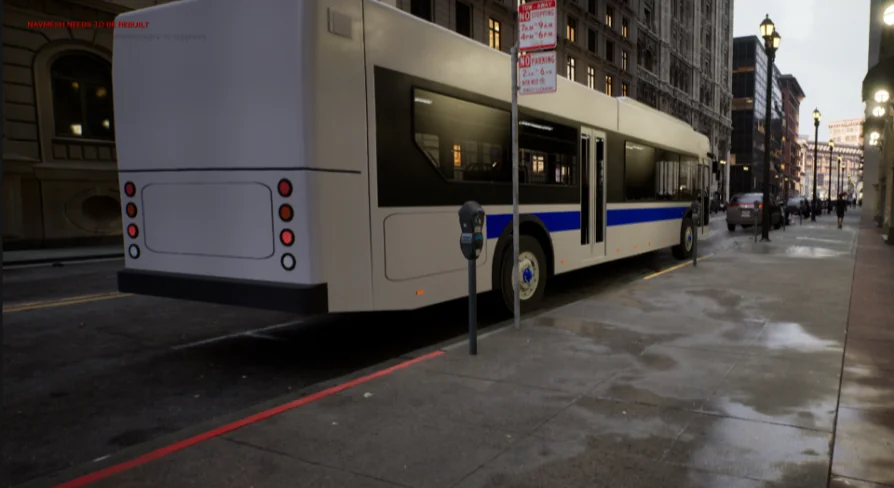
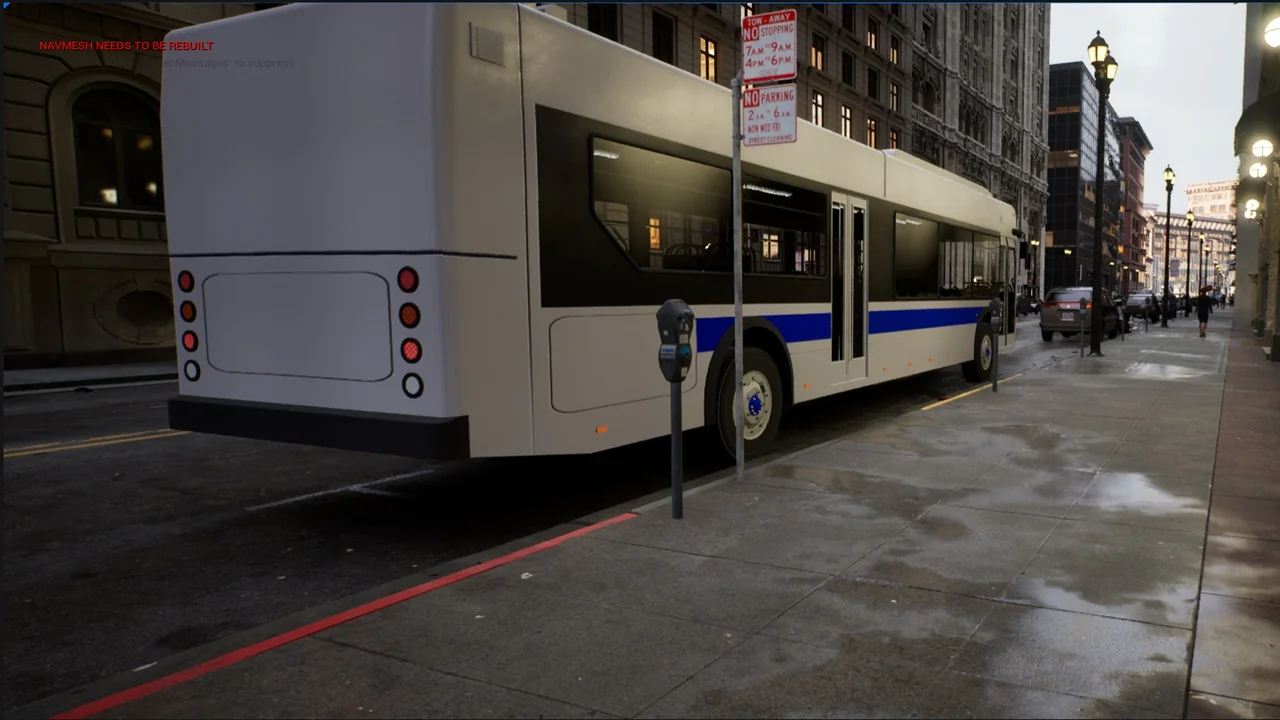
The City bus is constructed as a low-poly vintage transport vehicle configured for real-time applications. Its underlying 3D mesh is defined by a budget of 35,281 vertices and 18,167 faces. This geometric density maintains an authentic vintage silhouette, defining curved body panels, wheel arches, and window frames without overburdening the geometry pipeline. The balance of face count makes it lightweight enough for real-time simulation while preserving mechanical contours that read cleanly up close or at medium distances.
Engine integration spans multiple generations of Unreal Engine. The vehicle model natively supports Unreal Engine 4.27 and incorporates Nanite geometry virtualization when deployed in Unreal Engine 5.0. By supporting Nanite in Unreal Engine 5.0, the asset adapts to modern high-density geometry pipelines, streaming mesh data efficiently alongside other high-fidelity assets. At the same time, the underlying vertex count keeps it directly compatible with legacy setups and mobile hardware targets, reflected in playable demo configurations available for both Windows 64 and Android ES 3.1 platforms.
4096 × 4096 PBR Texturing and Memory Optimization
Surface representation relies on physically based rendering (PBR) workflows mapped across high-resolution texture sheets. The exterior body shell, or case, is mapped with a dedicated 4096 × 4096 resolution texture. This 4K texture space captures panel lines, metal trims, and vintage painted surfaces with crisp edge clarity. An independent 4096 × 4096 texture sheet is allocated strictly to the interior cabin, allowing passenger seats, flooring, dashboards, and driver consoles to retain sharp details during first-person views or close passenger-perspective camera placements.
To reduce draw call overhead and memory footprints, the glass material does not rely on an isolated texture map. Instead, the glass shares the primary 4096 × 4096 body texture. Reusing the exterior case texture for window panes and glass surfaces prevents redundant texture lookups while keeping transparent surfaces aligned with the vehicle body's material assignments. Beyond the primary body and cabin maps, the core PBR material coverage encompasses dedicated treatment for the headlight housing, the glass surfaces, and the road wheels, grounding the physical properties of rubber, polished reflectors, and transparent covers under varying lighting environments.
Lighting Systems and Manual Transmission Controls
Functional vehicle operations are integrated directly into the setup. The City bus is configured with a manual transmission system, providing realistic gear shifting behavior suited for drivable simulations, scripted transit routes, and player-controlled vehicle gameplay. Vehicle movement systems coordinate with the physical model to deliver predictable acceleration and handling aligned with an industrial passenger carrier.
The model features dedicated night lights, giving the vintage bus complete operational readiness for low-light environments, evening urban streets, and dark industrial yards. Illumination controls extend to signal indicators and reactive stopping cues:
Standard materials drive the turn signal and brake light assemblies.
Dynamic rear lights increase their glow intensity whenever braking is engaged.
Exterior color options, turn signal activation, and brake light behaviors can be customized to suit varying regional transit schemes or project needs.
The heightened glow of the rear lights when braking provides an immediate visual feedback mechanism, clarifying stopping events to following traffic or spectators within a scene.
Transit Routes and Urban Industrial Integration
The visual design of the vehicle targets passenger transport across urban settings, long-distance USA travel routes, and industrial districts. Its vintage styling fits period-accurate mid-century or retro-fitted modern city scenes, functioning equally well as an active public conveyance, a stationary street prop, or a component within wider transit hubs. The model also offers cross-compatibility with train pack environments, allowing developers to dock transit systems together around railyards, central stations, and intermodal transport junctions.
Scripting and blueprint mechanics included with the asset allow direct control over the vehicle's functional parts. Because it addresses both high-end desktop requirements on Windows 64 and restricted execution envelopes on Android ES 3.1, the bus functions across mobile transit titles, realistic city simulations, and interactive driving projects. For projects requiring expanded vehicle setups, an advanced tier is available through the pro version of the City bus asset, while this package supplies the core drivable vintage bus foundation with complete PBR mapping, Nanite readiness, and reactive signal lighting.
 Service
 Service
 Service
 Vehicles