"5da73d49ff33a5b1"{"id":"1002378","slug":"android-robot","title":"Android Robot","category":"Characters \u0026 Creatures","engine":"4.17+,5.0+","assetVersion":"","engineVersion":"Engine Version: 4.17+,5.0+","tag":"Characters","accent":"blue","visual":"character","summary":"Examine the technical details of the Android Robot, featuring three LOD levels, four 4K PBR texture sets, full skeletal rigging, and sixteen animations.","platform":"Unreal Engine","indexPolicy":"index","publishedAt":"2026-11-10T03:54:44.127Z","updatedAt":"2026-11-10T03:54:44.127Z","sourceNotes":[],"fileContents":[],"compatibility":["Unreal Engine","Engine Version: 4.17+,5.0+"],"featuredImage":{"alt":"Android Robot","src":"/wp-content/uploads/published/2026/11/e52ed5e4e773-5786987b-f513-4126-ac35-0fbf86d982e0-165186e3c3.webp"},"hasDownloadLink":true,"downloads":0,"terms":[{"taxonomy":"category","slug":"characters-and-creatures","name":"Characters \u0026 Creatures"}],"galleryImages":[{"src":"/wp-content/uploads/published/2026/11/797302ec617a-fe95892f-00eb-47a6-8f63-928c4821659c-00b71153db.webp","alt":"Android Robot"},{"src":"/wp-content/uploads/published/2026/11/0cff9f3ac598-6d4bfa06-9086-4ec4-80ba-d4e9b7fd8de6-63671a4bd5.webp","alt":"Android Robot"},{"src":"/wp-content/uploads/published/2026/11/2cc65b7e8fa0-bd495768-19b6-494c-a836-3347b414f15d-d0aeabe397.webp","alt":"Android Robot"},{"src":"/wp-content/uploads/published/2026/11/2d988e1c2ae0-4ee20c7c-295a-42d8-a253-3a3273b2c32e-aa37aef65e.webp","alt":"Android Robot"},{"src":"/wp-content/uploads/published/2026/11/d3ad4dc185f3-844e0aef-2367-4b0b-ac31-be14d56277f9-fbe86043dc.webp","alt":"Android Robot"}],"accessPanel":{"kind":"resource","title":"Get this resource","eyebrow":"Free resource","message":"Download this resource in your browser.","fileName":"Content.7z","safetyNote":"Resources are manually reviewed before listing to improve quality and reduce obvious risks.","actionLabel":"Get this resource","resourceType":"Resource archive","versions":[]},"contentHtml":"\u003cp\u003eDeep-space installations, orbital research labs, and sterile manufacturing decks depend on credible mechanical life to convey an authentic technological setting. The Android Robot delivers a realistic, humanoid synthetic form configured specifically to populate these types of high-tech and outer-space environments. Rather than presenting an abstract or overly stylized concept, the character model provides a practical mechanical framework ready to take on duties ranging from autonomous facility maintenance to active security alongside allied or opposing units.\u003c/p\u003e \u003ch2\u003eStaging Synthetic Characters with the Android Robot\u003c/h2\u003e\n\u003cp\u003eIntegrating a synthetic humanoid into a digital scene requires a silhouette that immediately communicates function and internal mechanical logic. The Android Robot fulfills this role by balancing humanoid proportions with clear robotic surface articulation. Because the model is structured as a lowpoly polygon character while maintaining realistic design sensibilities, it integrates cleanly into real-time environments where performance budgets run tight but visual fidelity cannot be sacrificed.\u003c/p\u003e \u003cp\u003eIn atmospheric sci-fi settings, synthetic operatives frequently serve as ambient workers walking between control stations, technical specialists interacting with ship machinery, or defensive guards patrolling pressurized corridors. The physical form of this android fits cleanly into themes focused on space exploration, robotic labor, and futuristic installations. Because the model maintains cross-compatibility with the Monsters - Alien Assassin asset, developers building hostile encounter loops or asymmetric encounters can place this humanoid machine directly into scenes featuring speculative alien adversaries without breaking visual cohesion.\u003c/p\u003e \u003ch2\u003eVertex Budgets and Multi-Stage LODs for the Robot Mesh\u003c/h2\u003e\n\u003cp\u003eMesh efficiency dictates how effectively an animated character functions across diverse scene configurations, from tight cinematic close-ups to expansive industrial arenas containing multiple active units. The character includes three distinct levels of detail designed to manage geometric loads systematically across variable viewing distances.\u003c/p\u003e \u003cp\u003eAt its closest range, LOD0 runs at 8,026 vertices. This budget preserves the crisp mechanical edges, joint housing contours, and torso plating necessary when the camera closes in during interactive sequences, inventory inspections, or dialogue framing. The geometry avoids excessive density while retaining all essential silhouette cues across the limbs and head assembly.\u003c/p\u003e \u003cp\u003eAs the character moves into mid-range camera views, LOD1 steps down to 5,151 vertices. This transition strips out fine sub-surface curvature that becomes imperceptible at intermediate distances, lightening the load on real-time rendering pipelines without degrading the robot's physical silhouette. For background operations, crowd sequences, or broad combat spaces, LOD2 reduces the model down to 2,990 vertices. At less than three thousand vertices, LOD2 allows multiple autonomous androids to operate simultaneously on screen, making the mesh ideal for squad deployments, industrial floor crews, or secondary units patrolling perimeter fences.\u003c/p\u003e \u003ch2\u003eMaterial Definition Across Four 4K Android Surface Sets\u003c/h2\u003e\n\u003cp\u003eVisual diversity is critical when deploying robotic characters across different roles or operational zones within a single project. To prevent uniform repetition, the asset provides four different 4K PBR texture setups. Rendering in full 4096-by-4096 resolution ensures that micro-surface wear, edge highlights, and panel separations retain extreme sharpness even when viewed under aggressive spotlighting or close-up player inspection.\u003c/p\u003e \u003cp\u003eEach of the four material configurations is governed by a complete suite of dedicated PBR texture maps:\u003c/p\u003e\n\u003cul\u003e \u003cli\u003e\u003cstrong\u003eDiffuse Maps:\u003c/strong\u003e Establish the base coloration and surface identification across the segmented body panels, distinguishing painted armor shells from exposed interior joints.\u003c/li\u003e \u003cli\u003e\u003cstrong\u003eMetallic Maps:\u003c/strong\u003e Define precise boundaries between conductive, exposed metal hardware and coated or composite non-metallic paneling.\u003c/li\u003e \u003cli\u003e\u003cstrong\u003eRoughness Maps:\u003c/strong\u003e Govern light scattering across polished plating, semi-matte structural elements, and friction-worn contact points.\u003c/li\u003e \u003cli\u003e\u003cstrong\u003eOcclusion Maps:\u003c/strong\u003e Deepen self-shadowing inside recessed panel lines, vent grilles, bolt insets, and mechanical joint cavities where dynamic scene lighting rarely penetrates.\u003c/li\u003e \u003cli\u003e\u003cstrong\u003eEmission Maps:\u003c/strong\u003e Drive the optical glow of ocular sensors, power relays, internal circuitry, and status indicators, delivering critical contrast in low-light corridors or shadow-heavy space environments.\u003c/li\u003e \u003cli\u003e\u003cstrong\u003eNormal Maps:\u003c/strong\u003e Project complex mechanical relief, panel seams, fastener details, and fine hardware components directly onto the low-polygon surface geometry without inflating the underlying vertex count.\u003c/li\u003e\n\u003c/ul\u003e \u003cp\u003eThese separate texture sets allow developers to designate specific colorways or wear patterns to distinct functional classes of androids, differentiating security operatives from maintenance droids or laboratory units while sharing the exact same base geometry.\u003c/p\u003e \u003ch2\u003eMotion Setup and Rigged Dynamics of the Android Robot\u003c/h2\u003e\n\u003cp\u003eA static mechanical shell requires expressive articulation to become an active character within an interactive scene. The Android Robot comes fully rigged and ready for dynamic deployment, mapped to articulate its humanoid skeleton smoothly through rapid tactical actions or slow, measured mechanical tasks.\u003c/p\u003e \u003cp\u003eIncluded with the asset are 16 distinct animations that establish baseline movement profiles right out of the box. These motion cycles provide the immediate building blocks needed for core character locomotion, idling behaviors, and functional interactions. Because the package is built to interact with script systems and animation blueprints, incorporating these 16 cycles into existing state machines or procedural blend trees is straightforward. Transitioning between stationary sensor sweeps, locomotion states, and alert reactions requires no custom retargeting overhaul.\u003c/p\u003e \u003cp\u003eThe rigged structure allows developers to easily expand the library using external motion clips, custom cinematic sequences, or SketchfabAnimations data. The skeletal hierarchy respects standard humanoid joint placement, ensuring that directional locomotion blends, head-tracking scripts, and weapon-bearing poses align naturally with the mesh without pinching the joint geometry or distorting the 4K surface maps.\u003c/p\u003e \u003ch2\u003eProject Deployment and Technical Suitability\u003c/h2\u003e\n\u003cp\u003eTechnical performance hinges on balancing visual complexity against run-time execution costs. By pairing an 8,026-vertex ceiling at LOD0 with a steep reduction down to 2,990 vertices at LOD2, the package fits comfortably into real-time strategy games, first-person narrative adventures, top-down tactical shooters, and cinematic space station simulations. Teams seeking a dependable, realistic android character with built-in LOD scaling, comprehensive PBR texture channel coverage, and sixteen operational animations can deploy the unit directly into production with minimal setup overhead.\u003c/p\u003e\n\n\u003ch2\u003eContinue Browsing Similar Packs\u003c/h2\u003e\n\u003cul\u003e\n\u003cli\u003e\u003ca href=\"https://3dcghub.com/etasphera17/\" rel=\"noopener noreferrer\"\u003eEtasphera17\u003c/a\u003e\u003c/li\u003e\n\u003cli\u003e\u003ca href=\"https://3dcghub.com/robot-spider/\" rel=\"noopener noreferrer\"\u003eRobot Spider\u003c/a\u003e\u003c/li\u003e\n\u003cli\u003e\u003ca href=\"https://3dcghub.com/crash-test-robot-dummy/\" rel=\"noopener noreferrer\"\u003eCrash Test Robot Dummy\u003c/a\u003e\u003c/li\u003e\n\u003cli\u003e\u003ca href=\"https://3dcghub.com/robot-bee/\" rel=\"noopener noreferrer\"\u003eRobot Bee\u003c/a\u003e\u003c/li\u003e\n\u003cli\u003e\u003ca href=\"https://3dcghub.com/robot-robbie-01/\" rel=\"noopener noreferrer\"\u003eRobot Robbie 01\u003c/a\u003e\u003c/li\u003e\n\u003c/ul\u003e","contentTextLength":7155,"navigation":{"current":42,"total":4340,"previous":{"id":"1002379","slug":"cyber-ninja","title":"Cyber Ninja","category":"Characters \u0026 Creatures","platform":"Unreal Engine","updatedAt":"2026-11-10T03:55:24.127Z"},"next":{"id":"1002377","slug":"aki-stylized-character","title":"Aki - Stylized Character","category":"Characters \u0026 Creatures","platform":"Unreal Engine","updatedAt":"2026-11-10T03:53:51.987Z"}},"relatedResources":[{"id":"2296","slug":"etasphera17","title":"Etasphera17","category":"Characters \u0026 Creatures","engine":"4.26+,5.0+","assetVersion":"Engine version: 4.26+,5.0+","engineVersion":"4.18","tag":"Characters","accent":"blue","visual":"character","summary":"Discover Etasphera17, a versatile low poly android character for RPG, FPS, and strategy games. Features 4K textures, rigging, and modular design for developers.","platform":"Unreal Engine","indexPolicy":"index","publishedAt":"2026-02-07T08:58:13.000Z","updatedAt":"2026-04-19T15:58:03.000Z","sourceNotes":[],"fileContents":[],"compatibility":["Unreal Engine","Engine version: 4.26+,5.0+"],"featuredImage":{"alt":"Etasphera17","src":"https://3dcghub.com/wp-content/uploads/2026/02/3f0cab86-b767-43af-b749-b371aefa5f92.webp"},"hasDownloadLink":true,"downloads":1},{"id":"1002174","slug":"robot-spider","title":"Robot Spider","category":"Characters \u0026 Creatures","engine":"4.19+,5.0+","assetVersion":"","engineVersion":"Engine Version: 4.19+,5.0+","tag":"Characters","accent":"blue","visual":"character","summary":"Examine the Robot Spider character model, featuring 4K PBR metallic-roughness textures, 13 animations, turret articulation, and an included damage variant.","platform":"Unreal Engine","indexPolicy":"index","publishedAt":"2026-10-29T10:54:47.040Z","updatedAt":"2026-10-29T10:54:47.040Z","sourceNotes":[],"fileContents":[],"compatibility":["Unreal Engine","Engine Version: 4.19+,5.0+"],"featuredImage":{"alt":"Robot Spider","src":"/wp-content/uploads/published/2026/10/c97535cddc0a-84eee4c7-f51c-4fc6-8d32-755f9175da17-3e3c630c50.webp"},"hasDownloadLink":true,"downloads":1},{"id":"1002312","slug":"crash-test-robot-dummy","title":"Crash Test Robot Dummy","category":"Characters \u0026 Creatures","engine":"4.12+,5.0+","assetVersion":"","engineVersion":"Engine Version: 4.12+,5.0+","tag":"Characters","accent":"blue","visual":"character","summary":"A rigged Unreal robot character with LODs, a physics asset, retargetable mannequin animations, customizable materials, and commented example blueprints.","platform":"Unreal Engine","indexPolicy":"index","publishedAt":"2026-11-06T06:15:02.722Z","updatedAt":"2026-11-06T06:15:02.722Z","sourceNotes":[],"fileContents":[],"compatibility":["Unreal Engine","Engine Version: 4.12+,5.0+"],"featuredImage":{"alt":"Crash Test Robot Dummy","src":"/wp-content/uploads/published/2026/11/3290a1b6fe56-217be32f-70ba-4a20-9099-909aaa640be1-3f80cc9255.webp"},"hasDownloadLink":true,"downloads":0}]}
Characters
Android Robot
Examine the technical details of the Android Robot, featuring three LOD levels, four 4K PBR texture sets, full skeletal rigging, and sixteen animations.
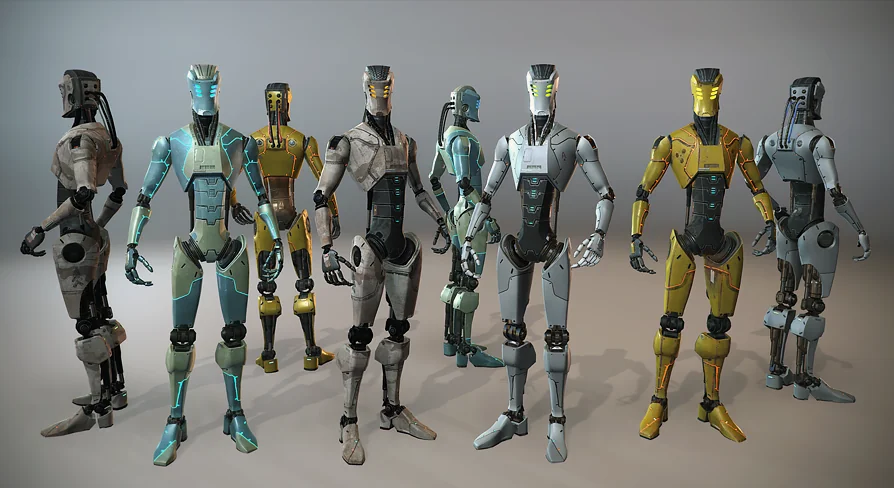
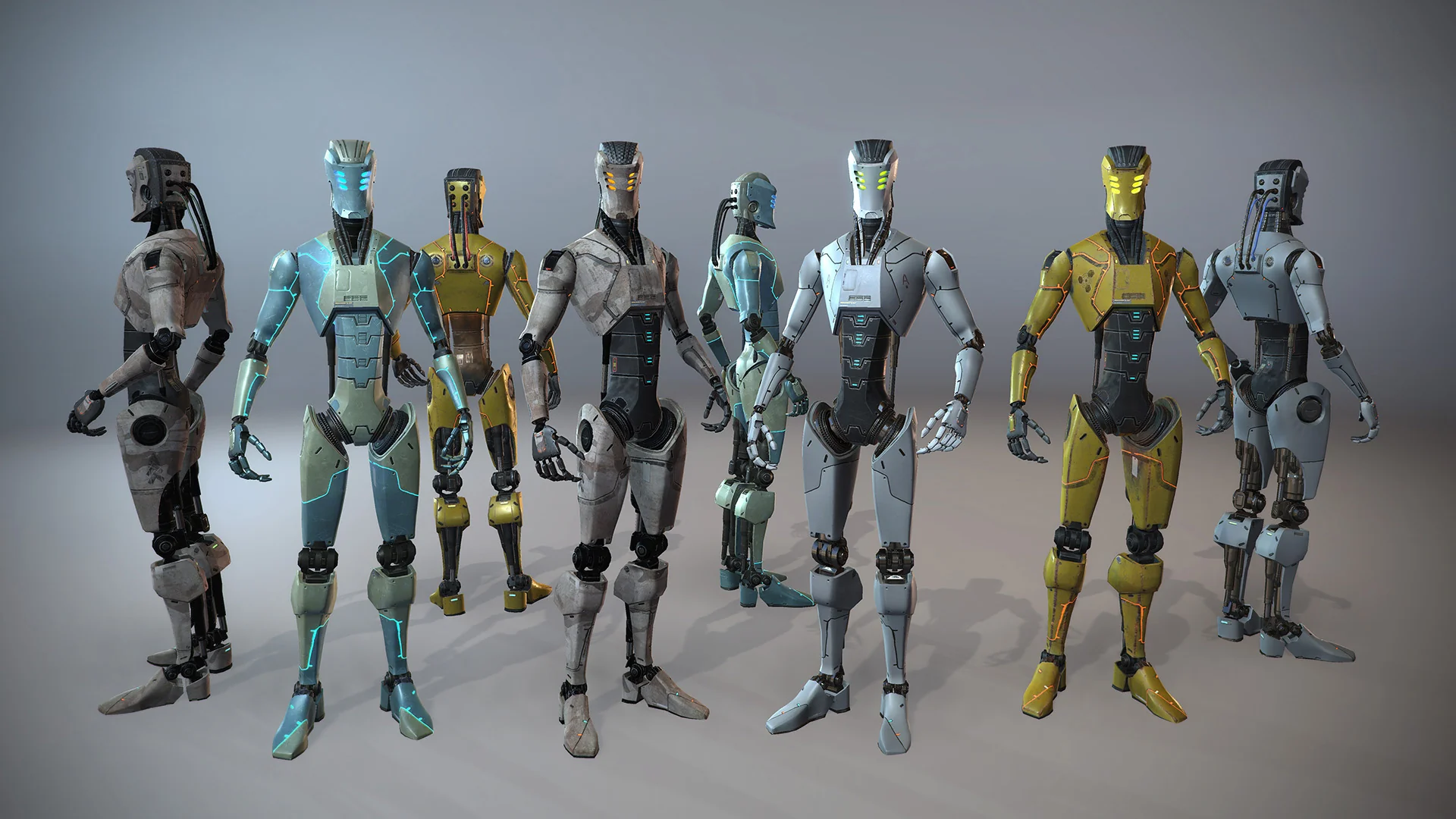
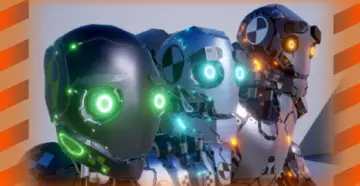
Deep-space installations, orbital research labs, and sterile manufacturing decks depend on credible mechanical life to convey an authentic technological setting. The Android Robot delivers a realistic, humanoid synthetic form configured specifically to populate these types of high-tech and outer-space environments. Rather than presenting an abstract or overly stylized concept, the character model provides a practical mechanical framework ready to take on duties ranging from autonomous facility maintenance to active security alongside allied or opposing units.
Staging Synthetic Characters with the Android Robot
Integrating a synthetic humanoid into a digital scene requires a silhouette that immediately communicates function and internal mechanical logic. The Android Robot fulfills this role by balancing humanoid proportions with clear robotic surface articulation. Because the model is structured as a lowpoly polygon character while maintaining realistic design sensibilities, it integrates cleanly into real-time environments where performance budgets run tight but visual fidelity cannot be sacrificed.
In atmospheric sci-fi settings, synthetic operatives frequently serve as ambient workers walking between control stations, technical specialists interacting with ship machinery, or defensive guards patrolling pressurized corridors. The physical form of this android fits cleanly into themes focused on space exploration, robotic labor, and futuristic installations. Because the model maintains cross-compatibility with the Monsters - Alien Assassin asset, developers building hostile encounter loops or asymmetric encounters can place this humanoid machine directly into scenes featuring speculative alien adversaries without breaking visual cohesion.
Vertex Budgets and Multi-Stage LODs for the Robot Mesh
Mesh efficiency dictates how effectively an animated character functions across diverse scene configurations, from tight cinematic close-ups to expansive industrial arenas containing multiple active units. The character includes three distinct levels of detail designed to manage geometric loads systematically across variable viewing distances.
At its closest range, LOD0 runs at 8,026 vertices. This budget preserves the crisp mechanical edges, joint housing contours, and torso plating necessary when the camera closes in during interactive sequences, inventory inspections, or dialogue framing. The geometry avoids excessive density while retaining all essential silhouette cues across the limbs and head assembly.
As the character moves into mid-range camera views, LOD1 steps down to 5,151 vertices. This transition strips out fine sub-surface curvature that becomes imperceptible at intermediate distances, lightening the load on real-time rendering pipelines without degrading the robot's physical silhouette. For background operations, crowd sequences, or broad combat spaces, LOD2 reduces the model down to 2,990 vertices. At less than three thousand vertices, LOD2 allows multiple autonomous androids to operate simultaneously on screen, making the mesh ideal for squad deployments, industrial floor crews, or secondary units patrolling perimeter fences.
Material Definition Across Four 4K Android Surface Sets
Visual diversity is critical when deploying robotic characters across different roles or operational zones within a single project. To prevent uniform repetition, the asset provides four different 4K PBR texture setups. Rendering in full 4096-by-4096 resolution ensures that micro-surface wear, edge highlights, and panel separations retain extreme sharpness even when viewed under aggressive spotlighting or close-up player inspection.
Each of the four material configurations is governed by a complete suite of dedicated PBR texture maps:
Diffuse Maps: Establish the base coloration and surface identification across the segmented body panels, distinguishing painted armor shells from exposed interior joints.
Metallic Maps: Define precise boundaries between conductive, exposed metal hardware and coated or composite non-metallic paneling.
Roughness Maps: Govern light scattering across polished plating, semi-matte structural elements, and friction-worn contact points.
Occlusion Maps: Deepen self-shadowing inside recessed panel lines, vent grilles, bolt insets, and mechanical joint cavities where dynamic scene lighting rarely penetrates.
Emission Maps: Drive the optical glow of ocular sensors, power relays, internal circuitry, and status indicators, delivering critical contrast in low-light corridors or shadow-heavy space environments.
Normal Maps: Project complex mechanical relief, panel seams, fastener details, and fine hardware components directly onto the low-polygon surface geometry without inflating the underlying vertex count.
These separate texture sets allow developers to designate specific colorways or wear patterns to distinct functional classes of androids, differentiating security operatives from maintenance droids or laboratory units while sharing the exact same base geometry.
Motion Setup and Rigged Dynamics of the Android Robot
A static mechanical shell requires expressive articulation to become an active character within an interactive scene. The Android Robot comes fully rigged and ready for dynamic deployment, mapped to articulate its humanoid skeleton smoothly through rapid tactical actions or slow, measured mechanical tasks.
Included with the asset are 16 distinct animations that establish baseline movement profiles right out of the box. These motion cycles provide the immediate building blocks needed for core character locomotion, idling behaviors, and functional interactions. Because the package is built to interact with script systems and animation blueprints, incorporating these 16 cycles into existing state machines or procedural blend trees is straightforward. Transitioning between stationary sensor sweeps, locomotion states, and alert reactions requires no custom retargeting overhaul.
The rigged structure allows developers to easily expand the library using external motion clips, custom cinematic sequences, or SketchfabAnimations data. The skeletal hierarchy respects standard humanoid joint placement, ensuring that directional locomotion blends, head-tracking scripts, and weapon-bearing poses align naturally with the mesh without pinching the joint geometry or distorting the 4K surface maps.
Project Deployment and Technical Suitability
Technical performance hinges on balancing visual complexity against run-time execution costs. By pairing an 8,026-vertex ceiling at LOD0 with a steep reduction down to 2,990 vertices at LOD2, the package fits comfortably into real-time strategy games, first-person narrative adventures, top-down tactical shooters, and cinematic space station simulations. Teams seeking a dependable, realistic android character with built-in LOD scaling, comprehensive PBR texture channel coverage, and sixteen operational animations can deploy the unit directly into production with minimal setup overhead.
 Characters
 Characters
 Characters
 Characters