"efaa631e936fd3ee"{"id":"1002172","slug":"robot-bee","title":"Robot Bee","category":"Characters \u0026 Creatures","engine":"4.19+,5.0+","assetVersion":"","engineVersion":"Engine Version: 4.19+,5.0+","tag":"Characters","accent":"blue","visual":"character","summary":"Rigged and animated Robot Bee low-poly character model featuring 4K PBR metallic-roughness textures, full flight, walking, and weapon combat animations.","platform":"Unreal Engine","publishedAt":"2026-10-29T10:15:34.621Z","updatedAt":"2026-10-29T10:15:34.621Z","sourceNotes":[],"fileContents":[],"compatibility":["Unreal Engine","Engine Version: 4.19+,5.0+"],"featuredImage":{"alt":"Robot Bee","src":"/wp-content/uploads/published/2026/10/e2c941f553b6-24c810ad-37cb-43fa-8ee9-d1406a377a32-03d7e5bdb8.webp"},"hasDownloadLink":true,"downloads":0,"terms":[{"taxonomy":"category","slug":"characters-and-creatures","name":"Characters \u0026 Creatures"}],"galleryImages":[{"src":"/wp-content/uploads/published/2026/10/c84e017fe49d-0b90fd62-12ae-40b6-869f-2c17b132cd0a-43359e0d31.webp","alt":"Robot Bee"},{"src":"/wp-content/uploads/published/2026/10/93ba5e8a5bc4-84580da9-ff7e-4f4d-ad92-398b7bb5e112-6300bbf450.webp","alt":"Robot Bee"},{"src":"/wp-content/uploads/published/2026/10/1f6f492fd94f-862c8a75-a05b-43ff-941a-2e09ae18ceb3-90b10d8f18.webp","alt":"Robot Bee"},{"src":"/wp-content/uploads/published/2026/10/f2e578564f4b-d00970a4-af28-4807-b2f0-5025f657efac-f75c3eb6f4.webp","alt":"Robot Bee"},{"src":"/wp-content/uploads/published/2026/10/f62053ff7d14-c6729fa5-d696-41c4-b51c-3f0452214e2a-dc99fa202d.webp","alt":"Robot Bee"},{"src":"/wp-content/uploads/published/2026/10/dd01ede189b9-8d79fd72-7a12-433d-b0fa-694a5adcdd97-c53d0fab8e.webp","alt":"Robot Bee"},{"src":"/wp-content/uploads/published/2026/10/1ed30e70766e-4039b0db-9264-4db9-a2df-8f16875b8cbd-2f2465c74f.webp","alt":"Robot Bee"},{"src":"/wp-content/uploads/published/2026/10/35128427fca0-aa92ce7e-f7db-4cd5-a9b8-c329786549b9-b1fea3e624.webp","alt":"Robot Bee"}],"accessPanel":{"kind":"resource","title":"Download this resource","eyebrow":"Free Download","message":"Log in or create a free account to start your download.","fileName":"Content.7z","safetyNote":"Resources are manually reviewed before listing to improve quality and reduce obvious risks.","actionLabel":"Download Free","resourceType":"Resource archive"},"contentHtml":"\u003ch2\u003eAerial Maneuvering and Ground Locomotion for Robot Bee\u003c/h2\u003e\n\u003cp\u003eHovering in place, drifting laterally across terrain, or transitioning directly from a vertical descent into a four-directional crawl defines the dual operational mode of Robot Bee. The character functions both as an airborne drone and an insectoid ground unit, relying on a fully configured skeletal rig that supports smooth transitions between flight and walking states.\u003c/p\u003e\n\u003cp\u003eFlight locomotion includes independent directional movement states: Air_idle, Air_Forward, Air_Backward, Air_left, and Air_right. These directional offsets enable realistic strafing and hovering behavior without forcing the asset to rotate entirely toward its vector of travel. For changing operational domains, dedicated Take_off and Landing sequences govern the shift between mid-air hovering and grounded movement. Once on the surface, a standard terrestrial movement set takes over, comprising Idle, Walk_forward, Walk_backward, Walk_left, and Walk_right, alongside stationary Turn_left and Turn_right clips. Having these discrete directional paths allows designers to assemble natural blend spaces or state machines that treat the machine as a multi-modal unit rather than a simple floating prop.\u003c/p\u003e \u003ch2\u003eTurret Deployment and Weapon Animations\u003c/h2\u003e\n\u003cp\u003eBeyond baseline movement, the model incorporates mechanical articulation for onboard reconnaissance and offensive weapons. Engagement systems are divided into state triggers, static frame poses, and active weapon fire clips, providing the necessary modularity for complex interaction blueprints.\u003c/p\u003e\n\u003cp\u003eTarget acquisition centers around Camera_on and Camera_off animations, complemented by a single-frame static pose designated as Camera_on_idle. This one-frame static state provides a clean resting pose for animation blueprints when the sensor suite remains deployed during prolonged scanning sequences. Offense relies on a heavy hardware setup managed through Turret_on and Turret_off cycles, along with its own single-frame Turret_on_idle pose. Ballistic actions are split across three separate firing behaviors:\u003c/p\u003e\n\u003cul\u003e \u003cli\u003eGun_L_fire for isolated left-barrel weapon cycling\u003c/li\u003e \u003cli\u003eGun_R_fire for isolated right-barrel weapon cycling\u003c/li\u003e \u003cli\u003eGun_LR_fire for simultaneous dual-barrel discharges\u003c/li\u003e\n\u003c/ul\u003e\n\u003cp\u003eWhen incapacitated, the unit resolves through a final Die animation, bringing the mechanical chassis to a complete shutdown whether grounded or falling from an aerial patrol.\u003c/p\u003e \u003ch2\u003eMesh Topology and 4K Metallic Roughness Textures\u003c/h2\u003e\n\u003cp\u003eConstructed as a low-poly character asset, the Robot Bee balances silhouette clarity with real-time performance constraints. The geometry sits at 21,169 vertices and 25,092 triangles, maintaining sufficient density around joints, mechanical wings, weapon mountings, and the insectoid segmented chassis without overloading rendering pipelines.\u003c/p\u003e\n\u003cp\u003eSurface definition is handled through 4K PBR textures authored for the metallic-roughness workflow. High-resolution texture maps preserve the panel seams, mechanical junctions, sensor lenses, and structural frame elements that define its military-style drone aesthetic. The 4K maps deliver clean close-up fidelity when the camera pulls into close third-person or first-person viewing distances, while the metallic-roughness setup ensures predictable light response under diverse lighting conditions, from harsh direct sunlight to low-light industrial interiors.\u003c/p\u003e \u003ch2\u003eIntegrating the Mechanical Drone across RPG, Strategy, and FPS Games\u003c/h2\u003e\n\u003cp\u003eThe structural combination of insect-like aesthetics, robotic architecture, and versatile movement states makes the model readily applicable to multiple game genres. In first-person shooters, the model fits into roles ranging from agile harassment drones to persistent ceiling-mounted automated sentries that deploy downward to engage players. The granular firing clips enable reactive combat programming, allowing the AI to alternate barrel fire based on cooling rates or player proximity.\u003c/p\u003e\n\u003cp\u003eIn top-down strategy titles and tactical role-playing games, the distinct locomotion sets provide distinct functional roles. The flight animations support rapid scouting, high-elevation reconnaissance, and cross-obstacle movement, while the landing and walking animations allow the same asset to lock down strategic ground points or defend fortified perimeter chokepoints. Compatibility extends to Monster Dog, making it easy to incorporate into projects utilizing complementary character pipelines.\u003c/p\u003e \u003ch2\u003ePractical Takeaway for Development Pipelines\u003c/h2\u003e\n\u003cp\u003eRobot Bee provides a turnkey robotic character that pairs insectoid design with complete ground and aerial capability. With 25,092 triangles, 4K metallic-roughness materials, and 23 motion and static frame clips covering movement, sensor activation, and independent weapon fire, it delivers an immediately functional combat asset for real-time game environments.\u003c/p\u003e\n\n\u003ch2\u003eMore From The Same Workflow\u003c/h2\u003e\n\u003cul\u003e\n\u003cli\u003e\u003ca href=\"https://3dcghub.com/robot-robbie-01/\" title=\"Robot Robbie 01\"\u003eRobot Robbie 01\u003c/a\u003e\u003c/li\u003e\n\u003cli\u003e\u003ca href=\"https://3dcghub.com/sci-fi-robot/\" title=\"Sci Fi Robot\"\u003eSci Fi Robot\u003c/a\u003e\u003c/li\u003e\n\u003cli\u003e\u003ca href=\"https://3dcghub.com/etasphera17/\" title=\"Etasphera17\"\u003eEtasphera17\u003c/a\u003e\u003c/li\u003e\n\u003cli\u003e\u003ca href=\"https://3dcghub.com/robot-cyber-suit/\" title=\"Robot Cyber Suit\"\u003eRobot Cyber Suit\u003c/a\u003e\u003c/li\u003e\n\u003cli\u003e\u003ca href=\"https://3dcghub.com/cyborg/\" title=\"Cyborg\"\u003eCyborg\u003c/a\u003e\u003c/li\u003e\n\u003c/ul\u003e","contentTextLength":4924,"navigation":{"current":113,"total":4209,"previous":{"id":"1002173","slug":"rapier-anim-set","title":"Rapier Anim Set","category":"Animations","platform":"Unity","updatedAt":"2026-10-29T10:44:49.154Z"},"next":{"id":"1002171","slug":"reversedualblade-animset","title":"ReverseDualBlade Animset","category":"Combat","platform":"Unreal Engine","updatedAt":"2026-10-29T10:13:47.973Z"}},"relatedResources":[{"id":"1002174","slug":"robot-spider","title":"Robot Spider","category":"Characters \u0026 Creatures","engine":"4.19+,5.0+","assetVersion":"","engineVersion":"Engine Version: 4.19+,5.0+","tag":"Characters","accent":"blue","visual":"character","summary":"Examine the Robot Spider character model, featuring 4K PBR metallic-roughness textures, 13 animations, turret articulation, and an included damage variant.","platform":"Unreal Engine","publishedAt":"2026-10-29T10:54:47.040Z","updatedAt":"2026-10-29T10:54:47.040Z","sourceNotes":[],"fileContents":[],"compatibility":["Unreal Engine","Engine Version: 4.19+,5.0+"],"featuredImage":{"alt":"Robot Spider","src":"/wp-content/uploads/published/2026/10/c97535cddc0a-84eee4c7-f51c-4fc6-8d32-755f9175da17-3e3c630c50.webp"},"hasDownloadLink":true,"downloads":1},{"id":"1001829","slug":"robot-robbie-01","title":"Robot Robbie 01","category":"Characters \u0026 Creatures","engine":"4.19+,5.0+","assetVersion":"","engineVersion":"Engine Version: 4.19+,5.0+","tag":"Characters","accent":"blue","visual":"character","summary":"Low-poly humanoid mecha Robot Robbie 01 features 4K PBR textures, Epic skeleton UE4 rigging, v1.1 eye morph targets, and a versatile animation suite.","platform":"Unreal Engine","publishedAt":"2026-10-21T08:21:32.204Z","updatedAt":"2026-10-21T08:21:32.204Z","sourceNotes":[],"fileContents":[],"compatibility":["Unreal Engine","Engine Version: 4.19+,5.0+"],"featuredImage":{"alt":"Robot Robbie 01","src":"/wp-content/uploads/published/2026/10/275ed59aa92f-b883a61c-8b35-4617-8f13-d93248ca4634-a2ab406c41.webp"},"hasDownloadLink":true,"downloads":0},{"id":"1000236","slug":"sci-fi-robot","title":"Sci Fi Robot","category":"Characters \u0026 Creatures","engine":"4.26+,5.0+","assetVersion":"","engineVersion":"Engine Version: 4.26+,5.0+","tag":"Characters","accent":"blue","visual":"character","summary":"An ultra-detailed robotic character model featuring an 80,000-triangle hero mesh, aggressive LOD scaling, and extensive material customization for sci-fi projec","platform":"Unreal Engine","publishedAt":"2026-06-28T11:32:47.315Z","updatedAt":"2026-06-28T11:32:47.315Z","sourceNotes":[],"fileContents":[],"compatibility":["Unreal Engine","Engine Version: 4.26+,5.0+"],"featuredImage":{"alt":"Sci Fi Robot","src":"/wp-content/uploads/published/2026/06/b6a57eb0f927-e1e2dc10-e3c7-405f-83c4-d3490872e02d-e26f1eceab.webp"},"hasDownloadLink":true,"downloads":1}]}
Characters
Robot Bee
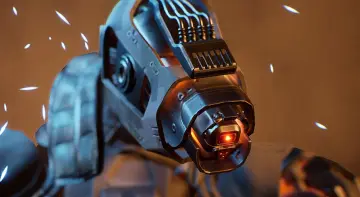
Rigged and animated Robot Bee low-poly character model featuring 4K PBR metallic-roughness textures, full flight, walking, and weapon combat animations.
Aerial Maneuvering and Ground Locomotion for Robot Bee
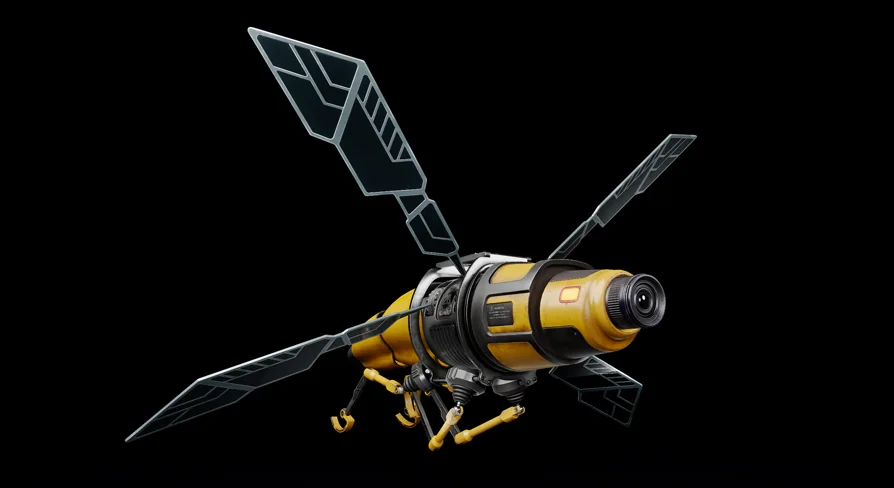
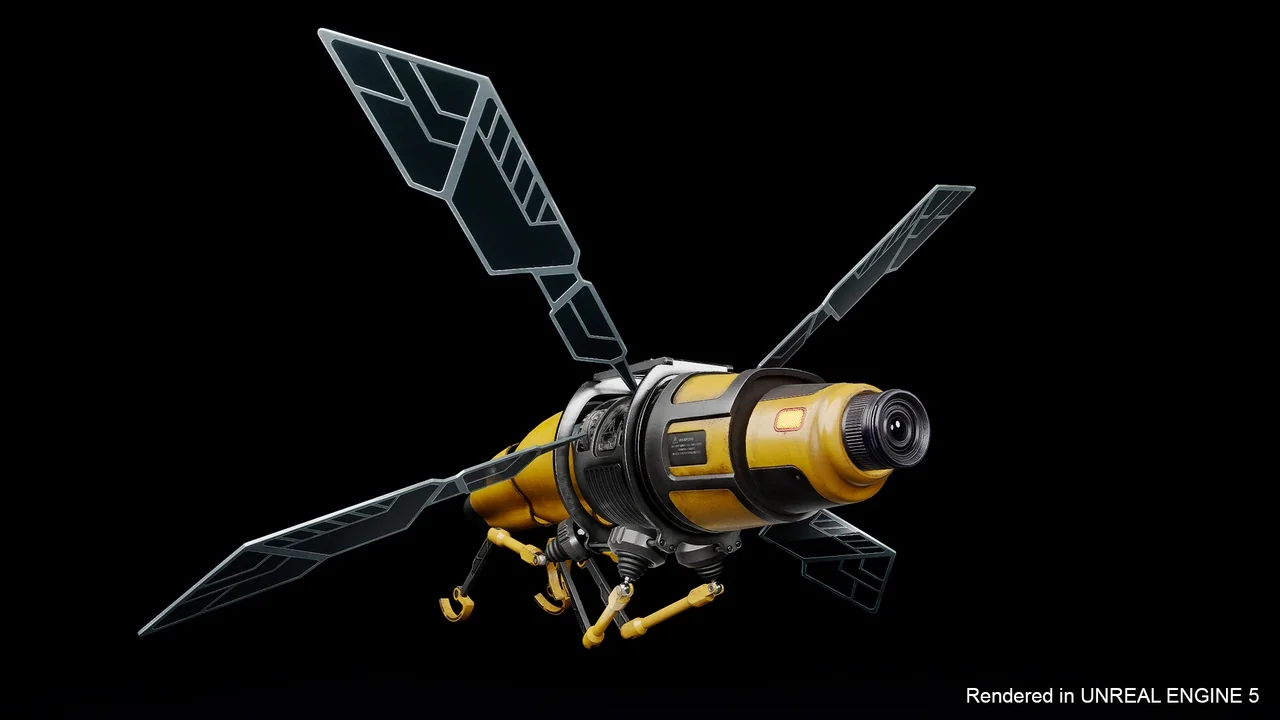
Hovering in place, drifting laterally across terrain, or transitioning directly from a vertical descent into a four-directional crawl defines the dual operational mode of Robot Bee. The character functions both as an airborne drone and an insectoid ground unit, relying on a fully configured skeletal rig that supports smooth transitions between flight and walking states.
Flight locomotion includes independent directional movement states: Air_idle, Air_Forward, Air_Backward, Air_left, and Air_right. These directional offsets enable realistic strafing and hovering behavior without forcing the asset to rotate entirely toward its vector of travel. For changing operational domains, dedicated Take_off and Landing sequences govern the shift between mid-air hovering and grounded movement. Once on the surface, a standard terrestrial movement set takes over, comprising Idle, Walk_forward, Walk_backward, Walk_left, and Walk_right, alongside stationary Turn_left and Turn_right clips. Having these discrete directional paths allows designers to assemble natural blend spaces or state machines that treat the machine as a multi-modal unit rather than a simple floating prop.
Turret Deployment and Weapon Animations
Beyond baseline movement, the model incorporates mechanical articulation for onboard reconnaissance and offensive weapons. Engagement systems are divided into state triggers, static frame poses, and active weapon fire clips, providing the necessary modularity for complex interaction blueprints.
Target acquisition centers around Camera_on and Camera_off animations, complemented by a single-frame static pose designated as Camera_on_idle. This one-frame static state provides a clean resting pose for animation blueprints when the sensor suite remains deployed during prolonged scanning sequences. Offense relies on a heavy hardware setup managed through Turret_on and Turret_off cycles, along with its own single-frame Turret_on_idle pose. Ballistic actions are split across three separate firing behaviors:
Gun_L_fire for isolated left-barrel weapon cycling
Gun_R_fire for isolated right-barrel weapon cycling
Gun_LR_fire for simultaneous dual-barrel discharges
When incapacitated, the unit resolves through a final Die animation, bringing the mechanical chassis to a complete shutdown whether grounded or falling from an aerial patrol.
Mesh Topology and 4K Metallic Roughness Textures
Constructed as a low-poly character asset, the Robot Bee balances silhouette clarity with real-time performance constraints. The geometry sits at 21,169 vertices and 25,092 triangles, maintaining sufficient density around joints, mechanical wings, weapon mountings, and the insectoid segmented chassis without overloading rendering pipelines.
Surface definition is handled through 4K PBR textures authored for the metallic-roughness workflow. High-resolution texture maps preserve the panel seams, mechanical junctions, sensor lenses, and structural frame elements that define its military-style drone aesthetic. The 4K maps deliver clean close-up fidelity when the camera pulls into close third-person or first-person viewing distances, while the metallic-roughness setup ensures predictable light response under diverse lighting conditions, from harsh direct sunlight to low-light industrial interiors.
Integrating the Mechanical Drone across RPG, Strategy, and FPS Games
The structural combination of insect-like aesthetics, robotic architecture, and versatile movement states makes the model readily applicable to multiple game genres. In first-person shooters, the model fits into roles ranging from agile harassment drones to persistent ceiling-mounted automated sentries that deploy downward to engage players. The granular firing clips enable reactive combat programming, allowing the AI to alternate barrel fire based on cooling rates or player proximity.
In top-down strategy titles and tactical role-playing games, the distinct locomotion sets provide distinct functional roles. The flight animations support rapid scouting, high-elevation reconnaissance, and cross-obstacle movement, while the landing and walking animations allow the same asset to lock down strategic ground points or defend fortified perimeter chokepoints. Compatibility extends to Monster Dog, making it easy to incorporate into projects utilizing complementary character pipelines.
Practical Takeaway for Development Pipelines
Robot Bee provides a turnkey robotic character that pairs insectoid design with complete ground and aerial capability. With 25,092 triangles, 4K metallic-roughness materials, and 23 motion and static frame clips covering movement, sensor activation, and independent weapon fire, it delivers an immediately functional combat asset for real-time game environments.
 Characters
 Characters
 Characters
 Characters