"5da73d49ff33a5b1"{"id":"1002379","slug":"cyber-ninja","title":"Cyber Ninja","category":"Characters \u0026 Creatures","engine":"5.0+","assetVersion":"","engineVersion":"Engine Version: 5.0+","tag":"Characters","accent":"blue","visual":"character","summary":"A technical look at implementing the futuristic Cyber Ninja asset, featuring PBR textures, lowpoly optimization, sword mechanics, and Animationblueprint logic.","platform":"Unreal Engine","indexPolicy":"index","publishedAt":"2026-11-10T03:55:24.127Z","updatedAt":"2026-11-10T03:55:24.127Z","sourceNotes":[],"fileContents":[],"compatibility":["Unreal Engine","Engine Version: 5.0+"],"featuredImage":{"alt":"Cyber Ninja","src":"/wp-content/uploads/published/2026/11/dbf1c2b04a7d-3147ee0f-93a2-48af-a6c9-db507391f80a-7a2d57a9ad.webp"},"hasDownloadLink":true,"downloads":0,"terms":[{"taxonomy":"category","slug":"characters-and-creatures","name":"Characters \u0026 Creatures"}],"galleryImages":[{"src":"/wp-content/uploads/published/2026/11/81c180e41c17-490077de-1c9b-4872-8238-57ceb82a4544-9ffacd9d14.webp","alt":"Cyber Ninja"},{"src":"/wp-content/uploads/published/2026/11/b552395c1c6c-632cf8f1-f885-40ef-b151-d70488dbdd34-84b0c4dcb6.webp","alt":"Cyber Ninja"},{"src":"/wp-content/uploads/published/2026/11/f383dc6f4652-3610261d-5d9f-429f-84f0-b8950b804cf8-14d8a0550a.webp","alt":"Cyber Ninja"},{"src":"/wp-content/uploads/published/2026/11/2df4c35e58b6-ac644c13-5d4f-4c49-a2b2-4ac4905b08f0-27c40c32fb.webp","alt":"Cyber Ninja"},{"src":"/wp-content/uploads/published/2026/11/0d1dd49d529f-bf0193d2-4c77-49e2-9f3d-1f9c1ad5efbe-cc59e48e64.webp","alt":"Cyber Ninja"}],"accessPanel":{"kind":"resource","title":"Get this resource","eyebrow":"Free resource","message":"Download this resource in your browser.","fileName":"Cyber Ninja.7z","safetyNote":"Resources are manually reviewed before listing to improve quality and reduce obvious risks.","actionLabel":"Get this resource","resourceType":"Resource archive","versions":[]},"contentHtml":"\u003cp\u003eFuturistic combat scenarios demand characters that can navigate tight industrial corridors, neon-lit alleyways, and high-tech installations with distinct visual clarity. The Cyber Ninja fills this operational role directly, providing a dedicated model suited for fast-moving encounters where both martial agility and robotic aesthetics are required. Tailored for production pipelines that balance rendering speed with material sophistication, this futuristic combatant fits into the role of a frontline fighter, swift infiltrator, or recurring enemy unit within high-tech game worlds.\u003c/p\u003e \u003ch2\u003eCombat Roles for the Cyber Ninja in Modern Game Systems\u003c/h2\u003e\n\u003cp\u003ePositioning a character within an action system requires a clear definition of silhouette, intended mobility, and combat behavior. Because this asset embodies both ninja and samurai archetypes overlaid with robotic and futuristic themes, it functions naturally across several distinct encounter tiers. In an adversarial context, it serves effectively as an agile enemy class designed to challenge player reflexes through rapid repositioning, melee flurries, and aggressive spatial denial.\u003c/p\u003e\n\u003cp\u003eThe visual distinction of a cybernetic warrior also suits player-controlled scenarios or companion roles. When designated as a controllable fighter, the character conveys speed, precise edge-weapon handling, and technological augmentation. Its physical presence communicates high mobility rather than heavy damage mitigation, signaling to the player or opposing combatant that tactics should center on evasion, counter-attacks, and surgical strikes rather than brute-force absorption.\u003c/p\u003e \u003ch2\u003eMaterial Fidelity and Lowpoly Architecture\u003c/h2\u003e\n\u003cp\u003eInteractive projects face a continuous trade-off between asset detail and frame-rate stability. The Cyber Ninja approaches this requirement through lowpoly geometry supported by physically based rendering (PBR) workflows. Employing a lowpoly base mesh guarantees that the character can be deployed in scenarios with multiple active combatants on screen simultaneously without imposing severe vertex overhead on the rendering pipeline.\u003c/p\u003e\n\u003cp\u003eAt the same time, the inclusion of realistic PBR surfaces ensures that the lowpoly structure does not sacrifice environmental believability. In modern lighting environments—particularly cyberpunk scenes filled with multi-colored point lights, high-contrast emissives, and metallic wet surfaces—PBR material channels respond accurately to shifting ambient values. The interaction of light against metallic panels, synthetic body suits, and mechanical joints maintains visual fidelity regardless of whether the character stands under stark artificial light, hides in deep shadow, or traverses high-contrast rain-slicked streets.\u003c/p\u003e \u003ch2\u003eControlling the Cyber Ninja via Animationblueprint and Script Integration\u003c/h2\u003e\n\u003cp\u003eSmooth dynamic motion is essential for any character grounded in martial combat. The Cyber Ninja setup incorporates an Animationblueprint alongside script integration, providing the foundational architecture required to drive believable motion trees and responsive combat mechanics.\u003c/p\u003e\n\u003cp\u003eThe Animationblueprint acts as the central hub for managing state changes between distinct movement loops. For a cybernetic melee unit, this involves handling complex blending between idle stances, full-speed sprints, directional dodges, and sudden attack releases. Having this animation framework natively aligned with the character allows combat logic to tap into dedicated blend spaces and transition rules without requiring structural retargeting fixes.\u003c/p\u003e\n\u003cp\u003eScript hooks complement this visual pipeline by handling the under-the-hood gameplay triggers. These scripts manage state evaluation, detecting whether the character is engaged in an attack swing, vulnerable to hit reactions, parrying incoming damage, or calculating line-of-sight awareness when configured as an enemy AI. By isolating animation states inside the Animationblueprint and behavioral rules within scripting logic, projects can iterate on attack pacing, recovery frames, and movement speed cleanly.\u003c/p\u003e \u003ch2\u003eSword Mechanics and Melee Stance Implementation\u003c/h2\u003e\n\u003cp\u003eCentral to the identity of this asset is its designated weapon: the sword. In sci-fi and cyberpunk encounters, blade-focused combatants must project speed, lethality, and technological enhancement. The Cyber Ninja’s pairing with a sword allows developers to construct deliberate strike profiles that reflect traditional swordsmanship accelerated by cybernetic performance.\u003c/p\u003e\n\u003cp\u003eImplementing sword gameplay involves binding the weapon transform securely to the character's hand sockets while utilizing script-driven collision traces along the blade edge. During an attack sequence defined within the Animationblueprint, animation notifies can activate precise hit-detection windows. Because the asset encompasses both ninja agility and samurai combat heritage, movement routines can comfortably span from low, quick thrusts to wider, heavy two-handed slashes, supporting tactical variety across both short skirmishes and extended melee duels.\u003c/p\u003e \u003ch2\u003eCyber Samurai Cross-Compatibility and Unit Variety\u003c/h2\u003e\n\u003cp\u003eEncounter design benefits immensely from visual and structural consistency across hostile or allied squads. The Cyber Ninja features explicit compatibility with the Cyber Samurai, allowing developers to build coherent visual rosters without stylistic drift.\u003c/p\u003e\n\u003cp\u003eWhere the Cyber Samurai provides a presence suited for heavier vanguard engagements, defensive bulwarks, or deliberate commander-type encounters, the Cyber Ninja offers the complementary counterpart: flanking maneuvers, rapid stealth approaches, and agile hit-and-run tactics. Using both assets within the same project environment creates clear visual hierarchies for players to read during fast-paced combat. Enemies wearing complementary armor styles immediately inform the player of a shared faction origin, while their differing body language and weapon stances clearly signal distinct mechanical threats.\u003c/p\u003e\n\u003cp\u003eThis cross-compatibility also streamlines backend integration. Systems already calibrated for the Cyber Samurai’s collision bounds, combat scripting routines, and socket configurations can readily interface with the Cyber Ninja, reducing the time needed to establish unified weapon handling, hit boxes, and team-based AI behavioral trees.\u003c/p\u003e\n\n\u003ch2\u003eContinue Browsing Similar Packs\u003c/h2\u003e\n\u003cul\u003e\n\u003cli\u003e\u003ca href=\"https://3dcghub.com/killer/\" rel=\"noopener noreferrer\"\u003eKiller\u003c/a\u003e\u003c/li\u003e\n\u003cli\u003e\u003ca href=\"https://3dcghub.com/pink-cyber-girl/\" rel=\"noopener noreferrer\"\u003ePINK CYBER GIRL\u003c/a\u003e\u003c/li\u003e\n\u003cli\u003e\u003ca href=\"https://3dcghub.com/robot-cyber-suit/\" rel=\"noopener noreferrer\"\u003eRobot Cyber Suit\u003c/a\u003e\u003c/li\u003e\n\u003cli\u003e\u003ca href=\"https://3dcghub.com/shinobi-girl-akane/\" rel=\"noopener noreferrer\"\u003eShinobi Girl Akane\u003c/a\u003e\u003c/li\u003e\n\u003cli\u003e\u003ca href=\"https://3dcghub.com/sci-fi-character-01-shadow/\" rel=\"noopener noreferrer\"\u003eSci-Fi Character 01 (Shadow)\u003c/a\u003e\u003c/li\u003e\n\u003c/ul\u003e","contentTextLength":6409,"navigation":{"current":41,"total":4340,"previous":{"id":"1002380","slug":"druid-werewolf","title":"Druid WereWolf","category":"Characters \u0026 Creatures","platform":"Unreal Engine","updatedAt":"2026-11-10T03:56:37.163Z"},"next":{"id":"1002378","slug":"android-robot","title":"Android Robot","category":"Characters \u0026 Creatures","platform":"Unreal Engine","updatedAt":"2026-11-10T03:54:44.127Z"}},"relatedResources":[{"id":"2844","slug":"killer","title":"Killer","category":"Characters \u0026 Creatures","engine":"5.6+","assetVersion":"Engine version: 5.6+","engineVersion":"4.25","tag":"Characters","accent":"blue","visual":"character","summary":"Enhance your project with this optimized female killer character. Featuring 4K PBR textures, modular parts, and Epic Skeleton rigging for seamless integration.","platform":"Unreal Engine","indexPolicy":"index","publishedAt":"2026-02-07T15:38:33.000Z","updatedAt":"2026-04-19T15:57:57.000Z","sourceNotes":[],"fileContents":[],"compatibility":["Unreal Engine","Engine version: 5.6+"],"featuredImage":{"alt":"Killer","src":"https://3dcghub.com/wp-content/uploads/2026/02/330a33a5-306d-4054-bf69-732f5b81e622.webp"},"hasDownloadLink":true,"downloads":1},{"id":"1000129","slug":"pink-cyber-girl","title":"PINK CYBER GIRL","category":"Characters \u0026 Creatures","engine":"4.26+,5.0+","assetVersion":"","engineVersion":"Engine Version: 4.26+,5.0+","tag":"Characters","accent":"blue","visual":"character","summary":"PINK CYBER GIRL is a cyberpunk character with a Japanese sword, battle helmet option, 10 added animations, improved hair materials, and a base mesh FBX.","platform":"Unreal Engine","indexPolicy":"index","publishedAt":"2026-06-11T10:25:15.290Z","updatedAt":"2026-06-11T10:25:15.290Z","sourceNotes":[],"fileContents":[],"compatibility":["Unreal Engine","Engine Version: 4.26+,5.0+"],"featuredImage":{"alt":"PINK CYBER GIRL","src":"/wp-content/uploads/published/2026/06/f3f191b1d88d-f6f77fc2-a7b3-49bc-9924-fe527488e6fb-62d195f104.webp"},"hasDownloadLink":true,"downloads":1},{"id":"3321","slug":"robot-cyber-suit","title":"Robot Cyber Suit","category":"Characters \u0026 Creatures","engine":"4.26+,5.0+","assetVersion":"Engine version: 4.26+,5.0+","engineVersion":"4.26","tag":"Characters","accent":"blue","visual":"character","summary":"Discover the Robot Cyber Suit for Unreal Engine. Featuring 4K textures, 11 color variations, and full customization for your next sci-fi or cyberpunk game.","platform":"Unreal Engine","indexPolicy":"index","publishedAt":"2026-02-09T06:26:31.000Z","updatedAt":"2026-04-19T15:57:39.000Z","sourceNotes":[],"fileContents":[],"compatibility":["Unreal Engine","Engine version: 4.26+,5.0+"],"featuredImage":{"alt":"Robot Cyber Suit","src":"https://3dcghub.com/wp-content/uploads/2026/02/4ec2964e-b01d-48fa-aad6-6c450a71b98d.webp"},"hasDownloadLink":true,"downloads":1}]}
Characters
Cyber Ninja
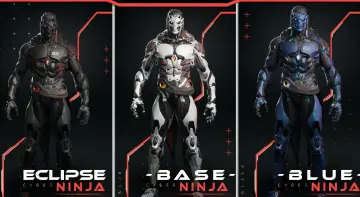
A technical look at implementing the futuristic Cyber Ninja asset, featuring PBR textures, lowpoly optimization, sword mechanics, and Animationblueprint logic.
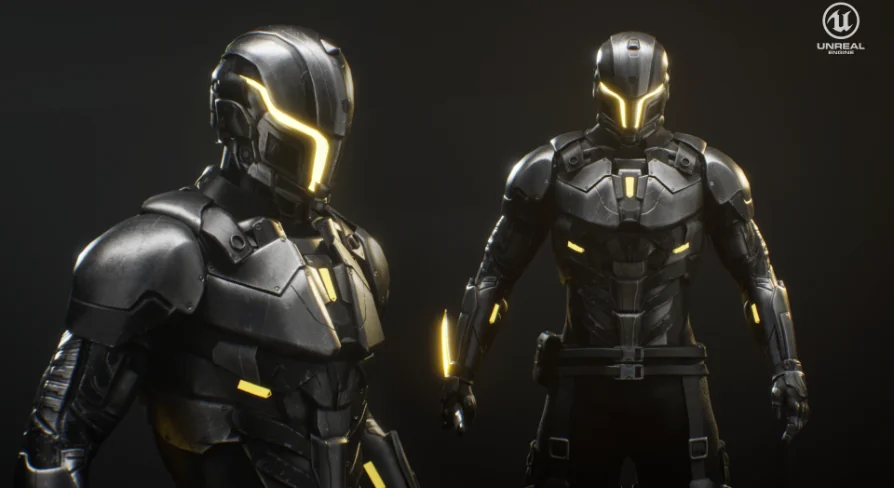
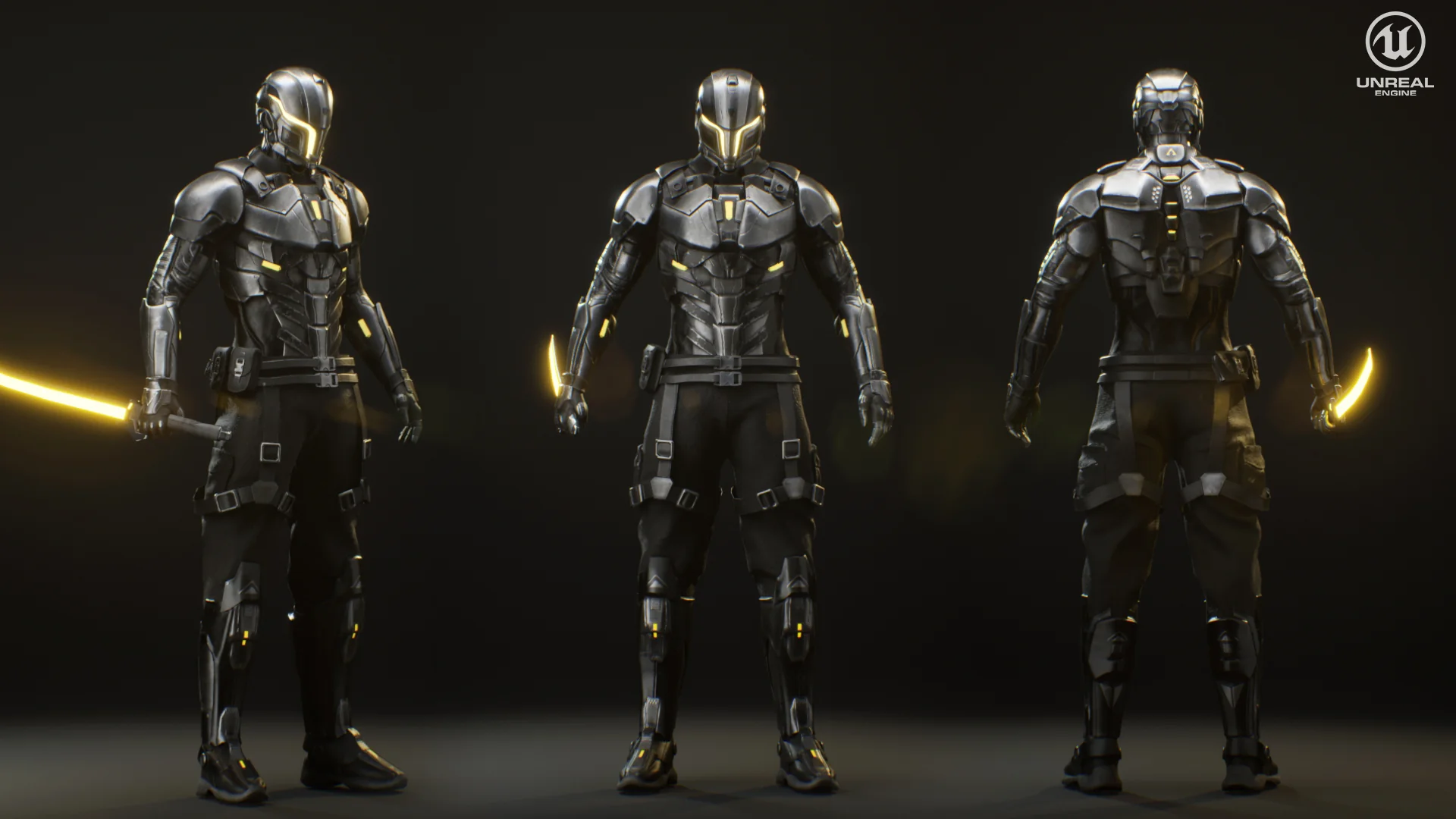
Futuristic combat scenarios demand characters that can navigate tight industrial corridors, neon-lit alleyways, and high-tech installations with distinct visual clarity. The Cyber Ninja fills this operational role directly, providing a dedicated model suited for fast-moving encounters where both martial agility and robotic aesthetics are required. Tailored for production pipelines that balance rendering speed with material sophistication, this futuristic combatant fits into the role of a frontline fighter, swift infiltrator, or recurring enemy unit within high-tech game worlds.
Combat Roles for the Cyber Ninja in Modern Game Systems
Positioning a character within an action system requires a clear definition of silhouette, intended mobility, and combat behavior. Because this asset embodies both ninja and samurai archetypes overlaid with robotic and futuristic themes, it functions naturally across several distinct encounter tiers. In an adversarial context, it serves effectively as an agile enemy class designed to challenge player reflexes through rapid repositioning, melee flurries, and aggressive spatial denial.
The visual distinction of a cybernetic warrior also suits player-controlled scenarios or companion roles. When designated as a controllable fighter, the character conveys speed, precise edge-weapon handling, and technological augmentation. Its physical presence communicates high mobility rather than heavy damage mitigation, signaling to the player or opposing combatant that tactics should center on evasion, counter-attacks, and surgical strikes rather than brute-force absorption.
Material Fidelity and Lowpoly Architecture
Interactive projects face a continuous trade-off between asset detail and frame-rate stability. The Cyber Ninja approaches this requirement through lowpoly geometry supported by physically based rendering (PBR) workflows. Employing a lowpoly base mesh guarantees that the character can be deployed in scenarios with multiple active combatants on screen simultaneously without imposing severe vertex overhead on the rendering pipeline.
At the same time, the inclusion of realistic PBR surfaces ensures that the lowpoly structure does not sacrifice environmental believability. In modern lighting environments—particularly cyberpunk scenes filled with multi-colored point lights, high-contrast emissives, and metallic wet surfaces—PBR material channels respond accurately to shifting ambient values. The interaction of light against metallic panels, synthetic body suits, and mechanical joints maintains visual fidelity regardless of whether the character stands under stark artificial light, hides in deep shadow, or traverses high-contrast rain-slicked streets.
Controlling the Cyber Ninja via Animationblueprint and Script Integration
Smooth dynamic motion is essential for any character grounded in martial combat. The Cyber Ninja setup incorporates an Animationblueprint alongside script integration, providing the foundational architecture required to drive believable motion trees and responsive combat mechanics.
The Animationblueprint acts as the central hub for managing state changes between distinct movement loops. For a cybernetic melee unit, this involves handling complex blending between idle stances, full-speed sprints, directional dodges, and sudden attack releases. Having this animation framework natively aligned with the character allows combat logic to tap into dedicated blend spaces and transition rules without requiring structural retargeting fixes.
Script hooks complement this visual pipeline by handling the under-the-hood gameplay triggers. These scripts manage state evaluation, detecting whether the character is engaged in an attack swing, vulnerable to hit reactions, parrying incoming damage, or calculating line-of-sight awareness when configured as an enemy AI. By isolating animation states inside the Animationblueprint and behavioral rules within scripting logic, projects can iterate on attack pacing, recovery frames, and movement speed cleanly.
Sword Mechanics and Melee Stance Implementation
Central to the identity of this asset is its designated weapon: the sword. In sci-fi and cyberpunk encounters, blade-focused combatants must project speed, lethality, and technological enhancement. The Cyber Ninja’s pairing with a sword allows developers to construct deliberate strike profiles that reflect traditional swordsmanship accelerated by cybernetic performance.
Implementing sword gameplay involves binding the weapon transform securely to the character's hand sockets while utilizing script-driven collision traces along the blade edge. During an attack sequence defined within the Animationblueprint, animation notifies can activate precise hit-detection windows. Because the asset encompasses both ninja agility and samurai combat heritage, movement routines can comfortably span from low, quick thrusts to wider, heavy two-handed slashes, supporting tactical variety across both short skirmishes and extended melee duels.
Cyber Samurai Cross-Compatibility and Unit Variety
Encounter design benefits immensely from visual and structural consistency across hostile or allied squads. The Cyber Ninja features explicit compatibility with the Cyber Samurai, allowing developers to build coherent visual rosters without stylistic drift.
Where the Cyber Samurai provides a presence suited for heavier vanguard engagements, defensive bulwarks, or deliberate commander-type encounters, the Cyber Ninja offers the complementary counterpart: flanking maneuvers, rapid stealth approaches, and agile hit-and-run tactics. Using both assets within the same project environment creates clear visual hierarchies for players to read during fast-paced combat. Enemies wearing complementary armor styles immediately inform the player of a shared faction origin, while their differing body language and weapon stances clearly signal distinct mechanical threats.
This cross-compatibility also streamlines backend integration. Systems already calibrated for the Cyber Samurai’s collision bounds, combat scripting routines, and socket configurations can readily interface with the Cyber Ninja, reducing the time needed to establish unified weapon handling, hit boxes, and team-based AI behavioral trees.
 Characters
 Characters
 Characters
 Characters