"6c6413bef81af556"{"id":"1001175","slug":"zombie-movement-and-modular-interaction-animations","title":"Zombie Movement and Modular Interaction Animations","category":"Locomotion / Gaits","engine":"5.0+","assetVersion":"","engineVersion":"Engine Version: 5.0+","tag":"Locomotion / Gaits","accent":"blue","visual":"animation","summary":"Explore Zombie Movement and Modular Interaction Animations, featuring 34 motion clips with wounded locomotion, paired grab sequences, and crawl attacks.","platform":"Unreal Engine","publishedAt":"2026-09-17T03:47:54.048Z","updatedAt":"2026-09-17T03:47:54.048Z","sourceNotes":[],"fileContents":[],"compatibility":["Unreal Engine","Engine Version: 5.0+"],"featuredImage":{"alt":"Zombie Movement and Modular Interaction Animations","src":"/wp-content/uploads/published/2026/09/13eb6b01a562-5c1e2ffa-4ec9-4fab-ae0a-72c010372724-88412b8dd5.webp"},"hasDownloadLink":true,"downloads":0,"terms":[{"taxonomy":"category","slug":"locomotion-gaits","name":"Locomotion / Gaits"}],"galleryImages":[{"src":"/wp-content/uploads/published/2026/09/c100c65b919c-9e5d00fd-8af7-4caa-bc8c-b7d116bc47b3-466bfd40a1.webp","alt":"Zombie Movement and Modular Interaction Animations"},{"src":"/wp-content/uploads/published/2026/09/7291d166bea3-8fb7794f-f017-4a6f-9470-df574a643466-02f7af141a.webp","alt":"Zombie Movement and Modular Interaction Animations"},{"src":"/wp-content/uploads/published/2026/09/2397a2cdad01-3967432c-71ef-46c3-8828-9ccf5424fc09-0f841f5c0b.webp","alt":"Zombie Movement and Modular Interaction Animations"},{"src":"/wp-content/uploads/published/2026/09/fcf38e6f79a4-f916580f-2337-4f2b-819b-711710bb7e48-da32fde87a.webp","alt":"Zombie Movement and Modular Interaction Animations"}],"accessPanel":{"kind":"resource","title":"Download this resource","eyebrow":"Free Download","message":"Log in or create a free account to start your download.","fileName":"Content.7z","safetyNote":"Resources are manually reviewed before listing to improve quality and reduce obvious risks.","actionLabel":"Download Free","resourceType":"Resource archive"},"contentHtml":"\u003ch2\u003ePopulating Survival Encounters with Damaged Locomotion\u003c/h2\u003e\u003cp\u003eTense horror scenes and post-apocalyptic streets rely heavily on the visual rhythm of approaching threats. A standard bipedal jog often breaks immersion when players confront mutilated or decaying enemies. Zombie Movement and Modular Interaction Animations addresses this requirement by delivering 34 distinct animation sequences crafted specifically around altered balance, physical damage, and desperate physical contact.\u003c/p\u003e\u003cp\u003eThe package establishes distinct motion sets depending on the physical condition of the threat. Intact characters move through an upright standing profile consisting of idle states, walks, and full-speed runs. When leg damage is factored in, the set supplies asymmetric movement routines for characters hopping on either the left or right leg, each branched across slow, fast, and idle tempos. Grounded threats are handled through dedicated crawl cycles, letting low-profile crawlers maintain an idle presence or drag themselves forward across slow and fast speeds.\u003c/p\u003e\u003ch2\u003eModular Interactions: Zombie Attack and Human Response\u003c/h2\u003e\u003cp\u003eClose-quarters combat with infected enemies often falls flat when strikes do not physically link to victim reactions. This collection provides interactive modular animation pairings that coordinate the attacker's assault directly with defensive human responses. Rather than relying entirely on standalone hit reactions, these paired sequences align combatants for physical struggles.\u003c/p\u003e\u003cp\u003eThe interactive modular system branches from standard proximity into multi-phase defensive encounters:\u003c/p\u003e\u003cul\u003e\u003cli\u003e\u003cstrong\u003eIdle to Grab:\u003c/strong\u003e An initiating transition where the attacker lunges outward to secure an opponent.\u003c/li\u003e\u003cli\u003e\u003cstrong\u003eGrab to Wrestle:\u003c/strong\u003e A sustained struggle state holding both human and undead characters in an active grapple.\u003c/li\u003e\u003cli\u003e\u003cstrong\u003eGrab to Takedown:\u003c/strong\u003e A violent follow-through that drives the encounter straight to the surface.\u003c/li\u003e\u003cli\u003e\u003cstrong\u003eTakedown and Get Munched:\u003c/strong\u003e A completed takedown sequence leading straight into lethal feeding behavior.\u003c/li\u003e\u003cli\u003e\u003cstrong\u003eGrab to Munching:\u003c/strong\u003e A standing or direct feeding transition that bypasses an extended ground wrestle.\u003c/li\u003e\u003cli\u003e\u003cstrong\u003eDefensive Counters:\u003c/strong\u003e Branching breakaways including a Grab to Push Defense and a Grab to Kick Defense, giving human characters functional escapes from the grapple.\u003c/li\u003e\u003c/ul\u003e\u003cp\u003eBecause these interactives exist as animation data rather than hardcoded gameplay logic, developers must implement their own blueprint triggers, synchronization markers, or state machine events to execute the paired transitions in-engine.\u003c/p\u003e\u003ch2\u003eOffensive Swings, Floor Recovery, and Blend Spaces\u003c/h2\u003e\u003cp\u003eBeyond extended grapples, the collection supplies standard combat swings suited for instant attack windows. Standing enemies can cycle through individual left-arm swings, right-arm swings, or a heavy two-handed lunging swing. Crawling enemies preserve combat danger along the floor with targeted left-arm and right-arm crawl strikes, preventing grounded targets from remaining passive obstacles.\u003c/p\u003e\u003cp\u003eSurfacing from ragdolls or ground states is supported through explicit recovery transitions. Characters knocked onto their stomachs can engage a prone-to-idle stand-up clip, while those slumped against surfaces transition from slumped-to-stand. Environmental hostility is further rounded out with vocalization states through a dedicated taunt and roar clip.\u003c/p\u003e\u003cp\u003eTo assist with immediate motion blending, the asset includes example blend spaces covering all idle, slow, and fast locomotion sequences. These pre-configured data containers make it straightforward to set up variable-speed navigation directly out of the box, linking controller velocity values to the crawl, hop, and walk cycles.\u003c/p\u003e\u003ch2\u003eProduction Context and Implementation Scope\u003c/h2\u003e\u003cp\u003eUnderstanding the provenance and structural relationship of these motions helps position them correctly within a studio pipeline. Some of the animations featured in this collection have been deployed in released survival titles such as HumanitZ. Furthermore, the base locomotion sequences contained within this set correspond to animations found in the Stoopid Zombies collection, while maintaining compatibility alongside The Locomotion Animation Pack.\u003c/p\u003e\u003cp\u003eWhen adopting this animation collection, game engineers should note that the pack contains purely raw animation assets and motion blend spaces. Game logic, interaction prompt handling, character alignment systems, and combat resolution frameworks must be authored separately to drive the interaction clips effectively. For teams seeking visceral, physical confrontations featuring multi-phase zombie tackles, limb-specific hopping, and frantic grapple breakaways, these 34 clips provide a solid kinematic foundation.\u003c/p\u003e\n\n\u003ch2\u003eContinue Browsing Similar Packs\u003c/h2\u003e\n\u003cul\u003e\n\u003cli\u003e\u003ca href=\"https://3dcghub.com/procedural-animation-framework/\" title=\"Procedural Animation Framework\"\u003eProcedural Animation Framework\u003c/a\u003e\u003c/li\u003e\n\u003cli\u003e\u003ca href=\"https://3dcghub.com/roll-and-dash-animation/\" title=\"Roll and Dash Animation\"\u003eRoll and Dash Animation\u003c/a\u003e\u003c/li\u003e\n\u003cli\u003e\u003ca href=\"https://3dcghub.com/silent-walking-animations/\" title=\"Silent Walking Animations\"\u003eSilent Walking Animations\u003c/a\u003e\u003c/li\u003e\n\u003cli\u003e\u003ca href=\"https://3dcghub.com/female-movement-pistol/\" title=\"Female Movement Pistol\"\u003eFemale Movement Pistol\u003c/a\u003e\u003c/li\u003e\n\u003cli\u003e\u003ca href=\"https://3dcghub.com/climbing-animation-set/\" title=\"Climbing Animation Set\"\u003eClimbing Animation Set\u003c/a\u003e\u003c/li\u003e\n\u003c/ul\u003e","contentTextLength":4798,"navigation":{"current":22,"total":3140,"previous":{"id":"1001176","slug":"41-animations-for-monsters","title":"41 Animations For Monsters","category":"Variety","platform":"Unreal Engine","updatedAt":"2026-09-17T03:51:27.422Z"},"next":{"id":"1001174","slug":"actorcore-sample-motions","title":"ActorCore Sample Motions","category":"Locomotion / Gaits","platform":"Unreal Engine","updatedAt":"2026-09-17T03:43:25.472Z"}},"relatedResources":[{"id":"1000661","slug":"procedural-animation-framework","title":"Procedural Animation Framework","category":"Locomotion / Gaits","engine":"5.4+","assetVersion":"","engineVersion":"Engine Version: 5.4+","tag":"Locomotion / Gaits","accent":"blue","visual":"animation","summary":"A modular Procedural Animation Framework for generating dynamic character movements. This blueprint-based tool offers a GUI to adjust speed, intensity, and styl","platform":"Unreal Engine","publishedAt":"2026-07-21T20:41:27.608Z","updatedAt":"2026-07-21T20:41:27.608Z","sourceNotes":[],"fileContents":[],"compatibility":["Unreal Engine","Engine Version: 5.4+"],"featuredImage":{"alt":"Procedural Animation Framework","src":"/wp-content/uploads/published/2026/07/b4f435dfaf31-35648f2c-79b6-4caf-a383-bb746751dd1b-2bb23f5fcb.webp"},"hasDownloadLink":true,"downloads":3},{"id":"1000438","slug":"roll-and-dash-animation","title":"Roll and Dash Animation","category":"Locomotion / Gaits","engine":"5.2+","assetVersion":"","engineVersion":"Engine Version: 5.2+","tag":"Locomotion / Gaits","accent":"blue","visual":"animation","summary":"Roll and Dash Animation is a 46-clip motion set covering directional dashes and rolling sequences for action, adventure, and combat character movement.","platform":"Unreal Engine","publishedAt":"2026-07-10T22:31:05.674Z","updatedAt":"2026-07-10T22:31:05.674Z","sourceNotes":[],"fileContents":[],"compatibility":["Unreal Engine","Engine Version: 5.2+"],"featuredImage":{"alt":"Roll and Dash Animation","src":"/wp-content/uploads/published/2026/07/6ebbafb6a8cf-3d976af6-d628-42be-a3ed-7923d6f223f1-55d887989f.webp"},"hasDownloadLink":true,"downloads":3},{"id":"1000880","slug":"silent-walking-animations","title":"Silent Walking Animations","category":"Locomotion / Gaits","engine":"5.2+","assetVersion":"","engineVersion":"Engine Version: 5.2+","tag":"Locomotion / Gaits","accent":"blue","visual":"animation","summary":"A 108-animation pack with eight directional walks and twelve gait categories, from crouching to tightrope, for quiet character movement.","platform":"Unreal Engine","publishedAt":"2026-08-05T15:25:57.406Z","updatedAt":"2026-08-05T15:25:57.406Z","sourceNotes":[],"fileContents":[],"compatibility":["Unreal Engine","Engine Version: 5.2+"],"featuredImage":{"alt":"Silent Walking Animations","src":"/wp-content/uploads/published/2026/08/c0f5ef3aede7-81361227-a6ff-449b-9f86-794371356af0-4458aeb8ba.webp"},"hasDownloadLink":true,"downloads":0}]}
Locomotion / Gaits
Zombie Movement and Modular Interaction Animations
Explore Zombie Movement and Modular Interaction Animations, featuring 34 motion clips with wounded locomotion, paired grab sequences, and crawl attacks.
Populating Survival Encounters with Damaged Locomotion
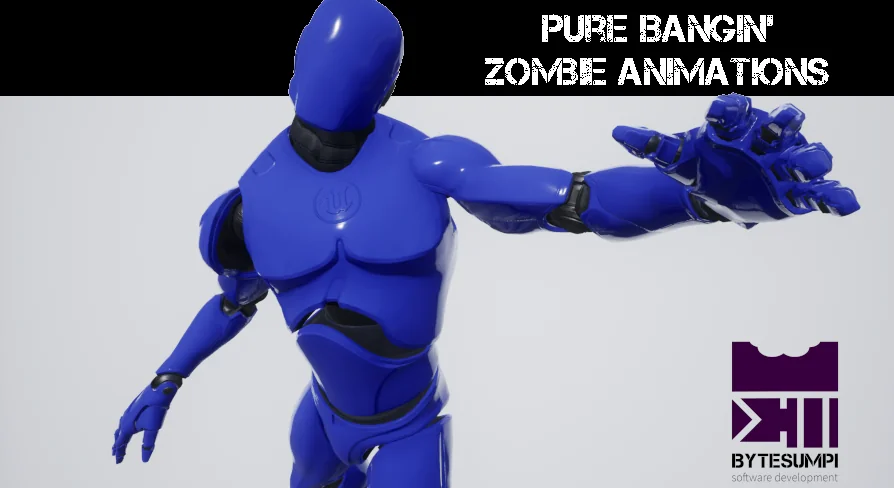
Tense horror scenes and post-apocalyptic streets rely heavily on the visual rhythm of approaching threats. A standard bipedal jog often breaks immersion when players confront mutilated or decaying enemies. Zombie Movement and Modular Interaction Animations addresses this requirement by delivering 34 distinct animation sequences crafted specifically around altered balance, physical damage, and desperate physical contact.
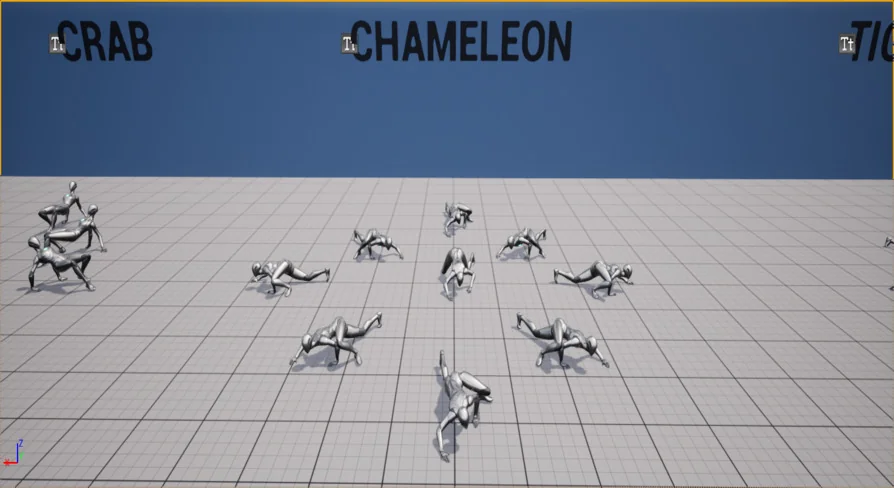
The package establishes distinct motion sets depending on the physical condition of the threat. Intact characters move through an upright standing profile consisting of idle states, walks, and full-speed runs. When leg damage is factored in, the set supplies asymmetric movement routines for characters hopping on either the left or right leg, each branched across slow, fast, and idle tempos. Grounded threats are handled through dedicated crawl cycles, letting low-profile crawlers maintain an idle presence or drag themselves forward across slow and fast speeds.
Modular Interactions: Zombie Attack and Human Response
Close-quarters combat with infected enemies often falls flat when strikes do not physically link to victim reactions. This collection provides interactive modular animation pairings that coordinate the attacker's assault directly with defensive human responses. Rather than relying entirely on standalone hit reactions, these paired sequences align combatants for physical struggles.
The interactive modular system branches from standard proximity into multi-phase defensive encounters:
Idle to Grab: An initiating transition where the attacker lunges outward to secure an opponent.
Grab to Wrestle: A sustained struggle state holding both human and undead characters in an active grapple.
Grab to Takedown: A violent follow-through that drives the encounter straight to the surface.
Takedown and Get Munched: A completed takedown sequence leading straight into lethal feeding behavior.
Grab to Munching: A standing or direct feeding transition that bypasses an extended ground wrestle.
Defensive Counters: Branching breakaways including a Grab to Push Defense and a Grab to Kick Defense, giving human characters functional escapes from the grapple.
Because these interactives exist as animation data rather than hardcoded gameplay logic, developers must implement their own blueprint triggers, synchronization markers, or state machine events to execute the paired transitions in-engine.
Offensive Swings, Floor Recovery, and Blend Spaces
Beyond extended grapples, the collection supplies standard combat swings suited for instant attack windows. Standing enemies can cycle through individual left-arm swings, right-arm swings, or a heavy two-handed lunging swing. Crawling enemies preserve combat danger along the floor with targeted left-arm and right-arm crawl strikes, preventing grounded targets from remaining passive obstacles.
Surfacing from ragdolls or ground states is supported through explicit recovery transitions. Characters knocked onto their stomachs can engage a prone-to-idle stand-up clip, while those slumped against surfaces transition from slumped-to-stand. Environmental hostility is further rounded out with vocalization states through a dedicated taunt and roar clip.
To assist with immediate motion blending, the asset includes example blend spaces covering all idle, slow, and fast locomotion sequences. These pre-configured data containers make it straightforward to set up variable-speed navigation directly out of the box, linking controller velocity values to the crawl, hop, and walk cycles.
Production Context and Implementation Scope
Understanding the provenance and structural relationship of these motions helps position them correctly within a studio pipeline. Some of the animations featured in this collection have been deployed in released survival titles such as HumanitZ. Furthermore, the base locomotion sequences contained within this set correspond to animations found in the Stoopid Zombies collection, while maintaining compatibility alongside The Locomotion Animation Pack.
When adopting this animation collection, game engineers should note that the pack contains purely raw animation assets and motion blend spaces. Game logic, interaction prompt handling, character alignment systems, and combat resolution frameworks must be authored separately to drive the interaction clips effectively. For teams seeking visceral, physical confrontations featuring multi-phase zombie tackles, limb-specific hopping, and frantic grapple breakaways, these 34 clips provide a solid kinematic foundation.
 Locomotion / Gaits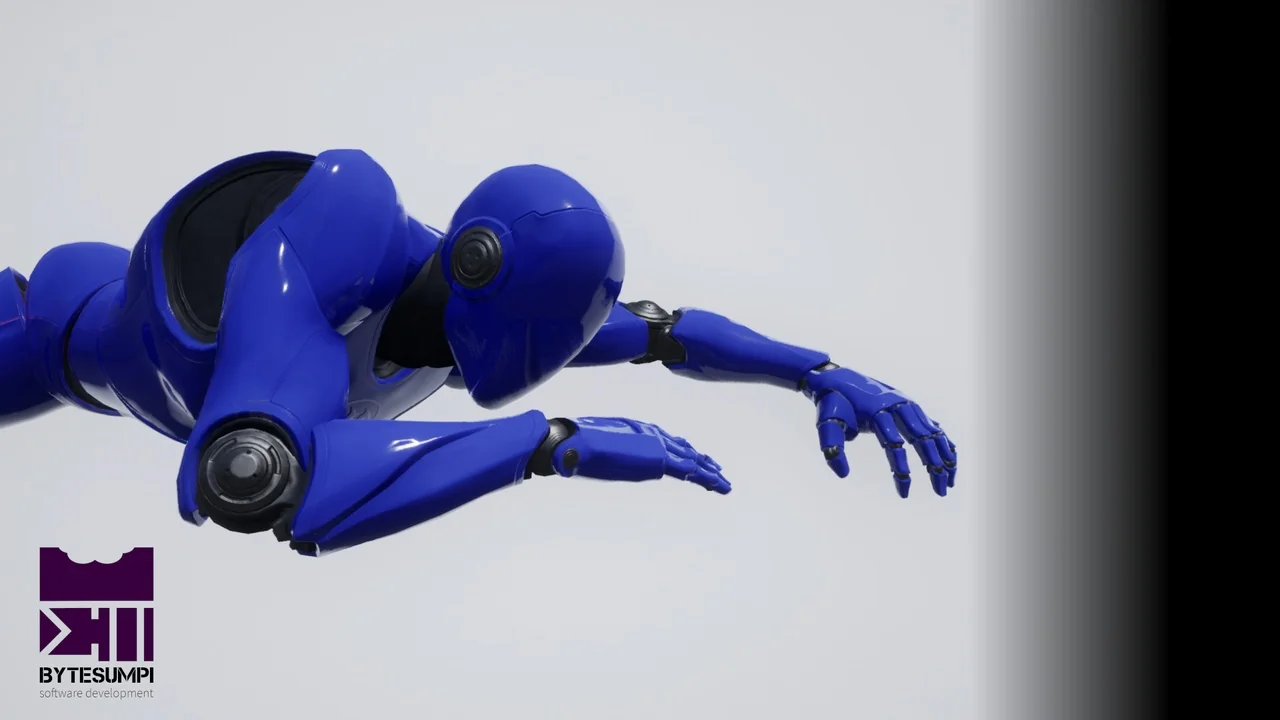
 Locomotion / Gaits
 Locomotion / Gaits
 Locomotion / Gaits