"efaa631e936fd3ee"{"id":"1002267","slug":"wild-boar-male","title":"Wild Boar - Male","category":"Animals","engine":"5.1+","assetVersion":"","engineVersion":"Engine Version: 5.1+","tag":"Animals","accent":"blue","visual":"mech","summary":"Detailed male wild boar 3D asset featuring 46 bones, 4 LOD levels, mobile mesh variation, 4K PBR textures, and over 70 root motion and in-place animations.","platform":"Unreal Engine","publishedAt":"2026-10-29T16:28:20.261Z","updatedAt":"2026-10-29T16:28:20.261Z","sourceNotes":[],"fileContents":[],"compatibility":["Unreal Engine","Engine Version: 5.1+"],"featuredImage":{"alt":"Wild Boar - Male","src":"/wp-content/uploads/published/2026/10/6e25d69ffb61-bb11756f-f545-40bd-b2d7-17b91c7a3ff6-8bd20b7e76.webp"},"hasDownloadLink":true,"downloads":0,"terms":[{"taxonomy":"category","slug":"animals","name":"Animals"}],"galleryImages":[{"src":"/wp-content/uploads/published/2026/10/8a5f96051ab2-34d9554b-08ac-4ce6-bd4a-c425f4e529ee-b6c089e762.webp","alt":"Wild Boar - Male"},{"src":"/wp-content/uploads/published/2026/10/b328bc41326f-59f7f5ce-40a2-4104-9466-df18083c400d-d04bd34062.webp","alt":"Wild Boar - Male"},{"src":"/wp-content/uploads/published/2026/10/54ae20b4722d-e3e7580f-e0d6-480c-a509-03ef7d92e51b-5e04261b87.webp","alt":"Wild Boar - Male"},{"src":"/wp-content/uploads/published/2026/10/08455d73b71c-baed3e07-1516-456c-ba24-3ea8c2fc6a7d-6434ca083c.webp","alt":"Wild Boar - Male"},{"src":"/wp-content/uploads/published/2026/10/579f7c43f5be-b35249ca-993f-4111-b5cb-140d744bf2bd-1b72c9bc9a.webp","alt":"Wild Boar - Male"},{"src":"/wp-content/uploads/published/2026/10/2eae1d0aa127-30cdd7dc-a936-4190-b254-1fee1064cdd0-6b51b8fcee.webp","alt":"Wild Boar - Male"},{"src":"/wp-content/uploads/published/2026/10/f8040476728c-c93e4b73-1d03-44b2-b263-53b2beab7e28-b69c69e9f2.webp","alt":"Wild Boar - Male"},{"src":"/wp-content/uploads/published/2026/10/a34de616e6b6-217122d8-9d07-4916-899b-ce1fa0f4e4db-19148120ef.webp","alt":"Wild Boar - Male"},{"src":"/wp-content/uploads/published/2026/10/093c81afbdcb-a82c1a4f-5a16-4d81-a8cb-ace044c1dc21-2ebfc92cf3.webp","alt":"Wild Boar - Male"}],"accessPanel":{"kind":"resource","title":"Download this resource","eyebrow":"Free Download","message":"Log in or create a free account to start your download.","fileName":"Content.7z","safetyNote":"Resources are manually reviewed before listing to improve quality and reduce obvious risks.","actionLabel":"Download Free","resourceType":"Resource archive"},"contentHtml":"\u003ch2\u003ePopulating Woodland and Wilderness Environments\u003c/h2\u003e\u003cp\u003eWilderness biomes, deep temperate forests, and survival-driven landscapes rely heavily on credible animal populations to establish scale and tension. The male wild boar serves as an archetypal woodland creature, functioning equally well as ambient fauna, a passive foraging resource, or an aggressive territorial threat. Bringing this species into a scene requires attention to anatomy, natural movement weight, and structural flexibility across varying terrain.\u003c/p\u003e\u003cp\u003eThe Wild Boar - Male asset is configured specifically around these environmental demands. Rather than providing a rigid or static creature mesh, it supplies an interactive quadruped framework capable of traversing uneven ground, wading through water, reacting to physical strikes, and sustaining complex life cycles in real time.\u003c/p\u003e\u003ch2\u003eSkeletal Structure, LOD Configuration, and Mobile Topology\u003c/h2\u003e\u003cp\u003eAt the center of the mesh is a 46-bone skeletal rig tailored to replicate the dense, muscular proportions of a full-grown male hog. The primary high-fidelity asset is composed of 15,400 triangles, maintaining silhouette definition along the snout, tusks, shoulder ridge, and legs without unnecessary polygon density. To ensure stable rendering across distance thresholds, the asset integrates four pre-configured Levels of Detail (LODs). These LOD stages streamline performance during wide exterior shots and sprawling open-world views where multiple creatures may share the frame.\u003c/p\u003e\u003cp\u003eFor mobile applications or hardware environments requiring extreme optimization, a separate lightweight model is provided. This secondary version drops the density down to 2,700 triangles, allowing the same fundamental anatomical profile and skeletal motion to run cleanly on resource-constrained platforms. Creators also have access to an alternate model configured without alpha channels alongside the standard setup, granting flexibility depending on whether custom transparency rendering is supported or desired in the target engine pipeline.\u003c/p\u003e\u003ch2\u003e4K Surface Textures and Color Variations\u003c/h2\u003e\u003cp\u003eSurface detail across the boar is handled by 4096x4096 texture maps designed around a physically based rendering (PBR) shading pipeline. Each set includes:\u003c/p\u003e\u003cul\u003e\u003cli\u003eAn albedo map carrying an embedded alpha mask for fur fringing and edge softness.\u003c/li\u003e\u003cli\u003eA packed channel map handling ambient occlusion (AO), metallic, and roughness values simultaneously.\u003c/li\u003e\u003cli\u003eA dedicated normal map defining muscle striations, skin folds, and bristled hide textures.\u003c/li\u003e\u003c/ul\u003e\u003cp\u003eTo prevent duplicate visual repetition when staging groups or sounders of swine across a habitat, three distinct color variations are included. Swapping between these texture sets allows different adult males in the same territory to display unique coat tones, helping break up visual uniformity across roaming packs.\u003c/p\u003e\u003ch2\u003eDirectional Locomotion and Aquatic Traversal\u003c/h2\u003e\u003cp\u003eNatural quadruped motion requires responsive transitions across varied movement speeds and angles. The asset contains an extensive locomotion set supplied in both In-Place (IP) and Root Motion (RM) configurations. Root motion data is fully customized and operational, allowing projects to drive movement directly from animation curves or extract positional velocity for programmatic physics drivers.\u003c/p\u003e\u003cp\u003eStandard navigation covers a full directional matrix: walking movements in six directions (front, left, right, back, back left, back right), trot cycles spanning three directions (front, left, right), and full-speed runs across front, left, and right vectors. Quick spatial adjustments are handled by dedicated left and right turns as well as rapid 180-degree turnaround maneuvers. For specialized ground interactions, a dig walk cycle combines low-profile pacing with environmental rootling. In aquatic zones, a specialized swimming set manages the transition from land to water, featuring a water entry sequence followed by front, left, right, back, back-left, and back-right swimming strokes.\u003c/p\u003e\u003ch2\u003eThe 15-Stage Jump and Ledge Climbing Pipeline\u003c/h2\u003e\u003cp\u003eRather than relying on a single generic jumping clip that floats awkwardly across uneven terrain, the Wild Boar - Male includes a granular, 15-stage jump pipeline. This breakdown gives animators and game programmers total control over elevation shifts, vertical obstacles, and falling physics:\u003c/p\u003e\u003cul\u003e\u003cli\u003e\u003cstrong\u003eLaunch States:\u003c/strong\u003e Start, start forward, and start place provide three distinct takeoff options based on current creature velocity.\u003c/li\u003e\u003cli\u003e\u003cstrong\u003eAscent and Mid-Air:\u003c/strong\u003e Upward trajectories are split between fly up, fly up forward, and a steady horizontal flight segment.\u003c/li\u003e\u003cli\u003e\u003cstrong\u003eDescent Profiling:\u003c/strong\u003e Downward arcs are isolated into fly down high, fly down high forward, fly down low, and fly down low forward, ensuring appropriate pose tension whether dropping off a low dirt bank or plummeting from a steep boulder.\u003c/li\u003e\u003cli\u003e\u003cstrong\u003eContact and Landing:\u003c/strong\u003e Impact frames cover landing, landing forward, and landing in place.\u003c/li\u003e\u003cli\u003e\u003cstrong\u003eEdge Recovery:\u003c/strong\u003e For complex navigation failures or cliffside crossings, specific fall edge, hooked, and climbed sequences account for hanging on geometry and scrambling back up onto solid footing.\u003c/li\u003e\u003c/ul\u003e\u003cp\u003eComplementing this multi-stage system are standard jumping actions, including running jumps, standing jumps in place, and forward hops intended for straightforward collision checks.\u003c/p\u003e\u003ch2\u003eLife Cycles, Idles, and Combat Responses\u003c/h2\u003e\u003cp\u003eTo sustain realistic creature behavior outside of active pursuit or flight, the library features segmented life-cycle loops. Activities such as eating, drinking, resting, and sleeping are engineered with explicit start, sustain (cycle), and exit animations. This structure prevents abrupt cuts when an artificial intelligence director commands an animal to wake up or stop grazing. The boar can transition cleanly from a dig walk into eating or digging food, drink from water sources, settle down through two distinct lying poses, or transition fully into sleep.\u003c/p\u003e\u003cp\u003eIdling behavior is supported by six distinct idle variations to avoid static standing while waiting for player intervention. When confrontations occur, the asset transitions into combat states with targeted attacks aimed upward, straight ahead, left, right, or delivered mid-stride during a charge. Damage reactions correspond directly to impact angles through front, back, and middle hit animations, resolving into directional left or right death collapses when health pools are depleted.\u003c/p\u003e\u003ch2\u003eIntegration Profiles and Workflow Takeaways\u003c/h2\u003e\u003cp\u003eThe combination of dual-topology options, comprehensive LOD setups, and dual IP/RM animations positions this asset cleanly between two common technical tracks. Production teams building for mobile runtimes can deploy the 2,700-triangle mesh with standard textures, avoiding alpha pass overhead while retaining full skeletal functionality. Conversely, high-end productions can run the 15,400-triangle mesh using all four LOD steps and 4K PBR textures, taking advantage of the complex 15-stage jump states and smooth idle-to-sleep cycles to create living, reactive wildlife.\u003c/p\u003e\n\n\u003ch2\u003eMore From The Same Workflow\u003c/h2\u003e\n\u003cul\u003e\n\u003cli\u003e\u003ca href=\"https://3dcghub.com/panthers-pack/\" title=\"Panthers pack\"\u003ePanthers pack\u003c/a\u003e\u003c/li\u003e\n\u003cli\u003e\u003ca href=\"https://3dcghub.com/fox-family/\" title=\"Fox - Family\"\u003eFox - Family\u003c/a\u003e\u003c/li\u003e\n\u003cli\u003e\u003ca href=\"https://3dcghub.com/stegosaurus/\" title=\"Stegosaurus\"\u003eStegosaurus\u003c/a\u003e\u003c/li\u003e\n\u003cli\u003e\u003ca href=\"https://3dcghub.com/puppy-shepherd/\" title=\"Puppy - Shepherd\"\u003ePuppy - Shepherd\u003c/a\u003e\u003c/li\u003e\n\u003cli\u003e\u003ca href=\"https://3dcghub.com/suburbs-vol-5-around-the-house-retro-nanite-and-low-poly/\" title=\"Suburbs VOL.5 - Around the House Retro (Nanite and Low Poly)\"\u003eSuburbs VOL.5 - Around the House Retro (Nanite and Low Poly)\u003c/a\u003e\u003c/li\u003e\n\u003c/ul\u003e","contentTextLength":7107,"navigation":{"current":18,"total":4209,"previous":{"id":"1002268","slug":"wildman","title":"Wildman","category":"Characters \u0026 Creatures","platform":"Unreal Engine","updatedAt":"2026-10-29T16:29:01.463Z"},"next":{"id":"1002266","slug":"widget-group-button","title":"Widget Group Button","category":"Engine Tools","platform":"Unreal Engine","updatedAt":"2026-10-29T16:27:57.852Z"}},"relatedResources":[{"id":"1002271","slug":"wolf-male","title":"Wolf - Male","category":"Animals","engine":"5.1+","assetVersion":"","engineVersion":"Engine Version: 5.1+","tag":"Animals","accent":"blue","visual":"mech","summary":"Detailed breakdown of the Wolf - Male asset, featuring a 57-bone rig, 14,500 tris, 4 LODs, mobile mesh, 4K PBR textures, and over 100 animations.","platform":"Unreal Engine","publishedAt":"2026-10-29T16:30:16.430Z","updatedAt":"2026-10-29T16:30:16.430Z","sourceNotes":[],"fileContents":[],"compatibility":["Unreal Engine","Engine Version: 5.1+"],"featuredImage":{"alt":"Wolf - Male","src":"/wp-content/uploads/published/2026/10/fcdd77531c39-3d432fed-181d-4620-96a6-19eecca547b3-67b1abb765.webp"},"hasDownloadLink":true,"downloads":0},{"id":"1616","slug":"panthers-pack","title":"Panthers pack","category":"Animals","engine":"4.26+,5.0+","assetVersion":"Engine version: 4.26+,5.0+","engineVersion":"4.25","tag":"Animals","accent":"blue","visual":"character","summary":"Enhance your game with this professional panther asset pack. Includes realistic and fantasy skins, 4K PBR textures, and 16 animations for game developers.","platform":"Unreal Engine","publishedAt":"2026-02-06T20:08:21.000Z","updatedAt":"2026-04-19T15:58:07.000Z","sourceNotes":[],"fileContents":[],"compatibility":["Unreal Engine","Engine version: 4.26+,5.0+"],"featuredImage":{"alt":"Panthers pack","src":"https://3dcghub.com/wp-content/uploads/2026/02/5ade6ad0-a129-49ee-b9b2-cee2c6aedff0.webp"},"hasDownloadLink":true,"downloads":1},{"id":"1000991","slug":"fox-family","title":"Fox - Family","category":"Animals","engine":"5.1+","assetVersion":"","engineVersion":"Engine Version: 5.1+","tag":"Animals","accent":"blue","visual":"mech","summary":"Realistic adult fox and fox cub 3D models with 57 bones, 4 LOD levels, 4096x4096 PBR textures, and 100+ animations for game projects and mobile.","platform":"Unreal Engine","publishedAt":"2026-08-18T06:46:26.547Z","updatedAt":"2026-08-18T06:46:26.547Z","sourceNotes":[],"fileContents":[],"compatibility":["Unreal Engine","Engine Version: 5.1+"],"featuredImage":{"alt":"Fox - Family","src":"/wp-content/uploads/published/2026/08/36141dc051df-684b259c-f2d7-41a0-b9de-d83f7da92619-4125ca1483.webp"},"hasDownloadLink":true,"downloads":0}]}
Animals
Wild Boar - Male
Detailed male wild boar 3D asset featuring 46 bones, 4 LOD levels, mobile mesh variation, 4K PBR textures, and over 70 root motion and in-place animations.
Category:Unreal Engine,AnimalsPlatform: Unreal EngineEngine Version: 5.1+Published: Oct 29, 2026
Animals
Resource overview
Populating Woodland and Wilderness Environments
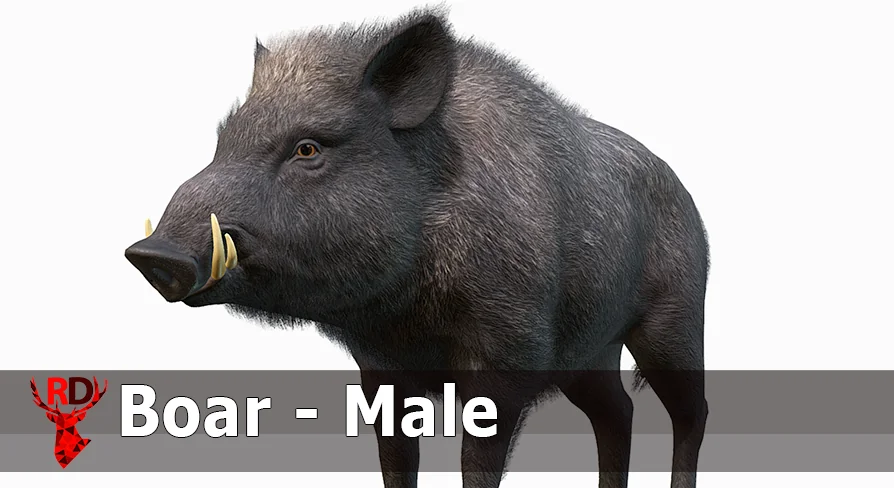
Wilderness biomes, deep temperate forests, and survival-driven landscapes rely heavily on credible animal populations to establish scale and tension. The male wild boar serves as an archetypal woodland creature, functioning equally well as ambient fauna, a passive foraging resource, or an aggressive territorial threat. Bringing this species into a scene requires attention to anatomy, natural movement weight, and structural flexibility across varying terrain.
The Wild Boar - Male asset is configured specifically around these environmental demands. Rather than providing a rigid or static creature mesh, it supplies an interactive quadruped framework capable of traversing uneven ground, wading through water, reacting to physical strikes, and sustaining complex life cycles in real time.
Skeletal Structure, LOD Configuration, and Mobile Topology
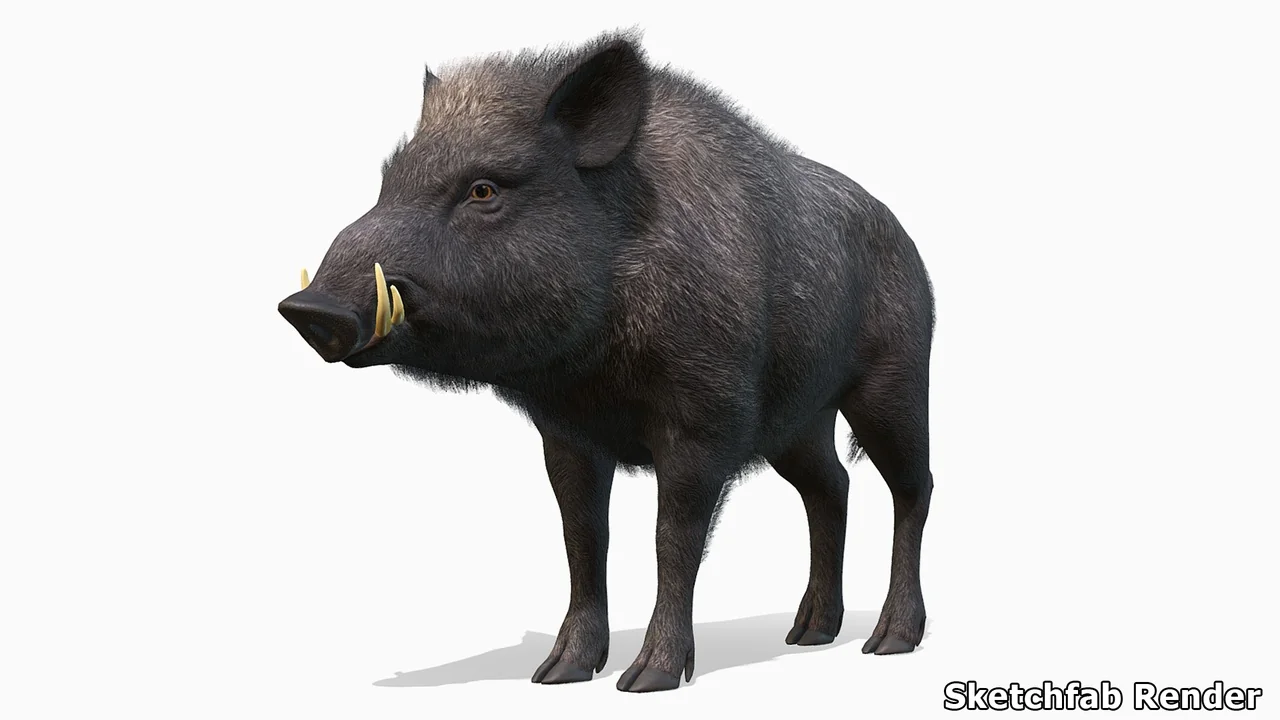
At the center of the mesh is a 46-bone skeletal rig tailored to replicate the dense, muscular proportions of a full-grown male hog. The primary high-fidelity asset is composed of 15,400 triangles, maintaining silhouette definition along the snout, tusks, shoulder ridge, and legs without unnecessary polygon density. To ensure stable rendering across distance thresholds, the asset integrates four pre-configured Levels of Detail (LODs). These LOD stages streamline performance during wide exterior shots and sprawling open-world views where multiple creatures may share the frame.
For mobile applications or hardware environments requiring extreme optimization, a separate lightweight model is provided. This secondary version drops the density down to 2,700 triangles, allowing the same fundamental anatomical profile and skeletal motion to run cleanly on resource-constrained platforms. Creators also have access to an alternate model configured without alpha channels alongside the standard setup, granting flexibility depending on whether custom transparency rendering is supported or desired in the target engine pipeline.
4K Surface Textures and Color Variations
Surface detail across the boar is handled by 4096x4096 texture maps designed around a physically based rendering (PBR) shading pipeline. Each set includes:
An albedo map carrying an embedded alpha mask for fur fringing and edge softness.
A packed channel map handling ambient occlusion (AO), metallic, and roughness values simultaneously.
A dedicated normal map defining muscle striations, skin folds, and bristled hide textures.
To prevent duplicate visual repetition when staging groups or sounders of swine across a habitat, three distinct color variations are included. Swapping between these texture sets allows different adult males in the same territory to display unique coat tones, helping break up visual uniformity across roaming packs.
Directional Locomotion and Aquatic Traversal
Natural quadruped motion requires responsive transitions across varied movement speeds and angles. The asset contains an extensive locomotion set supplied in both In-Place (IP) and Root Motion (RM) configurations. Root motion data is fully customized and operational, allowing projects to drive movement directly from animation curves or extract positional velocity for programmatic physics drivers.
Standard navigation covers a full directional matrix: walking movements in six directions (front, left, right, back, back left, back right), trot cycles spanning three directions (front, left, right), and full-speed runs across front, left, and right vectors. Quick spatial adjustments are handled by dedicated left and right turns as well as rapid 180-degree turnaround maneuvers. For specialized ground interactions, a dig walk cycle combines low-profile pacing with environmental rootling. In aquatic zones, a specialized swimming set manages the transition from land to water, featuring a water entry sequence followed by front, left, right, back, back-left, and back-right swimming strokes.
The 15-Stage Jump and Ledge Climbing Pipeline
Rather than relying on a single generic jumping clip that floats awkwardly across uneven terrain, the Wild Boar - Male includes a granular, 15-stage jump pipeline. This breakdown gives animators and game programmers total control over elevation shifts, vertical obstacles, and falling physics:
Launch States: Start, start forward, and start place provide three distinct takeoff options based on current creature velocity.
Ascent and Mid-Air: Upward trajectories are split between fly up, fly up forward, and a steady horizontal flight segment.
Descent Profiling: Downward arcs are isolated into fly down high, fly down high forward, fly down low, and fly down low forward, ensuring appropriate pose tension whether dropping off a low dirt bank or plummeting from a steep boulder.
Contact and Landing: Impact frames cover landing, landing forward, and landing in place.
Edge Recovery: For complex navigation failures or cliffside crossings, specific fall edge, hooked, and climbed sequences account for hanging on geometry and scrambling back up onto solid footing.
Complementing this multi-stage system are standard jumping actions, including running jumps, standing jumps in place, and forward hops intended for straightforward collision checks.
Life Cycles, Idles, and Combat Responses
To sustain realistic creature behavior outside of active pursuit or flight, the library features segmented life-cycle loops. Activities such as eating, drinking, resting, and sleeping are engineered with explicit start, sustain (cycle), and exit animations. This structure prevents abrupt cuts when an artificial intelligence director commands an animal to wake up or stop grazing. The boar can transition cleanly from a dig walk into eating or digging food, drink from water sources, settle down through two distinct lying poses, or transition fully into sleep.
Idling behavior is supported by six distinct idle variations to avoid static standing while waiting for player intervention. When confrontations occur, the asset transitions into combat states with targeted attacks aimed upward, straight ahead, left, right, or delivered mid-stride during a charge. Damage reactions correspond directly to impact angles through front, back, and middle hit animations, resolving into directional left or right death collapses when health pools are depleted.
Integration Profiles and Workflow Takeaways
The combination of dual-topology options, comprehensive LOD setups, and dual IP/RM animations positions this asset cleanly between two common technical tracks. Production teams building for mobile runtimes can deploy the 2,700-triangle mesh with standard textures, avoiding alpha pass overhead while retaining full skeletal functionality. Conversely, high-end productions can run the 15,400-triangle mesh using all four LOD steps and 4K PBR textures, taking advantage of the complex 15-stage jump states and smooth idle-to-sleep cycles to create living, reactive wildlife.
 Animals
 Animals
 Animals
 Animals