"1a0e4ac4dc71d030"{"id":"1001253","slug":"turn-based-strategy-rpg-template","title":"Turn-Based Strategy RPG Template","category":"RPG","engine":"5.0+","assetVersion":"","engineVersion":"Engine Version: 5.0+","tag":"RPG","accent":"blue","visual":"mech","summary":"Explore the Turn-Based Strategy RPG Template featuring square and hex grids, Blueprint architecture, elemental combat, quest systems, and AI mechanics.","platform":"Unreal Engine","publishedAt":"2026-09-23T15:40:14.497Z","updatedAt":"2026-09-23T15:40:14.497Z","sourceNotes":[],"fileContents":[],"compatibility":["Unreal Engine","Engine Version: 5.0+"],"featuredImage":{"alt":"Turn-Based Strategy RPG Template","src":"/wp-content/uploads/published/2026/09/33fb4f14422f-c8440a90-3434-4425-b9cc-f90eb9acad66-ef61d0e044.webp"},"hasDownloadLink":true,"downloads":0,"terms":[{"taxonomy":"category","slug":"rpg","name":"RPG"}],"galleryImages":[{"src":"/wp-content/uploads/published/2026/09/e0855d6970f4-74814ddd-845a-432b-9879-99ee7d22b018-50db8d49f8.webp","alt":"Turn-Based Strategy RPG Template"},{"src":"/wp-content/uploads/published/2026/09/7c664f71d529-944dbd91-f619-46f1-8475-1e79f995c724-fc7b2b69b9.webp","alt":"Turn-Based Strategy RPG Template"},{"src":"/wp-content/uploads/published/2026/09/2ff88e02d236-da4abf23-9915-4ec4-812e-5053f1d371d1-b8c6bf25ee.webp","alt":"Turn-Based Strategy RPG Template"},{"src":"/wp-content/uploads/published/2026/09/86c4100935db-1bfbbd58-1aba-4d38-a678-a4595c7210ce-999a7293a1.webp","alt":"Turn-Based Strategy RPG Template"},{"src":"/wp-content/uploads/published/2026/09/02fa302d4da8-7843bea3-3bb4-4b11-a4a1-a235574ab7bf-8cfbba53e5.webp","alt":"Turn-Based Strategy RPG Template"},{"src":"/wp-content/uploads/published/2026/09/be344c8eae7d-c7c23d57-8bee-495b-80a4-95f3d4680b9c-1ab7d1f3a1.webp","alt":"Turn-Based Strategy RPG Template"},{"src":"/wp-content/uploads/published/2026/09/a3061b499287-8c3b186b-bac9-4b69-9e7b-e8546de43d3d-2c879e52f9.webp","alt":"Turn-Based Strategy RPG Template"},{"src":"/wp-content/uploads/published/2026/09/9a38540ad9bd-fa7e2b04-44d6-4fdd-a440-c5a08fe46f99-43eebda3d0.webp","alt":"Turn-Based Strategy RPG Template"},{"src":"/wp-content/uploads/published/2026/09/b010a1ed8b99-225a7bff-81d8-4741-8e30-380c3929c646-5ecfaa9e00.webp","alt":"Turn-Based Strategy RPG Template"}],"accessPanel":{"kind":"resource","title":"Download this resource","eyebrow":"Free Download","message":"Log in or create a free account to start your download.","fileName":"Content.7z","safetyNote":"Resources are manually reviewed before listing to improve quality and reduce obvious risks.","actionLabel":"Download Free","resourceType":"Resource archive"},"contentHtml":"\u003ch2\u003eConstructing Tactical Battlefields Across Square and Hex Grids\u003c/h2\u003e\n\u003cp\u003eTactical role-playing projects depend heavily on how space, movement, and board layout interact during an encounter. The Turn-Based Strategy RPG Template approaches terrain layout by supporting both square and hex grids natively. This dual-grid foundation lets developers shape fantasy encounters ranging from rigid dungeon corridors to expansive, organic wilderness maps without writing custom spatial math from scratch.\u003c/p\u003e\n\u003cp\u003eThe framework divides gameplay between an explore mode and a battle mode. During exploration phases, characters navigate through the environment, encounter interactables scattered across the map, pick up objectives, and converse with NPCs. When an encounter triggers, the scene transitions into a structured turn-based battle environment where grid tiles dictate range, movement budgets, and targeting lines. Because the underlying logic accommodates both square and hexagonal coordinates, the spatial flow of combat can be adapted to tight, chess-like skirmishes or fluid, multi-directional field battles.\u003c/p\u003e \u003ch2\u003eUnit Archetypes, Big Units, and Retargeted Battle Animations\u003c/h2\u003e\n\u003cp\u003eCombat encounters rely on distinct combatant roles to create depth on the board. The framework organizes party members and hostile forces into melee, range, and magic units, each with distinct engagement ranges and movement profiles. Standard humanoids share the field alongside specialized big units, which occupy expanded grid footprints and introduce unique movement constraints to tactical planning.\u003c/p\u003e\n\u003cp\u003eThese larger scale entities feed directly into dedicated boss fights, where encounter design shifts toward managing area denial, high-threat single targets, and elevated health pools. To handle character movement and attacks during skirmishes, battle animations are re-targeted from Paragon Greystone animations. This provides an immediate visual baseline for melee swings, striking impacts, and idle battle stances directly out of the box, allowing combat prototyping to move forward with responsive motion already mapped to character states.\u003c/p\u003e \u003ch2\u003eCombat Mechanics: Elemental Resistances, Status Effects, and AI Routines\u003c/h2\u003e\n\u003cp\u003eSkirmish depth is governed by an interrelated set of combat calculations handling actions, resources, and incoming damage types. Characters utilize both passive and active abilities alongside castable spells. Damage output interacts with an elemental damage and resistance system, meaning units can leverage specific elemental affinities against enemy vulnerabilities or suffer reduced effectiveness against resistant targets.\u003c/p\u003e\n\u003cp\u003eLayered on top of basic health depletion are status effects that can alter unit effectiveness across consecutive turns. Combat balance is sustained through several automated systems:\u003c/p\u003e\n\u003cul\u003e \u003cli\u003e\u003cstrong\u003eGeneric AI That Uses Skills:\u003c/strong\u003e Computer-controlled units evaluate the field, reposition along grid paths, and deploy both active abilities and spells against player formations rather than relying on basic auto-attacks.\u003c/li\u003e \u003cli\u003e\u003cstrong\u003eAuto Combat Integration:\u003c/strong\u003e Routine skirmishes or grinding sequences can be resolved using automated turn execution, letting the system drive character decisions based on available skill sets.\u003c/li\u003e \u003cli\u003e\u003cstrong\u003eLayered Status Rules:\u003c/strong\u003e Lingering conditions, buffs, and debuffs tick down across turn cycles, impacting mobility, turn order, and defensive resilience.\u003c/li\u003e\n\u003c/ul\u003e \u003ch2\u003eRole-Playing Progression, Character Vendors, and Quest Systems\u003c/h2\u003e\n\u003cp\u003eBeyond isolated tactical boards, the template packages the structural mechanics required to build a persistent role-playing campaign. A full stats and leveling system tracks character experience, attribute points, and power scaling as encounters are cleared. Defeated foes, quest milestones, and exploration rewards feed back into character growth, expanding spell repertoires and unit baseline performance.\u003c/p\u003e\n\u003cp\u003eProgression is tied to an integrated equipment system, allowing units to swap weapons, armor, and gear that modify underlying stats. Towns, camps, and staging areas utilize character vendors where gear can be bought, sold, or traded. Story progression and objective tracking run through a built-in quest system that communicates directly with world interactables. For narrative interactions, the architecture includes native compatibility with the Conversation2D Plugin, enabling branching character dialogue during exploration. State persistence across sessions is managed through an integrated save and load feature, preserving quest steps, unit inventory, level states, and board configurations.\u003c/p\u003e \u003ch2\u003eBlueprint Architecture and Project Implementation Fit\u003c/h2\u003e\n\u003cp\u003eThe entire template is built with 100% blueprints, leaving the logic transparent and directly modifiable within Unreal Engine's visual scripting environment. Developers working without native C++ compilation pipelines can inspect, tweak, and extend state machines, grid calculations, and damage pipelines entirely in graphs. The included fully functional UI supplies action bars, character screens, dialogue boxes, grid overlays, and health readouts that hook cleanly into the underlying Blueprint data.\u003c/p\u003e\n\u003cp\u003eTeams building classic turn-based tactics titles, medieval fantasy skirmish games, or grid-centric dungeon crawlers will find the template particularly applicable. It is also made for compatibility alongside the Reactive Turn-Based RPG Template, presenting a modular starting point for developers who need complete control over tactical AI, inventory loops, and multi-mode exploration without constructing the underlying framework from zero.\u003c/p\u003e\n\n\u003ch2\u003eMore From The Same Workflow\u003c/h2\u003e\n\u003cul\u003e\n\u003cli\u003e\u003ca href=\"https://3dcghub.com/advanced-turn-based-tile-toolkit/\" title=\"Advanced Turn Based Tile Toolkit\"\u003eAdvanced Turn Based Tile Toolkit\u003c/a\u003e\u003c/li\u003e\n\u003cli\u003e\u003ca href=\"https://3dcghub.com/turn-based-jrpg-template/\" title=\"Turn-Based jRPG Template\"\u003eTurn-Based jRPG Template\u003c/a\u003e\u003c/li\u003e\n\u003cli\u003e\u003ca href=\"https://3dcghub.com/turn-based-tactic-starter-pack/\" title=\"Turn Based Tactic Starter Pack\"\u003eTurn Based Tactic Starter Pack\u003c/a\u003e\u003c/li\u003e\n\u003cli\u003e\u003ca href=\"https://3dcghub.com/easy-topdown-template-v2-1-survival-action-shooter-top-down-rpg/\" title=\"Easy TopDown Template V2.1 | Survival Action Shooter Top Down RPG\"\u003eEasy TopDown Template V2.1 | Survival Action Shooter Top Down RPG\u003c/a\u003e\u003c/li\u003e\n\u003cli\u003e\u003ca href=\"https://3dcghub.com/open-world-rpg-toolkit/\" title=\"Open World RPG Toolkit\"\u003eOpen World RPG Toolkit\u003c/a\u003e\u003c/li\u003e\n\u003c/ul\u003e","contentTextLength":5717,"navigation":{"current":5,"total":3200,"previous":{"id":"1001254","slug":"procedural-vehicles-sedan","title":"Procedural Vehicles - Sedan","category":"Racing","platform":"Unreal Engine","updatedAt":"2026-09-23T15:44:32.894Z"},"next":{"id":"1001252","slug":"survivors-roguelike-multiplayer-game-template","title":"Survivors Roguelike - Multiplayer Game Template","category":"RPG","platform":"Unreal Engine","updatedAt":"2026-09-23T15:37:57.602Z"}},"relatedResources":[{"id":"1001043","slug":"advanced-turn-based-tile-toolkit","title":"Advanced Turn Based Tile Toolkit","category":"RPG","engine":"5.3+","assetVersion":"Asset Version: 3.5.4","engineVersion":"Engine Version: 5.3+","tag":"RPG","accent":"blue","visual":"mech","summary":"A UE4 toolkit for turn-based tactics with grid pathfinding, square and hexagonal grids, tactical AI, visibility, multiplayer, and multiple example maps.","platform":"Unreal Engine","publishedAt":"2026-08-27T14:35:27.571Z","updatedAt":"2026-08-27T14:35:27.571Z","sourceNotes":[],"fileContents":[],"compatibility":["Unreal Engine","Asset Version: 3.5.4","Engine Version: 5.3+"],"featuredImage":{"alt":"Advanced Turn Based Tile Toolkit","src":"/wp-content/uploads/published/2026/08/0ce862fc44e6-a214e5d5-e57d-4591-ae11-96db49501f2d-402e714e02.webp"},"hasDownloadLink":true,"downloads":0},{"id":"1000898","slug":"turn-based-jrpg-template","title":"Turn-Based jRPG Template","category":"RPG","engine":"5.4+","assetVersion":"Asset Version: 12.4.0","engineVersion":"Engine Version: 5.4+","tag":"RPG","accent":"blue","visual":"mech","summary":"A fully Blueprint-driven turn-based JRPG template with same-map exploration and battles, equipment visuals, quests, crafting, save/load, and mobile/console supp","platform":"Unreal Engine","publishedAt":"2026-08-06T04:55:52.266Z","updatedAt":"2026-08-06T04:55:52.266Z","sourceNotes":[],"fileContents":[],"compatibility":["Unreal Engine","Asset Version: 12.4.0","Engine Version: 5.4+"],"featuredImage":{"alt":"Turn-Based jRPG Template","src":"/wp-content/uploads/published/2026/08/32552b8463f9-c012103c-6661-4ee2-b632-47bd65648896-aa336cda0e.webp"},"hasDownloadLink":true,"downloads":0},{"id":"11887","slug":"turn-based-tactic-starter-pack","title":"Turn Based Tactic Starter Pack","category":"RPG","engine":"4.26+,5.0+","assetVersion":"Engine version: 4.26+,5.0+","engineVersion":"4.26","tag":"RPG","accent":"blue","visual":"animation","summary":"The Turn Based Tactic Starter Pack provides a robust foundation for building tactical games, featuring turn-based combat, enemy AI, and a fully functional marketplace.","platform":"Unreal Engine","publishedAt":"2026-03-05T19:00:34.000Z","updatedAt":"2026-04-19T15:48:06.000Z","sourceNotes":[],"fileContents":[],"compatibility":["Unreal Engine","Engine version: 4.26+,5.0+"],"featuredImage":{"alt":"Turn Based Tactic Starter Pack","src":"https://3dcghub.com/wp-content/uploads/2026/03/5f5a9534-d2b6-4b49-9dde-2c6d13a0a118.webp"},"hasDownloadLink":true,"downloads":0}]}
RPG
Turn-Based Strategy RPG Template
Explore the Turn-Based Strategy RPG Template featuring square and hex grids, Blueprint architecture, elemental combat, quest systems, and AI mechanics.
Constructing Tactical Battlefields Across Square and Hex Grids
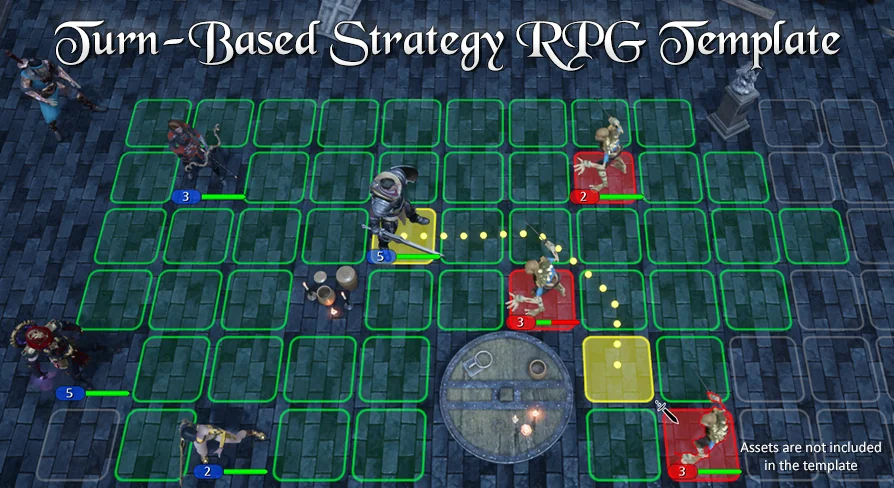
Tactical role-playing projects depend heavily on how space, movement, and board layout interact during an encounter. The Turn-Based Strategy RPG Template approaches terrain layout by supporting both square and hex grids natively. This dual-grid foundation lets developers shape fantasy encounters ranging from rigid dungeon corridors to expansive, organic wilderness maps without writing custom spatial math from scratch.
The framework divides gameplay between an explore mode and a battle mode. During exploration phases, characters navigate through the environment, encounter interactables scattered across the map, pick up objectives, and converse with NPCs. When an encounter triggers, the scene transitions into a structured turn-based battle environment where grid tiles dictate range, movement budgets, and targeting lines. Because the underlying logic accommodates both square and hexagonal coordinates, the spatial flow of combat can be adapted to tight, chess-like skirmishes or fluid, multi-directional field battles.
Unit Archetypes, Big Units, and Retargeted Battle Animations
Combat encounters rely on distinct combatant roles to create depth on the board. The framework organizes party members and hostile forces into melee, range, and magic units, each with distinct engagement ranges and movement profiles. Standard humanoids share the field alongside specialized big units, which occupy expanded grid footprints and introduce unique movement constraints to tactical planning.
These larger scale entities feed directly into dedicated boss fights, where encounter design shifts toward managing area denial, high-threat single targets, and elevated health pools. To handle character movement and attacks during skirmishes, battle animations are re-targeted from Paragon Greystone animations. This provides an immediate visual baseline for melee swings, striking impacts, and idle battle stances directly out of the box, allowing combat prototyping to move forward with responsive motion already mapped to character states.
Combat Mechanics: Elemental Resistances, Status Effects, and AI Routines
Skirmish depth is governed by an interrelated set of combat calculations handling actions, resources, and incoming damage types. Characters utilize both passive and active abilities alongside castable spells. Damage output interacts with an elemental damage and resistance system, meaning units can leverage specific elemental affinities against enemy vulnerabilities or suffer reduced effectiveness against resistant targets.
Layered on top of basic health depletion are status effects that can alter unit effectiveness across consecutive turns. Combat balance is sustained through several automated systems:
Generic AI That Uses Skills: Computer-controlled units evaluate the field, reposition along grid paths, and deploy both active abilities and spells against player formations rather than relying on basic auto-attacks.
Auto Combat Integration: Routine skirmishes or grinding sequences can be resolved using automated turn execution, letting the system drive character decisions based on available skill sets.
Layered Status Rules: Lingering conditions, buffs, and debuffs tick down across turn cycles, impacting mobility, turn order, and defensive resilience.
Role-Playing Progression, Character Vendors, and Quest Systems
Beyond isolated tactical boards, the template packages the structural mechanics required to build a persistent role-playing campaign. A full stats and leveling system tracks character experience, attribute points, and power scaling as encounters are cleared. Defeated foes, quest milestones, and exploration rewards feed back into character growth, expanding spell repertoires and unit baseline performance.
Progression is tied to an integrated equipment system, allowing units to swap weapons, armor, and gear that modify underlying stats. Towns, camps, and staging areas utilize character vendors where gear can be bought, sold, or traded. Story progression and objective tracking run through a built-in quest system that communicates directly with world interactables. For narrative interactions, the architecture includes native compatibility with the Conversation2D Plugin, enabling branching character dialogue during exploration. State persistence across sessions is managed through an integrated save and load feature, preserving quest steps, unit inventory, level states, and board configurations.
Blueprint Architecture and Project Implementation Fit
The entire template is built with 100% blueprints, leaving the logic transparent and directly modifiable within Unreal Engine's visual scripting environment. Developers working without native C++ compilation pipelines can inspect, tweak, and extend state machines, grid calculations, and damage pipelines entirely in graphs. The included fully functional UI supplies action bars, character screens, dialogue boxes, grid overlays, and health readouts that hook cleanly into the underlying Blueprint data.
Teams building classic turn-based tactics titles, medieval fantasy skirmish games, or grid-centric dungeon crawlers will find the template particularly applicable. It is also made for compatibility alongside the Reactive Turn-Based RPG Template, presenting a modular starting point for developers who need complete control over tactical AI, inventory loops, and multi-mode exploration without constructing the underlying framework from zero.
 RPG
RPG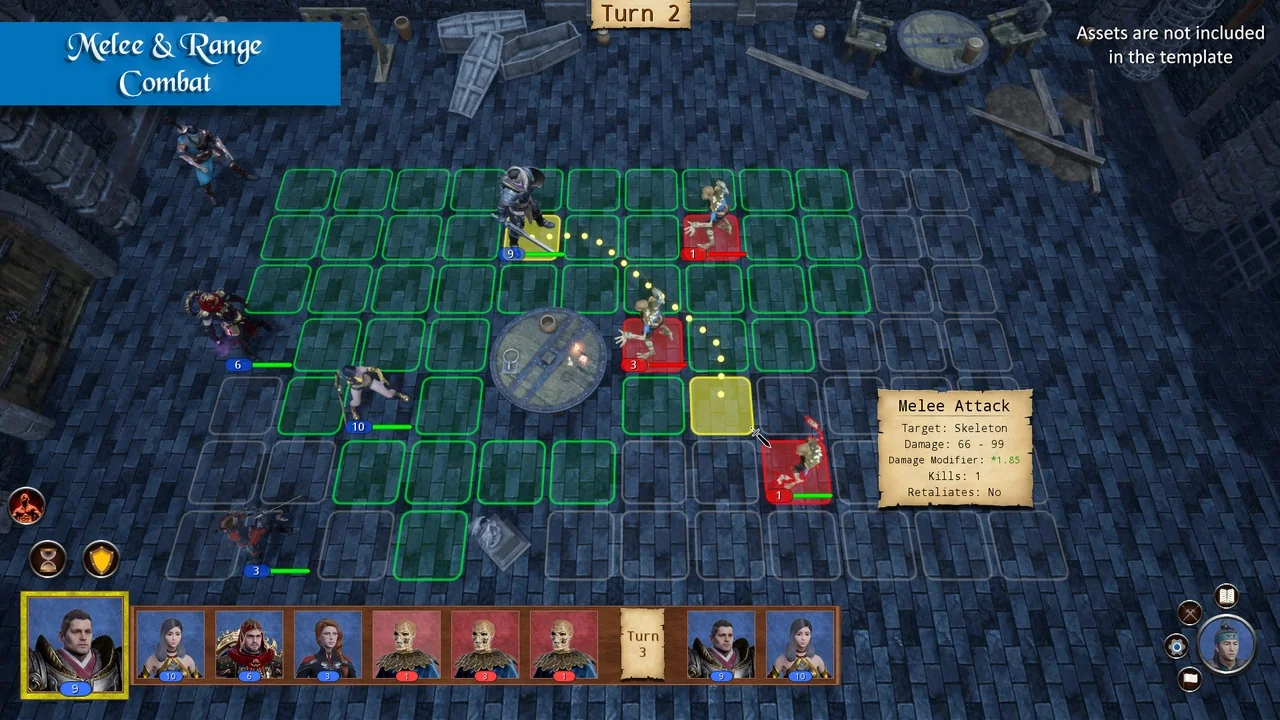
 RPG
RPG RPG
RPG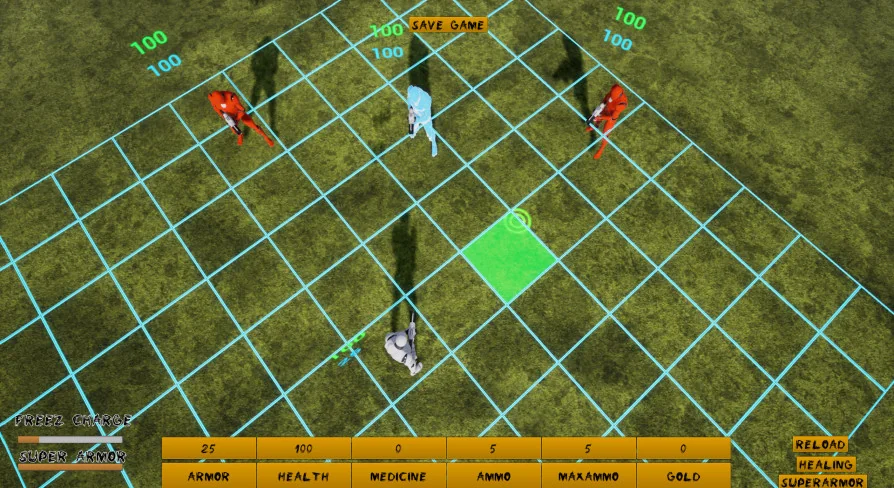 RPG
RPG