"059e11fbf316ed56"{"id":"1001290","slug":"turn-based-rpg-template","title":"Turn-Based RPG Template","category":"Game Systems","engine":"5.0+","assetVersion":"","engineVersion":"Engine Version: 5.0+","tag":"Game Systems","accent":"blue","visual":"mech","summary":"Examine the Turn-Based RPG Template for Unreal Engine, featuring 100% Blueprints, grid movement, drag-and-drop units, waves, and stat-driven combat.","platform":"Unreal Engine","publishedAt":"2026-10-01T12:58:01.677Z","updatedAt":"2026-10-01T12:58:01.677Z","sourceNotes":[],"fileContents":[],"compatibility":["Unreal Engine","Engine Version: 5.0+"],"featuredImage":{"alt":"Turn-Based RPG Template","src":"/wp-content/uploads/published/2026/10/1845fc93c5bf-25c342ea-39ca-48b7-850f-9de8db58cc0e-2e246803c1.webp"},"hasDownloadLink":true,"downloads":0,"terms":[{"taxonomy":"category","slug":"game-systems","name":"Game Systems"}],"galleryImages":[{"src":"/wp-content/uploads/published/2026/10/6f1a276e40b2-dac33a18-da1a-4a8b-b8c5-a293d9a7c490-410461970c.webp","alt":"Turn-Based RPG Template"},{"src":"/wp-content/uploads/published/2026/10/065ebdd243b1-beaf381e-ef5c-47e8-a48e-000520fc85bd-f9a373d9d1.webp","alt":"Turn-Based RPG Template"},{"src":"/wp-content/uploads/published/2026/10/e915e0295098-ec8fe3b3-0a87-4cb9-919a-8da6b94af050-bab3e1d9cd.webp","alt":"Turn-Based RPG Template"},{"src":"/wp-content/uploads/published/2026/10/f9ae7718a23d-376a584a-02c1-4669-9539-1546b8485889-70c1bd4e1a.webp","alt":"Turn-Based RPG Template"},{"src":"/wp-content/uploads/published/2026/10/b409053beb37-6f798bbb-0586-4598-ba3b-ad17e17b179a-76c2ebde83.webp","alt":"Turn-Based RPG Template"},{"src":"/wp-content/uploads/published/2026/10/48bd00b4def1-c47b3e69-d401-4222-802b-51947ee61b63-35e572f899.webp","alt":"Turn-Based RPG Template"},{"src":"/wp-content/uploads/published/2026/10/bce2050ede6b-d19558cc-ae05-47f8-b3b2-06bf805c3493-3e2c580baf.webp","alt":"Turn-Based RPG Template"},{"src":"/wp-content/uploads/published/2026/10/d1c86d78f89a-d287ece6-18d6-4afa-8c23-d90c7142fcee-43451b962c.webp","alt":"Turn-Based RPG Template"},{"src":"/wp-content/uploads/published/2026/10/778912ff0492-6debe912-92dc-44a1-b1d1-801bacb398b5-a243bec859.webp","alt":"Turn-Based RPG Template"},{"src":"/wp-content/uploads/published/2026/10/58710b59dcd8-a2562d97-6288-4ea7-9ac6-2acc3aede51d-cce69237a9.webp","alt":"Turn-Based RPG Template"}],"accessPanel":{"kind":"resource","title":"Download this resource","eyebrow":"Free Download","message":"Log in or create a free account to start your download.","fileName":"Content.7z","safetyNote":"Resources are manually reviewed before listing to improve quality and reduce obvious risks.","actionLabel":"Download Free","resourceType":"Resource archive"},"contentHtml":"\u003ch2\u003eBypassing Low-Level Combat Setup with 100% Blueprints\u003c/h2\u003e\u003cp\u003eConstructing a turn-based tactical combat framework from scratch requires establishing complex rules for turns, tiles, and character states before any playable encounter can occur. The Turn-Based RPG Template solves this initial bottleneck by providing a fully functional battle foundation developed entirely in Blueprints, removing the need for custom C++ code when structuring turn logic or encounter loops.\u003c/p\u003e\u003cp\u003eBecause the logic is contained within Blueprints, designers can directly trace execution flow across combat steps. Whether crafting a tactical strategy title or a classic fantasy JRPG, developers can inspect the underlying graphs to modify battle sequences, integrate specialized game rules, or tailor player interactions without breaking core turn mechanics.\u003c/p\u003e\u003ch2\u003eGrid System Mechanics and Drag-and-Drop Unit Deployment\u003c/h2\u003e\u003cp\u003ePositioning forms the core of tactical RPG combat, dictating engagement ranges, movement boundaries, and survival odds. The template incorporates a native grid system alongside an interactive drag-and-drop mechanic that allows units to be assigned cleanly to grid coordinates during combat phases.\u003c/p\u003e\u003cp\u003eThe drag-and-drop functionality links cursor or input handling directly to grid positions, allowing characters to transition from standby deployment into specific tactical tiles. This grid infrastructure establishes coordinate clarity across the battlefield, ensuring movement ranges and tile occupancies remain deterministic throughout alternating player and enemy rounds.\u003c/p\u003e\u003ch2\u003eStat-Based Damage Systems and Attack Patterns\u003c/h2\u003e\u003cp\u003eCharacter viability in turn-based encounters hinges on structured mathematical systems rather than manual hit registration. This template incorporates a stat-based damage calculation system that evaluates incoming attacks against character attributes to resolve offensive and defensive exchanges.\u003c/p\u003e\u003cp\u003eCombat capability is expanded through diverse skill types and deliberate attack patterns:\u003c/p\u003e\u003cul\u003e\u003cli\u003e\u003cstrong\u003eOffensive Skills:\u003c/strong\u003e Direct offensive abilities tuned through stat calculations to inflict damage across target tiles.\u003c/li\u003e\u003cli\u003e\u003cstrong\u003eSupportive Skills:\u003c/strong\u003e Utility abilities engineered to aid friendly units, alter tactical positioning, or reinforce defenses.\u003c/li\u003e\u003cli\u003e\u003cstrong\u003eAttack Patterns:\u003c/strong\u003e Defined operational shapes and ranges that determine how offensive actions sweep across the grid.\u003c/li\u003e\u003cli\u003e\u003cstrong\u003eCharacter Stats:\u003c/strong\u003e Numerical attributes that dictate offensive potency, defensive mitigation, and unit performance.\u003c/li\u003e\u003c/ul\u003e\u003cp\u003eBy defining explicit attack patterns alongside supportive and offensive capabilities, encounters move beyond basic single-target exchanges into layered spatial puzzles where positioning determines skill efficacy.\u003c/p\u003e\u003ch2\u003eBattle Flow: Camera Movements, Waves, and Boss Fights\u003c/h2\u003e\u003cp\u003eSustaining visual engagement in turn-based encounters requires deliberate perspective shifts that communicate action and intent across the board. The template includes dedicated camera movements that frame the tactical grid, adjusting perspective during positioning phases, skill executions, and round transitions.\u003c/p\u003e\u003cp\u003eEncounters are structured to scale beyond isolated skirmishes. The included wave logic organizes consecutive groups of adversaries, testing player endurance and tactical resource management across multi-stage engagements. These waves culminate in specialized boss fight setups, allowing encounters to pivot from standard multi-unit engagements into high-threat focal battles featuring distinct combat conditions.\u003c/p\u003e\u003ch2\u003eDemonstration Assets and Production Integration\u003c/h2\u003e\u003cp\u003eSeparation between system logic and cosmetic visuals is maintained throughout the template structure. The base template is delivered purely as an operational framework; visual demonstration assets shown in previews are excluded from the core package and are instead provided through a dedicated sample project.\u003c/p\u003e\u003cp\u003eIn that sample implementation, character assets are sourced from Unreal Engine Marketplace Paragon packs, which carry explicit licensing restricted to Unreal Engine projects. Interface elements, specifically skill images, utilize assets credited to creator eleazzaar under the Creative Commons Attribution 3.0 license. This clean separation ensures that developers can test functionality using the fully assembled sample project while keeping their production builds lightweight and ready for custom fantasy or tactical art integration.\u003c/p\u003e\u003ch2\u003eImplementing Turn-Based Encounters in Production\u003c/h2\u003e\u003cp\u003ePrototyping turn-based mechanics often stalls when teams spend weeks coordinating grids, unit placement, and turn state tracking. The Turn-Based RPG Template bypasses that groundwork by supplying a tested tactical environment with integrated waves, stat checks, and combat cameras right out of the box.\u003c/p\u003e\u003cp\u003eFor independent developers and studios targeting tactical battle systems, the blueprint structure serves as an adaptable framework. Teams can retain the core coordinate logic and wave progression systems while completely replacing UI schemes, stat formulas, and character definitions to fit unique game design goals.\u003c/p\u003e\n\n\u003ch2\u003eRelated Resources Worth Checking\u003c/h2\u003e\n\u003cul\u003e\n\u003cli\u003e\u003ca href=\"https://3dcghub.com/procedural-turn-in-place-system/\" title=\"Procedural Turn in Place System\"\u003eProcedural Turn in Place System\u003c/a\u003e\u003c/li\u003e\n\u003cli\u003e\u003ca href=\"https://3dcghub.com/turn-based-strategy-rpg-template/\" title=\"Turn-Based Strategy RPG Template\"\u003eTurn-Based Strategy RPG Template\u003c/a\u003e\u003c/li\u003e\n\u003cli\u003e\u003ca href=\"https://3dcghub.com/advanced-turn-based-tile-toolkit/\" title=\"Advanced Turn Based Tile Toolkit\"\u003eAdvanced Turn Based Tile Toolkit\u003c/a\u003e\u003c/li\u003e\n\u003cli\u003e\u003ca href=\"https://3dcghub.com/turn-based-jrpg-template/\" title=\"Turn-Based jRPG Template\"\u003eTurn-Based jRPG Template\u003c/a\u003e\u003c/li\u003e\n\u003cli\u003e\u003ca href=\"https://3dcghub.com/advanced-tactical-based-system/\" title=\"Advanced Tactical-based System\"\u003eAdvanced Tactical-based System\u003c/a\u003e\u003c/li\u003e\n\u003c/ul\u003e","contentTextLength":5198,"navigation":{"current":7,"total":3238,"previous":{"id":"1001291","slug":"combat-magic-animations","title":"Combat Magic Animations","category":"Combat","platform":"Unreal Engine","updatedAt":"2026-10-01T14:40:33.091Z"},"next":{"id":"1001289","slug":"stylized-truck-pack-drivable-truck","title":"Stylized Truck Pack (Drivable Truck)","category":"Game Systems","platform":"Unreal Engine","updatedAt":"2026-10-01T12:57:24.100Z"}},"relatedResources":[{"id":"1001011","slug":"procedural-turn-in-place-system","title":"Procedural Turn in Place System","category":"Animations","engine":"5.1+","assetVersion":"","engineVersion":"Engine Version: 5.1+","tag":"Animations","accent":"blue","visual":"animation","summary":"IK-based turn-in-place for UE4/UE5 humanoids with auto foot projection, customizable curves, strafing set, Control Rig setup, and replication.","platform":"Unreal Engine","publishedAt":"2026-08-22T13:14:55.097Z","updatedAt":"2026-08-22T13:14:55.097Z","sourceNotes":[],"fileContents":[],"compatibility":["Unreal Engine","Engine Version: 5.1+"],"featuredImage":{"alt":"Procedural Turn in Place System","src":"/wp-content/uploads/published/2026/08/58b7c31ef80f-667a563c-7f44-4f12-b33a-40d2aeab67cf-3a9009c480.webp"},"hasDownloadLink":true,"downloads":5},{"id":"1001253","slug":"turn-based-strategy-rpg-template","title":"Turn-Based Strategy RPG Template","category":"RPG","engine":"5.0+","assetVersion":"","engineVersion":"Engine Version: 5.0+","tag":"RPG","accent":"blue","visual":"mech","summary":"Explore the Turn-Based Strategy RPG Template featuring square and hex grids, Blueprint architecture, elemental combat, quest systems, and AI mechanics.","platform":"Unreal Engine","publishedAt":"2026-09-23T15:40:14.497Z","updatedAt":"2026-09-23T15:40:14.497Z","sourceNotes":[],"fileContents":[],"compatibility":["Unreal Engine","Engine Version: 5.0+"],"featuredImage":{"alt":"Turn-Based Strategy RPG Template","src":"/wp-content/uploads/published/2026/09/33fb4f14422f-c8440a90-3434-4425-b9cc-f90eb9acad66-ef61d0e044.webp"},"hasDownloadLink":true,"downloads":0},{"id":"1001043","slug":"advanced-turn-based-tile-toolkit","title":"Advanced Turn Based Tile Toolkit","category":"RPG","engine":"5.3+","assetVersion":"Asset Version: 3.5.4","engineVersion":"Engine Version: 5.3+","tag":"RPG","accent":"blue","visual":"mech","summary":"A UE4 toolkit for turn-based tactics with grid pathfinding, square and hexagonal grids, tactical AI, visibility, multiplayer, and multiple example maps.","platform":"Unreal Engine","publishedAt":"2026-08-27T14:35:27.571Z","updatedAt":"2026-08-27T14:35:27.571Z","sourceNotes":[],"fileContents":[],"compatibility":["Unreal Engine","Asset Version: 3.5.4","Engine Version: 5.3+"],"featuredImage":{"alt":"Advanced Turn Based Tile Toolkit","src":"/wp-content/uploads/published/2026/08/0ce862fc44e6-a214e5d5-e57d-4591-ae11-96db49501f2d-402e714e02.webp"},"hasDownloadLink":true,"downloads":0}]}
Game Systems
Turn-Based RPG Template
Examine the Turn-Based RPG Template for Unreal Engine, featuring 100% Blueprints, grid movement, drag-and-drop units, waves, and stat-driven combat.
Category:Unreal Engine,Game SystemsPlatform: Unreal EngineEngine Version: 5.0+Published: Oct 1, 2026
Game Systems
Resource overview
Bypassing Low-Level Combat Setup with 100% Blueprints
Constructing a turn-based tactical combat framework from scratch requires establishing complex rules for turns, tiles, and character states before any playable encounter can occur. The Turn-Based RPG Template solves this initial bottleneck by providing a fully functional battle foundation developed entirely in Blueprints, removing the need for custom C++ code when structuring turn logic or encounter loops.
Because the logic is contained within Blueprints, designers can directly trace execution flow across combat steps. Whether crafting a tactical strategy title or a classic fantasy JRPG, developers can inspect the underlying graphs to modify battle sequences, integrate specialized game rules, or tailor player interactions without breaking core turn mechanics.
Grid System Mechanics and Drag-and-Drop Unit Deployment
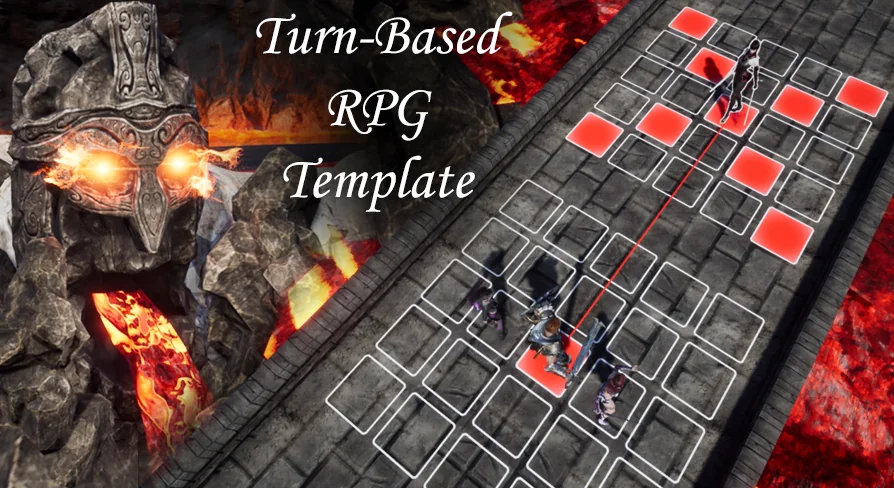
Positioning forms the core of tactical RPG combat, dictating engagement ranges, movement boundaries, and survival odds. The template incorporates a native grid system alongside an interactive drag-and-drop mechanic that allows units to be assigned cleanly to grid coordinates during combat phases.
The drag-and-drop functionality links cursor or input handling directly to grid positions, allowing characters to transition from standby deployment into specific tactical tiles. This grid infrastructure establishes coordinate clarity across the battlefield, ensuring movement ranges and tile occupancies remain deterministic throughout alternating player and enemy rounds.
Stat-Based Damage Systems and Attack Patterns
Character viability in turn-based encounters hinges on structured mathematical systems rather than manual hit registration. This template incorporates a stat-based damage calculation system that evaluates incoming attacks against character attributes to resolve offensive and defensive exchanges.
Combat capability is expanded through diverse skill types and deliberate attack patterns:
Offensive Skills: Direct offensive abilities tuned through stat calculations to inflict damage across target tiles.
Supportive Skills: Utility abilities engineered to aid friendly units, alter tactical positioning, or reinforce defenses.
Attack Patterns: Defined operational shapes and ranges that determine how offensive actions sweep across the grid.
Character Stats: Numerical attributes that dictate offensive potency, defensive mitigation, and unit performance.
By defining explicit attack patterns alongside supportive and offensive capabilities, encounters move beyond basic single-target exchanges into layered spatial puzzles where positioning determines skill efficacy.
Battle Flow: Camera Movements, Waves, and Boss Fights
Sustaining visual engagement in turn-based encounters requires deliberate perspective shifts that communicate action and intent across the board. The template includes dedicated camera movements that frame the tactical grid, adjusting perspective during positioning phases, skill executions, and round transitions.
Encounters are structured to scale beyond isolated skirmishes. The included wave logic organizes consecutive groups of adversaries, testing player endurance and tactical resource management across multi-stage engagements. These waves culminate in specialized boss fight setups, allowing encounters to pivot from standard multi-unit engagements into high-threat focal battles featuring distinct combat conditions.
Demonstration Assets and Production Integration
Separation between system logic and cosmetic visuals is maintained throughout the template structure. The base template is delivered purely as an operational framework; visual demonstration assets shown in previews are excluded from the core package and are instead provided through a dedicated sample project.
In that sample implementation, character assets are sourced from Unreal Engine Marketplace Paragon packs, which carry explicit licensing restricted to Unreal Engine projects. Interface elements, specifically skill images, utilize assets credited to creator eleazzaar under the Creative Commons Attribution 3.0 license. This clean separation ensures that developers can test functionality using the fully assembled sample project while keeping their production builds lightweight and ready for custom fantasy or tactical art integration.
Implementing Turn-Based Encounters in Production
Prototyping turn-based mechanics often stalls when teams spend weeks coordinating grids, unit placement, and turn state tracking. The Turn-Based RPG Template bypasses that groundwork by supplying a tested tactical environment with integrated waves, stat checks, and combat cameras right out of the box.
For independent developers and studios targeting tactical battle systems, the blueprint structure serves as an adaptable framework. Teams can retain the core coordinate logic and wave progression systems while completely replacing UI schemes, stat formulas, and character definitions to fit unique game design goals.
 Game Systems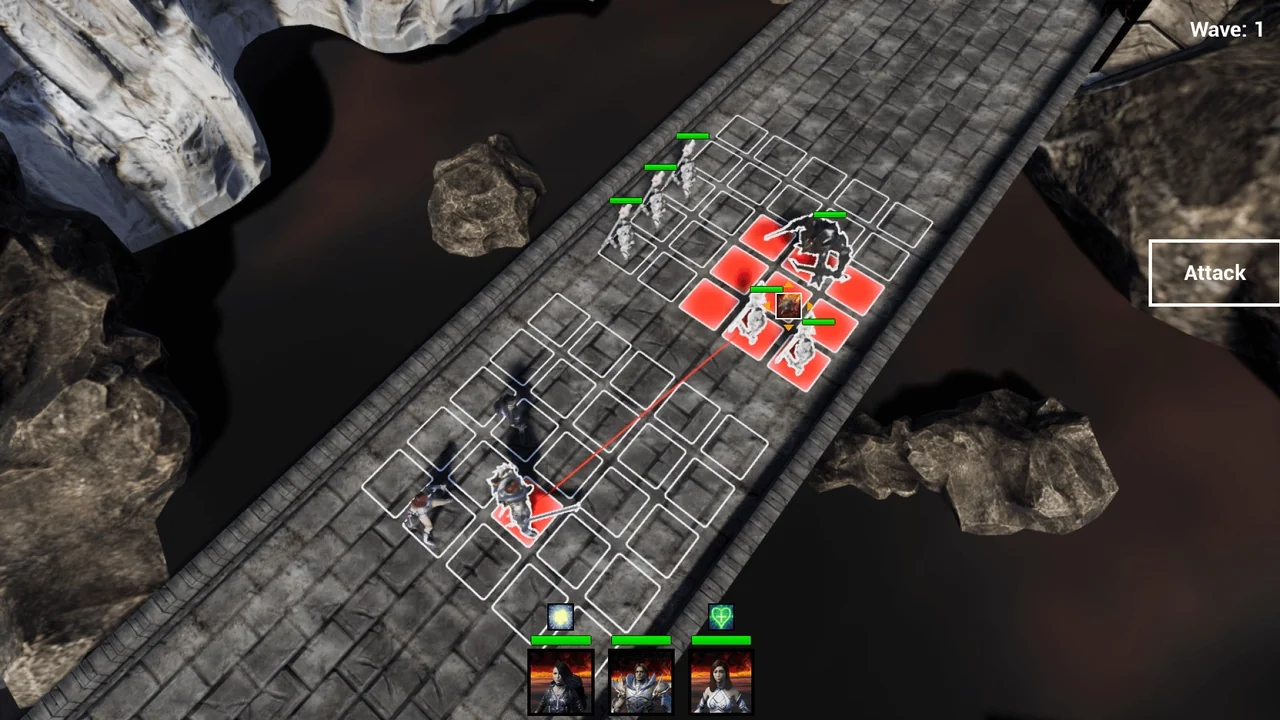
 Animations
 RPG
RPG RPG
RPG